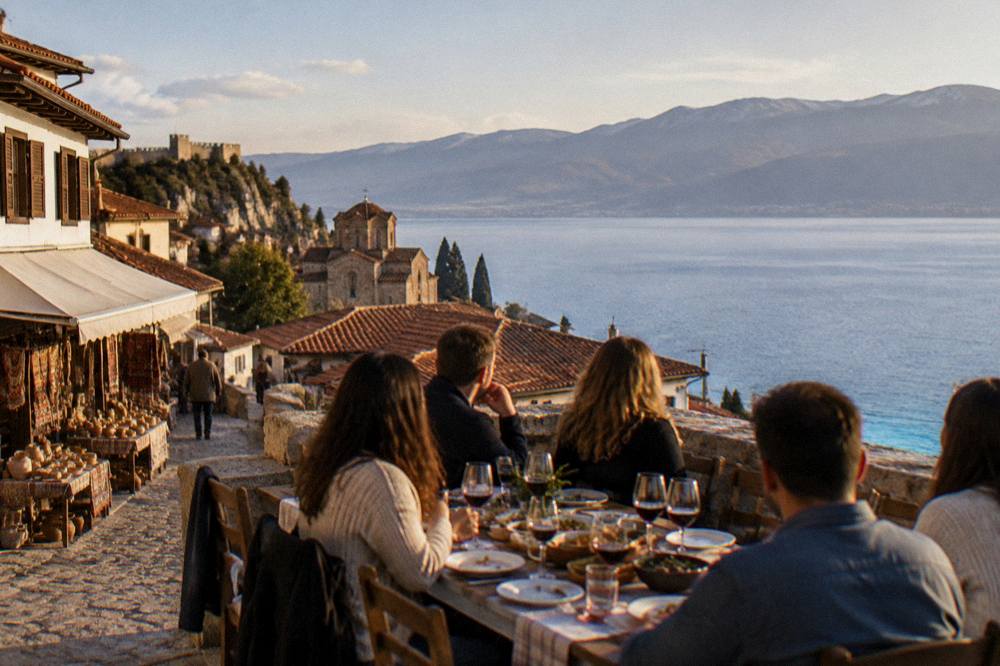
Ohrid Food And Wine Tours: Trout, Tavče Gravče And Local Wine
Ohrid’s food and wine tours turn a walk through the old town into a tasting journey across North Macedonia’s most celebrated flavours.
Short answer
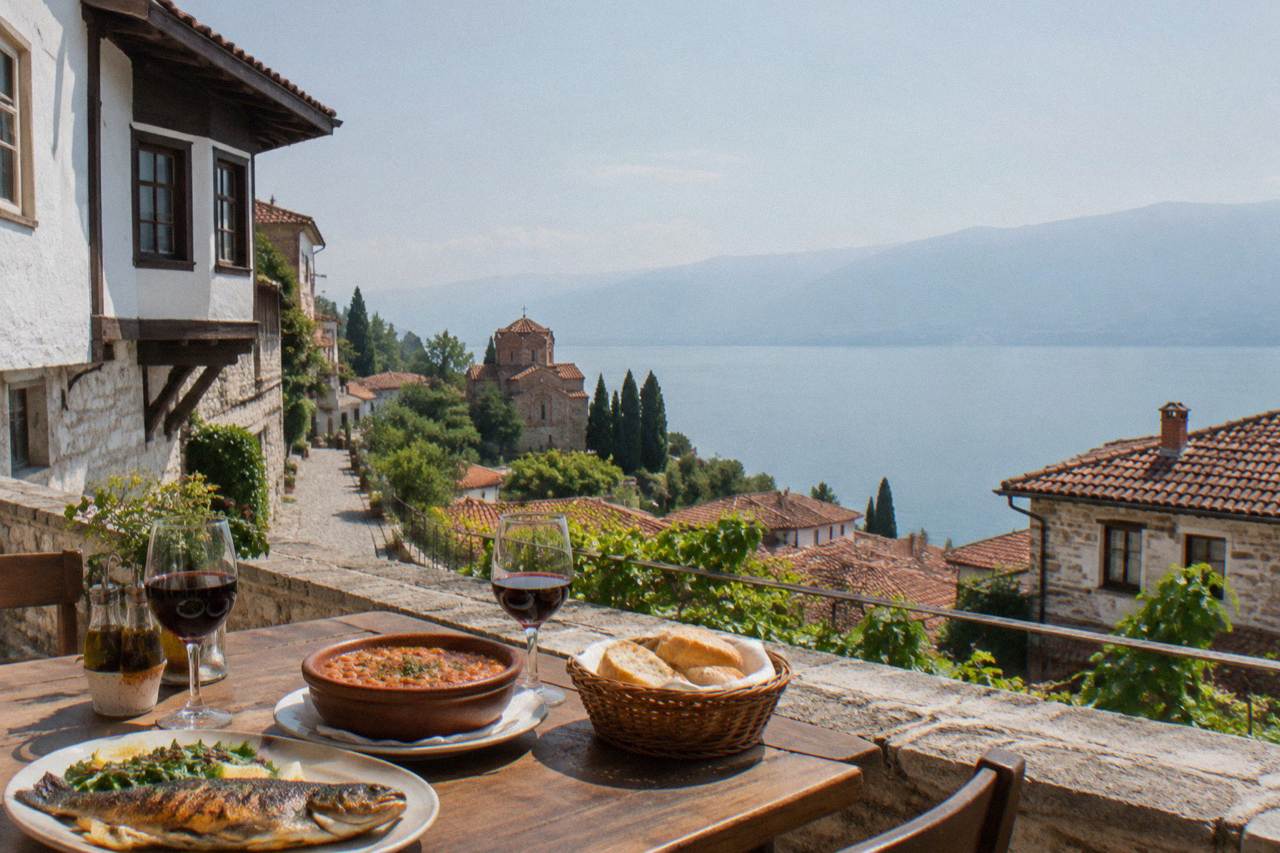
Ohrid food and wine tours cover cooking classes, winery visits with tastings, and guided walks that stop for trout, tavče gravče, rakija, and local wine. A cooking class lets you prepare traditional dishes yourself, while a winery tour pairs Macedonian varietals with monastery settings. City walks add food stops to the sightseeing, and no tour requires previous experience. Book a cooking class for hands-on learning, a winery tour for a structured tasting, or a city tour for a relaxed food-and-history mix.
For a full picture of Ohrid's culinary landscape, the Ohrid Travel Guide covers the best food and drink experiences the city offers. A food and wine tour here is never just a meal: it is a walk through centuries of Byzantine influence, Ottoman spice routes, and a lake that has fed the town for millennia. The dishes are simple and direct: grilled Ohrid trout pulled from the lake, slow-baked tavče gravče in a clay pot, a shot of rakija poured from an unlabelled bottle, and glasses of Vranec or Smederevka poured in a stone cellar. Tours bundle these tastes into a few hours, whether you are stirring a pot in a family kitchen, swirling a glass at a monastery winery, or stopping at a market stall between the Church of St John at Kaneo and the Old Bazaar.
What Makes Ohrid Food And Wine Tours Special?
Ohrid food and wine tours stand out because they combine the town’s UNESCO-listed setting with ingredients that are tightly tied to the lake and the surrounding mountains: freshwater trout, mountain herbs, peppers grown in the Prespa basin, and wines from the Tikveš region. Unlike a generic city food tour, an Ohrid tour almost always includes a stop at a lake-view terrace or a monastery courtyard, turning a tasting into a full sensory experience that is hard to replicate anywhere else.
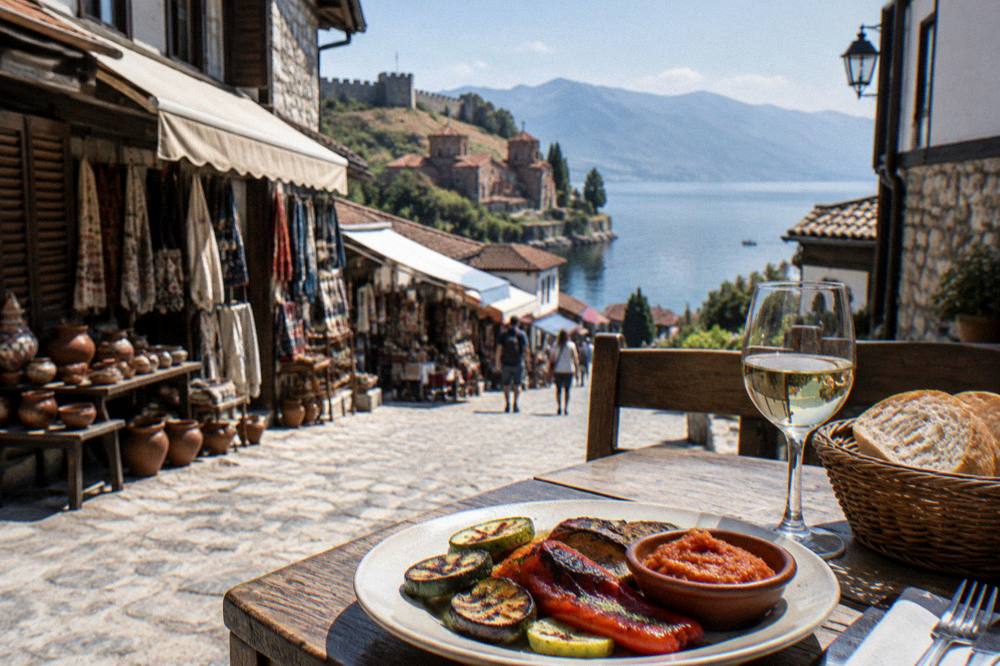
The lake itself is the starting point. Ohrid trout, a species found only in Lake Ohrid and a handful of connected waters, appears on nearly every menu and in many cooking classes. The fish is usually grilled whole and served with a squeeze of lemon, a side of ajvar, and a simple salad of tomatoes, cucumbers, and sirene cheese. A food tour that skips the trout is rare, and most tours make a point of explaining why the fish is protected and how local fishermen work under strict quotas.
Beyond the trout, the table fills with dishes that have been made in Ohrid homes for generations. Tavče gravče, the national dish of North Macedonia, is a bean stew baked in a traditional earthenware pot until the top forms a crust. Ajvar, a red pepper and aubergine relish, is prepared in huge batches every autumn and served year-round. Rakija, a fruit brandy, is the first thing offered to a guest, and a tour that includes a home visit or a village stop will almost certainly pour a small glass before any food arrives.
The wine side is equally rooted in place. North Macedonia’s wine industry, centred on the Tikveš valley, produces bold reds like Vranec and Kratosija, as well as crisp whites like Smederevka and Zilavka. In Ohrid, a winery tour often takes place at a monastery estate where the vines climb a hillside overlooking the lake. The combination of cool mountain air, limestone soil, and a long, sunny growing season gives the wines a character that is distinct from other Balkan regions.
Which Dishes And Drinks Do Food Tours Typically Cover?
A typical Ohrid food tour covers grilled Ohrid trout, tavče gravče, ajvar, shopska salad, rakija, and Macedonian wine, with some tours adding burek, stuffed peppers, and a dessert such as baklava or tulumba. The exact lineup depends on the tour type: a cooking class lets you prepare three or four dishes from scratch, a winery tour focuses on a flight of wines paired with local cheese and cured meats, and a city walk stops at a market, a bakery, and a restaurant for small plates along the way.
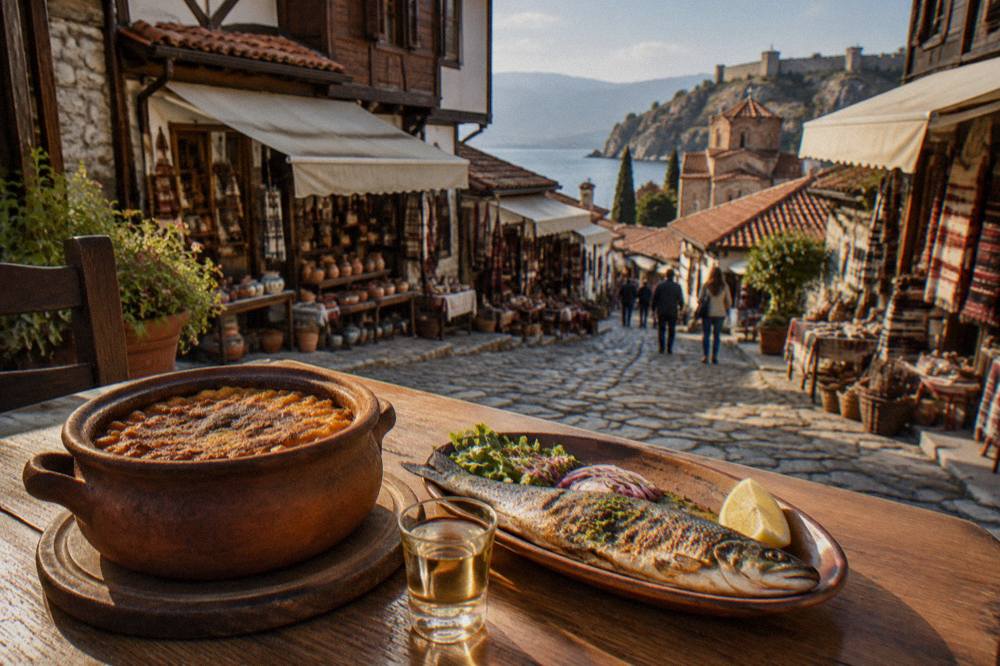
The table below sets out the dishes and drinks that appear most often on Ohrid food tours, along with what a visitor can expect from each one. No tour includes every item, but the core of trout, beans, peppers, and wine runs through nearly every experience.
| Dish/Drink | What It Is | How It Appears On A Tour |
|---|---|---|
| Ohrid trout | Freshwater fish, grilled whole, served with lemon | Served as a main course on a restaurant stop or cooked during a class |
| Tavče gravče | Baked bean stew in a clay pot | Often prepared from scratch in a cooking class; served as a side on food walks |
| Ajvar | Red pepper and aubergine relish | Spooned onto bread as a starter; explained during market visits |
| Shopska salad | Chopped tomatoes, cucumbers, onions, grated sirene cheese | A constant side dish on any meal stop |
| Rakija | Fruit brandy, typically plum or grape | Poured as a welcome drink at the start of a tour or in a village home |
| Macedonian wine | Red (Vranec, Kratosija) and white (Smederevka, Zilavka) | Tasted in flights at a winery or paired with food at a restaurant |
| Burek | Flaky pastry filled with cheese, meat, or spinach | Bought from a bakery during a city walk |
| Stuffed peppers | Peppers filled with rice, meat, and spices | Served as a warm dish in a cooking class or a family-run restaurant |
| Baklava / Tulumba | Sweet pastries soaked in syrup | Offered as a dessert at the end of a meal stop |
Rakija deserves a special mention because it is never just a drink in North Macedonia. A tour guide will explain the ritual: the host pours a small glass, everyone says "Na zdravje," and the glass is sipped slowly, not downed. The rakija itself can be homemade, clear and potent, or aged in oak barrels, taking on a golden colour and a smoother finish. A food tour that includes a village visit often stops at a home where the family distils its own rakija from plums or grapes, and the tasting is as much about hospitality as it is about alcohol.
Macedonian wine, by contrast, is the structured part of the experience. A winery tour moves through a cellar, explains the grape varieties, and pours a flight that typically starts with a white, moves to a rosé, and finishes with two or three reds. The tasting is accompanied by a plate of local cheese, cured meats, and bread. Some wineries near Ohrid are attached to monasteries, so the tasting room sits inside a stone building that dates back centuries, and the vines grow on terraces that drop toward the lake.
How Does A Cooking Class In Ohrid Work?
An Ohrid cooking class typically runs for a few hours in a home kitchen or a small culinary studio, where a local cook guides a small group through three or four traditional dishes such as tavče gravče, stuffed peppers, and a dessert, with all ingredients provided and the meal eaten together at the end. No previous cooking experience is required, and the class usually includes a glass of rakija or wine while you cook, plus a recipe card to take home.
The class begins with a trip to the market if the format includes shopping. The instructor points out the best peppers, the freshest trout, and the right sirene cheese, explaining how to choose ingredients the way an Ohrid grandmother would. Back in the kitchen, the group ties on aprons and starts with the dish that needs the longest cooking time, usually the tavče gravče, which goes into the oven early so it can bake slowly while the other dishes are prepared.
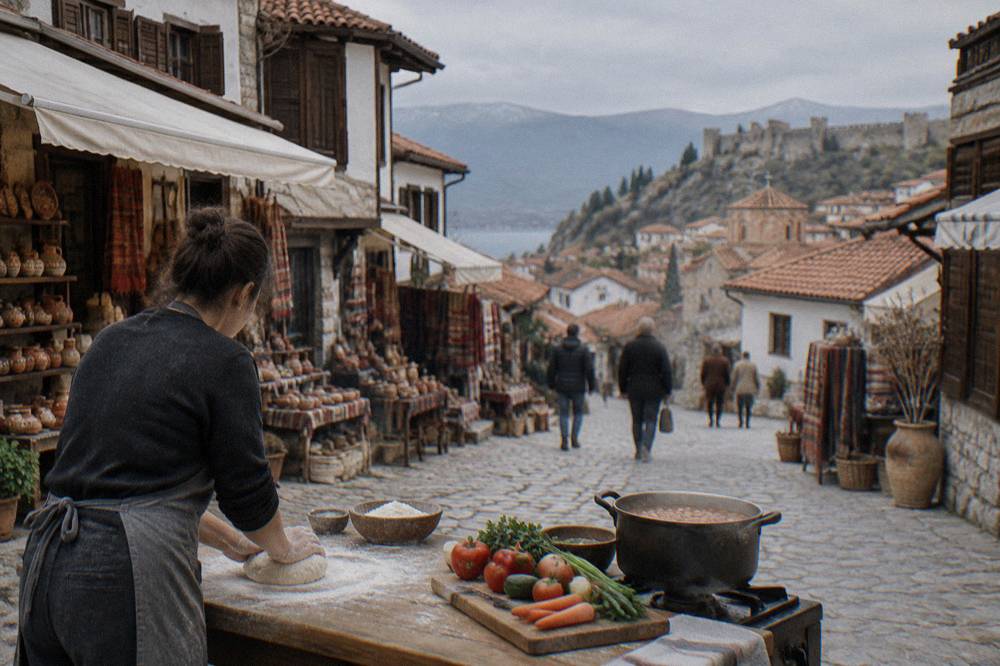
Chopping, stirring, and seasoning fill the next hour. The cook demonstrates how to clean and grill the trout, how to stuff peppers with a rice and herb mixture, and how to roll out dough for a simple pastry. The pace is relaxed, with plenty of time for questions and stories about the origin of each dish. Many instructors learned the recipes from their own grandmothers, and the class feels less like a formal lesson and more like cooking with a friend who happens to know every trick.
When the food is ready, everyone sits down at a long table to eat. The meal is the payoff, and it is always accompanied by local wine or rakija. The conversation turns to travel, food memories, and the differences between Macedonian cuisine and the visitors' home cooking. At the end, the instructor hands out printed recipe cards so the dishes can be recreated at home. A cooking class in Ohrid is as much a cultural exchange as it is a meal.
For a deeper dive into the region's wine, a dedicated winery tour pairs local varietals with monastery settings. The experience moves from the cellar to the tasting room, where a flight of wines is poured alongside local cheese and cured meats. The setting, often a centuries-old stone building with a terrace overlooking the lake, adds a layer of atmosphere that a restaurant tasting cannot match.
What Can I Expect From A City Walk That Includes Food Stops?
A city walk with food stops in Ohrid combines sightseeing with tastings, moving from the Old Bazaar to the lakefront while stopping at a bakery for burek, a market stall for ajvar and cheese, and a restaurant for grilled trout or tavče gravče, all with a guide who explains the history of each dish and the neighbourhood. The walk typically covers the main landmarks of the old town, so you see the churches and the fortress while eating your way through the city.
The route often starts at the Old Bazaar, where the guide points out the Ottoman-era shopfronts and the small bakeries that have been turning out burek for decades. A stop at one of these bakeries yields a warm, flaky pastry filled with cheese or meat, eaten standing on the cobblestones while the guide explains how the bazaar functioned as a trading hub for centuries.
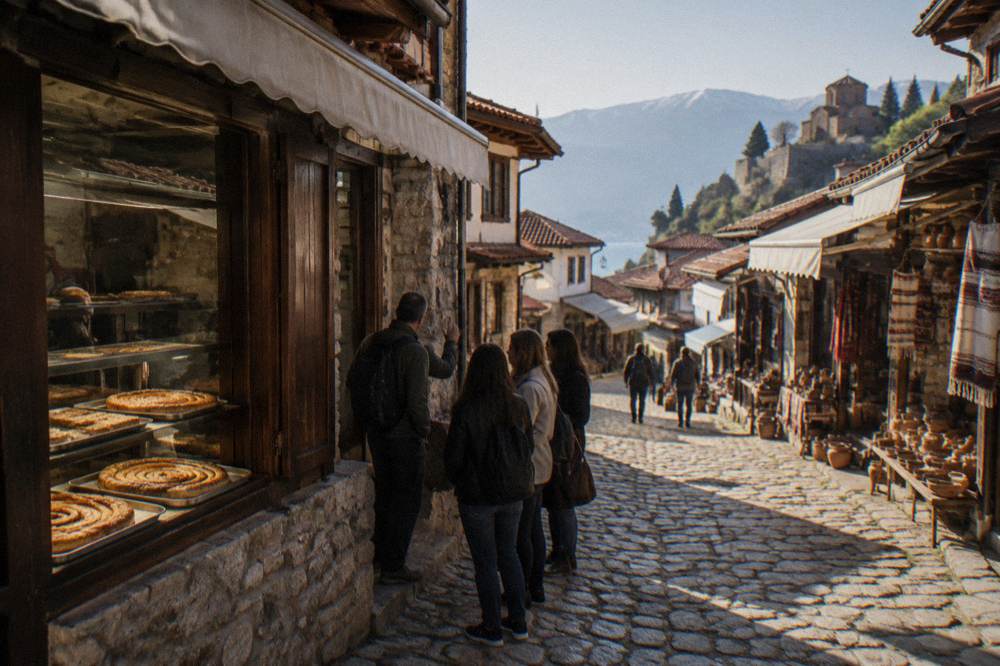
From the bazaar, the walk climbs toward the Upper Gate and Samuel's Fortress, pausing at viewpoints where the lake spreads out below. The guide weaves in stories of Ohrid's Byzantine and Ottoman past, and the food stops become a way to understand the city's layers. A market visit introduces ajvar and sirene cheese, with the guide explaining how the peppers are roasted and peeled in autumn and how the cheese is made from sheep's milk.
The main meal stop is usually a restaurant on the lakefront or tucked into a side street in the old town. Here the group sits down to a plate of grilled trout or a portion of tavče gravče, often with a glass of local wine. The guide stays with the group, answering questions about the food and the city, and the meal becomes a natural extension of the walk rather than a separate event.
What Wine Varieties Are Typical In Ohrid Tastings?
An Ohrid wine tasting typically pours three to five wines, starting with a white such as Smederevka or Zilavka, moving to a rosé, and finishing with reds like Vranec and Kratosija, with some wineries adding a dessert wine or a rakija at the end. The wines are almost always from the Tikveš wine region, North Macedonia's largest and most famous, and the tasting is accompanied by a plate of local cheese, cured meats, and bread.
The table below lists the grape varieties most commonly poured on an Ohrid winery tour, along with their style and typical tasting notes. The exact flight varies by winery, but the core of Smederevka and Vranec appears on nearly every list.
| Grape Variety | Type | Typical Notes |
|---|---|---|
| Smederevka | White | Light-bodied, crisp, green apple and citrus |
| Zilavka | White | Medium-bodied, floral, stone fruit |
| Rosé (blend) | Rosé | Dry, strawberry and watermelon |
| Vranec | Red | Full-bodied, dark fruit, pepper, oak |
| Kratosija | Red | Medium-bodied, red cherry, soft tannins |
| Stanusina | Red | Light-bodied, tart red berries, high acidity |
| Temjanika | White (aromatic) | Muscat-like, grapey, floral |
Vranec is the star of Macedonian wine, a deep, inky red that can age for years and develops notes of blackberry, plum, and black pepper. It is the grape that most wineries lead with, and a tasting will often include two Vranec wines: a young, unoaked version and a reserva that has spent time in barrel. Kratosija, sometimes called the cousin of Vranec, is softer and more approachable, with red cherry and a smooth finish.
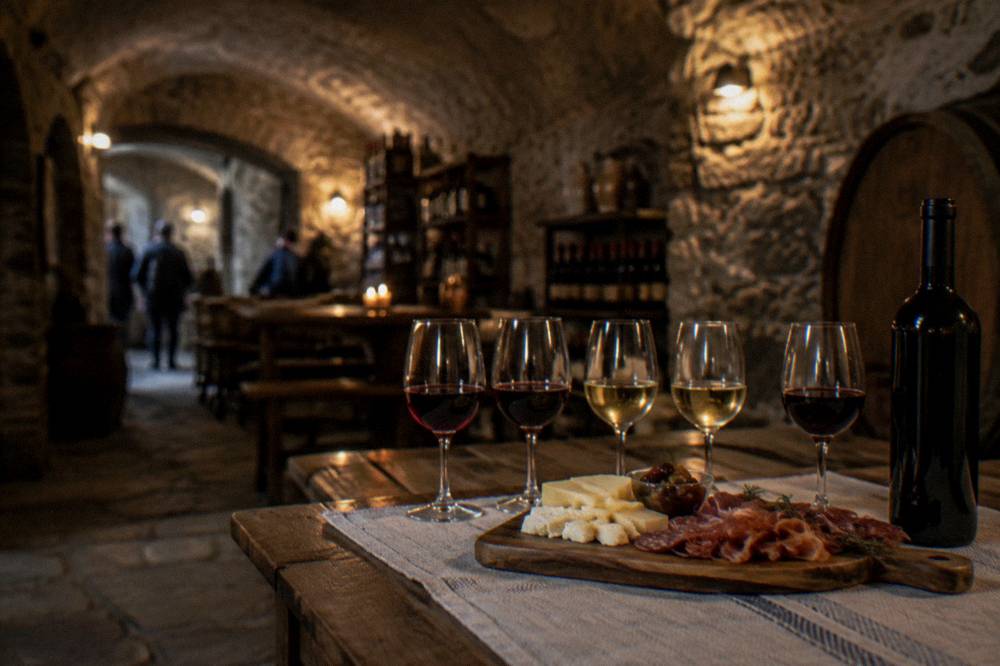
The setting of a winery tour near Ohrid is often as memorable as the wine. Several monastery wineries sit on hillsides above the lake, and the tasting room opens onto a terrace where the view stretches across the water to the mountains. The combination of cool cellar air, the smell of oak barrels, and the sight of vines growing on steep slopes makes the tasting feel connected to the land in a way that a bar or restaurant cannot replicate.
Are Food Tours Suitable For Dietary Restrictions?
Most Ohrid food tours can accommodate vegetarian, gluten-free, and nut-free diets if the operator is told in advance, because the traditional menu already includes many plant-based dishes like tavče gravče, ajvar, shopska salad, and stuffed peppers, and the cooking class format allows the instructor to adjust recipes on the spot. Vegan and dairy-free requests are more challenging because sirene cheese and yoghurt appear in many dishes, but a good tour will offer alternatives such as grilled vegetables and oil-based sauces.
The key is to communicate the restriction at the time of booking. A cooking class instructor can swap out cheese for extra herbs or prepare a separate portion of a dish without dairy. On a city walk, the guide can steer the group toward bakeries that offer spinach burek instead of meat burek and toward restaurants that are happy to serve a plate of grilled vegetables and ajvar as a main course.
Winery tours are generally the easiest for dietary restrictions because the focus is on wine, and the accompanying cheese and meat plate can be adjusted or skipped. A vegetarian visitor can simply enjoy the bread, olives, and wine, while someone with a gluten restriction can pass on the bread and still participate fully in the tasting.
For more detail on the individual dishes, the tavče gravče guide explains the ingredients and preparation, and the Ohrid trout page covers how the fish is typically served.
What Is The Best Time Of Year For A Food And Wine Tour In Ohrid?
The best time for an Ohrid food and wine tour is from May to October, when the lakefront terraces are open, the markets are full of fresh produce, and the weather is warm enough to enjoy a meal outdoors. July and August bring the busiest crowds and the highest temperatures, while May, June, September, and October offer milder weather, fewer visitors, and the same seasonal ingredients at their peak.
The climate table below shows the modelled monthly normals for Ohrid, based on ERA5 reanalysis data for the 1991–2020 period. These are not station records but give a reliable picture of what to expect in terms of temperature and rain.
| Month | Average High (°C) | Average Low (°C) | Rainfall (mm) |
|---|---|---|---|
| January | 5.0 | -0.8 | 76.5 |
| February | 6.3 | 0.0 | 74.3 |
| March | 10.0 | 2.5 | 80.5 |
| April | 14.6 | 6.3 | 82.4 |
| May | 19.5 | 10.8 | 70.8 |
| June | 24.2 | 15.2 | 43.1 |
| July | 27.1 | 18.3 | 34.7 |
| August | 27.6 | 19.0 | 32.9 |
| September | 22.4 | 14.9 | 62.4 |
| October | 17.4 | 10.3 | 76.0 |
| November | 11.5 | 5.3 | 90.4 |
| December | 6.2 | 0.9 | 92.6 |
Spring and autumn are the sweet spots for a food tour. In May, the first strawberries and cherries appear at the market, and the weather is warm enough for a terrace lunch but not yet hot. October brings the grape harvest in the Tikveš region, and many wineries offer special tastings and events around the crush. The lake is still warm enough for a post-tour swim in early autumn, and the summer crowds have thinned, making restaurant stops more relaxed.
Winter food tours are possible but limited. Many boat-related tours stop running, and some wineries reduce their hours. A cooking class, however, is a perfect cold-weather activity: the oven is on, the kitchen is warm, and the dishes, beans, stews, baked pastries, are exactly what you want to eat when the temperature drops. The Ohrid in winter guide has more on what stays open during the colder months.
Common Questions About Ohrid Food And Wine Tours
Do I Need To Book A Food Tour In Advance?
Yes, booking ahead is recommended, especially in July and August when small-group cooking classes and winery tours fill up. Many tours offer free cancellation up to 24 hours before the start, so reserving early secures a spot without risk.
Are Drinks Included In The Tour Price?
Most cooking classes and winery tours include wine or rakija with the meal or tasting. A city walk that stops at a restaurant typically includes a glass of wine or a soft drink, but additional drinks are usually paid separately. The operator's listing will state what is covered.
Can Children Join A Food Or Wine Tour?
Cooking classes and city walks are often family-friendly, and children who enjoy trying new foods will find plenty to like. Winery tours are generally aimed at adults, but some allow older children if accompanied by a parent. Check the age policy on the listing before booking.
What Should I Wear On A Food Tour?
Comfortable walking shoes are essential for any tour that includes a city walk, as the old town's cobbled streets and hills can be tiring in sandals. For a cooking class, wear clothes that can handle a splash of oil or flour. A light jacket is useful for lakeside terraces in the evening, even in summer.
How Much Food Is Served On A Tour?
A cooking class ends with a full meal of the dishes prepared. A winery tour serves a plate of cheese and cured meats alongside the wine, which is more of a snack than a meal. A city walk includes several small stops that add up to a substantial lunch, but a visitor with a large appetite may want a snack afterward.