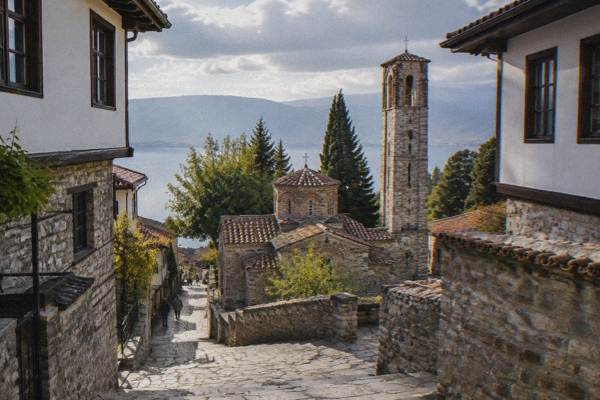
Do I Need A Visa For North Macedonia?
Entry rules for Ohrid and North Macedonia: who travels visa-free, for how long, what documents the border expects, police registration, and how Albania combines with one trip.
Ohrid sits on Lake Ohrid in North Macedonia, a freshwater mountain lake at about 693 m above sea level, and the practical question many travelers ask before booking is the one in the title: whether a visa stands between them and the old town. The short answer, for the nationalities that fill most arrival lists, is no. North Macedonia runs a generous visa-free regime, separate from both the EU and the Schengen area, and this Ohrid Travel Guide page sets out what the foreign ministry and UK travel guidance actually say: who enters without a visa, for how long, what documents to carry, and the small registration step your hotel handles on arrival. Where a rule differs for UK citizens specifically, that difference is flagged in its own section below.
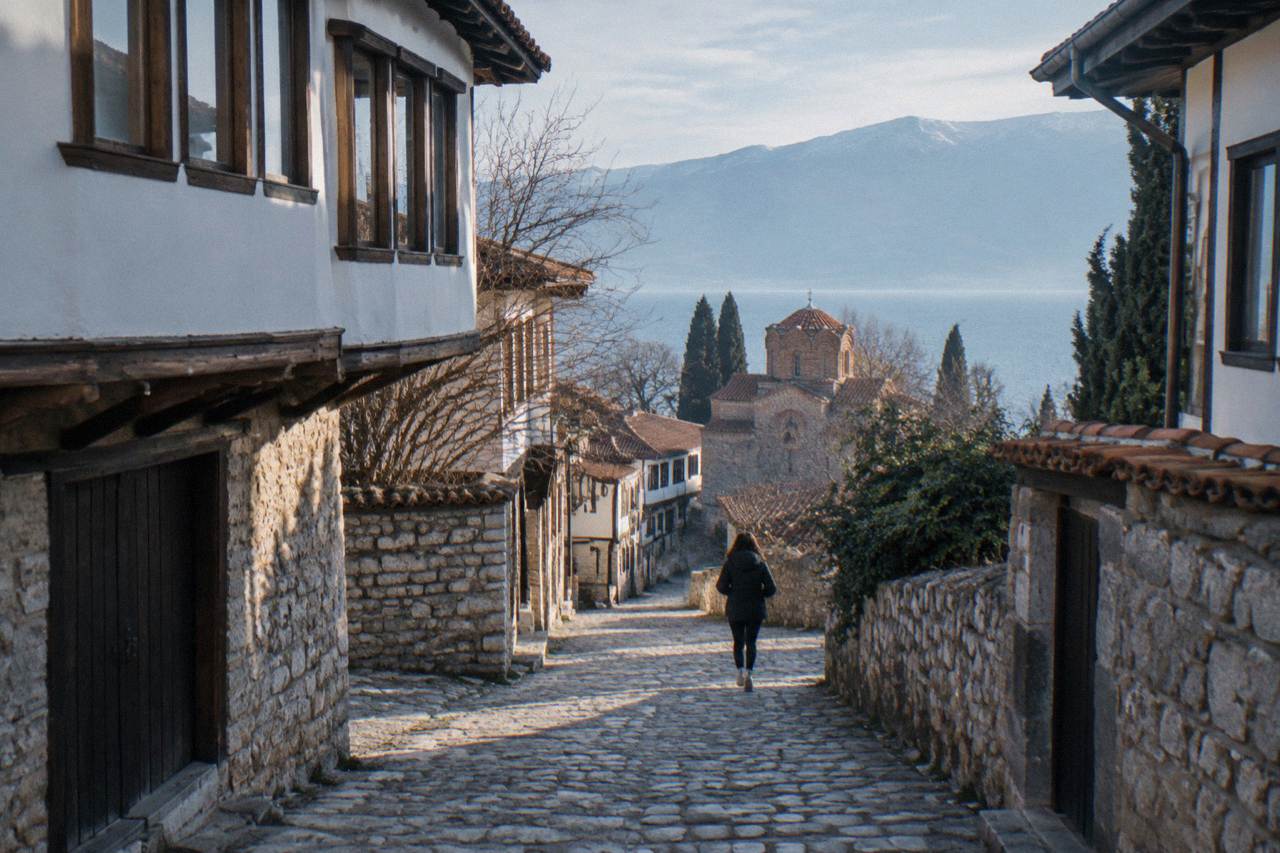
No visa is needed for a stay of up to 90 days in any 180-day period by visa-free nationals, according to the North Macedonian foreign ministry's own entry information. Citizens of the United Kingdom may visit for up to 3 months without a visa, per UK travel guidance, and holders of a valid multiple-entry UK, US or Canadian visa, or a Schengen residence permit, may stay up to 15 days. Only stays outside these categories require a visa application.
That single paragraph covers the overwhelming majority of leisure trips to Ohrid. A British family staying a week on the lake shore, a German couple combining Ohrid with a few days in Skopje, an American spending a long weekend walking the old town lanes: none of them files a visa application. The 90-day allowance is measured across a rolling 180-day window, so it also covers the rare traveller who enters, leaves for Albania, and comes back within the same summer.
Two things follow from this that are easy to get wrong. First, North Macedonia is not in the Schengen area, so time spent in Ohrid does not consume a Schengen allowance, and time in Greece or Croatia does not count towards the North Macedonian 90 days. Second, the visa-free route is a border decision like any other: the officer at the crossing can still ask to see your documents, which is why the section below on passports and proof of travel matters even for a visa-free trip. For a fuller rundown of entry formalities, the site's dedicated page on North Macedonia visa and entry rules goes deeper than this article can.
Who Can Enter Ohrid Visa-Free, And For How Long?
Visa-free foreign nationals may stay up to 90 days in any 180-day period, per the foreign ministry's published entry rules. UK visitors may stay up to 3 months. A separate, shorter allowance of up to 15 days applies to holders of a valid multiple-entry UK, US or Canadian visa or a Schengen residence permit. Anyone outside these groups applies for a visa before travel through a Macedonian embassy or consulate.
The structure of the rules matters more than the headline. There are, in effect, three doors. The widest is full visa-free entry with the 90-in-180 allowance. A middle door serves nationals who hold certain other countries' visas or residence permits, capped at 15 days. The third door is the conventional visa application, filed in advance at a Macedonian diplomatic mission, and it is the only route for nationalities outside the first two groups.
The 180-day window is rolling, not calendar-based. If you arrive on 1 June, the clock does not reset on 1 September; the border counts backwards from each new entry. For a normal holiday this changes nothing, but for a summer of hopping between Ohrid, Albania and Greece it is the difference between a smooth re-entry and a refusal at the window.
The allowance is also generous relative to the size of the destination. Ohrid rewards three or four unhurried days rather than three months, and the site's answer to how many days you need in Ohrid maps the old town, the lake shore and St Naum onto a realistic itinerary. Nobody should feel pressed to burn the full 90.
What Documents Do You Need At The Border For Ohrid?
UK guidance states your passport's expiry date must be at least 90 days after the date you arrive in North Macedonia, and visitors must register with the local police within 48 hours of arrival, a task hotels normally complete for their guests. Proof of onward travel and accommodation may be requested at entry, so carrying booking confirmations is the practical standard. No visa document is needed for visa-free stays.
The passport rule deserves attention because it is stricter than many travellers assume. "Valid for the duration of your trip" is not the test here: the expiry date must fall at least 90 days after your arrival date, per the UK Foreign Office's entry requirements page for North Macedonia. A passport with six weeks left on it fails that test for a holiday starting tomorrow. Check the date before booking flights, not at the airport.
Registration is the other formality that surprises people. Everyone is expected to register with the local police within 48 hours of arrival, and in practice the hotel does it as part of check-in, so a guest in an Ohrid guesthouse does nothing at all. It matters mainly for people staying in private accommodation, who should ask their host to handle it. Keep the registration slip you are given, because it is the document the border officer may ask to see on the way out.
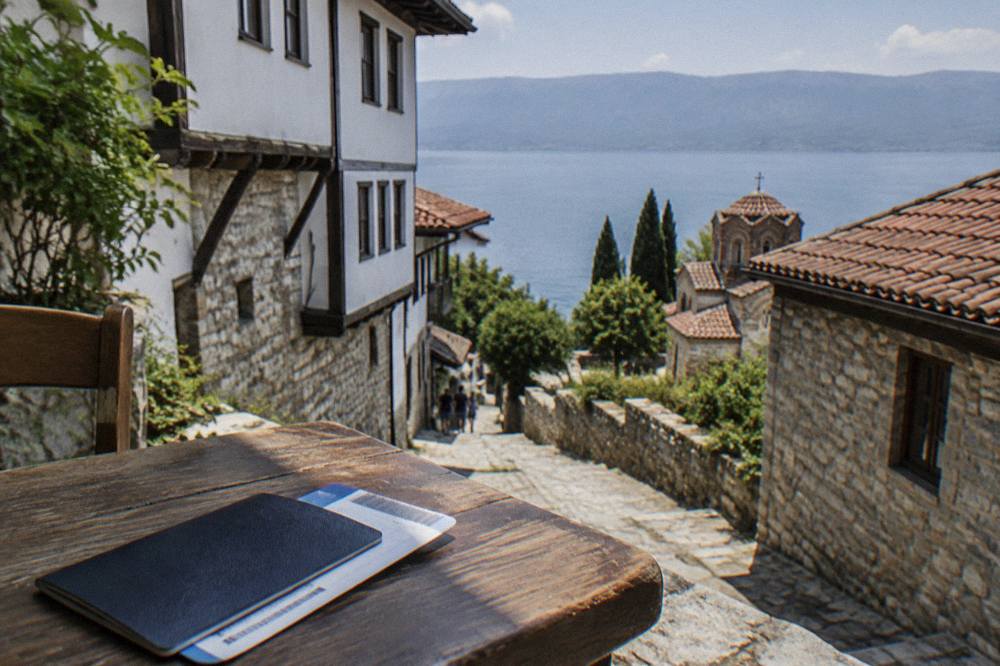
Beyond that, the border works on ordinary travel documents: the passport itself, evidence of where you are staying, and a ticket or reservation showing you intend to leave. Officers at a small crossing such as the one near St Naum, roughly 4 km from the monastery, see leisure traffic all summer and the process is routine. If your plans cross into Albania, the site's guide to getting from Ohrid to Tirana covers the crossing options, and the run out to the monastery itself is covered in how to get from Ohrid to St Naum.
Do UK, EU, US And Canadian Citizens Need A Visa For Ohrid?
UK citizens do not need a visa for visits of up to 3 months, EU citizens travel visa-free under the standard 90-days-in-180 allowance, and US and Canadian citizens enter visa-free under the same allowance, per the foreign ministry's entry information. None of these groups needs a visa application, an authorisation or a pre-registration for a normal holiday in Ohrid.
The UK figure differs slightly from the general one, and the difference is in the wording rather than the reality. UK guidance phrases its allowance as "up to 3 months", while the foreign ministry's general rule says 90 days in any 180. For any holiday measured in days rather than months, the two amount to the same thing, and no British visitor planning a week by the lake needs to think about the distinction.
North Macedonia is not in the EU, which is worth saying plainly because the map invites confusion. There is no EU ID-card freedom here in the style of Schengen neighbours: bring a passport. The country is also outside the euro, and prices in Ohrid are paid in denars, a subject the site covers in what currency is used in Ohrid, with euros commonly quoted for tours and transfers but not legal tender on the ground.
A table keeps the three main groups straight:
| Nationality or document held | Visa needed? | Maximum stay | Source of the rule |
|---|---|---|---|
| EU and other visa-free nationals | No | 90 days in any 180-day period | Foreign ministry entry information |
| UK citizens | No | Up to 3 months | UK travel guidance for North Macedonia |
| US and Canadian citizens | No | 90 days in any 180-day period | Foreign ministry entry information |
| Holders of a valid multiple-entry UK, US or Canadian visa, or a Schengen residence permit | No | Up to 15 days | Foreign ministry entry information |
| All other nationalities | Yes, in advance | As set by the visa | Macedonian embassy or consulate |
What Should You Know About The Border Crossings Around Ohrid?
Ohrid's nearest airport is about 10 km from the centre, and road arrivals reach the city from Skopje by bus in about 3 hours, or from Tirana in about 3 to 3.5 hours including the border. The Sveti Naum and Tushemisht crossing with Albania sits about 4 km from St Naum monastery, and the foreign ministry's 90-day allowance applies at every one of these entry points alike.
The crossings around the lake are small and human-scaled. The one beside St Naum, which links to Tushemisht on the Albanian side, is close enough to the monastery that travellers walk between the two posts, and it is a standard route for a day trip to Pogradec. Arriving by air means Ohrid's own airport on the E65, reached by taxi for roughly 600 to 800 denars into the centre, per figures reported by transfer guides. Arriving overland from the capital usually means the Skopje bus, with fares of about 850 to 950 denars one way.
What the border officer will want is the same at each point: the passport valid past the 90-day rule, and, if asked, evidence of your stay. Nothing in the entry rules changes by land, sea-lane or air. Travellers weighing the two capitals against each other can compare the details in the site's pages on the bus from Skopje to Ohrid and the taxi alternative in how much a taxi costs from Skopje to Ohrid.
Is North Macedonia In The EU Or The Schengen Area?
No, North Macedonia is in neither the EU nor the Schengen area, which means a trip to Ohrid is always a separate entry from any Schengen travel either side of it. Bulgaria and Romania became full Schengen members, land borders included, on 1 January 2025, per the European Commission, but North Macedonia remains outside. Schengen time-counting rules do not apply to days spent in Ohrid.
The practical consequences run in the visitor's favour. Days in Ohrid do not eat into a Schengen 90-day allowance, so a European summer that strings together Greece, Ohrid and Croatia again leaves each country's clock ticking separately. There is a flip side: every re-entry into North Macedonia is a fresh border check, with passports stamped or scanned, so keep the entry documentation for the whole stay.
The currency consequence is just as real. The denar is the money of the country, pegged in practice to the euro, but a wallet of euro banknotes is not a wallet of legal tender here. Cash machines in Ohrid dispense denars, and museum tickets, church entries and boat fares are quoted in MKD. The deeper money questions, from exchange to card use, sit on the site's North Macedonia visa and entry guide and its currency companion page.
For anyone pairing the lake with beach resorts further afield, the non-Schengen status also shapes timings: crossings can take longer in August, and building an hour of slack into any border day is ordinary planning, not pessimism.
Can You Combine Ohrid With Albania On One Trip?
Yes, and no visa is needed for either side by visa-free nationals, so a single trip can cross from Ohrid to Pogradec or Tirana and back using only a passport, with each re-entry to North Macedonia covered by the same 90-days-in-180 allowance. The Sveti Naum and Tushemisht crossing near the monastery is the closest link, about 4 km from St Naum.
The geography makes the combination easy. The monastery sits a short drive from the Albanian border, Pogradec lies just beyond it on the same lake, and buses and minibuses run the Ohrid to Tirana route in about 3 to 3.5 hours for roughly 15 to 20 euros, crossing at the Qafe Thane or Kjafasan point. Day trips that start in Tirana also run in the other direction, bringing visitors across for Ohrid and St Naum in one organised sweep, and a guided excursion from the capital is a sensible format for anyone whose main base is Albania.
Two cautions apply. Each crossing is a full border check, so carry the passport rather than assuming a casual wave-through, and the 180-day window means a summer of repeated crossings should still be counted. Otherwise the two-country lake trip is one of the more rewarding ways to use Ohrid's visa-free status, and the site's answer to whether Ohrid is safe for tourists addresses the comfort questions that usually follow.
What Else Should Visa-Free Visitors Know Before Flying To Ohrid?
Emergency numbers in North Macedonia are ambulance 194, police 192 and roadside assistance 196, per UK travel guidance, and hotels complete the police registration required within 48 hours of arrival. Beyond a passport expiring at least 90 days after arrival, no special document separates a visa-free visitor to Ohrid from any other tourist, and the denar, not the euro, is the currency on the ground.
Want peace of mind on medical costs and cancellations before you go? Book a travel insurance here.
A few practical notes round out the picture. The old town climbs from the lake to the fortress and its lanes are walked rather than driven, which matters for luggage more than for legs: pack for cobbles. Domestic travel is unhurried and inexpensive by Western European standards, and the site's answer to whether Ohrid is cheap or expensive puts the daily costs in context. If anything in the entry rules is unusual for your nationality, the Macedonian foreign ministry's entry page is the reference that decides it, and checking it before booking flights costs nothing.
Visitors arriving for the first time often book a guided walk to anchor the geography, and the half-day city tour of the old town serves exactly that purpose; Check availability on the operator's live listing if that suits your first day.
Common Questions About North Macedonia Visas
Do I Need A Visa For North Macedonia?
No, not if you are a visa-free national: the foreign ministry's rules allow a stay of up to 90 days in any 180-day period. UK citizens may stay up to 3 months, and holders of a valid multiple-entry UK, US or Canadian visa or a Schengen residence permit may stay up to 15 days.
How Long Can I Stay In Ohrid Without A Visa?
Visa-free nationals may stay up to 90 days in any rolling 180-day period, and UK visitors up to 3 months. The window is rolling, so repeated entries within one summer all draw on the same allowance.
Is North Macedonia In The Schengen Area?
No. North Macedonia is outside both the EU and Schengen, so time in Ohrid does not count against a Schengen allowance. Bulgaria and Romania became full Schengen members on 1 January 2025, but North Macedonia remains outside.
What Passport Validity Does North Macedonia Require?
UK guidance states your passport's expiry date must be at least 90 days after the date you arrive. This is stricter than merely being valid for the trip, so check the date before booking travel.
Do I Need To Register With The Police In Ohrid?
Yes, within 48 hours of arrival, but hotels normally complete the registration for their guests at check-in. If you stay in private accommodation, ask your host to register you and keep the slip.
Can I Cross To Albania And Back On The Same Trip?
Yes. The Sveti Naum and Tushemisht crossing sits about 4 km from St Naum monastery, and visa-free nationals need only a passport for both sides. Each re-entry to North Macedonia is a fresh border check within the same 90-day allowance.
Entry to Ohrid is, for the great majority of visitors, the simplest part of the trip: a passport with three months of validity beyond arrival, a booking confirmation in your email, and a hotel that files the registration on your first evening. The lake, the churches and the fortress ask for rather more of your time than the border ever will.