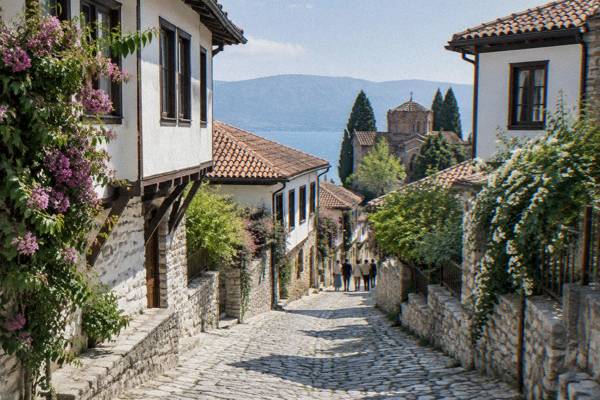
How Many Days Do You Need In Ohrid?
A practical length-of-stay answer for Ohrid, North Macedonia: what one, two, three and five days each cover, with sight costs, day trips and seasonal timing.
Ohrid, a lakeside town in North Macedonia on a freshwater mountain lake sitting at about 693 m above sea level, rewards a slower itinerary than its size suggests. The old town climbs from the lake shore to Samuel's Fortress on foot, the lakeshore villages spread east and south, and the region is a UNESCO mixed heritage site inscribed in 1979 and 1980. The honest answer to a length-of-stay question is three days for the town itself and five if the plan includes St Naum, Galicica National Park and Struga, and this page from the Ohrid Travel Guide breaks each option down with the actual ticket prices and travel times that shape the decision.
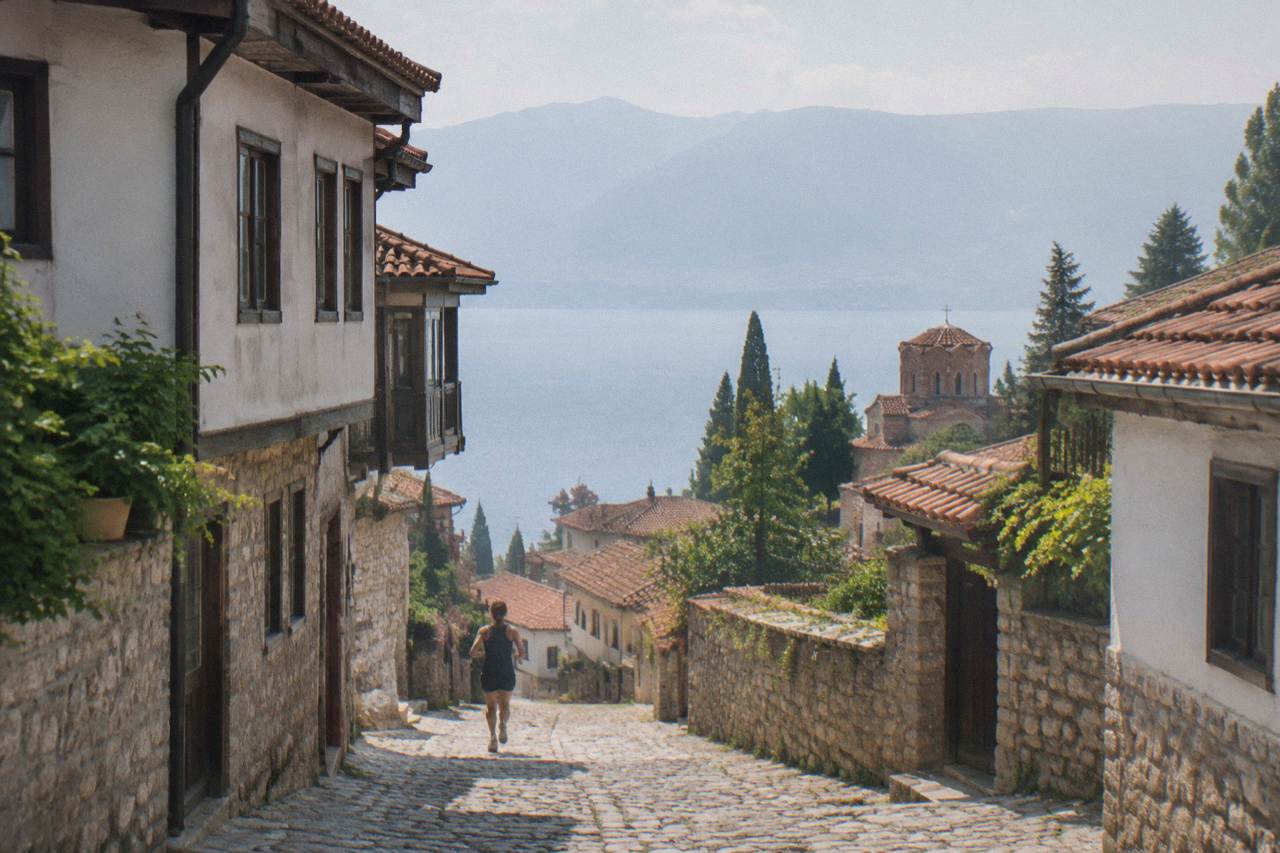
Three days is the practical answer for Ohrid itself: one day for the old town core of St Sophia, Plaosnik and Samuel's Fortress, one for the lake and the eastern shore including the Bay of Bones, and one flexible day for St Naum, a boat cruise or both. Two days works for the town core alone, and five days fits travellers adding Galicica National Park, Struga or an Albanian border crossing.
The reason three days is the floor rather than two is the geography of the region rather than the size of the town. The museum sites run on a fixed schedule: the Robev Family House, the Bay of Bones and the Icon Gallery all keep a winter schedule from 1 October to 30 April and a summer schedule from 1 May to 30 September, and each is closed on Mondays. A one-day stumble into a Monday removes three of the town's key indoor sights at a stroke, and the lake's main full-day boat cruise to St Naum, run by Boat Armada from the port, takes seven hours on its own. Squeezing both the old town and the lake into a single day means choosing between them by lunchtime.
The broader planning question, whether Ohrid is worth the trip at all, resolves quickly once the itinerary math is done. A town that needs three days for its core and rewards five is not a stopover. It is a destination.
What Can You Cover In One Or Two Days In Ohrid?
One day covers the compact old town walk: St Sophia, the Ancient Theatre, Samuel's Fortress, Plaosnik and the descent to St John at Kaneo, plus an evening on the lakefront. Two days adds a boat cruise and either the Icon Gallery and Robev Family House interiors or the Bay of Bones at Peshtani, reachable on the same eastern shore road as several beaches.
To cover the old town lanes with a guide, book a half-day city tour here.
The museum institute's ticket prices make the two-day version cheap to execute. Entry to the institute's sites, including the Robev Family House and the Museum on Water at the Bay of Bones, is 150 MKD for foreign visitors and 120 MKD for domestic visitors, with a reported child and student rate of 60 MKD. Those figures come from the museum institute's own website. With the walking distances inside the old town measured in minutes rather than hours, the cost of a second day is mostly accommodation, not tickets.
A single day, by contrast, forces a hard choice between the town and the lake. The old town lanes are on foot, the fortress sits at the top of the climb, and the panoramic boat tours of the old town shore exist precisely for travellers with only a day. The two-day Ohrid itinerary exists for exactly this case, and it is a real itinerary rather than a compromise, provided the Monday closure rule is respected.
Is Three Days The Right Amount Of Time In Ohrid?
Three days is the standard fit for Ohrid because it separates the three things that compete for the same daylight: the old town sights, the lake and the eastern shore, and St Naum at the southern end of the lake. Day one walks the town, day two takes the full-day boat cruise or the shore road to the Bay of Bones, and day three goes to St Naum and the Crn Drim springs.
The third day earns its place. St Naum monastery entry is listed at 150 MKD by the cruise operator that serves it, and a rowboat ride through the springs where the Crn Drim emerges costs about 5 EUR. The monastery sits about 4 km from the Tushemisht border crossing into Albania, which is open around the clock for passenger vehicles and pedestrians, so the third day can also absorb a short cross-border detour. The three-day Ohrid itinerary sequences all of this without the Monday trap.
Weather barely constrains a three-day plan in the main season. The ERA5 reanalysis for Ohrid, modelled 1991-2020 normals, puts July at a mean daily high of 27.1 C and August at 27.6 C, with August rainfall at just 32.9 mm across the month. Rain totals climb to 90.4 mm in November and 92.6 mm in December, which is when the flexible third day starts doing heavier lifting indoors at the museum sites.
When Do Five Days In Ohrid Make Sense?
Five days makes sense when the itinerary grows beyond the lake itself: Galicica National Park between Lake Ohrid and Lake Prespa, the town of Struga on the Black Drim, the villages of the eastern shore such as Trpejca and Ljubanista, and a slower rhythm that includes swimming, since the modelled lake surface temperature reaches about 23.5 C in August.
Galicica is the main reason to stretch to five. The park, North Macedonia's second national park, established in 1958, covers 22,750 ha between the two lakes, with Magaro peak at 2,254 m, and it charges 250 MKD per vehicle with no per-passenger fee, or 100 MKD for someone entering on foot from the Ohrid-side gate. The park is open year-round, but heavy snow can close the main road, typically from January to March, so a five-day winter plan should treat Galicica as conditional. The five-day Ohrid itinerary allocates the extra days to the park and the shore villages.
Struga, reached by local bus for a fare reported at 100 to 150 MKD in older guides, sits where the Black Drim leaves the lake. A five-day plan can pair a Prespa side with a Struga evening without rushing either.
How Do Day Trips Change How Many Days You Need In Ohrid?
Day trips lengthen an Ohrid stay only when they start from Ohrid. Trips to St Naum, Struga, Galicica and Pogradec across the border fit inside a five-day base, while Skopje, about 170 km away by road with a bus journey of about 3 hours, and Tirana, about 3 to 3.5 hours including the border, work better as separate legs of a route than as daily returns.
The border logistics matter more than the distances. North Macedonia is not in the EU or in Schengen, so every crossing is a real border check. Travellers arriving in the country should also note the entry rules: visa-free nationals may stay up to 90 days in any 180-day period, UK visitors up to 3 months with a passport valid at least 90 days after arrival, and registration with the local police within 48 hours is handled by hotels, as the UK Foreign Office sets out. The visa and entry details are worth a read before a two-country itinerary is locked in.
For anyone routing through Albania, the St Naum day trip that starts in Tirana or Durres is the cleanest way to see Ohrid and the monastery in one guided sweep, and its own listing carries the current price, times and inclusions: Check availability. It starts where its listing says it starts, in Tirana or Durres, and it is a Tirana departure rather than an Ohrid one.
What Does The Season Do To The Length Of An Ohrid Stay?
The season changes how much a given number of days delivers rather than the number itself: from about May to October the boats to St Naum run and the full seven-hour cruise is possible, while from November to March the museums shorten to their winter hours of 09:00 to 15:30 and the modelled lake surface temperature falls from about 14.7 C in October to about 6.0 C in December, ending the swimming.
The summer schedule is the efficient one. From 1 May to 30 September the Robev Family House runs two shifts, 09:00 to 15:30 and 13:30 to 20:00, and the Bay of Bones extends to 16:30, which lets a short-stay traveller stack an evening museum visit after a day on the water. The 66th Ohrid Summer Festival opened on 12 July 2026 at the Ancient Theatre and ran toward its traditional 20 August close, and the Ohrid Water Festival in August 2026 included the 25 km swimming marathon from St Naum to Ohrid harbour on 22 August. A three-day stay in July or August can catch a performance and still tour the town. The summer in Ohrid guide covers the peak-season trade-offs, and the fuller length-of-stay breakdown adds month-by-month detail.
Winter shortens the useful day rather than the trip. ERA5 modelled normals give January a mean daily high of 5.0 C and a mean daily low of -0.8 C, with 76.5 mm of rain, and daylight-ending museum hours at 15:30 mean the afternoons belong to the lakefront rather than the galleries. A winter visit needs one fewer day for the lake and one more for slow meals and the indoor sights, which nets out to the same three days.
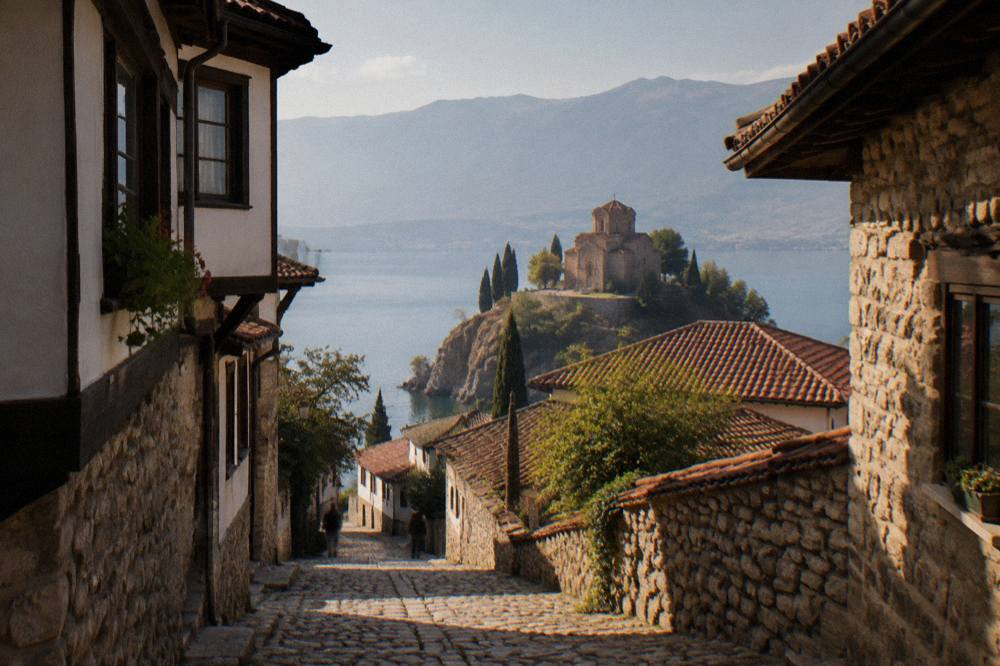
How Do Costs Compare Across One, Three And Five Days In Ohrid?
Sightseeing costs scale gently with days in Ohrid: the museum institute sites charge 150 MKD foreign entry each, St Naum monastery is listed at 150 MKD, Galicica charges 250 MKD per vehicle, and the full-day lake cruise costs from 1,200 den per adult, so a five-day sightseeing budget in local costs runs to a few thousand denars before food and lodging, which the entry fees barely move.
| Length of stay | Old town core | Lake time | Day trips | Best fit |
|---|---|---|---|---|
| One day | St Sophia, Ancient Theatre, fortress walk, Kaneo | One-hour panoramic cruise only | None | Stopover on a Skopje-Tirana route |
| Two days | Full old town plus museum interiors | Eastern shore and Bay of Bones (150 MKD entry) | None | First visit, tight schedule |
| Three days | Full old town at walking pace | Full-day St Naum cruise, from 1,200 den adult | St Naum or the Tushemisht border | The standard first visit |
| Five days | Everything plus galleries in depth | Swimming season, from July, modelled about 23.5 C in August | Galicica (250 MKD per vehicle), Struga, Prespa, Pogradec | Region-focused trip |
The table's lesson is that the marginal day in Ohrid is cheap in tickets and expensive only in time. Accommodation and food dominate the budget at every length, and the questions of what currency to carry and where to base yourself matter more to the total than any entry fee on this page.
Common Questions About Days In Ohrid
How many days do you need in Ohrid?
Three days for the town, the lake and St Naum; five days if Galicica National Park, Struga or an Albania crossing are on the list.
Can you see Ohrid in one day?
One day covers the old town walk from St Sophia up to Samuel's Fortress and down to St John at Kaneo, plus a short panoramic boat tour, but the Bay of Bones and St Naum will not fit.
Is Ohrid worth five days?
Yes, when the extra days go to Galicica National Park, the eastern shore villages, Struga and the Tushemisht border into Albania; the town itself is comfortably done in three.
What is closed on Mondays in Ohrid?
The museum institute sites, including the Robev Family House, the Bay of Bones and the Icon Gallery, are closed on Mondays on both their winter and summer schedules.
Do the boats to St Naum run all year?
The boats run roughly May to October with a reduced winter service; road access to St Naum remains possible year-round, and the monastery sits about 4 km from the Tushemisht border crossing.
Does the season change how many days you need?
It changes what the days deliver: summer schedules run to 20:00 at the Robev Family House and the lake is warm enough for swimming from July, while winter museum hours end at 15:30 and Galicica's road can close in snow, typically January to March.
Three days is the answer that fits the town, and five is the answer that fits the region; anything shorter is a well-chosen sample rather than a mistake, provided the Monday closures and the boat season are checked against the calendar first.