How Do I Get From Ohrid To Tirana?
How to travel from Ohrid in North Macedonia to Tirana in Albania by road: bus and shared minibus options, border crossings and visa rules.
Ohrid, in North Macedonia, and Tirana, in Albania's capital region, sit about 86 km apart as a straight line, and every practical way of covering that distance runs by road, across one international border. There is no passenger train between the two cities and no direct flight. The Ohrid Travel Guide sets out below what the available sources actually support on buses, border crossings and entry rules, and where the honest answer is that schedules change and should be checked before travel. For the wider picture of the reverse run, see the companion page on getting from Tirana to Ohrid.
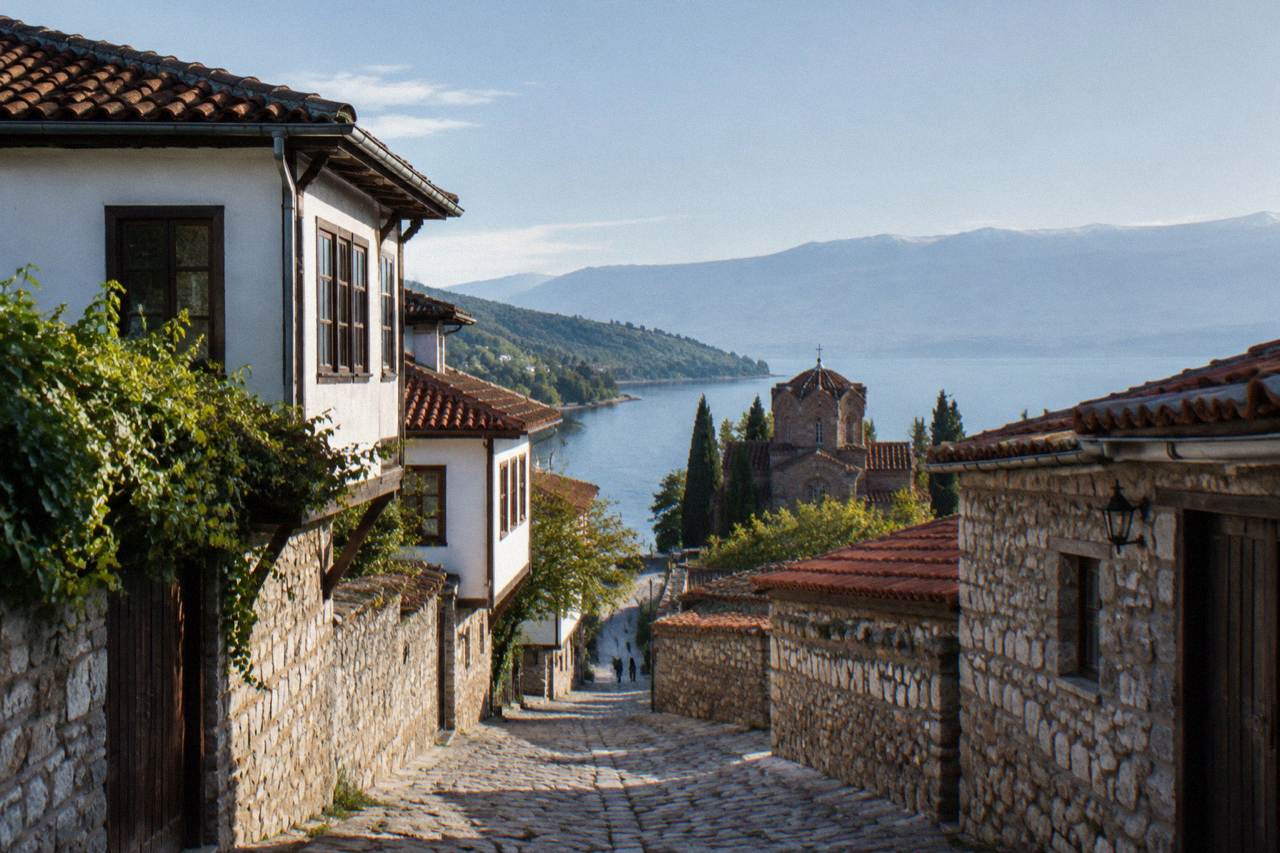
You travel by road, usually on a scheduled bus or shared minibus that crosses the land border between North Macedonia and Albania, and there is no passenger train and no direct flight on this route. The straight-line distance between Ohrid and Tirana is about 86 km, and the crossing most services use sits on the Struga side of the lake. Check current schedules before you travel, because frequencies and fares are not published in any stable form.
The route leaves Ohrid heading north, passes Struga about 12 km away on the far side of Lake Ohrid's northern end, and then reaches the Albanian border before descending toward Tirana. That is the whole geography of the trip: one lake, one border, one capital. Nothing about it involves the sea, a ferry or a rail line, because none of those exist on this corridor.
Two practical decisions shape the day. First, whether to take a scheduled bus or shared minibus, which is the standard public option, or to arrange a private transfer, which costs more and can be booked around your own times. Second, which border crossing you go through, because there is more than one, and a crossing further south pairs naturally with a stop at St Naum on the Macedonian shore. The sections below take each of those in turn.
To skip the schedule and set your own times, book a private transfer here.
Can You Take A Bus From Ohrid To Tirana?
Yes, shared minibuses and direct services between Ohrid and Tirana are the standard way to make this trip, typically running several times a day and crossing at the Qafe Thane or Kjafasan border posts near Struga, according to route guides for the corridor. No official timetable, fare or frequency is published in a stable form, so check current schedules with the operator or station before you travel.
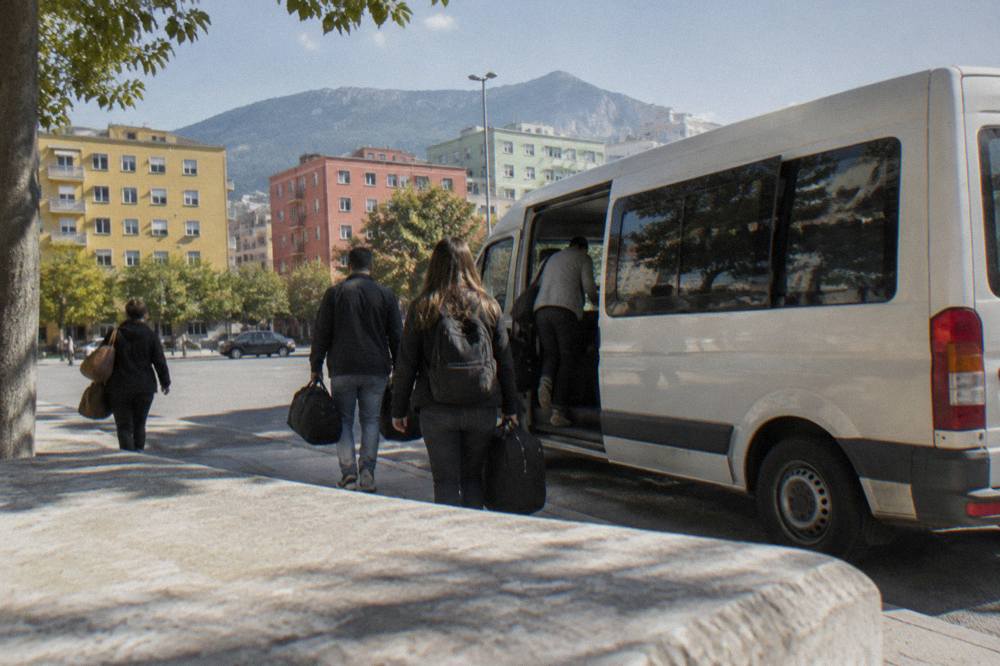
The mechanics are simple even when the detail is thin. Services on this corridor are described in route guides as running roughly five to seven times a day in the high season, taking three to three and a half hours including the border, at fares reported in the region of 15 to 20 euros one way. Those are reported planning figures, not a published tariff, and the honest instruction is to treat them as a starting point and confirm at the bus station or with the operator. Shared Albanian minibuses, the furgons, operate on this corridor alongside scheduled coaches, and the reported pattern is that more of them leave Tirana than Ohrid, so travellers heading north may find fewer departures than travellers heading south.
Departures from the Ohrid side are normally handled through the Ohrid bus station, with the border formalities happening on board the vehicle: everyone gets out at the North Macedonia exit post and again at the Albanian entry post, and the bus waits. Bring your passport in hand luggage, not the hold. Luggage is usually stowed in the hold and sometimes carries a small extra charge to the driver; that is a corridor custom rather than a published rule, so expect it without counting on a figure.
For travellers who prefer everything arranged in advance, a guided day-trip product is an alternative to the public bus, with the important caveat that it starts on the Albanian side. The St Naum Day Tour from Tirana departs from Tirana or Durres and covers Ohrid and the St Naum monastery, which makes it a way of seeing both ends of this corridor in one booked day rather than a point-to-point transfer. It has its own page on this site, with live pricing and availability on the operator's listing: Check availability. The same product family is covered on the site's page about Tirana as a day trip from Ohrid.
Is There A Train From Ohrid To Tirana?
No, there is no passenger train between Ohrid and Tirana, and no passenger rail service reaches Ohrid at all. North Macedonia has no operational passenger line into the town, and Albania's passenger network does not connect to Ohrid either, so the rail option does not exist in any form on this route. Anyone who finds a rail suggestion on an older site or forum is reading outdated or mistaken information.
This is a point worth settling plainly, because it is one of the most common wrong turns in Balkan trip planning. The question gets asked so often that this site keeps a dedicated page on whether there is a train from Tirana to Ohrid, and the answer there is the same one that applies in this direction. Skopje, the North Macedonian capital, is the rail hub for the country, but even from Skopje you cannot reach Ohrid by train, only by road.
The consequence for planning is that road and air are the only categories of option. There is no direct flight between Ohrid and Tirana either, and no domestic flight from Ohrid to anywhere in North Macedonia, so the road crossing is not one option among several: it is the way to do this trip. Private transfers operate on the corridor and can be booked in advance at prices well above the shared services; a figure in the region of 130 euros or more is reported for long private transfers in this part of the country, but that belongs to the Skopje corridor's reports rather than an established Ohrid to Tirana tariff, so treat any private quote as something to agree before setting off.
Which Border Crossing Does The Ohrid To Tirana Route Use?
Scheduled services between Ohrid and Tirana use the crossings on the north side of the lake, at Qafe Thane and Kjafasan near Struga, while the Sveti Naum and Tushemisht crossing at the lake's southern end is reported open around the clock and sits about 4 km from St Naum monastery. The crossing you use matters for timing, for onward plans and for any detour to St Naum or Pogradec.
| Crossing | Where It Sits | What The Sources Say |
|---|---|---|
| Qafe Thane / Kjafasan | North of Struga, on the main Ohrid to Tirana road | The main route for scheduled buses and minibuses on this corridor |
| Sveti Naum / Tushemisht | South end of Lake Ohrid, about 4 km from St Naum monastery | Reported open 24/7 for passenger vehicles and pedestrians |
| On foot at Sveti Naum | Between the two border posts | A walk of roughly 1 to 1.5 km between posts is described on the crossing, with Pogradec a short drive beyond on the Albanian side |
The southern crossing deserves a special note because it turns a border transit into a sightseeing day. St Naum monastery stands by the Crn Drim springs at the lake's southern shore, about 4 km from the Tushemisht border post, and crossing there on foot is a described, practical option for pedestrians, with the walk between the two posts taking perhaps 45 minutes. This is the corridor covered in detail on the site's page about getting from Ohrid to St Naum.
Border crossing times vary, so build slack into any onward plan rather than trusting a fixed duration. Summer weekends on this corridor carry the heaviest traffic, and the crossing at St Naum and Tushemisht handles both tourist cars and pedestrians on a small physical footprint. North Macedonia is not in the European Union and not in Schengen, so this is a full external border check in both directions, with passport stamps and document checks each way.
Do You Need A Visa To Travel From Ohrid To Tirana?
Visa-free nationals of countries including the United States, the United Kingdom and the European Union may stay up to 90 days in any 180-day period in North Macedonia, and UK visitors may stay up to 3 months in Albania's neighbour without a visa, with passport expiry at least 90 days after the date of arrival. Holders of a valid multiple-entry UK, US or Canadian visa or a Schengen residence permit may enter North Macedonia for up to 15 days.
Albania and North Macedonia set their own entry rules, and this land border applies both sets in a single stop. Two practical rules from the UK Foreign Office's travel advice apply to the North Macedonian side and are easy to miss: visitors must register with the local police within 48 hours of arrival, and a hotel normally completes that registration for its guests. Anyone staying in private accommodation should ask the host to handle it or do it themselves within the 48-hour window. The full entry picture, including the rules for other nationalities, sits on this site's page on whether you need a visa for North Macedonia.
Currency is the other practical border fact. North Macedonia uses the denar, which is not legal tender anywhere in Albania, and Albania uses the lek, which is not legal tender in North Macedonia. Euros are commonly quoted for tours and transfers in the region and are sometimes accepted informally in tourist areas, but the denar itself is pegged in practice to the euro, and neither country's cash works in the other's shops. Carry a small amount of each currency if you are crossing and returning the same day, and withdraw locally rather than converting on the roadside.
How Should You Plan The Day Of Travel?
Leave Ohrid in the morning and plan to reach Tirana by early afternoon, border check included. Confirm your departure the day before at the Ohrid bus station or with the operator, arrive early enough to buy a ticket and stow luggage, and keep your passport in hand luggage for the two border stops. Avoid tight onward connections, since neither the departure time nor the border queue is guaranteed by any published schedule.
A sensible sequence looks like this. Check the current departures the day before, either at the Ohrid bus station or with the operator, and note that seasonal services on this corridor thin out outside the summer months. Arrive early enough to buy a ticket and stow luggage. Keep the passport accessible for the two border stops. On the Albanian side, agree any onward taxi fare in Tirana before getting in, which is standard practice in the region. If the return leg is on a different day, plan it the same way: confirm, do not assume, because the corridor's afternoon departures are the first thing to change out of season.
Travellers combining the trip with sightseeing have two good shapes for the day. The northern shape rides the direct bus to Tirana and spends the day there. The southern shape goes to St Naum first, about 4 km from the Tushemisht crossing, walks or rides across the border, and continues through Pogradec toward Tirana, trading schedule simplicity for the lake's southern shore. The itineraries page on the Skopje, Ohrid and Tirana route covers how the three cities chain together over several days.
Common Questions About Travel From Ohrid To Tirana
How Do I Get From Ohrid To Tirana?
By road, on a scheduled bus or shared minibus that crosses the land border between North Macedonia and Albania. The straight-line distance is about 86 km, there is no train and no direct flight, and current schedules should be checked with the operator or station before travel.
Is there a bus from Ohrid to Tirana?
Yes. Shared minibuses and direct services are the standard public option on this corridor, typically using the Qafe Thane or Kjafasan crossings north of Struga. Departures and fares change with the season, so confirm them before you travel.
Can you cross the border at St Naum?
Yes, the Sveti Naum and Tushemisht crossing at the southern end of the lake is reported open around the clock, about 4 km from St Naum monastery, and pedestrians can walk between the two border posts.
Do I need a visa for North Macedonia or Albania?
Visa-free nationals may stay up to 90 days in any 180-day period in North Macedonia, and UK visitors may stay up to 3 months. Visitors must register with the local police within 48 hours of arrival in North Macedonia, which a hotel normally does for its guests.
Can I use euros on the Ohrid to Tirana route?
Euros are commonly quoted for tours and transfers in the region, but the local currencies are the denar in North Macedonia and the lek in Albania, and neither country's cash is legal tender in the other. Withdraw locally for small purchases.