Is It Safe To Travel To North Macedonia Right Now?
Safety, entry rules, transport and 2026 practical changes for visitors to Ohrid and North Macedonia, reported from official sources.
Ohrid, a lakeside town in North Macedonia on Lake Ohrid at about 693 m above sea level, is open to visitors and the current official advice for the country sits at the lowest precaution level. The Ohrid Travel Guide reports here what government sources and primary listings actually say about safety, entry, transport and the practical rules that changed in Ohrid during 2026, so a decision to travel rests on published facts rather than impressions.
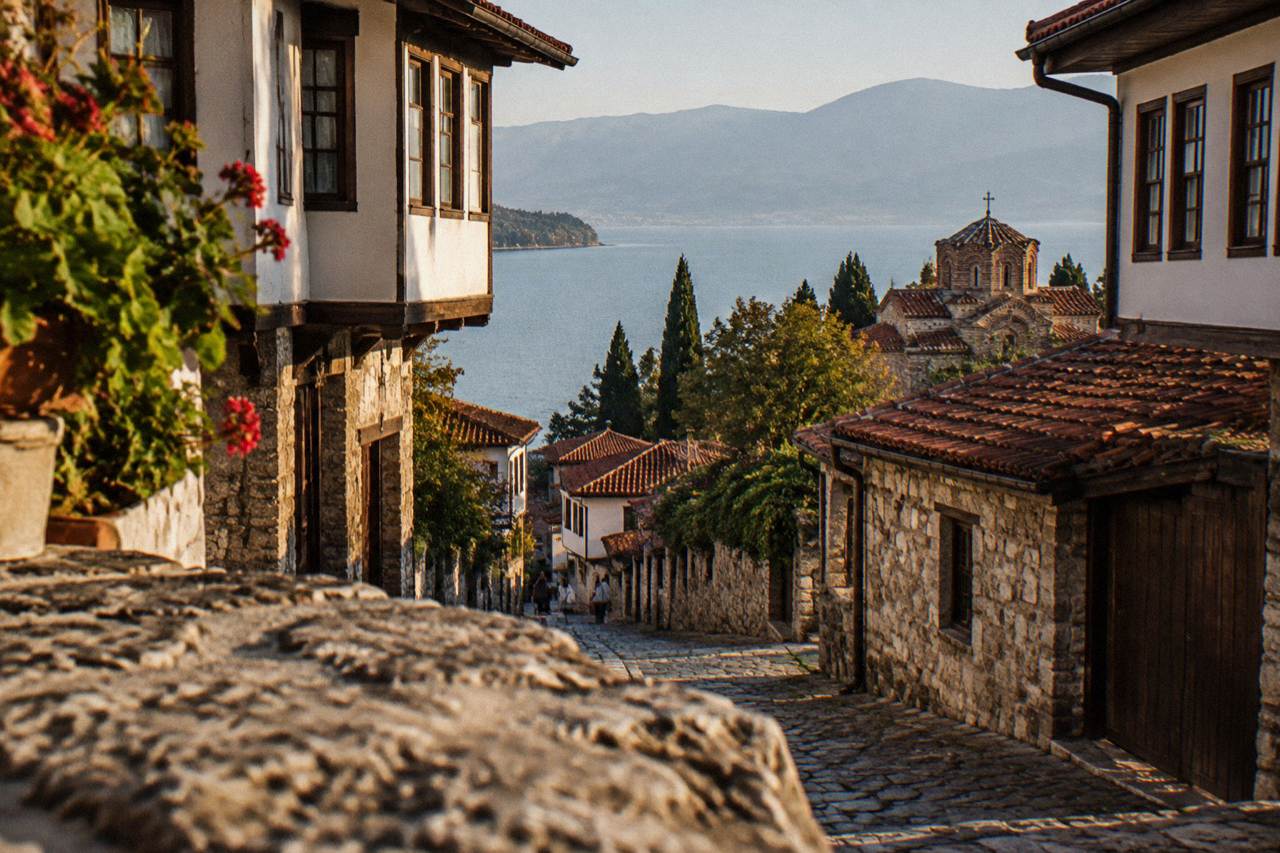
Yes, according to the current official advice, Ohrid and North Macedonia are safe to visit under normal travel precautions, with no government advisory against travel to the country. The United States State Department advisory is reported at Level 1, Exercise Normal Precautions, the lowest of its four levels, and the UK Foreign Office publishes standard travel advice for North Macedonia rather than a warning. Nothing in the current advice singles out Ohrid or the lake region for concern. That is the baseline for the country as a whole, and a visitor to Ohrid should also know the specific, dated practical facts, from entry rules and emergency numbers to the swimming-water results and street changes of 2026.
The usual caveats about any destination still apply in the sense that ordinary care with belongings and normal road caution are sensible everywhere. No crime statistic, scam list or incident figure for Ohrid appears in the published record available to this page, so none is stated. What can be reported plainly are the things a traveller can act on: the emergency numbers, the entry requirements, the state of the roads and the bathing-water results for the lake in the 2026 season.
For a broader look at the town itself, see Is Ohrid Safe For Tourists? and the Is Ohrid Safe? guide, which cover the same question at destination level.
What Official Safety Advice Applies To Ohrid?
The official guidance that applies to Ohrid is the nationwide advice for North Macedonia: the US advisory is reported at Level 1, Exercise Normal Precautions, the lowest level, and the UK Foreign Office maintains standard travel advice rather than advising against travel. The UK page is also the source for the practical safety numbers worth saving before arrival: ambulance 194, police 192 and roadside assistance 196. Those three numbers are the confirmed set, so store them rather than guessing at a general European equivalent.
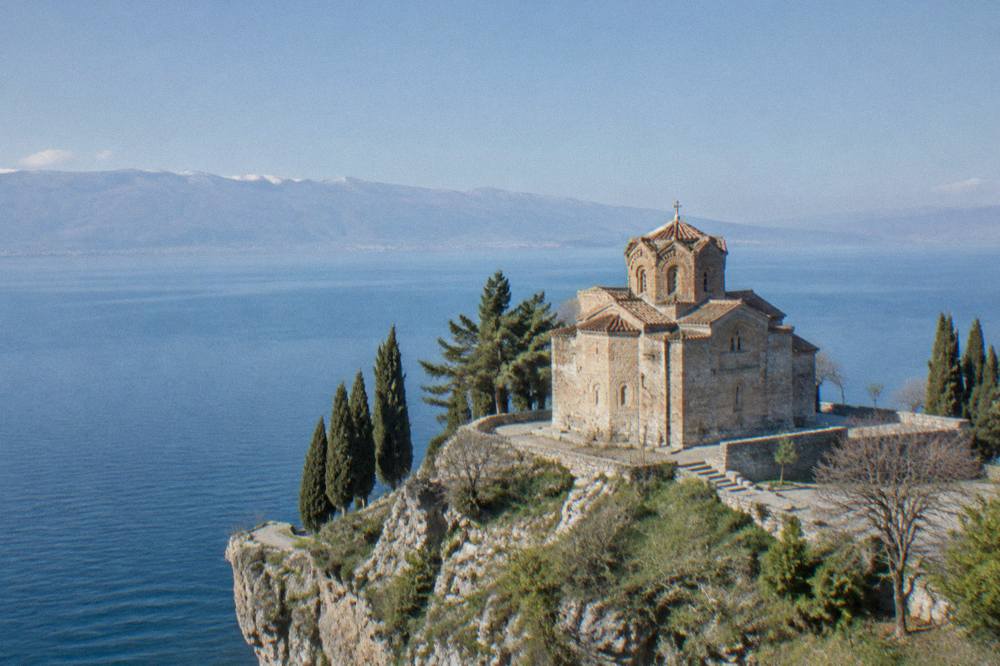
A small note on the wider region: North Macedonia is not in the European Union and not in Schengen, so the border regime is national rather than European. Bulgaria and Romania became full Schengen members, land borders included, on 1 January 2025, but crossing into North Macedonia itself always means a national border check. That matters for anyone combining Ohrid with a Balkan loop.
| Practical item | What applies in North Macedonia |
|---|---|
| US advisory level | Level 1, Exercise Normal Precautions (reported) |
| Ambulance | 194 |
| Police | 192 |
| Roadside assistance | 196 |
| EU / Schengen membership | Neither; national border checks apply |
| Visa-free stay | Up to 90 days in any 180-day period for visa-free nationals |
| Police registration | Within 48 hours of arrival; hotels do it for guests |
A good way to get oriented safely in a town of steep lanes is a guided walk, and the roster includes a shared small-group walk through the old town's lanes and landmarks: Check availability.
How Safe Is Swimming In Lake Ohrid In 2026?
The 2026 bathing-water results for Lake Ohrid, published from Institute of Public Health testing in May and June 2026, met standards at the tested points, with Class I physico-chemical results everywhere except Grashnica beach, which was rated Class III, and most microbiological samples rated Excellent. In plain terms, the lake's swimming water passed the tests at the monitored locations, with one named exception at Grashnica and poorer ratings reported at some individual points. The same reporting notes ongoing concerns about wastewater infrastructure, because parts of the shoreline between St Naum and Radozda remain unconnected to the collector system, so the picture is good at tested beaches but not problem-free everywhere.
The 2026 season also brought new navigation limits aimed at swimmer safety. Under a government decision announced by the Ministry of Transport on 2 June 2026, jet skis are banned on the lake between 1 July and 31 August from 11:00 to 19:00, and boats are restricted at night: from 3 June to 31 August between 21:00 and 05:00, and from 1 to 30 September between 20:00 and 06:00, with a further limit in October. Anyone planning an evening boat trip or a jet ski session in high summer should check the operator's live listing for how the rules shape departures.
Swimming itself is popular from July, when modelled lake surface temperatures reach about 22.9 C, rising to about 23.5 C in August. Those figures are modelled aggregator values, not station readings. More detail is in Is It Possible To Swim In Lake Ohrid?.
Is It Safe And Easy To Get To Ohrid?
Yes, and the route picture is stable: Skopje is about 170 km from Ohrid by road with buses taking about three hours and cars about two and a half, Ohrid's own airport sits about 10 km from the centre, and there is no passenger train to Ohrid at all. The one structural change to know about is the Kicevo to Ohrid motorway: the Izvor to Vrbjani section, about 10 km including the Preseka tunnel, is due to open in the coming months, with the full motorway expected in the first half of 2027. Until then the last stretch remains the older road.
Buses from Skopje to Ohrid run several times a day and cost 850 to 950 MKD one way, with the journey taking about three hours. From Tirana, minibuses run roughly five to seven times a day, taking three to three and a half hours including the border and costing about EUR 15 to 20. There is no passenger rail line to Ohrid from anywhere, a point worth checking before believing any timetable that claims otherwise, and no domestic flight between Skopje and Ohrid.
At Ohrid's St Paul the Apostle Airport, 2025 traffic was 263,869 passengers, up 20.0 percent on 2024, though still below 2023 and 2019, and Wizz Air is expected to base an aircraft at Ohrid, which would bring new routes. Route details and winter schedules change seasonally, so the airline's own site is the reference for a specific date. The airport taxi fare to the centre is reported at roughly 600 to 800 MKD.
Do You Need A Visa Or Registration To Visit Ohrid?
Visa-free nationals may stay in North Macedonia up to 90 days in any 180-day period, UK visitors may stay up to three months without a visa, and arrivals must register with the local police within 48 hours, a formality hotels normally complete for their guests. The foreign ministry's entry page is the authority on who counts as visa-free, and it also covers the separate rule allowing holders of valid multiple-entry UK, US or Canadian visas, or Schengen residence, to stay up to 15 days. For UK passports, the rule is that the expiry date must be at least 90 days after the date of arrival.
North Macedonia is outside the EU and Schengen, so European entry systems do not apply at its borders, and the denar (MKD), not the euro, is the local currency, although euro prices are commonly quoted for tours and transfers. Expect a cash-and-card mix and draw denars locally rather than assuming euro acceptance. The full entry picture is in Do I Need A Visa For North Macedonia?.
What Practical Rules Changed In Ohrid In 2026?
Two dated changes matter for visitors in 2026: a resident-only parking regime now applies on old-town streets such as Ilindenska, Kosta Abrash and Car Samoil, free for residents with a valid sticker and closed to non-resident parking, and lake navigation limits restrict jet skis by day and boats at night through the summer and into October. Both are 2026 measures reported from official announcements, not permanent laws, so treat them as the current state of play rather than a fixed rule of the town. Arriving by car means planning where to park outside the resident streets; arriving by bus or transfer avoids the question entirely.
The UNESCO story of 2026 also affects how the town is talked about. In 2025 the Committee had found the conditions for danger listing met, so the question was live and the 2026 outcome resolved it in the region's favour. The site, inscribed in 1979 and 1980 and extended to the Albanian part in 2019, remains on the World Heritage List without the danger designation.
The lake level, for anyone who reads drought coverage, stood about 5 cm above the agreed minimum at the autumn readings, with the October multi-year mean at 693.31 m and the lake sitting at about 693 m above sea level. No record low or drought declaration appears in the reporting.
Common Questions About Travel Safety In Ohrid
Is It Safe To Travel To North Macedonia Right Now?
Yes, under normal precautions. The US advisory is reported at Level 1, Exercise Normal Precautions, the lowest level, and UK advice is standard rather than a warning against travel.
What are the emergency numbers in Ohrid?
Ambulance 194, police 192 and roadside assistance 196, as published in UK travel advice for North Macedonia.
Is the water in Lake Ohrid safe to swim in?
The 2026 tests met standards at the monitored points, Class I physico-chemically except Grashnica beach at Class III, with most microbiological samples rated Excellent.
Do I need to register with the police in Ohrid?
Yes, within 48 hours of arrival, and hotels normally complete the registration for their guests.
Is North Macedonia in the EU or Schengen?
No to both. Border checks are national, the currency is the Macedonian denar, and visa-free nationals may stay up to 90 days in any 180-day period.
Is it safe to drive to Ohrid from Skopje?
The road route of about 170 km takes about two and a half hours by car with roughly 140 MKD in tolls, headlights are required day and night, and the final Kicevo to Ohrid motorway section is expected to open in the first half of 2027.
The short version is that official advice, the 2026 water results and the dated municipal changes all point the same way: Ohrid is open, calm and manageable for visitors who take ordinary care, arrive with the three emergency numbers saved, and park outside the resident-only streets of the old town.