Is Ohrid Safe? Crime, Scams And Lake Hazards
Ohrid, a lakeside town in North Macedonia on a freshwater mountain lake, is a low-hazard destination, and the real safety questions are practical ones: lake conditions, mountain roads, and the emergency numbers nobody memorises in advance.
Short answer
Ohrid is a safe destination by the standard measures: the US State Department advisory for North Macedonia is reported at Level 1, Exercise Normal Precautions, and the practical risks are the lake, the mountain roads and small everyday care, not crime. Ambulance is 194, police 192 and roadside assistance 196.
Ohrid sits on Lake Ohrid, a freshwater mountain lake in North Macedonia at about 693 m above sea level, inside a UNESCO mixed heritage site that was inscribed in 1979 and 1980. The Ohrid Travel Guide treats safety here as a practical question rather than a dramatic one: the US State Department advisory for the whole country is reported at Level 1, Exercise Normal Precautions, and the things that actually deserve a visitor's attention are the lake, the mountain roads, the 2026 boating rules and a handful of numbers worth saving before arrival. Official and primary sources cover everything from emergency numbers to the government decision that changed how boats operate on the lake this summer.
Is Ohrid Safe For Visitors Overall?
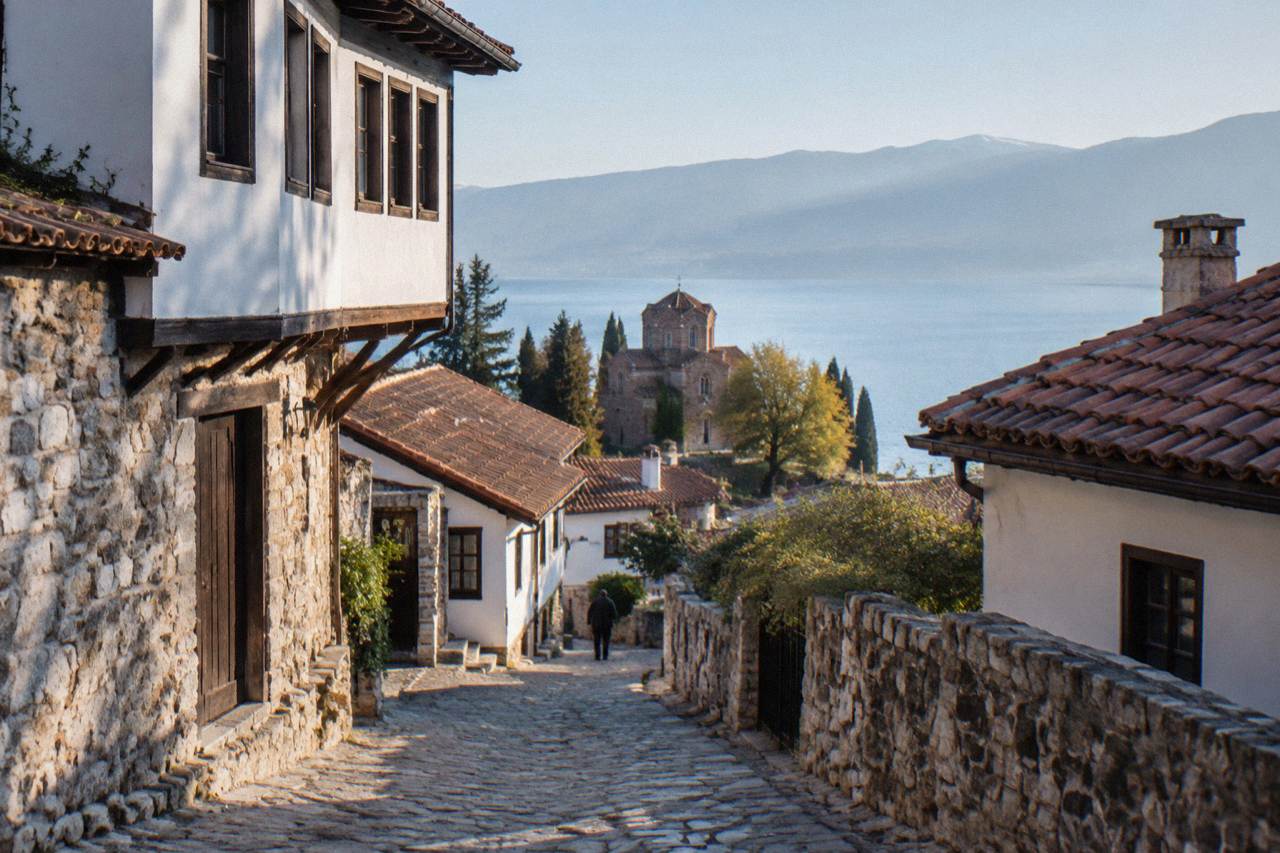
Yes, Ohrid is a safe destination by the standard published measures: the US State Department keeps its North Macedonia advisory at Level 1, Exercise Normal Precautions, the lowest level on its scale, and no advisory singles Ohrid out for concern. The town is small, the old town is a network of pedestrian lanes climbing from the lake to Samuel's Fortress, and the hazards that matter are environmental, the lake, the heat and the mountain roads, rather than crime.
The advisory level is a country-wide figure and is reported rather than independently re-checked, so treat it as a floor of reassurance, not a description of any specific street. What the published record does give for Ohrid itself is reassuring in a different way: November 2025 counted 18,103 guests in the town, 11,686 of them foreign, and the State Statistical Office data shows Germany as the largest foreign market. This is a mature tourist town that receives foreign visitors year-round, not a place discovering tourism for the first time.
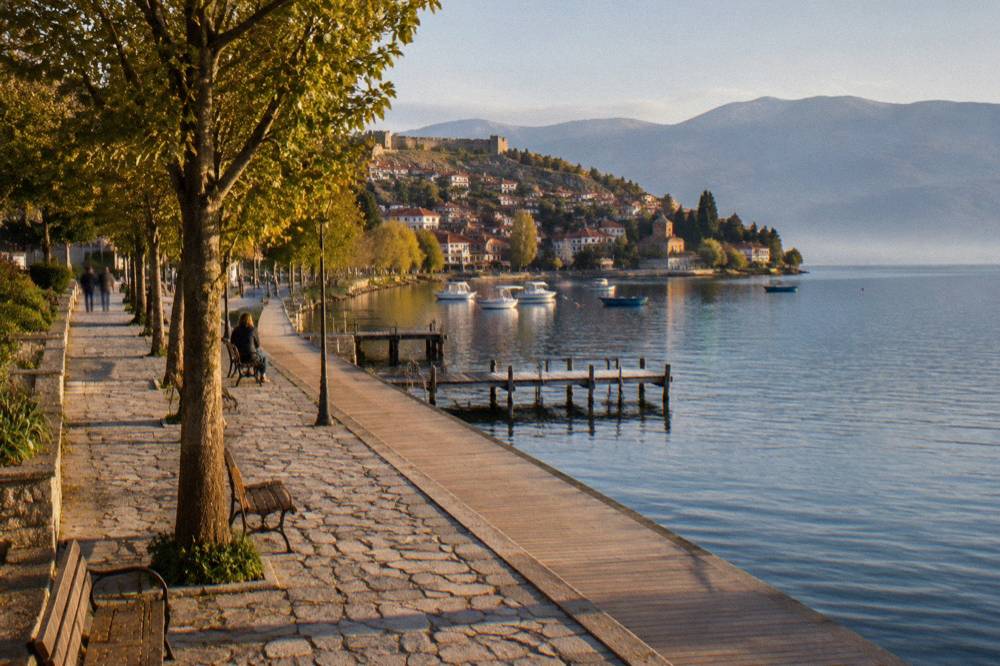
The practical reading is that ordinary city precautions carry the day. The old town lanes are on foot, the climb from the lake to the fortress is real exercise in summer heat, and the lakeside boardwalk is the town's evening promenade. None of that requires special measures beyond comfortable shoes, water and sun protection. For the broader question of how the town feels for first-time visitors, the companion page is Ohrid safe for tourists covers the same ground in a shorter format.
One genuinely local safety factor deserves a sentence: from the summer of 2026, streets in the old core such as Ilindenska, Kosta Abrash and Car Samoil operate a resident-only parking regime, with non-resident vehicles subject to clamping, as reported by local media. Visitors arriving by car should plan to park outside the resident streets, which also removes most of the stress of driving in the narrow lanes.
How Safe Is Getting To Ohrid?
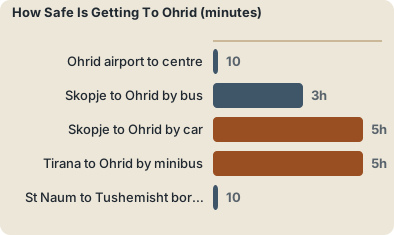
Getting to Ohrid is routine and well documented: Ohrid's own airport is about 10 km from the centre via the E65, the bus from Skopje covers about 170 km in around three hours for 850 to 950 denars one way, and minibuses from Tirana take three to three and a half hours including the border, for about 15 to 20 euros. None of these routes carries a published safety warning, and each is a standard daily service used by residents and visitors alike.
The airport, Ohrid St Paul the Apostle, is operated by TAV Macedonia, and its own passenger guide gives the 10 km distance and the E65 access road. There is no regular public shuttle from the terminal; taxis and pre-booked transfers are the standard options, with secondary sources reporting roughly 600 to 800 denars or about 12 euros to the centre. Agree the fare before setting off, which is the normal practice for the town's licensed taxis as well.
The road connection is improving. The Kicevo to Ohrid motorway section has been under construction since around 2014, with about 37 km of roughly 57 km operational as of mid-2026, and the full opening targeted for the first half of 2027, per the transport ministry's statements. Until then, expect ordinary two-lane mountain driving on the remaining stretches. Drivers should also know the local rules: headlights are required day and night, a green card is expected for foreign insurance, and motorway tolls are paid at each plaza, about 140 denars in total for a car between Skopje and Ohrid, with no vignette system.
For travellers combining Albania and North Macedonia, the Skopje, Ohrid and Tirana route logic is simple: the Sveti Naum to Tushemisht border crossing is reported to operate around the clock for passenger vehicles and pedestrians, and it sits about 4 km from the St Naum monastery area, roughly a 10 minute drive, with a taxi quoted at 400 denars and up to an hour of waiting time at the border at busy moments.
| Route | Distance | Typical time | Fare or cost | Source tier |
|---|---|---|---|---|
| Ohrid airport to centre | About 10 km | 10 to 15 min | About 600 to 800 MKD by taxi | Airport site (distance), reported fare |
| Skopje to Ohrid by bus | About 170 km | About 3 h | 850 to 950 MKD one way | secondary |
| Skopje to Ohrid by car | About 172 km | About 2.5 h | About 140 MKD in tolls | secondary |
| Tirana to Ohrid by minibus | Via Qafe Thane border | 3 to 3.5 h | About 15 to 20 EUR | secondary |
| St Naum to Tushemisht border | About 4 km | About 10 min | Taxi quoted 400 MKD | blog |
The row worth reading closely is the Tirana one, because it includes a border crossing and therefore variable waiting time that no fare captures. Bookable day trips that start in Tirana or Durres depart from there, and they handle the crossing logistics as part of the product, which is one reason they are popular with visitors basing themselves in Albania.
What Are The Emergency Numbers And Health Basics In Ohrid?
The numbers to save before arriving in Ohrid are ambulance 194, police 192 and roadside assistance 196, all confirmed on the UK Foreign Office's help page for North Macedonia, and the country's tap water and healthcare context carry no published advisory beyond ordinary travel advice. The US advisory level for the country is reported at Level 1, Exercise Normal Precautions, which is the lowest tier, and no Ohrid-specific health warning appears in the published record.
Those three numbers matter because 194, 192 and 196 are the ones listed on the UK government's North Macedonia help page. Write them down or save them offline, because in a lakeside town the realistic emergencies are a road incident, a swimmer in difficulty or a health event on a hot day.
| Service | Number | Notes |
|---|---|---|
| Ambulance | 194 | Confirmed on the UK government help page |
| Police | 192 | Confirmed on the same page |
| Roadside assistance | 196 | Confirmed on the same page |
Two practical health angles are worth a paragraph each. The climb from the lake to the fortress is steep, and heat plus exertion is the most likely way an otherwise healthy visitor gets into difficulty. Second, ticks and terrain on the Galicica trails are covered further down this page; the park's main road can close under snow, typically between January and March, which is a planning fact rather than a danger fact.
For visa-free visitors, one legal detail doubles as a safety-of-stay fact: registration with the local police is required within 48 hours of arrival, and hotels do it as a matter of course. Independent travellers staying in private accommodation should make sure it happens, because an unregistered stay is an administrative problem, not a safety one, but it is the single most common paperwork error visitors make.
A guided day is one way to short-circuit the practical risks: a private full-day tour of the old town and the lake shore puts the walking routes, the boat docks and the parking question in the hands of a local operator. The private full-day best of Ohrid tour is this site's featured pick for that job, and the operator's live listing carries current availability, Check availability before committing to a date.
Is It Safe To Swim In Lake Ohrid?
Swimming in Lake Ohrid is a normal summer activity with a short season: modelled surface temperatures reach about 22.9 C in July and 23.5 C in August, and the comfortable swimming window runs roughly from July into September. The realistic hazards are cold water outside that window, wind on open stretches of the lake, and swimming at night or near boat routes, which the 2026 navigation rules were written to address.
The water temperature figures are modelled aggregator values, not station readings, so treat them as planning guides: about 4.6 C in January, 10.5 C in April, 22.9 C in July, 23.5 C in August and 14.7 C in October. In short, the lake is a warm swim in high summer and a cold one by late autumn.
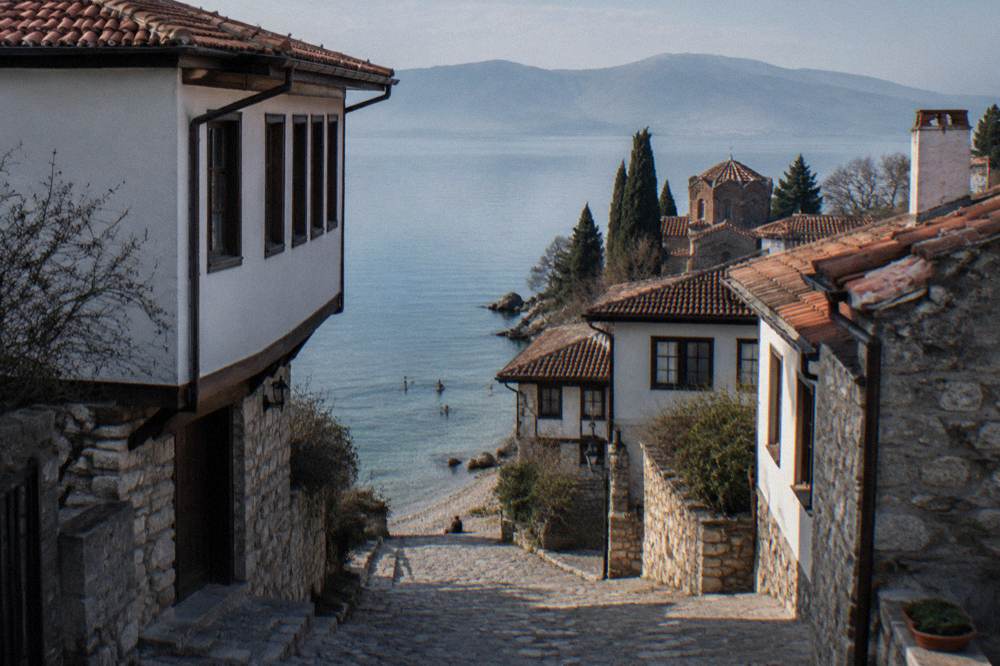
The deeper answer to is it possible to swim in Lake Ohrid covers beaches and seasonality in detail; the safety summary is that the popular swimming spots, Gradiste, Lagadin, Ljubanista, Potpesh and Labino, are pebble and mixed shores with clear water, and no seasonal closure applies beyond the winter reduction in facilities. Enter the water feet first in unfamiliar spots, watch children near the shore platforms, and treat any evening swim with the same caution the law now applies to boats, because unlit swimmers and boats do not mix.
| Month | Modelled surface temperature | Swimming comfort |
|---|---|---|
| January | About 4.6 C | Cold, no |
| April | About 10.5 C | Cold, no |
| July | About 22.9 C | Comfortable |
| August | About 23.5 C | Comfortable |
| September | About 19.7 to 25 C | Comfortable early month |
| October | About 14.7 C | Cold for most people |
The lake itself is a deep freshwater basin shared with Albania, feeding the Crn Drim springs near St Naum. Depth, surface area and water-quality classes are not stated on this page; the safe summary is that the lake is swimmable in season, cold out of it, and best enjoyed in daylight near supervised or populated shores. The main Lake Ohrid guide covers the geography, and the swimming in Lake Ohrid page covers the practical season.
What Do The 2026 Lake Navigation Rules Mean For Safety?
The 2026 rules, set by a government decision announced on 2 June 2026, ban jet skis on Lake Ohrid from 1 July to 31 August between 11:00 and 19:00, and ban boat traffic at night from 3 June to 31 August between 21:00 and 05:00, with a further night limit in September and October, all in the name of swimmer safety. For visitors this means quieter daytime water at the beaches and no scheduled boat activity after dark in high summer.
The September limit runs 20:00 to 06:00 from 1 to 30 September, and an October restriction follows, per the Ministry of Transport's announcement. The intent is explicit: separating fast craft from swimmers in the peak hours and unlit boats from the water at night. If a sunset cruise is on your list, the 1.5 hour sunset sailing is timed to finish before the night ban bites, and the Lake Ohrid boats and ferries page explains how the scheduled boats fit around the rules.
| Rule | Dates | Hours |
|---|---|---|
| Jet ski ban | 1 Jul to 31 Aug 2026 | 11:00 to 19:00 |
| Boat night ban, summer | 3 Jun to 31 Aug 2026 | 21:00 to 05:00 |
| Boat night ban, September | 1 to 30 Sep 2026 | 20:00 to 06:00 |
| Further October limit | October 2026 | Per the ministry announcement |
For anyone renting a kayak or a paddleboard, the practical takeaway is simpler: stay close to shore, wear the provided buoyancy aid, and be off the water by dusk. The guided options are the low-stress route, because the operator carries the local knowledge of wind and boat lanes. The paddleboard tour with landmark photos is this section's pick for exactly that reason, covering the shoreline sights with a group and a guide rather than a solo first outing.
Is It Safe To Hike Around Ohrid And In Galicica National Park?
Hiking around Ohrid is safe with ordinary mountain preparation: Galicica National Park, North Macedonia's second national park, founded in 1958, covers 22,750 ha between Lake Ohrid and Lake Prespa with the Magaro peak at 2,254 m, is open year-round, and its main road can close under heavy snow, typically between January and March. The hazards are altitude, weather changes and route-finding, not crime or wildlife.
The park sits between the two lakes, which means many trails start high and finish with serious descents, and the Lake Prespa side is a different weather world from the Ohrid side on any given day. The Two Lakes hiking trail is the signature route, and the Ohrid hiking page covers trail options in detail. Carry more water than feels reasonable, check the Galicica park site's live camera page for conditions before setting out, and treat winter closures of the main road as a hard planning fact: the road between the lakes is typically closed by snow between January and March.
| Galicica National Park fact | Figure |
|---|---|
| Established | 1958, second national park in North Macedonia |
| Area | 22,750 ha |
| Highest peak | Magaro, 2,254 m |
| Position | Between Lake Ohrid and Lake Prespa |
| Vehicle entry fee | 250 MKD per vehicle |
| On-foot entry, Ohrid-side gate | 100 MKD |
| Seasonal road note | Snow can close the main road, typically Jan to Mar |
Note the fee structure, because a common confusion costs money: the 250 MKD charge is per vehicle, with no per-passenger fee, and 100 MKD applies only to someone entering on foot through the Ohrid-side gate. A family in one car pays 250 MKD in total, not per person.
For a gentler day, the jeep safari through the park covers the high ground without the climbing, and the ATV full-day adventure does the same for travellers who want the ridge views with wheels under them. Both are listed in this site's activity pages alongside the hiking options.
Do Entry Rules And Border Crossings Affect Safety Near Ohrid?
Entry to North Macedonia is straightforward for most visitors: visa-free nationals may stay up to 90 days in any 180-day period, UK visitors may stay up to 3 months without a visa, and a passport must have an expiry date at least 90 days after arrival, per the UK Foreign Office. The country is not in the EU or Schengen, registration with local police is required within 48 hours, and the Albania border at Sveti Naum and Tushemisht is reported to operate around the clock.
The Schengen detail matters for route planning: Bulgaria and Romania became full Schengen members, land borders included, on 1 January 2025, but North Macedonia itself remains outside both the EU and Schengen, so border checks apply on every entry, and排队 times at the Albanian crossing can reach an hour at peak moments. Holders of a valid multiple-entry UK, US or Canadian visa, or a Schengen residence permit, may enter for up to 15 days, per the foreign ministry's published rules.
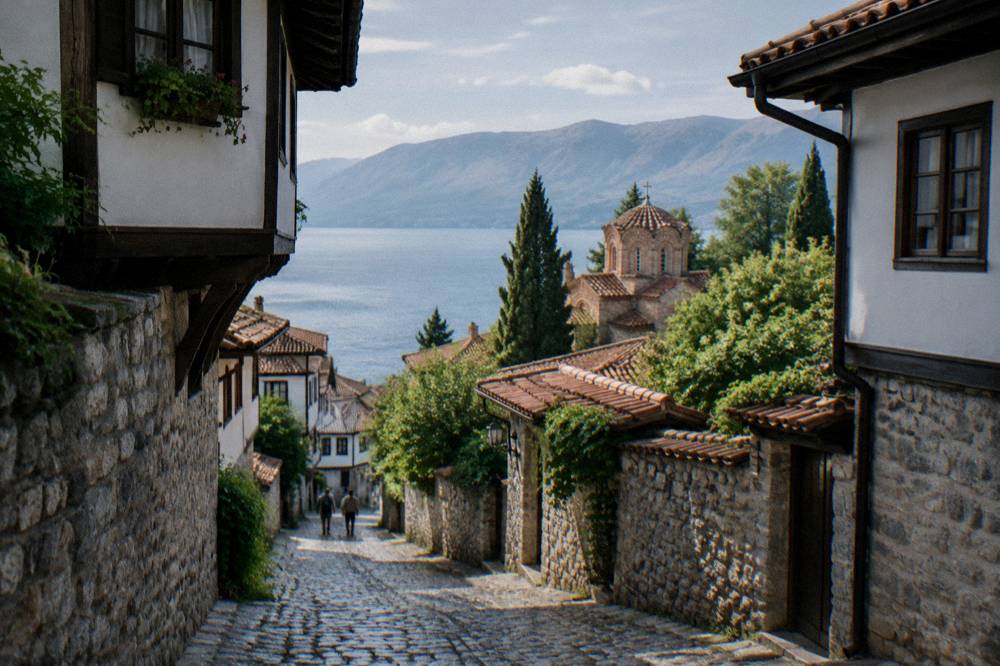
The crossing at Sveti Naum and Tushemisht is a modest one, pedestrian crossing is possible with a walk of roughly a kilometre between posts, and Pogradec on the Albanian side is a short drive beyond it, which makes the Pogradec, Albania from Ohrid day trip a simple two-country outing. Carry your passport on any trip that touches the border, even for a boat excursion that dips along the shoreline, and keep the registration rule in mind if your itinerary has you moving between accommodations.
Money is the last entry-adjacent basic: the currency is the Macedonian denar, euros are commonly quoted for tours and transfers but are not legal tender, and the denar is de facto pegged to the euro, with the National Bank's middle rate at 61.6633 MKD to 1 EUR on 19 October 2026. Paying in denars avoids the poor informal exchange rates reported at some tourist businesses.
How Safe Is Exploring The Ohrid Old Town On Foot?
The old town of Ohrid is a pedestrian-first district of stone lanes climbing from the lake to Samuel's Fortress, and walking it is the normal way everyone visits it; the hazards are underfoot stone, summer heat on the climbs, and vehicle rules, not personal safety concerns. The 2026 resident-only parking regime on streets like Ilindenska, Kosta Abrash and Car Samoil keeps non-resident cars out, which makes the upper lanes quieter than they were.
The museums in the old core run a winter schedule from 1 October to 30 April and a summer schedule from 1 May to 30 September, with the museum institute's sites, Robev Family House, the Museum on Water at the Bay of Bones and the Icon Gallery, all closed on Mondays. Tickets for those institute sites are 150 den for foreign visitors, 120 den for domestic, with a reported 60 den rate for children and students. None of that is a safety matter, but Monday closure catches out a surprising number of walkers who have planned their only full day in town around a museum visit.
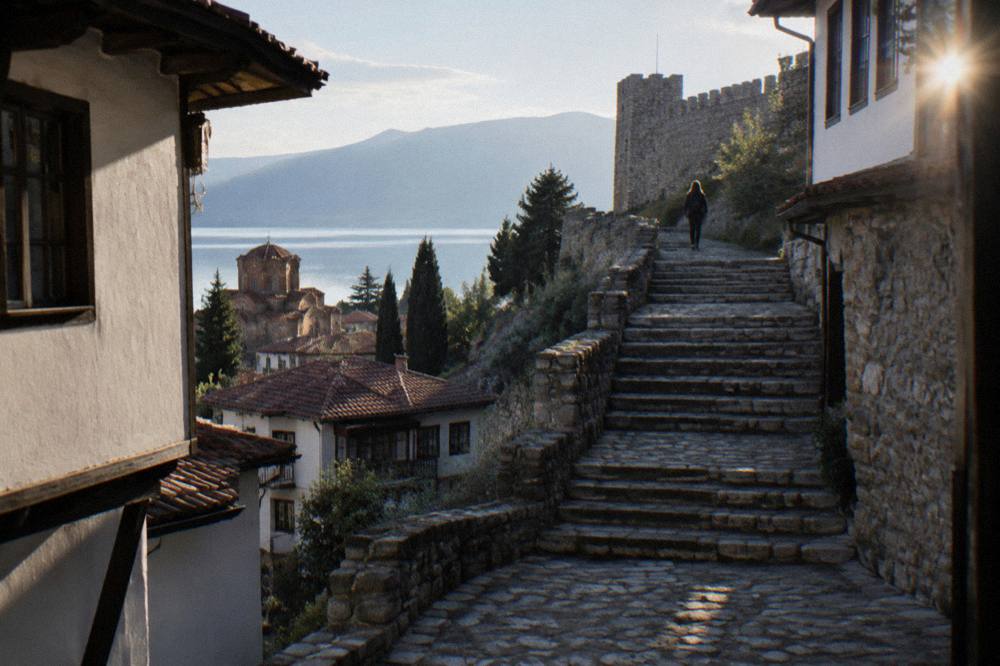
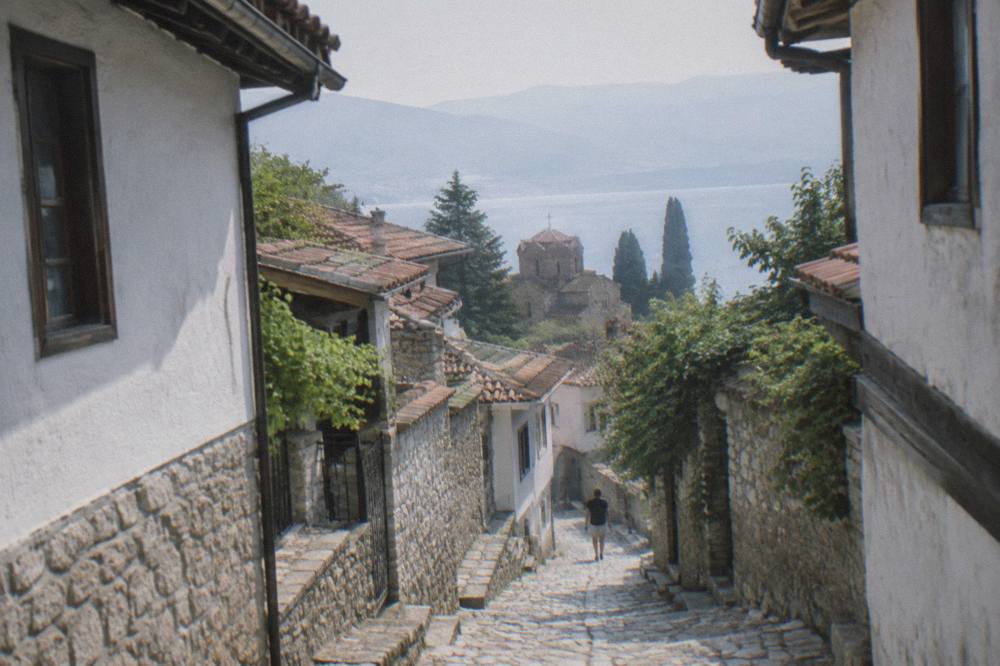
Practical foot-safety advice writes itself from the terrain: the steps between the lakefront and the fortress are worn smooth in places, wet stone after rain is slick, and the descent in low evening light deserves a torch or a phone light from late autumn onwards. Comfortable shoes outrank everything else in the packing list. The Old Bazaar area and the town's other quarters are covered elsewhere on this site for anyone planning a full circuit.
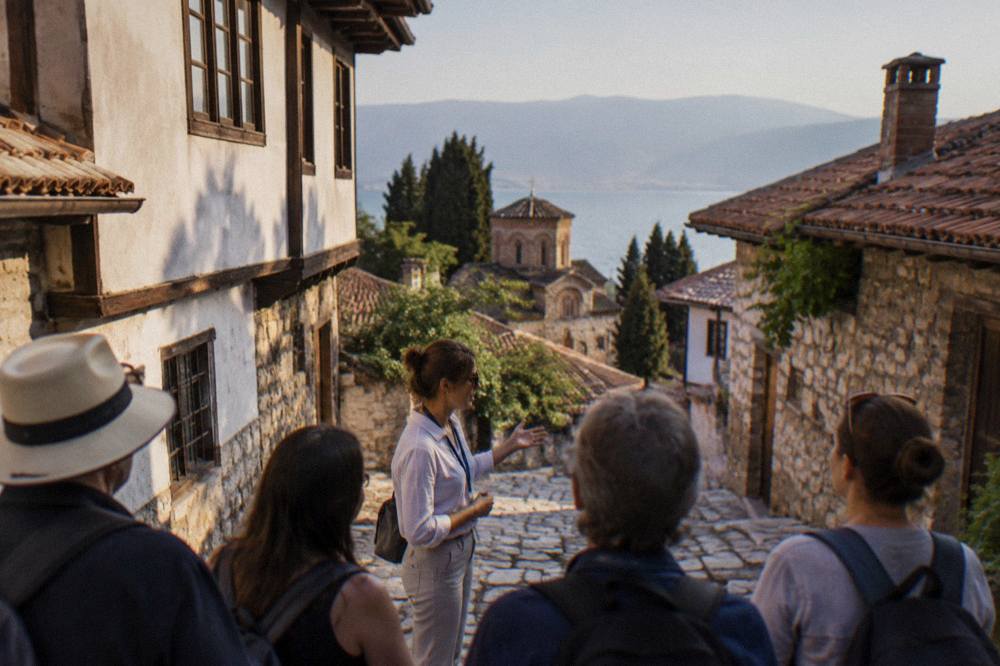
The small-group city tour of the old town is the low-effort option for visitors who would rather have the route chosen for them; it walks the lanes with a local guide and the group format suits solo travellers who prefer company on the climbs.
When Do Weather And Season Change The Safety Picture In Ohrid?
Ohrid's climate, per the ERA5 reanalysis normals for 1991 to 2020, gives July and August highs of 27.1 and 27.6 C with only about 35 and 33 mm of rain, while November and December carry the heaviest rain at about 90 and 93 mm, and January lows average -0.8 C with snow possible in town and heavier snow up in Galicica, so the safety picture shifts with the season rather than staying constant.
Summer safety is about heat, sun and the lake; winter safety is about ice on the lanes, short daylight on the trails and reduced services, with the seasonal boats to St Naum running roughly May to October and a reduced schedule outside that window. Autumn rain, roughly 62 mm in September and 76 mm in October, makes the stone steps the item to respect.
| Month | Mean high C | Mean low C | Rain mm |
|---|---|---|---|
| Jan | 5.0 | -0.8 | 76.5 |
| Mar | 10.0 | 2.5 | 80.5 |
| May | 19.5 | 10.8 | 70.8 |
| Jul | 27.1 | 18.3 | 34.7 |
| Sep | 22.4 | 14.9 | 62.4 |
| Nov | 11.5 | 5.3 | 90.4 |
The figures are modelled normals from a reanalysis grid cell, not a weather-station record, so read them as the shape of the year rather than a forecast. The full monthly breakdown, along with what it means for timing a visit, sits on the Ohrid weather and best time to visit Lake Ohrid pages.
The UNESCO point deserves its own sentence because it circulates in garbled form: the Ohrid region is a World Heritage site, inscribed 1979 and 1980 and extended to the Albanian part in 2019, and in July 2026 the Committee decided not to inscribe it on the danger list, while asking for a joint report by 1 February 2029. That is a conservation story, not a visitor-safety story, and it should not colour anyone's risk assessment of a holiday.
What Should Families And Solo Travellers Watch Out For In Ohrid?
Families and solo travellers face the same short list of real considerations in Ohrid: water safety for children at the pebble beaches, the steepness of the old-town climbs in heat, Monday closures at the museum sites, and, for solo travellers, the ordinary fact that the town's evening life concentrates on the lakeside boardwalk where people and light are plentiful. None of these is unusual for a lakeside resort town, and all are managed with ordinary planning.
For families, the beaches at Gradiste, Lagadin and Ljubanista are the standard swims, the daytime jet ski ban in July and August removes the fastest craft from the busiest hours, and the Ohrid with kids season notes sit on the summer guide. For solo travellers, the practical comforts are structural: the old town is walkable, the boardwalk is the evening spine of the town, and the boat trips and small-group tours make solo sightseeing social without any effort.
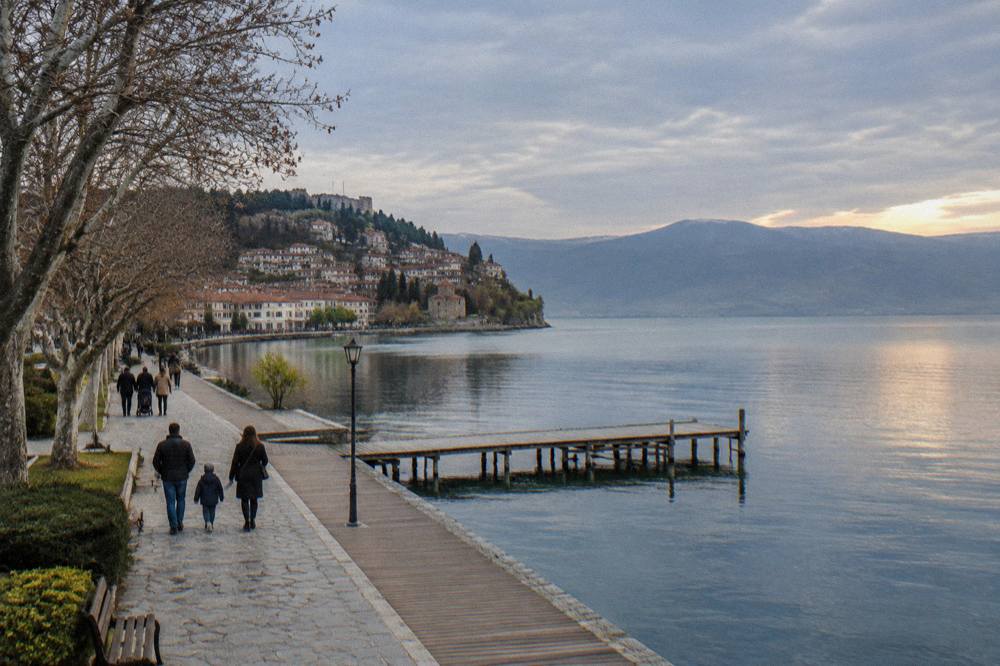
The sunset cruise is the classic low-risk evening activity: it is on the water, in a group, back before the night boat ban, and it delivers the view of the old town from the lake that every visitor photographs. Pair it with a daytime walking tour and the two together cover the town and the lake with barely any independent logistics left to solve.
Common Questions About Safety In Ohrid
Is Ohrid safe for tourists?
The US State Department advisory for North Macedonia is reported at Level 1, Exercise Normal Precautions, and no published advisory singles Ohrid out. The practical risks are the lake, the mountain roads and summer heat, not crime.
What is the emergency number in Ohrid?
Ambulance is 194, police is 192 and roadside assistance is 196, all confirmed on the UK government's help page for North Macedonia. Save all three before arrival.
Is it safe to swim in Lake Ohrid?
Yes, in season. Modelled surface temperatures reach about 23 C in July and August, and the comfortable window runs roughly from July into September. Outside that window the water is cold, and swimming at night near boat routes is the hazard the 2026 rules target.
Are jet skis allowed on Lake Ohrid?
Not in the middle of the day in high summer. A government decision announced on 2 June 2026 bans jet skis from 1 July to 31 August between 11:00 and 19:00, and bans boat traffic at night through summer and into autumn.
Is the water safe to swim in near the beaches?
The popular swimming beaches, Gradiste, Lagadin, Ljubanista, Potpesh and Labino, are established pebble and mixed shores with clear water. Water-quality classifications are not stated on this page; swim at populated shores in daylight as the ordinary precaution.
Is it safe to drive to Ohrid?
Yes, with local rules observed: headlights on day and night, a green card for insurance, tolls paid at each plaza, and awareness that the final motorway sections were still under construction into 2026 with the full Kicevo to Ohrid opening expected in the first half of 2027.
Do I need to register with police in Ohrid?
Yes, within 48 hours of arrival. Hotels handle it automatically; travellers in private accommodation should confirm it is done.
Ohrid rewards the same preparation as any lakeside mountain town: the numbers 194, 192 and 196 saved offline, sun and water taken seriously on the climbs and at the beaches, the lake treated as a swimmer's lake in daylight, and the border rules understood before a two-country day trip. With those in place, the published record describes a destination whose biggest hazards are entirely manageable ones.