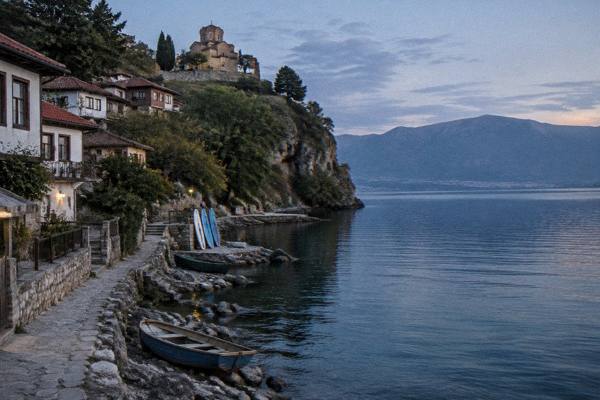
Is It Possible To Swim In Lake Ohrid?
Yes, you can swim in Lake Ohrid: a month-by-month guide to water temperature, swimming beaches near Ohrid, the July to September season and the 2026 rules on the water.
Yes, swimming is possible in Lake Ohrid, and it is one of the main reasons people base themselves in Ohrid, a lakeside town in North Macedonia. The lake sits at about 693 m above sea level, is freshwater, and the Ohrid Travel Guide covers its beaches and boat life in depth because summer visitors plan their days around the water. The honest answer has three parts: the water is warm enough for comfortable swimming only in part of the year, the swimming spots are pebble and gravel shores rather than sand, and a set of dated 2026 rules governs what boats and jet skis may do near swimmers.
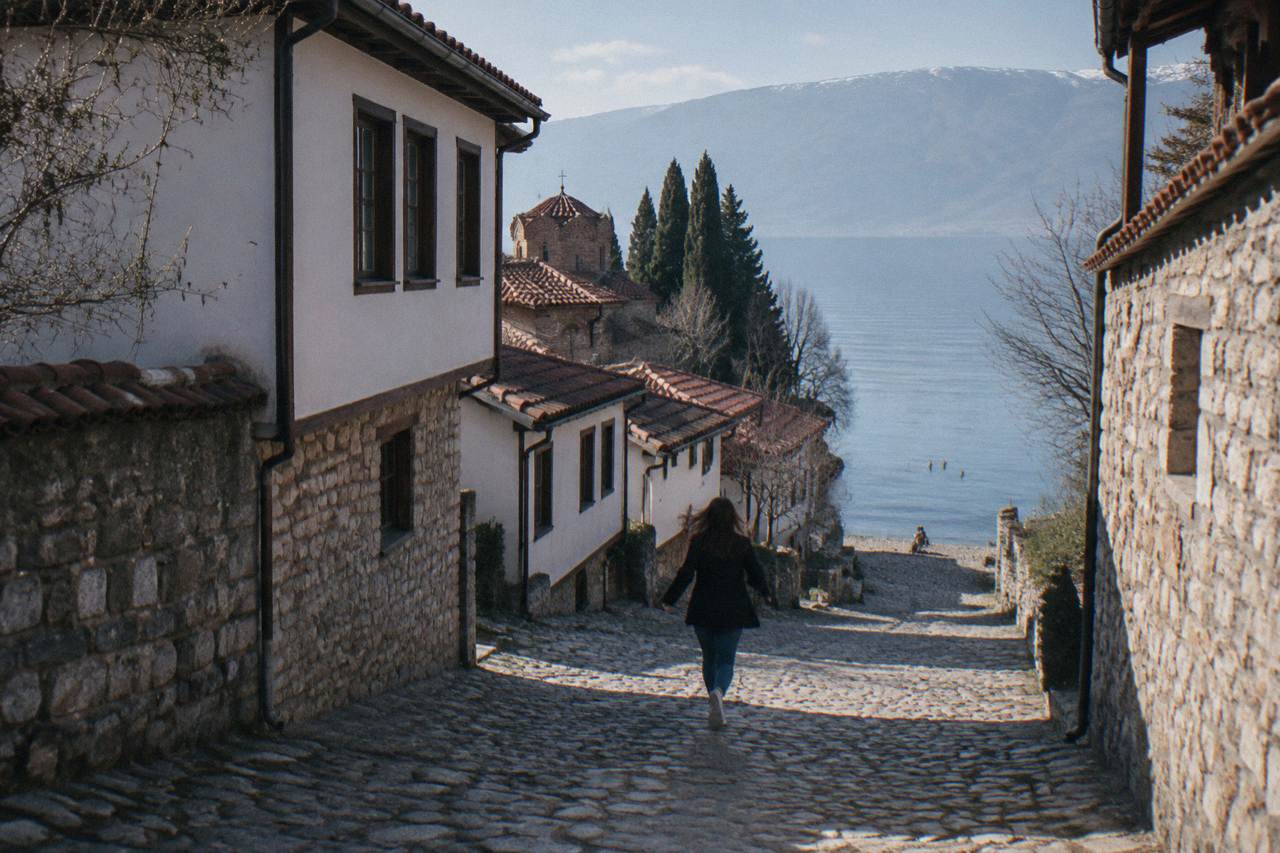
Yes, swimming in Lake Ohrid is not only possible but routine, and the town of Ohrid is built around it: the lake is a freshwater mountain lake shared with Albania, the swimming season runs roughly July to September on the modelled water-temperature figures, and swimming happens from pebble and gravel shores within walking or short driving distance of the old town.
That is the short version. The longer version is that Lake Ohrid is not the sea and does not behave like one. It is an inland lake high in the mountains, which means the water warms up slowly in spring, holds its warmth through late summer, and cools quickly once autumn sets in. People do swim outside the core season, but comfortable swimming, the kind where you stay in for an hour, is a July-to-September story on the modelled figures, and October is a short-dip month at best.
The lake's character also shapes where you swim. The shores near Ohrid town are pebble and gravel rather than sand, and many swimmers wear water shoes for that reason. Some of the best-known swimming spots, Gradiste, Lagadin, Ljubanista, Potpesh and Labino, sit along the lake road south and east of town, reached by car, bus or boat. The swimming beaches around Ohrid are covered in their own guide, including how each shore differs.
One more framing point: the question of whether you can swim is separate from the question of whether you should swim in a given spot on a given day. The lake is large, weather changes, and local conditions at an individual beach matter. Below, the water temperature runs month by month, along with the main swimming spots, the season, and the rules that applied on the water in 2026.
How Warm Is The Water In Lake Ohrid?
Those numbers deserve their caveat. Monthly lake temperatures for Ohrid come from modelled aggregator values, not from a weather-station record, so every figure carries an "about". The one official anchor is the UHMR multi-year October mean of 14.3 C for the lake, which sits close to the modelled October figure of about 14.7 C and gives the table below some grounding.
| Month | Modelled surface temperature |
|---|---|
| January | about 4.6 C |
| February | about 5.4 C |
| March | about 7.2 C |
| April | about 10.5 C |
| May | about 14.9 C |
| June | about 19.4 C |
| July | about 22.9 C |
| August | about 23.5 C |
| September | about 19.7 C |
| October | about 14.7 C |
| November | about 10.3 C |
| December | about 6.0 C |
Read the table from a swimmer's point of view. June at about 19.4 C is bearable for a short swim and pleasant for paddling. July and August, at about 22.9 C and 23.5 C, are the months when the lake genuinely feels warm, and September at about 19.7 C still works for swimming, especially early in the month. From October onward the temperature drops fast, and by December the lake is at about 6.0 C, cold-water territory that only trained winter swimmers should consider.
Air temperature matters too, because you spend more time out of the lake than in it. The modelled 1991-2020 ERA5 climate normals for Ohrid put the mean daily high at about 27.1 C in July and 27.6 C in August, with overnight lows of about 18.3 C and 19.0 C, and rain at 34.7 mm and 32.9 mm across those two months. June, by contrast, averages about 24.2 C as a daily high with 43.1 mm of rain, and September about 22.4 C with 62.4 mm. Those figures, modelled rather than station-recorded, line up with the water table: July and August are the months when air and water agree that swimming is a good idea.
If the lake's temperature curve shapes when you travel, the best time to visit Lake Ohrid is its own question with a fuller answer, and the weather in Ohrid breaks the air-temperature and rainfall picture down month by month.
Where Can You Swim Around Ohrid?
The geography is simple. The lake runs in a long arc, and the old town of Ohrid sits on its north-eastern shore. Closest to town are the city beach and lido areas, which put you in the water within a short walk of the centre. Further out along the southern shore sit the bigger swimming grounds: Gradiste near Peshtani, Lagadin, Ljubanista and Potpesh, plus Labino nearer town. Each is a pebble or mixed shore with clear water, and each gets busier as summer peaks.
| Swimming spot | Position relative to Ohrid town | Shore type |
|---|---|---|
| City beach and lido | walking distance from the old town | managed town shore |
| Labino | short distance from the centre | lake shore with clear water |
| Potpesh | along the southern shore road | pebble shore |
| Gradiste | near Peshtani, southern shore | mixed pebble and gravel |
| Lagadin | southern shore, east of Ohrid | pebble shore |
| Ljubanista | far southern shore near St Naum | pebble and gravel |
Getting to the further beaches is half the fun. Boats run the lake in season, and the boats and ferries on Lake Ohrid explain the routes and operators. A boat-based day that combines the swimming stops with sightseeing is one of the most practical ways to see the southern shore, and the Bay of Bones and St Naum boat trip is the operator listing this site features for exactly that kind of day. Check availability on the operator's live listing if that format suits your group.
Like the sound of seeing the lake from the water at dusk. Book an Ohrid Lake sunset cruise here.
Two practical notes complete the picture. First, beach facilities on Lake Ohrid are seasonal: bars, sunbeds and similar services scale down or close outside the main summer months, so an autumn swim can mean an empty shore with nothing running. Second, pebble shores are hard on bare feet, and water shoes are standard kit. Neither point changes the answer, but both change what you pack.
When Is The Swimming Season In Ohrid?
The swimming season in Lake Ohrid runs from about July to September, because the modelled water temperatures only clear about 20 C in July and August and fall back to about 19.7 C in September, while June at about 19.4 C is a marginal month that suits swimmers who tolerate cooler water.
The season's edges are worth understanding rather than memorising. Early June can feel too cold for anything but a quick dip. By mid-July the surface has warmed to about 22.9 C, and August is the month the modelled figures peak at about 23.5 C. September is the surprise for many visitors: the lake has stored a summer's worth of heat, so the water stays at about 19.7 C even as the air cools, and early September can be a calmer, more comfortable time to swim than mid-August.
August is also when the whole town is oriented around the water. The Ohrid summer season is the busiest stretch of the year, and the swimming beaches bear the load: this is the month when beds in town are hardest to find and the shores are at their fullest. Anyone who wants warm water and fewer people on the same trip should look at early September, on the modelled temperature curve, while accepting that the lake does not promise it.
Outside the season, the honest framing is that the lake is always swimmable in the physical sense and rarely comfortable. A May lake at about 14.9 C is a bracing experience, not a leisurely one, and the winter lake at about 6 C is for cold-water specialists with proper preparation. For everyone else the planning rule is simple: book July or August for guaranteed warmth, September for a good chance of it, and treat everything else as scenery.
What Rules Apply On The Water In Ohrid In 2026?
A Government decision dated 2 June 2026, announced by the Ministry of Transport, banned jet skis on Lake Ohrid from 11:00 to 19:00 between 1 July and 31 August, and banned boating at night between 21:00 and 05:00 from 3 June to 31 August and between 20:00 and 06:00 in September, with a further October limit, all aimed at swimmer safety.
Those rules matter to swimmers because they change the character of the water in the middle of the day. During the peak summer window, the lake near the swimming shores is quieter than it would otherwise be, since jet skis are off the water at exactly the hours when the beaches are fullest. The night boating limits work the other way: they keep the lake still after dark, which matters for evening swims near town and for anyone planning to be on a boat at sunset.
The rules are dated, and that is deliberate. They were announced for the 2026 season with specific end dates, and writing them as permanent law would be wrong. Anyone planning a 2027 trip should check whether the limits were extended, renewed or changed, because seasonal safety rules of this kind are normally reissued each year rather than set once.
There is also a 2026 change on the streets that affects beach access by car. From summer 2026, a resident-only parking regime applies on old-town streets including Ilindenska, Kosta Abrash and Car Samoil, with clamping reported for non-residents. If your plan is to drive from accommodation in the old town to Gradiste or Ljubanista, the parking regime makes the boat and bus options more attractive than they already were. The practical side of visiting Ohrid is covered in its own guide, including the emergency numbers: ambulance 194, police 192, roadside assistance 196.
What Lives In The Water You Swim In?
Lake Ohrid is a freshwater lake with over 200 endemic species, including 17 endemic fish, according to the UNESCO listing for the Ohrid region, and the water is a lake ecosystem rather than a marine one, so swimming in it means sharing the water with freshwater fish, none of which pose a threat to people.
UNESCO's own listing for the Natural and Cultural Heritage of the Ohrid Region is the source for the biodiversity figure, and it is the reason the lake is protected as a mixed natural and cultural site, inscribed in 1979 and 1980 and extended to the Albanian part of the lake in 2019. For a swimmer, the practical translation is simple: the water is fresh, the fish are small and uninterested in people, and the clarity the lake is known for comes in part from its mountain-spring character, with the Crn Drim springs near St Naum feeding it.
If the natural history appeals, the wildlife of Lake Ohrid goes deeper on the endemic species, and the questions around the lake's age and its depth are separate pages with their own answers. The lake itself has a full guide covering its geography and shores.
Common Questions About Swimming In Lake Ohrid
Is It Possible To Swim In Lake Ohrid?
Yes. Lake Ohrid is a freshwater mountain lake next to Ohrid town in North Macedonia, swimming is a normal summer activity, and the comfortable season runs from about July to September on the modelled water-temperature figures.
How cold is Lake Ohrid?
Modelled surface temperatures range from about 4.6 C in January to about 23.5 C in August. The official UHMR multi-year October mean for the lake is 14.3 C, which sits close to the modelled October figure of about 14.7 C.
Can you swim in Lake Ohrid in June?
You can, but June is marginal: the modelled water temperature is about 19.4 C, cool rather than warm. July and August, at about 22.9 C and 23.5 C, are the comfortable swimming months.
Are there beaches in Ohrid?
Yes. The city beach and lido are within walking distance of the old town, and the named swimming shores further out include Gradiste, Lagadin, Ljubanista, Potpesh and Labino, all pebble or mixed gravel rather than sand.
Is Lake Ohrid safe for swimming?
Swimming is a normal part of summer in Ohrid, and the 2026 Government navigation rules ban jet skis during daytime peak hours in July and August specifically to protect swimmers. As with any open water, check local conditions at the specific shore on the day.
Swimming in Lake Ohrid comes down to timing: pick July, August or early September, bring water shoes for the pebble shores, and treat the lake as the inland mountain water it is, cold in winter, warm at its August peak, and swimmable in between.