Is North Macedonia Friendly To Americans?
How North Macedonia and Ohrid receive American visitors: visa rules, safety advisories, money, language and practical arrivals, drawn from official sources.
Ohrid, a lakeside town in North Macedonia on a freshwater mountain lake sitting at about 693 m above sea level, is the destination Americans usually mean when they ask this question, and the short answer is that the country is straightforward to enter and the town is straightforward to enjoy. The rules that matter to a US passport holder are few: visa-free entry for up to 90 days in any 180-day period, a currency that is easy to understand once explained, and a US State Department advisory at its lowest level. This page works through each of those in turn, with the sources named as they appear, and the Ohrid Travel Guide covers the rest of the practical picture on its other pages.
Yes, in the practical sense that matters to a traveller: Americans enter visa-free for up to 90 days in any 180-day period, the US State Department's travel advisory for the country stands at Level 1, Exercise Normal Precautions, and there is no registration, permit or special form a US visitor must arrange beyond what a hotel handles. North Macedonia is outside the EU and outside Schengen, so the European Union's entry systems do not apply, and the border formalities are the country's own. The Macedonian foreign ministry publishes the entry rules, and UK Foreign Office guidance adds that visitors register with the local police within 48 hours of arrival, a task hotels perform for their guests automatically.
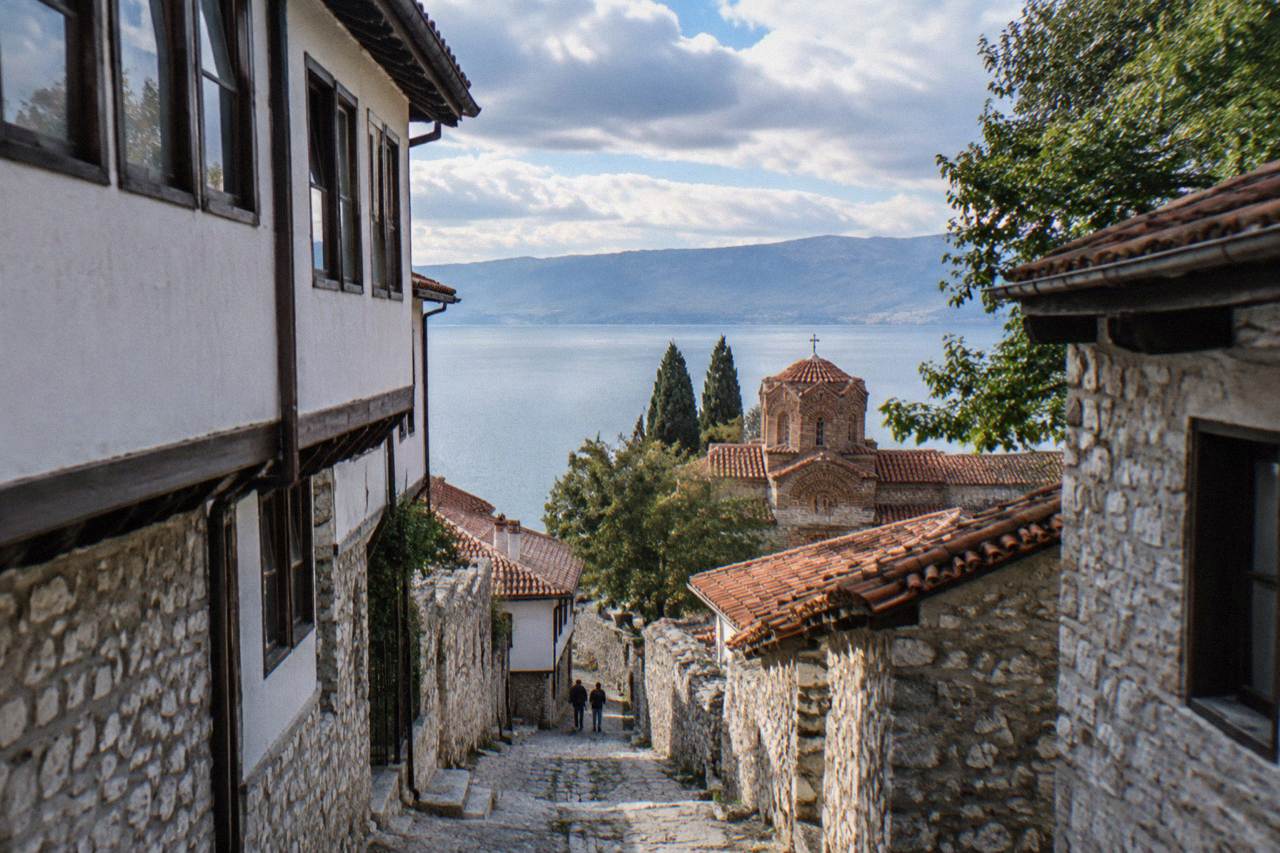
None of that tells you how a place feels. For that, look at what the town actually offers an American first-timer: a walkable old town, a UNESCO World Heritage inscription covering both the landscape and the buildings, and a cost structure where the local currency, the denar, is pegged in practice to the euro. The full case for the town is laid out on is Ohrid worth visiting, and the deeper background is on what is Ohrid famous for.
How Easy Is Entry To North Macedonia For US Passport Holders?
A US passport holder may stay up to 90 days in any 180-day period without a visa, per the Macedonian foreign ministry's own entry information, and there is no electronic authorisation scheme to complete before travel because the country is neither in the EU nor in Schengen. Holders of a valid multiple-entry UK, US or Canadian visa, or a Schengen residence permit, may also enter for up to 15 days under a separate provision. UK guidance says visitors register with local police within 48 hours, and hotels do this for their guests, so a stay in Ohrid involves no paperwork of your own.
Two neighbours confuse this picture and are worth correcting. Bulgaria and Romania became full Schengen members, land borders included, on 1 January 2025, so a European trip that passes through them is a Schengen matter, but North Macedonia itself is not. If your itinerary crosses from Greece or from Albania, each border is a North Macedonian checkpoint with its own queue. The dedicated page on visa and entry rules carries the detail.
| Entry question | Answer for US citizens |
|---|---|
| Visa needed? | No, up to 90 days in any 180-day period |
| Pre-travel authorisation? | None, the country is outside the EU and Schengen |
| Police registration | Within 48 hours of arrival, done by hotels for guests |
| 15-day provision | Holders of a valid multiple-entry US, UK or Canadian visa or Schengen residence permit |
Once you are inside the country, the arrival to Ohrid is its own step. Ohrid's own airport lies about 10 km from the centre, and Skopje, the usual alternative, is about 170 km away by road with buses taking around three hours, covered on how far is Ohrid from Skopje. Americans arriving from Tirana should note that day-trip products flagged as starting in Tirana genuinely start there, not in Ohrid, a distinction that matters when reading an itinerary.
Is Ohrid Safe For American Tourists?
The US State Department's travel advisory for North Macedonia stands at Level 1, Exercise Normal Precautions, the lowest rung on its scale, and the emergency numbers a visitor would ever need are ambulance 194, police 192 and roadside assistance 196, as listed in UK Foreign Office guidance for the country. Those are the two sourced anchors an American can hold onto: the advisory from the department itself, and the numbers from a government travel-advice page. Nothing in the published record for Ohrid adds a city-specific warning on top of the national level.
Practical safety in Ohrid is mostly the ordinary kind. Tap water in the town is generally reported as drinkable from the municipal supply, and 2026 bathing-water testing of the lake found Class I physico-chemical quality at most sampled points, with one beach, Grashnica, rated Class III. The fuller treatment, including the water question, sits on is Ohrid safe for tourists and can you drink the water in Ohrid.
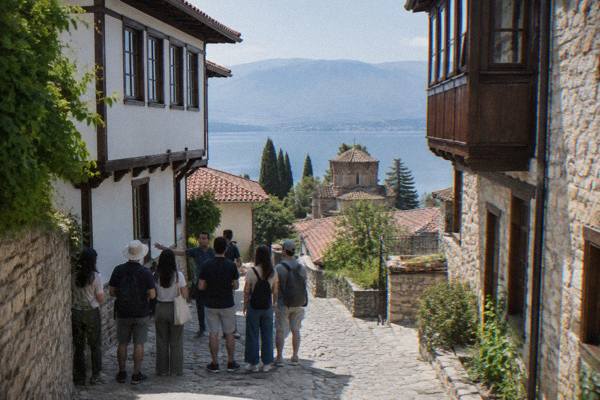
A first guided walk is a reasonable way for any newcomer, American or otherwise, to get oriented before exploring alone. The Ohrid Old Town walking tour covers the old lanes with a guide, and Check availability if you want it in your first days.
What Is Daily Life In Ohrid Like For An American Visitor?
Daily life runs on the Macedonian denar, a currency the central bank holds steady against the euro, with euros commonly quoted for tours and transfers but not legal tender, so an American budget is best planned in denars withdrawn locally rather than in converted cash carried in. The National Bank's published middle rate on 19 October 2026 was 61.6633 denars to one euro, and that stability means prices in denars do not move around during a stay. Museum tickets, boat fares and park fees are all set in denars.
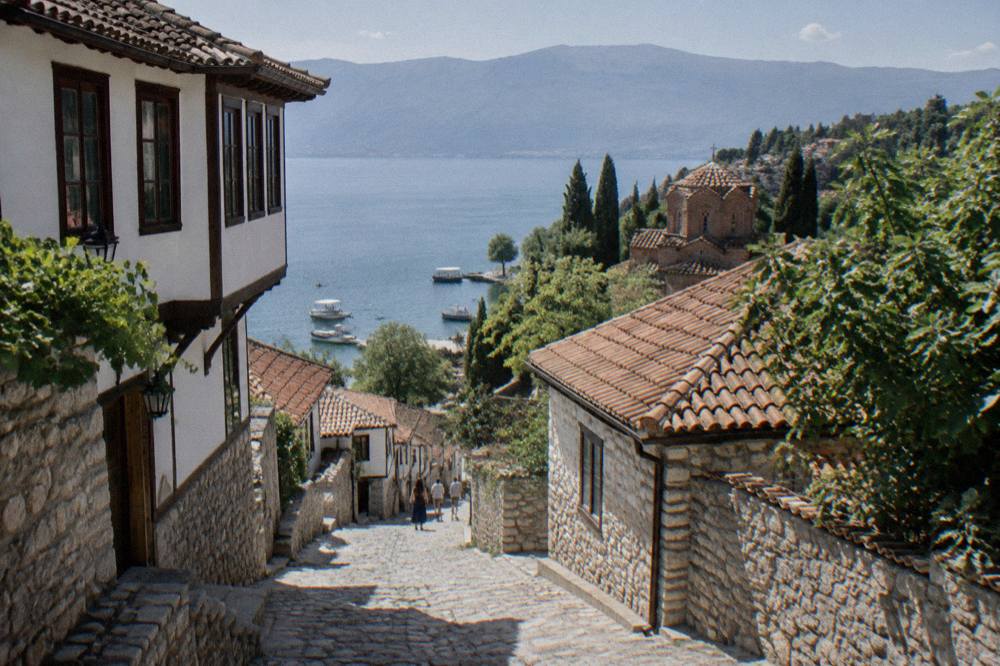
The town itself is compact and on foot. The old town climbs from the lake shore up to Samuel's Fortress, the lanes are pedestrian, and since summer 2026 several old-town streets, including Ilindenska, Kosta Abrash and Car Samoil, are reserved for residents' parking under a municipal regime reported in local news, which is one more reason not to drive inside the old core. Where to base yourself is covered on where to stay in Ohrid.
| Daily question | What the published sources say |
|---|---|
| Currency | Macedonian denar (MKD); euros quoted for tours but not legal tender |
| Central bank rate | 61.6633 MKD per EUR, middle rate on 19 October 2026 |
| Tap water | Generally drinkable from the municipal supply, per published assessments |
| Lake swimming | 2026 tests mostly Class I and Excellent; Grashnica beach Class III |
| Emergency numbers | Ambulance 194, police 192, roadside assistance 196 |
For sizing a trip, how many days do you need in Ohrid and the main things to do in Ohrid page are the two anchors, and the cost question is treated on its own page at is Ohrid cheap or expensive. Swimming and lake access, a fair part of any summer visit, have their own treatment at is it possible to swim in Lake Ohrid.
Do People In Ohrid Speak English?
Macedonian, written in the Cyrillic alphabet, is the country's language, with Latin script also in use, and there is no published survey of English proficiency specific to Ohrid, so the honest answer is that the language of the place is Macedonian and any claim about how widely English is spoken would be a guess rather than a fact. What can be said from the products themselves is that this town sustains a large roster of guided tours delivered to international visitors, walking tours, boat cruises, wine tastings and day trips among them, which is indirect evidence of a tourism economy organised around foreign guests.
The practical hedge is standard for any Balkan trip: a phone translation app, a few words of greeting, and a guided first walk that sets the geography straight. The question has its own page at do they speak English in Ohrid, which keeps the treatment honest about what is and is not measured.
How Do Americans Actually Get To Ohrid?
The two standard routes are Ohrid's own airport, St Paul the Apostle, about 10 km from the centre and served primarily by Wizz Air with routes that include Milan Malpensa, Wroclaw and Katowice among its 2026 additions, or the land route from Skopje, about 170 km away, with buses taking around three hours and costing 850 to 950 MKD one way. There is no passenger train to Ohrid and no domestic flight from Skopje. The airport's passenger count in 2025 was 263,869, up 20 percent on 2024, and Wizz Air has been reported in August 2026 to be preparing a based aircraft at Ohrid.
For Americans this usually means a connection through a European hub or an arrival via Tirana, which is about three to three and a half hours away by minibus across the border, at roughly 15 to 20 euros one way. The route pages, are there any direct flights to Ohrid and how do I get from Ohrid to Tirana, carry the schedules in detail. Driving yourself is also possible: headlights must be on day and night, there is no vignette, and motorway tolls between Skopje and Ohrid total roughly 140 MKD for a car, paid at each plaza.
Common Questions About North Macedonia For Americans
Is North Macedonia Friendly To Americans?
By every published measure that matters, yes: visa-free entry for up to 90 days in any 180-day period, a US travel advisory at Level 1, and a tourism economy in Ohrid built around foreign visitors.
Is North Macedonia in the EU or Schengen?
No to both. North Macedonia is outside the EU and outside Schengen, so EU entry systems do not apply; the country runs its own border rules.
Do Americans need a visa for North Macedonia?
No, US citizens may stay up to 90 days in any 180-day period without a visa, per the Macedonian foreign ministry's entry information.
What currency should an American use in Ohrid?
The Macedonian denar, MKD. Euros are commonly quoted for tours and transfers but are not legal tender, and ATMs in Ohrid dispense denars.
Is Ohrid safe for American tourists?
The US State Department advisory for North Macedonia stands at Level 1, Exercise Normal Precautions, the lowest level, and emergency numbers are ambulance 194, police 192 and roadside assistance 196.
Is the water in Ohrid safe to drink?
Tap water from the municipal supply is generally reported as drinkable, and 2026 lake testing found mostly Class I physico-chemical quality, with Grashnica beach rated Class III.