Can I Drink The Water In Ohrid?
A practical answer to whether you can drink the water in Ohrid, North Macedonia: what the 2026 lake water tests found, bottled water advice, and water temperatures for swimming.
Ohrid, a lakeside town in North Macedonia on a freshwater mountain lake sitting at about 693 m above sea level, is a destination built around water: Lake Ohrid itself, the lakeside boardwalk, the beaches, the boat cruises to St Naum. The question every visitor asks before packing a filter bottle or a stomach remedy is the one in the title, and the safest framing is simple. Drink bottled water in Ohrid, never drink untreated water from Lake Ohrid, and use the lake for swimming, which is what its water quality testing actually covers. This page, from the Ohrid Travel Guide, sets out what the 2026 testing found, how the water temperature moves through the year, and how water fits into the rest of a trip to the town.
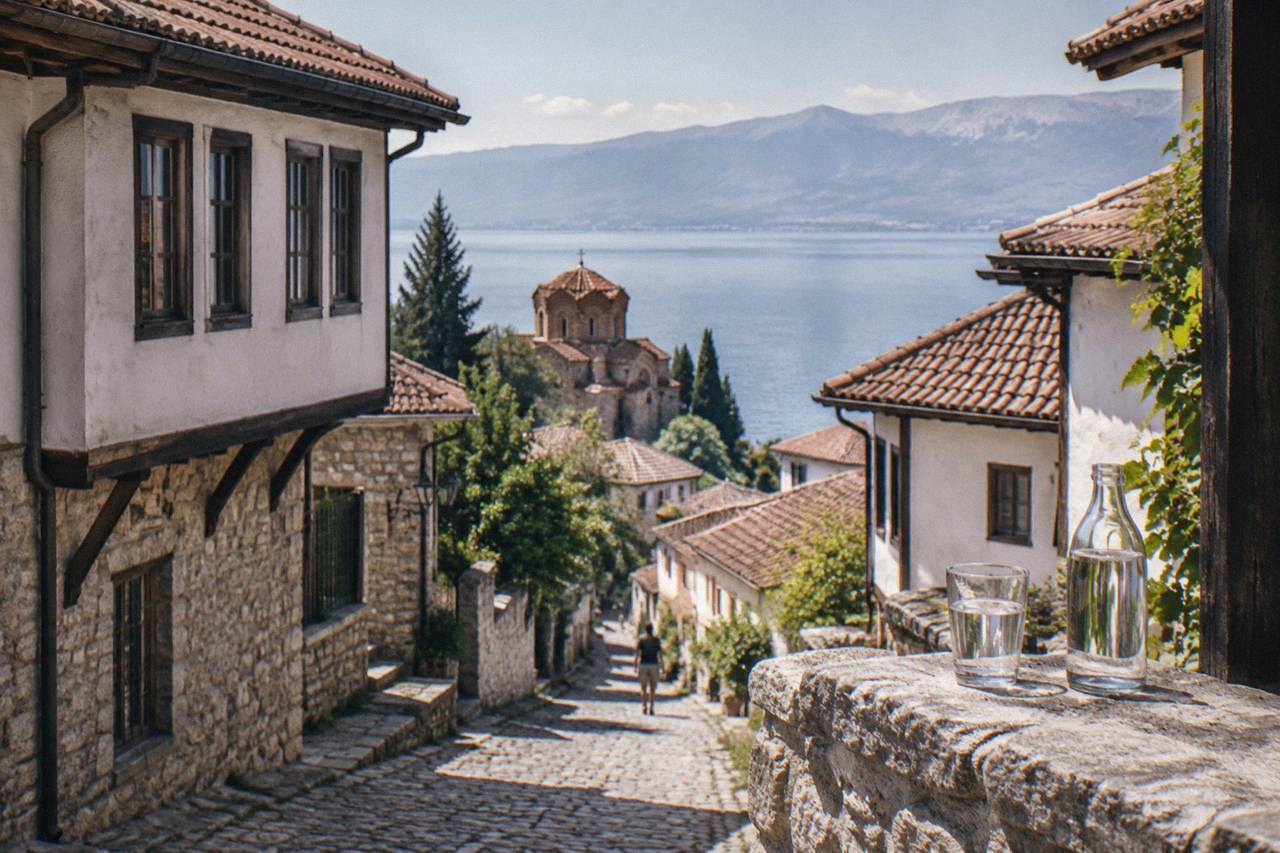
Drink bottled water during your stay in Ohrid and do not drink untreated water from Lake Ohrid under any circumstances. The lake's water quality in 2026 was tested for bathing, meaning swimming suitability, not for drinking, and the Institute of Public Health's results carry a specific exception at Grashnica beach, which rated Class III on the physico-chemical scale while the other tested points rated Class I.
That is the whole answer in one place, and the reasoning behind it matters. Bathing water standards and drinking water standards are different things. A sample graded Class I physico-chemically tells you the water is fit to swim in; it says nothing about whether the same water is fit to fill a glass. The same logic applies to the rowboats at the Crn Drim springs at St Naum and to every fountain, spring and stream around the lake and in Galicica National Park: none of it is a tested drinking supply for visitors, so none of it should be treated as one.
Bottled water avoids the question entirely, and it is the standard practice the local hospitality trade is built around. Cafes and restaurants around the Old Bazaar and the boardwalk serve bottled water by default, and shops throughout the old town stock it. If a tap in a guesthouse looks tempting after a hot climb up to Samuel's Fortress, the bottled option is always within a few minutes' walk.
For anything medical, the numbers that matter are emergency ones: ambulance 194, police 192, roadside assistance 196.
What Do The 2026 Water Tests Say About Lake Ohrid?
Testing of Lake Ohrid's bathing water between May and June 2026, reported by the Institute of Public Health, returned Class I results on the physico-chemical scale at the tested points, with one exception: Grashnica beach rated Class III, and most microbiological samples graded Excellent or Good for bathing. The same reporting flagged ongoing wastewater concerns, including properties not yet connected to the collector system that serves Ohrid and Struga, with coverage gaps noted between St Naum and Radozda.
The distinction between the two halves of that finding is where a careful reader earns their keep. The test results are good news for swimmers at the graded beaches: Class I physico-chemically and mostly Excellent microbiologically is a strong showing for a lake that receives summer visitor pressure. The structural concerns are about pipes and connections on land, not about the water you float in at Gradiste or Ljubanista today. Both things are true at once, and the water quality page linked from this section unpacks the fuller picture.
| Tested aspect (May to June 2026) | Reported result | What it means for a visitor |
|---|---|---|
| Physico-chemical quality, tested points | Class I | Fit for bathing |
| Physico-chemical quality, Grashnica beach | Class III | The one flagged exception |
| Microbiological bathing samples | Mostly Excellent or Good | Fit for bathing at graded points |
| Wastewater collector coverage | Properties unconnected; gaps from St Naum to Radozda | A land-side infrastructure issue, reported as ongoing |
Swimming itself, where and when to do it, is covered in detail on the guide to swimming in Lake Ohrid, and the broader question of the lake's cleanliness has its own page at is the water in Lake Ohrid clean. The short version for this page: swim at the established beaches, buy your drinking water in bottles, and keep the two uses of the lake separate in your planning.
Is Bottled Water The Easy Answer In Ohrid?
Bottled water is the straightforward answer for drinking in Ohrid: it is what cafes and restaurants serve by default, it is stocked in shops across the old town, and it removes every question about pipes, springs and testing regimes. Order it by name at the table, keep a bottle for the climbs, and treat every natural water source around the lake and in Galicica National Park as scenery rather than a drinking supply.
The practical habits follow from that. A day that takes in the Ancient Theatre, the lanes up to the fortress and a swim at the city beach involves real exertion at lake elevation, and the old town's lanes are on foot, so a bottle in the daypack earns its place. At mealtimes, ordering bottled water alongside the local wine or a tavche gravche is unremarkable and immediate. Nobody needs a filtration strategy for a few days in Ohrid; the commercial supply of bottled water does the job.
For visitors who prefer their water fermented, Ohrid has a growing tasting scene, and the related pick on this page is exactly that: a winery tour and tasting experience in town, which pairs a local winery visit with guided tasting. Read more about it on the S&S winery tour page, and Check availability if a tasting slot suits your dates.
How Cold Is Lake Ohrid Water Through The Year?
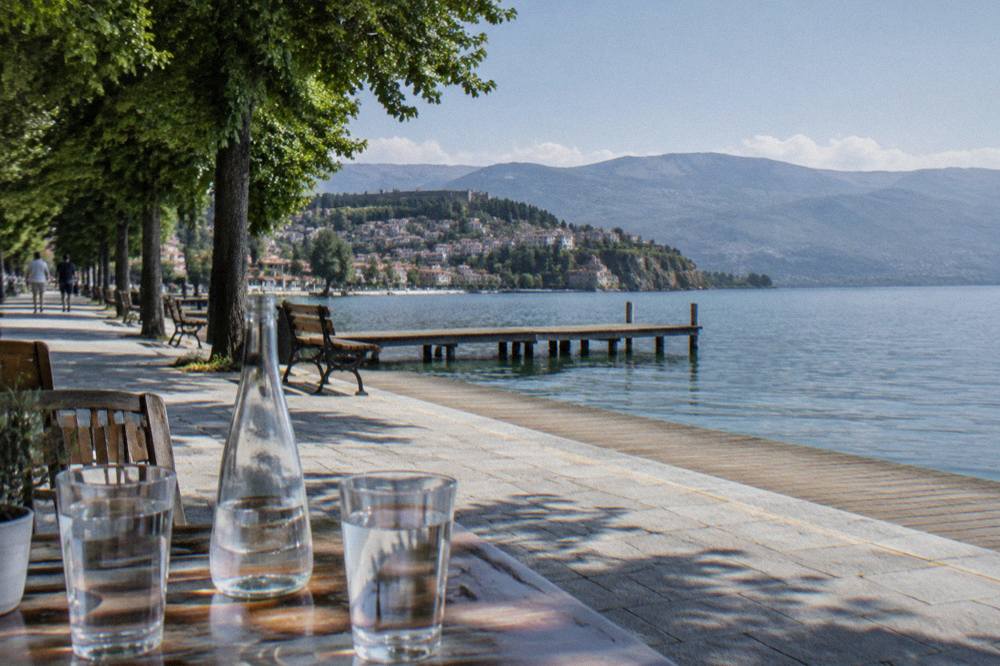
Modelled aggregator figures put Lake Ohrid's surface water temperature at about 4.6 C in January, about 22.9 C in July and about 23.5 C in August, with the UHMR multi-year October mean at 14.3 C for the 2001 to 2020 base period. The comfortable swimming window runs from July, when modelled surface readings first reach their summer warmth, and the water cools back through the mid-teens by October.
These are modelled values from lake temperature aggregators, plus one official multi-year mean, not a single station's daily reading, so treat them as planning guidance. They line up neatly with the air temperature pattern: modelled ERA5 climate normals for 1991 to 2020 give Ohrid a July mean daily high of 27.1 C and an August high of 27.6 C, against January lows averaging -0.8 C. The lake warms a month behind the air and holds its heat into September, which is why late summer remains a swimming month even as the evenings cool.
| Month | Modelled lake surface temperature (C) | Modelled mean daily air high (C), ERA5 1991 to 2020 |
|---|---|---|
| January | 4.6 | 5.0 |
| March | 7.2 | 10.0 |
| May | 14.9 to 18.7 across datasets | 19.5 |
| July | 22.9 | 27.1 |
| August | 23.5 | 27.6 |
| October | 14.7 (aggregator); UHMR October mean 14.3 | 17.4 |
Temperature and drinkability are separate questions, and it is worth keeping them separate in your head. A warm August lake is inviting for a swim at Kaneo or Trpejca, and the 2026 bathing results support that swim. None of it makes the lake a drinking source. The month-by-month detail, including what closes and what thins out off season, sits on the Ohrid weather by month page, and the shoulder-season picture is on the Ohrid in autumn and Ohrid in spring guides.
What About Ice, Coffee And Restaurant Drinks In Ohrid?
In Ohrid's cafes and restaurants, order bottled water and bottled or canned drinks, and drink coffee and tea freely: hot beverages are made with boiled water, which addresses the concern on its own. Ice is a standard part of the local hospitality trade's bottled-and-boiled economy, and the wine, rakija and beer that Ohrid is known for are bottled products with their own supply chains entirely separate from the lake.
This is the level of the question where overthinking costs more than it saves. The town's visitor economy runs on bottled soft drinks, bottled wine and boiled coffee, and has for decades. A meal of Ohrid trout with a glass of Vranec, or a tasting flight at a local winery, involves no tap water decision at all. The Macedonian wine tradition and the rakija culture each have their own guide pages, and a winery tasting is one of the more enjoyable ways to spend an evening in town without a water filter in sight.
One practical note that belongs here rather than anywhere else: the lakeside climate is warm from June through September, with modelled August highs of 27.6 C, and the walk from the boardwalk up through the old town to the fortress is a sustained climb. Carry the bottled water on that walk. Hydration in Ohrid is a shopping task, not an engineering one.
Where Else Does Water Matter On An Ohrid Trip?
Water shapes most of a day in Ohrid beyond drinking: the boat cruises to St Naum and the Bay of Bones, the swimming beaches at Gradiste, Lagadin, Ljubanista, Potpesh and Labino, the rowboats at the Crn Drim springs, and the 2026 navigation limits that restrict jet skis and night boating on the lake between July and October. Planning around water means planning around the season, since boats to St Naum run roughly May to October and thin out in winter.
The 2026 rules deserve one clear paragraph because they change the summer experience. Under the government decision of 2 June 2026, jet skis are banned on the lake from 1 July to 31 August between 11:00 and 19:00, boats are restricted at night from 3 June through the summer and into late September, with a further October limit. For a swimmer or a kayaker this is good news, and for anyone booking an evening cruise it is a reason to check timings with the operator's live listing.
Around the town itself, the practical questions visitors ask cluster in a handful of places. The water-adjacent ones are whether it is possible to swim in Lake Ohrid and where to stay in Ohrid relative to the beaches; the arrival ones cover the bus from Skopje to Ohrid and the taxi cost from Skopje to Ohrid. Each has its own page with the figures that matter.
Common Questions About Drinking Water In Ohrid
Can I Drink The Water In Ohrid?
Drink bottled water in Ohrid and do not drink untreated water from Lake Ohrid or from any spring, fountain or stream around the lake. The 2026 water testing covered bathing suitability, not drinking safety.
Is Lake Ohrid Water Safe To Swim In?
May to June 2026 testing by the Institute of Public Health rated the tested bathing points Class I physico-chemically, with Grashnica beach the exception at Class III, and most microbiological samples graded Excellent or Good for bathing.
How Warm Is Lake Ohrid For Swimming?
Modelled figures put the July surface at about 22.9 C and August at about 23.5 C, with the comfortable swimming window starting in July and cooling through the mid-teens by October, when the UHMR multi-year mean is 14.3 C.
Can I Drink From The Springs At St Naum?
Treat the Crn Drim springs at St Naum as scenery, not a drinking supply. The rowboats there take visitors across the springs for the view, and bottled water is available in the shops and cafes around the monastery area.
What Emergency Numbers Apply In Ohrid?
Ambulance is 194, police is 192 and roadside assistance is 196.
Bottled water, boiled coffee and a swim at a tested beach: that is the water picture in Ohrid, and it leaves plenty of time for the parts of the lake you actually came for.