What Is Ohrid Famous For?
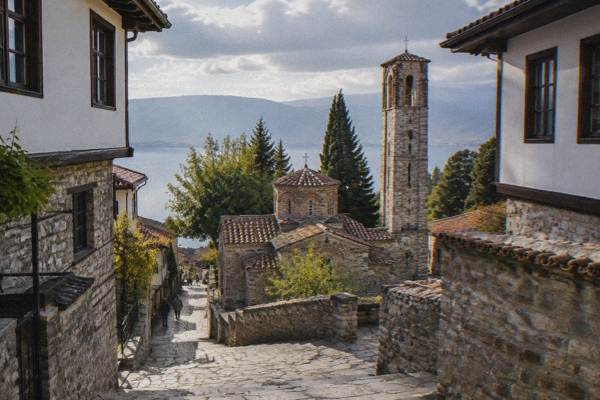
Ohrid in North Macedonia is famous for its Byzantine churches, the UNESCO World Heritage old town, Lake Ohrid and the St Naum monastery. Here is what the sources actually say.
Ohrid, a lakeside town in North Macedonia on the shore of Lake Ohrid, is famous for having a whole historic region inscribed as a UNESCO mixed World Heritage site, for its cluster of Byzantine churches above a freshwater mountain lake, and for the St Naum monastery at the Crn Drim springs. The Ohrid Travel Guide covers each of these in depth, from the fortress walls to the festival calendar.
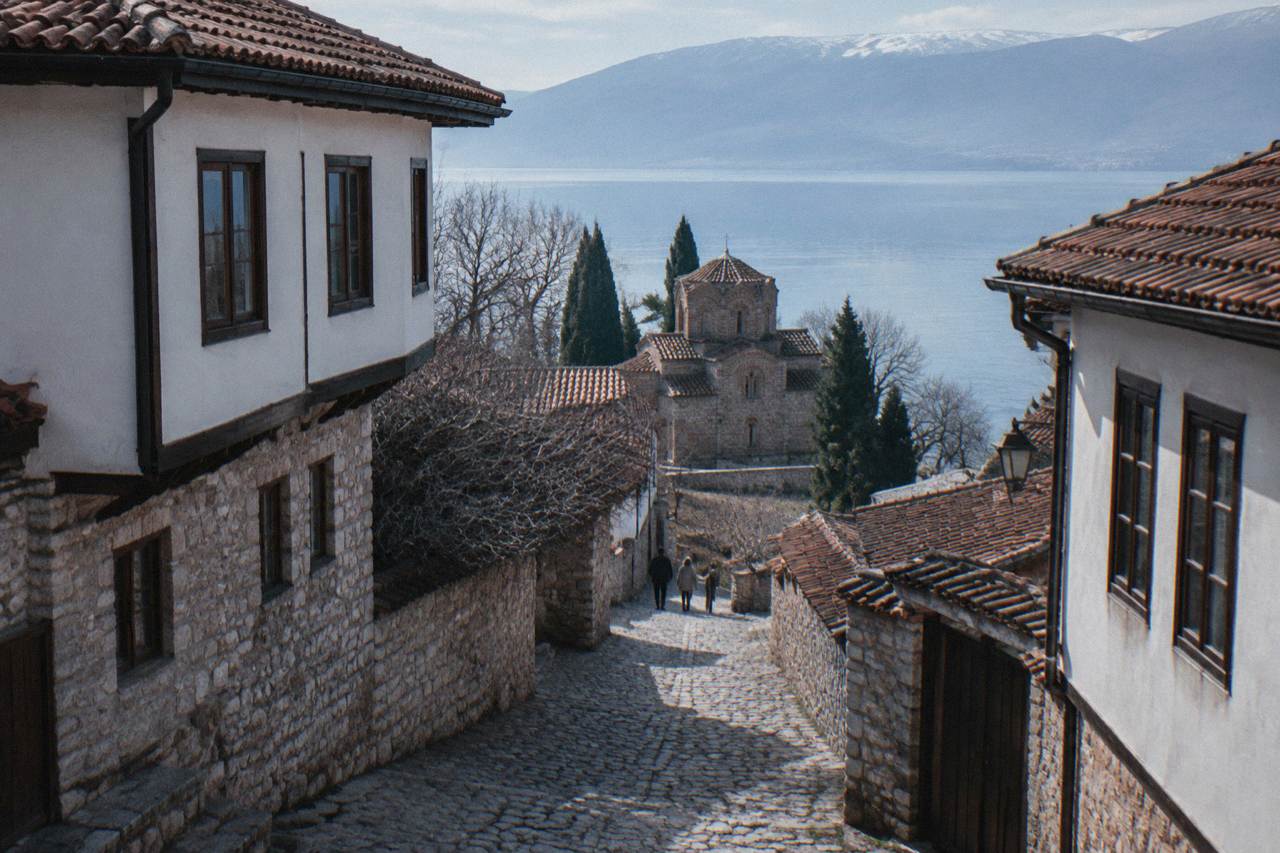
Ohrid is famous for the density of its heritage in one small place: a UNESCO mixed site covering the Natural and Cultural Heritage of the Ohrid Region, inscribed in 1979 for its natural value and 1980 for its cultural value and extended to the Albanian part of the lake in 2019, plus the oldest Slav monastery at Plaosnik, more than 800 Byzantine-style icons from the 11th to the end of the 14th century, and a lake holding over 200 endemic species, including 17 endemic fish.
Those figures come from the UNESCO listing itself, and they explain why a town of this size carries the cultural weight of a capital. The property spans roughly 94,729 hectares across the lake and its shores, which means the protection covers not just the churches but the water they stand above. The lake has existed for about two to three million years, per the same UNESCO description.
Few towns of comparable size sit inside a mixed site of that scale. The practical consequence for a visitor is simple: the old town, the lake and the monastery landscape are treated as one heritage unit, and the town's identity follows from that pairing. If the question is what people mean when they name Ohrid, the answer starts with that combination of Byzantine architecture and an ancient lake ecosystem, not with any single monument.
The sections below take each part in turn: the churches and the UNESCO listing, the fortress and the museum sites, the lake and St Naum, and the summer festivals. Prices and dates are given only where the primary sources publish them, and the question of how many days you need in Ohrid is covered separately.
Ohrid's Byzantine Churches And The UNESCO World Heritage Site
The church core of Ohrid is famous for the Church of St John at Kaneo, St Sophia, Plaosnik, the Perivleptos and Icon Gallery complex, and the museum institute's sites, whose tickets list 120 den for domestic visitors and 150 den for foreign visitors, with the Perivleptos complex holding the Icon Gallery where those 800 Byzantine-style icons are kept.
The Icon Gallery sits at the Perivleptos complex on Klimentov Univerzitet Street, and the institute's own page gives its hours: 09:00 to 14:00 in winter (1 October to 30 April) and 09:00 to 17:00 in summer, closed Monday. The same institute runs Robev Family House on Tsar Samoil Street, with two summer shifts from 1 May, and the Bay of Bones on the water near Peshtani. The children and student rate of 60 den is reported on the ticket page.
What makes the church ensemble famous is not just the count but the documentation. UNESCO's listing names Plaosnik as the site of the oldest Slav monastery, St Panteleimon, and describes an icon collection spanning the 11th to the end of the 14th century. The Church of St Sophia and the Ancient Theatre are the traditional venues of the Ohrid Summer Festival, which places live performance inside the heritage buildings each July and August.
| Museum institute site | Location | Winter hours (1 Oct to 30 Apr) | Closed |
|---|---|---|---|
| Robev Family House | Tsar Samoil St 62 | 09:00 to 15:30 | Monday |
| Bay of Bones (Museum on Water) | Gradishte, Peshtani | 09:00 to 15:30 | Monday |
| Icon Gallery (Perivleptos) | Klimentov Univerzitet St | 09:00 to 14:00 | Monday |
Entrance fees of about 150 MKD are reported for St John at Kaneo, St Sophia and Plaosnik as well, but those figures come from secondary sources rather than an official page, so confirm at the door. A guided walk is one way to see the whole church sequence in order; the small-group option is covered in the walking tour guide, and a fuller circuit of the town appears on the city tour listing below.
Samuel's Fortress, The Ancient Theatre And The Old Town Above The Lake
Above the old town, Ohrid is famous for Samuel's Fortress, the walls that climb from the lakeshore, and the Ancient Theatre, a late Hellenistic structure built at the end of the 3rd or start of the 2nd century BC whose capacity rose to 5,000 after the epiteatron was added, first excavated in 1935.
The theatre's dates come from the museum institute's own page on the monument, which also notes its role today as a performance venue during the Ohrid Summer Festival. The fortress above it has a municipal revitalisation plan budgeted at over 11 million denars, reported to include a summer stage and illumination, though the official fortress page publishes no ticket price or opening hours.
The old town itself is famous as a pedestrian landscape: the lanes climb from the lake to the fortress, the Old Bazaar sits in the lower town, and the whole stretch is on foot. The history of the settlement and how old Ohrid is fills in the long chronology behind the walls. For the fortress specifically, the dedicated guide pages carry what is known and what is not.
A guided circuit that ties the fortress, the theatre and the churches into one walk is the most direct way to take the famous core in a single pass. The related tour below is one such option: Check availability on the operator's live listing for the days you plan to be in town.
Prefer to take in the old town from the water? Book a boat tour here.
Lake Ohrid, Boats And The St Naum Monastery
The lake is what makes Ohrid famous beyond the churches: Lake Ohrid sits at about 693 m above sea level, holds over 200 endemic species including 17 endemic fish, and stretches to the St Naum monastery near the Albanian border, where the entrance is listed at 150 MKD per person and a rowboat through the Crn Drim springs runs about 5 EUR.
The St Naum figures come from a cruise operator's published list, so treat them as secondary and confirm on site. The monastery sits about 4 km from the Tushemisht border crossing, a roughly 10-minute drive, and the crossing is reported open 24/7 for passenger vehicles and pedestrians, which is why the St Naum area doubles as the natural edge of a two-country visit. The wider set of guides lives on Ohrid Travel Guide.
Boats connect the town with the far shore. One operator, Boat Armada, publishes a full-day cruise from Ohrid port to St Naum of about 7 hours, from 1,200 den for an adult and 600 den for a child, with stops that can include the Bay of Bones. The Bay of Bones, a reconstructed pile-dwelling museum on the water at Gradishte, charges 150 MKD per person per the same operator's list, and the museum institute's own page gives its summer hours as 09:00 to 16:30, closed Monday.
Whether the water is swimmable and what lives in it are questions with their own answers, and the swimming page covers the season and the 2026 water-quality results. Modelled surface temperatures put July around 22.9 C and August around 23.5 C, with the swimming season running from July.
The Galicica Ridge And The View Over Two Lakes
Galicica National Park, North Macedonia's second national park, founded in 1958 with 22,750 hectares between Lake Ohrid and Lake Prespa and the Magaro peak at 2,254 m, is famous as the mountain wall that separates the two lakes, with Lake Prespa sitting about 148 m above Lake Ohrid across the ridge.
The park is open year-round, though heavy snow can close the main road, typically between January and March. Access by vehicle is charged at 250 MKD per car with no per-passenger fee, while 100 MKD applies only to someone entering on foot from the Ohrid-side gate. Those figures come from a park guide rather than the park's own site, so confirm at the gate.
The two-lakes geography is part of what the region is known for: the UHMR gauges put Lake Prespa at 841.36 m and Lake Ohrid at about 693 m on the same October bulletin, a difference of roughly 148 m across the Galicica ridge. Hiking routes across the park, including guided options, are covered in the hiking pages.
The Ohrid Summer Festival And The August Water Festival
Ohrid is famous in July and August for the Ohrid Summer Festival, whose 66th edition opened on 12 July 2026 at the Ancient Theatre and runs by tradition to 20 August, and for the Ohrid Water Festival from 12 to 30 August 2026, which includes the 25 km swimming marathon from St Naum to Ohrid harbour on 22 August and a separate 33 km stand-up-paddle marathon around the lake on 26 August.
The swimming marathon, the Klime Savin route, drew 16 swimmers in 2026, 11 men and 5 women, with a prize fund of USD 15,000. The Balkan Festival of Folk Songs and Dances held its 65th edition from 3 to 6 July 2026 at the Grigor Prlichev cultural centre, and the Struga Poetry Evenings ran their 65th edition from 24 to 29 June 2026 in nearby Struga. Dates for the 2027 editions have not been announced.
| Event | 2026 edition | Venue or route |
|---|---|---|
| Ohrid Summer Festival (66th) | 12 July to 20 August | Ancient Theatre, St Sophia |
| Balkan Festival of Folk Songs and Dances (65th) | 3 to 6 July | Grigor Prlichev cultural centre |
| Struga Poetry Evenings (65th) | 24 to 29 June | Struga |
| Swimming marathon (39th) | 22 August | St Naum to Ohrid harbour, 25 km |
| SUP marathon | 26 August | Around the lake, 33 km |
Concerts inside the Ancient Theatre and St Sophia are the festival experiences most tied to the heritage buildings, and the festival calendar is one reason the peak season runs June to September, with August the busiest month.
Where Ohrid Sits On The Map
Ohrid sits in the southwest of North Macedonia, about 170 km by road from Skopje, on an inland mountain lake at about 693 m above sea level, close enough to the Albanian border that Pogradec and Tirana work as onward stops, with the town's airport, Ohrid St Paul the Apostle, about 10 km from the centre, a position that shapes both its climate and its season.
The lake's position in a mountain basin is what gives the town its climate: modelled ERA5 reanalysis normals for 1991 to 2020 put July's mean daily high at 27.1 C and January's mean daily low at -0.8 C.
That altitude and the inland setting matter for planning. Snow falls in Ohrid in winter, and the same ERA5 normals give December 92.6 mm and November 90.4 mm of precipitation, against 32.9 mm in August. The question of when to visit the lake works through the trade-offs month by month.
Common Questions About What Ohrid Is Famous For
What Is Ohrid Famous For?
Ohrid is famous for a UNESCO mixed World Heritage site covering its Byzantine churches and Lake Ohrid, the oldest Slav monastery at Plaosnik, more than 800 Byzantine-style icons from the 11th to 14th century, Samuel's Fortress, the Ancient Theatre, and the St Naum monastery at the Crn Drim springs.
Why Is The Ohrid Region A UNESCO World Heritage Site?
The Natural and Cultural Heritage of the Ohrid Region was inscribed in 1979 for natural value and 1980 for cultural value, covering about 94,729 hectares, and was extended to the Albanian part of the lake in 2019. The lake is recognised for over 200 endemic species, including 17 endemic fish.
Is Ohrid Famous For A Lake Or For Churches?
Both, and as one unit: the UNESCO listing is mixed, covering the lake ecosystem and the Byzantine heritage together. The church core includes St John at Kaneo, St Sophia, Plaosnik and the Perivleptos and Icon Gallery complex, while the lake reaches to the St Naum monastery near the Albanian border.
What Food Is Ohrid Famous For?
The Ohrid trout is the local food name tied most directly to the lake, and it has its own page on this site. Beyond that, the destination's food pages cover tavche gravche, rakija and Macedonian wine in detail.
What Is The Ancient Theatre Of Ohrid Famous For?
The theatre was built at the end of the 3rd or start of the 2nd century BC in the late Hellenistic period, was first excavated in 1935, and its capacity rose to 5,000 after the epiteatron was added. Today it is a main venue of the Ohrid Summer Festival.
Is Ohrid Famous For Pearls?
Ohrid pearl is a local craft product the town is associated with, and the workshops have a dedicated page on this site covering what is made there.
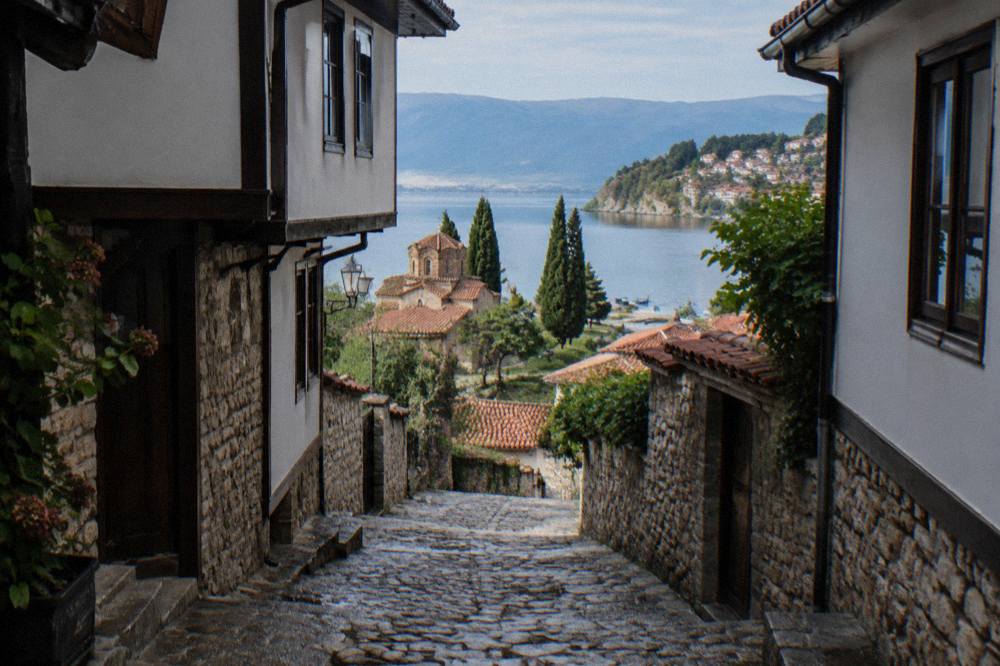
Taken together, the famous Ohrid is a single compact proposition: a fortress-crowned old town of Byzantine churches inside a UNESCO mixed site, sitting on a lake millions of years old that runs all the way to a monastery at the border springs, with a festival calendar that fills the ancient stone venues every summer.