Is The Water In Lake Ohrid Clean?
What monitoring, UNESCO reporting and the wastewater collector project say about water quality in Lake Ohrid, and how to plan a swim around it.
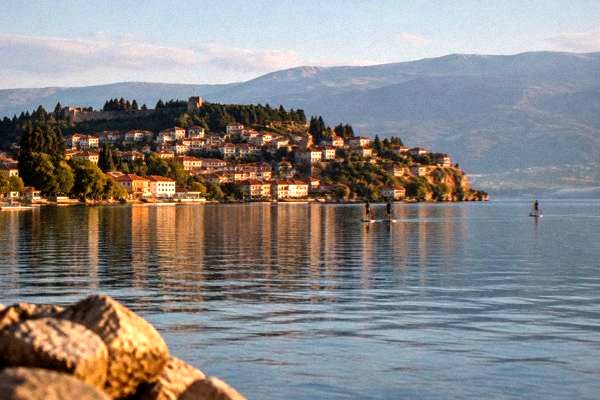
Lake Ohrid is the freshwater mountain lake that Ohrid, in North Macedonia, sits on, and the question of how clean its water is has two separate answers. In the open lake and at most of the bathing spots tested in summer, the water is in good condition. At a small number of nearshore points close to town, repeated problems with wastewater have been reported for years, and the institutions that monitor the lake say so openly. The published testing, the UNESCO record and the municipal collector project give a clear picture, without guessing at anything in between. The Ohrid Travel Guide covers the lake in depth, from swimming in Lake Ohrid to the wildlife living in the lake.
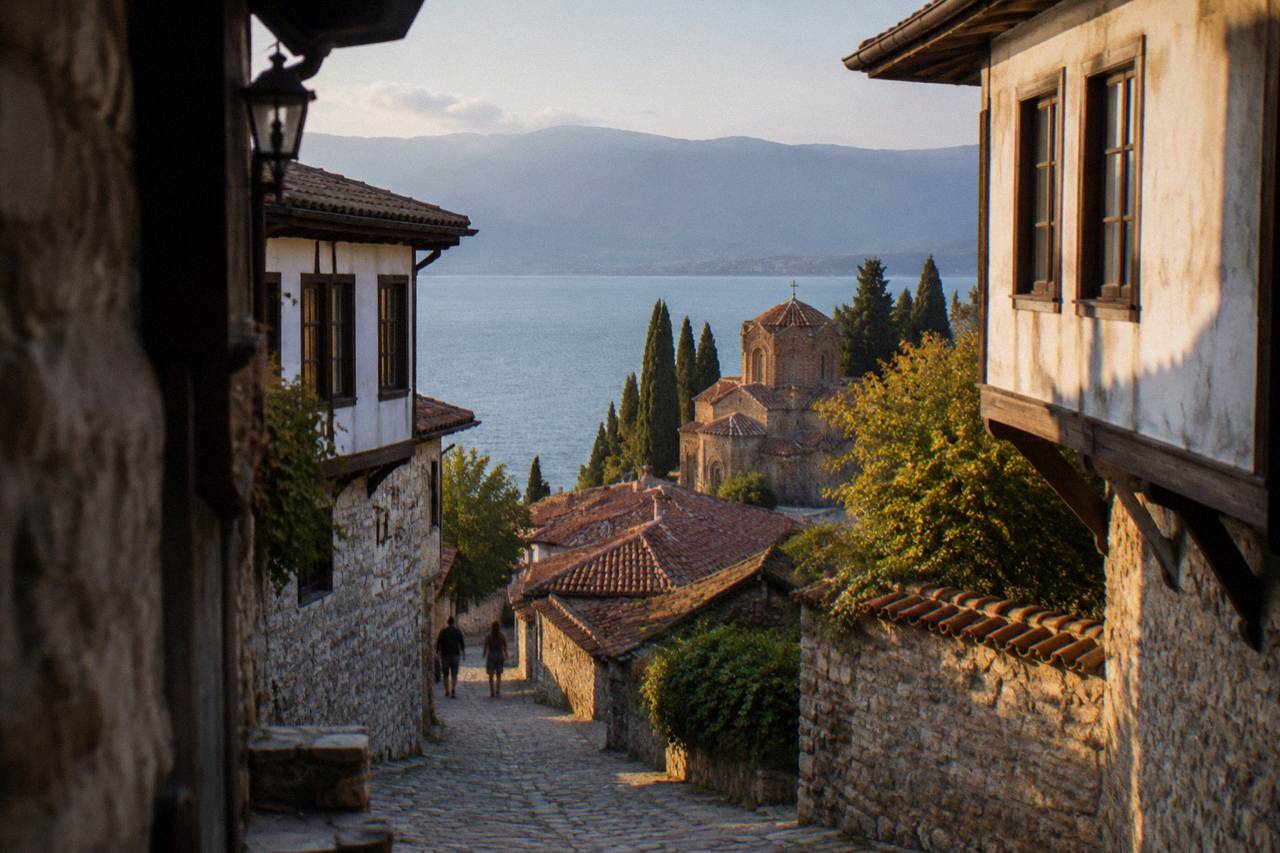
In the main body of the lake and at most of the bathing locations monitored in summer, the water tests well, while a handful of nearshore points around Ohrid town have repeatedly been flagged for wastewater pollution, and the fix, a collector sewer network, is still incomplete between St Naum and Radozda. In plain terms: swim at the established beaches away from town drains and you are swimming in water that the summer monitoring programme has repeatedly found to be in good condition, while the spots near urban outfalls are the ones with a documented history of problems. The distinction matters more here than in most lake destinations because Lake Ohrid is a shared basin, and the condition of the water near the shore is a local question, not a whole-lake one. Reporting by the Institute of Public Health on the 2026 bathing season, covered by regional media, describes exactly this split: broadly good results with specific exceptions that recur year on year.
The lake itself is an unusual body of water. It sits at about 693 m above sea level, it is spring-fed, and it drains out through the Crn Drim, with the best-known springs clustered near the St Naum monastery at the southern end. UNESCO's own listing for the Ohrid region records more than 200 endemic species in the lake, including 17 endemic fish, which is the kind of biodiversity that only persists where a large, stable, oxygen-rich water body has existed undisturbed for a very long time. That ecological record is the strongest general evidence that the open lake is not a degraded one.
The problems are concentrated where people are. Properties that were never connected to the sewer network, defects in the collector pipes themselves, and stretches of shoreline with no collection at all mean that treated water does not yet reach every bay. None of that is hidden: it has been reported in the Macedonian press, in UNESCO's own review of the site, and in the government's funding decisions for the repair works.
Where Does Lake Ohrid's Water Come From?
Lake Ohrid is filled mainly by springs, the largest and best known of them at the Crn Drim heads near the St Naum monastery, and it empties through the Black Drim river at Struga, so the water at any given beach has usually arrived through kilometres of karst rather than through surface runoff from the town. The spring system is the reason the open water stays so clear: what enters the lake has been filtered through rock. UNESCO's inscription documents list the lake and its endemic fauna as the natural half of the mixed World Heritage property, inscribed in 1979 and 1980, with the property extended to the Albanian side of the lake in 2019. The lake basin is shared between North Macedonia and Albania, which is why the water-quality conversation is a two-country one and why UNESCO keeps pressing both governments on it.
For a swimmer, the geography tells you most of what you need. The southern and eastern shorelines, the ones closest to the big springs and furthest from the urban network around Ohrid town and Struga, are where the spring-fed character of the lake is most intact. The western shore near town is where the collector network matters most.
| Fact about the lake basin | Figure | What it means for water quality |
|---|---|---|
| Endemic species recorded by UNESCO | More than 200 | A stable, long-undisturbed ecosystem in the open lake |
| Endemic fish species | 17 | Biodiversity that depends on sustained water quality |
| Main inflow | Springs, incl. the Crn Drim heads at St Naum | Spring-fed water filtered through karst rock |
| Outflow | Black Drim at Struga | Water leaves the basin rather than stagnating |
| UNESCO property status | Mixed site, inscribed 1979 and 1980, extended 2019 | The lake is monitored internationally, not just locally |
| Shared between | North Macedonia and Albania | Protection and pollution are both transboundary questions |
Seeing the lake from the water is the fastest way to understand how abruptly conditions change from one bay to the next, and the boat products above, together with the Lake Ohrid boats and ferries guide, cover the main options from the harbour. A walking tour of the old town, such as the Ohrid city tour, the best of Ohrid, runs along the shoreline stretch where the nearshore testing points sit, which makes the contrast between the open lake and the urban shore easy to see for yourself: Check availability.
Fancy getting out on that clear water yourself? Book a stand up paddle tour here.
What Summer Testing Covers On Lake Ohrid?
Bathing water around Ohrid is sampled during the summer season by the national public health institutions, and the published results for 2026 show most sampled locations meeting the standards, with a short recurring list of nearshore exceptions in and immediately around Ohrid town where results have been worse. The programme covers the swimming beaches, not the deep lake, and that is the right way to read it: a beach result tells you about that beach and its immediate catchment, including any drain or canal mouth nearby. Reporting on the May and June 2026 sampling round described the physico-chemical results as broadly meeting the standard, with Grashnica beach, the stretch closest to Ohrid's urban outfalls, the standing exception. Microbiological results at most sampled points were reported in the top quality bracket, with a few locations again falling short.
No class labels are needed to act on this. The pattern is stable enough across seasons that the practical rule writes itself: the established beaches on the eastern and southern shore test well year after year, and the points nearest the town's drainage infrastructure are the ones that keep appearing in the exception column. If you want the current season's numbers before you swim, the results are published each summer by the public health institute, and a beach's most recent result is a better guide than any general claim about "the lake".
Water temperature is a separate question from cleanliness, and it is the one people actually notice first. The table below shows modelled monthly surface values for the lake, aggregator estimates rather than station measurements, alongside the one official multi-year figure the hydrological service publishes for October. The practical swimming window, July to September, lines up with the warmest modelled water.
| Month | Modelled surface temperature (C) | Note |
|---|---|---|
| January | about 4.6 | Modelled aggregator value |
| February | about 5.4 | Modelled aggregator value |
| March | about 7.2 | Modelled aggregator value |
| April | about 10.5 | Modelled aggregator value |
| May | about 14.9 to 18.7 | Modelled, datasets differ |
| June | about 19.4 to 22.5 | Modelled, datasets differ |
| July | about 22.9 | Modelled aggregator value |
| August | about 23.5 | Modelled aggregator value |
| September | about 19.7 to 25.0 | Modelled, datasets differ |
| October | about 14.7 | Modelled; UHMR multi-year October mean is 14.3 |
| November | about 10.3 | Modelled aggregator value |
| December | about 6.0 | Modelled aggregator value |
What Is The Wastewater Problem Around The Lake?
A regional collector system carries sewage from Ohrid and Struga to a treatment plant at Vranishta, but reporting shows properties and hotels that were never connected, defects in the network that let leaks through, and a stretch from St Naum to Radozda with no collection at all, which is why certain nearshore points keep failing while the open lake stays sound. The system exists and works where it is complete; the failures are at the edges. Macedonian investigative reporting in 2026 described the St Naum to Radozda stretch as full of unconnected dischargers, with no filters and no treatment for the wastewater entering that part of the basin. The repair effort is funded and moving: projects in the 2026 budget, reported at roughly three-quarters of a million to 1.4 million euros depending on scope, cover pump and generator modernisation at the treatment plant. The gap between a funded modernisation project and a fully connected shoreline is where the pollution story currently sits.
This is also the fact that keeps the question alive internationally. UNESCO's reviews of the Ohrid region property have repeatedly named wastewater management among the conditions it wants addressed, alongside urban development pressures on the shoreline. The pollution that does reach the lake is a known quantity with a known engineering fix, not a mystery, and the monitoring exceptions cluster exactly where the network is incomplete.
Does UNESCO Status Protect The Water In Lake Ohrid?
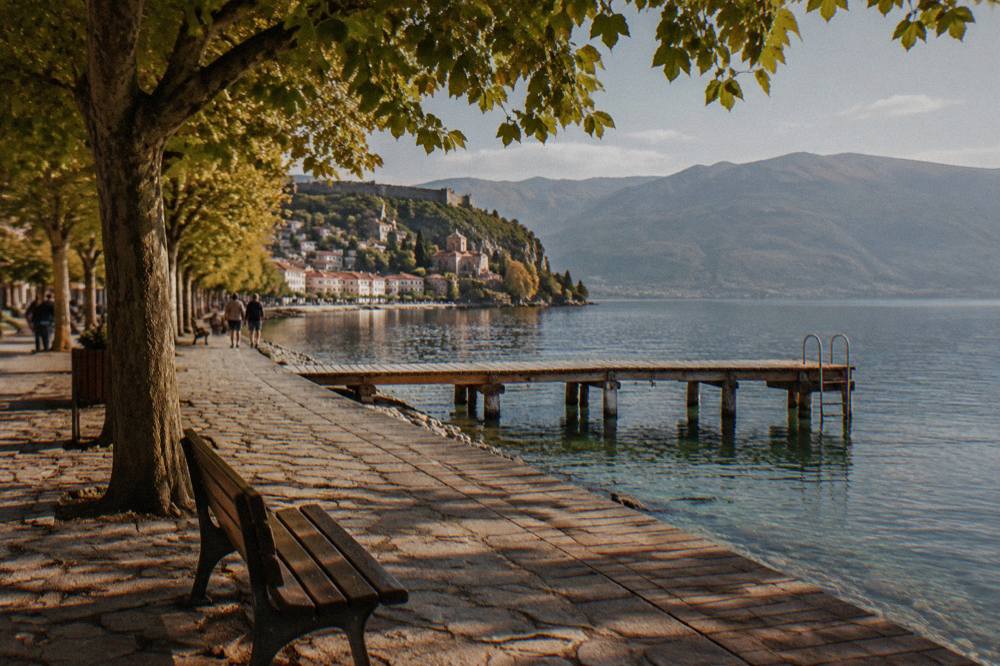
A year earlier, in 2025, the committee had concluded that the conditions for danger listing were met and deferred action, which is why the 2026 outcome was watched closely. For the water itself, the practical meaning is that the pressure is documented, the recommendations are specific, and the scrutiny continues.
The listing's natural half is what ties water quality to world heritage status at all. UNESCO's citation for the property records the lake's endemic fauna and its long ecological continuity as the reasons the natural values were inscribed in 1979. Degradation of water quality would strike directly at those values, which is why the committee's recommendations lean so heavily on completing the collector network and controlling shoreline development. Readers deciding whether the lake is "worth it" can look at the question from both ends in is Ohrid worth visiting and the general guide to Lake Ohrid.
How To Plan A Swim Around Water Quality In Ohrid?
Swim at the established beaches on the eastern and southern shore, check the current season's bathing results if you want numbers rather than patterns, and treat the nearshore points inside Ohrid town, especially around Grashnica and canal mouths, as the places where the documented problems concentrate. The lake is not a uniform body of water from a bather's point of view, and a ten-minute drive along the shore changes what is upstream of you. The swimming season itself runs roughly July to September, when the modelled surface temperature is above 20 C, and the detailed beach-by-beach picture is in is it possible to swim in Lake Ohrid?.
First, distance from the urban drainage network is the single best predictor of a good result in the testing reports, and the beaches east and south of town are the ones that consistently test well. Second, the town's drinking water is a separate system from the lake, and the question of what comes out of the tap is answered on its own page: can I drink the water in Ohrid?. Third, if a summer report flags a specific beach, that flag is about that beach, and the rest of the shoreline is unaffected; the monitoring is granular by design. Finally, remember that the lake's wildlife, from its endemic trout to its smaller species, is part of what the testing protects, and the ferry and boat schedule page is the practical companion if you plan to reach the far shore under your own steam.
Common Questions About Lake Ohrid Water
Questions about the lake's water come down to a few recurring themes: how clean it is at the beaches, whether the whole lake shares that condition, what is being done about the weak points, and whether the tap water is a different question entirely. The answers below pull together what the monitoring record, the UNESCO decisions and the collector project reporting establish, in the same terms as the sections above.
Is the water in Lake Ohrid clean?
At most monitored bathing locations, yes, the summer testing finds the water in good condition, and the open spring-fed lake is ecologically intact with more than 200 endemic species recorded by UNESCO. A short list of nearshore points in and around Ohrid town, above all Grashnica beach, repeatedly fall short because of wastewater from unconnected parts of the shore network.
Is it safe to swim in Lake Ohrid?
The swimming beaches that the seasonal monitoring covers have mostly returned good results, and swimming is a normal part of an Ohrid summer from roughly July to September, when the modelled surface temperature is above 20 C. The documented problem points are specific nearshore locations near town drainage, not the lake as a whole.
Why do some beaches have worse results than others?
Because the sewer collector network is incomplete in places: properties and hotels that were never connected, defects in the pipes, and the uncollected stretch between St Naum and Radozda all discharge into particular bays. Beaches far from those outfalls, on the eastern and southern shore, consistently test better.
Is anything being done about the wastewater?
Yes. Ohrid and Struga are served by a collector system treating wastewater at Vranishta, and 2026 budget projects fund pump and generator modernisation at the plant, at costs reported in the hundreds of thousands of euros up to about 1.4 million depending on scope. UNESCO's 2026 decision requires a joint report by 1 February 2029 on progress including wastewater management.
Can I drink the water in Lake Ohrid?
Lake water is not treated drinking water, and the town's supply is a separate system. The tap water question has its own answer on the page about drinking water in Ohrid.
Does UNESCO say the lake is in danger?
No.