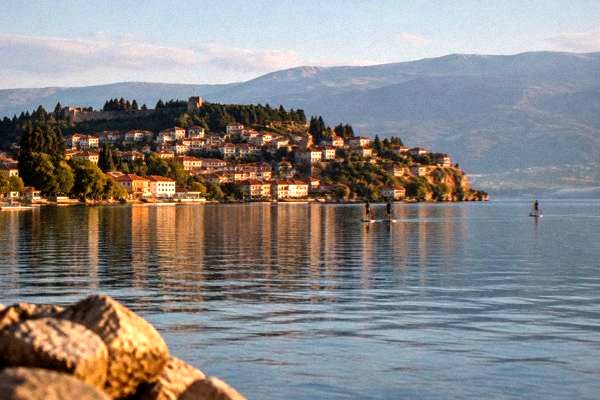
Swimming In Lake Ohrid: Water Quality, Temperature And Entry Points
Lake Ohrid fills a mountain basin at about 693 m above sea level next to the old town of Ohrid, and from about July its surface is warm enough for swimming on the modelled figures. This guide sets out the numbers, the swimming spots and the practical details.
Short answer
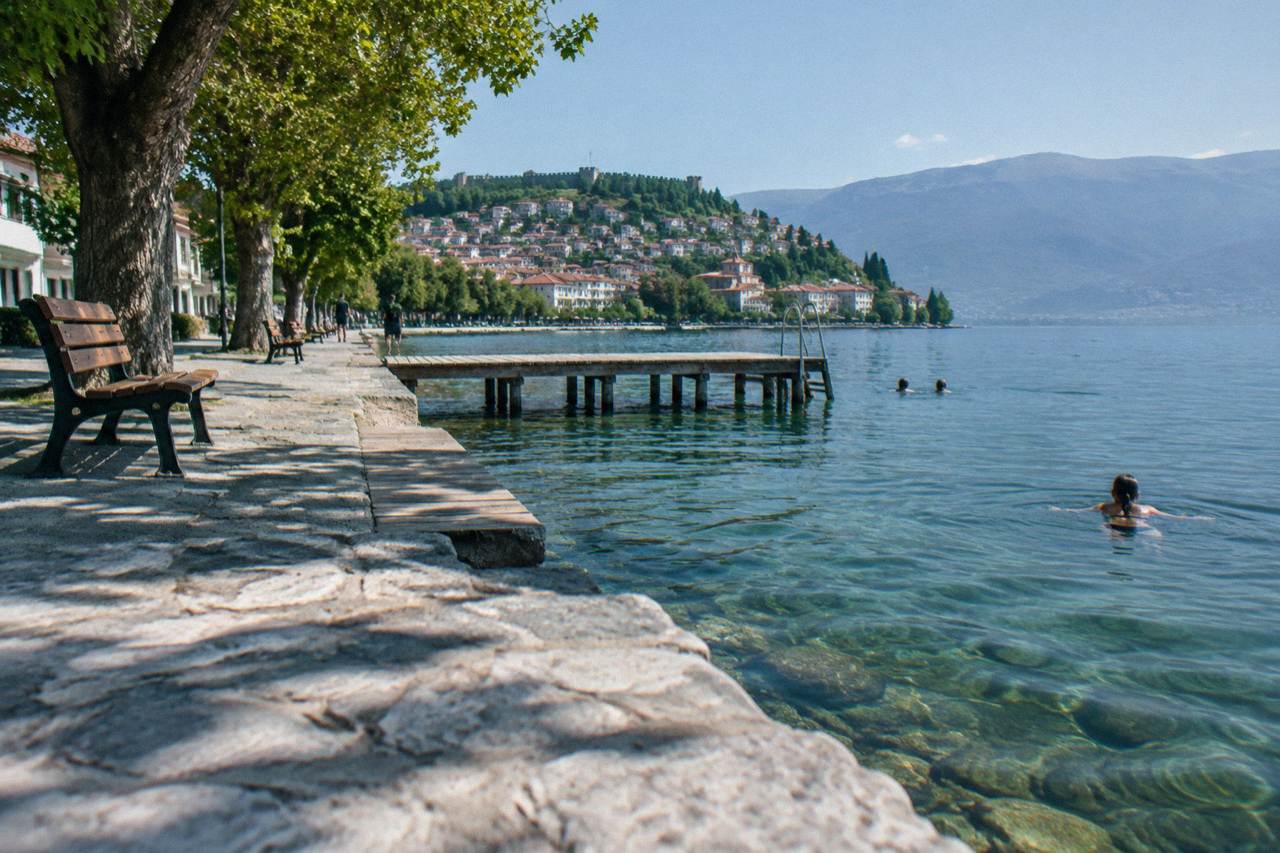
Lake Ohrid is a freshwater mountain lake next to Ohrid, North Macedonia, and swimming is a normal summer activity there. Modelled surface temperatures reach about 22.9 C in July and 23.5 C in August, so the swimming season runs roughly July to September at the shore spots around the town.
Lake Ohrid sits at about 693 m above sea level beside the old town of Ohrid, a UNESCO mixed World Heritage site in North Macedonia, and for roughly a quarter of the year its surface is warm enough for swimming. The Ohrid Travel Guide covers the lake end to end, and this page gathers what matters for a swim: how the water warms through the year, where the entry points sit, and what the 2026 lake rules changed. Freshwater, not sea: the lake shares its basin with Albania and drains through the Crn Drim, and everything below applies to that inland water.
How Warm Does Lake Ohrid Get For Swimming?
Modelled surface temperatures put the lake at about 22.9 C in July and about 23.5 C in August, with an October multi-year mean of 14.3 C from the hydrological service, so comfortable swimming at the shore runs roughly from July into September on those figures. The lake is a deep mountain basin, and spring warms the surface slowly: the modelled April figure is about 10.5 C, still cold for anything but a short dip.
The monthly surface figures come from aggregator models rather than a single measurement programme, so read them as a planning guide, not a promise for any given week. The October mean of 14.3 C is the hydrological service's own multi-year figure for the lake, calculated on a 2001 to 2020 base. Together they describe a lake that heats late and holds its warmth into early autumn, which is why late August and early September swims sit in warmer water than the air temperature alone suggests.
Air temperatures frame the same story. The ERA5 reanalysis for the old-town grid point, modelled 1991 to 2020 normals, gives mean daily highs of 24.2 C in June, 27.1 C in July and 27.6 C in August, falling to 17.4 C in October. Rain stays low in midsummer, about 33 to 35 mm in July and August, and picks up to about 76 mm by October. The full monthly picture is on the Ohrid weather by month page.
| Month | Modelled lake surface (C) | Mean daily high, air (C) | Rain (mm) |
|---|---|---|---|
| January | about 4.6 | 5.0 | 77 |
| April | about 10.5 | 14.6 | 82 |
| July | about 22.9 | 27.1 | 35 |
| August | about 23.5 | 27.6 | 33 |
| September | modelled, about 20 | 22.4 | 62 |
| October | 14.3 (multi-year mean) | 17.4 | 76 |
Air figures are modelled ERA5 reanalysis normals for 1991 to 2020 and the lake figures are modelled aggregator values except the October mean, so treat every number as an about. For how this fits the wider calendar, see when is the best time to visit Lake Ohrid.
Where Can You Enter The Lake Around Ohrid?
The commonly listed swimming spots around Ohrid are Gradiste, Lagadin, Ljubanista, Potpesh and Labino, a string of pebble and mixed shores running along the lake road east and south of the town, plus the city beach by the town itself. All are freshwater lake shores, reached by road or boat, and none involves surf, tides or salt water. Access is informal at most of them: a pebble edge, jetty or platform rather than a managed lido complex.
Gradiste and Ljubanista sit on the southern shore toward St Naum, Lagadin and Peshtani on the stretch between the town and the Bay of Bones, and Potpesh and Labino close enough to walk from the old town. The shore is pebble and stone rather than sand almost everywhere, so hard-soled swim shoes earn their place in the bag. Beach facilities scale with the season: bars and rental stands operate in the main summer months and thin out outside them.
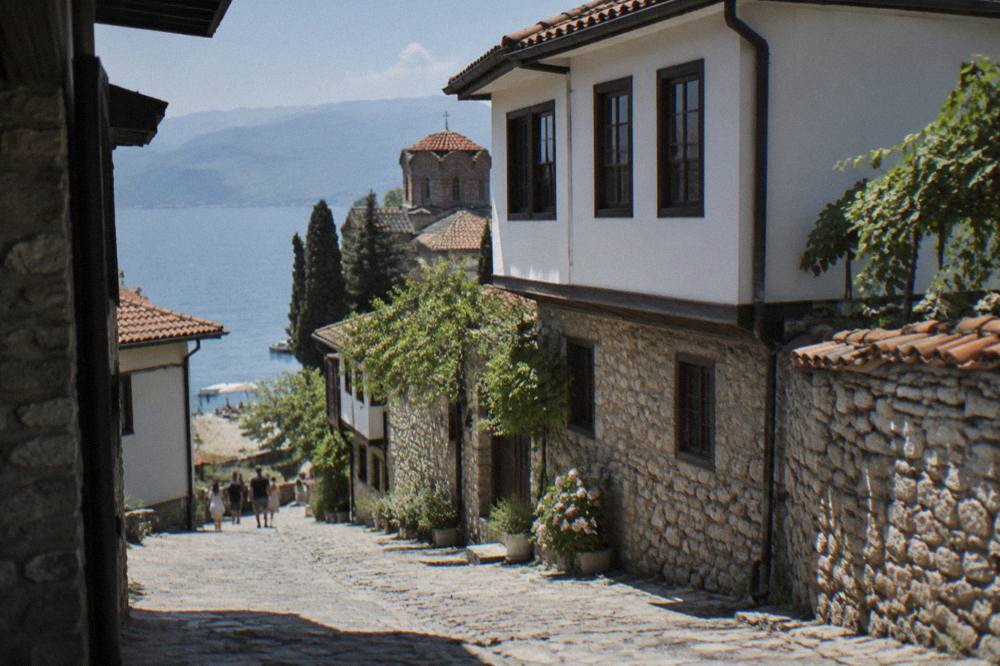
The town-side option matters for anyone without a car. The city beach area by the Ohrid waterfront is the default swim for visitors staying in the old town, and the city beach and lido guide covers it in detail. From the same waterfront, seasonal boat services run along the lake, and several call at the swimming shores; the Lake Ohrid boats and ferries page explains how that network works.
| Spot | Direction from Ohrid old town | Shore type | Best reached by |
|---|---|---|---|
| City beach area | In town, on the waterfront | Managed stretch by the promenade | On foot |
| Potpesh | East of the centre | Pebble | On foot or short taxi |
| Labino | East of the centre | Pebble and platform | On foot or short taxi |
| Lagadin | South-east along the lake road | Pebble | Car, bus or boat |
| Gradiste | South, near Peshtani | Pebble, largest of the southern spots | Car or boat |
| Ljubanista | Far south, toward St Naum | Pebble | Car or boat |
What Do The 2026 Lake Rules Change For Swimmers?
A government decision of 2 June 2026 restricted lake navigation for swimmer safety: jet skis are banned between 1 July and 31 August from 11:00 to 19:00, and boats are banned at night between 3 June and 31 August from 21:00 to 05:00, with a further night limit in September. The rules govern vessels, not swimmers, but they shape the water: daytime peak hours on the busy shore stretches are calmer than before.
The measure came from the Ministry of Transport and applies across the Macedonian side of the lake for the stated periods, so it matters most where boat traffic and swimming overlap, near the town waterfront and the popular southern shores. A second 2026 change affects the shore rather than the water: a resident-only parking regime took effect from summer 2026 on the old-town streets, including Ilindenska, Kosta Abrash and Car Samoil, with clamping reported for non-residents. Anyone driving to a swim from accommodation inside the old town should plan to park outside the restricted streets, a subject the Ohrid parking guide covers.
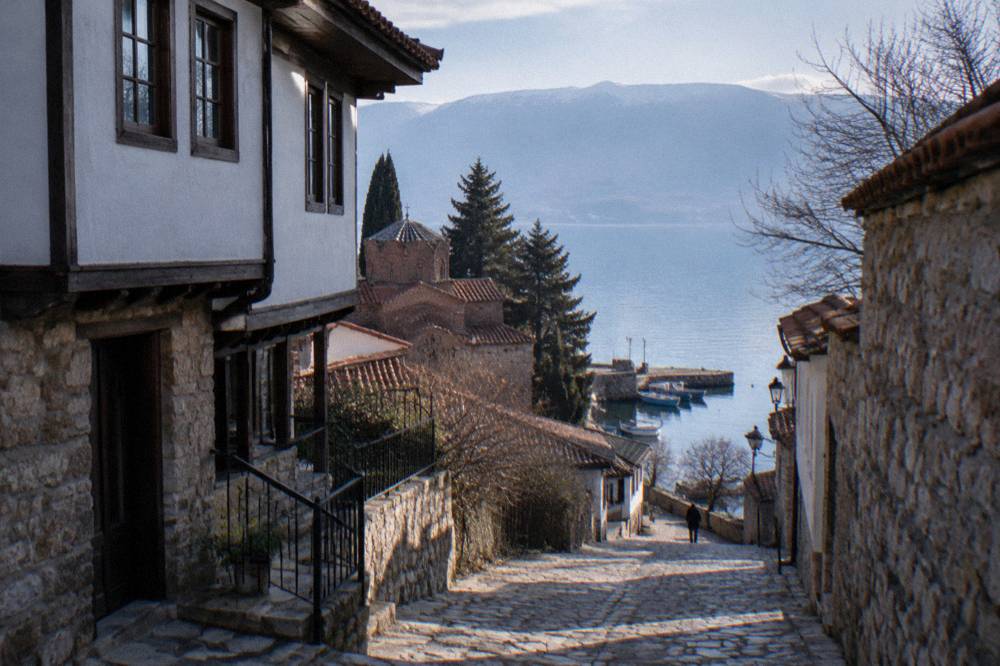
Both rules are dated 2026 measures rather than permanent fixtures, so confirm near your travel dates. For the wider question of water cleanliness, the dedicated is the water in Lake Ohrid clean page is the place to go, and the drinking water question covers the tap.
How Deep Does The Water Get At The Swimming Spots?
The swimming shores around Ohrid shelve gradually over pebble and stone, with wading depth for the first several metres at the commonly used spots, while the lake itself is a deep mountain basin. In plain terms: the shallows are family-friendly, the drop-off comes slowly, and no swimming spot requires a jump or a scramble. The lake bottom is stone and pebble, not sand, almost everywhere.
That shelving is the practical reason the eastern and southern shores work for swimming. Entry is by walking in, and the clear water lets you read the bottom before each step. Swim shoes help on the pebble edges, and the stone can be slippery where algae grow on fixed surfaces like jetties and platforms. There are no tides, no currents in the swimming sense and no surf; wind can raise a chop on open water in the afternoon, which matters more to paddlers and small boats than to shore swimmers.
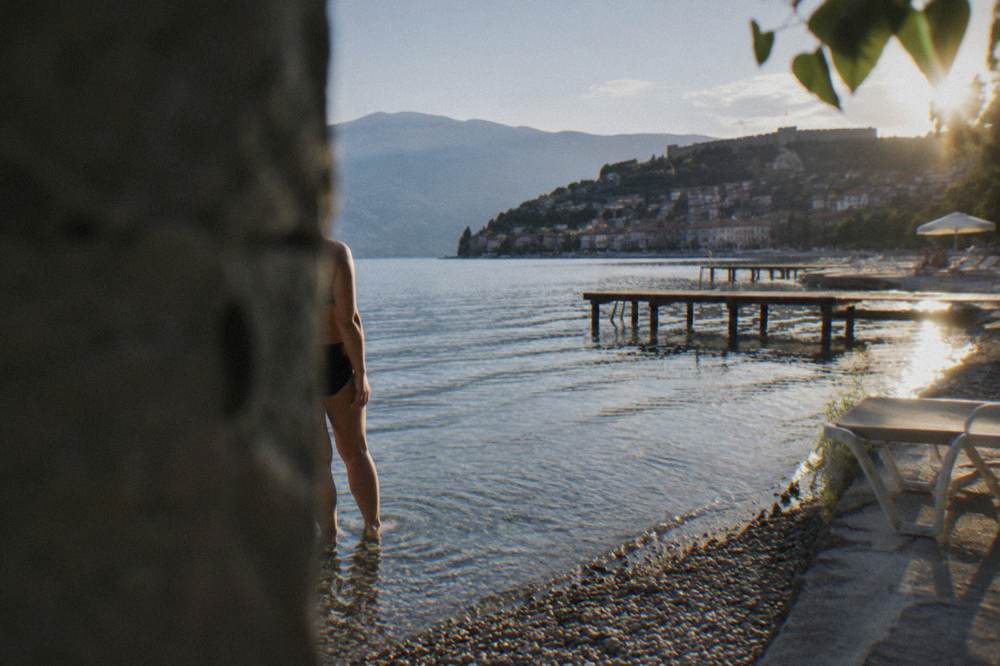
For anyone who wants the lake from below the surface, a try-dive session at the Bay of Bones is the structured way in, with gear and instruction included. The Bay of Bones attraction page describes the museum site the trip is named for, on the water at Gradiste near Peshtani.
When Does Swimming Season Start And End In Ohrid?
On the modelled figures, lake swimming starts around July, when the surface reaches about 22.9 C, and runs through August at about 23.5 C into September, which still shows modelled values around 20 C early in the month. May and June are warm in the air, with modelled highs of 19.5 C and 24.2 C, but the lake lags behind: the May surface sits in the mid-teens on the modelled spreads, cold for anything but a brief swim.
The lag cuts both ways. The same depth that keeps the lake cool in spring holds warmth into autumn, so a late-September swim lands in water warmer than the October mean of 14.3 C suggests for the weeks after. Beach facilities track the air season rather than the water: bars, loungers and rental stands run through the June-to-September peak and wind down after it. Boat services to the southern shores run about May to October on the reported schedules and reduce outside that window.
| Period | Lake surface, modelled | Air high, modelled | Swimming verdict |
|---|---|---|---|
| April | about 10.5 C | 14.6 C | Cold water, short dips only |
| May | mid-teens on the modelled spreads | 19.5 C | Air warm, water still cool |
| June | about 19 to 22 C | 24.2 C | First comfortable swims late month |
| July | about 22.9 C | 27.1 C | Full swim season |
| August | about 23.5 C | 27.6 C | Full swim season, busiest month |
| September | about 20 C early month | 22.4 C | Warm water, thinning facilities |
| October | 14.3 C multi-year mean | 17.4 C | Season over for most swimmers |
Season-by-season planning lives on the Ohrid in summer, Ohrid in spring and Ohrid in autumn pages.
Can You Swim At St Naum And The Eastern Shore?
Yes, the far-southern end of the lake around St Naum and the eastern-shore spots like Trpejca and Ljubanista are swimming areas as well as sightseeing ones, reached by road or by the seasonal boats. St Naum sits about 4 km from the Tushemisht border crossing with Albania, near the Crn Drim springs, and the monastery there is a sight in its own right. The swimming in that stretch is pebble-shore lake swimming, the same water as at the town beaches.
Getting there is half the decision. The road hugs the shore the whole way south from Ohrid, past Peshtani and the Bay of Bones, and the seasonal cruise boats run the same line on the water with stops along it. A full-day boat trip that pairs the Bay of Bones with St Naum and a swim stop is the single most efficient way to combine the two, since it removes the parking question entirely.
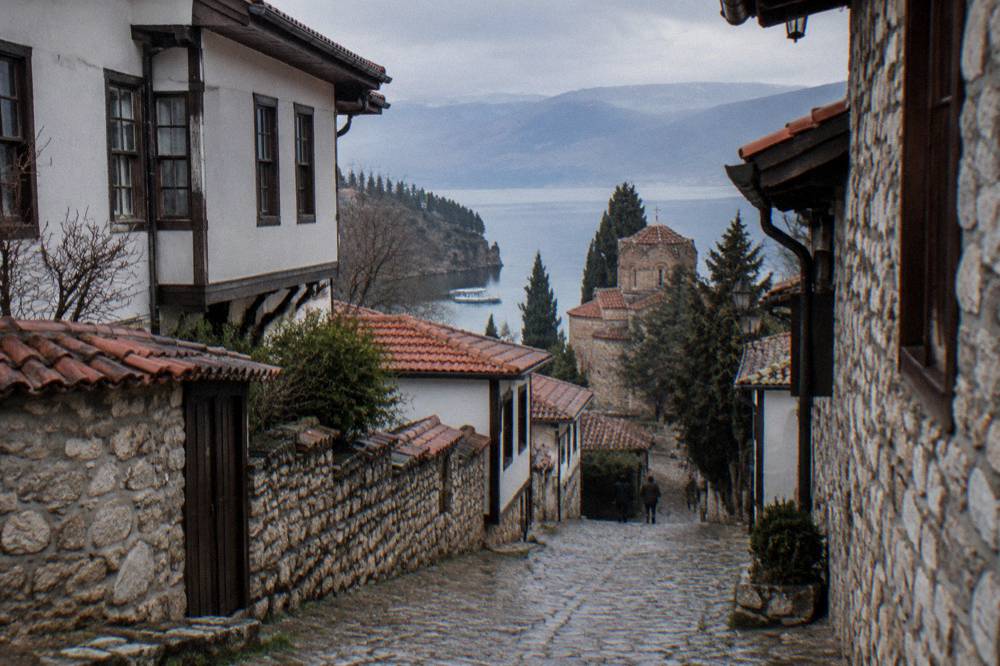
The rowboats at the Crn Drim springs by St Naum are a separate, short experience on the spring-fed channel rather than the open lake, and the monastery entrance and the boat rides are priced locally in denar. The St Naum monastery and Trpejca and Ljubanista pages cover the sightseeing side.
What Should You Know About Safety In And On The Water?
Emergency numbers in North Macedonia are ambulance 194, police 192 and roadside assistance 196, and the practical open-water rules are the ordinary freshwater ones: swim near the shore spots rather than alone along undeveloped stretches, respect the 2026 vessel restrictions that keep peak-hour boat traffic away from swimmers, and treat jetties and stone as slippery. The lake is a cold-deep basin beyond the shallows, so distance swimming is for prepared swimmers, not casual ones.
A few specifics help. Wind can raise a chop on the open lake in the afternoon, and paddleboarders and kayakers feel it first; the rental operators along the waterfront time their sessions around it. Alcohol and swimming mix as badly here as anywhere. Children are safest at the managed stretches where the shelving is gradual and the pebble bottom is easy to read. For the general safety picture of the town, the is Ohrid safe page is the dedicated guide.
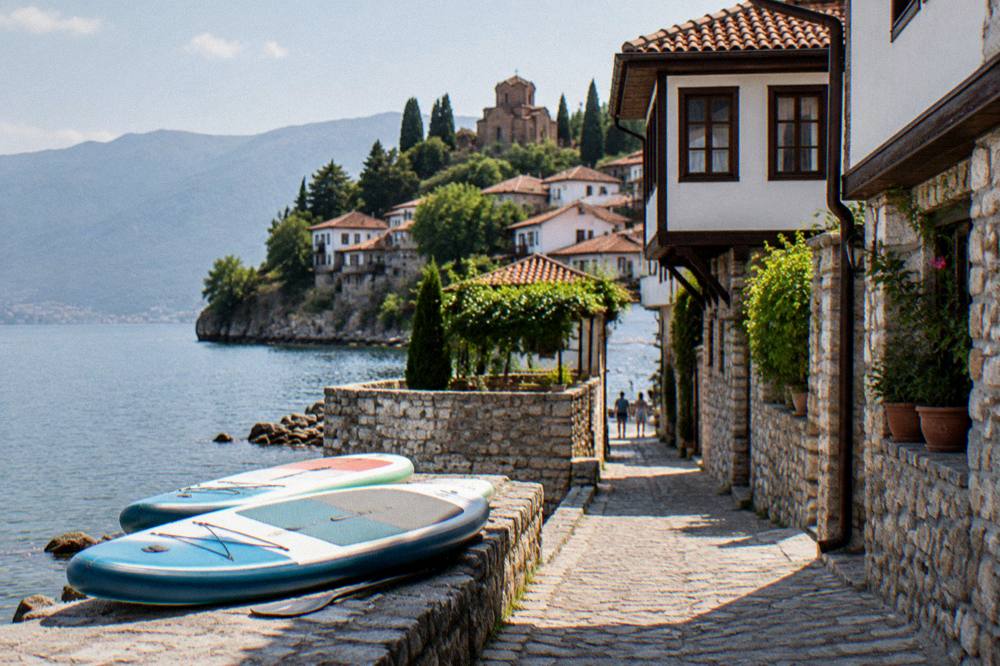
Paddling is the natural companion to swimming here, since the same clear shallows that make the shore good for a swim make it good for a board. A rental hour with the old town and St John at Kaneo in view is the easy version; for anyone weighing the two towns on the water, Ohrid vs Struga compares the lake experience at both.
Fancy paddling past the old town and St John at Kaneo? Book a SUP rental here.
What Can You Do On The Lake Besides Swim?
Besides swimming, Lake Ohrid supports paddleboarding and kayaking along the town shore, boat cruises from one hour to full day, scuba try-dives at the Bay of Bones, paragliding flights that land by the water, and the long-distance swimming and paddle events of the August water festival. The shore around Ohrid is where almost all of it starts, from the waterfront in the town itself to Gradiste and St Naum to the south.
The August events are worth building a trip around if open water is the point of the visit. The Ohrid Swimming Marathon covers 25 km from St Naum to Ohrid harbour, with its 39th edition held on 22 August 2026, and a separate 33 km stand-up-paddle marathon circles the lake on 26 August within the same festival. Both are races for registered athletes rather than public swims, but they frame the lake as a serious open-water venue, not just a bathing spot.
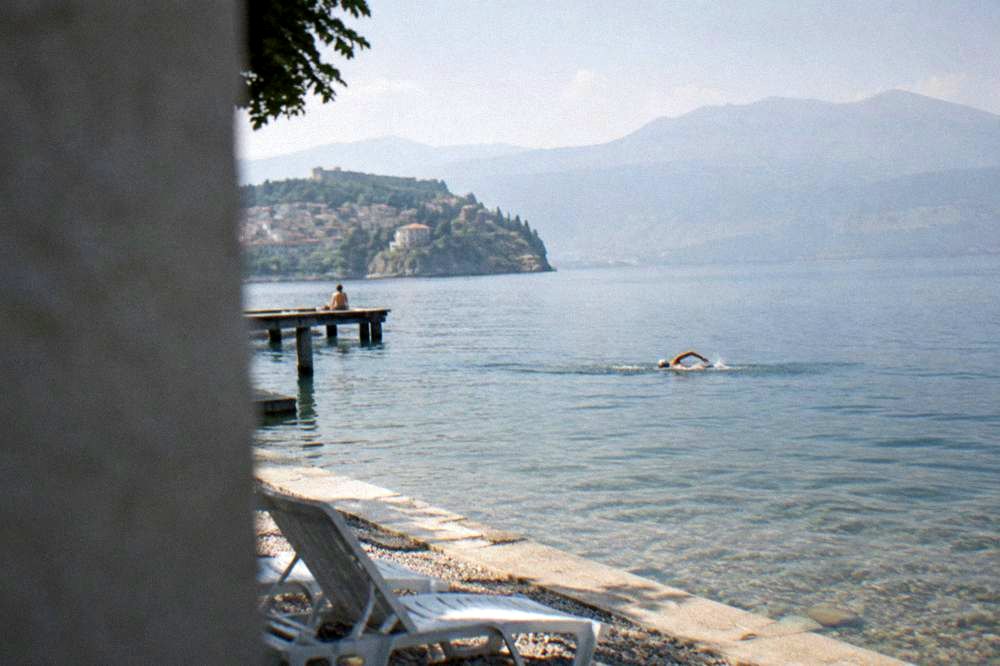
| Activity | Where it starts | What it involves | Season |
|---|---|---|---|
| Paddleboard rental | Ohrid waterfront | Flat-water paddling by the old town and Kaneo | Main summer months |
| Old town panoramic cruise | Ohrid harbour | A short loop of the town shore from the water | Main summer months |
| Full-day boat trip | Ohrid port | Bay of Bones, southern shore and St Naum with swim stops | About May to October |
| Try dive | Bay of Bones, near Peshtani | Instructor-led scuba session over the museum bay | Main summer months |
| Sunset cruise | Ohrid harbour | An evening circuit timed to the light | Main summer months |
For the sightseeing core that fills the hours out of the water, the things to do in Ohrid page is the site's main index, and Ohrid in one day sequences a first visit.
Does Swimming Fit Into A Short Ohrid Trip?
Yes, a swim fits even a one-day visit, because the town's own waterfront puts wading-depth water a few minutes' walk from the old town lanes, and the summer boats tie a swim stop to the Bay of Bones and St Naum in a single outing. On a two- or three-day stay, one shore day and one water day cover the essentials without rushing. The constraint is season, not time: outside roughly July to September the water is the limiting factor.
The practical split for a short visit: keep the old town, Samuel's Fortress and the church circuit to the cooler hours, swim in the early afternoon when the air high is near its modelled July and August peak, and let a boat day carry you to the southern shores without a car. Anyone with five days can add Galicica National Park above the lake or a Struga afternoon, and the Ohrid in five days itinerary does exactly that.
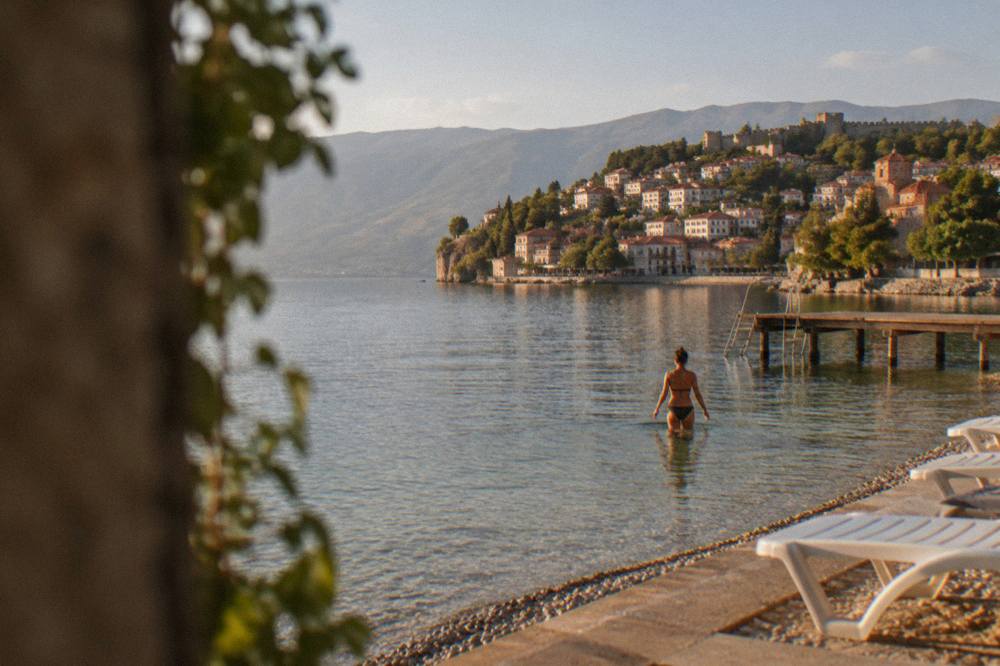
One decision moment belongs early: if being on the water matters, book the boat and paddle sessions before arrival, since summer capacity at the waterfront is finite. A paddleboard rental on the town shore keeps a free-cancellation option open on the operator's live listing: Check availability.
Common Questions About Swimming In Lake Ohrid
Is it possible to swim in Lake Ohrid?
Yes. Lake Ohrid is a freshwater mountain lake next to Ohrid, and swimming is a normal summer activity, with the season running roughly July to September on the modelled water temperatures. The fuller answer is on the is it possible to swim in Lake Ohrid page.
How warm is Lake Ohrid in summer?
Modelled surface figures give about 22.9 C in July and about 23.5 C in August, with September still around 20 C early in the month. The figures are modelled aggregator values, so treat them as planning numbers.
Can you swim in Lake Ohrid in May or October?
Most swimmers do not. The modelled May surface sits in the mid-teens, and the October multi-year mean is 14.3 C, cold for anything but a brief dip. The comfortable window is July to early September.
Are there beaches in Ohrid?
The town has a managed waterfront stretch by the promenade, and pebble shores run along the lake road: Potpesh and Labino near the centre, then Lagadin, Gradiste and Ljubanista to the south. The bottom is stone and pebble, so swim shoes help.
Is swimming in Lake Ohrid safe?
The shores shelve gradually over pebble, there are no tides or surf, and 2026 daytime vessel restrictions keep peak-hour boat traffic away from swimmers between July and August. Emergency numbers are ambulance 194 and police 192, and prepared swimmers should treat the open lake beyond the shallows as a cold-deep basin.
Do you need to get to St Naum to swim?
No. The town waterfront and the shores east and south of Ohrid all sit on the same water. St Naum adds the Crn Drim springs and the monastery to a swim day, which is why the full-day boats pair the two.