What Lives In Lake Ohrid?
The plants, fish and endemic wildlife of Lake Ohrid in North Macedonia, with the UNESCO figures, the Crn Drim springs and the ways to see the lake's life from Ohrid.
Lake Ohrid, the freshwater mountain lake beside the old town of Ohrid in North Macedonia, is one of the very few places in Europe where a lake's animal and plant life has been studied and protected as part of a UNESCO World Heritage property. The listing covers the town's churches and the lake together, and the natural side of that listing rests on the lake's unusual share of species that live here and nowhere else. This page on the Ohrid Travel Guide sets out what lives in the lake and where you can see it.
Lake Ohrid is home to more than 200 endemic species, including 17 endemic fish, according to the UNESCO description of the Natural and Cultural Heritage of the Ohrid Region. Endemic means these fish, snails, worms and algae exist in this one basin and nowhere else on Earth. The lake's age of about two to three million years gave isolated populations time to evolve into separate species, and since 2019 the property also covers the Albanian part of the lake.
The word "endemic" does the heavy lifting in that sentence. A lake can hold many fish; what makes Lake Ohrid unusual is how many of its fish, snails, worms and algae exist only in this one basin. The UNESCO listing records the tally as over 200 endemic species across the lake's groups of life, with 17 of them fish. That is a count of species, not of individual animals, and it is the figure the World Heritage Committee works from when it reviews the state of the property.
The same UNESCO description records the lake as having existed for about two to three million years, which is the reason given for the level of endemism: a long, stable, deep freshwater basin gives isolated populations time to evolve into separate species. The figures for the lake's depth and surface area belong to a different question, covered in How Deep Is Lake Ohrid?.
Which Animals And Plants Are Endemic To Lake Ohrid?
Lake Ohrid's recorded endemic life includes 17 endemic fish species along with a larger set of endemic snails, worms and algae, bringing the total the UNESCO listing records to more than 200 endemic species across all groups. Freshwater snails make up a substantial share of the endemic total, and the lake's clear water and stable, cold depths provide the habitat these species exist in, found only in this basin.
Two practical points follow for a visitor. First, no organised activity on the lake is sold as a wildlife-spotting trip: the lake's endemism is a scientific fact, not a safari. What you actually see from the shore or a boat is clear water, shoreline reeds, fish near the rocks and birds along the waterline. Second, the lake's famous clarity is part of the same story. Swimming in it, which is covered in detail in Is It Possible To Swim In Lake Ohrid?, is the closest many people get to the water itself, and the modelled summer surface temperatures of about 22.9 C in July and 23.5 C in August are why the swim season sits in high summer.
The clearest way to put yourself above the lake's water, rather than reading about it, is from the deck of a boat, and the options range from a one-hour loop of the old town bay to a full-day run down the shoreline toward St Naum. The Lake Ohrid boats and ferries guide compares them, and the section below covers the one habitat along the shore where the lake's natural and human history meet.
Want to get out on that clear water yourself? Book a SUP rental here.
Where Does The Lake's Water Come From?
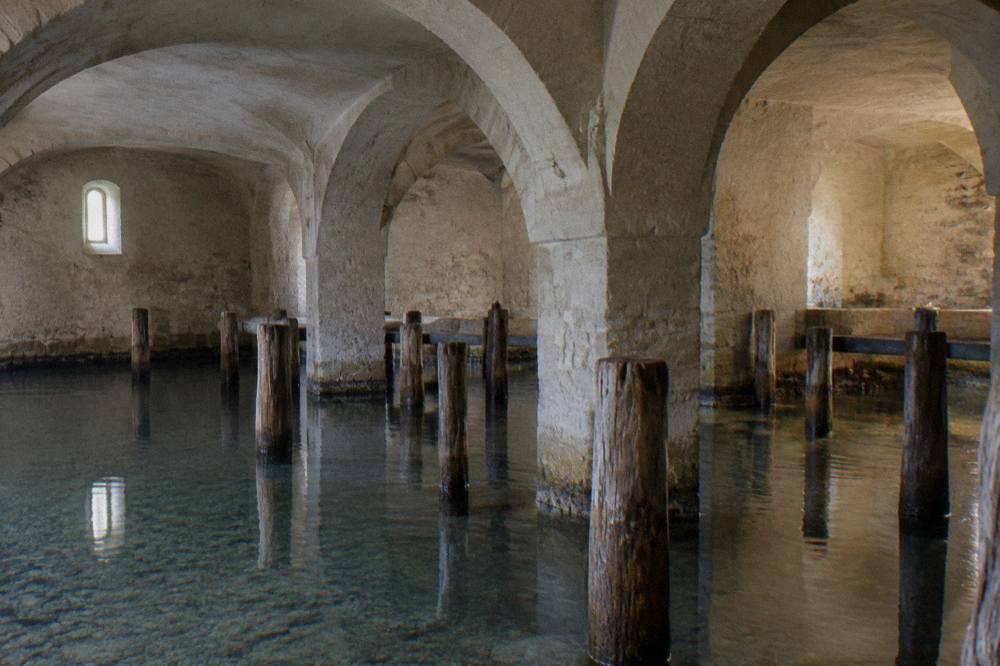
The clearest single source of Lake Ohrid's water is the Crn Drim springs at St Naum, at the southern end of the lake near the Albanian border, where water rises through the bedrock and feeds the basin, and where rowboats take visitors across the spring pools for about 5 EUR per boat. The springs sit beside the St Naum monastery, about 4 km from the Tushemisht border crossing, and they are the part of the lake's plumbing a visitor can actually stand next to. Water that surfaces there has passed through the mountains, arrives clear and cold, and joins the lake; the Black Drim then flows out again at Struga, at the northern end, which is why the lake is a through-flow system rather than a closed puddle. UNESCO's natural description treats the lake and its spring systems as a single hydrological story. For the practical side of reaching the springs, the St Naum tours from Ohrid and from Tirana both call there.
The lake's temperature follows the seasons in a way that shapes where its cold-water species can live. The modelled surface values, from aggregator data rather than a station record, run coolest in winter and warmest in midsummer:
| Month | Modelled Surface Temperature |
|---|---|
| January | about 4.6 C |
| February | about 5.4 C |
| March | about 7.2 C |
| April | about 10.5 C |
| May | about 14.9 C |
| June | about 19.4 C |
| July | about 22.9 C |
| August | about 23.5 C |
| September | about 19.7 C |
| October | about 14.7 C |
| November | about 10.3 C |
| December | about 6.0 C |
The UHMR multi-year October mean of 14.3 C sits close to the modelled October figure, which is a useful sanity check on the table. The point for wildlife is that the surface warms and cools through a wide annual range while the deep water stays cold and stable year-round, and that stability is one of the conditions the lake's endemic species depend on. Swimming, by contrast, tracks the surface: the season runs roughly from July, as covered in the swimming in Lake Ohrid guide.
Where Can You See The Lake's Life From Ohrid?
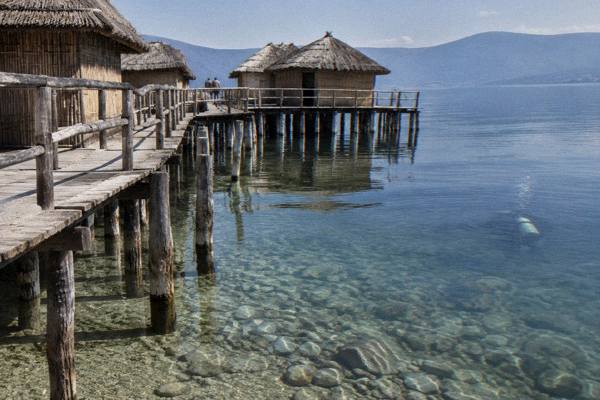
From Ohrid itself the lake's life is visible along the shoreline, from the water on a boat, and at the Bay of Bones near Peshtani, a reconstructed prehistoric pile settlement standing on pilings in the lake, where entry is 150 MKD for foreign visitors. The Bay of Bones, the Museum on Water run by the museum institute, is the one sight on the lake where the water and its human past are the same exhibit: the reconstruction stands over the shallows on wooden piles, with the lake's clear water around it. It sits at Gradishte near Peshtani on the road toward St Naum, and the museum's own pages give its winter hours as 09:00 to 15:30 and summer hours, from 1 May to 30 September, as 09:00 to 16:30, closed Mondays. The Bay of Bones attraction guide covers it in full.
The rest of the lake's visible life is simpler and free: fish along the rocks below the old town, waterbirds over the reeds, and the clarity of the water itself, which is the quality the whole basin is known for. A half-day guided walk of the old town, such as the Ohrid Half-Day City Tour, spends its time in the lanes and churches but finishes the geography of the town, from the fortress down to the water. Check availability if that structure suits your first day; the same walk works as an orientation before any boat or lake trip.
One seasonal note belongs here. Under a government decision of 2 June 2026, jet skis are banned on the lake from 1 July to 31 August between 11:00 and 19:00, and boat traffic faces night limits through the summer and into October, measures aimed at swimmer safety and the lake itself. If quiet water matters to you, the timing of a boat trip within the day now makes a difference, and the Ohrid in summer guide puts the rules in seasonal context.
How Does The Lake's Wildlife Shape A Visit To Ohrid?
The lake's wildlife shapes a visit mostly indirectly: it explains the water's protected status, it sets the rhythm of the swim and boat seasons between about May and October, and it turns any trip down the shoreline toward St Naum into a passage through the habitat that holds the endemic species. There is no zoo, no aquarium and no ticketed wildlife tour; the lake's 200-plus endemic species are a fact you carry with you rather than a show you attend. What the status does produce is a shoreline where large-scale development is watched closely, an international review process that made headlines in July 2026, and a local economy built around the water rather than beside it. The timing of your visit decides what the lake offers, and that question has its own page in When Is The Best Time To Visit Lake Ohrid?.
A sensible lake-focused plan for a first visit looks like this:
| Part Of The Lake | What You Experience | Practical Detail |
|---|---|---|
| Old town shoreline | The water below Ohrid's churches and the boardwalk | Free, on foot any time |
| Bay of Bones, Peshtani | Reconstructed pile dwellings standing in the lake | 150 MKD foreign entry, closed Mondays |
| Crn Drim springs, St Naum | Spring pools feeding the lake, by rowboat | Rowboat about 5 EUR per boat |
| Full-day lake cruise | Ohrid port toward St Naum with shoreline stops | From 1,200 den adult, seasonal |
The rowboat and cruise figures above are local operator fares from the lake's own cruise pages, not bookable product prices, and both run on a seasonal schedule that contracts outside the main months. For the broader picture of how the town and the water fit together in a short stay, the one day in Ohrid itinerary sequences the shoreline stops.
Common Questions About What Lives In Lake Ohrid?
What Lives In Lake Ohrid?
More than 200 endemic species, including 17 endemic fish, according to the UNESCO description of the Natural and Cultural Heritage of the Ohrid Region, along with the wider plant, snail and algae life of a lake basin that has existed for about two to three million years.
Are there fish in Lake Ohrid you can see from the shore?
Yes. Fish live along the rocky shoreline below the old town and around the reeds, and the lake's 17 endemic fish species are part of the UNESCO property description. There is no ticketed wildlife viewing; the fish are simply part of the water you swim and boat in.
Is Lake Ohrid's wildlife protected?
Yes, through the UNESCO mixed World Heritage property inscribed in 1979 and 1980 and extended to the Albanian side in 2019. On 24 July 2026 the World Heritage Committee decided not to place the property on the List of World Heritage in Danger, while requesting a joint report by 1 February 2029.
Can you swim in the lake where these species live?
Yes, swimming is a normal part of an Ohrid summer, with modelled surface water of about 22.9 C in July and 23.5 C in August and a season that runs roughly from July. The full answer, including the year-round picture, is on the swimming page for Lake Ohrid.
Where do the lake's springs come out?
The best-known springs are the Crn Drim springs at St Naum, at the southern end of the lake near the Albanian border, about 4 km from the Tushemisht crossing. Rowboats cross the spring pools for about 5 EUR per boat, and the water then flows into the lake while the Black Drim drains it at Struga.
Do any tours focus on the lake's nature?
No tour is sold as a wildlife trip. The closest experiences are the boat cruises along the shoreline toward the Bay of Bones and St Naum, and the walk around the Bay of Bones pile dwellings, which stand in the lake itself at Peshtani.