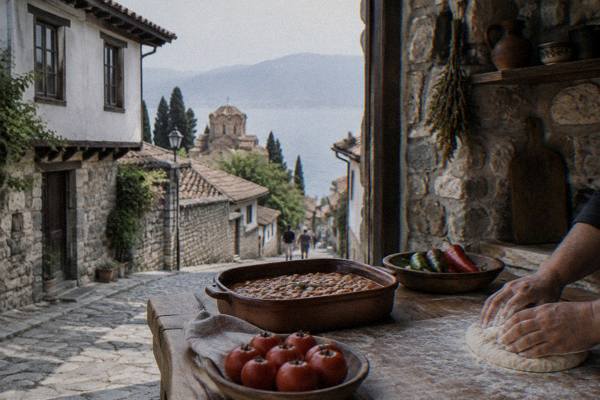
What Do Macedonians Eat For Breakfast?
What Macedonians eat for breakfast in Ohrid, from bakery burek to savoury mehana tables, plus where to find each style in the old town.
Breakfast in Ohrid, the old lake town of North Macedonia, is a savoury affair built around bread, white cheese, pastry and coffee rather than a sweet hotel buffet. The morning table here belongs to the bakery and the mehana, not the cereal box. The Ohrid Travel Guide covers the destination end to end, and this page answers one narrow question well: what the first meal of the day actually looks like in a Macedonian household and in the Ohrid old town a visitor walks through. The answer sits in a handful of standing habits, each easy to recognise once named, and each one anchored in the shops and kitchens that open first in the morning.
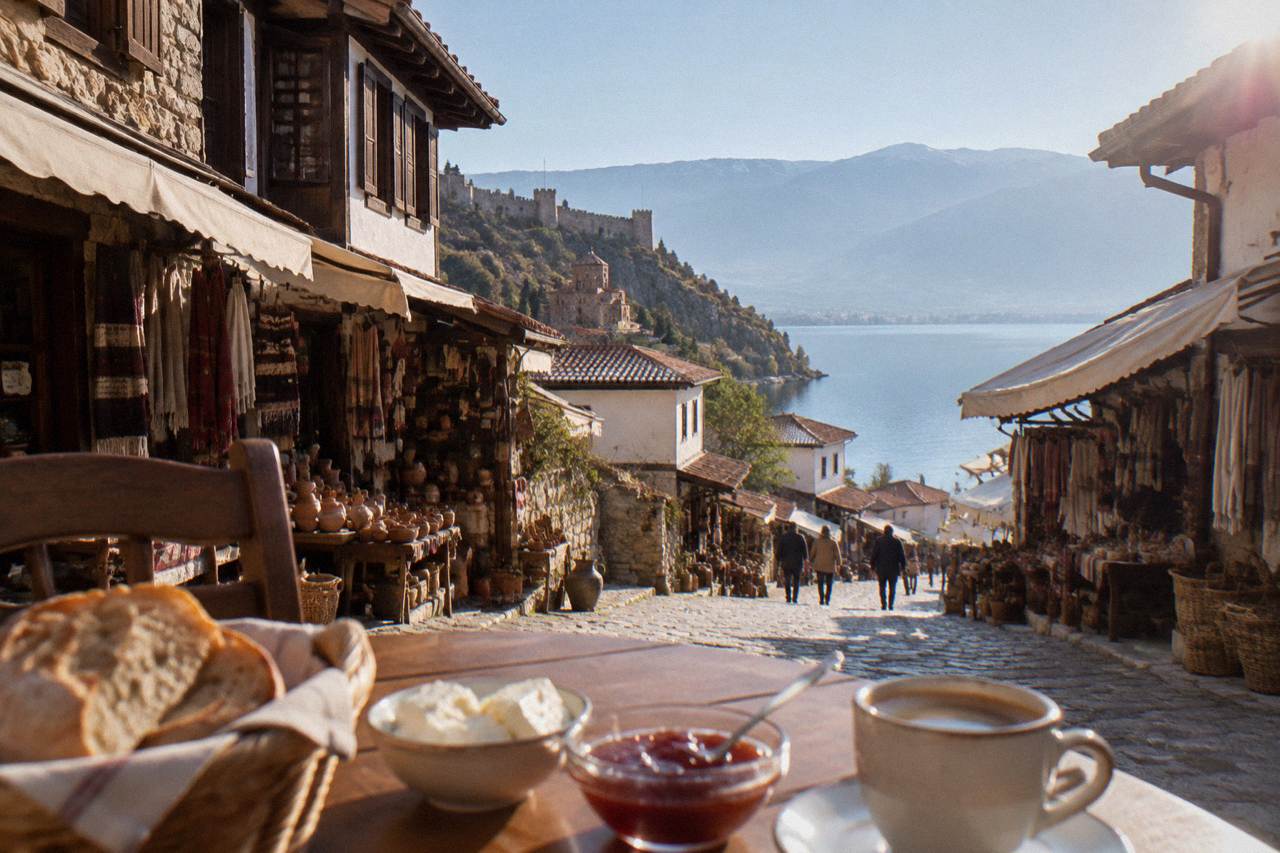
A Macedonian breakfast is usually savoury and bread-based: burek or fresh bread with white cheese (sirene), ajvar or another preserved pepper relish, olives, eggs cooked simply, and strong Turkish-style coffee, eaten at home on workdays and at a bakery or mehana when the morning is slower. Nothing on the table needs translating into a tourist menu. The components are the same ones that fill the meze spread later in the day, simply eaten earlier and smaller. That is the single most useful thing to understand: breakfast in North Macedonia is not a separate cuisine, it is the everyday table read at speed.
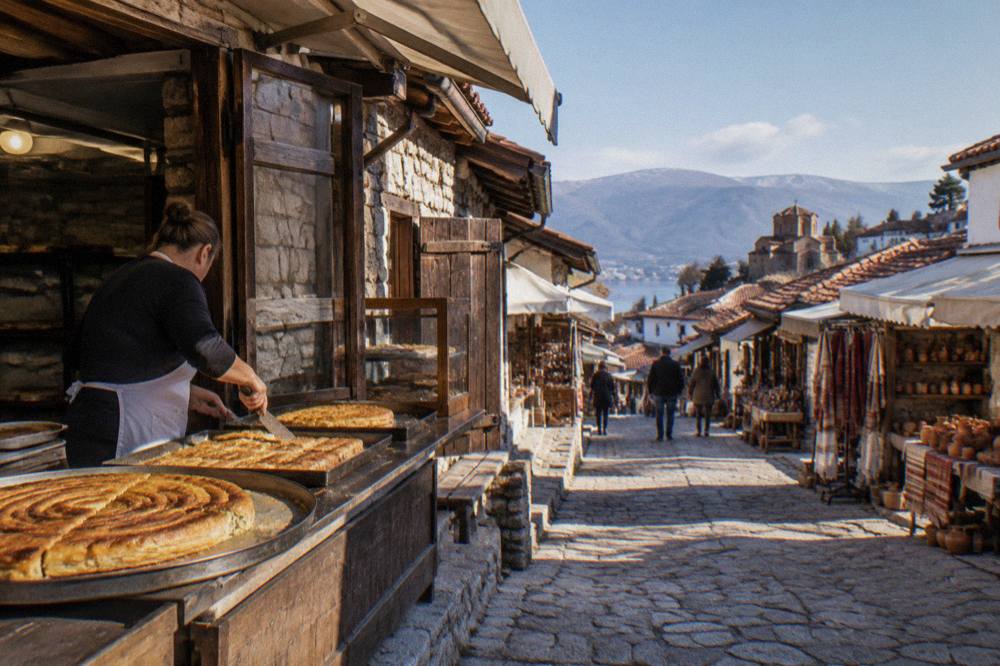
The burek bakery is the engine of the morning. Filo pastry rolled with cheese, minced meat, potato or spinach and pumpkin, sold by weight and cut with scissors, is the standing weekday breakfast across the country, and Ohrid is no exception. It comes out of the oven early, it is eaten fast, often standing, and it is washed down with yoghurt or ayran rather than espresso. A visitor who queues in an Ohrid bakery at opening time is doing exactly what the town does.
The second pattern is the home table. Bread, sirene, ajvar, maybe scrambled or fried eggs with peppers, olives, and coffee. It is a farmer's structure that has survived urbanisation because it works: protein, fat and bread carry a person to lunch, which is the main cooked meal of the day in most Macedonian households. Lunch, not breakfast, is where the slow food sits, dishes such as tavche gravche, the baked bean pot, belong to the middle of the day or evening.
Sweets are a minor key at breakfast. A slice of baklava or a sweet pastry happens, but the default register is salty and fatty and savoury. The coffee, on the other hand, is non-negotiable. Macedonian coffee, boiled in a small copper pot and poured unfiltered, is the pace-setter of the whole meal, and ordering it is the easiest local signal a visitor can send.
Where Breakfast Happens In Ohrid
In Ohrid, breakfast happens in three places: the burekdzhilnitsa (burek bakery) that opens before the lanes fill, the Old Bazaar and its surrounding café tables where coffee stretches long, and the mehana-style kitchens of the old town that serve a full savoury spread to visitors who want the home table cooked for them. Each place answers a different kind of morning. A bakery morning costs little and takes ten minutes. A mehana breakfast is a sit-down affair with bread baskets and relishes. A café morning is mostly about the coffee and the people-watching, with something small alongside.
The choice matters more in Ohrid than in a big city because the old town is compact and vertical. The lanes climb from the lake toward Samuel's Fortress, and the bakery that smells right on the way down to the waterfront is often the same one that has sold out by late morning. Baked goods here are a morning product. Anyone wanting the full range of the morning table should move early, the way the town does.
| Morning setting | What it is | What you eat | How the morning runs |
|---|---|---|---|
| Burek bakery (burekdzhilnitsa) | Pastry sold by weight, cut to order | Burek with cheese, meat, potato or spinach; yoghurt or ayran | Fast, often standing, over by mid-morning as trays sell out |
| Old Bazaar café | Coffee house around the old commercial streets | Macedonian coffee, a small sweet, juice | Slow, social, the coffee is the point |
| Mehana or restaurant breakfast | Sit-down kitchen in the old town | Bread, sirene, ajvar, eggs with peppers, olives, tomatoes | A full savoury table, unhurried, closest to the home version |
The Old Bazaar itself, the historic commercial street of the town, is the natural anchor for a breakfast walk. It sits within walking distance of the lake, the churches and the fortress lanes, so a morning there costs no transport and no planning. Visitors mapping the wider town can start with what Ohrid is famous for before deciding which mornings to give to food.
The Standing Components Of A Macedonian Breakfast Table
Four components define the Macedonian breakfast table: bread or burek as the base, white sirene cheese as the protein, ajvar or a similar pepper relish as the flavour layer, and boiled Turkish-style coffee as the frame that holds the meal together, with eggs and olives appearing when the morning is longer. Each component is cheap, keeps well and appears at other meals too, which is why the breakfast table looks like a smaller meze. Nothing about it is breakfast-specific in the way Anglophone hotel food is. That repetition is the point: the same larder feeds the whole day.
Bread is the load-bearing element. Fresh white bread, bought the same morning, is the default, and it is used as the utensil as much as the food. Sirene, the brined white cheese of the region, sits beside it in a block, crumbled over eggs or eaten in slices with tomato and cucumber in the warmer months. Ajvar, the roasted red pepper and aubergine relish made in autumn batches, is the jar that never leaves the table. It spreads on bread the way jam does elsewhere, which is why visitors sometimes misread the table as sweet until the first bite.
Eggs appear in simple forms, scrambled with peppers and tomato, fried, or folded into a pan with cheese. Cured and smoked meats appear too, though less centrally than in some neighbouring breakfast cultures. Olives, raw onion, green pepper and tomato round out the plate when the table is set for guests. The whole spread is designed to be assembled rather than cooked, which is why it scales so easily from a workday two-minute version to a weekend table for six.
For a visitor, the fastest route into this table is to cook it. Ohrid has cooking classes that walk through Macedonian home dishes from scratch, and Ohrid cooking classes cover exactly the kind of everyday food this page describes, the kind a hotel breakfast skips. Check availability if a morning in a kitchen sounds better than another morning in a café line.
Coffee, Yoghurt And The Morning Drinks Of Ohrid
Macedonian coffee is the defining morning drink of Ohrid: finely ground coffee boiled with water and sugar in a small long-handled pot, served unfiltered in a small cup with the grounds left at the bottom, ordered sweet or unsweetened and drunk slowly, while ayran and yoghurt are the standing non-coffee companions to burek. The coffee culture is Ottoman in structure and social in function. A single cup is an invitation to sit, and the phrase for it covers half an hour of the morning, not five minutes.
Espresso drinks are widely available in the cafés around the old town and the lakefront, and younger orders tilt that way, but the boiled coffee has not gone anywhere. It is the drink of the home, the bakery counter and the older café tables alike. Ordering it is simple: choose sweet, medium or unsweetened, and wait, because it arrives hot enough that patience is part of the serving.
The dairy side matters just as much at the bakery. Ayran, the salted yoghurt drink, is the traditional partner to a cheese burek, the combination cutting the fat of the pastry. Plain drinking yoghurt does the same job. Fruit juices and herbal teas exist on any café list, but they are secondary. The pairing a visitor should try once is the full local sequence: hot burek, cold ayran, coffee after.
How A Visitor Builds A Breakfast Day In Ohrid
A breakfast-focused morning in Ohrid works best as a walk that starts at a bakery when the trays come out, moves to the Old Bazaar for coffee while the town fills, and finishes either at the lakefront or inside a mehana for the full savoury spread, spacing the three stops between roughly 07:00 and 11:00, which is the window in which the morning food of the town actually happens. After that window the bakeries thin out and lunch service begins, and the breakfast table converts into the meze table. The morning is the whole opportunity.
The walk needs no car and no booking. The old town is on foot by design, its lanes climbing from the water to the fortress, and everything breakfast-related sits inside that climb. Visitors pairing the morning with sightseeing can hand the afternoon to a guide and spend the earlier hours eating; the question of how many days you need in Ohrid usually answers itself once a slow breakfast becomes part of the plan.
| Part of the morning | Where | What to take | What it pairs with |
|---|---|---|---|
| First stop, early | A burek bakery near the Old Bazaar | Cheese burek and ayran, eaten fast | The walk down toward the lake |
| Second stop, mid-morning | A café in or around the Old Bazaar | Macedonian coffee, something small | People-watching as shops open |
| Third stop, late morning | A mehana in the old town | The full savoury spread: bread, sirene, ajvar, eggs | A slow start to sightseeing, or nothing at all |
Budget travellers should know the shape of the cost without this page printing numbers: bakery breakfast is the cheap end of eating in Ohrid, a café coffee is modest, and the full mehana spread is a proper restaurant spend. The general question of whether Ohrid is cheap or expensive covers the whole spectrum, and breakfast is consistently the lightest meal of the day on any budget.
One cultural note worth carrying into the morning: the Macedonian breakfast table is unhurried even when it is fast. The bakery queue moves quickly but nobody rushes the coffee. Visitors who match that rhythm, eating where the town eats and sitting where it sits, get the meal as it actually is, rather than the distilled version a hotel buffet serves. Language is rarely a barrier at a bakery counter, where pointing and holding up fingers does the work, and the broader question of whether people speak English in Ohrid has a reassuring answer.
Common Questions About Breakfast In Ohrid
What Do Macedonians Eat For Breakfast?
A savoury, bread-based table: burek or fresh bread with white sirene cheese, ajvar, olives and simple egg dishes, framed by boiled Macedonian coffee, with ayran or yoghurt alongside pastry from the bakery.
Is burek really a breakfast food in North Macedonia?
Yes. Burek sold by weight, eaten hot from the morning trays with yoghurt or ayran, is the standard fast weekday breakfast across the country, including Ohrid.
Do Macedonians eat a sweet breakfast?
Rarely as the default. Sweet pastries exist and baklava is eaten at any hour, but the standing register of the breakfast table is savoury: cheese, relish, eggs and bread.
Can I get this breakfast as a visitor in Ohrid?
Yes, without effort. Bakeries, Old Bazaar cafés and old-town mehanas all serve versions of the same table, and cooking classes in Ohrid teach the home dishes hands-on.
What should I drink with a Macedonian breakfast?
Macedonian coffee, boiled and served unfiltered, is the traditional frame of the meal, and ayran or plain drinking yoghurt is the classic partner to burek.