What Should I Avoid In North Macedonia?
The mistakes travellers make in Ohrid and North Macedonia, from currency and border rules to lake swimming and museum hours, with the fixes for each one.
Ohrid, a lakeside town in North Macedonia on a lake sitting at about 693 m above sea level, is an easy place to travel, but a handful of local rules catch visitors out every summer. The Ohrid Travel Guide record of local facts points to five areas where mistakes are common: money, entry and registration, the lake itself, driving and parking, and sightseeing schedules. Each one has a simple fix, and none of them should put anyone off visiting.
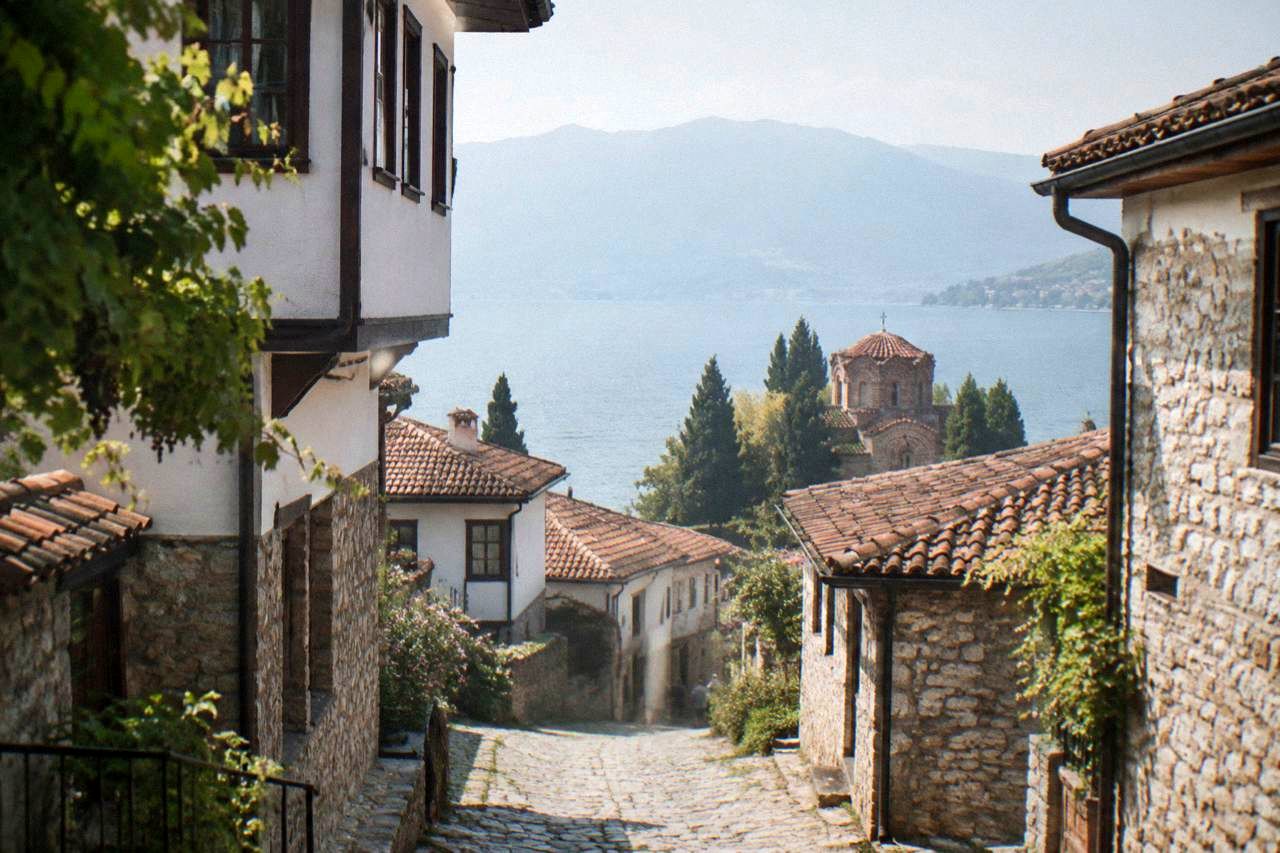
The main things to avoid in North Macedonia are paying in euros as if they were legal tender, skipping the 48-hour police registration, treating Lake Ohrid like a supervised swimming pool, driving without headlights on, and assuming Ohrid's museum sites open seven days a week, since the museum institute's sites close on Mondays. None of these are dangers in the dramatic sense. The US State Department rates North Macedonia at Level 1, Exercise Normal Precautions, its lowest category. They are practical traps, and each one is cheap or free to avoid once you know it exists.
Start with the frame: North Macedonia is not in the European Union and is not in the Schengen area, so habits imported from Greece or Croatia do not transfer. The currency is the Macedonian denar, border rules are national ones, and the lake is a freshwater mountain lake, not a sea. Getting these basics right removes most of the friction. Travellers who ask themselves is Ohrid safe for tourists are usually relieved by the answer, and the practical page on whether Ohrid is worth visiting covers what the town offers in return for the small effort.
Money Mistakes To Avoid Around Ohrid
Avoid paying in cash euros, avoid changing money on the street, and avoid assuming card payments work everywhere, because the denar is the only legal currency and euros are accepted informally, where they are accepted at all, at poor rates. The National Bank's middle rate on 19 October 2026 was 1 EUR = 61.6633 MKD, and the denar is effectively pegged to the euro, so there is no timing game to play. ATMs are widespread in Ohrid and withdraw denars. Bookable tours and transfers are often quoted in euros or dollars, but on the ground the museum, the bus and the bakery all price in denars.
The other money mistake is assuming price levels mean carelessness. Ohrid is inexpensive by western European standards, but the cost and budget picture still rewards attention, because the traps are rate-based rather than amount-based. A bad informal euro rate costs more than any museum ticket.
| Money habit | The trap | The fix |
|---|---|---|
| Paying a café in euros | Informal acceptance at a poor rate | Withdraw denars from an ATM |
| Checking rates at the airport only | One rate seen, no comparison | Denar is pegged near 61.5 to the euro; the mid rate was 61.6633 on 19 Oct 2026 |
For structure rather than self-planning, a guided option such as the private full-day best of Ohrid and Lake Ohrid tour removes route decisions entirely, and tickets, timings and denar prices for the museum sites below stay your own to plan. Check availability
Entry And Border Mistakes Travellers Make
Avoid overstaying the 90-days-in-any-180 rule, avoid assuming Schengen rules apply, and do not skip police registration, because visa-free nationals may stay up to 90 days in any 180-day period and UK guidance says visitors register with the local police within 48 hours of arrival, which hotels do for their guests. North Macedonia is outside the EU and outside Schengen, so a Schengen visa or a Schengen stay does not itself govern your right to be here. The foreign ministry states the 90-in-180 rule for visa-free nationals, and holders of valid multiple-entry UK, US or Canadian visas or Schengen residence permits may enter for up to 15 days.
UK passport holders have a specific trap: the passport expiry date must be at least 90 days after the date of arrival, and UK visitors may stay up to three months without a visa. Crossing by land from Albania at Sveti Naum / Tushemisht, the crossing is reported to be open around the clock, but allow time; there is no border-queue figure to rely on, so build slack rather than a number. The visa and entry questions are worth reading in full before a first trip.
Both became full Schengen members, land borders included, on 1 January 2025. That matters for routing, because it changes which legs of a Balkan itinerary involve external-border checks and which do not. North Macedonia remains outside either arrangement, so its crossings are its own.
Lake And Swimming Mistakes In Ohrid
Avoid swimming in the lake without checking the 2026 water-quality results, avoid jet ski and night boat activity in the restricted summer windows, and avoid treating the lake as warm year-round, because 2026 testing found Class I physico-chemical quality at most bathing points but Class III at Grashnica beach, and modelled surface temperatures only reach swimming comfort from July. The Institute of Public Health's 2026 bathing tests rated most microbiological samples Excellent or Good, with Grashnica beach the standing exception on the physico-chemical measure. The practical page on swimming in Lake Ohrid carries the detail.
A government decision of 2 June 2026 set lake navigation limits for swimmer safety: jet skis are banned from 1 July to 31 August between 11:00 and 19:00, and boats are banned at night, 21:00 to 05:00 from 3 June to 31 August and 20:00 to 06:00 in September, with a further October limit. Do not book or accept a trip that breaks those windows. On temperature, the modelled aggregator figures put the surface at about 22.9 C in July and 23.5 C in August, falling to about 14.7 C in October, and the swimming season runs from July; the October mean of 14.3 C comes from the UHMR multi-year record. The rest of the planning pages sit on Ohrid Travel Guide.
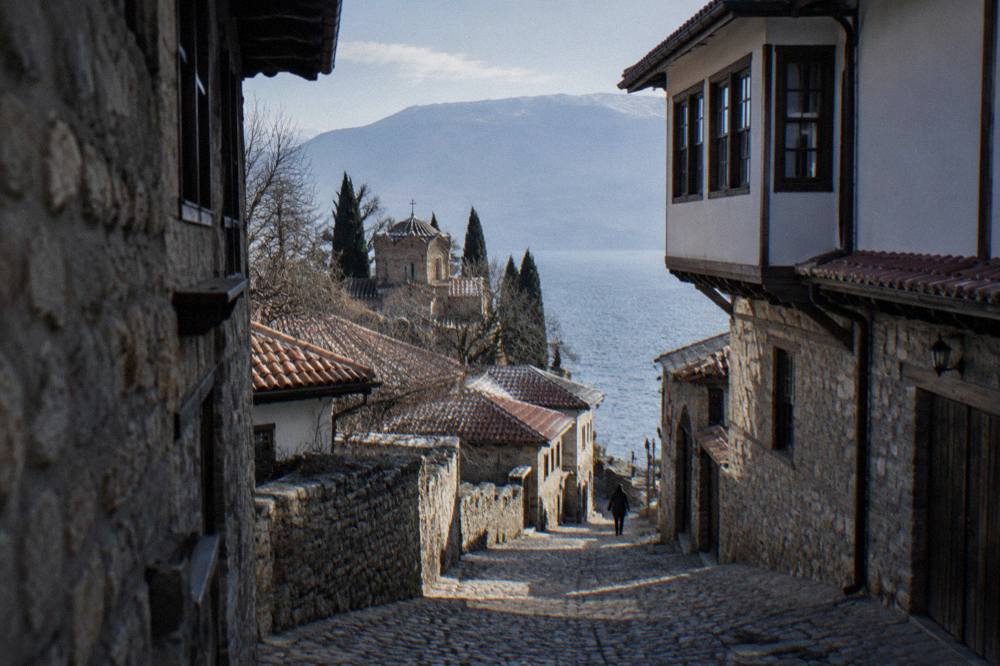
Two more lake cautions. First, do not drink untreated lake water; the municipal supply in Ohrid is generally drinkable, and the tap water page covers that question, but the lake itself is not a drinking source.
Driving And Parking Mistakes In Ohrid
Avoid driving with headlights off, avoid arriving by car without denars for the toll plazas, and avoid parking on the old-town streets as a non-resident, because headlights must be on day and night, tolls are paid per section in cash or card, and from summer 2026 streets such as Ilindenska, Kosta Abrash and Car Samoil are reserved for residents, with clamping reported for non-residents. There is no vignette; you pay at each plaza. The Skopje to Ohrid drive runs about 172 km with roughly 140 MKD in tolls for a car. Carry a green card for insurance.
The resident-only parking regime is the newest trap, dated 2026, and it applies to the old town's core streets specifically. Park outside the restricted streets and walk; the old town is on foot anyway, climbing from the shore to the fortress. If you are not driving at all, the how to get to Ohrid picture is simple: the bus from Skopje takes about three hours, there is no passenger train to Ohrid, and the airport sits about 10 km from the centre.
The old town rewards a slow wander on foot. Book a guided old town walk here.
Sightseeing Mistakes: Tickets, Mondays And Museum Hours
Avoid planning museum visits for Mondays, avoid mixing up which site charges what, and avoid assuming summer hours in winter, because the museum institute's sites, including Robev Family House, the Museum on Water at the Bay of Bones and the Icon Gallery, close on Mondays, charge 150 den for foreign visitors and 120 den for domestic, and run a winter schedule from 1 October to 30 April. The winter schedule matters more than visitors expect: Robev Family House opens 09:00 to 15:30 in winter, the Icon Gallery 09:00 to 14:00, and from 1 May the summer schedule brings longer hours at the same sites.
| Museum institute site | Foreign ticket | Domestic ticket | Winter hours (1 Oct to 30 Apr) | Closed |
|---|---|---|---|---|
| Robev Family House | 150 MKD | 120 MKD | 09:00 to 15:30 | Monday |
| Museum on Water, Bay of Bones | 150 MKD | 120 MKD | 09:00 to 15:30 | Monday |
| Icon Gallery, Perivleptos | 150 MKD | 120 MKD | 09:00 to 14:00 | Monday |
Do not carry these prices onto sights the institute does not run. At St Naum, by contrast, the entrance is listed at 150 MKD per person on a cruise operator's own page, and a rowboat through the Crn Drim springs costs about 5 EUR. For Galicica National Park, the charge is 250 MKD per vehicle, with no per-passenger fee; 100 MKD applies only to someone entering on foot from the Ohrid-side gate.
The last sightseeing mistake is seasonal: boats to St Naum run roughly May to October and drop off in winter, so a cold-month itinerary built around a lake cruise can fail before it starts. The road to St Naum stays open, and the St Naum journey works year-round by land.
What Not To Worry About In Ohrid
Emergencies are covered by simple numbers: ambulance 194, police 192 and roadside assistance 196, so there is no need to fear a crisis going unhandled. Worry only belongs in planning. Book the full-day private tour of Ohrid and the lake if a fixed itinerary suits you, or take the St Naum day tour from Tirana if Albania is your base, remembering it departs from Tirana, and finish with a short sunset cruise on the lake.
The one place worry earns its keep is planning, not fear. Book the full-day private tour of Ohrid and the lake if a fixed itinerary suits you, or take the St Naum day tour from Tirana if Albania is your base, remembering it departs from Tirana, and finish with a short sunset cruise on the lake. Between them, they touch the town, the monastery and the water without testing any of the rules above.
Common Questions About Avoiding Mistakes In North Macedonia
What Should I Avoid In North Macedonia?
Avoid paying in euros as if they were legal tender, overstaying the 90-days-in-any-180 visa-free limit, skipping the 48-hour police registration, swimming near Grashnica beach given its 2026 Class III rating, parking as a non-resident on the old town's restricted streets, and planning museum visits on Mondays, when the museum institute's sites close.
Do I Need To Register With The Police In North Macedonia?
Yes. UK guidance says visitors register with the local police within 48 hours of arrival, and hotels do it for their guests automatically. If you stay in private accommodation, ask your host to handle it.
Can I Use Euros In Ohrid?
No, not as legal currency. The denar is the only legal tender, pegged near 61.5 to the euro; the mid rate was 61.6633 on 19 October 2026. Euros are accepted informally in some tourist settings at poor rates, so withdraw denars instead.
Is Lake Ohrid Safe For Swimming?
At most tested bathing points, yes: 2026 sampling found Class I physico-chemical quality and mostly Excellent microbiological results. Grashnica beach was the exception at Class III. Swim in the normal season, from July, when modelled surface temperatures reach about 23 C.
Are Ohrid Museums Open On Mondays?
No. The museum institute's sites, including Robev Family House, the Museum on Water at the Bay of Bones and the Icon Gallery, are closed on Mondays year-round, with a shorter winter schedule from 1 October to 30 April.
What Are The Emergency Numbers In North Macedonia?
Ambulance 194, police 192, and roadside assistance 196, as listed in UK travel advice for the country.