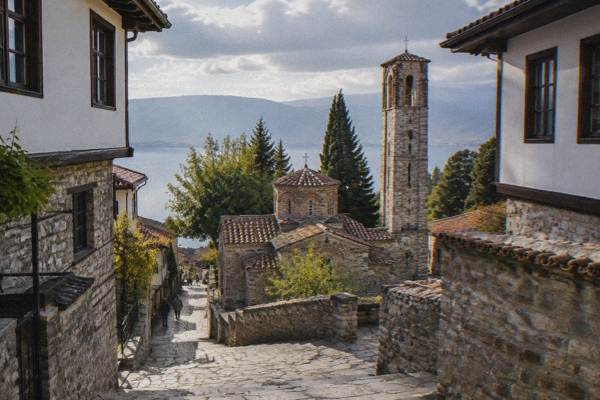
When Is The Best Time To Visit Lake Ohrid?
The best time to visit Lake Ohrid in North Macedonia, month by month: modelled climate normals, lake swimming temperatures, festival dates and how to choose between summer, spring, autumn and winter.
Ohrid sits on the shore of Lake Ohrid, a freshwater mountain lake in North Macedonia whose surface lies at about 693 m above sea level, and the question of when to go shapes the whole trip: summer brings swimmable water and the festival calendar, spring and autumn bring cooler hiking weather on the Galicica slopes, and winter strips the town back to its churches, lanes and museums. The Ohrid Travel Guide breaks the year down with modelled climate figures, lake temperatures and dated festival facts so the choice can be made on numbers rather than guesswork.
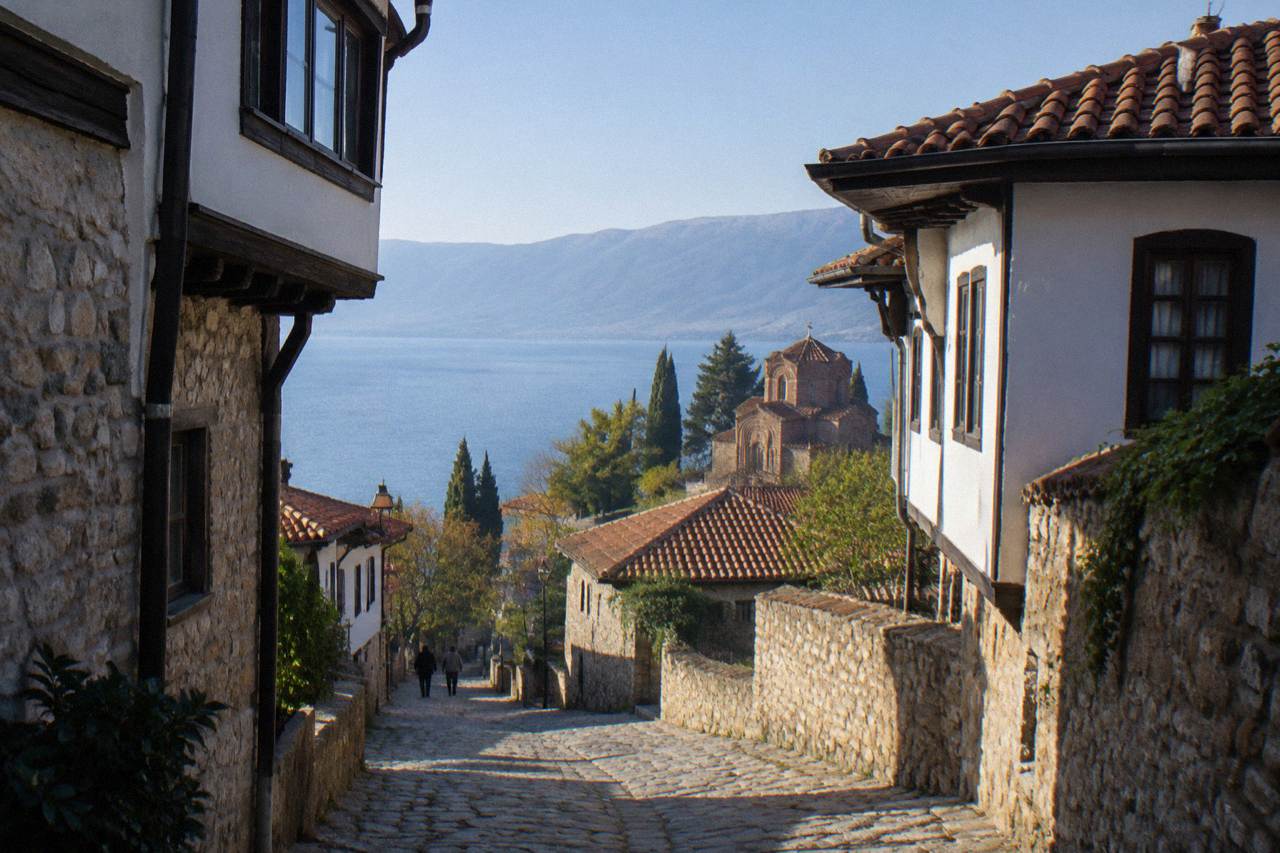
The best time to visit Lake Ohrid is June to September, with July and August as the core of the season: modelled ERA5 normals give Ohrid mean daily highs of 24.2 C in June, 27.1 C in July and 27.6 C in August, and the modelled lake surface temperature crosses about 22.9 C in July, which is when comfortable swimming begins.
August is the busiest month of that window, and the practical trade-off is simple. Peak summer delivers the warmest water, the Ohrid Summer Festival and the Water Festival, but also the fullest accommodation and the 2026 lake navigation limits that banned jet skis by day and boats at night through the season. September keeps daytime highs near a modelled 22.4 C with the water still around 20 C, and the museum sites stay on their summer schedule until 30 September. A fuller breakdown of the whole destination, town included, sits in the best time to visit Ohrid guide, and month-specific detail continues below.
What Is The Weather Like In Ohrid Month By Month?
Ohrid's climate is continental with a lake influence: modelled ERA5 reanalysis normals for 1991 to 2020 show mean daily highs climbing from 5.0 C in January to 27.6 C in August, mean daily lows from -0.8 C in January to 19.0 C in August, and annual precipitation totalling about 816.6 mm, with the December total at 92.6 mm and the August total at 32.9 mm.
These figures are modelled reanalysis values for the old-town grid point, not a weather-station record, so read them as reliable averages rather than forecasts. Rain is spread across the year with a summer dip: June, July and August come in at 43.1, 34.7 and 32.9 mm, while November and December sit at 90.4 and 92.6 mm. Snow reaches the Galicica ridge more readily than the town itself, and heavy snow can close the park's main road in a typical January to March window.
| Month | Mean High C | Mean Low C | Rain mm |
|---|---|---|---|
| Jan | 5.0 | -0.8 | 76.5 |
| Feb | 6.3 | 0.0 | 74.3 |
| Mar | 10.0 | 2.5 | 80.5 |
| Apr | 14.6 | 6.3 | 82.4 |
| May | 19.5 | 10.8 | 70.8 |
| Jun | 24.2 | 15.2 | 43.1 |
| Jul | 27.1 | 18.3 | 34.7 |
| Aug | 27.6 | 19.0 | 32.9 |
| Sep | 22.4 | 14.9 | 62.4 |
| Oct | 17.4 | 10.3 | 76.0 |
| Nov | 11.5 | 5.3 | 90.4 |
| Dec | 6.2 | 0.9 | 92.6 |
The month-by-month picture matters most at the edges of the season. April's modelled high of 14.6 C is fine for walking the old town's lanes and out to St John at Kaneo, but not for the water. October still averages a modelled 17.4 C high, though rain rises to 76.0 mm. For weather-specific planning, the Ohrid weather guide carries the same figures with the seasonal interpretation.
When Can You Swim In Lake Ohrid?
Swimming in Lake Ohrid is realistically a July to September activity: modelled aggregator values put the surface at about 22.9 C in July and 23.5 C in August, against 14.7 C in October, 10.5 C in April and 4.6 C in January, and the lake's own multi-year October mean recorded by the hydrometeorological service is 14.3 C.
Those water figures are modelled or multi-year means, not a promise for any given week, and the lake is deep enough that near-shore shallows warm ahead of the open water. Beaches such as Gradiste, Lagadin, Ljubanista, Potpesh and Labino carry the summer season, and beach facilities thin out or close once it ends. Anyone weighing the water question in detail can read whether it is possible to swim in Lake Ohrid, and the lake itself, its springs and its shoreline are covered in the Lake Ohrid guide.
Boat trips follow roughly the same calendar. Cruises from Ohrid port toward St Naum, with stops such as the Bay of Bones, generally run about May to October on a seasonal schedule, and the full-day cruise fare listed by one operator is 1,200 den for an adult. A short sunset cruise is the classic shoulder-season option, when the water is still swimmable but the August crowds have gone, and there are Lake Ohrid boats and ferries detail for planning a day on the water.
An evening on the water pairs nicely with that season. Book an Ohrid Lake sunset cruise here.
What Events Fill The Ohrid Summer Calendar?
The Ohrid Summer Festival is the anchor: its 2026 opening gala was held at the Ancient Theatre, a late Hellenistic venue the museum institute dates to the late third or early second century BC, and St Sophia is a traditional festival stage. The swimming marathon covers 25 km from St Naum to Ohrid harbour, and a separate 33 km stand-up paddle marathon around the lake followed on 26 August.
Beyond the festival fortnights, the peak season carries its own rhythm of concerts and open-air events in the old town, and a first visit timed for July gets both the festival program and the warmest water in the same week. For structure, one day in Ohrid shows what a single festival-season day can hold.
Is Spring Or Autumn Better For Visiting Ohrid?
May, June and September are the strongest shoulder months: modelled highs of 19.5 C in May, 24.2 C in June and 22.4 C in September sit either side of the August peak, June rainfall drops to 43.1 mm, and the museum institute's summer schedule, with longer opening hours at sites such as Robev Family House, runs from 1 May to 30 September.
Autumn has the quieter feel. From 1 October the museum sites switch to their winter schedule, Robev Family House and the Museum on Water opening 09:00 to 15:30 and closed Mondays, while the Icon Gallery runs 09:00 to 14:00. October's modelled rain of 76.0 mm is real but workable, and the lake at its 14.3 C multi-year October mean is for looking at, not swimming in. Spring is the reverse: April can be damp at a modelled 82.4 mm, but by May the trails in Galicica National Park are open and the park's 250 MKD per-vehicle entry applies year-round, with snow typically closing the main road only between January and March.
The shoulder choice suits walkers above all. The old town climbs from the lake to Samuel's Fortress on foot, and Galicica's Two Lakes trail between Lake Ohrid and Lake Prespa is a full-day objective best saved for the months when the high ground is clear. The Lake Prespa day trip and the Mavrovo National Park day trip are the same story: fine from late spring, snow-affected in deep winter.
What Does Winter In Ohrid Look Like?
Winter in Ohrid means modelled highs of 5.0 C in January and 6.2 C in December, lows below freezing in January, museum sites on their shorter 1 October to 30 April schedule with a Monday closing day, boat trips to St Naum reduced or paused outside the main season, and a calendar anchored on Orthodox Christmas on 7 January and St Clement of Ohrid day on 8 December.
The town does not shut. Robev Family House, the Museum on Water at the Bay of Bones and the Icon Gallery all stay open through winter on the museum institute's schedule, and the churches of the old town are year-round buildings. What disappears is the water layer of a visit: no swimming, few boats, and the beaches standing empty. What winter adds is room: the lanes around the Old Bazaar and the walk up to the fortress belong to residents, and the lake's level, about 693 m above sea level, sits quiet against a bare shoreline. The Vevcani Carnival, traditionally held on 13 and 14 January for the Julian New Year, is the one winter event in the wider region with a fixed place in the calendar.
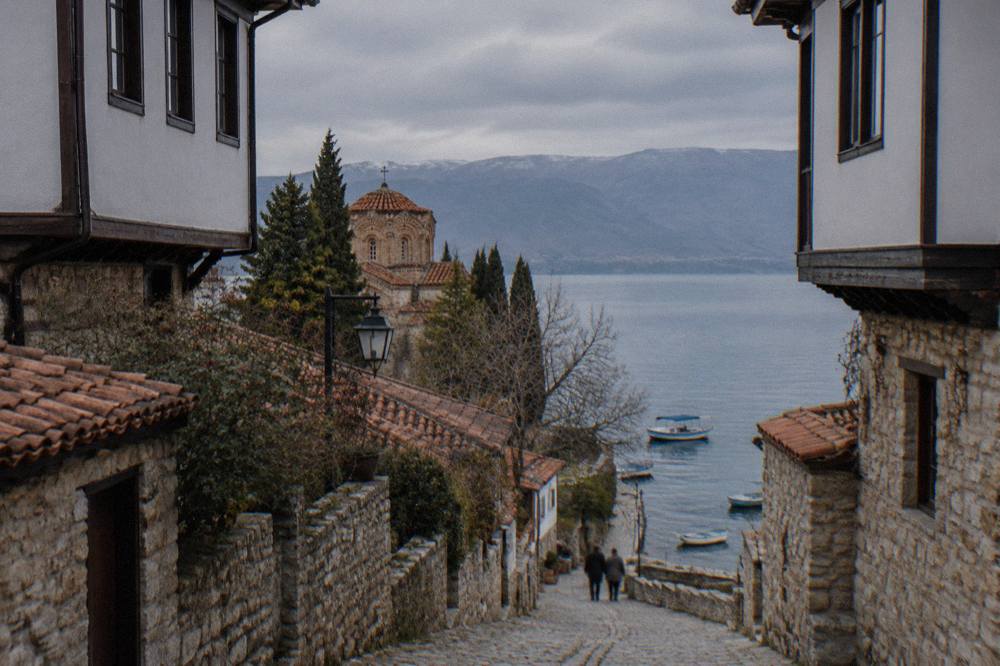
A private day that pairs the old town's sights with the lake shore, run at your own pace rather than a group's, is the format that adapts best to a winter or shoulder visit; the private best of Ohrid and Lake Ohrid tour is exactly that, and Check availability for the dates in question before locking the rest of the plan.
Common Questions About Visiting Lake Ohrid
When Is The Best Time To Visit Lake Ohrid?
June to September, with July and August as the warmest core of the season: modelled highs reach 27.1 C in July and 27.6 C in August, and the modelled lake surface sits around 22.9 C in July. September is the quieter alternative, still around a modelled 22.4 C by day.
Is August too crowded in Ohrid?
August is the busiest month of the June to September peak, with full accommodation and busy beaches, and the 2026 lake rules banned jet skis by day and boats at night through the season. July or September gives the same water and festival access with less pressure.
Can you swim in Lake Ohrid outside summer?
Comfortable swimming is a July to September prospect on the modelled figures: about 22.9 C in July, 23.5 C in August, and back to a multi-year October mean of 14.3 C. May's modelled surface of roughly 15 to 19 C is brisk, and from November the water falls toward 10 C.
Do the museums close in winter in Ohrid?
No, but they shorten. From 1 October to 30 April the museum institute's sites run reduced hours, Robev Family House and the Museum on Water opening 09:00 to 15:30 and the Icon Gallery 09:00 to 14:00, with Monday the closed day. The summer schedule with longer hours runs 1 May to 30 September.
When does it snow in Ohrid?
Winter precipitation includes snow in the town, and the Galicica ridge above it takes significantly more, with heavy snow able to close the national park's main road in a typical January to March window. Modelled January normals for Ohrid itself are a 5.0 C high and a -0.8 C low.
What festivals run in Ohrid in summer?
The 2026 season held the Struga Poetry Evenings from 24 to 29 June, the Balkan Festival from 3 to 6 July, the Ohrid Summer Festival from 12 July to 20 August and the Ohrid Water Festival from 12 to 30 August, including the 25 km swimming marathon on 22 August. Dates for 2027 have not been announced.