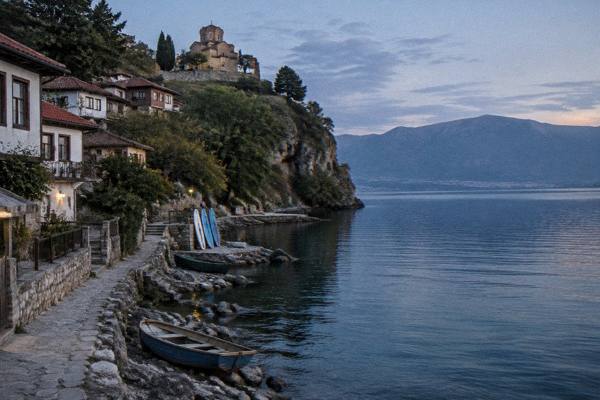
Ohrid Weather: Temperatures, Rain And Lake Swimming Season
Ohrid sits at about 693 m above sea level on Lake Ohrid, a freshwater mountain lake in North Macedonia, and its weather runs through four real seasons: modelled 1991-2020 normals put July and August daytime highs near 27 C, January lows just below freezing, and the lake warm enough for swimming from around July.
Short answer
Ohrid's modelled climate normals (ERA5 reanalysis, 1991-2020) show mean daily highs from about 5.0 C in January to 27.6 C in August, with rain peaking in November and December around 90 mm a month and dropping to about 33 mm in July and August; the lake reaches about 22.9 C to 23.5 C in July and August, and swimming season runs roughly July to September.
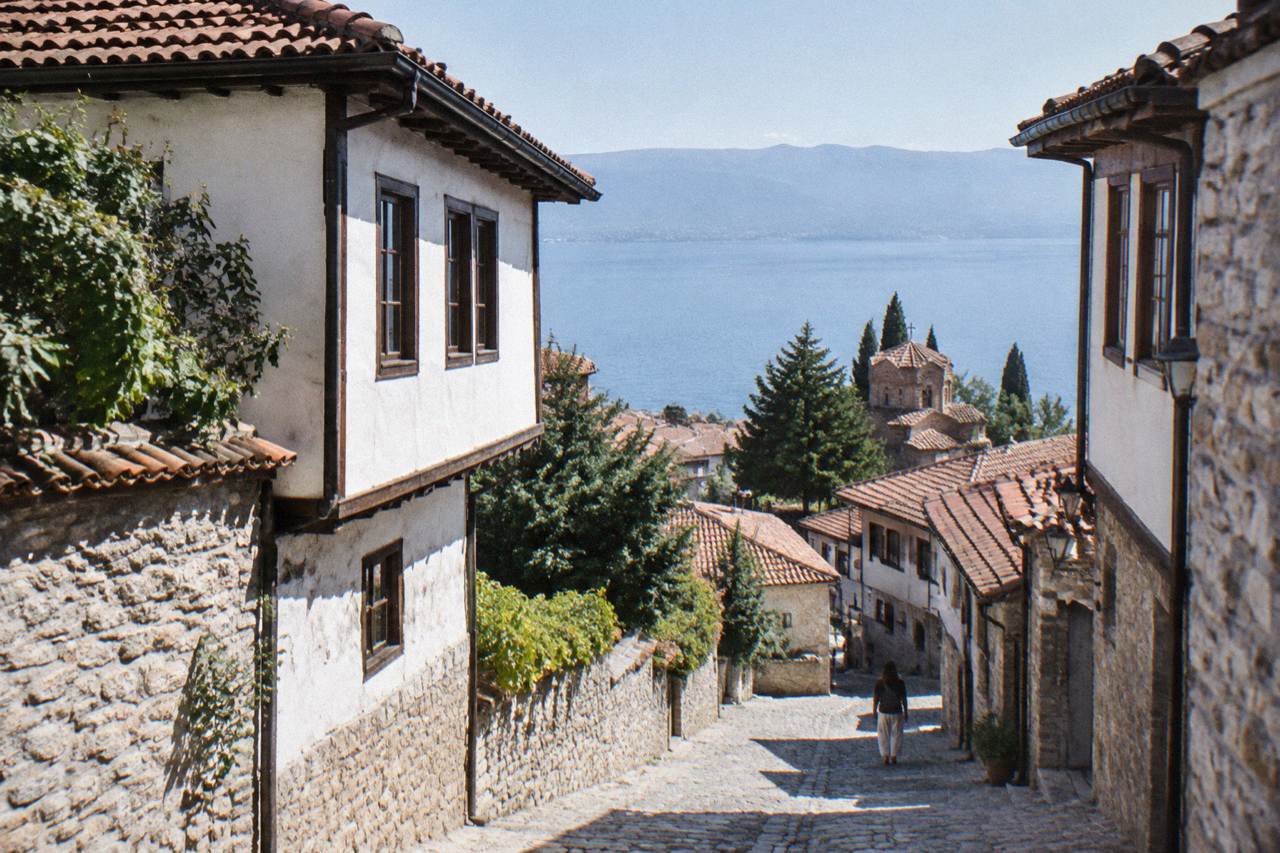
Ohrid, a lakeside town in North Macedonia on a freshwater mountain lake sitting at about 693 m above sea level, has a continental climate with a lake influence, and the figures on this page come from modelled ERA5 reanalysis normals for 1991 to 2020 rather than from a weather-station record. Summer daytime highs feel properly warm on the modelled averages, winter nights fall a little below freezing, and the lake itself warms enough for swimming from around July. The Ohrid Travel Guide breaks all of it down month by month below, alongside the water temperatures that decide when the swimming season opens. For a deeper dive into the water itself, see what Lake Ohrid is like.
What Is The Weather Like In Ohrid Through The Year?
Ohrid has a continental climate softened by Lake Ohrid, with modelled 1991-2020 normals showing mean daily highs from about 5.0 C in January to 27.6 C in August and mean daily lows from about -0.8 C in January to 19.0 C in August, while monthly rain ranges from about 32.9 mm in August to about 92.6 mm in December. The figures are ERA5 reanalysis values for the old-town grid point, not a station record, so each number carries the word "about".
The table below is the full monthly picture. Read it as a planning baseline: the normals average thirty years of modelled data, and any single week in Ohrid can sit above or below them.
| Month | Mean Daily High | Mean Daily Low | Rain |
|---|---|---|---|
| January | 5.0 C | -0.8 C | 76.5 mm |
| February | 6.3 C | 0.0 C | 74.3 mm |
| March | 10.0 C | 2.5 C | 80.5 mm |
| April | 14.6 C | 6.3 C | 82.4 mm |
| May | 19.5 C | 10.8 C | 70.8 mm |
| June | 24.2 C | 15.2 C | 43.1 mm |
| July | 27.1 C | 18.3 C | 34.7 mm |
| August | 27.6 C | 19.0 C | 32.9 mm |
| September | 22.4 C | 14.9 C | 62.4 mm |
| October | 17.4 C | 10.3 C | 76.0 mm |
| November | 11.5 C | 5.3 C | 90.4 mm |
| December | 6.2 C | 0.9 C | 92.6 mm |
Across the full year the modelled precipitation total comes to about 816.6 mm. The distribution matters more than the total: the June-to-August stretch is dry on the normals, while November and December each carry roughly ninety millimetres. If a month-by-month narrative is what you are after, the Ohrid weather by month guide walks through each one in detail.
How Warm Does Ohrid Get In Summer?
On the modelled 1991-2020 normals, July averages a mean daily high of about 27.1 C with lows of about 18.3 C, and August averages about 27.6 C by day and 19.0 C by night, with rain at roughly 34.7 mm in July and 32.9 mm in August, the lowest monthly totals of the year. Those are averages for the old-town grid point, not heat-wave or cold-spike forecasts.
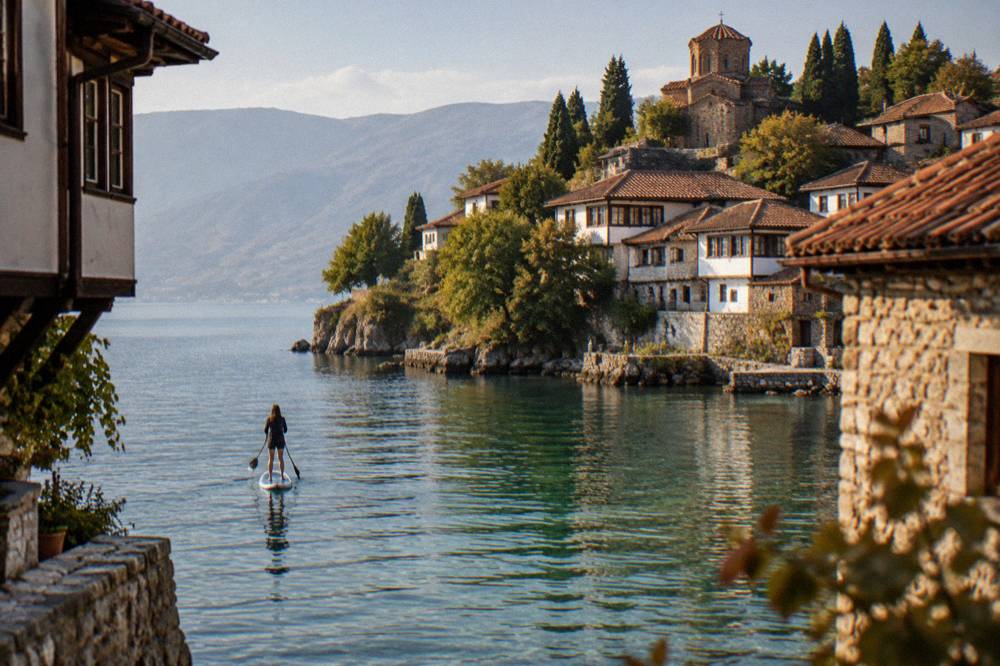
Nights barely drop below eighteen degrees in midsummer on the modelled figures, which is what makes the evening lakefront and the outdoor festival season work. The 66th Ohrid Summer Festival ran from 12 July to 20 August 2026, with the opening gala at the Ancient Theatre, and the lake itself hosts its own calendar: the Ohrid Water Festival ran 12 to 30 August 2026, including the 25 km swimming marathon from St Naum to Ohrid harbour on 22 August and a separate 33 km stand-up-paddle marathon around the lake on 26 August.
Summer is also when the full range of lake activities runs at its widest, from boat cruises along the old town to diving and paddleboarding. The month-by-month detail for the June-to-September window sits in the Ohrid in summer guide.

Is Lake Ohrid Warm Enough For Swimming?
Modelled lake surface temperatures put Lake Ohrid at about 22.9 C in July and about 23.5 C in August, with June at roughly 19.4 C and September at roughly 19.7 C, so the comfortable swimming season runs from about July to September, while the October mean is 14.3 C on the UHMR multi-year average for 2001 to 2020. Winter sends the modelled surface figures down to about 4.6 C in January.
The monthly water-temperature picture, from modelled aggregator values for the lake surface:
| Month | Modelled Surface Temperature |
|---|---|
| January | about 4.6 C |
| February | about 5.4 C |
| March | about 7.2 C |
| April | about 10.5 C |
| May | about 14.9 C |
| June | about 19.4 C |
| July | about 22.9 C |
| August | about 23.5 C |
| September | about 19.7 C |
| October | about 14.7 C |
| November | about 10.3 C |
| December | about 6.0 C |
Two things follow from the table. First, May looks warm on land, with a modelled daily high near 19.5 C, but the lake is still around fifteen degrees, which is brisk for anything longer than a quick dip. Second, the July-to-September window is the one where the water and the air agree, and that is when the paddleboards, kayaks and swimming beaches fill up. The full swimming picture, including where people swim, sits in swimming in Lake Ohrid, and the plain answer to the question is at is it possible to swim in Lake Ohrid.
Paddleboarding is the easiest way to use the warm window, since a session needs only calm morning water. The stand-up paddle tour on Lake Ohrid pages list the current options; the featured pick covers the lake with a guide, and Check availability on the operator's live listing before you build a day around it.
How Much Rain Does Ohrid Get, Month By Month?
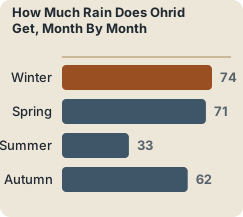
Modelled 1991-2020 normals give Ohrid about 816.6 mm of rain a year, with the lowest monthly totals in July (about 34.7 mm) and August (about 32.9 mm) and the highest monthly totals in November (about 90.4 mm) and December (about 92.6 mm), while spring months each carry roughly 70 to 82 mm. Wet days across the year range from about 6.6 to 13.6 a month on the modelled counts.
The pattern is simple: a dry, warm core from June through August, and a wetter shoulder from October through March. Even so, the wet-season figures describe steady moderate rainfall rather than monsoon-style downpours, and a rain jacket covers most of it.
| Season | Months | Typical Monthly Rain (Modelled) | Character |
|---|---|---|---|
| Winter | Dec to Feb | about 74 to 93 mm | Cold, wet, some snow |
| Spring | Mar to May | about 71 to 82 mm | Warming, showers |
| Summer | Jun to Aug | about 33 to 43 mm | Dry, warm days |
| Autumn | Sep to Nov | about 62 to 90 mm | Cooling, rain building |
Rain in Ohrid rarely wipes out a day, and the town has enough churches, museums and covered bazaar lanes to absorb a wet afternoon. The Ohrid in the rain itinerary is built exactly for those days.
What Is Ohrid Weather Like In Spring?
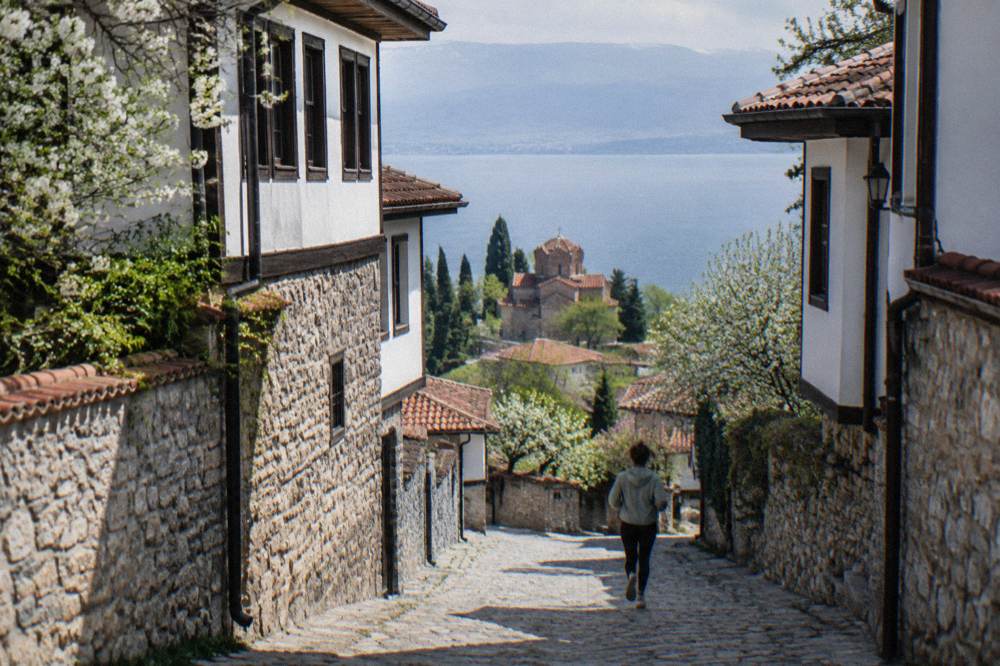
Spring in Ohrid warms steadily on the modelled normals, from a mean daily high of about 10.0 C in March to 14.6 C in April and 19.5 C in May, with nights rising from about 2.5 C to 10.8 C across the same stretch, and rain holding near 80.5, 82.4 and 70.8 mm a month. The lake lags behind the air: modelled surface water sits at about 7.2 C in March and only reaches about 14.9 C in May.
That gap between air and water temperature is the defining spring feature. An afternoon in May can feel fully warm in the sun, while a swim still takes resolve. What spring does offer is hiking weather on the surrounding hills before summer heat arrives, and the Ohrid hiking guide covers the trails that suit these months.
Spring is also when the museum and church sites shift to their summer schedule, running from 1 May to 30 September, which lengthens the usable sightseeing day. Layered clothing is the practical answer: mornings near five degrees in March, afternoons pushing twenty by May.
What Is Ohrid Weather Like In Autumn?
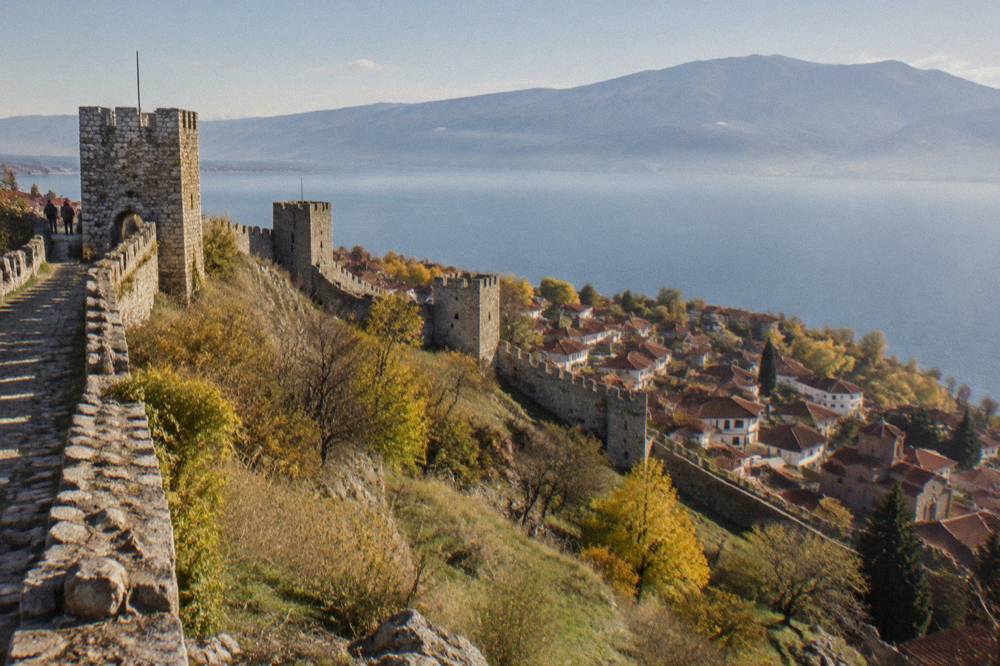
Autumn cools Ohrid from a modelled mean daily high of about 22.4 C in September to 17.4 C in October and 11.5 C in November, with nights falling from about 14.9 C to 5.3 C, while monthly rain climbs from about 62.4 mm to 90.4 mm and the lake surface drops from about 19.7 C to 10.3 C. Early September still reads as summer on every line of the table.
September is the quiet compromise month: the water has not yet given up its summer warmth, the modelled highs stay comfortable, and the rain totals remain moderate. By late October the modelled lake surface sits near the UHMR October multi-year mean of 14.3 C, and the swimming season is effectively over for all but the hardy.
Boat services on the lake taper as the season ends; the typical window for boats to St Naum runs about May to October, with a reduced winter schedule after that, and the Lake Ohrid boats and ferries guide tracks what runs when. If your dates are flexible, the broader trade-offs between the seasons are laid out in when is the best time to visit Lake Ohrid.
Is Ohrid Cold In Winter?
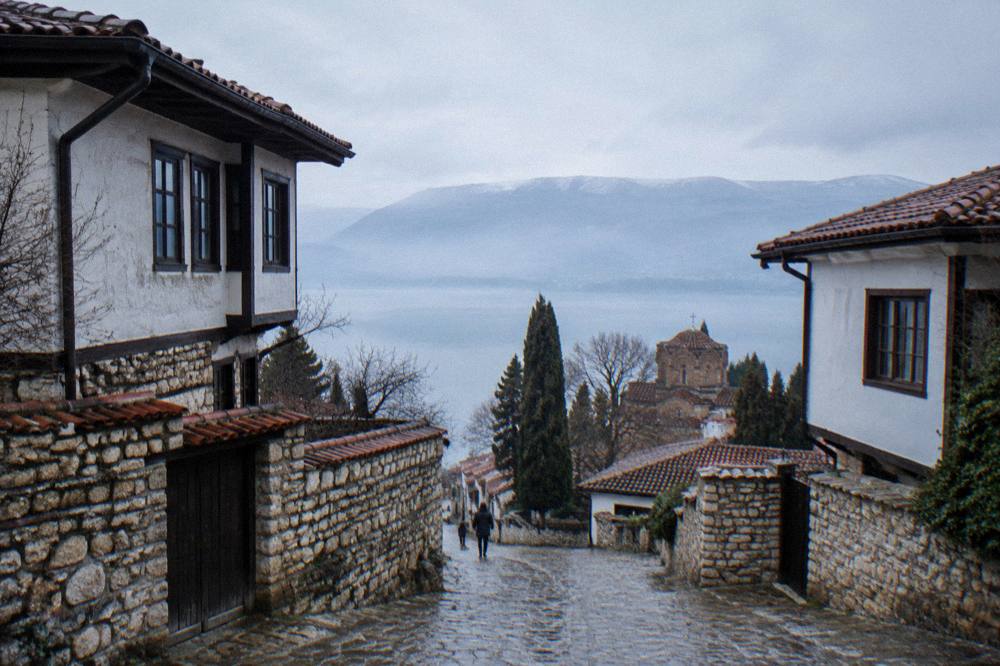
Winter in Ohrid is real but not severe on the modelled normals, with mean daily highs of about 5.0 C in January, 6.3 C in February and 6.2 C in December, mean daily lows of about -0.8 C in January, and monthly rain of roughly 74 to 93 mm that can fall as snow. The lake surface cools to about 4.6 C in January on the modelled figures, and swimming is firmly off the table.
Snow reaches the town in winter, and it reaches the Galicica ridge in larger amounts: Galicica National Park, which rises to Magaro peak at 2,254 m between Lake Ohrid and Lake Prespa, can have snow closing its main road, typically between January and March. Winter visitors, in other words, get a quiet lake town with cold clear days, with the ski-and-snow landscapes a drive away rather than a lift ride.
Museum sites run their winter schedule from 1 October to 30 April, with shorter hours and a Monday closure at the institute's sites, so winter sightseeing needs a little more planning around opening times. A fuller account of the cold months sits in the town's seasonal coverage, and a one-day circuit that works year-round is the Ohrid in one day itinerary.
How Does The Lake Affect Ohrid Weather?
Lake Ohrid, sitting at about 693 m above sea level as a large freshwater body shared with Albania, moderates Ohrid's continental climate by cooling the peak of summer and softening the depth of winter relative to inland areas at the same latitude, and it sets its own calendar: the water warms months behind the air in spring and holds heat into September. The result is a lake-influenced continental pattern rather than a maritime one.
The lag is visible in the numbers. Air temperatures in May average a modelled high near 19.5 C while the lake surface sits near 14.9 C; in September the relationship flips, with the air at 22.4 C and the water still near 19.7 C. That thermal memory is why September swimming works and May swimming is bracing. The UHMR October multi-year mean of 14.3 C, measured over the 2001 to 2020 base period, is one of the few non-modelled figures available for the lake and matches the pattern.
The lake also shapes what there is to do. When the water is warm, the activity roster runs from paddle tours to diving; when it is cold, the town turns to its churches, the Old Bazaar and the museums. Year-to-year lake management matters too: under a June 2026 government decision, jet skis are banned on the lake from 1 July to 31 August between 11:00 and 19:00, and night boating is restricted through the summer and into October 2026.
What Should You Pack For Ohrid Weather?
Pack for Ohrid in layers built around the season: summer days averaging modelled highs near 27 C with warm nights near 19 C call for light clothing, sun protection and swimwear, spring and autumn need a jacket for mornings near 3 to 15 C and rain gear for 60 to 90 mm monthly rainfall, and winter demands a proper coat for lows around -0.8 C with waterproof shoes for snow. The lake breeze makes evenings cooler than the daytime numbers suggest, even in August.
A practical season-by-season summary:
| Season | Modelled Day Range | Rain Per Month | What To Bring |
|---|---|---|---|
| Spring (Mar to May) | about 10 to 20 C highs | about 71 to 82 mm | Layers, light rain jacket, walking shoes |
| Summer (Jun to Aug) | about 24 to 28 C highs | about 33 to 43 mm | Swimwear, sun hat, sunscreen, water shoes for pebbles |
| Autumn (Sep to Nov) | about 12 to 22 C highs | about 62 to 90 mm | Jacket, umbrella, layered tops |
| Winter (Dec to Feb) | about 5 to 6 C highs | about 74 to 93 mm | Warm coat, waterproof footwear, hat and gloves |
Two Ohrid-specific notes. Pebble and mixed shores mean water shoes earn their place in the bag from July to September. And because the town climbs from the lakeshore up to Samuel's Fortress on foot, whatever you pack you will carry uphill, so err toward the lighter end of each season's range.

Which Ohrid Activities Depend On The Weather?
The weather-dependent core of Ohrid is the lake itself: swimming, paddleboarding, kayaking, diving and boat trips to St Naum and the Bay of Bones all depend on warm water and the roughly May-to-October boat season, while hiking in Galicica National Park depends on snow clearing from the high ground, typically after January to March closures. Town sightseeing, churches and museums run in every month, on winter hours from 1 October.
The split matters for trip planning. A July or August visit puts every lake option on the table but shares the town with the peak season, when August is the busiest month. A September visit keeps the water near 19.7 C on the modelled figures while the crowds thin. A March visit trades the lake for hiking at lower elevations and long museum afternoons.
The activity pages map all of this out: things to do in Ohrid for the full roster, Lake Ohrid by bike for two-wheeled options, and the Lake Prespa day trip for the high ground across the Galicica ridge.
When Is The Best Time To Visit Ohrid For Good Weather?
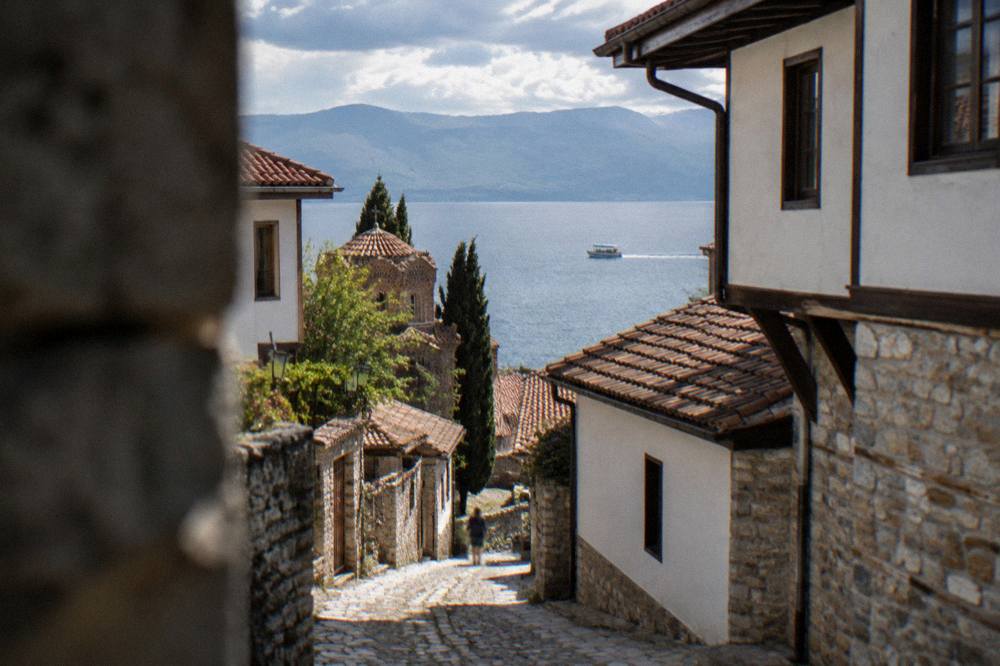
The modelled figures point to July and August for the warmest weather with little rain (highs about 27.1 to 27.6 C, rain about 33 to 35 mm a month) and to September as the best compromise, with highs near 22.4 C, rain near 62.4 mm and lake water still near 19.7 C, while June matches September's air temperatures with slightly cooler water at about 19.4 C. May and October are pleasant on land but sit outside the comfortable swimming window.
Weigh the trade-offs honestly. July and August deliver the full lake season, the Ohrid Summer Festival and the warmest water, at the cost of peak crowds and the highest accommodation demand. June and September sit at the edges of the season with nearly all of the same options. October to April is for the town, the churches and the museums rather than the water, with museum sites on their winter schedule from 1 October to 30 April and closed on Mondays.
Whatever the month, the town itself stays walkable and the core sights stay open in some form. Build the days from the weather table above, book the lake activities for the warm window, and keep a rain plan in the shoulder seasons.
Common Questions About Ohrid Weather
What is the warmest month in Ohrid?
August has the highest mean daily high on the modelled 1991-2020 normals, at about 27.6 C, with July close behind at about 27.1 C; August nights average about 19.0 C.
When can you swim in Lake Ohrid?
The comfortable swimming season runs roughly July to September, when modelled surface temperatures are about 22.9 C in July, 23.5 C in August and 19.7 C in September. The UHMR October multi-year mean is 14.3 C, which marks the practical end of the season.
Does it snow in Ohrid?
Winter precipitation in Ohrid can fall as snow, and the modelled January mean daily low is about -0.8 C. Snow is heavier on the Galicica ridge, where it can close the park's main road, typically from January to March.
What is the rainiest time of year in Ohrid?
November averages about 90.4 mm of rain on the modelled normals and December about 92.6 mm, the two highest monthly totals; July and August are the lowest at about 34.7 mm and 32.9 mm.
Is Ohrid warm in winter?
Winter days reach modelled highs of about 5.0 to 6.3 C from December to February, with nights near or slightly below freezing. It is cold-weather town sightseeing rather than lake weather.
Is Ohrid weather the same as Skopje weather?
Ohrid's climate is moderated by the lake at about 693 m above sea level, so its summer peaks and winter lows sit closer together than an inland continental pattern; Skopje, about 170 km away by road, has no comparable lake influence.