What Is The Population Of Ohrid?
Ohrid in North Macedonia has a municipal population of 51,428 according to the 2021 census. Here is what that figure covers and how it compares with visitor numbers.
Ohrid, the lakeside town in North Macedonia on the shore of Lake Ohrid, has a resident population far smaller than many visitors expect from a place with this much history. The 2021 national census counted the municipality at 51,428 people, a figure reported from the State Statistical Office census release. That single number raises a set of practical questions: what the municipality boundary actually contains, how the count compares with the flow of visitors in a normal season, and what a town of this size feels like to walk around. This page on the Ohrid Travel Guide answers each of those from published figures rather than guesswork.
The Ohrid municipality recorded a population of 51,428 people at the 2021 national census, the most recent full count carried out in North Macedonia. The figure comes from the State Statistical Office's census release and covers the whole municipality, not only the old town core where most sightseeing happens. No newer full census figure has superseded it.
The census number deserves one clarification that matters for anyone comparing figures across sources. The State Statistical Office counts municipalities, and the Ohrid municipality stretches well beyond the historic core around the lake. It includes the villages along the eastern and southern shore that day-trippers pass through on the road toward St Naum and the Albanian border, plus inland settlements on the slopes of Galicica National Park. Someone quoting a much smaller figure for "Ohrid town alone" is drawing a tighter boundary than the census uses.
The 2021 census is the second census conducted in North Macedonia since independence, and it followed years of political dispute over the previous one. Its headline results were published by the State Statistical Office in a dedicated release, which is where the 51,428 figure for the Ohrid municipality appears. The figure is normally cited as the current official population until the next census, and it is the number used in national statistics thereafter. Municipal-level census tables are also published in interactive form on the statistical office's data portal, so anyone needing the breakdown by settlement or age group can pull it directly rather than relying on secondhand summaries.
One more nuance separates a census from a population register. A census counts people where they were recorded on census day, and countries with large diaspora populations, which describes North Macedonia, see gaps between the census count and the number of people who hold ties to a place. Ohrid's position as a tourism and second-home destination adds its own layer: apartments owned by families from Skopje or abroad are part of the housing stock but their owners are counted elsewhere. None of this changes the official figure of 51,428, but it explains why the town can feel fuller or emptier than that number implies depending on the month.
How Does The Resident Population Compare With Visitors To Ohrid?
Ohrid's visitor flow in a single peak month can approach the size of its entire resident population. In November 2025 the municipality recorded 18,103 guests, of whom 11,686 were foreign, producing 33,149 overnight stays. Nationally, North Macedonia counted 1,336,597 tourists in 2025, and Ohrid is one of the country's principal lake destinations.
The November 2025 figures, drawn from State Statistical Office data, are a shoulder-season snapshot rather than the summer peak. Even so, the composition is striking: foreign guests outnumbered domestic ones by close to two to one that month, and Germany was the largest single foreign market with 3,537 guests, followed by Turkey. The same data set recorded 33,149 overnight stays across the municipality's accommodation, which points to an average stay of close to two nights in that month alone. If a quiet late-autumn month generates that volume, the July and August figures sit well above it, since the season runs roughly June to September with August as its high point.
| Measure | Figure | Notes |
|---|---|---|
| Ohrid municipality population, 2021 census | 51,428 | Reported from the State Statistical Office census release |
| Guests in Ohrid, November 2025 | 18,103 | 6,417 domestic, 11,686 foreign |
| Overnight stays in Ohrid, November 2025 | 33,149 | State Statistical Office data |
| Largest foreign market, November 2025 | Germany, 3,537 guests | Followed by Turkey |
| Tourists in North Macedonia, 2025 | 1,336,597 | National total, up from 1,260,425 in 2024 |
The practical reading of these numbers is straightforward. A municipality of 51,428 residents that hosts 18,103 guests in a quiet late-autumn month operates at a scale where tourism shapes the town's rhythm without erasing ordinary life. The butcher, the school run and the lakeside promenade coexist with the visitor economy, and the balance tips further toward visitors as summer arrives. Anyone wondering how many days you need in Ohrid should know that the town's compact resident core is one reason even a short stay covers a lot of ground. The national context reinforces the point: 1,336,597 tourists across the whole country in 2025, up from 1,260,425 the year before, means the domestic travel market alone is substantial, and Ohrid takes a significant share of the lake portion of it.
What Does A Town Of 51,428 Residents Feel Like To Visit?
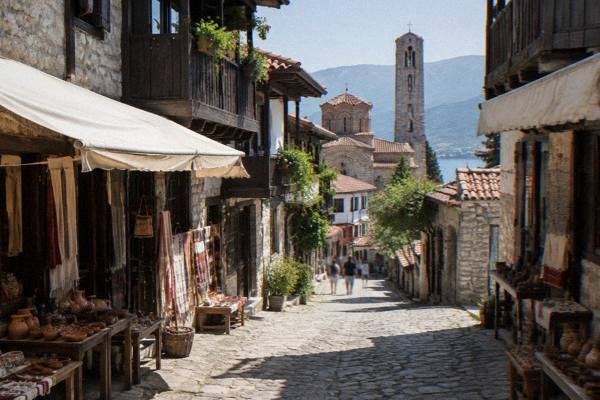
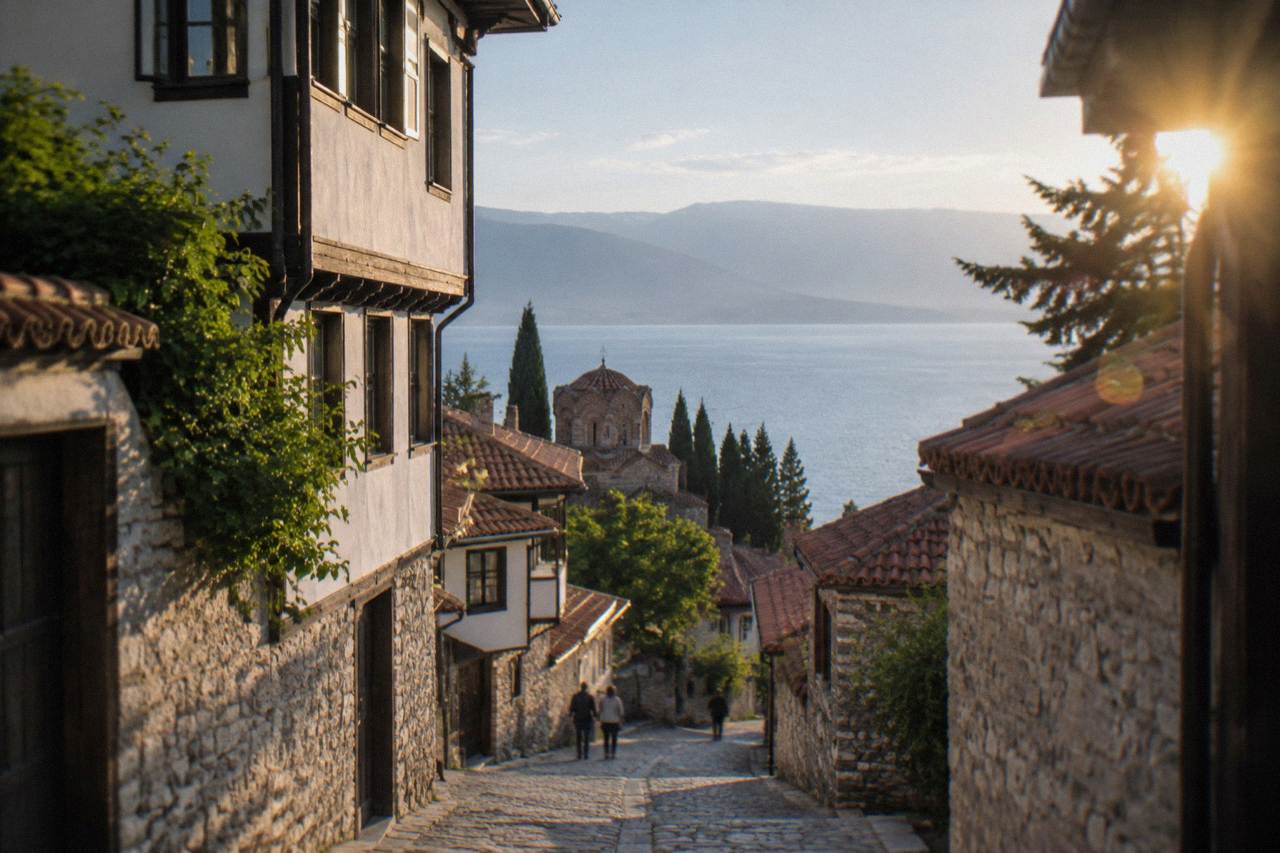
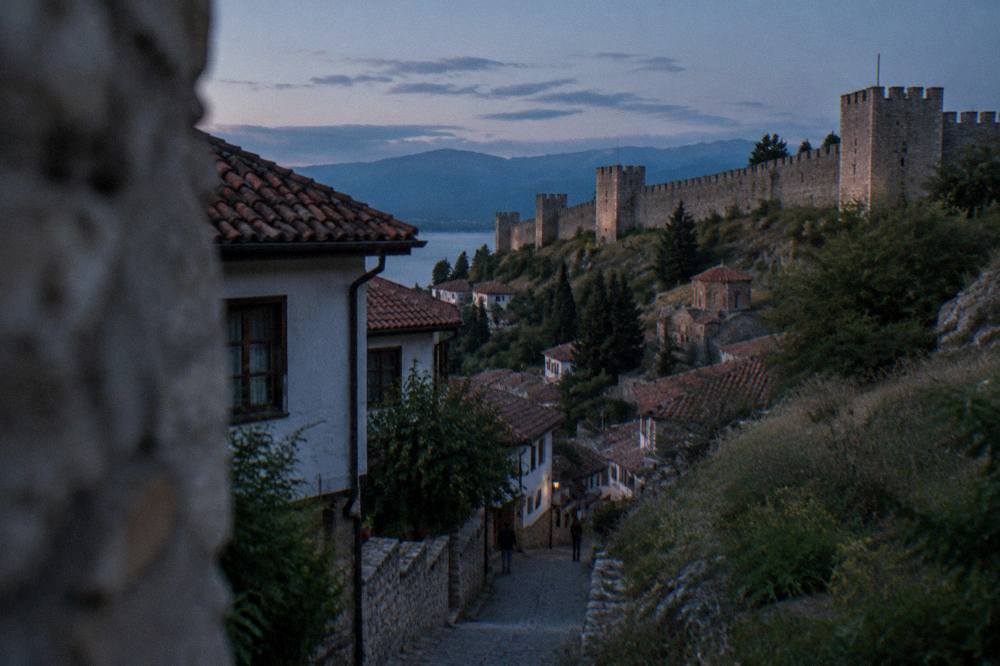
Ohrid is compact enough that the visitor-facing part of town sits within walking distance of itself, with the old town lanes climbing from the lake shore toward Samuel's Fortress at the top of the hill. The resident population is spread across the wider municipality, so the historic core feels far smaller than the headline census number suggests.
The geography explains the compactness better than the population figure does. The lanes between are on foot, and the climb from the shore to the fortress is short but steep. Visitors base themselves in this core or along the shore and reach the outlying villages, beaches and monastery sites by road or boat.
That compactness is why walking tours dominate the first day of most itineraries. A shared small-group walk such as Discover Ohrid's Hidden Gems covers the lanes and viewpoints of the old town on foot, and it can be booked ahead with free cancellation on the operator's live listing: Check availability. The tour is one of several walking options profiled in the site's Ohrid walking tour guide.
For context on how the resident population is distributed, the municipality includes shoreline settlements such as Peshtani and Lagadin, the villages near Trpejca and Ljubanista on the way to St Naum, and inland communities on the Galicica slopes. The visitor infrastructure, from the boat departures along the shore to the restaurants of the Old Bazaar, is concentrated in and around the old town, while the census population is not. A traveller who expects a town of 51,428 people to have the traffic and scale of a city will find instead a dense historic core surrounded by dispersed villages, with the nearest large urban concentration in Skopje about 170 km away by road.
Why Do Population Figures For Ohrid Vary Between Sources?
Different sources count different boundaries, and that is the main reason quoted figures for Ohrid do not match. The 51,428 figure is the municipality-wide census count, while informal estimates for the old town alone, or for the urban settlement as opposed to the municipality, produce smaller numbers. The census remains the only full official count.
The State Statistical Office publishes results at municipality level, and that is the unit used in the 2021 census release. Other bodies, from mapping services to travel write-ups, may quote an estimate for the town proper or repeat an older figure from the previous census era. When comparing, the questions to ask are which year the figure comes from and which boundary it describes. The safe course is to use the municipality figure with its year attached, which is what national statistics do.
There is also a seasonal dimension that affects perceived population. A municipality of 51,428 residents that absorbs a steady stream of domestic and foreign guests, 18,103 in a single November month, carries a summer population that is substantially higher on any given day. That is a floating number nobody counts precisely, and no official figure for it is published, so any specific claim about summer population should be treated with caution. What can be stated from the data is the pattern: guests arrive year-round, foreign visitors dominated the November 2025 count, and overnight stays ran to 33,149 in that month alone.
Is Ohrid Crowded Given Its Population?
Ohrid's summer months concentrate visitors in a small historic core, and August is the busiest point of the season, which runs roughly June to September. With a resident base of 51,428 and guest numbers in the tens of thousands per month, the balance in the old town shifts noticeably toward visitors in peak weeks, while the wider municipality stays far quieter.
The concentration effect is worth understanding before booking. The census population spreads across the municipality's villages and shore settlements, but sightseeing, dining and swimming cluster around a handful of locations: the old town lanes, the church of St John at Kaneo, the shoreline promenade and the beaches within reach of the town. When the season peaks, those specific places carry the load, not the municipality as a whole. A visitor who stays a street or two back from the lake, or visits the Ohrid neighborhoods beyond the core, notices the difference immediately.
For travellers weighing this against other lake towns in the region, the site's comparison of Ohrid versus Struga covers the neighbouring town on the lake's outflow, and where to stay in Ohrid maps the districts against the visitor flow. Both matter more than the raw population number when deciding where to sleep, because the choice of district determines how much of the daily visitor flow sits outside the door.
| Figure | Value | What it describes |
|---|---|---|
| 51,428 | 2021 census | Ohrid municipality, resident population |
| About 693 m | Lake surface level | Lake Ohrid, UHMR gauge basis |
| 18,103 | November 2025 | Guests in Ohrid municipality that month |
| 33,149 | November 2025 | Overnight stays in Ohrid municipality |
| 1,336,597 | 2025 | Tourists in North Macedonia, national total |
Common Questions About The Population Of Ohrid
What Is The Population Of Ohrid?
The Ohrid municipality recorded 51,428 residents at the 2021 national census, the most recent full count. The figure covers the whole municipality, including shoreline and inland villages, not only the historic old town.
Is Ohrid a big city?
No. Ohrid is a town-scale municipality of 51,428 residents, and the historic core where most sightseeing happens is small enough to explore entirely on foot.
How many tourists visit Ohrid compared with residents?
In November 2025 the municipality recorded 18,103 guests and 33,149 overnight stays, per State Statistical Office data. Summer months run considerably higher than that shoulder-season figure.
Where do most of Ohrid's residents live?
The census population is distributed across the municipality, which includes the old town, the shore settlements and villages on the Galicica slopes. The visitor economy is concentrated in and around the old town core.
Which country is Ohrid in?
Ohrid is in North Macedonia, a country outside the EU and the Schengen area, on the shore of Lake Ohrid, a freshwater mountain lake at about 693 m above sea level.
Why do different websites give different population figures for Ohrid?
Most disagreements come from boundaries and years. The 51,428 figure is the municipality-wide 2021 census count, while estimates for the town core alone, or figures carried over from earlier counts, produce smaller numbers.
In short, the 2021 census figure of 51,428 residents describes a mid-sized lakeside municipality whose everyday scale stays modest, while its guest numbers, 18,103 in a single autumn month, show why the old town hums through the summer and settles back to local rhythms once the season ends.