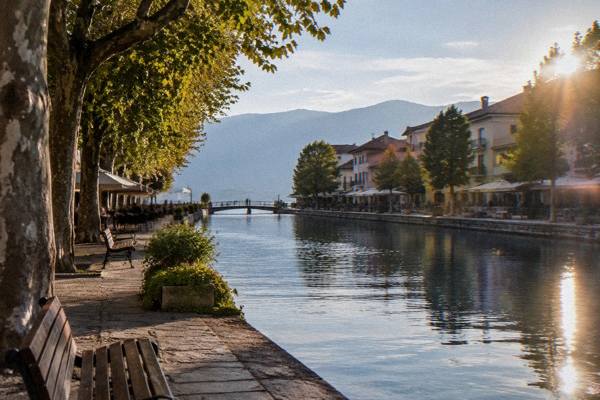
Ohrid Vs Struga: Which Lake Town To Base In
Ohrid and Struga sit at opposite ends of the Macedonian shore of Lake Ohrid, about 12 km apart in a straight line, and they suit different kinds of trip. This comparison lays out what each town offers as a base, using the museum institute's own ticket pages, the national park's published figures and the modelled climate normals.
Short answer
Base in Ohrid if the UNESCO sights, the old town lanes and the boat trips are the point of the trip; base in Struga if you want a quieter lakeside stay near the Black Drim and easier reach of the western shore. The two are close enough that you can sleep in one and spend a full day in the other.
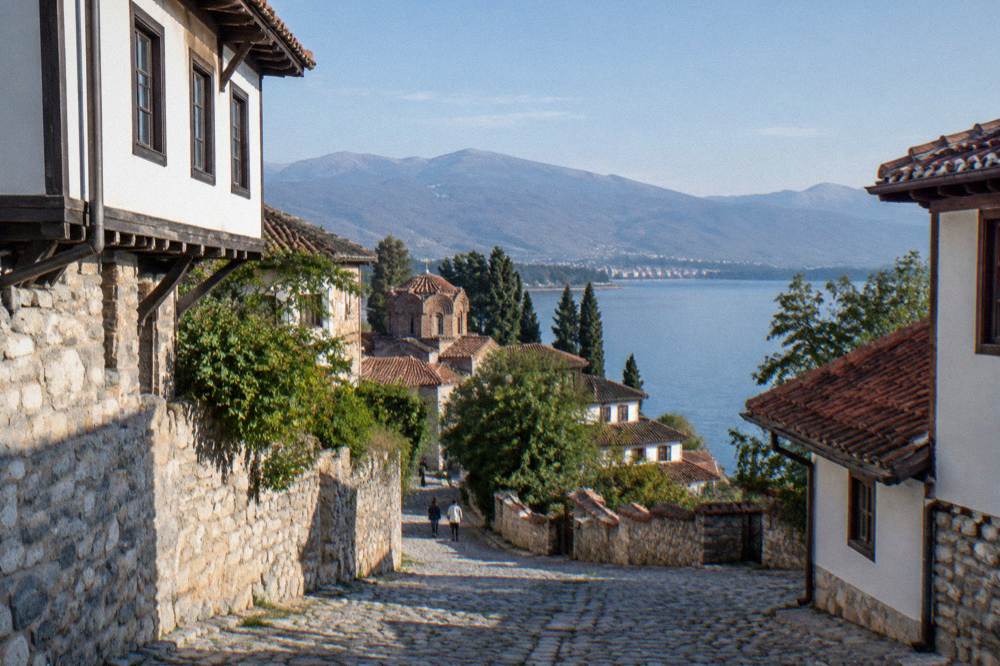
Ohrid and Struga are the two Macedonian towns on Lake Ohrid, a freshwater mountain lake shared with Albania whose surface sits at about 693 m above sea level. Ohrid, in North Macedonia, holds the UNESCO mixed site "Natural and Cultural Heritage of the Ohrid Region", inscribed in 1979 and 1980, with its Byzantine churches, Samuel's Fortress, the Ancient Theatre and the Old Bazaar inside a single walkable old town. Struga sits at the northern end of the lake, close to where the water leaves it on its way toward Albania. The straight-line distance between the two town centres is about 12 km, which makes the "which base" question a matter of character rather than geography. This Ohrid Travel Guide comparison works from what primary sources actually publish: the museum institute's ticket pages, the national park's figures and the modelled climate normals, not impressions.
What Kind Of Town Is Each One In Ohrid Vs Struga?
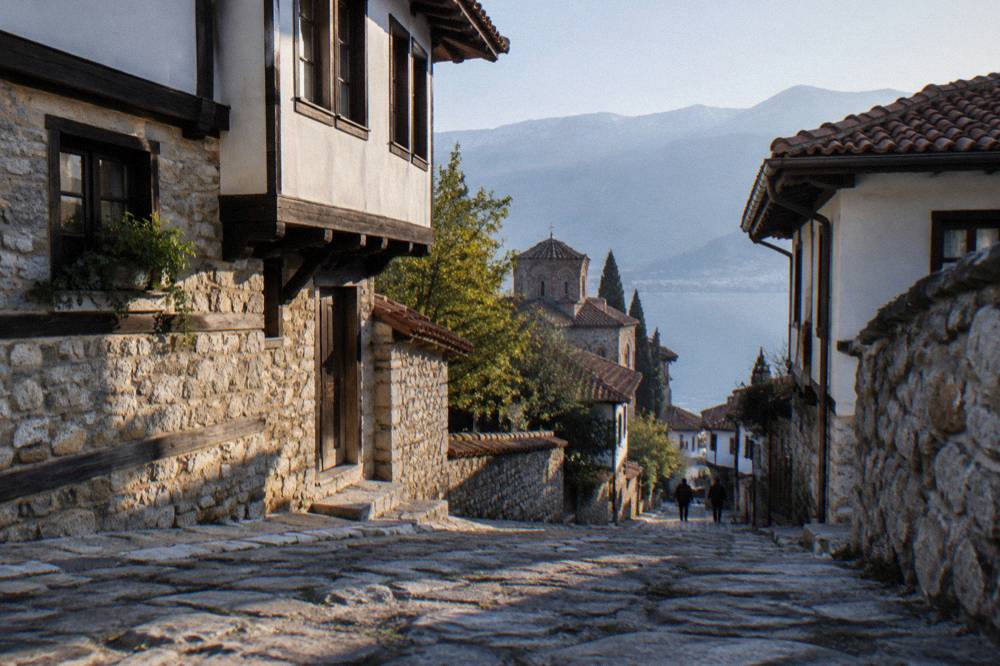
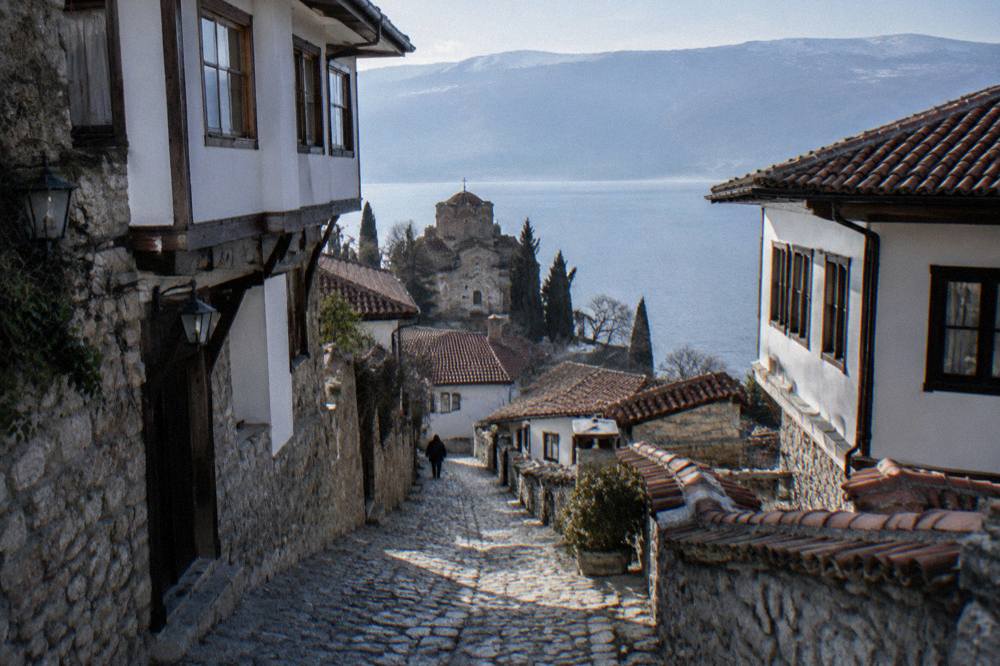
Ohrid is a hillside heritage town of churches, a fortress and stone lanes climbing from the lake shore, and it is the destination the UNESCO listing is built around; Struga is a smaller, flatter town at the lake's northern outlet, known for its poetry festival and its position beside the Black Drim rather than for a dense cluster of monuments. The two are not versions of the same thing. Ohrid's old town climbs from the waterfront to Samuel's Fortress, and the lanes between are on foot. Struga, at the lake's outflow end, is the seat of the Struga Poetry Evenings, whose 65th edition ran from 24 to 29 June 2026 under the theme "Where Poetry Lives", with about 70 poets taking part, according to the national news agency's report.
For a first-time visitor whose interest is the heritage, Ohrid is where the listed monuments physically are. The Old Town guide territory of Struga is a different proposition entirely: a working town on the water with a shorter monument list, which is precisely why some travellers prefer it.
That difference shapes everything else in this comparison: what you can walk to, what you have to travel for, and how the evening feels after the day trips end.
Which Town Has The Sights Within Walking Distance?
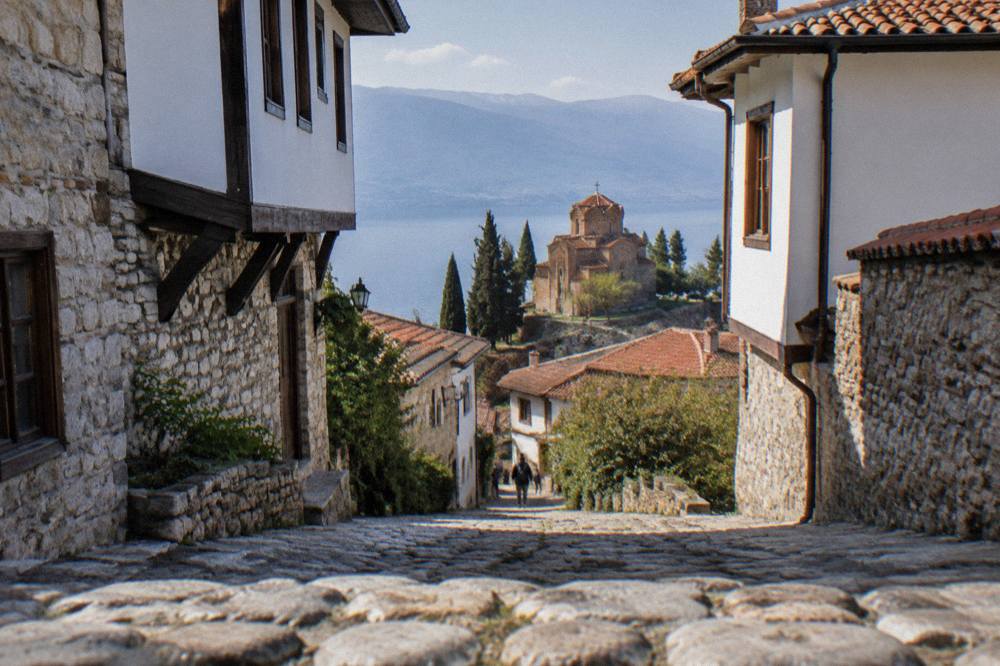
Ohrid does, and by a wide margin: the church of St John at Kaneo, St Sophia, Plaosnik, the Ancient Theatre, Samuel's Fortress, the Old Bazaar, the Perivleptos and Icon Gallery complex and the Robev Family House are all inside one contiguous old town, while Struga's sights are fewer and its biggest draws, the poetry festival aside, sit at the lake's edge rather than on a hillside. The institute that runs Ohrid's museum sites, NI Institute and Museum Ohrid, sells tickets at 120 den for domestic visitors and 150 den for foreign visitors, with a 60 den rate for children and students, according to its own ticket page. Its three flagship sites each publish their own schedule, and the shared pattern matters for planning.
To find your way around that hillside cluster with a guide, book an old town walking tour here.
| Museum institute site | Winter hours (1 Oct to 30 Apr) | Summer hours (from 1 May) | Closed |
|---|---|---|---|
| Robev Family House, Tsar Samoil St 62 | 09:00 to 15:30 | Two shifts, 09:00 to 15:30 and 13:30 to 20:00 | Monday |
| Bay of Bones / Museum on Water, Gradishte, Peshtani | 09:00 to 15:30 | 09:00 to 16:30 (to 30 Sep) | Monday |
| Icon Gallery, Klimentov Univerzitet St bb | 09:00 to 14:00 | 09:00 to 17:00 | Monday |
Samuel's Fortress stands above the old town, and a municipal revitalisation plan reported in 2026 budgets over 11 million denars for a summer stage, illumination and archaeological work there. The Ancient Theatre below it was built at the end of the third or start of the second century BC, in the late Hellenistic period, and its capacity rose to 5,000 after the epiteatron was added, per the museum institute's own site page. Ohrid also holds the oldest Slav monastery, St Panteleimon at Plaosnik, and more than 800 Byzantine-style icons from the 11th to the end of the 14th century, in UNESCO's own description of the property.
Struga's answer to that list is shorter, and the honest framing is that its strengths are positional, not monumental. It sits near the lake's outlet, and the town's best-known cultural event, the Struga Poetry Evenings, is now in its 65th edition. What Struga does offer within easy reach is the western shore: the road to Vevcani and the villages toward the Albanian border, and the quick run down to St Naum at the lake's southern end.
How Easy Is It To Travel Between Ohrid And Struga?
The two towns are about 12 km apart in a straight line and are connected by local buses along the shore road, with operators running multiple departures a day, so a day trip between them is short and cheap and neither choice locks you out of the other. Older guide figures put the local fare at roughly 100 to 150 den one way, a figure to confirm on the day since it comes from secondary sources. The buses are run by the same regional operators that serve the Skopje route, among them Galeb and Classic Company, both based in Ohrid. There is no train anywhere in this corridor: no passenger rail service reaches Ohrid, and none serves Struga either.
That proximity cuts both ways. A reader basing in Ohrid can spend a morning in Struga and be back for the afternoon; a reader basing in Struga can commute into Ohrid's old town daily and still sleep by the quieter water. The day trip from Ohrid to Struga takes less time than many intra-city journeys in larger capitals.
For travellers arriving from Albania, one product bridges both towns in a single day: the Tirana and Durres lake day trip crosses into North Macedonia and reaches the Ohrid side of the lake from Tirana, Durres or Golem, and it starts in Albania, not in Ohrid. If that schedule fits, Check availability on the operator's live listing.
Which Town Is Better For Boat Trips On Lake Ohrid?
Ohrid is the practical base for lake boating, because the port and the full-day cruise departures to St Naum with stops at the Bay of Bones run from Ohrid's harbour, and the museum's own water site at the Bay of Bones is reached far more easily by water or road from Ohrid than from Struga. One cruise operator, Boat Armada, publishes a full-day Ohrid port to St Naum cruise of about 7 hours, from 1,200 den for an adult and 600 den for a child, with the Bay of Bones entrance of 150 den per person listed separately as not included. St Naum monastery's entrance is 150 den per person, and a rowboat through the Crn Drim springs near the monastery costs about 5 EUR, per the same operator's published list.
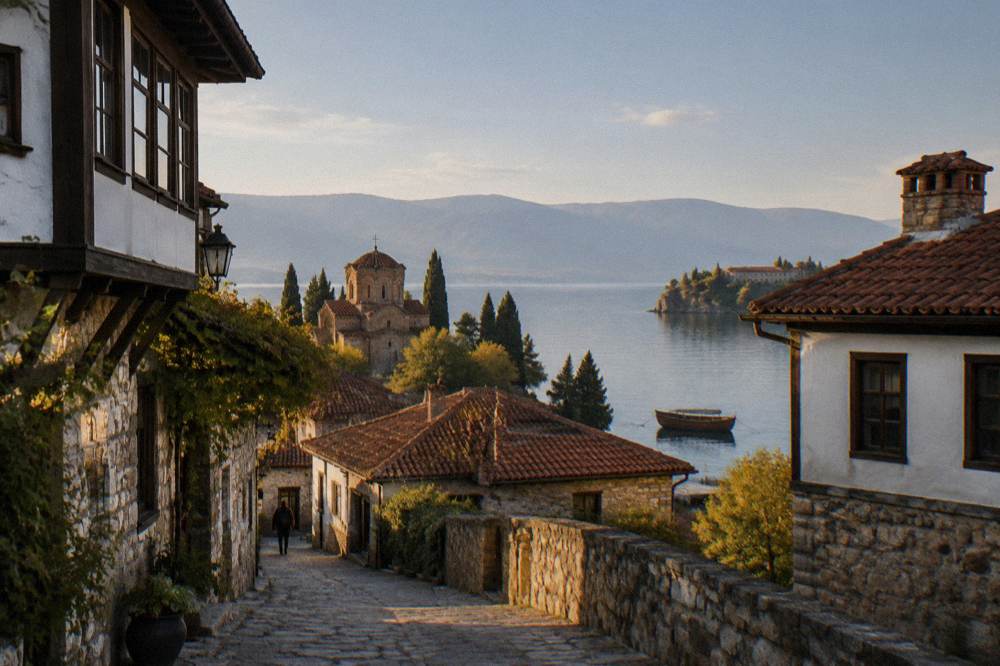
The boating season is bounded. Cruises to St Naum generally run about May to October with a reduced winter schedule, and 2026 brought new navigation limits on the lake: a government decision of 2 June 2026 bans jet skis from 1 July to 31 August between 11:00 and 19:00, and bans boats at night from 3 June to 31 August between 21:00 and 05:00, with a further October limit, in the interest of swimmer safety. None of that stops the daytime cruise calendar; it does mean evening boat events in peak summer are off.
Struga has boat services of its own, typically as part of day trips or private charters, but the structured full-day products cluster on the Ohrid side. The lake boats and ferries overview lists what runs where, and the Bay of Bones attraction page covers the museum site the cruises stop at.
How Do The Two Towns Compare For Day Trips?
Struga has the edge for the western shore and the border country, Ohrid has the edge for the southern lake and the mountains, and the two towns' catchments overlap almost completely because the whole Macedonian lake shore is a single road corridor of about an hour end to end. From either base, St Naum sits at the southern end of the lake about 4 km from the Albanian border crossing at Tushemisht; Galicica National Park, North Macedonia's second national park, founded in 1958, spans 22,750 ha between Lake Ohrid and Lake Prespa with Magaro peak at 2,254 m; and Lake Prespa lies beyond the ridge, its gauge at Nakolec reading 841.36 m in October 2026, about 148 m above Lake Ohrid.
| Day trip | Straight-line distance | Reachable from Ohrid | Reachable from Struga |
|---|---|---|---|
| Struga town | about 12 km | yes, local bus along the shore | it is the base |
| Galicica National Park | between the two lakes | yes, road from Ohrid | yes, longer drive |
| Lake Prespa | beyond the Galicica ridge | yes | yes, longer drive |
| Bitola | about 46 km from Ohrid | yes | yes, via Ohrid |
| Skopje | about 111 km from Ohrid | yes, about 3 h by bus | yes, add the Struga leg |
| Tirana, Albania | about 86 km from Ohrid | yes, about 3 to 3.5 h | yes, similar |
The park fee structure is worth knowing whichever base you choose: Galicica charges 250 MKD per vehicle with no per-passenger fee, and the 100 MKD rate applies only to someone entering on foot from the Ohrid-side gate. The main park road can close under heavy snow, typically January to March. From Ohrid the Lake Prespa day trip and the Galicica hikes are the mountain options; from Struga the natural first excursion is Vevcani, the hill village above the western shore.
Where Should You Stay If You Want To Swim?
Both towns sit on swimmable water, but Ohrid gives you the beaches and swimming spots most guides write about, Gradiste, Lagadin, Ljubanista, Potpesh and Labino along the eastern and southern shore, while Struga's swimming is closer to town on the northern shore, and the modelled water temperatures are the same lake either way: about 22.9 C in July and 23.5 C in August, against 4.6 C in January. The lake's October mean water temperature, in the UHMR multi-year record, is 14.3 C. The swimming season runs from roughly July, once the modelled surface readings pass 20 C.
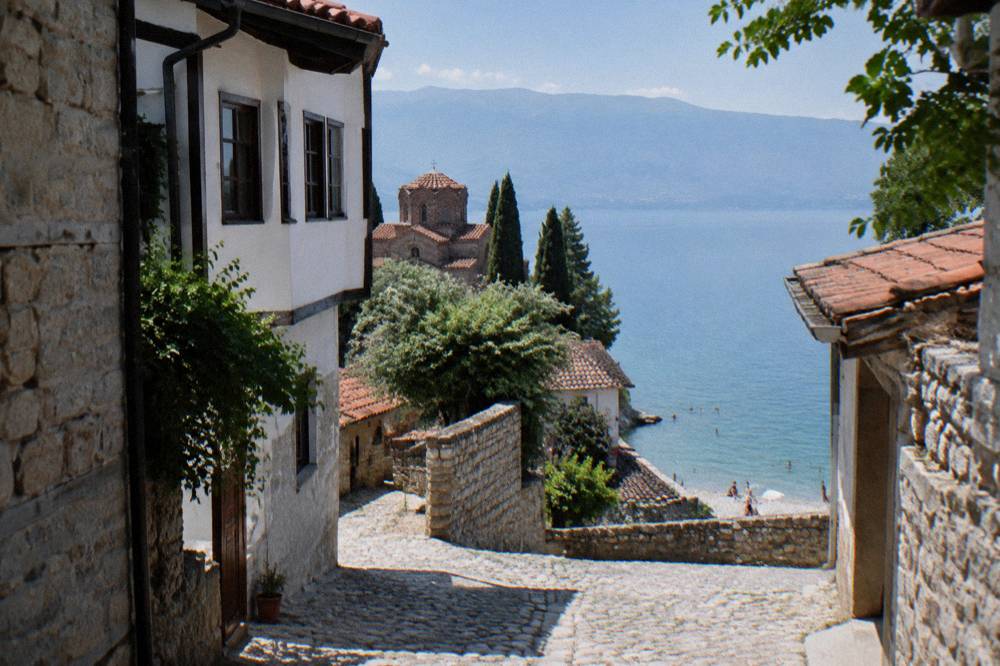
The 2026 bathing tests reported by the Institute of Public Health graded the lake's water Class I physico-chemically at most sampled points, with most microbiological samples rated "Excellent", though Grashnica beach on the Ohrid side recorded Class III. Those are point-specific results, and the swimming guide and the question is it possible to swim in Lake Ohrid carry the detail.
The honest difference is not the water but the walk. From Ohrid's old town, the water is immediately below the cliffs and the larger beaches are a short ride east. From Struga, the northern shore's facilities thin out in winter, as they do along the whole lake, and the season generally runs from about May or June to September or October.
What About Weather, Crowds And Festivals In Each Town?
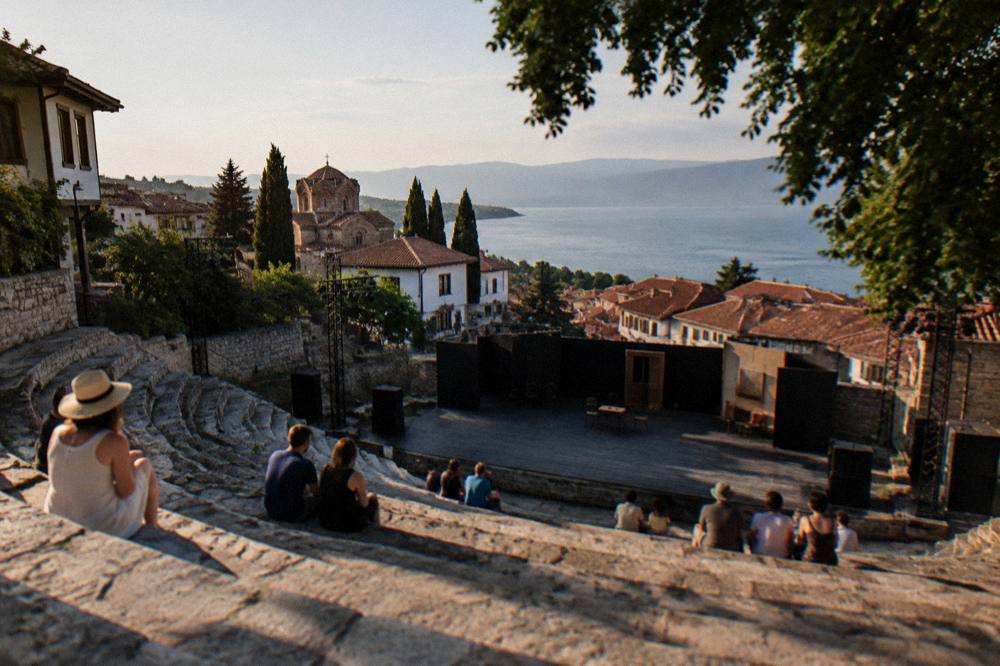
The two towns share one modelled climate, ERA5 reanalysis normals for the 1991 to 2020 period, with July averaging a high of 27.1 C and August 27.6 C against winter highs near 5 C in January, and the same rain pattern, heaviest in November and December and lightest in July and August, so weather should not decide the base, but festivals might: Ohrid's flagship summer festival runs 12 July to 20 August while Struga's poetry week sits in late June. The 66th Ohrid Summer Festival opened on 12 July 2026 at the Ancient Theatre with a gala evening, and closes by tradition on 20 August; its main venues include the Ancient Theatre and St Sophia. Struga's 65th Poetry Evenings ran 24 to 29 June 2026, moved from their traditional late-August slot.
| Month | Mean daily high C | Mean daily low C | Rain mm |
|---|---|---|---|
| Jan | 5.0 | -0.8 | 76.5 |
| Feb | 6.3 | 0.0 | 74.3 |
| Mar | 10.0 | 2.5 | 80.5 |
| Apr | 14.6 | 6.3 | 82.4 |
| May | 19.5 | 10.8 | 70.8 |
| Jun | 24.2 | 15.2 | 43.1 |
| Jul | 27.1 | 18.3 | 34.7 |
| Aug | 27.6 | 19.0 | 32.9 |
| Sep | 22.4 | 14.9 | 62.4 |
| Oct | 17.4 | 10.3 | 76.0 |
| Nov | 11.5 | 5.3 | 90.4 |
| Dec | 6.2 | 0.9 | 92.6 |
These are modelled normals for the lake basin, not a station record, and they apply to the shared valley rather than differently to each town. Snow falls in the basin in winter, and Galicica above it holds heavier snow that can close the park road. August is the busy month on the whole lake, with full accommodation and busy beaches reported across guides; November 2025 alone counted 18,103 guests in Ohrid municipality, of whom 11,686 were foreign visitors, with Germany the largest foreign market, in State Statistical Office data.
Which Town Suits Which Traveller?
Choose Ohrid as the base if the trip is about the UNESCO sights, the churches, the fortress and the boat departures, and choose Struga if the priority is a quieter, flatter lakeside stay from which Ohrid is a short bus ride and the western shore is on the doorstep; families with young children and readers with limited mobility may also prefer Struga's flat ground over Ohrid's climb from the shore to the fortress. Neither choice is wrong, and the two are close enough that a three-day trip can sleep in one town and eat evenings in the other. The itineraries on this site, including one day in Ohrid and three days around the lake, all start from Ohrid simply because the monument list does.
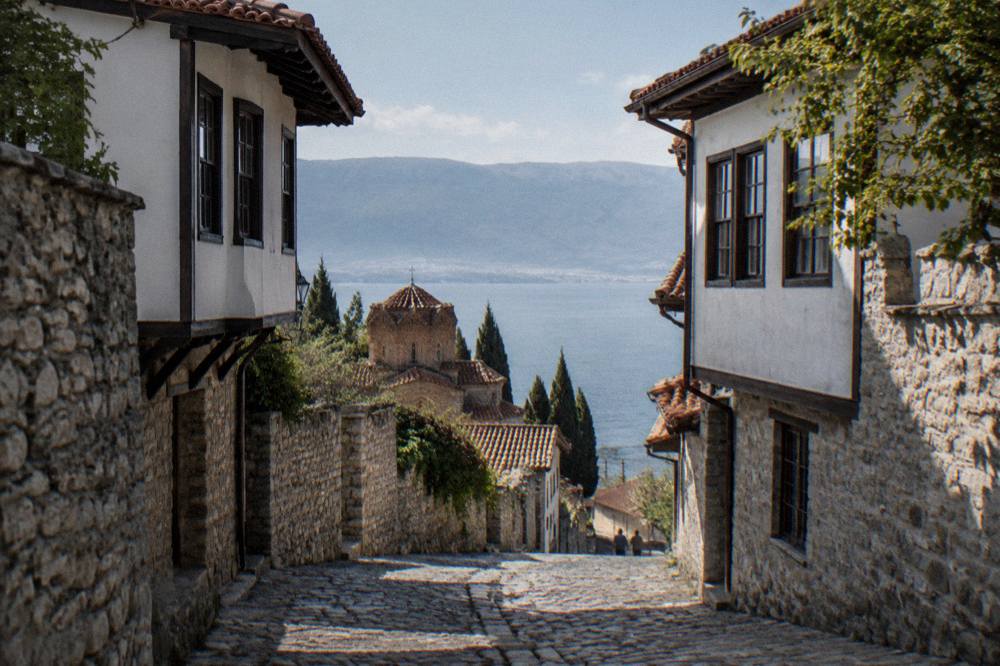
A second practical angle is the airport. Ohrid's St Paul the Apostle Airport, OHD, is about 10 km from the centre of Ohrid, which places it between the two towns and closer to neither in particular, and Wizz Air is expected to base an aircraft there, according to an August 2026 announcement, with 2026 route additions including Milan Malpensa, Wroclaw and Katowice. Arrivals from Tirana, Skopje or elsewhere should be matched to the base the same way: see getting to Ohrid planning notes and the safety overview for entry and practicalities.
Ohrid Vs Struga: The Short Answer
For a first visit of one to three days, Ohrid is the base the sources support: every headline sight, the port cruises and the festival venues are there, and Struga is a 12 km bus ride away; for a slower week, a second home on the lake or a base for the western shore and Vevcani, Struga earns its place, especially in late June when the poetry festival is on and the summer crowds are not. The deciding facts are structural, not matters of taste. Ohrid has the monument density and the departures; Struga has the flat ground, the outflow and the quiet. A reader who wants both should sleep in Ohrid and give Struga a day, or sleep in Struga and buy Ohrid's museum mornings at 150 den a site.
| Question | Better Base | Why |
|---|---|---|
| First short visit | Ohrid | UNESCO sights, fortress and port cruises all in one walkable town |
| Boat trips to St Naum | Ohrid | full-day cruises depart Ohrid port, from 1,200 den adult |
| Quiet lakeside stay | Struga | smaller town at the lake's northern outlet |
| Flat, easy walking | Struga | Ohrid's old town climbs from the shore to the fortress |
| Late June culture | Struga | 65th Poetry Evenings ran 24 to 29 June 2026 |
| July and August festivals | Ohrid | Summer Festival 12 July to 20 August, Ancient Theatre and St Sophia |
| Western shore and Vevcani | Struga | shorter run to the hill villages above the shore |
| Museums on a Monday | neither | the institute's three sites close on Mondays year-round |
Common Questions About Ohrid And Struga
Is Struga cheaper than Ohrid?
No sourced price comparison between accommodation in the two towns exists in the published record, so this guide states none. The costs that are published are the same from either base: museum institute tickets at 120 den domestic and 150 den foreign, the Galicica vehicle fee of 250 MKD, and the lake cruise from 1,200 den.
Can you visit Struga as a day trip from Ohrid?
Yes. The towns are about 12 km apart in a straight line and local buses run along the shore road multiple times a day, run by regional operators including Galeb and Classic Company. A morning in Struga and an afternoon back in Ohrid's old town is a normal day shape.
Does Lake Ohrid touch both towns?
Yes. Ohrid sits on the eastern shore toward the lake's southern end and Struga at the northern outlet, where the Black Drim leaves the lake. The same water, at about 693 m above sea level, runs along both frontages, and the modelled surface temperatures are shared: about 22.9 C in July and 4.6 C in January.
Which town has the festivals?
Both, in different months. Ohrid hosts the Ohrid Summer Festival, whose 66th edition ran 12 July to 20 August 2026 with venues including the Ancient Theatre and St Sophia, and the Balkan Festival of Folk Songs and Dances from 3 to 6 July 2026. Struga hosts the Struga Poetry Evenings, whose 65th edition ran 24 to 29 June 2026.
Is Ohrid walkable for someone who struggles with hills?
Only in part. The old town climbs from the lake shore up to Samuel's Fortress and the lanes between are on foot. Struga, by contrast, is flat beside the outflow, which is one reason a slower trip might base there and commute into Ohrid by bus.
Can you base in Struga and still see St Naum?
Yes. St Naum sits at the lake's southern end, about 4 km from the Tushemisht border crossing, and is reached by road along either shore or by boat. The published full-day cruises depart from Ohrid port, so a Struga-based traveller drives, rides the bus or commutes to Ohrid for the boat option.