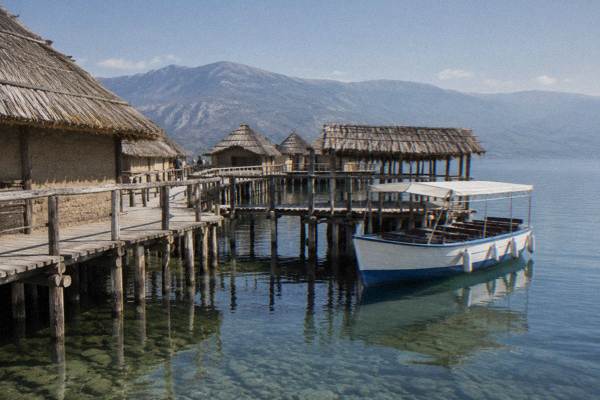
Bay Of Bones: The Reconstructed Lake Dwelling
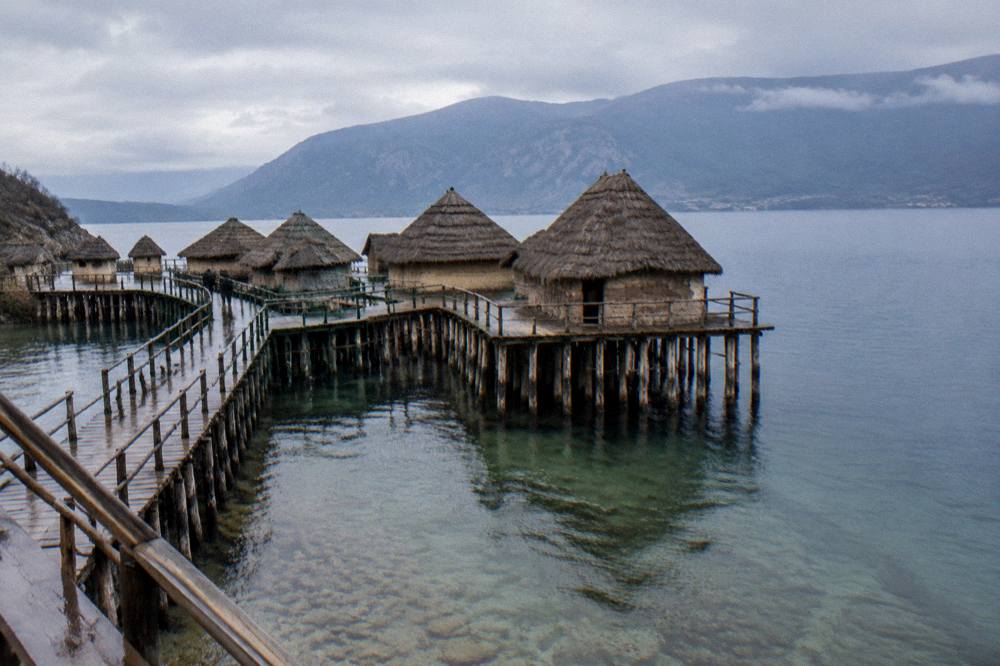
The Bay of Bones, the Museum on Water at Gradishte near Peshtani, is a reconstructed lake dwelling standing on piles above Lake Ohrid, run by the Institute and Museum of Ohrid and reached most easily by boat from Ohrid town.
Short answer
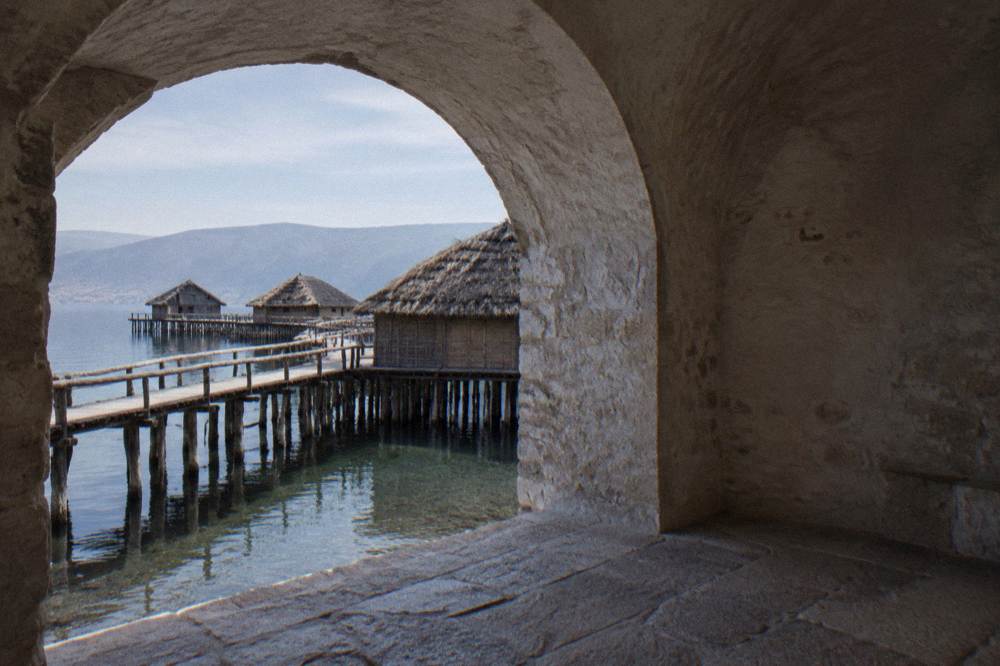
The Bay of Bones is a reconstructed pile dwelling standing over the water at Gradishte near Peshtani, about 14 km south of Ohrid along the lake shore. It is one of the sites of the NI Institute and Museum Ohrid, it is closed on Mondays, and the classic way to reach it is on a boat cruise from Ohrid that also stops at St Naum.
The Bay of Bones, known locally as the Museum on Water, is a reconstructed lake dwelling that stands on wooden piles above the surface of Lake Ohrid at Gradishte, near the village of Peshtani on the lake's eastern shore. It is one of the museum sites of the NI Institute and Museum Ohrid, the same institution that runs the Robev Family House and the Icon Gallery in the old town, and this Ohrid Travel Guide page lays out how to reach it, what a day there involves, and how it fits into a wider trip along the lake. It is not a ruin in the water and not a theme park: it is a museum-built reconstruction of a prehistoric pile settlement, and the shore around it is one of the lake's familiar swimming and boat-stop areas.
What Is The Bay Of Bones In Ohrid?
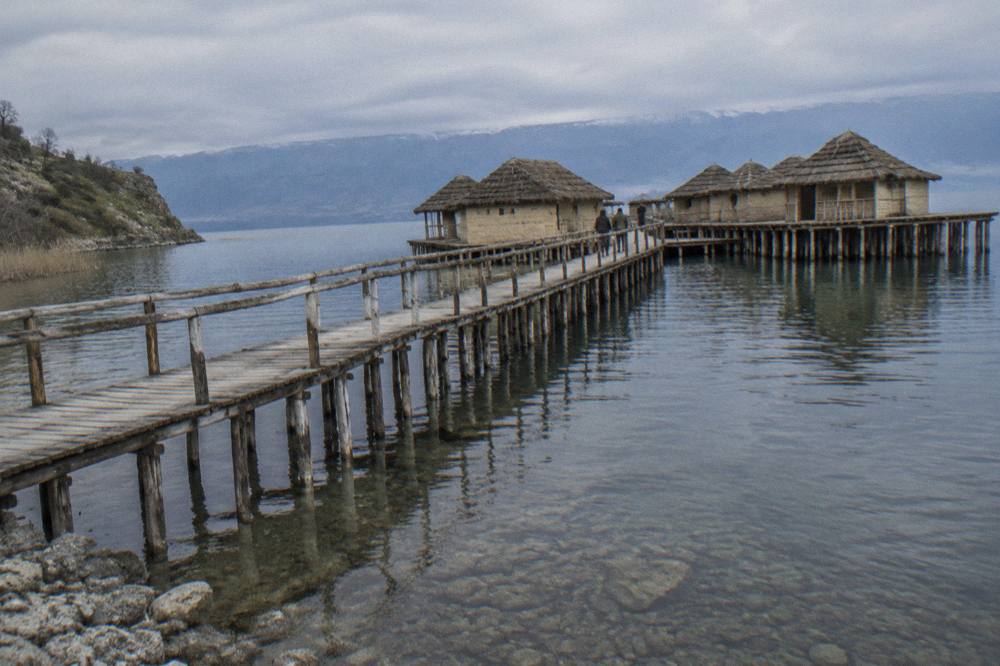
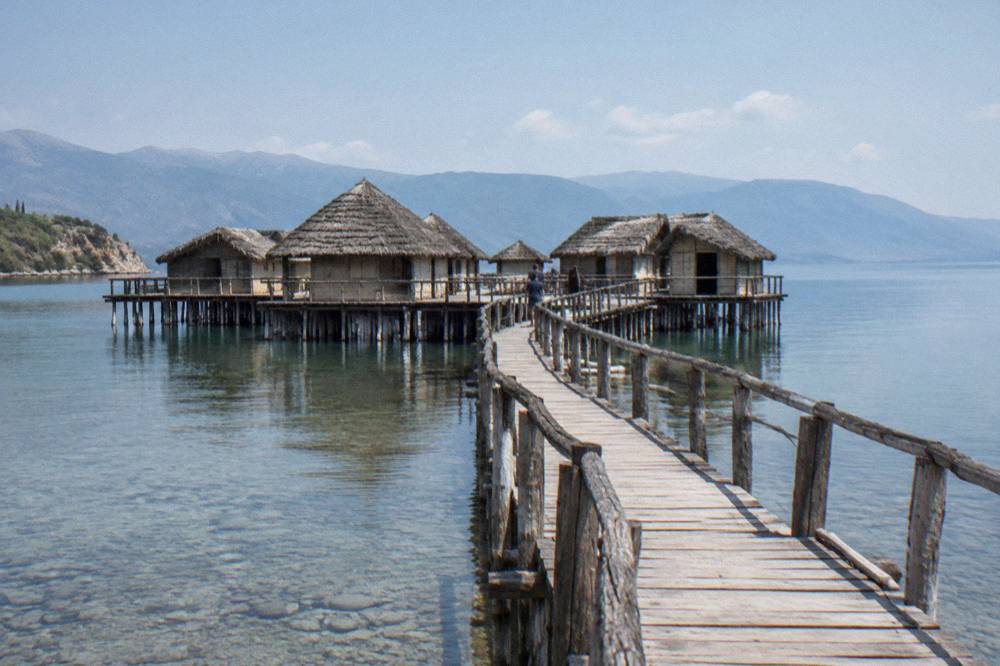
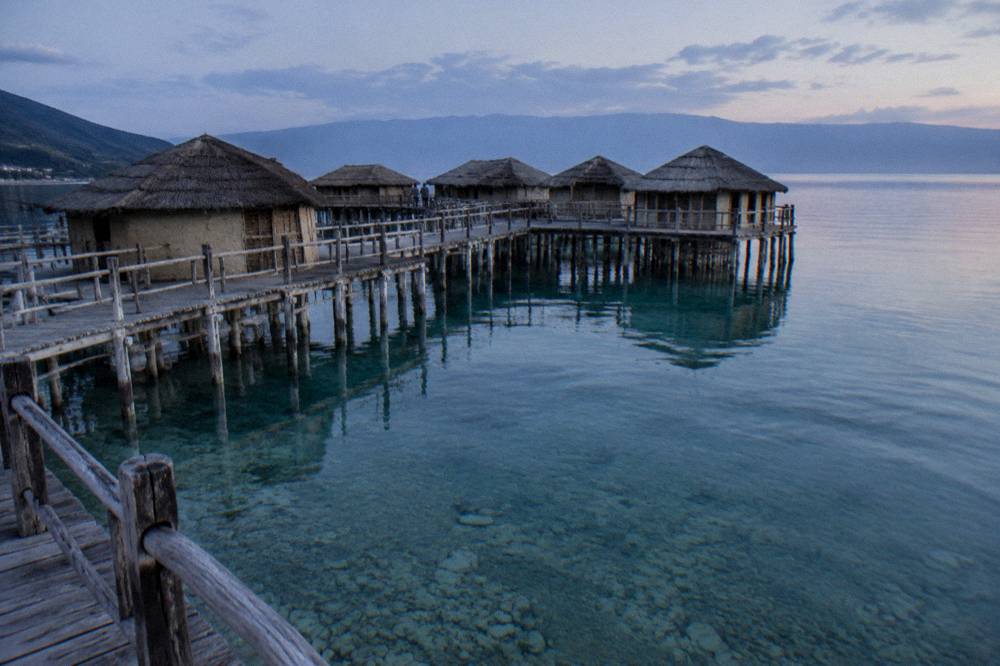
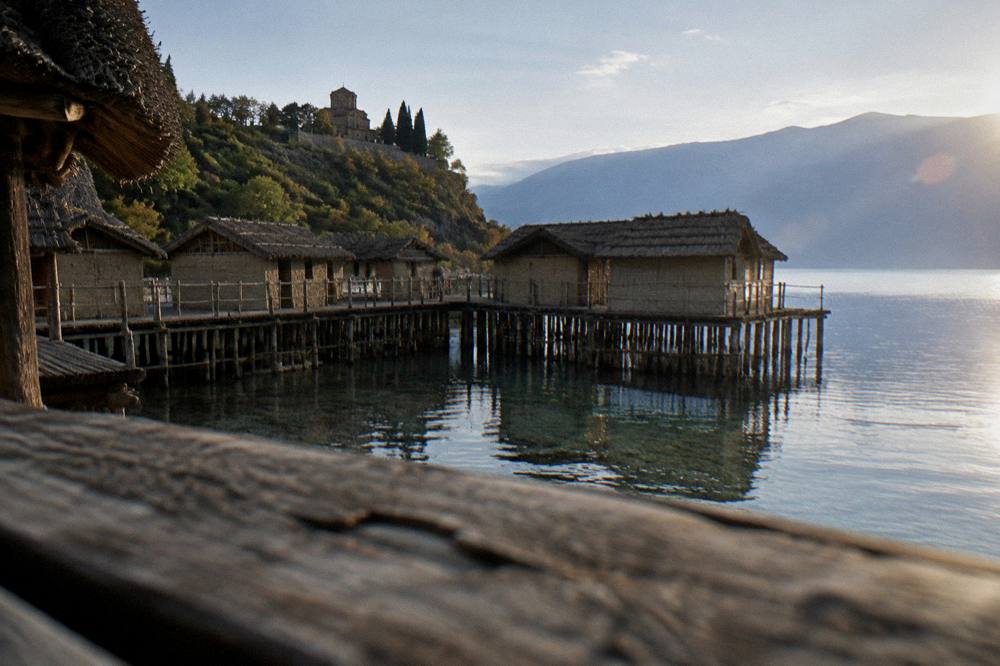
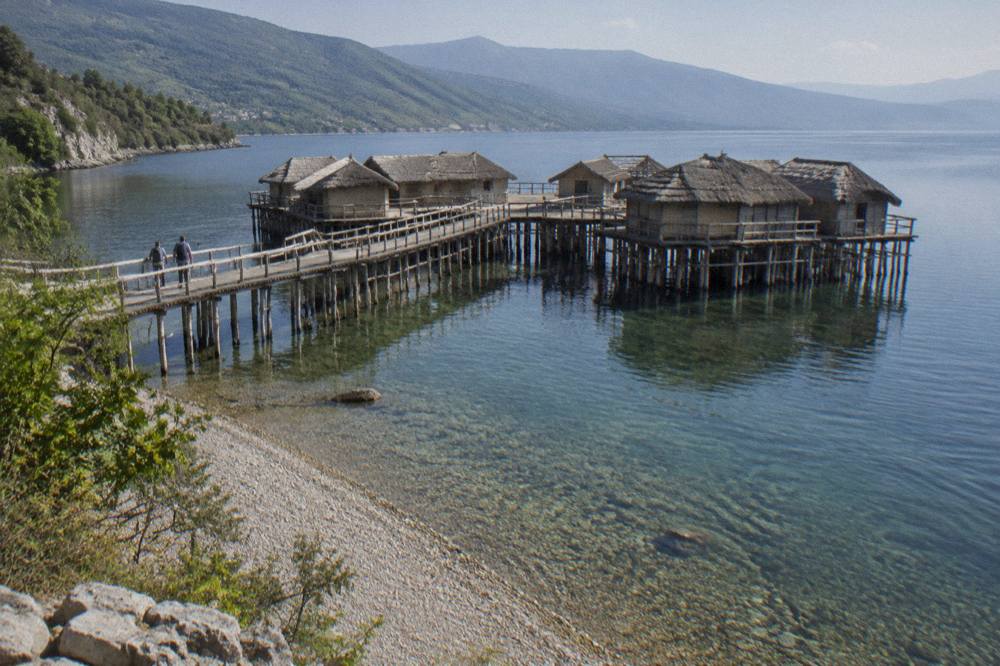
The Bay of Bones is a full-scale reconstructed lake dwelling, built on piles driven into the shallows at Gradishte near Peshtani on Lake Ohrid, and operated as an archaeological museum site by the NI Institute and Museum Ohrid. The name in Macedonian, Zaliv na Koskite, refers to the bay itself, and the structure presents a Bronze Age and Iron Age pile settlement of the kind that once stood along this shore, with walkways and platforms standing directly over the water.
The site belongs to the same museum institute as the National Museum's town sites, which matters practically: the institute runs its sites on a winter schedule from 1 October to 30 April and a summer schedule from 1 May to 30 September, and Monday is the closed day at the museum sites where the institute publishes closing days. The Bay of Bones sits at Gradishte, a shoreline stretch near Peshtani that also serves as one of the lake's swimming areas, so a visit usually combines the museum platform with time on the pebble shore or a swim off the boat. The museum institute's own pages carry the current schedules and ticket arrangements for its sites, and those are the pages to check before setting out, because seasonal schedules change each year.
What the reconstruction gives you is the thing almost no other lake shore in the region offers: the ability to stand on a platform over the water and read a prehistoric lakeside settlement at full scale rather than through a glass case. The museum institute presents the site as part of the lake's long settlement story, a story that UNESCO recognized when it inscribed the "Natural and Cultural Heritage of the Ohrid Region" as a mixed property, natural in 1979 and cultural in 1980, extended to the Albanian part of the lake in 2019. The wider landscape of Lake Ohrid frames every visit here, and the site is one of the clearest places to see why the heritage listing covers nature and culture together.
How Do You Get To The Bay Of Bones From Ohrid?
There are three realistic ways to reach the Bay of Bones from Ohrid town: a boat along the lake shore, a road journey south along the eastern shore road toward Peshtani and Trpejca, or as a stop on an organised day trip that continues to St Naum at the southern end of the lake. The site is at Gradishte near Peshtani, on the same shore road that continues to Trpejca, Ljubanista and St Naum, and boat cruises from Ohrid treat it as a standard stop with a swim break.
The boat option is the classic one. A full-day cruise from Ohrid port along the lake, run by a local operator, is listed as a seven-hour trip calling at the Bay of Bones with a swim stop, continuing toward St Naum, from 1,200 den per adult and 600 den per child. The cruise operator's own listing notes that the Bay of Bones entrance is not included in the boat fare, so budget the museum ticket separately. Boats to the southern lake generally run about May to October with a reduced winter schedule, so outside that window the road is the dependable route. The wider picture of lake transport is covered in the Lake Ohrid boats and ferries guide.
By road, the eastern shore road runs south from Ohrid past the beach settlements of Lagadin and Peshtani toward Trpejca and St Naum; Gradishte sits on this stretch near Peshtani. The local bus network along the shore serves the villages, with the town bus station on the eastern edge of Ohrid as the departure point, and schedules thin out outside the summer months. If you are driving from further afield, the practical figures are these: Ohrid airport is about 10 km from the centre, Skopje is about 170 km by road, and the road south from town is the same one that serves the whole eastern shore. Visitors planning a broader circuit can compare the two classic lake towns of the region in the Ohrid vs Kotor guide.
The organised day-trip option covers the most ground. Several products on this site's roster run the Ohrid to Bay of Bones and St Naum route by boat, some with a barbecue lunch on board, and there is a dedicated diving product that runs try dives at the bay itself. The featured pick for this page is the Lake Ohrid boat trip to Bay of Bones and St Naum with a swim stop, which pairs the museum stop with the monastery and the southern springs in one day. You can check live dates and pricing on the operator's listing: Check availability.
What Can You See On A Bay Of Bones Boat Trip?
A Bay of Bones boat trip from Ohrid typically combines three things: a stop at the reconstructed pile dwelling itself with time on the Gradishte shore, a swim break in the lake, and a continuation south to St Naum monastery at the Crn Drim springs, before the return cruise along the eastern shore. The on-water portion gives you the shore profile that the road never shows, from the Old Town cliffs and Kaneo down through the beach settlements to the monastery at the southern end.
The full-day local cruise listed by the operator at Ohrid port is a seven-hour circuit from 1,200 den per adult and 600 den per child, with the Bay of Bones entrance paid separately at the site. St Naum monastery, at the southern end of the same trip, charges an entrance of 150 MKD per person per the cruise operator's published notes, and a rowboat ride through the Crn Drim springs near the monastery runs at about 5 EUR. That combination, pile dwelling plus monastery plus springs, is the standard full-day shape of the southern lake, and the numbers below set out the local costs that are published.
| Item on the southern lake route | Local price | Notes |
|---|---|---|
| Full-day boat cruise, Ohrid port to St Naum | from 1,200 den adult, 600 den child | Seven-hour trip with Bay of Bones stop and swim break, per the operator's listing |
| Bay of Bones entrance | museum institute ticket, sold at the site | Not included in the boat fare, per the cruise operator's listing |
| St Naum monastery entrance | 150 MKD per person | Per the cruise operator's published notes |
| Rowboat at the Crn Drim springs | about 5 EUR | Per the cruise operator's listing |
| Galicica National Park, if driving over the ridge | 250 MKD per vehicle, 100 MKD on foot | Vehicle fee covers the car, no per-passenger charge |
The museum stop itself is short but distinctive: a walk over the water on the reconstructed platform, the shore at Gradishte, and the interpretation presented by the museum institute. Because the site sits in a swimming bay, the boat stop usually doubles as the swim stop, so bring what you need for both. For the question of whether the water is fit to swim in, see is it possible to swim in Lake Ohrid, and for the wider picture of where to swim along this shore, the swimming in Lake Ohrid guide covers the beaches north and south of the bay.
Can You Swim And Dive At The Bay Of Bones?
Yes, swimming is part of a Bay of Bones visit, because Gradishte is one of the lake's shore swimming areas and the boat cruises schedule their swim stop at or near the bay; the modelled lake surface temperature reaches about 22.9 C in July and 23.5 C in August, with the swim season generally running from July, and try-diving products run dives at the bay itself for visitors who want to go under the surface rather than across it.
The water around this part of the eastern shore is the same body of water as the whole lake, a freshwater mountain lake shared with Albania, sitting at about 693 m above sea level. The temperature figures worth planning around are modelled aggregator values, not station readings: about 4.6 C at the surface in January, about 22.9 C in July, 23.5 C in August and 14.7 C in October, with the UHMR multi-year October mean at 14.3 C. In plain terms, midsummer is for swimming and October is for sightseeing in a jacket. The when is the best time to visit Lake Ohrid page carries the month-by-month detail.
Diving at the bay is a real product category, not a footnote: the roster on this site includes a dedicated try-dive experience at the Bay of Bones, aimed at visitors without a diving background, alongside a general scuba experience elsewhere on the lake. What lives under the surface matters here more than in most lakes: UNESCO's own listing notes the lake holds over 200 endemic species, including 17 endemic fish, which is the single strongest reason the heritage inscription is a mixed one. The underwater life of the lake is covered in detail in what lives in Lake Ohrid, and the question of water quality, including the 2026 bathing monitoring, in is the water in Lake Ohrid clean.
Curious about seeing the pile dwellings from below the surface? Book a try diving experience here.
Beyond swimming and diving, the bay works as a stand-up paddleboarding base. A guided SUP tour with photo stops at the lake's landmarks runs from Ohrid, and the calm morning water along the eastern shore suits it; there is also a straightforward hourly board rental with views toward Kaneo and the Old Town for visitors who want to paddle without a guide. Both are on the roster above, and neither needs anything beyond what you would bring for a swim.
When Is The Best Time To Visit The Bay Of Bones?
The most dependable window for a Bay of Bones visit is May to September, when the museum sites are on their summer schedule, the boats to the southern lake are running, and the modelled water temperature is warm enough for the swim stop; July and August bring the July mean daily high of 27.1 C and the August high of 27.6 C, along with the busiest shore of the year, while late spring and September trade some warmth for thinner crowds on the same boats.
The climate figures below are ERA5 reanalysis climate normals for the 1991 to 2020 period, modelled for a grid cell over Ohrid, not a station record, and the water temperatures are modelled aggregator values. November and December carry the highest monthly rain totals in the table, 90.4 mm and 92.6 mm, and July and August the lowest, 34.7 mm and 32.9 mm, which is why the boat season and the festival calendar both concentrate in summer.
| Month | Mean daily high (C) | Mean daily low (C) | Rain (mm) | Modelled lake surface (C) |
|---|---|---|---|---|
| Jan | 5.0 | -0.8 | 76.5 | about 4.6 |
| Feb | 6.3 | 0.0 | 74.3 | about 5.4 |
| Mar | 10.0 | 2.5 | 80.5 | about 7.2 |
| Apr | 14.6 | 6.3 | 82.4 | about 10.5 |
| May | 19.5 | 10.8 | 70.8 | |
| Jun | 24.2 | 15.2 | 43.1 | |
| Jul | 27.1 | 18.3 | 34.7 | about 22.9 |
| Aug | 27.6 | 19.0 | 32.9 | about 23.5 |
| Sep | 22.4 | 14.9 | 62.4 | |
| Oct | 17.4 | 10.3 | 76.0 | about 14.7 |
| Nov | 11.5 | 5.3 | 90.4 | about 10.3 |
| Dec | 6.2 | 0.9 | 92.6 | about 6.0 |
Two seasonal notes shape a summer visit more than the thermometer. The lake's event calendar peaks in this window: the 66th Ohrid Summer Festival opened on 12 July 2026 at the Ancient Theatre and ran to its traditional close on 20 August, and the Ohrid Water Festival ran 12 to 30 August 2026, including the 25 km swimming marathon from St Naum to Ohrid harbour on 22 August and a 33 km stand-up paddle marathon around the lake on 26 August. And the lake itself operates under 2026 navigation rules: a government decision of 2 June 2026 banned jet skis from 11:00 to 19:00 in July and August and restricted night boating from early June through September, so the cruise schedule you meet on the quay reflects those limits rather than operator whim. The month-by-month breakdown continues in the Ohrid weather guide.
What Else Sits Near The Bay Of Bones On Lake Ohrid?
The Bay of Bones sits on the middle of the eastern shore, and everything worth pairing with it lies along the same road or the same boat line: Peshtani and Lagadin's beach stretches immediately around it, the fishing village of Trpejca further south, the beaches of Ljubanista, and St Naum monastery at the southern tip beside the Albanian border crossing at Tushemisht, about 4 km from the monastery, while the Galicica ridge above the shore carries the national park road toward Lake Prespa.
Galicica National Park is the high ground between the two lakes, North Macedonia's second national park, proclaimed in 1958, covering 22,750 hectares with Magaro peak at 2,254 m, open year-round with heavy snow able to close the main road typically from January to March. The park charges 250 MKD per vehicle with no per-passenger fee, or 100 MKD for someone entering on foot from the Ohrid-side gate.
| Stop on the eastern shore and beyond | What it is | Practical figure from the sources |
|---|---|---|
| Gradishte / Peshtani | Swimming shore and the Bay of Bones museum site | Museum institute site, closed Mondays, seasonal schedules |
| Trpejca | Fishing village on the southern shore | Standard cruise stop south of the bay |
| St Naum monastery | Monastery at the Crn Drim springs | Entrance 150 MKD, rowboat about 5 EUR |
| Tushemisht border | Crossing to Albania beside the monastery | About 4 km from St Naum, about 10 minutes by car |
| Galicica National Park | Ridge park between the two lakes | 250 MKD per vehicle, 100 MKD on foot; snow can close the road Jan to Mar |
| Lake Prespa | The higher lake across the ridge | Gauge at 841.36 m, about 148 m above Lake Ohrid |
South of the border, the Albanian shore continues to Pogradec and Lin, and the Pogradec day trip from Ohrid covers the crossing practicalities, including the walking route between the border posts. North of the bay, the shore road returns you to Ohrid's own attractions: the Church of St John at Kaneo above the water, the Old Bazaar, and Samuel's Fortress above the old town, all of which fit into the one-day plan in Ohrid in one day. A five-day stay absorbs the whole southern lake without hurrying, as the Ohrid in five days itinerary sets out.
How Much Does A Day At The Bay Of Bones Cost?
Expect a starting total of 1,200 den for the adult boat cruise and 600 den for a child, plus the Bay of Bones museum ticket bought separately at the site, plus 150 MKD at St Naum if the trip continues there and about 5 EUR for the springs rowboat. Food is either bought at the shore stops or included on barbecue cruises. Bookable tours and dives print their own prices on their listings, and the denar, not the euro, is the local currency.
The currency point matters more here than in most of Europe: North Macedonia is not in the EU and the denar is the local currency, with euros commonly quoted for tours and transfers but not legal tender, and the National Bank's middle rate on 19 October 2026 was 1 EUR to 61.6633 MKD. Do not convert a denar price into euro prices of your own; pay denar prices in denar. A realistic day budget in local terms looks like this:
| Line of a Bay of Bones day | Local figure | Basis |
|---|---|---|
| Boat cruise, Ohrid to St Naum, adult | from 1,200 den | Operator listing, seven-hour trip |
| Boat cruise, child | from 600 den | Operator listing |
| Bay of Bones entrance | museum ticket at the site | Institute ticketing, separate from the boat fare |
| St Naum monastery entrance | 150 MKD | Cruise operator's published notes |
| Springs rowboat | about 5 EUR | Cruise operator's listing |
| Galicica vehicle fee, if looping over the ridge | 250 MKD per vehicle | Park fee, no per-passenger charge |
Bookable products on this page, the full-day cruise, the try dive at the bay and the paddleboarding tour, each print their own current price, rating and review count from their listings, so compare the total against the self-organised version above rather than against a guessed average. Visitors working out whether Ohrid suits a tighter budget generally find the answer in the town's low local costs for museum sites and shore food, and the is Ohrid safe guide covers the practical side of moving around the shore, including the emergency numbers 192 for police and 194 for ambulance. For the town's fuller attraction list beyond this shore, start from things to do in Ohrid.
Is The Bay Of Bones Worth The Trip From Ohrid?
Yes, the Bay of Bones earns its half day: it is the only full-scale reconstructed pile dwelling you can walk over on Lake Ohrid, and it sits on the same boat line and shore road as Trpejca, the beaches and St Naum, converting a single outing into the most complete southern-lake circuit available from Ohrid. Even visitors with no interest in archaeology get a swim bay and boat day, while non-swimmers still get the museum platform over the water.
The honest trade-off is distance and season. The site is a shore stop south of town, not a walk from the centre, so it costs either a boat ticket or a road journey, and outside the roughly May to October boat window it depends on the shore road and the museum's winter schedule. Pair it with what the day already offers: a summer visit lands inside the festival season and the swim season at once, while a spring or September visit catches the same boats with cooler air, the September mean daily high sitting at 22.4 C against August's 27.6 C. Either way, the pairing with St Naum and the springs is what turns the trip from a museum errand into the lake's signature day out.
Common Questions About The Bay Of Bones
What is the Bay of Bones in Ohrid?
A full-scale reconstructed pile dwelling standing over the water at Gradishte near Peshtani on Lake Ohrid, operated as a museum site by the NI Institute and Museum Ohrid. The name Zaliv na Koskite belongs to the bay, and the platform presents a prehistoric lakeside settlement at full scale.
How do I get to the Bay of Bones from Ohrid?
Three ways: a boat cruise from Ohrid port that stops at the bay with a swim break, the eastern shore road toward Peshtani, or an organised day trip by boat that continues to St Naum. The local full-day cruise runs from 1,200 den per adult and 600 den per child, seven hours, with the museum entrance paid separately.
Is the Bay of Bones open on Mondays?
Monday is the closed day at the museum institute's sites where the institute publishes closing days, so plan the visit for Tuesday to Sunday and check the museum institute's own pages for the current seasonal schedule before you travel.
Can you swim at the Bay of Bones?
Yes. Gradishte is one of the lake's shore swimming areas and boat cruises schedule their swim stop at or near the bay. Modelled lake surface temperatures reach about 22.9 C in July and 23.5 C in August, with the swim season generally running from July.
Can you dive at the Bay of Bones?
Yes. A dedicated try-dive product runs dives at the bay for visitors without diving experience, and the lake behind it holds over 200 endemic species including 17 endemic fish, per the UNESCO listing.
How much does the Bay of Bones boat trip cost?
The local full-day cruise from Ohrid port is listed from 1,200 den per adult and 600 den per child for a seven-hour trip, with the Bay of Bones entrance and the St Naum monastery entrance of 150 MKD paid separately at the sites.