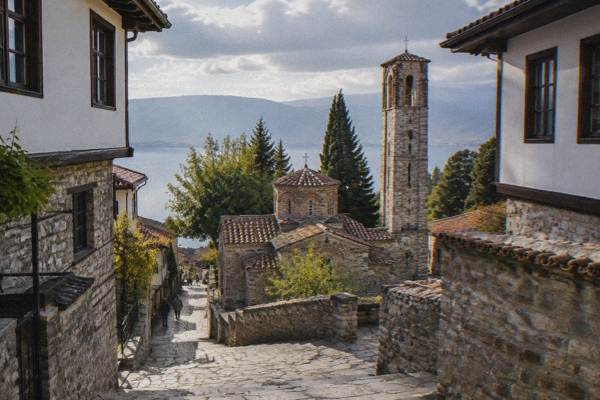
Are Ohrid Pearls Real?
A clear answer to whether Ohrid pearls are real, what the name covers, how to shop for them in Ohrid, North Macedonia, and what a pearl-hunting visit to the lake town costs.
Ohrid, the lake town in North Macedonia on the shore of Lake Ohrid, is famous for a souvenir that confuses almost everyone who hears its name for the first time: the Ohrid pearl. The short answer is that the pearls sold in Ohrid Travel Guide territory are real as a craft and as a protected local product, but they are not natural pearls formed inside a mollusc shell. They are made by hand in Ohrid workshops, and the town treats the name as part of its heritage rather than as a claim about gemmology. Understanding that distinction before you walk into a shop on the lakeside lanes makes the whole purchase decision much easier.
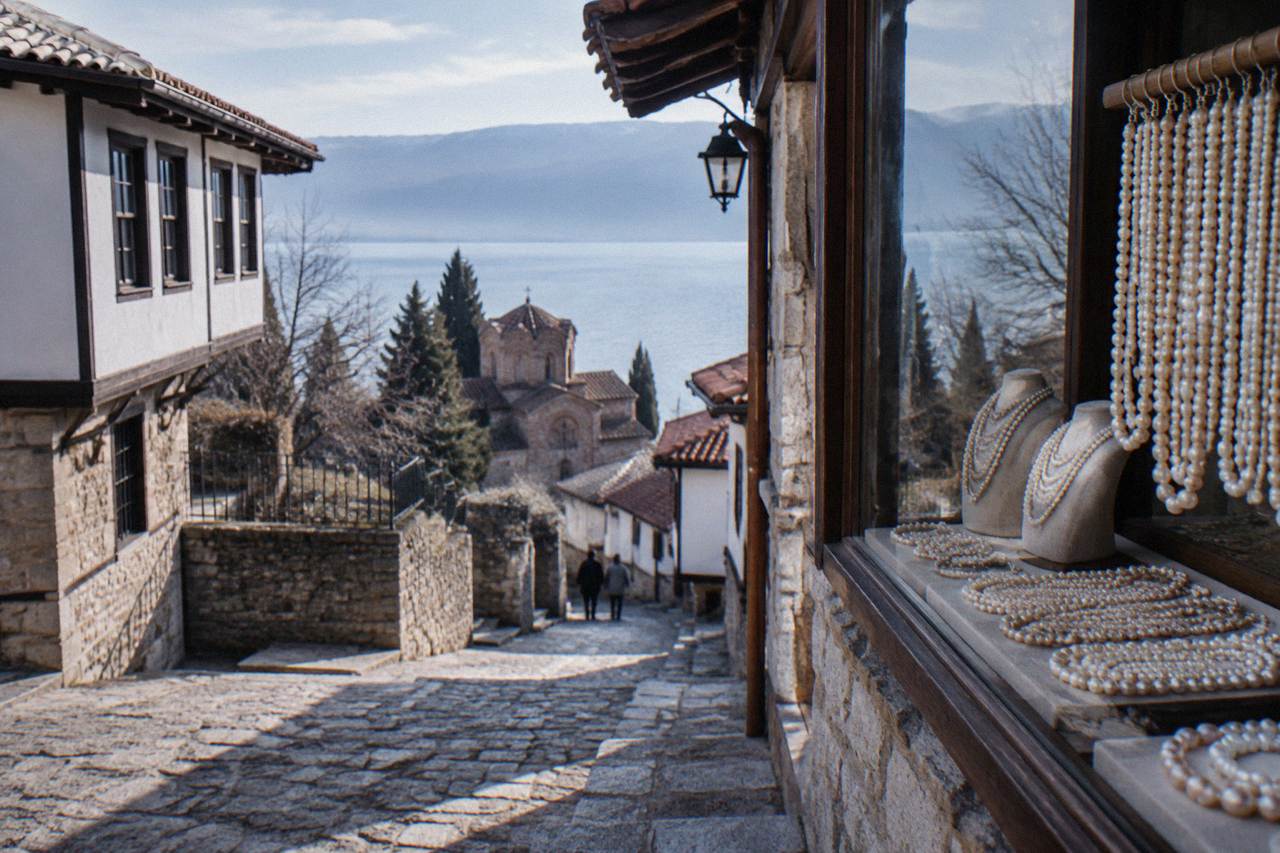
Ohrid pearls are real in the sense that matters to a buyer: they are a genuine, locally made product of Ohrid workshops, not natural pearls and not imported imitations sold under a borrowed name. The name refers to a man-made pearl craft practised in the town, and the craft, not the gemmology, is what the label protects and what you are paying for when you buy in Ohrid.
A natural pearl forms inside a living mollusc over years, and a cultured pearl is farmed by seeding a shell. An Ohrid pearl belongs to neither category. It is a simulated pearl, produced by a technique that the town's workshops have passed down and guarded closely, and each finished piece is the product of that process rather than of the lake itself. Nothing about that makes the object fake in the way a counterfeited designer handbag is fake. The product is exactly what it claims to be: an Ohrid-made pearl, created by a local method, sold as jewellery and as a keepsake of the town.
The useful mental model is Denby pottery or Murano glass. Nobody asks whether a Murano glass bead is "real glass" in order to feel reassured, because the value sits in the origin and the craft. Ohrid pearls work the same way. What you should watch for is the difference between an authentic Ohrid workshop product and a mass-produced imitation bead sold in a souvenir stall with the same word attached, and that distinction is a shopping question rather than a geological one. The Ohrid pearl workshops page covers where the craft is practised in the town, and the Ohrid souvenirs and shopping guide places pearls among everything else worth bringing home.
The lake itself frames the shopping. Lake Ohrid sits at about 693 m above sea level, is a freshwater mountain lake, and is part of the UNESCO mixed site "Natural and Cultural Heritage of the Ohrid Region", inscribed in 1979 and 1980 and extended to the Albanian part of the lake in 2019. UNESCO's own listing records over 200 endemic species in the lake, including 17 endemic fish, which is part of why the town's identity, and its souvenirs, are so tightly bound to the water.
What Should You Check Before Buying Ohrid Pearls?
Buy from an established workshop rather than an anonymous stall, ask where and how the piece was made, and treat any seller who describes the pearl as natural or as lake-harvested as a reason to walk away, because the authentic product is man-made and the honest seller says so plainly. Price, finish and the seller's willingness to explain the craft are the three practical checks.
The first check is provenance. The workshops that carry the tradition in Ohrid sell directly and can tell you about the making of the piece in front of you. A stall that cannot answer where the pearl was made, or that hedges about its origin, is selling you a bead, not the craft. The second check is the surface: a well-made simulated pearl has a consistent finish and a satisfying weight in the hand, and obvious seams, dull patches or paint-like coating point to a cheap imitation regardless of what the sign says. The third check is the story. An honest seller describes the pearl as an Ohrid-made product; a seller reaching for "natural pearl" language is either confused or hoping you are.
Price discipline helps too. Bookable tours and transfers render their prices from live listings, but a pearl is a physical object you haggle over in a shop, so the rule is comparative: look at what two or three workshops charge for a similar strand before committing, and be sceptical of a price that seems dramatically below everyone else's for the same finish. That is generic shopping craft, and it applies to every jeweller in every town, but it matters more in a place where the product's entire value is its origin.
If the shopping trip doubles as a sightseeing day, the old town rewards the walk between shops. A self-guided option such as the Check availability link for the Echoes of Antiquity audio tour lets you move at your own pace between the lanes, and the tour's own page at Echoes of Antiquity Audio Tour explains what it covers. For travellers arriving from Albania, the Private Day Tour of Ohrid from Tirana and Durres is another route into town for a shopping day.
Where Do Pearls Fit Among Ohrid's Souvenirs And Sights?
Pearls are the headline souvenir of Ohrid, but they sit inside a much wider shopping and sightseeing scene that includes the Old Bazaar, the town's museums, churches such as St John at Kaneo and St Sophia, and lake products of every kind, so a pearl-buying visit easily becomes a full day or a full weekend around the old town and the shore.
The Old Bazaar is the natural companion to the pearl workshops: it is the historic trading street of the town, and it is where souvenir shopping in Ohrid has happened for centuries. Around it, the sightseeing core is compact and walkable. The NI Institute and Museum Ohrid runs Robev Family House, the Museum on Water at the Bay of Bones and the Icon Gallery on a shared ticket system: domestic visitors pay 120 den, foreign visitors 150 den, and children and students 60 den. Robev Family House runs a winter schedule from 1 October to 30 April, 09:00 to 15:30, closed Mondays, and a summer schedule from 1 May with two shifts. The Icon Gallery keeps winter hours of 09:00 to 14:00 and summer hours of 09:00 to 17:00, also closed Mondays.
For shoppers who want the lake in the same day, the full-day boat cruise from Ohrid port to St Naum with Boat Armada runs seven hours, from 1,200 den per adult and 600 per child, and the operator's own notes list the Bay of Bones entrance at 150 MKD per person as not included. St Naum monastery entrance is 150 MKD per person on the same operator listing, and a rowboat through the Crn Drim springs costs about 5 EUR. Those figures give a pearl-shopping trip a frame: the jewellery is the souvenir, but the lake day is the memory it comes from.
Here is how the local costs stack up for a day that mixes shopping with sightseeing:
| Item | Cost (as listed) | Notes |
|---|---|---|
| Museum institute sites (Robev House, Museum on Water, Icon Gallery) | 120 den domestic / 150 den foreign | Children and students 60 den; closed Mondays |
| Bay of Bones entrance | 150 MKD | Listed on the cruise operator's exclusions |
| St Naum monastery entrance | 150 MKD | Per person, per the cruise operator's listing |
| Rowboat at the Crn Drim springs | About 5 EUR | Per boat, per the cruise operator's listing |
| Full-day boat cruise Ohrid to St Naum | From 1,200 den adult / 600 den child | Seven hours, Boat Armada |
| Galicica National Park by car | 250 MKD per vehicle | 100 MKD only if entering on foot |
Is Ohrid Worth Visiting Just For The Pearls?
Ohrid is worth visiting for far more than the pearls, and the shopping is best treated as one thread in a town whose UNESCO-listed old core, lake shore and monastery landscape justify the trip on their own, so a pearl purchase becomes a keepsake of a real destination rather than the reason for one.
The question of whether the town merits the journey has its own answer on is Ohrid worth visiting, and the short version is that the UNESCO inscription covers both nature and culture, from a lake that has existed about two to three million years, per UNESCO's listing, to the old town's Byzantine churches. What is Ohrid famous for beyond the pearls, from the churches to the lake itself, is covered in the what is Ohrid famous for answer. The practical layer is friendly too: the US State Department advisory for North Macedonia stands at Level 1, Exercise Normal Precautions, and the town is walkable, with the old-town lanes climbing from the lake toward Samuel's Fortress on foot.
Money is straightforward. The currency is the Macedonian denar, and the National Bank middle rate on 19 October 2026 was 1 EUR to 61.6633 MKD. Euros are commonly quoted for tours and transfers but are not legal tender, so expect to pay a pearl workshop in denar unless it posts euro prices itself. North Macedonia is not in the EU or Schengen, which matters for card fees and border formalities more than for shopping. If the wider trip is the goal, the things to do in Ohrid overview is the place to start.
Common Questions About Ohrid Pearls
Are Ohrid Pearls Real?
They are real as a locally made craft product of Ohrid workshops, not as natural pearls. Nothing sold as an Ohrid pearl was formed inside a mollusc; the value is in the protected local technique and origin, and an honest seller will describe exactly that.
Are Ohrid pearls made from the lake?
The pearls are made in Ohrid by a workshop technique, not harvested from Lake Ohrid. The lake supplies the town's identity and the name's prestige, not the material of the finished pearl.
How can I avoid fake Ohrid pearls?
Buy from an established workshop that can explain how the piece was made, compare finishes and prices across two or three shops, and treat "natural pearl" claims as a red flag rather than a selling point.
How much do Ohrid pearls cost?
Prices vary by piece and workshop, and no reliable published price list exists, so compare in person. Pay in denar, the local currency, and be sceptical of a strand priced far below comparable shops.
Where in Ohrid should I shop for pearls?
The workshops of the old town are the place to buy, with the Old Bazaar as the surrounding shopping district. Allow a half day to browse properly and to see the museums and churches between purchases.
Do Ohrid pearls last?
A well-made simulated pearl from a reputable workshop is jewellery, and like any pearl jewellery it should be stored and worn with ordinary care, kept away from perfume and abrasion, which is standard advice for pearl finishes of any origin.