Ohrid Pearls: Workshops, Shops And The Secret Recipe
Ohrid pearls are the signature souvenir of Ohrid, North Macedonia: made in family workshops from a secret process tied to the lake, sold in small shops in the old town, and easy to combine with the churches, museums and lake trips around them.
Short answer
Ohrid pearls are made in a small number of family workshops in Ohrid, North Macedonia, from a coating process each workshop keeps to itself, and sold from shops concentrated in the old town near the Old Bazaar and the lakefront. A visit is a short stop, easy to pair with the Old Bazaar, the museum sites and a lake cruise in the same day.
Ohrid, on the shore of Lake Ohrid in North Macedonia, is the only place in the world where Ohrid pearls are made. The pearls are produced by a handful of family workshops in the town, each guarding its own process, and sold from small shops in the lanes of the old town, above all around the Old Bazaar. This page on the Ohrid Travel Guide lays out what the pearls are, where the workshops and shops sit, how a visit fits into a day alongside the churches and museums, and what the surrounding sights cost, in denar exactly as the museum institute lists them.
What Are Ohrid Pearls And Why Is Ohrid Famous For Them?
Ohrid pearls are man-made pearls produced in family workshops in Ohrid, North Macedonia, using a coating process kept secret by each workshop, and the town is famous for them because no other place produces them. They are the signature craft of a lakeside town whose old centre holds a UNESCO mixed heritage site, and the buying conversation in Ohrid happens with the maker's own shop rather than a wholesaler.
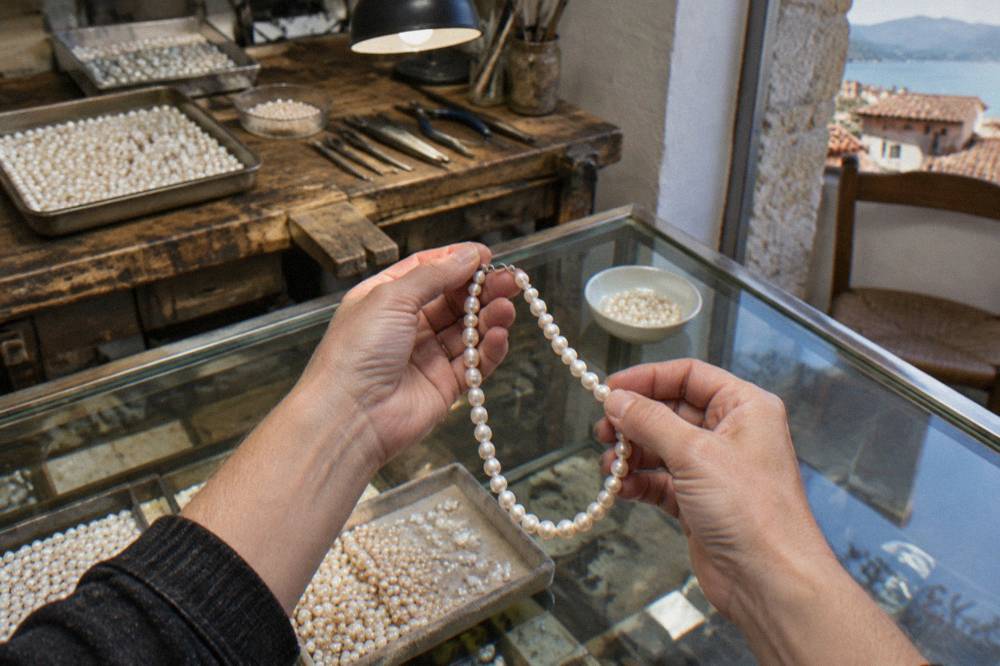
The short version: these are not harvested pearls. Each workshop builds the bead and applies the coating itself, and the exact recipe is the workshop's own property, passed within the family rather than published. That secrecy is the reason the phrase "the secret recipe" follows the pearls around, and it is also the reason a buyer in Ohrid is dealing with the maker's own shop rather than a wholesaler. The full story of what is inside an Ohrid pearl is covered in detail on Are Ohrid Pearls Real?, the site's dedicated answer page.
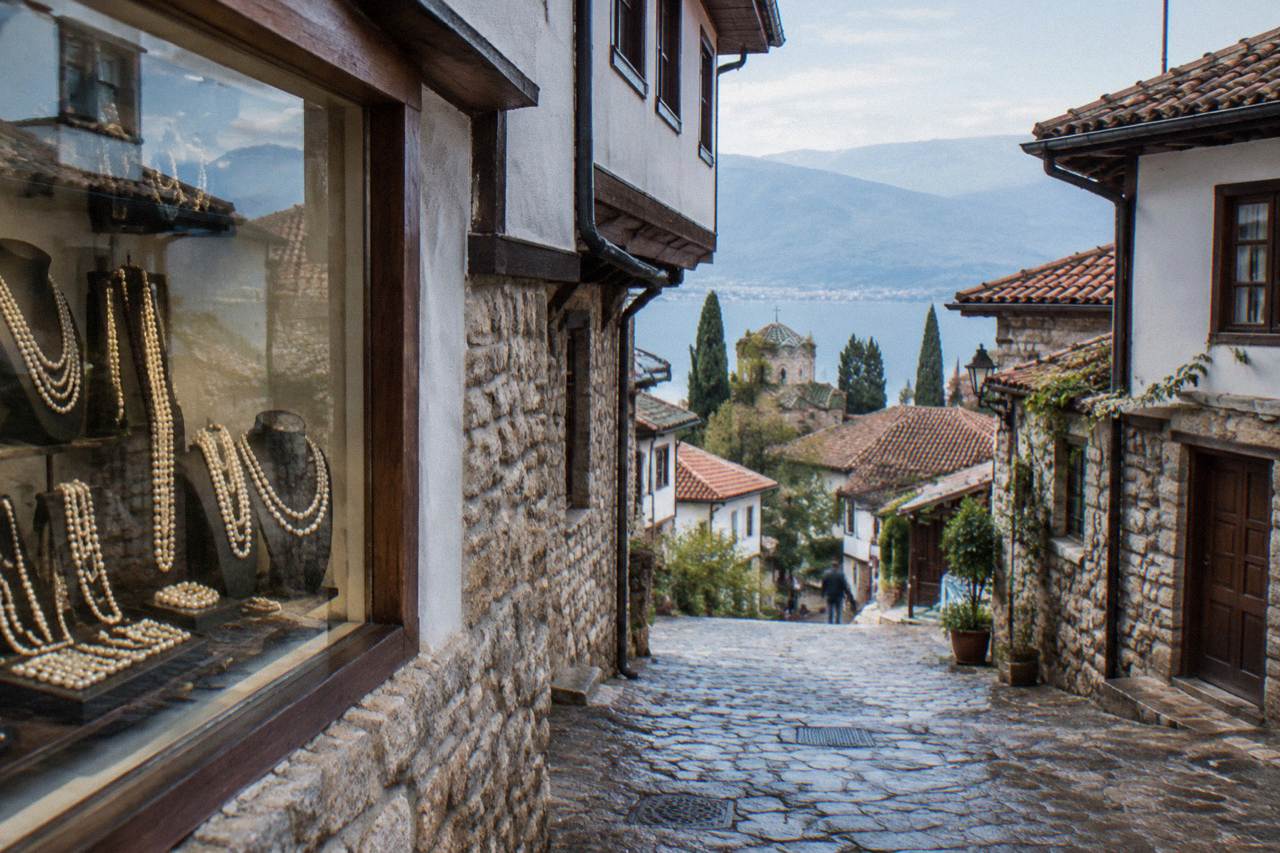
What the pearls look like is a pale, even lustre, typically strung as necklaces, bracelets and earrings, and sold alongside the other signature crafts of the town. The buying decisions that matter are covered in the sections below: where the shops are, how to avoid imitations imported from elsewhere, and which sights to fold into the same walk. For the wider shopping picture, including woodcarving and other crafts, the companion page is Ohrid Souvenirs And Shopping.
Where Are The Ohrid Pearl Workshops And Shops Located?
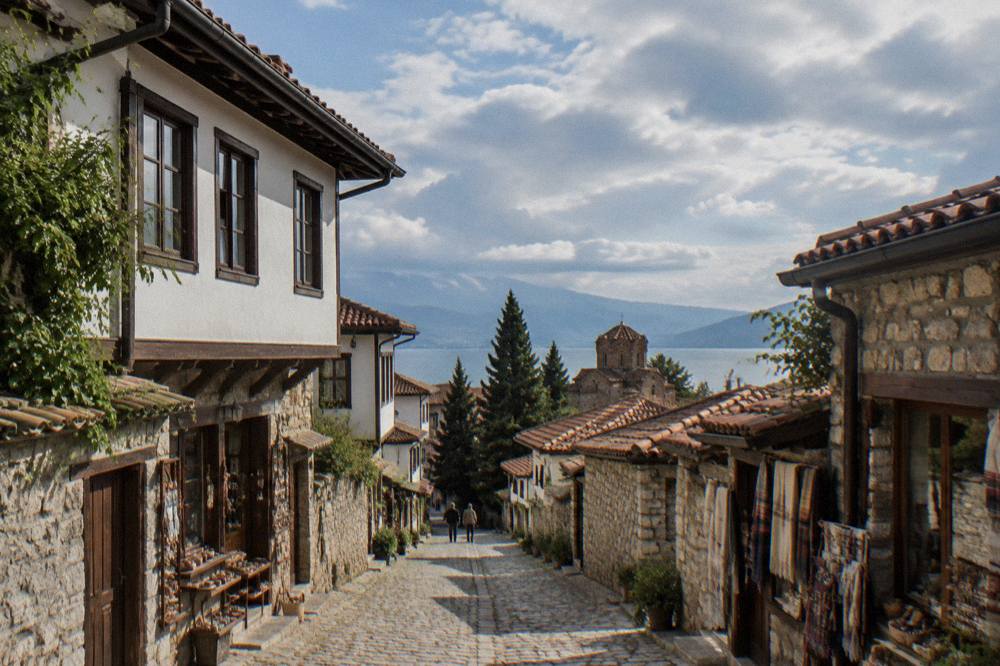
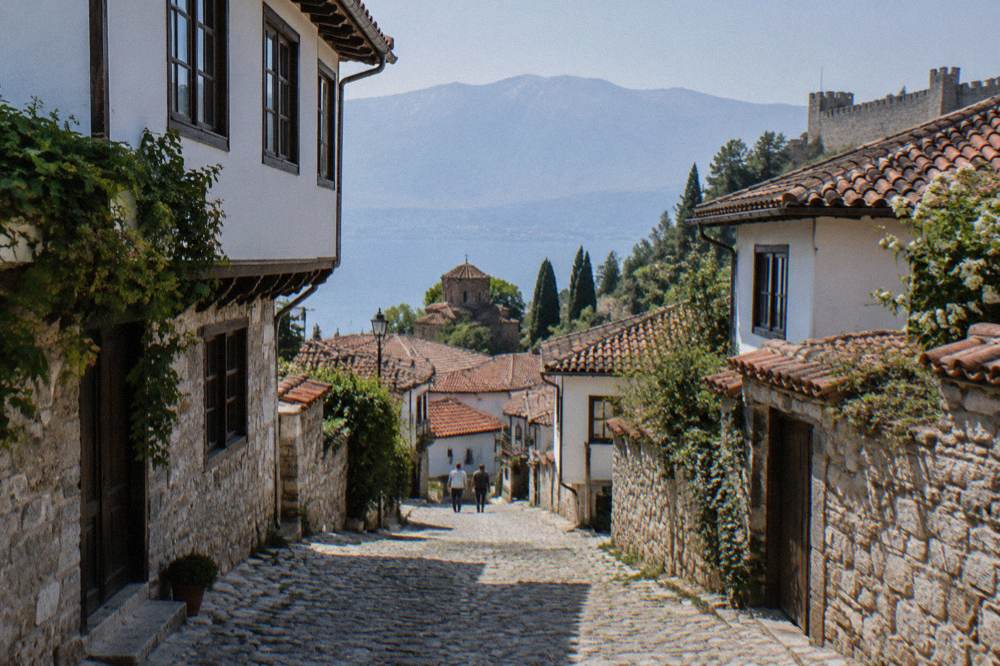
The pearl shops of Ohrid sit in and around the old town, in the lanes running between the Old Bazaar and the lakefront, all of them within walking distance of one another because the old town is compact and pedestrian. No transport is needed for the circuit, and the practical base for the walk is the bazaar street itself, from where the cobbled lanes climb toward the fortress and drop toward the lake.
The old town climbs from the shore to the fortress, and the lanes are on foot. That geography does the visitor a favour: a pearl-shopping circuit needs no transport at all. Start on the Old Bazaar street, work through the jewellers' windows, then continue up toward Samuel's Fortress and Plaosnik, or down toward the lake at the Ohrid boardwalk.
Planning to base yourself steps from the bazaar lanes? Book a hotel stay here.
Two practical notes from 2026. From summer 2026 the streets Ilindenska, Kosta Abrash and Car Samoil in the old town run a resident-only parking regime, with non-resident cars clamped, so a hire car is a liability on this walk, not an asset. And the shops are small, family-run premises, so a morning visit pairs naturally with the sightseeing flow described later on this page rather than a dedicated trip.
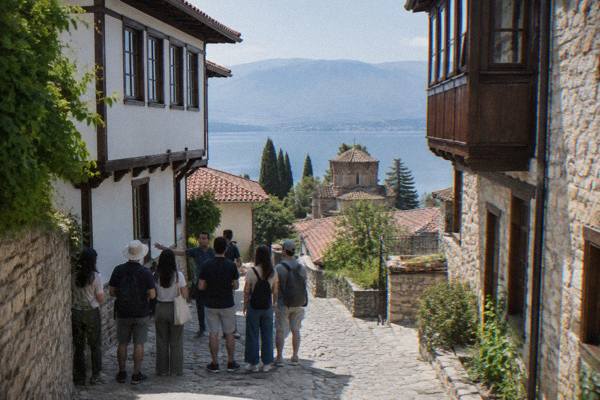
A shared small-group walking tour is one way to see the lanes beyond the shop windows. The hidden gems shared walk on this site's roster is exactly that kind of corner-covering stroll.
How Can You Tell Real Ohrid Pearls From Imitations?
The reliable markers of a real Ohrid pearl are provenance and price honesty: buy from a workshop's own shop in the old town, ask directly about the origin, and treat strands sold as Ohrid pearls elsewhere with suspicion, because the workshops sell only what they make themselves. The question of what is genuinely inside the pearl has its own dedicated answer page on this site, which goes through the evidence in full.
The core of the answer is that production is local and limited. The workshops are families in Ohrid, the output is small, and the sale happens in their own premises. A strand offered in another country, or by a seller who cannot name the workshop, is not the same object regardless of how it is labelled. For the full breakdown, see Are Ohrid Pearls Real?.
Inside a shop in Ohrid, the questions worth asking are simple: who made this, here in the town, and what is it made of. A workshop selling its own product answers plainly. This is also where the price discussion belongs, at the counter, in person, rather than in a general rule typed on a page, because each workshop sets its own prices for its own pieces.
The same scrutiny applies to the other crafts sold around the bazaar, and the broader shopping guide linked above covers those categories. Pearls are the headline item, but they sit in a market of woodcarving, icons and filigree, and the same provenance logic protects a buyer across all of it.
What Does A Visit To An Ohrid Pearl Workshop Involve?
A visit to an Ohrid pearl workshop is a short, unhurried stop inside a small family shop in the old town: a look at the finished strands, a conversation with the seller about the process, and a purchase decision made at the counter, usually folded into a wider walk through the bazaar lanes rather than a booked appointment.
The shops are retail premises first. The making happens behind the scenes, and the secret each family guards is exactly why there is no factory-floor tour: what a visitor gets is the product, the story and the prices, in the workshop's own front room. Budget anywhere from a few minutes to half an hour per shop, and plan to walk between several, because comparing pieces and sellers across two or three windows is the sensible way to buy.
The natural shape of the morning is a loop: bazaar street for the jewellers, then up the hill. The walks listed below cover that terrain with a guide, and one of them, the shared hidden-gems stroll, is the site's featured pick for this page, available to Check availability directly through the operator's live listing.
Which Ohrid Sights Pair Best With A Pearl Shopping Walk?
The sights that pair best with a pearl-shopping walk in Ohrid are all inside the same compact old town: the Old Bazaar itself, St Sophia, the Ancient Theatre and Plaosnik on the climb, Samuel's Fortress at the top, and St John at Kaneo on the descent to the lake, so a single on-foot loop covers the shops and the headline churches in one morning.
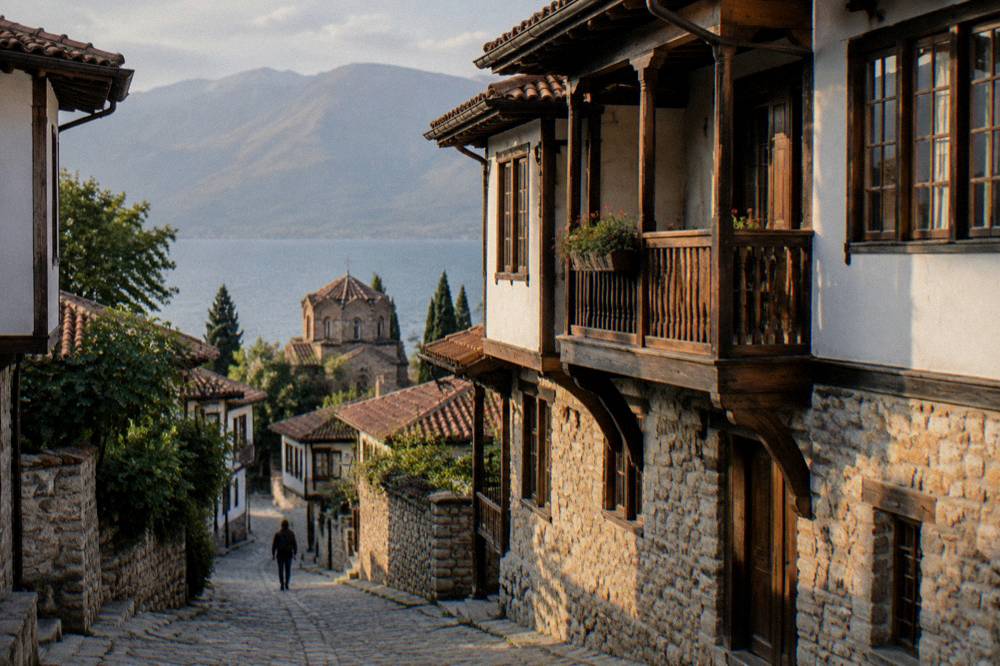
The loop works because everything sits on one hill. From the bazaar the lanes rise past St Sophia and the Ancient Theatre toward Plaosnik and the fortress, then the path drops to St John at Kaneo above the lake. The whole route is pedestrian, the lanes are steep in places, and the order can be reversed to put the churches before the shopping.
For a first visit still sketching the day, the site's one day in Ohrid itinerary sequences these same sights, and the old town area page maps the district the shops sit in. The fortress has its own page, as does the monastery complex at Plaosnik, so the depth is there when needed.
How Much Do The Ohrid Museum Sites Around The Pearl Shops Cost?
Entry to the museum institute sites in Ohrid, including Robev Family House, the Museum on Water at the Bay of Bones and the Icon Gallery, is 150 MKD for foreign visitors and 120 MKD for domestic visitors, with a 60 den rate reported for children and students, according to the institute's own website, which is the same body that runs the sites a pearl-shopping walk passes on the way uphill.
The institute's sites follow two seasonal schedules, and Monday is the closed day. The winter schedule runs 1 October to 30 April and the summer schedule 1 May to 30 September, and the hours differ slightly by site, which matters when a shopping morning is tight.
| Museum site | Winter hours (1 Oct to 30 Apr) | Summer hours (from 1 May) | Closed |
|---|---|---|---|
| Robev Family House | 09:00 to 15:30 | 09:00 to 15:30 and 13:30 to 20:00 | Monday |
| Bay of Bones (Museum on Water) | 09:00 to 15:30 | 09:00 to 16:30 | Monday |
| Icon Gallery (Perivleptos complex) | 09:00 to 14:00 | 09:00 to 17:00 | Monday |
The Perivleptos complex that houses the Icon Gallery is also home to the Church of the Holy Mother of God Perivleptos, and the gallery's collection sits inside the UNESCO listing that covers the whole Ohrid region, inscribed in 1979 and 1980 and extended to the Albanian part of the lake in 2019. A pearl bought in the bazaar and an icon seen in the gallery are two halves of the same craft tradition the UNESCO inscription recognises, which includes more than 800 Byzantine-style icons from the 11th to the end of the 14th century.
| Ticket category | Price at museum institute sites |
|---|---|
| Foreign visitors | 150 MKD |
| Domestic visitors | 120 MKD |
| Children and students | 60 den (reported rate) |
One boundary to hold onto: these rates belong to the museum institute's listed sites. Samuel's Fortress, further up the hill, is a separate subject and no price or hours for it appear here, because none are published to state. The fortress does have a 2026 municipal revitalisation plan, budgeted at 11 million denars, covering a summer stage and illumination, which is a headline worth knowing for what the hilltop will look like in coming seasons.
What Can You Combine With Pearl Shopping Outside The Old Town?
Beyond the old town, the pairings that work from Ohrid are the boat cruises on the lake, the monastery at St Naum at the far southern shore, the prehistoric Museum on Water at the Bay of Bones near Peshtani, and the cooking and food experiences in and around the town, all reachable as half-day or day additions to a shopping morning.
The lake is the anchor. A cruise from Ohrid port toward St Naum calls at the Bay of Bones, and one operator, Boat Armada, runs a full-day version of 7 hours from 1,200 den per adult and 600 den per child, with the Bay of Bones entrance at 150 MKD per person listed separately on that operator's page. The St Naum monastery itself charges 150 MKD per person, and a rowboat through the Crn Drim springs beside it costs about 5 EUR, both figures from the same cruise operator's listing.
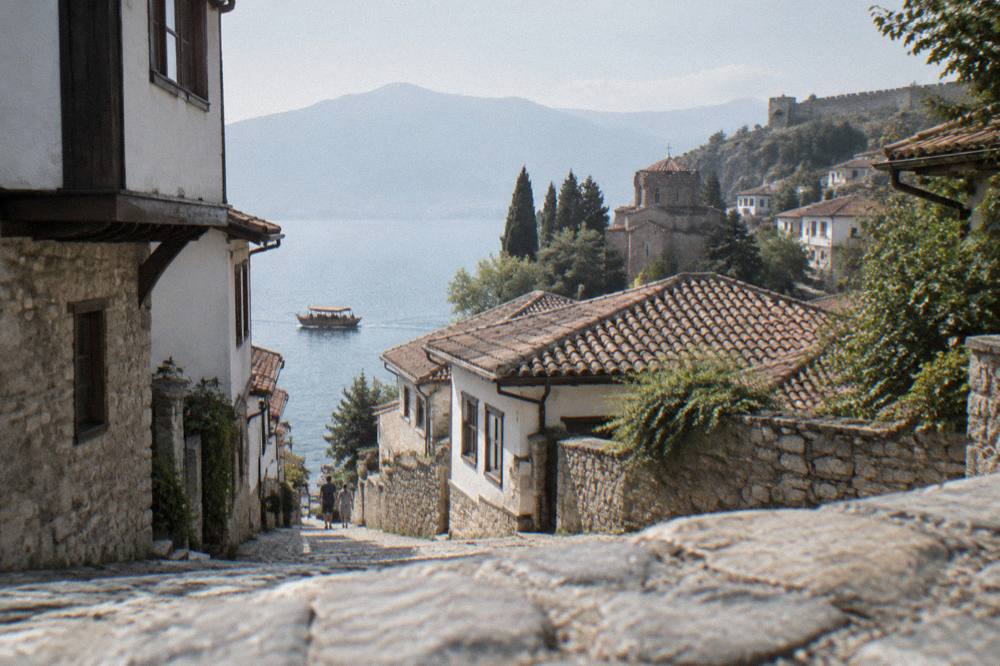
For a shorter water outing, the panoramic boat tours of the old town shoreline run about an hour, and the sunset version is the site's pick for an evening after a shopping day. The selection below covers both.
Food is the other pairing. A cooking class turns an afternoon in Ohrid into a table of local dishes, and the classes on this site's roster are small-scale, kitchen-based sessions. The trio block earlier on this page includes one; the solo pick below is the same category at its most popular rating tier.
When Is The Best Time Of Year To Visit Ohrid For The Pearls And The Sights?
The best time to visit Ohrid for pearl shopping and sightseeing together is late spring through early autumn: the museum sites run their longer summer schedule from 1 May to 30 September, the boats to St Naum run roughly May to October, and the peak crowds land in June to September with August the busiest month, so May, June and September balance open hours against thinner streets.
The climate supports that window. The modelled ERA5 reanalysis normals for 1991 to 2020 give July a mean daily high of 27.1 C and August 27.6 C, with June at 24.2 C and September at 22.4 C, and August shows 32.9 mm of rain against November's 90.4 mm and December's 92.6 mm.
| Month | Mean daily high | Mean daily low | Rain |
|---|---|---|---|
| May | 19.5 C | 10.8 C | 70.8 mm |
| Jun | 24.2 C | 15.2 C | 43.1 mm |
| Jul | 27.1 C | 18.3 C | 34.7 mm |
| Aug | 27.6 C | 19.0 C | 32.9 mm |
| Sep | 22.4 C | 14.9 C | 62.4 mm |
| Oct | 17.4 C | 10.3 C | 76.0 mm |
Winter shopping is possible but narrower: from 1 October the museum sites switch to the short winter schedule and close at 15:30 or 14:00, and the lake boats reduce or stop outside the main season. The lake itself stays swimmable mainly from July, with modelled surface temperatures of 22.9 C in July, 23.5 C in August and 14.7 C in October, against 4.6 C in January, so a swim-plus-shopping day is a July to September idea.
The summer calendar adds a reason to time a visit. The 66th Ohrid Summer Festival ran 12 July to 20 August 2026, opening with a gala at the Ancient Theatre, the same stone theatre a shopping loop passes on the hill.
Can You Reach The Pearl Quarter Of Ohrid Without A Car?
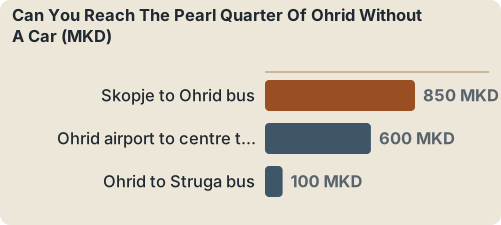
Yes, the pearl quarter of Ohrid is fully reachable without a car: the shops are in the pedestrian old town, the local bus station sits a short taxi or walk from the centre, and intercity buses connect Ohrid to Skopje in about 3 hours for 850 to 950 MKD one way, with no passenger train serving the town at all.
The transport picture is simple. Ohrid St Paul the Apostle Airport lies about 10 km from the centre, with taxis reported at 600 to 800 MKD for the ride. From Skopje, buses run multiple times daily with several operators. From Tirana, minibuses take 3 to 3.5 hours including the border for about 15 to 20 EUR. Inside the town, everything on this page is on foot.
| Route | Typical cost | Journey time |
|---|---|---|
| Skopje to Ohrid bus | 850 to 950 MKD one way | about 3 hours |
| Tirana to Ohrid minibus | about 15 to 20 EUR | 3 to 3.5 hours with border |
| Ohrid airport to centre taxi | 600 to 800 MKD (reported) | about 10 to 15 minutes |
| Ohrid to Struga bus | 100 to 150 MKD (older guides) | local route |
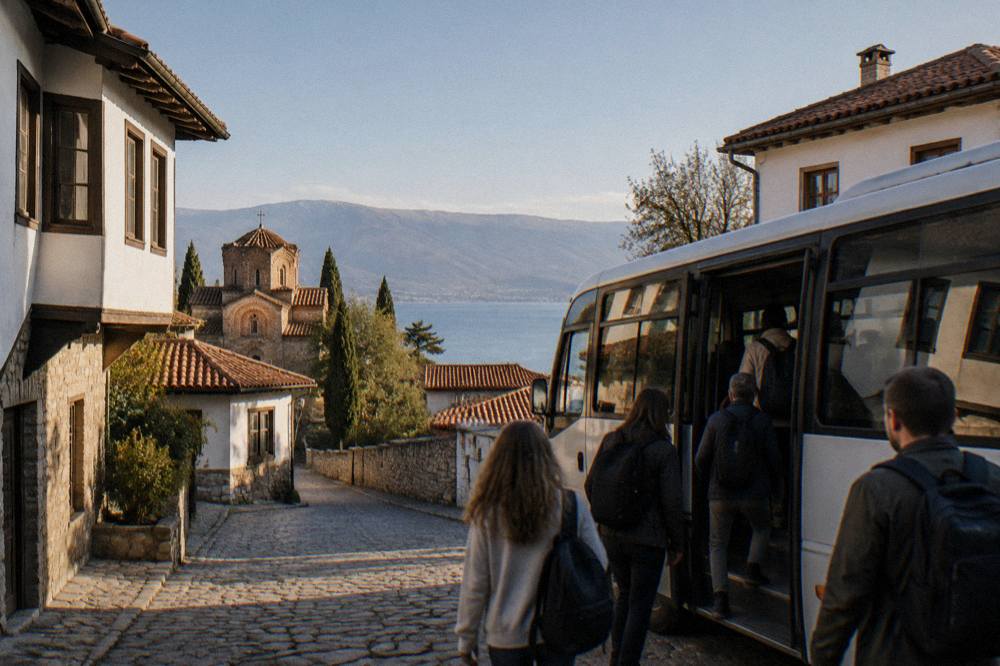
Given the resident-only parking regime on the old-town streets since summer 2026, arriving without a car is not just possible, it is the better plan. The lanes around the bazaar are no place for a vehicle, and every pairing on this page, the churches, the fortress, the boardwalk, the port, is a walk of minutes.
What Else Should A Pearl-Buying Day In Ohrid Include?
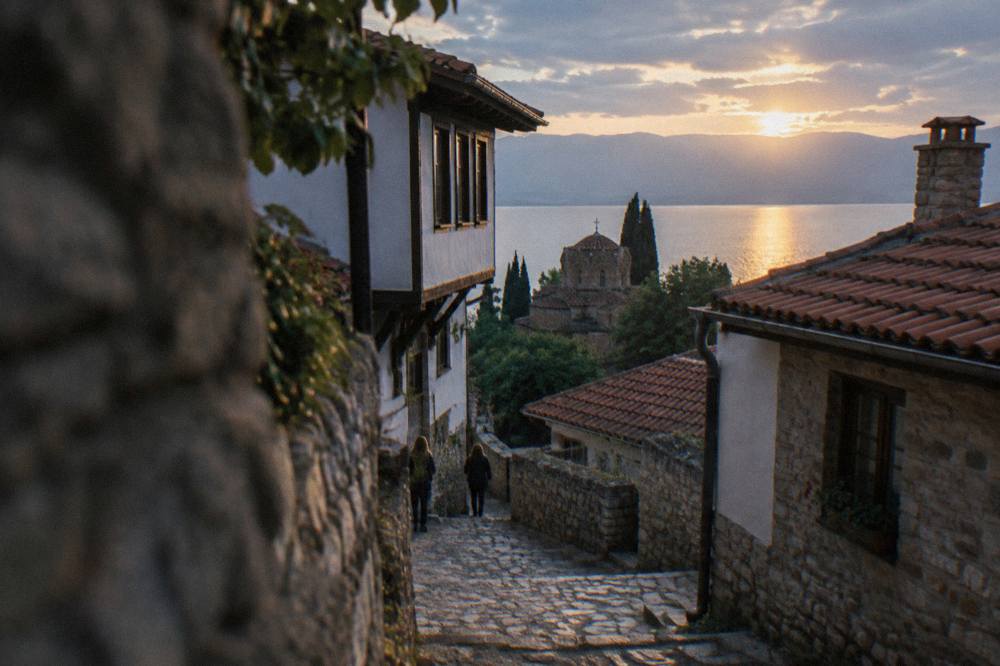
A full pearl-buying day in Ohrid fits the workshops, the bazaar, at least one museum site, the church loop to St John at Kaneo and an evening on the water, because every one of those pieces sits within the same walkable town, and the sunset cruise on the lake is the natural close after the shops shut.
The things to do in Ohrid root page holds the full menu, but the shape of the day writes itself. Morning in the bazaar lanes and the jewellers. Afternoon down to Kaneo and the lake. Evening on a boat.
The evening leg deserves its own pick: the sunset cruise is the short, inexpensive version of the lake experience, and it leaves from the port the whole day has circled back to.
For a longer stay, the Ohrid neighborhoods page spreads the visit across the districts, and the craft stops that complement pearls, like the Ohrid paper museum and the national museum in the Robev Family House, reward the second day. The trio below is the site's shortlist for the additions that bookend a shopping trip best.
Common Questions About Ohrid Pearls And Workshops
Are Ohrid pearls real pearls?
Ohrid pearls are man-made pearls produced in family workshops in Ohrid from a process each workshop keeps secret, not pearls harvested from a mollusc. The dedicated page Are Ohrid Pearls Real? covers the question in full.
Where are Ohrid pearls made?
They are made in Ohrid, North Macedonia, by a small number of family workshops, and sold from those workshops' own shops in the old town around the Old Bazaar.
Can you visit an Ohrid pearl workshop?
A visit is a stop in a workshop's own shop in the old town: the finished pearls, the seller's account of the process and the counter. There is no factory-floor tour, because the coating process is the secret each family guards.
How much do Ohrid pearls cost?
Each workshop sets its own prices for its own pieces, so the price conversation happens at the counter in Ohrid. No general price is quoted here.
What else should you buy in Ohrid besides pearls?
The bazaar and old town also carry woodcarving, icons and filigree, and the Ohrid souvenirs and shopping guide covers the full range.
How do you spot a fake Ohrid pearl?
Buy from a workshop's own shop in Ohrid and ask who made the piece. The workshops sell only what they make, so provenance in person is the test; a strand sold elsewhere under the Ohrid name is not the same object.