Ohrid Souvenirs And Shopping: Pearls, Filigree And Wood Carving
Ohrid's souvenir tradition runs deeper than postcards: the town is known for its pearl made from fish scales, filigree silverwork, carved wood, painted icons and food gifts from the Lake Ohrid region.
Short answer
The signature Ohrid souvenirs are Ohrid pearl jewellery, filigree silver, wood carving, replica icons and local food gifts such as wine, rakija and mountain tea. The Old Bazaar and the lanes between it and the lakefront hold most of the workshops and shops.
Ohrid, the old town on Lake Ohrid in North Macedonia, has a shopping scene built around crafts with a local provenance rather than imported trinkets. The Ohrid Travel Guide covers the town sight by sight, and this page deals with the part of a trip many guides skip: what is actually made here, what is worth carrying home, and where the shops sit in a town whose lanes climb from the lake to Samuel's Fortress. The signature items are Ohrid pearl, filigree silver, wood carving, icons and food gifts, and the things to do in Ohrid list almost always ends with an afternoon in the shops.
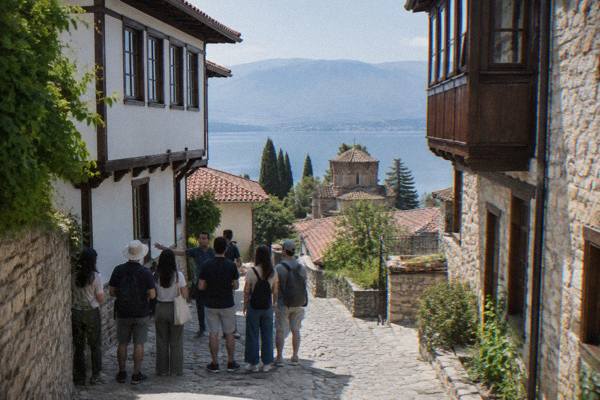
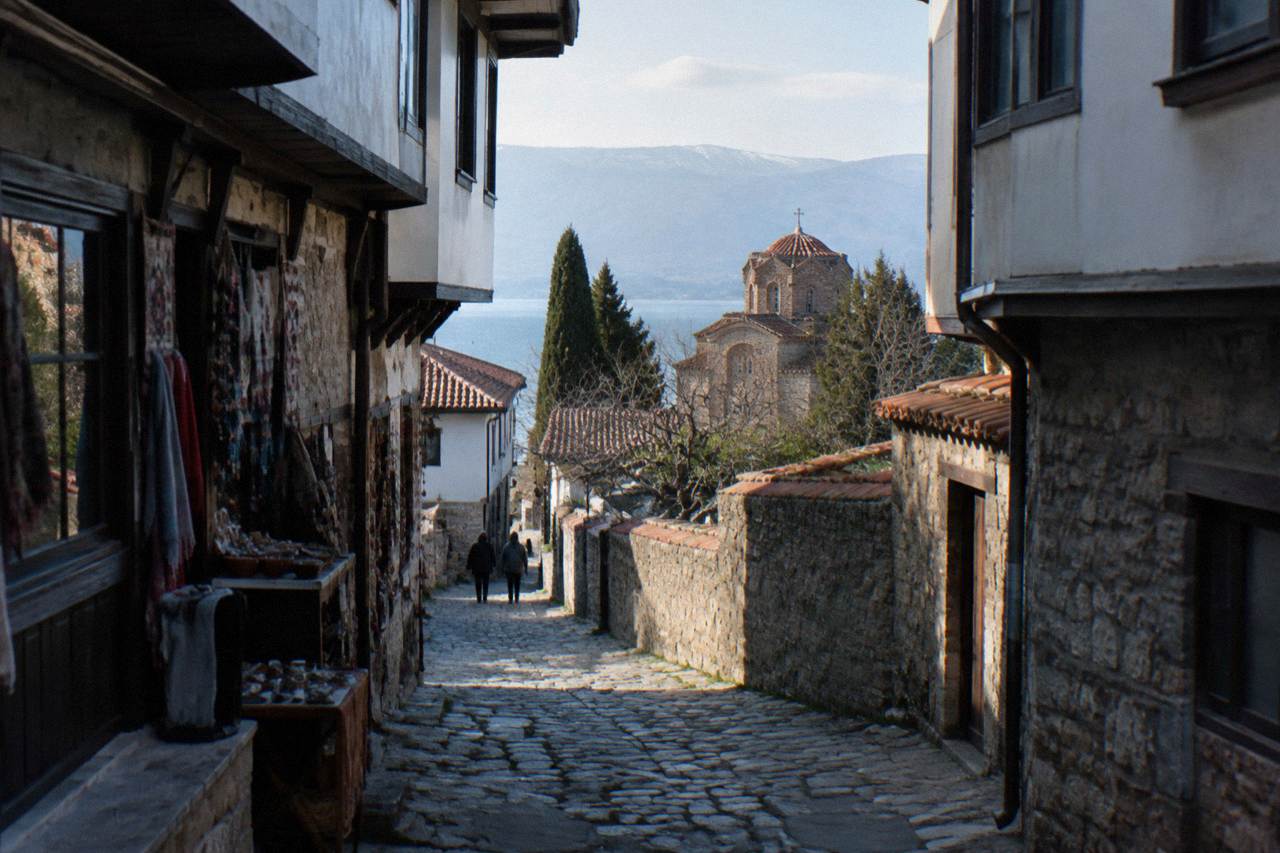
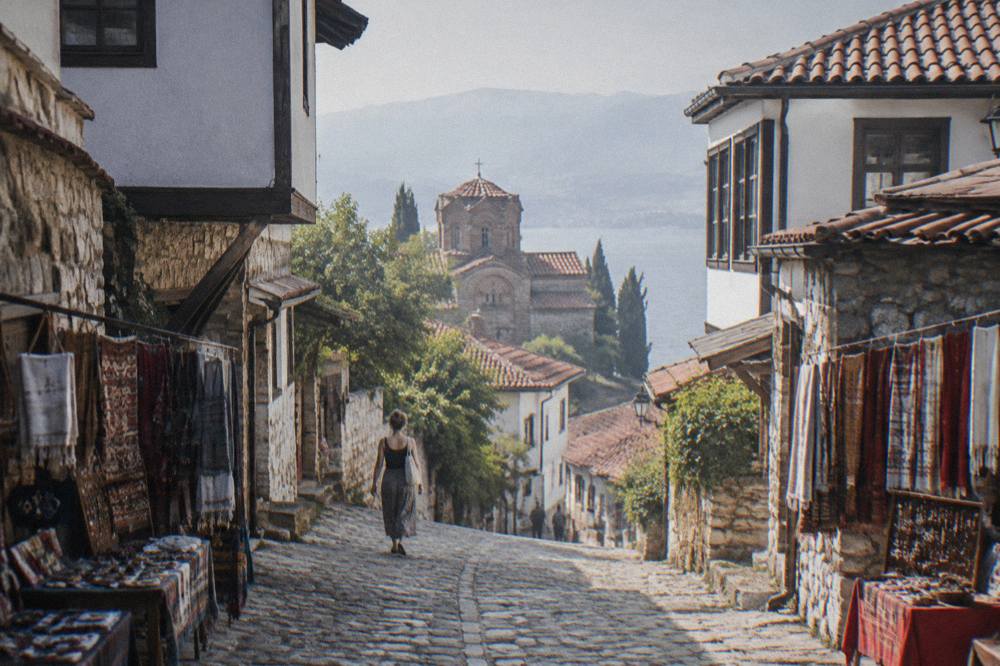
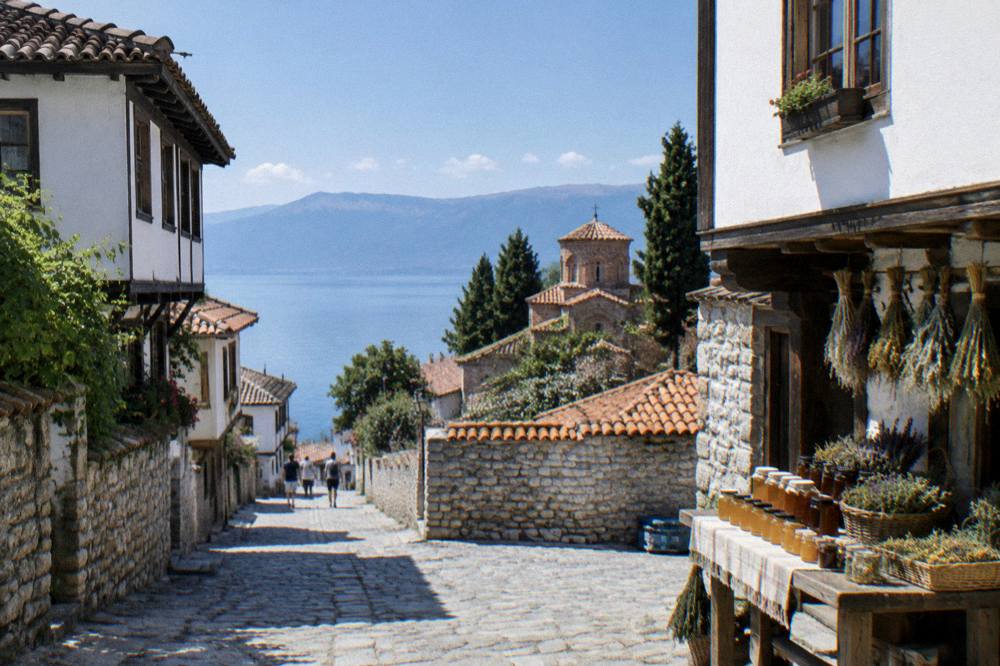
The Old Bazaar is the natural starting point, a short walk from the lakefront, and the shopping streets fan out from it toward the old town's churches. Nothing in Ohrid is far from anything else: the town is compact, pedestrian, and the walk from the bazaar lanes to the Church of St John at Kaneo takes in most of the workshop storefronts on the way.
What Are The Souvenirs Ohrid Is Actually Known For?
The five crafts most tied to Ohrid are Ohrid pearl jewellery, filigree silverwork, carved wood, painted and replica icons, and food gifts from the Lake Ohrid region such as wine, rakija, honey and mountain tea. Each one has a workshop tradition inside the town rather than an import chain behind it, and the pearl in particular exists nowhere else in the same form.
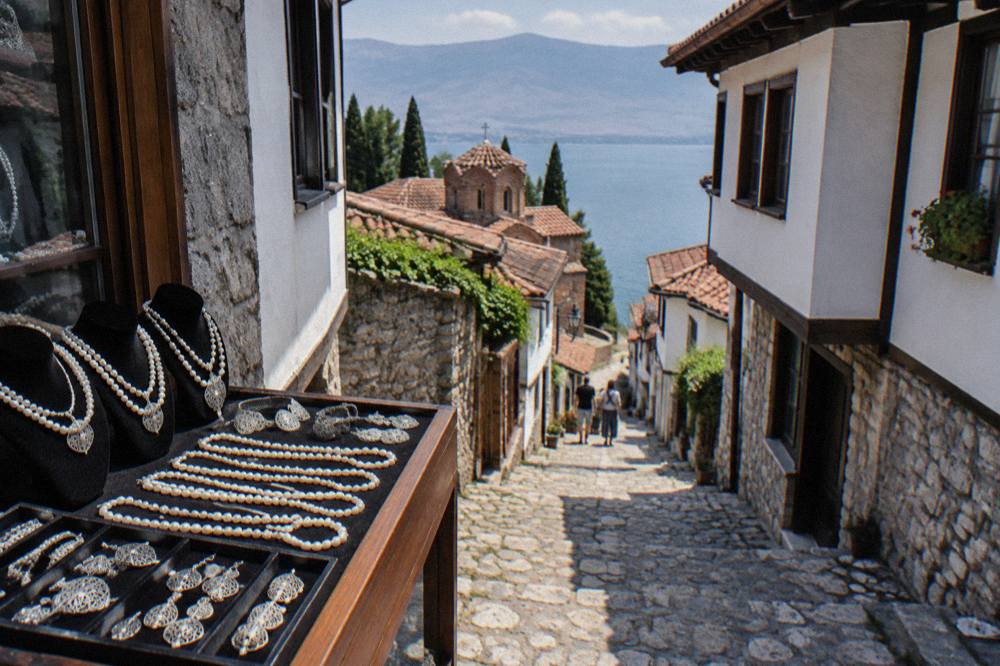
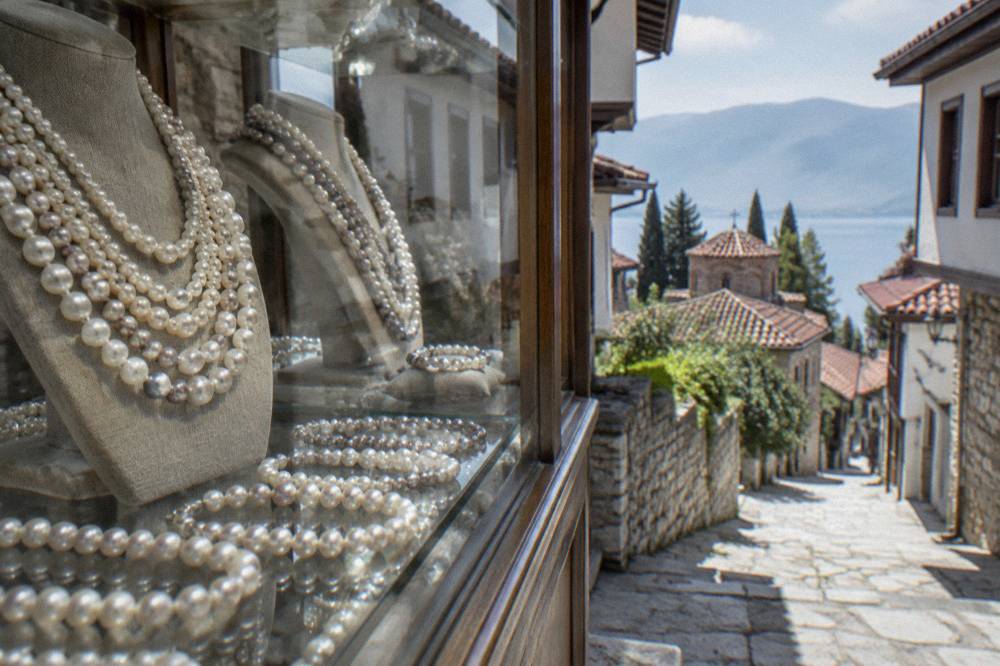
Ohrid pearl is the item with the strongest claim to uniqueness. It is made from the scales of the bleak, a small fish native to Lake Ohrid, and the technique is associated with two Ohrid families whose workshops have produced it for generations. The result is a pearl-like bead used in necklaces, earrings and brooches, and it is the souvenir most tightly bound to the lake itself. The question of what makes it real, and how the fake versions differ, is covered in detail on the page are Ohrid pearls real, and the workshop tradition has its own guide at Ohrid pearl workshops.
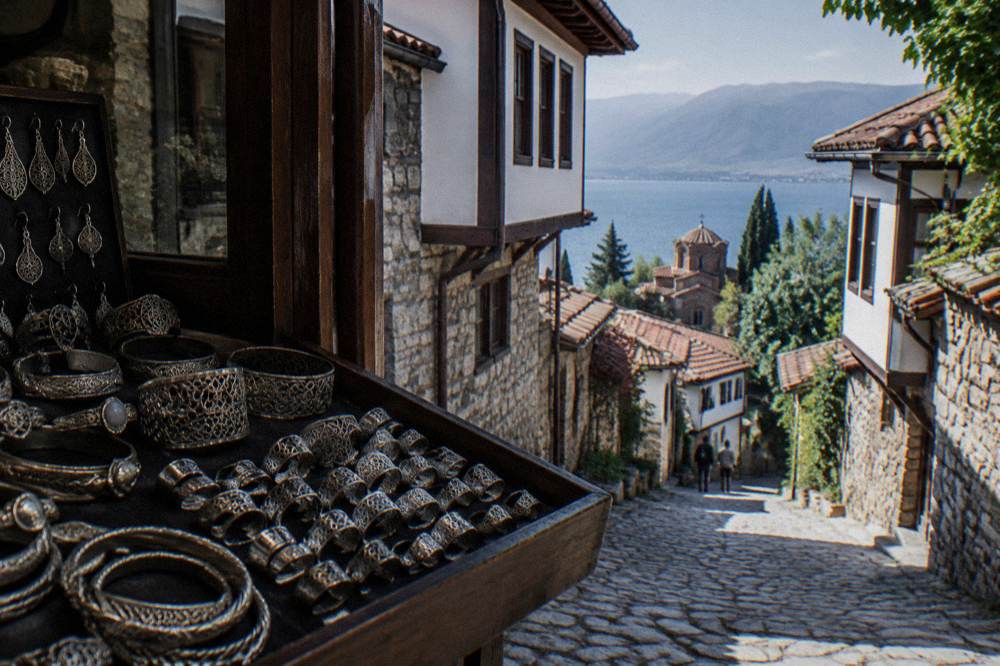
Filigree silver is the second signature. This is fine silver wire twisted into delicate patterns, a craft with deep roots in the Balkans, and Ohrid jewellers apply it to rings, bracelets, crosses and traditional ornaments. Wood carving is the third: Ohrid's carving tradition is tied to its church interiors, and workshops sell relief-carved panels, crosses, boxes and small furniture pieces. Icons, both antique and newly painted replicas in the Byzantine style, follow naturally, since Ohrid holds one of the great collections of Byzantine-style icons, more than 800 of them from the 11th to the end of the 14th century according to the UNESCO listing for the region. Food gifts round out the list: Macedonian wine, rakija, honey, herbal tea and sweets travel well and cost less than the metalwork.
Where Do You Buy Souvenirs In Ohrid?
The main souvenir shopping areas in Ohrid are the Old Bazaar and the lanes that run from it down toward the lakefront and up toward Samuel's Fortress, with the highest concentration of jewellers, icon sellers and craft shops in the old town's stone streets. Everything is within walking distance, and no transport is needed between shops.
The Old Bazaar is the historic commercial heart. It sits close to the lake and the lower town, and its lanes hold the densest cluster of jewellery shops, souvenir stands and small craft sellers. From there the shopping route runs naturally along the old town's main street toward the Upper Gate and the fortress, passing workshops and galleries on the way, and a detour to the old town streets around the Kaneo district adds smaller studios away from the busiest stretch.
A half-day walk with a guide is one efficient way to find the shops, because the guide-led routes of the old town pass the bazaar and the workshop streets as part of the standard circuit. The half-day city tour of Ohrid covers the old town's main sights in one loop, and the craft streets sit on that loop rather than beside it. Check availability
How Do You Tell Real Ohrid Pearl From A Fake?
Real Ohrid pearl is made in Ohrid from the scales of the Lake Ohrid bleak, coated layer by layer onto a bead, and it comes from a small number of long-established family workshops; imitations are ordinary shell or glass beads, often imported, sold at a fraction of the price with the same name attached. The workshop's own name, and its history inside the town, are the strongest signals of authenticity.
The two family names associated with the original technique are the gatekeepers of the real thing, and their shops in Ohrid sell directly to buyers. The background story, the biology of the bleak and the family history are laid out on the Ohrid pearl workshops page, and the short answers to the common authenticity questions are on are Ohrid pearls real. The practical test in a shop is simple to state: ask where and how the pearl was made, and treat a vague answer as the answer. A workshop that makes the pearl itself can say so plainly, and the established houses in Ohrid are not shy about their own process.
What Food Gifts And Drink Should You Bring Home From Ohrid?
The food gifts that travel best from Ohrid are Macedonian wine, rakija fruit brandy, honey, mountain herbal tea, ajvar red pepper relish and sweets such as lokum, all sold in the old town's shops and in groceries around the bazaar. Wine and rakija are the two with the strongest regional identity, and both pack safely in a suitcase with basic care.
Curious to try the local table for yourself? Book an Ohrid cooking class here.
Macedonian wine is the headline food gift. The country's wineries, including the monastery wineries around the Ohrid region, produce reds and whites that are hard to find abroad, and a tasting is often the easiest way to choose bottles worth carrying. Rakija, the fruit brandy of the Balkans, comes in several fruit varieties and is sold in gift-sized bottles. Mountain tea, dried herbs and honey are lighter options, and ajvar, the roasted pepper relish, is sold in jars that survive a journey.
The Ohrid food guide covers what the region's table looks like, and rakija and Macedonian wine goes deeper on the two bottles most worth buying. A guided tasting with transport turns the purchase into an outing: the monastery winery tours from Ohrid include the cellar visit and the tasting in one ticket.
Is Filigree Silver From Ohrid Worth Buying?
Filigree silver from Ohrid is one of the better value crafts in the town, because the technique is genuinely local and labour-intensive while the prices sit well below comparable handwork in western Europe. Rings, bracelets, crosses and traditional ornaments are the standard pieces, and the work is fine enough that it reads as far more than trinket-grade silver.
The craft itself is the selling point. Filigree is built from thin silver threads twisted and soldered into openwork patterns, and a piece made this way carries hours of handwork visible in its detail. Ohrid's jewellers work in both the local Balkan ornamental tradition and simpler modern designs, so the range runs from traditional crosses to plain contemporary bands. The shops in and around the Old Bazaar are the place to compare pieces side by side, and asking about the silver content and whether the piece is handmade is normal practice rather than an imposition.
What Wood Carving And Icon Gifts Are Sold In Ohrid?
Ohrid's wood carving shops sell relief-carved panels, wall crosses, boxes and mirror frames in the town's church-carving tradition, while icon shops sell newly painted replicas in the Byzantine style alongside prints and small mounted icons. Both crafts connect directly to Ohrid's church heritage, and both are sold in the old town within a short walk of the bazaar.
The carving tradition matters here because Ohrid's historic church interiors include major carved work, and the town's workshops carry that lineage into pieces sized for a suitcase. A carved panel or cross is heavier and costlier than jewellery, but it is the craft most visibly tied to the town's religious architecture. Icons follow the same logic: the Byzantine-style painting tradition that filled Ohrid's churches is still practised, and a hand-painted replica on wood is a different object from a printed card, at a different price. The Ohrid churches guide explains where the original works sit, and the Icon Gallery holds the reference collection, part of the museum institute whose sites charge 120 den for domestic visitors and 150 den for foreign visitors, with a 60 den rate reported for children and students.
For visitors arriving from Tirana or staying on the Albanian coast, the lake day trips that bring you into Ohrid for the day also pass through the old town's shopping streets, which makes a souvenir stop realistic even on a tight itinerary.
How Much Should You Budget For Shopping In Ohrid?
Ohrid souvenir prices span a wide band: food gifts and small crafts sit at the low end, filigree silver and carved wood in the middle, and real Ohrid pearl and hand-painted icons at the top, with the pearl priced as jewellery rather than as a souvenir. A realistic approach is to set a budget before entering the bazaar and to treat the pearl workshops as a separate, considered purchase.
No reliable price list exists for the town's shops, and prices vary by maker and piece, so the honest planning tool is a structure rather than a figure. The table below sets out the tiers.
| Gift category | Typical items | Price tier | Notes |
|---|---|---|---|
| Food gifts | Wine, rakija, honey, tea, ajvar, sweets | Low to mid | Sold in bazaar shops and groceries; bottles need packing care |
| Small crafts | Magnets, prints, small textiles | Low | Widely available around the bazaar |
| Filigree silver | Rings, bracelets, crosses, ornaments | Mid | Handwork price varies with complexity |
| Wood carving | Panels, crosses, boxes, frames | Mid to high | Weight and size matter for travel |
| Replica icons | Hand-painted icons on wood | Mid to high | Hand-painted pieces cost far more than prints |
| Ohrid pearl | Necklaces, earrings, brooches | High | Buy from an established workshop |
The overall cost context for a trip, from accommodation to meals, is covered in the Ohrid cost and budget guide, and the currency mechanics, why prices are quoted in both denar and euro and how to handle both, are on the Macedonian denar and money page. The short version: the denar is the local currency, euros are commonly quoted but are not legal tender, and paying in denar avoids poor informal exchange rates.
How Do You Pay For Souvenirs In Ohrid?
Souvenirs in Ohrid are bought with Macedonian denar, the local currency, with euros quoted by some sellers despite not being legal tender in North Macedonia; ATMs in the town issue denar, and the fixed practice is to hold small notes for bazaar purchases rather than relying on a single large withdrawal.
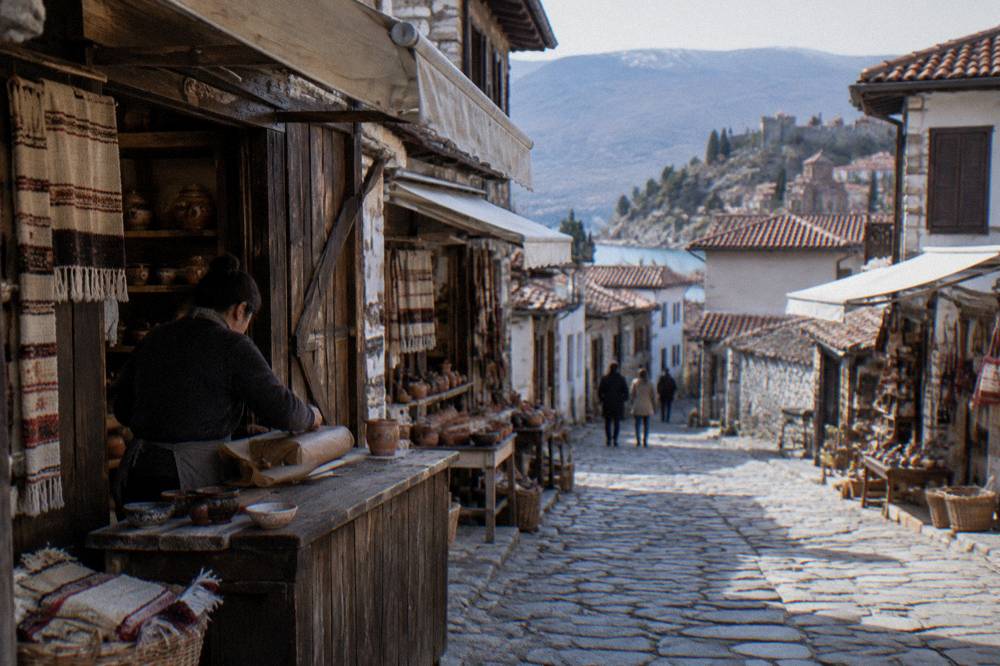
The money question matters more in the bazaar than in hotels, because small shops prefer cash and change for large notes can be scarce early in the day. The Macedonian denar and money guide covers the practical detail: the denar is effectively pegged to the euro, exchange offices and ATMs are easy to find in the town centre, and paying in euros informally tends to work against the buyer. For the pearl and filigree workshops, larger purchases can involve receipts and certificates, and asking for both is reasonable.
When Is The Best Time Of Year For Shopping In Ohrid?
The best time for shopping in Ohrid is the main season from late spring to early autumn, when the bazaar shops, workshops and market stalls are fully open and the town's craft sellers are at their most active; in winter the core jewellers and workshops stay but seasonal stalls and some tourist-facing shops reduce or close, and hours shorten.
The season logic follows the town's rhythm. Peak season runs June to September, with August the busiest month, and the full retail offer, including boat-linked shopping stops on the eastern shore, runs about May to October. The trade-off is crowds against choice. A spring or September visit splits the difference, and the month-by-month detail, including the modelled ERA5 climate normals for Ohrid, is on the Ohrid weather and best time to visit Ohrid pages.
| Season | Months | Shopping conditions | Crowd level |
|---|---|---|---|
| Spring | March to May | Shops reopening, seasonal stalls from late spring | Low to moderate |
| Summer | June to August | Everything open, longest hours, full market offer | High, August peak |
| Early autumn | September to October | Still fully open, boats running to about October | Moderate |
| Winter | November to February | Core workshops open, seasonal stalls closed, shorter hours | Low |
Can You Combine Shopping With Sightseeing In One Day?
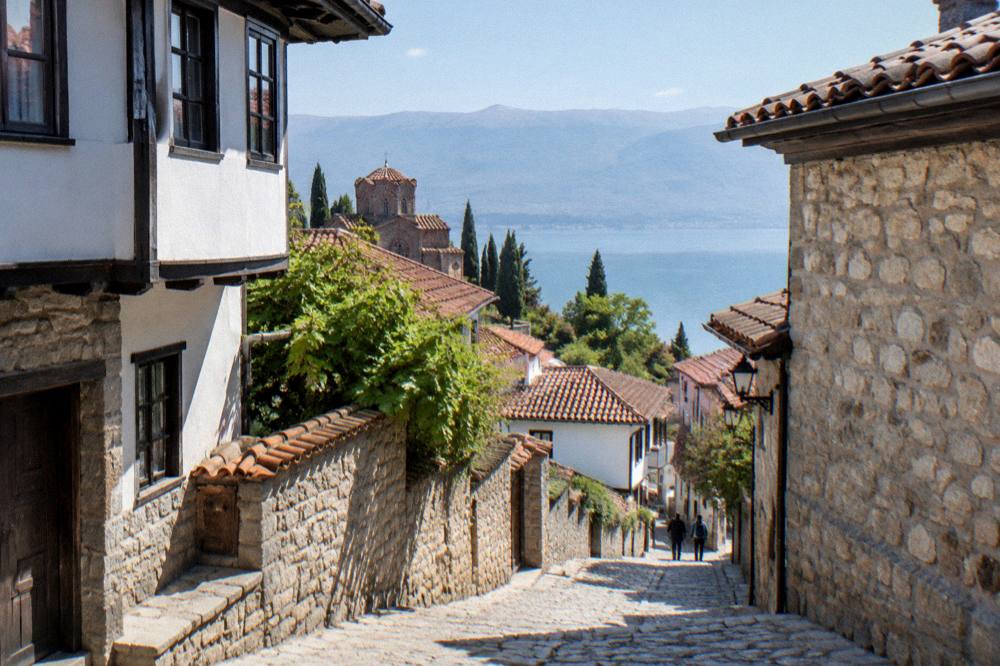
Yes, and in Ohrid it is hard not to: the souvenir shops, the Old Bazaar, the Church of St John at Kaneo, Samuel's Fortress, the Ancient Theatre and the Icon Gallery all sit in one walkable old-town area, so a single day covers the main sights and the main shops together, with the lakefront at the bottom of the loop for a swim or a boat trip.
The classic loop starts at the lakefront, climbs through the bazaar streets to the fortress and the Ancient Theatre, then descends past Plaosnik and St Sophia toward the lake, ending at Kaneo. Shopping fits naturally at the start and end, with the pearl and filigree workshops on the middle stretch. How long to give the town overall is answered on how many days in Ohrid, and the one-day version is mapped on Ohrid in one day.
A boat trip adds the eastern shore to the same day. The Bay of Bones cruises run from Ohrid and stop at the Museum on Water, where the entrance is 150 den for foreign visitors and 120 den for domestic, closed Mondays, and the trip combines the lake, the monastery at St Naum and a return through the old town in time for the shops.
What Should You Know About Customs And Taking Souvenirs Out Of North Macedonia?
Souvenirs bought in Ohrid's shops, including pearls, silver, carving, icons, wine and rakija, can be taken out of North Macedonia for personal use, with the two real constraints being alcohol limits set by your destination country and the general rule against exporting antique items, which is why newly made icons and replicas are the safe purchase and loose antique-looking pieces are not.
The practical points are few. Wine and rakija in a checked bag should be packed for glass, and airline liquid rules apply to carry-on. Antique religious items are the one category to treat with care: a hand-painted new replica from a workshop is a documented purchase, while anything presented as genuinely old needs proper export paperwork, and reputable sellers say so. Entry rules for North Macedonia itself, visa-free stays of up to 90 days in any 180-day period for visa-free nationals, are on the North Macedonia visa and entry page.
| Souvenir type | Export consideration | Packing note |
|---|---|---|
| Ohrid pearl | None beyond normal | Jewellery box or soft pouch |
| Filigree silver | None beyond normal | Avoid crushing; soft pouch |
| Wood carving | None beyond normal | Wrap against scratches |
| New replica icons | Fine if newly made | Flat packing protects the panel |
| Wine and rakija | Destination alcohol limits | Checked bag, cushioned |
| Honey and ajvar | Jar seals for flights | Checked bag, leak-proof bag |
Is Shopping In Ohrid Safe And Is Haggling Expected?
Shopping in Ohrid is safe in the ordinary sense that North Macedonia carries a Level 1, Exercise Normal Precautions advisory from the US State Department, and the bazaar is a daytime pedestrian area where the normal risks are pickpocketing-level at most; haggling is mild and confined mainly to market stalls and loose craft items, not to workshop jewellery, where fixed prices are the norm.
Fixed-price culture dominates the workshops: the pearl houses, filigree jewellers and icon painters price their work like shops, not like bazaars. At stalls selling crafts, food and textiles, a polite negotiation is normal but modest, and the starting prices in Ohrid are low enough that the margin is small. General safety context for the town is on is Ohrid safe, and the practical answer for a shopper is that the main caution is the same one as anywhere: keep cash and cards分布 out of one pocket. The old town's lanes are stepped and cobbled, so a shopping bag you can carry hands-free matters more than any security measure.
What Day Trips Add To The Shopping List?
The day trips that add to an Ohrid shopping list are Struga for its riverside town market feel, the villages around Galicica and Lake Prespa for honey and herbal products, and Tirana or Skopje routes for anything the Ohrid shops do not stock, with Struga reachable on a short local bus and the others as full-day outings.
Struga, the town on Lake Ohrid's northern shore where the Black Drim flows out, is the easiest add-on and has its own guide at Struga from Ohrid. The Vevcani village area inland from Struga is known for its springs and its village crafts scene, covered on Vevcani. Galicica National Park, between Lake Ohrid and Lake Prespa, is a landscape of mountain meadows whose villages sell honey and dried herbs, and the Galicica National Park guide covers the park entry fee of 250 den per vehicle or 100 den on foot from the Ohrid-side gate.
Common Questions About Shopping In Ohrid
What is the most famous souvenir from Ohrid?
Ohrid pearl, made from the scales of the Lake Ohrid bleak by long-established family workshops in the town. Filigree silver and wood carving are the other two crafts with a strong local tradition.
Are Ohrid pearls real pearls?
They are man-made pearls in the sense that no mollusc produced them: the material comes from fish scales, coated onto a bead by a technique associated with two Ohrid families. The full answer is on the are Ohrid pearls real page.
Where is the best place to buy souvenirs in Ohrid?
The Old Bazaar and the lanes running from it up toward Samuel's Fortress hold the densest cluster of jewellers, icon shops and craft sellers, all within a short walk of the lakefront.
Can you pay in euros in Ohrid shops?
Euros are commonly quoted but are not legal tender in North Macedonia, and informal euro acceptance tends to use poor rates. The local currency is the Macedonian denar, and ATMs in the town issue it.
Is haggling expected in Ohrid?
Mildly, and mainly at market stalls and craft stands. The pearl workshops, jewellers and icon painters sell at fixed prices like ordinary shops.
Can you bring Ohrid wine and rakija home on a plane?
Yes, packed in checked luggage within your destination country's alcohol allowance. Jars such as ajvar and honey also belong in a checked bag with secure seals.
The shopping loop in Ohrid is short, the signature crafts are genuinely local, and the single purchase that exists nowhere else, the pearl from the lake's own fish, is sold a few minutes' walk from the water that produces it. Start at the bazaar, work up to the fortress, and buy the pearl last, once the town has explained why it matters.