Ohrid Weather By Month: Highs, Lows And Water Temperature
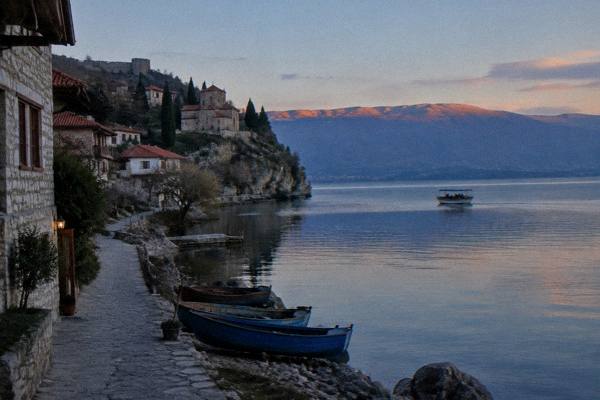
Ohrid, on the shore of Lake Ohrid in North Macedonia at about 693 m above sea level, has cold snowy winters and warm dry summers. The month-by-month figures below are modelled climate normals, 1991 to 2020, together with modelled lake surface temperatures.
Short answer
Ohrid's warmest months are July and August with modelled daily highs about 27 C and only about 33 mm of rain each. The coolest is January with highs about 5 C and lows below freezing. Lake swimming is realistic from July, when modelled surface water reaches about 23 C.
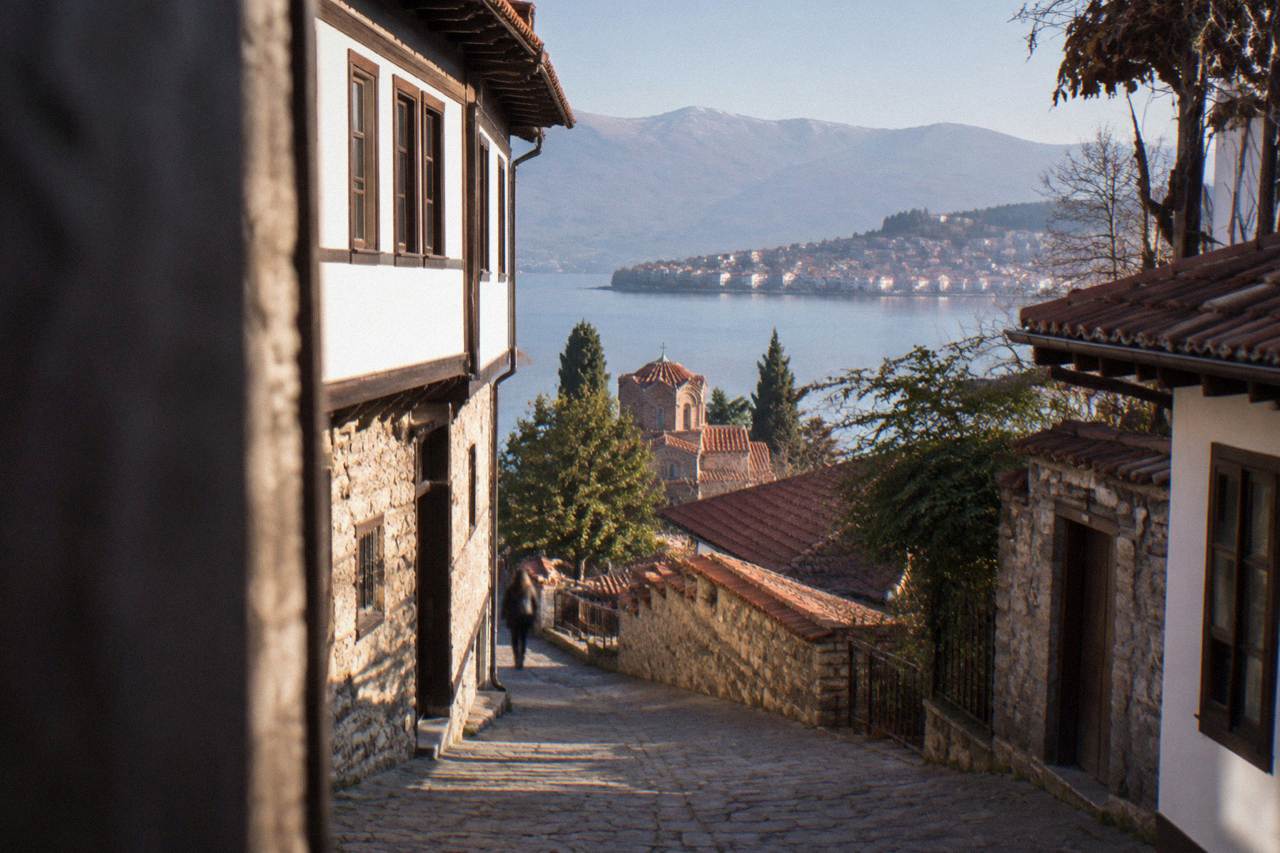
Ohrid sits on the shore of Lake Ohrid in North Macedonia, a freshwater mountain lake at about 693 m above sea level, and its weather follows a continental pattern softened by that large body of water. The Ohrid Travel Guide monthly breakdown below uses modelled climate normals from the ERA5 reanalysis, 1991 to 2020, for the old-town grid point, not a weather-station record, and pairs them with modelled lake surface temperatures from an aggregator service. Together they answer the practical questions: when it rains, when it is warm enough to swim, and what each month asks of your packing list. For the wider planning picture, see when to visit Ohrid.
What Is The Weather Like In Ohrid Month By Month?
Ohrid's modelled monthly normals, ERA5 reanalysis 1991 to 2020, range from a January high of about 5 C with lows of about minus 1 C to an August high of about 27.6 C with lows of about 19 C, and rainfall runs from about 33 mm in August to about 93 mm in December. The figures are modelled for a grid cell over the old town at about 701 m, so treat every number as "about" rather than as a station reading. The shape of the year is classic continental: a dry, warm core from June through August and a wetter, cooler shoulder from October through March.
| Month | Mean high (C) | Mean low (C) | Rain (mm) |
|---|---|---|---|
| January | 5.0 | -0.8 | 76.5 |
| February | 6.3 | 0.0 | 74.3 |
| March | 10.0 | 2.5 | 80.5 |
| April | 14.6 | 6.3 | 82.4 |
| May | 19.5 | 10.8 | 70.8 |
| June | 24.2 | 15.2 | 43.1 |
| July | 27.1 | 18.3 | 34.7 |
| August | 27.6 | 19.0 | 32.9 |
| September | 22.4 | 14.9 | 62.4 |
| October | 17.4 | 10.3 | 76.0 |
| November | 11.5 | 5.3 | 90.4 |
| December | 6.2 | 0.9 | 92.6 |
Read the table by halves. December and November carry the highest monthly rain totals in the modelled series, 92.6 mm and 90.4 mm respectively, while August and July sit at the bottom with 32.9 mm and 34.7 mm. June is the pivot month: highs jump from May's 19.5 C to 24.2 C and rainfall almost halves. September cools only gently, which is why it remains a workable month for the lake, covered next.
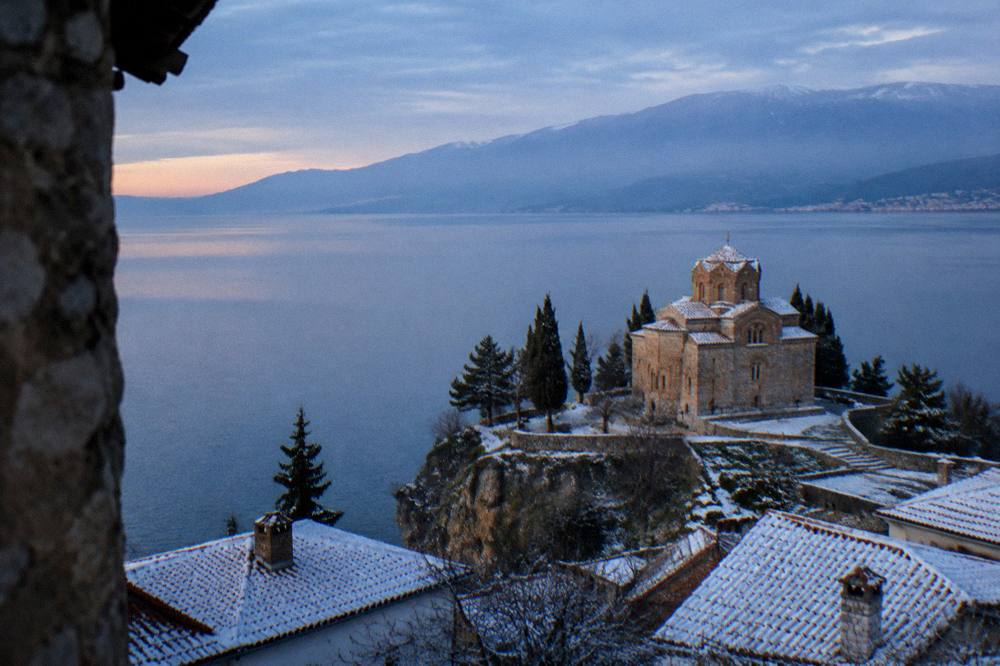
Altitude matters as much as latitude here. The lake influence keeps winter lows from falling as far as they do in the surrounding lowlands, and it holds early-summer days back slightly while the deep water warms. Snow does occur in Ohrid in winter, and Galicica National Park, which rises between Lake Ohrid and Lake Prespa to Magaro peak at 2,254 m, holds heavier snow that can close the park's main road, typically January to March.

What Is The Water Temperature In Lake Ohrid By Month?
Modelled lake surface temperatures in Lake Ohrid run from about 4.6 C in January and about 6 C in December to about 23.5 C in August, with July at about 22.9 C and October at about 14.7 C, while the UHMR multi-year October mean is 14.3 C. These are modelled aggregator values, not gauge measurements, so the same "about" applies. The one exception is the October mean of 14.3 C, which comes from the hydrological service's own multi-year figures, base period 2001 to 2020. The UHMR October mean sits within a tenth of a degree of the modelled October value, which is a good sign both are close to reality.
| Month | Modelled surface water (C) |
|---|---|
| January | 4.6 |
| February | 5.4 |
| March | 7.2 |
| April | 10.5 |
| May | 14.9 |
| June | 19.4 |
| July | 22.9 |
| August | 23.5 |
| September | 19.7 |
| October | 14.7 |
| November | 10.3 |
| December | 6.0 |
The curve lags the air by roughly a month. Air temperatures peak in August, but the lake is still climbing through July, and September's water at about 19.7 C stays swimmable while night-time air already drops toward 15 C. In spring the reverse holds: April air can feel pleasant at a 14.6 C high, but the water is still only about 10.5 C, cold enough that a first swim of the year is a short one. Anyone planning around the water should read swimming in Lake Ohrid alongside this table, and anyone curious about conditions can also check whether the water in Lake Ohrid is clean.
Water quality in 2026 supports swimming where the temperature does: bathing-water testing in May and June 2026 returned Class I physico-chemical results at most measured points, with most microbiological samples rated excellent, though Grashnica beach was an exception at Class III. The lake level itself hovered around 693 m above sea level in autumn 2026, close to its multi-year October mean of 693.31 m.
When Can You Swim In Lake Ohrid?
Swim in Lake Ohrid from July through August, when surface water is about 23 C and comfortable. September remains workable at about 19.7 C, and the season is conventionally described as running July to September. June sits at about 19.4 C, right on the edge for warm-water swimmers, while May's 14.9 C suits only the hardy. After that window the lake cools fast, and by late autumn it is far too cold without a wetsuit.
Two practical notes shape the season beyond the thermometer. First, boat services to St Naum and the Bay of Bones generally run about May to October on a seasonal schedule and drop to a reduced winter pattern, so a September swim stop on a lake cruise is realistic and an April one is not. Second, summer 2026 brought new navigation limits on the lake under a June 2026 government decision: jet skis were banned between 1 July and 31 August from 11:00 to 19:00, and boats were restricted at night through the summer, a dated rule written for swimmer safety rather than a permanent law. Neither changes water temperature, but both change what the summer lake feels like.
What Is Ohrid Weather Like In Spring?
Spring in Ohrid warms steadily from a March high of about 10 C to a May high of about 19.5 C, but it stays wet, with modelled rainfall of 80.5 mm in March, 82.4 mm in April and 70.8 mm in May. Nights remain cold into April, averaging 2.5 C in March and 6.3 C in April, so the season rewards layers. The lake lags behind the air all spring, from about 7.2 C in March to about 14.9 C in May.
May is the month the balance tips. Daily highs near 20 C, longer evenings of daylight for sightseeing and the museum sites moving to their summer schedule from 1 May, running to 30 September, make it a strong shoulder-season choice, though the modelled figures still show about 71 mm of rain. Rain in spring tends to come in passing fronts rather than all-day soaks on the modelled wet-day counts, but the totals are what they are: bring a rain layer. The full seasonal picture is in Ohrid in spring.
What Is Ohrid Weather Like In Summer?
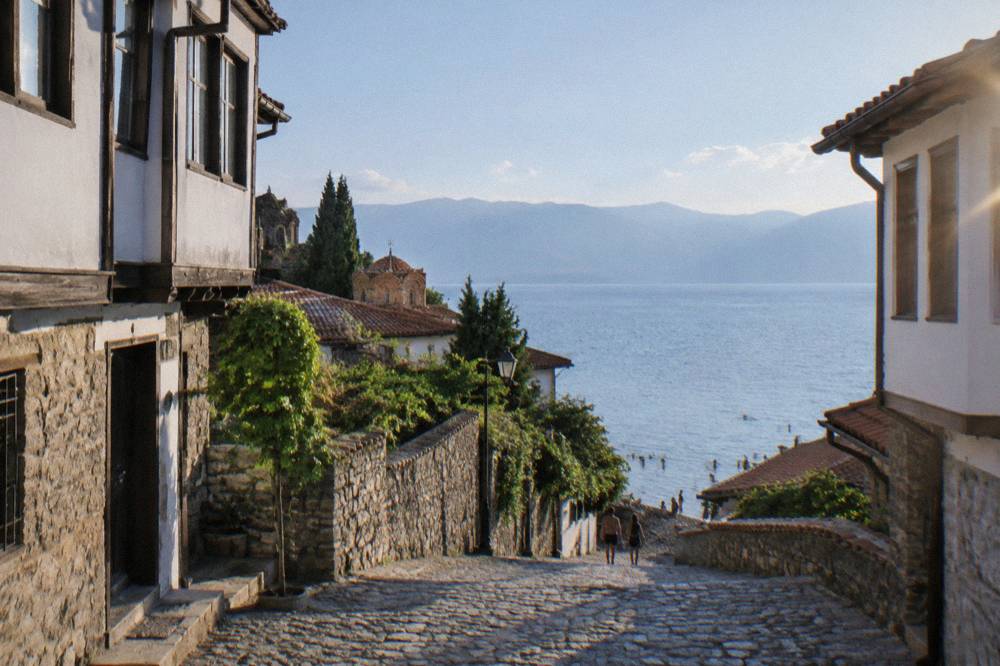
Summer is Ohrid's dry, warm core: modelled highs of about 24.2 C in June, 27.1 C in July and 27.6 C in August, with lows from 15.2 C to 19 C and monthly rainfall of only 43.1 mm, 34.7 mm and 32.9 mm respectively. The lake reaches about 23 C, the swimming season opens properly in July, and the August figures make it the busiest month of the year for the town. Nothing in the modelled series calls for extreme heat.
The season is also the festival season. The 66th Ohrid Summer Festival opened on 12 July 2026 at the Ancient Theatre and ran to its traditional close on 20 August, and the Ohrid Water Festival filled 12 to 30 August 2026 with events including the 25 km St Naum to Ohrid harbour swimming marathon on 22 August. Evening venues like the Ancient Theatre, a late Hellenistic site first excavated in 1935, depend on dry August nights, and August's modelled 32.9 mm of rain is the lowest of any month. Booking ahead in August is simple prudence, and how many days to spend in Ohrid covers how to fill them.

What Is Ohrid Weather Like In Autumn?
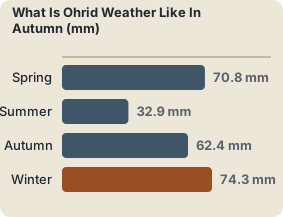
Autumn cools Ohrid from a September high of about 22.4 C to a November high of about 11.5 C, while rainfall climbs from 62.4 mm in September to 76 mm in October and 90.4 mm in November, and lake water falls from about 19.7 C to about 10.3 C. September is the season's prize: summer-grade water, air still above 20 C on average, and rain totals below the spring peak. October flips the picture, and November is firmly a coat-and-umbrella month.
October also marks a hard practical line. The museum institute's sites, including the Robev Family House, the Bay of Bones and the Icon Gallery, switch to their winter schedule on 1 October, running to 30 April, which for Robev House and the Bay of Bones means 09:00 to 15:30 rather than the longer summer shifts. Daylight shrinks, and the wet-day counts climb through the modelled series. Anyone weighing October against May should read Ohrid in autumn against the spring page before choosing.
| Season | Months | Modelled high (C) | Modelled rain (mm) | Lake water (C) |
|---|---|---|---|---|
| Spring | Mar to May | 10.0 to 19.5 | 70.8 to 82.4 | 7.2 to 14.9 |
| Summer | Jun to Aug | 24.2 to 27.6 | 32.9 to 43.1 | 19.4 to 23.5 |
| Autumn | Sep to Nov | 11.5 to 22.4 | 62.4 to 90.4 | 10.3 to 19.7 |
| Winter | Dec to Feb | 5.0 to 6.3 | 74.3 to 92.6 | 4.6 to 6.0 |

What Is Ohrid Weather Like In Winter?
Winter in Ohrid is cold rather than severe: modelled highs of about 5 C in January, 6.3 C in February and 6.2 C in December, lows from minus 0.8 C to 0.9 C, and the year's highest rainfall totals at 92.6 mm in December and 90.4 mm in November, some of it falling as snow. The lake surface sits at about 4.6 C in January on the modelled series, and swimming is off the table for everyone except organised winter bathers.
Winter does not shut the town. The museum institute's sites keep their winter hours, 09:00 to 15:30 for the Robev Family House and the Bay of Bones, 09:00 to 14:00 for the Icon Gallery, all closed on Mondays. Snow reaches Ohrid itself in some winters, and Galicica's higher ground holds more of it, with the park's main road typically affected January to March. The Vevcani Carnival, traditionally held on 13 to 14 January for the old Julian New Year, is the one fixed winter date in the surrounding region. What a cold-weather visit costs is covered in Ohrid costs and budget.
How Should You Pack For Ohrid Across The Year?
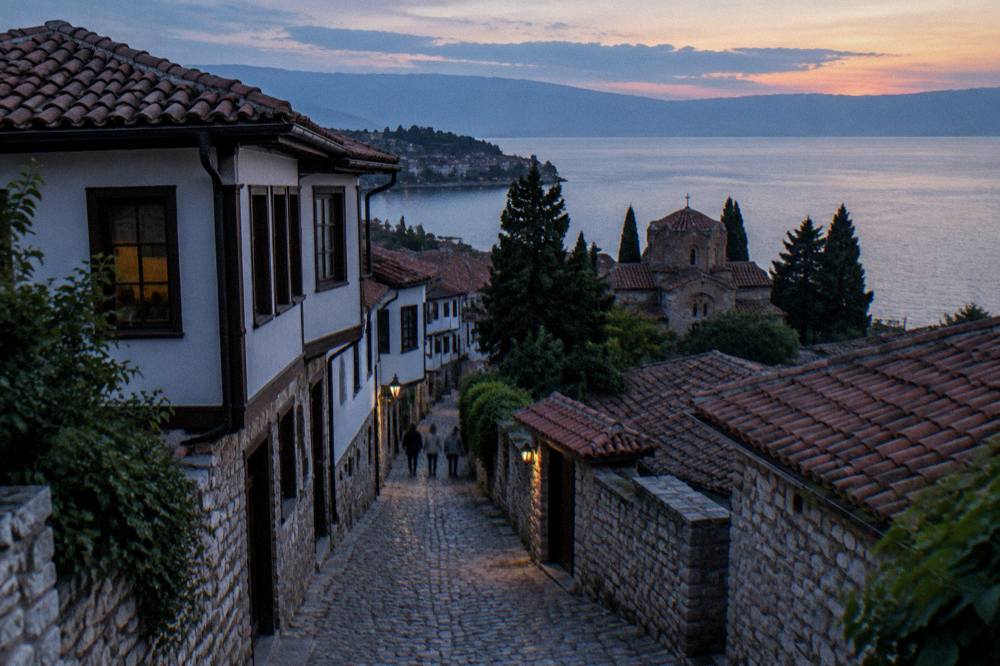
Pack for Ohrid in layers from April to October, a proper warm jacket from November to March when modelled lows sit between minus 0.8 C and 5.3 C, swimwear only from June to September, and a rain layer in every month, since even August's modelled rainfall is 32.9 mm. The old town's lanes climb on foot from the lake up to the fortress, so shoes matter as much as coats: cobbles and steps do not care about the forecast.
| Month(s) | What the modelled figures say | Packing focus |
|---|---|---|
| Dec to Feb | Highs about 5 to 6 C, lows near or below 0 C, 74 to 93 mm rain | Warm coat, layers, waterproof, shoes with grip |
| Mar to Apr | Highs 10 to 15 C, rain about 80 to 82 mm | Layers, rain jacket, warm evenings unlikely |
| May | High about 19.5 C, low 10.8 C, 70.8 mm rain | Light layers, rain layer, sweater for evenings |
| Jun to Aug | Highs 24 to 28 C, lows 15 to 19 C, 33 to 43 mm rain | Swimwear, sun protection, light evening layer |
| Sep | High 22.4 C, water 19.7 C, 62.4 mm rain | Swimwear plus layers, light rain layer |
| Oct to Nov | Highs 11.5 to 17.4 C, 76 to 90 mm rain | Jacket, layers, umbrella, waterproof shoes |
Two details the averages hide. First, the diurnal range is large outside summer, often more than 10 C between day and night on the modelled figures, so a warm afternoon in April does not guarantee a warm evening. Second, summer rain, when it comes, is brief in total volume: 33 mm across August is a handful of thunderstorm-type events rather than weeks of drizzle, while December's 92.6 mm spreads across the modelled series' highest wet-day counts. The general climate overview sits at Ohrid weather, and questions about water safety at drinking the water in Ohrid are separate from the swimming question covered above.

Which Month Should You Choose For An Ohrid Trip?
July and August are the modelled peak for warmth, lake water about 23 C and the lowest rainfall of the year, September offers nearly the same water at about 19.7 C with fewer demands on your patience, and May is the best spring month at a 19.5 C modelled high if you accept about 71 mm of rain. January and February are for museum visits, winter light and the Vevcani Carnival, not for the lake.
The choice couples weather to opening hours. From 1 May to 30 September the museum sites run their longer summer schedule, and the boat season to St Naum and the Bay of Bones runs roughly May to October, so the May-to-September window maximises what is open as well as what is warm. Within that window, June pairs 24.2 C modelled highs with 43.1 mm of rain and cooler water, while September pairs 22.4 C highs with the year's last swimmable lake. For the trade-offs by trip length, how many days you need in Ohrid and where to stay in Ohrid carry the rest of the plan, and the town's flagship sight list is at things to do in Ohrid.
Whatever the month, the old town itself is the constant. A small-group walking tour of the old town is the related pick for this page, a year-round orientation for the lanes that climb from the lake to the fortress, and you can Check availability for your dates.
Common Questions About Ohrid Weather By Month
What is the warmest month in Ohrid?
On the modelled ERA5 normals, 1991 to 2020, August has the highest mean daily high at about 27.6 C, just ahead of July at about 27.1 C. August also has the lowest modelled rainfall of the year at about 32.9 mm.
What is the coolest month in Ohrid?
January, with a modelled mean high of about 5.0 C and a mean low of about minus 0.8 C, the lowest of the year. December and February run close behind at highs of 6.2 C and 6.3 C.
When does it rain most in Ohrid?
December carries the highest modelled monthly total at about 92.6 mm, followed by November at about 90.4 mm. July and August carry the lowest, about 34.7 mm and 32.9 mm.
When is Lake Ohrid warm enough for swimming?
The modelled surface temperature passes about 20 C from July and holds about 23 C through August, falling to about 19.7 C in September. The swimming season is conventionally July to September.
Does it snow in Ohrid?
Yes, winter precipitation in Ohrid includes snow on the climate tables. Galicica National Park, between Lake Ohrid and Lake Prespa, holds heavier snow, and the park's main road can be affected typically from January to March.
Are the climate figures station measurements?
No. The air-temperature and rainfall figures on this page are modelled normals from the ERA5 reanalysis, 1991 to 2020, for a grid cell over the old town at about 701 m. Lake water temperatures are modelled aggregator values except the multi-year October mean of 14.3 C.