Five Days In Ohrid: The Slow Lake Week
Five days is enough to see Ohrid at lake pace: the old town lanes, the Byzantine churches, a full boat day to St Naum, the Galicica ridge and a slow final evening on the water.
Short answer
Five days in Ohrid splits naturally into the old town, the church circuit, a boat day to St Naum and the Bay of Bones, a Galicica and Lake Prespa day trip, and a final slow day of beaches, the Old Bazaar and a sunset cruise on Lake Ohrid.
Ohrid, a lakeside town in North Macedonia on the shore of Lake Ohrid, rewards the traveller who slows down. The lake sits at about 693 m above sea level, the UNESCO mixed site "Natural and Cultural Heritage of the Ohrid Region" covers the town and the water together, and five days is the point where a rushed checklist becomes an actual week beside the water. The Ohrid Travel Guide itinerary below spreads the old town, the churches, a boat day to St Naum, the Galicica ridge and one entirely slow day across a five-day frame, using the published ticket prices and hours where they exist.
How Should Five Days In Ohrid Be Structured?
The working shape is one day for the old town core, one for the church circuit and the fortress ridge, one full-day boat trip to St Naum and the Bay of Bones, one day trip over the Galicica ridge to Lake Prespa or along the eastern shore, and one deliberately slow final day of beach, bazaar and a sunset cruise on Lake Ohrid, with every museum visit planned around the Monday closures.
Museum sites in Ohrid run a winter schedule from 1 October to 30 April and a summer schedule from 1 May to 30 September, and the institute's sites close on Mondays. That single fact shapes the week more than anything else: put Robev Family House, the Icon Gallery and the Bay of Bones museum on days that are not Monday, and keep Monday for walking, beaches and the boat. Five days also gives the week a buffer, because a windy day can cancel a lake crossing and a snowfall can close the park road, and a plan with one spare rhythm absorbs both. The table below is the frame the rest of this page expands.
| Day | Theme | Anchor sight | Watch out for |
|---|---|---|---|
| Day 1 | Old town core | Old Bazaar and the boardwalk | Monday closes the museum sites |
| Day 2 | Churches and ridge | St John at Kaneo and Plaosnik | Steep lanes above the old town |
| Day 3 | Full lake day | St Naum and Bay of Bones | Boat season runs about May to October |
| Day 4 | Over the ridge | Galicica and Lake Prespa | Snow can close the park road January to March |
| Day 5 | Slow finish | Beach, Old Bazaar, sunset cruise | Book the cruise ahead in summer |
What Should Day One In The Ohrid Old Town Look Like?
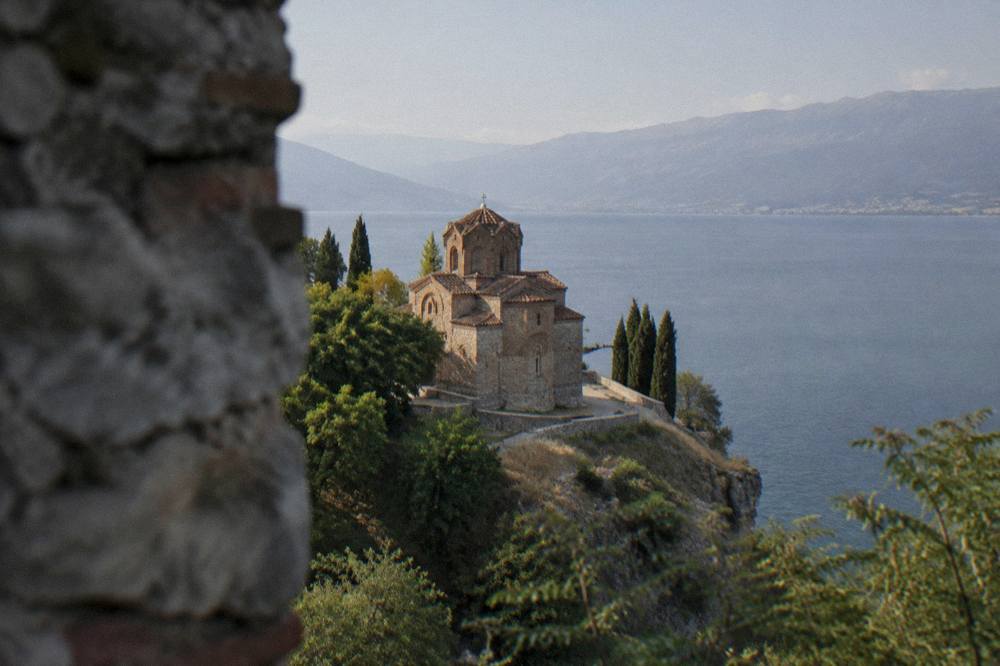
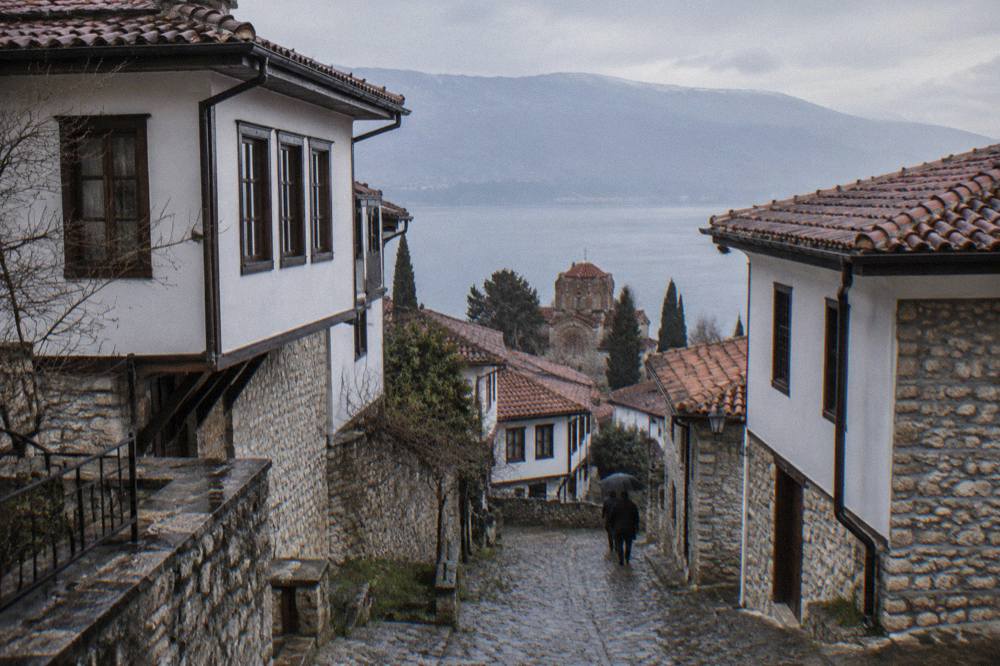
Day one belongs to the old town on foot: start at the Old Bazaar, walk the lake boardwalk, climb toward Samuel's Fortress and finish at the Church of St John at Kaneo above the water, keeping the whole day to lanes and viewpoints rather than ticketed interiors, because the lanes themselves are the sight and the climb from the lake to the fortress is what gives the town its shape.
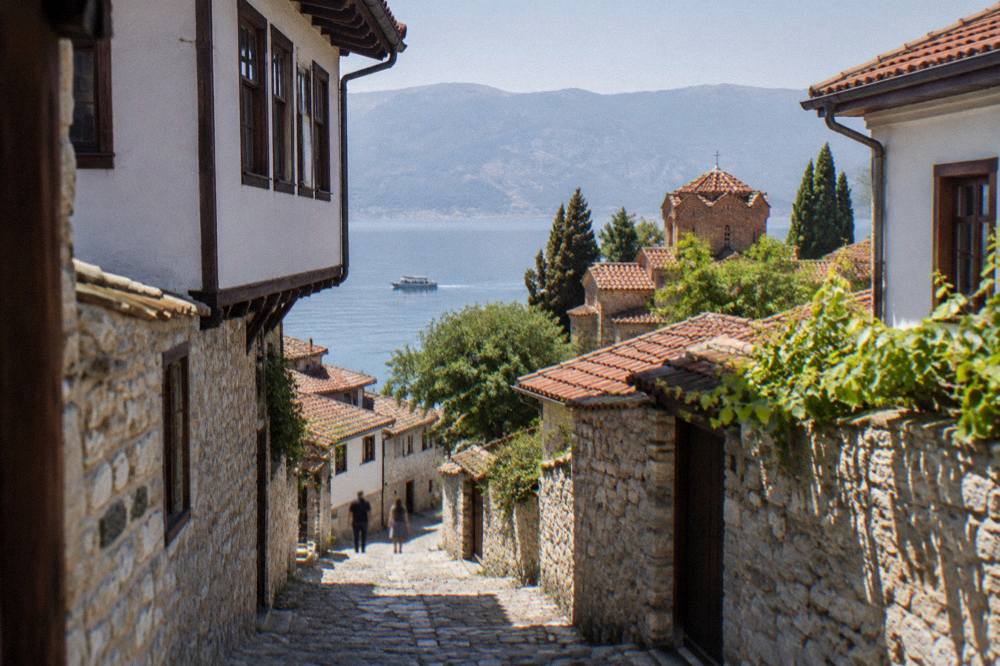
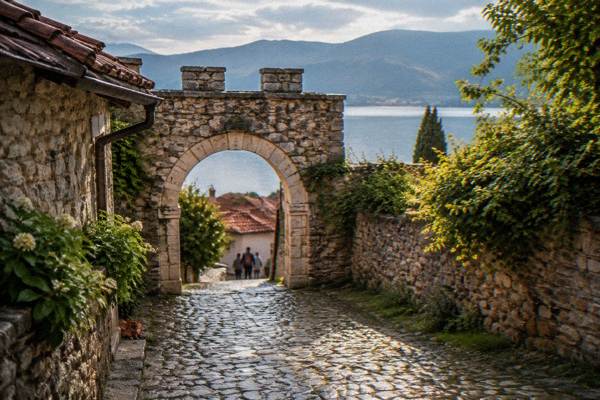
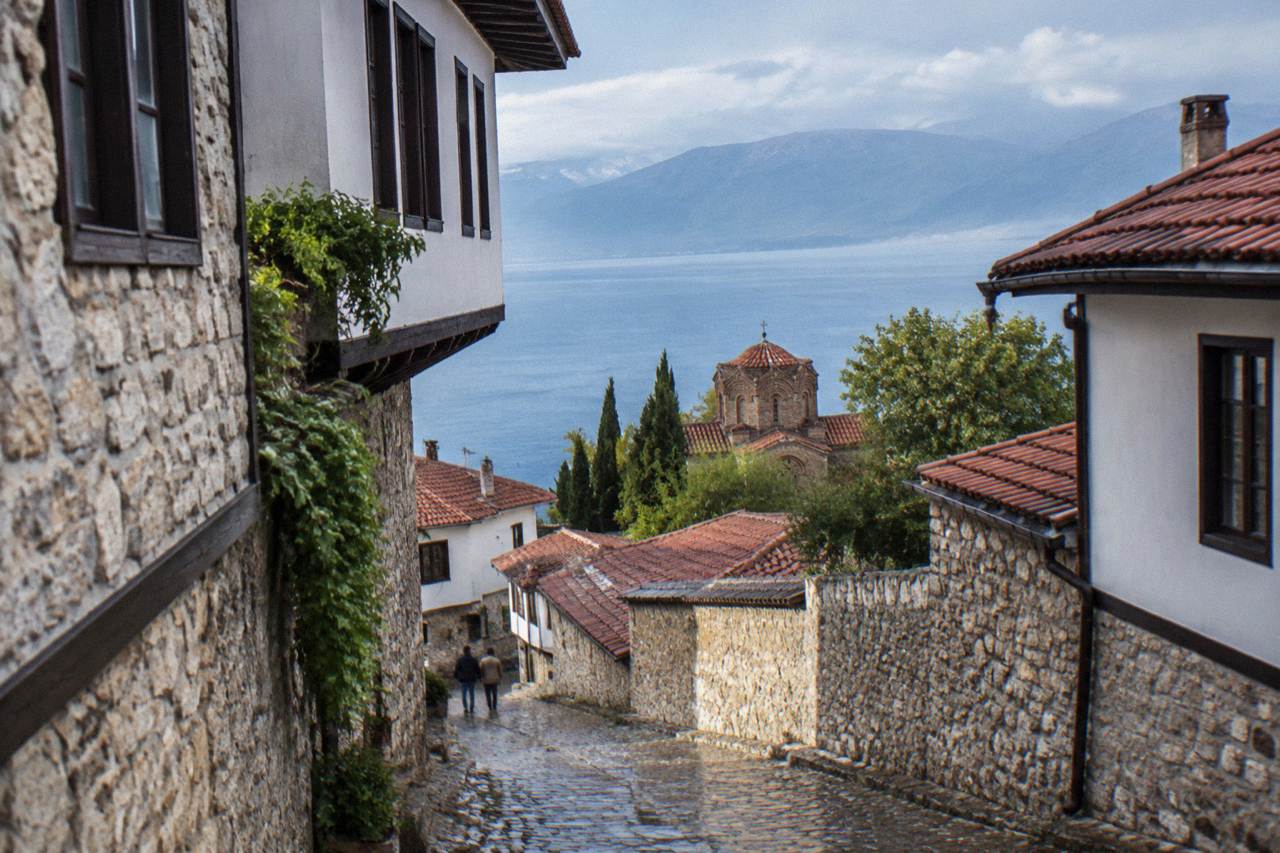
The old town climbs from the lake shore to the fortress, and the lanes are pedestrian in character, so comfortable shoes matter more than a timetable. The boardwalk along the water connects the town side to the Kaneo district, and the lake itself is visible from much of the walk. There is no tram and no bike share in Ohrid, and none is needed: the town core is compact enough that a first day on foot covers the Old Bazaar, the boardwalk and the Kaneo district with time left for a long lakeside lunch. For anyone who prefers a guide for the first orientation, a guided small-group old town walk or one of the shorter one-day plans can be slotted into this first afternoon instead.
Samuel's Fortress sits at the top of the climb. A municipal revitalisation plan, reported in 2026, budgets over 11 million denars for a summer stage, illumination and archaeological work at the fortress, which signals investment but says nothing about access changing. Treat the fortress as a walk-up sight and check locally on the day. The descent from the fortress side leads back down toward the Plaosnik plateau and the Ancient Theatre, which is where day two picks up the thread, so a first-day reconnaissance of that upper ground pays off twice.
Which Churches And Museums Fill Day Two In Ohrid?
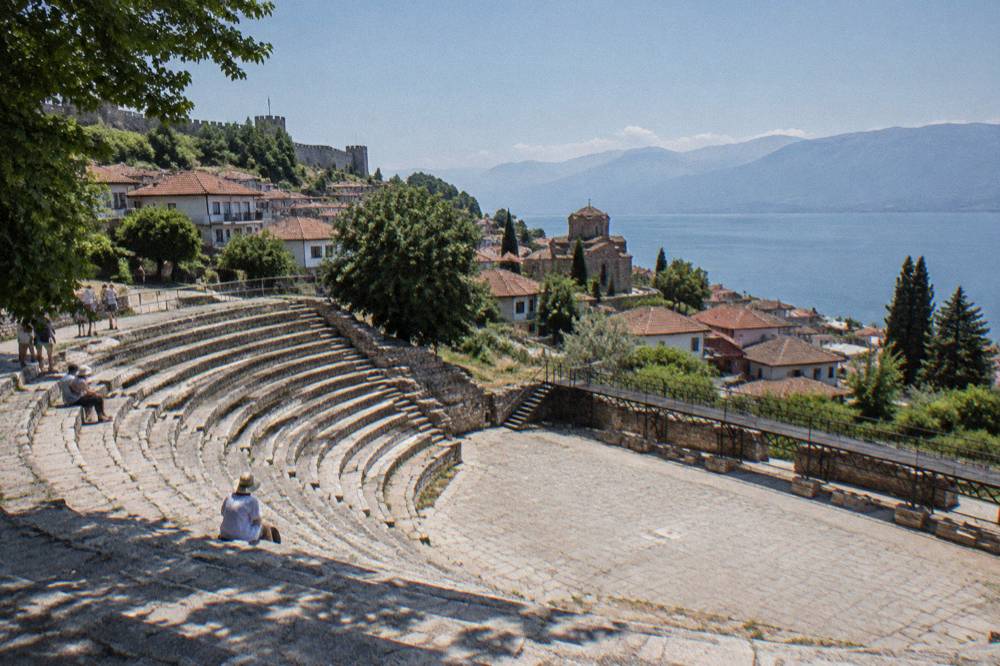
Day two is the ticketed circuit: the Robev Family House and the Icon Gallery at the Perivleptos complex run on the museum institute's ticket system at 150 den for foreign visitors and 120 den for domestic visitors, with a reported 60 den rate for children and students, and the Ancient Theatre, built at the end of the third or start of the second century BC, sits on the walking line between them.
The institute's own pages give the hours, and they differ by site, so the table is worth carrying. The Robev Family House runs two summer shifts from 1 May, while the Icon Gallery closes earlier in winter. All of them close on Monday. St Sophia, Plaosnik and St John at Kaneo sit on the same walking day: a reported figure of about 150 MKD each circulates for the church interiors, but the museum institute's own pages do not list those hours, so treat church access as something to confirm on the spot.
| Site | Ticket | Hours | Closed |
|---|---|---|---|
| Robev Family House | 120 den domestic / 150 den foreign | Winter 09:00 to 15:30; summer from 1 May, 09:00 to 15:30 and 13:30 to 20:00 | Monday |
| Icon Gallery, Perivleptos complex | 120 den domestic / 150 den foreign | Winter 09:00 to 14:00; summer 09:00 to 17:00 | Monday |
| Bay of Bones, Museum on Water | 120 den domestic / 150 den foreign | Winter 09:00 to 15:30; summer 09:00 to 16:30 | Monday |
| Ancient Theatre | No fee or hours published on the institute's page | Daylight access | None stated |
The Ancient Theatre's own page at the museum institute gives its history: first excavated in 1935, capacity rising to 5,000 after the epiteatron was added. It is also the opening venue of the Ohrid Summer Festival, whose 66th edition opened on 12 July 2026 with a gala at the theatre. UNESCO's own listing adds context that shapes the whole church day: Ohrid holds the oldest Slav monastery, at St Panteleimon, and more than 800 Byzantine-style icons from the 11th to the end of the 14th century, which is why the Icon Gallery belongs on the itinerary rather than on a spare-time list. The church circuit deserves its own page, and the three-day itinerary compresses this same material for shorter visits.
Is A St Naum Boat Day Worth One Of The Five Days?
Yes: the full-day boat cruise from Ohrid port to St Naum runs about seven hours, from 1,200 den per adult and 600 den per child with the operator Boat Armada, stops at the Bay of Bones and the lakeside villages, and pairs naturally with the monastery's Crn Drim springs, where a rowboat ride is quoted at about 5 EUR, making it the single biggest day of the week.
Want the lake day with lunch thrown in? Book a boat cruise with BBQ here.
The St Naum monastery entrance is listed at 150 MKD per person on a cruise operator's own inclusions page. The monastery sits close to the Albanian border: the Tushemisht crossing is about 4 km away, roughly a 10 minute drive, and pedestrians can cross there, which makes Pogradec a realistic add-on for a second border day. The Check availability link covers a booked version of the lake day for travellers who arrive from the Albanian side, since that product departs from Tirana, Durres or Golem rather than from Ohrid itself.
Boat schedules to St Naum are seasonal, reported to run about May to October with a reduced winter service, so a five-day trip between November and April should plan this day by road instead. The boat and ferry guide covers the operators in more detail, and the Bay of Bones page covers the museum on water itself. On a summer week, the boat day is also the day to swim: the cruise stops give access to water that the modelled aggregator values put at about 23.5 C in August, and the crossing itself covers the stretch of shoreline that days one, two and five only see from above.
What Does Day Four Look Like: Galicica, Prespa Or The Eastern Shore?
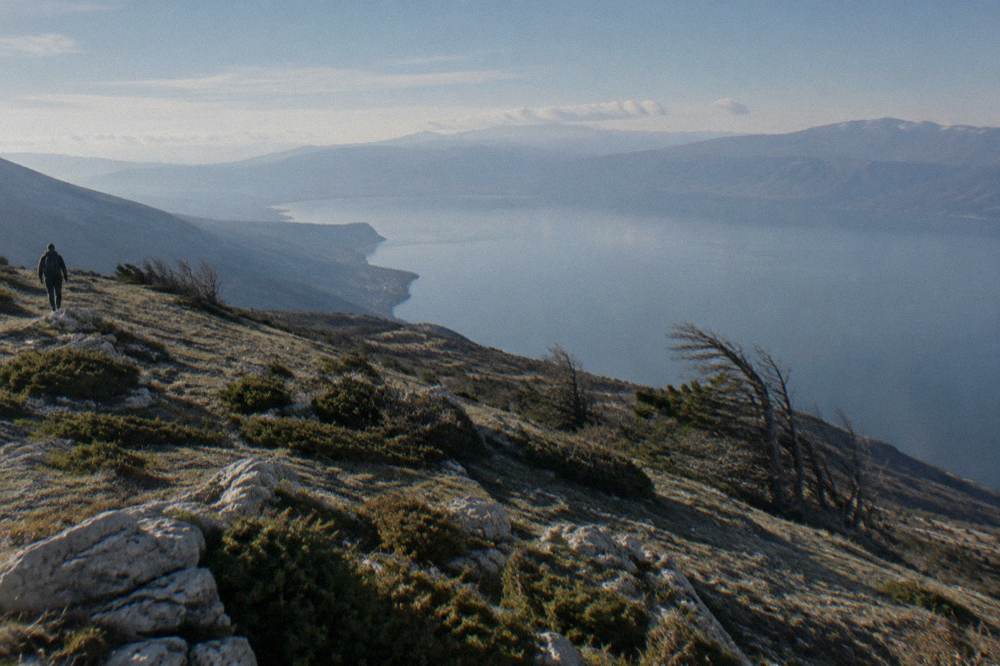
Day four goes uphill: Galicica National Park, North Macedonia's second national park, founded in 1958, covers 22,750 ha between Lake Ohrid and Lake Prespa with the Magaro peak at 2,254 m, charges 250 MKD per vehicle with no per-passenger fee or 100 MKD for someone entering on foot from the Ohrid-side gate, and its road toward the Prespa viewpoint can close under snow, typically January to March.
Standing between them is the whole point of the day: no other spot on this itinerary puts two large lakes in one view. A Lake Prespa day trip is the natural car or van day; hikers will find the Ohrid hiking guide and the cycling option on the lake by bike route both work the same terrain. If the weather turns, the eastern shore villages toward Trpejca and Ljubanista, or even Pogradec in Albania, keep the day on the water instead of the ridge. The park is open year-round on paper, and its official site runs a live camera page, which is a practical way to check the ridge conditions before committing the day.
How Should The Final Slow Day In Ohrid Be Spent?
The fifth day should be deliberately light: a morning swim or a beach morning, a unhurried pass through the Old Bazaar for souvenirs, an afternoon at anything the week missed, and a sunset cruise on Lake Ohrid to close the trip, since the lake's modelled surface temperatures run about 22.9 C in July and 23.5 C in August, with the comfortable swimming season reported from July through September.
Swimming is the natural morning. The modelled aggregator values put the lake at about 14.9 C in May and about 19.7 C in September at the warm end of the ranges, so June through August is the reliable window. The swimming guide and the can you swim in Lake Ohrid answer cover the beaches; the question of when to visit Lake Ohrid matters if the trip can move at all. The Old Bazaar is the second half of the morning: Ohrid pearls, paper and icons are the classic souvenirs, and a slow fifth day is the right moment for them, when nothing else is waiting. The sunset cruise closes the week on the water without a full-day commitment, and the two-day itinerary shows what to cut if the week shrinks. A evening glass of wine after the cruise is a local habit worth keeping: the region's wineries and rakija tradition have their own pages on this site.
What Weather Should A Five-Day Ohrid Week Expect?
The ERA5 reanalysis normals for 1991 to 2020 for the Ohrid grid cell give July a mean daily high of 27.1 C and August 27.6 C, against January lows around -0.8 C, with monthly rainfall ranging from 32.9 mm in August to 92.6 mm in December, and these are modelled reanalysis figures for a high grid cell, not a weather-station record.
The table gives the full monthly picture for planning which week of the year the five days fall into.
| Month | Mean high C | Mean low C | Rain mm |
|---|---|---|---|
| Jan | 5.0 | -0.8 | 76.5 |
| Feb | 6.3 | 0.0 | 74.3 |
| Mar | 10.0 | 2.5 | 80.5 |
| Apr | 14.6 | 6.3 | 82.4 |
| May | 19.5 | 10.8 | 70.8 |
| Jun | 24.2 | 15.2 | 43.1 |
| Jul | 27.1 | 18.3 | 34.7 |
| Aug | 27.6 | 19.0 | 32.9 |
| Sep | 22.4 | 14.9 | 62.4 |
| Oct | 17.4 | 10.3 | 76.0 |
| Nov | 11.5 | 5.3 | 90.4 |
| Dec | 6.2 | 0.9 | 92.6 |
November carries 90.4 mm of rain in the modelled normals and December 92.6 mm, while August carries 32.9 mm. Read against the itinerary, the numbers say that a May or late-September week trades a little warmth for empty lanes, a July or August week trades quiet for warm water and full schedules, and a winter week keeps the town but loses both the boat day and, often, the park road. The Ohrid weather guide and the summer guide expand on this; a winter version of the same five days is possible but the boat day drops out and the Galicica road is at risk.
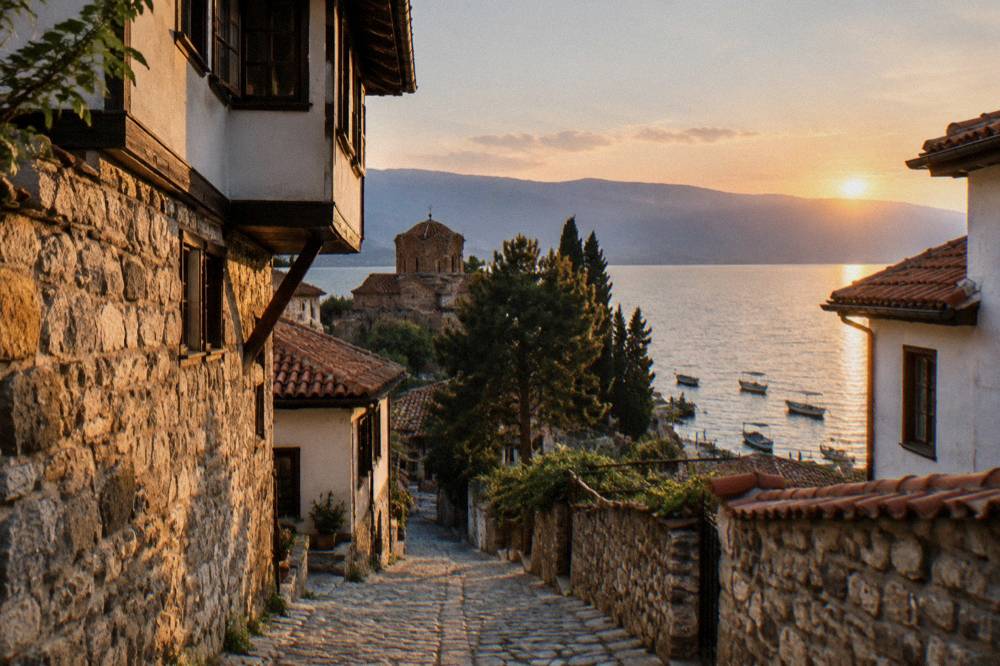
How Do You Get To Ohrid For The Five-Day Week?
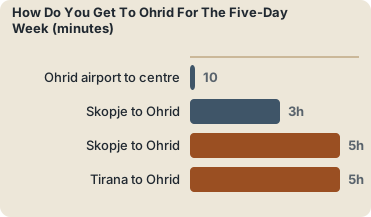
Ohrid's own airport, St Paul the Apostle (OHD), sits about 10 km from the centre on the E65, with Wizz Air reported opening new routes from 2026 including Milan Malpensa from 30 March, Wroclaw from 7 June and Katowice from 8 June, while the land alternative from Skopje is a bus of about 3 hours over about 170 km costing 850 to 950 MKD one way, with no passenger train to Ohrid at all.
An airport taxi is reported at about 600 to 800 MKD, around EUR 12, to the centre, and the airport has no regular public shuttle bus. Coming from Albania, the Tirana to Ohrid minibus runs roughly 5 to 7 times a day, takes 3 to 3.5 hours including the border and costs about EUR 15 to 20, crossing at Qafe Thane. Drivers should add that the Kicevo to Ohrid motorway remains under construction, with full opening reported for the first half of 2027, so the last stretch of a Skopje arrival is still the old road. The full option set, including the Skopje airport route, is in the Skopje Ohrid Tirana route guide.
| Route | Mode | Time | Reported fare |
|---|---|---|---|
| Ohrid airport to centre | Taxi | 10 to 15 min | 600 to 800 MKD |
| Skopje to Ohrid | Bus | About 3 h | 850 to 950 MKD |
| Skopje to Ohrid | Car plus tolls | About 2.5 h | About 140 MKD tolls |
| Tirana to Ohrid | Minibus | 3 to 3.5 h | EUR 15 to 20 |
What Practical Rules Shape A Five-Day Stay In Ohrid?
North Macedonia is not in the EU or Schengen: visa-free nationals may stay up to 90 days in any 180-day period, UK visitors up to 3 months with a passport valid at least 90 days after arrival, visitors register with the local police within 48 hours and hotels do it automatically, the currency is the Macedonian denar with euros quoted for tours but not legal tender, and the emergency numbers are 194 for an ambulance, 192 for police and 196 for roadside assistance.
Two dated 2026 rules matter on the ground. A resident-only parking regime applies from summer 2026 on old-town streets including Ilindenska, Kosta Abrash and Car Samoil, with clamping reported for non-residents, so a hire car should be parked outside the old streets. And lake navigation limits from a June 2026 government decision ban jet skis during daytime hours in July and August and restrict boats at night through the summer and into autumn, written for swimmer safety. On money, the denar trades around a National Bank middle rate of 61.6633 MKD to the euro, and while euros are commonly quoted for tours and transfers they are not legal tender, so cash withdrawals come out in denars. The is Ohrid safe guide and the how many days do you need answer cover the rest of the practical picture, and the things to do overview lists every sight by category.
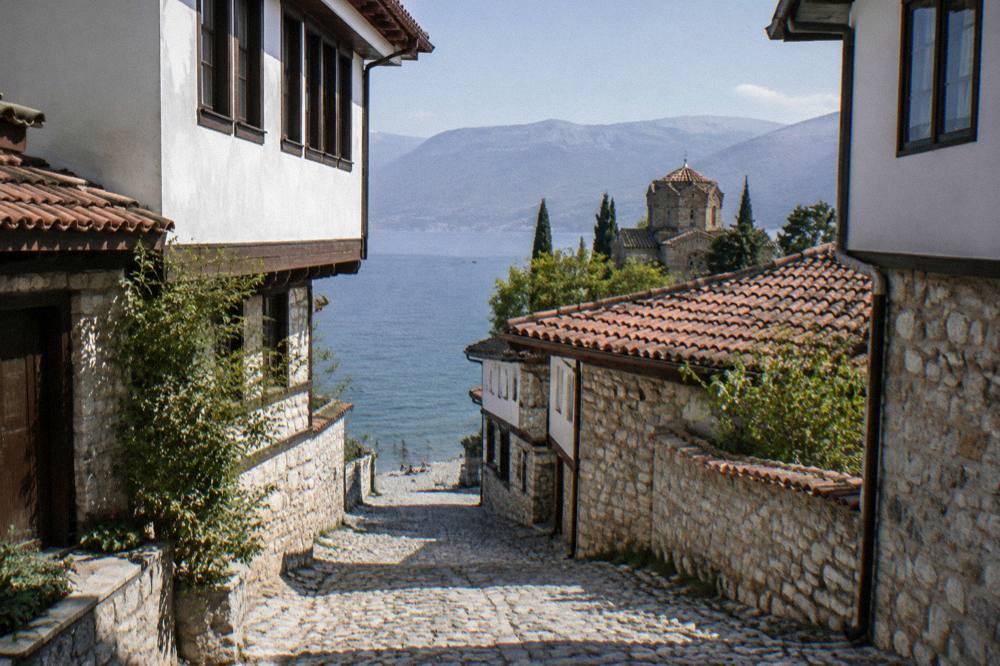
A five-day frame also leaves room for a private guide on whichever day the week did not cover well. A private full-day tour of the town and the lake, booked for whichever day suits, covers the fortress ridge, the churches and the shore in one escorted loop, and works especially well on the day a boat crossing is cancelled by wind.
Common Questions About Five Days In Ohrid
Is five days in Ohrid too long?
No. Five days fits the old town, the church circuit, a full boat day to St Naum, a Galicica and Prespa day trip and one slow beach day without rushing, and the museum Monday closures make a longer frame easier than a shorter one.
What is closed on Mondays in Ohrid?
The museum institute sites close on Mondays: the Robev Family House, the Icon Gallery and the Bay of Bones museum on water. Plan those for another day and keep Monday for walking, beaches and the boat.
Can you swim in Lake Ohrid on a five-day trip?
Yes, in the right months. Modelled surface temperatures run about 22.9 C in July and 23.5 C in August, and the comfortable swimming season is reported from July through September.
How much do the Ohrid museum sites cost?
The museum institute lists 120 den for domestic visitors and 150 den for foreign visitors, with a reported 60 den rate for children and students, per site.
Do you need a car for five days in Ohrid?
Not for the town itself, but a car or a booked day trip helps for Galicica, Lake Prespa and the eastern shore. Note the 2026 resident-only parking regime on the old-town streets if you do drive.
What is the single best day trip from Ohrid?
The full-day boat cruise to St Naum, from 1,200 den per adult with Boat Armada, combines the lake crossing, the Bay of Bones and the monastery with the Crn Drim springs in one day.
A five-day week in Ohrid ends the way it began, on the water, with the sunset cruise back toward the port and the fortress above the old lanes. That closing image, more than any checklist, is what the slow lake week is for.