Is Ohrid Better Than Struga?
A fact-by-fact comparison of Ohrid and Struga, the two towns on Lake Ohrid in North Macedonia: sights, distances, festivals and which one fits which trip.
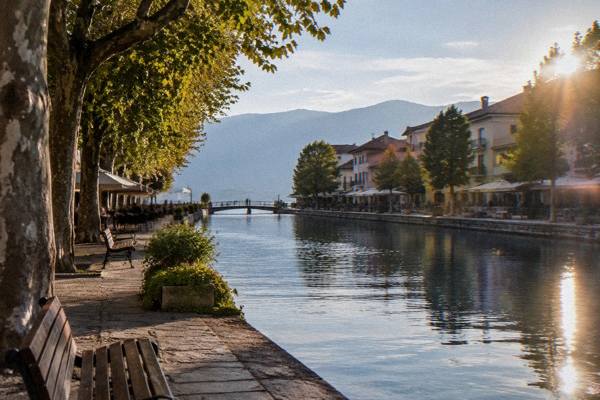
Ohrid and Struga are the two best-known towns on Lake Ohrid in North Macedonia, a freshwater mountain lake whose surface sits at about 693 m above sea level. The Ohrid Travel Guide covers both, and the honest answer to which is better is that they do different jobs: Ohrid is the UNESCO-listed destination with the churches, the fortress hill and the visitor numbers, while Struga is the smaller town at the lake's outflow into the Black Drim, best known as the home of the Struga Poetry Evenings. Both are covered in the Ohrid versus Struga comparison guide, and this page answers the question directly.
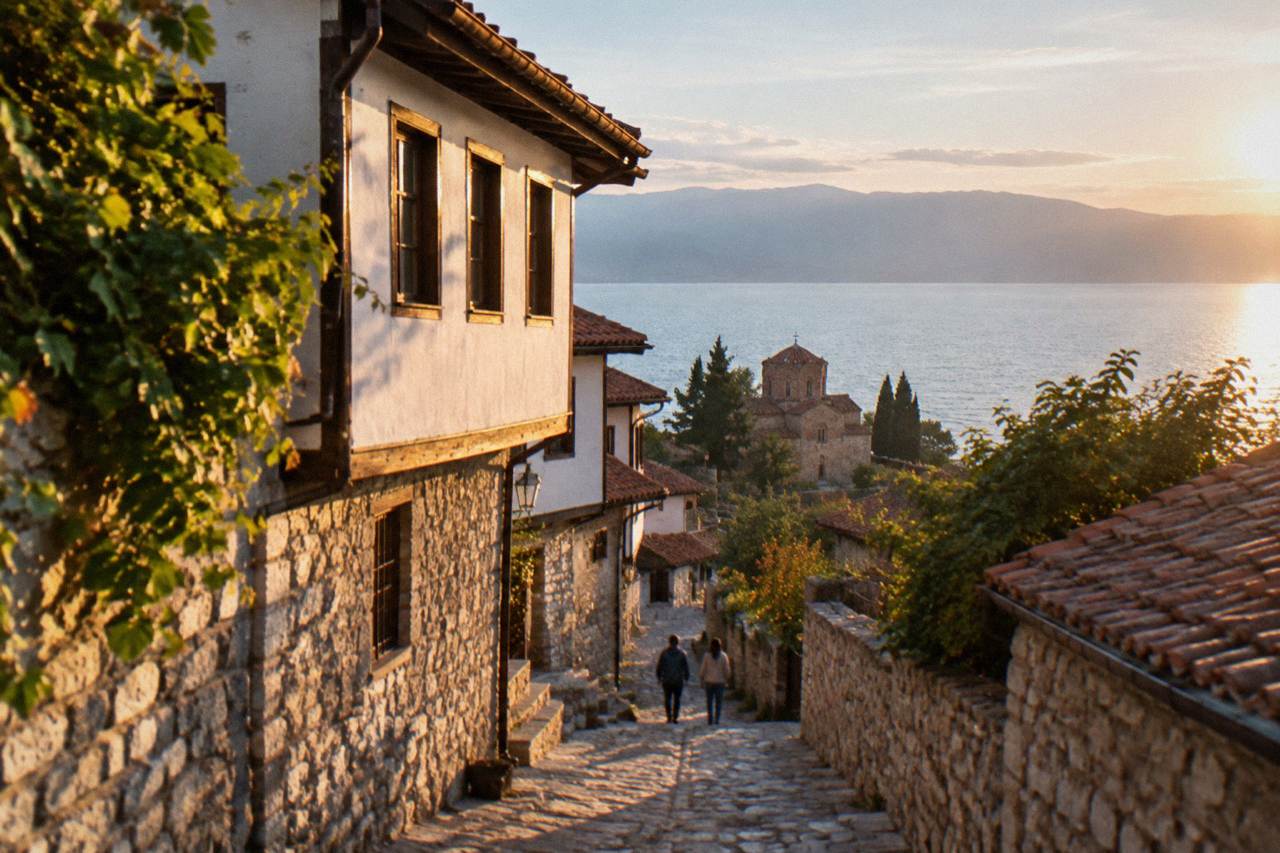
For a first visit to the lake region, yes, Ohrid is the stronger choice, because it holds the UNESCO World Heritage listing and nearly all of the major sights, from St John at Kaneo and St Sophia to Samuel's Fortress, Plaosnik and the Ancient Theatre. Struga is not a lesser Ohrid, though; it is a smaller lakeside town of a different character, where the Black Drim flows out of the lake, and it hosts the internationally known Struga Poetry Evenings.
The UNESCO property is called the Natural and Cultural Heritage of the Ohrid Region, inscribed in 1979 and 1980 and extended to the Albanian part of the lake in 2019. UNESCO's own listing credits Ohrid with the oldest Slav monastery, at Plaosnik, and with more than 800 Byzantine-style icons from the 11th to the end of the 14th century. Struga sits inside the wider region, but the concentration of listed monuments, the museum sites and the day-to-day visitor economy are on the Ohrid side. State Statistical Office data reported for November 2025 counted 18,103 guests in Ohrid that single month, 33,149 overnight stays, and Germany as the largest foreign market with 3,537 guests. No comparable monthly figure for Struga appears in the same data set, so the two towns are not compared on numbers here beyond that.
That does not make Struga a footnote. The 65th Struga Poetry Evenings ran from 24 to 29 June 2026 under the theme "Where Poetry Lives", bringing about 70 poets to the town, and the festival is the event Struga is known for across the region. Anyone planning around festivals rather than monuments can reasonably build a trip the other way round, staying in Struga and traveling east. The practical Struga day trip guide covers that direction in detail.
What Ohrid Has That Struga Does Not
Ohrid holds essentially the whole inventory of headline sights on the North Macedonian side of the lake: the Church of St John at Kaneo, St Sophia, Plaosnik, the Ancient Theatre, Samuel's Fortress, the Old Bazaar, the Perivleptos and Icon Gallery complex, and the Bay of Bones down the shore at Peshtani. Struga has none of these, and no equivalent museum network; its identity is the lake outflow, the Black Drim, and the poetry festival.
The museum network alone is lopsided. The NI Institute and Museum Ohrid runs Robev Family House, the Museum on Water at the Bay of Bones and the Icon Gallery, with tickets at 120 den for domestic visitors, 150 den for foreign visitors and a reported child and student rate of 60 den. Robev Family House runs a winter schedule from 1 October to 30 April, 09:00 to 15:30, closed Mondays, and a summer two-shift schedule from 1 May. The Bay of Bones keeps the same seasons with summer hours of 09:00 to 16:30, also closed Monday. The Ancient Theatre, built at the end of the 3rd or start of the 2nd century BC, is one of the festival venues in Ohrid, and the 66th Ohrid Summer Festival opened there on 12 July 2026.
The festival calendar deepens that imbalance. Ohrid's summer alone stacks the Ohrid Summer Festival, which opened on 12 July 2026 and closes by tradition on 20 August, the 65th Balkan Festival of Folk Songs and Dances from 3 to 6 July 2026, and the Ohrid Water Festival from 12 to 30 August 2026, which includes the 25 km swimming marathon from St Naum to Ohrid harbour on 22 August and a separate 33 km stand-up paddle marathon around the lake on 26 August. Struga's calendar centres on its single flagship event in June. A visitor whose trip is timed to culture rather than quiet will find far more of it, week by week, in Ohrid.
Beyond the monuments, Ohrid's position gives it the activity layer: the boat cruises from the port, the paragliding flights above the lake, the stand-up paddleboarding tours along the old town shore, and Galicica National Park immediately behind the town, between Lake Ohrid and Lake Prespa, with an entry fee of 250 den per vehicle or 100 den on foot from the Ohrid-side gate. Galicica is North Macedonia's second national park, proclaimed in 1958, covering 22,750 ha, with Magaro peak at 2,254 m. The three-day Ohrid itinerary is built around exactly this density, and it is the reason the standard advice on how many days you need in Ohrid starts at two rather than one.
None of this exists in Struga, and pretending otherwise would be misleading. What Struga offers is scale and pace rather than inventory, which is a different argument, taken up below.
What Struga Does Better Than Ohrid
Struga's advantages are size, calm and a single world-known cultural event: it is a small town where the Black Drim leaves Lake Ohrid, it hosts the Struga Poetry Evenings, whose 65th edition ran 24 to 29 June 2026, and it sits closer to the western shore villages and the Albanian border area around the lake. It does not compete on monuments, and no price comparison between the two towns is supported here.
The poetry festival is the clearest fact on Struga's side. The 65th edition moved to late June 2026, one day longer than before, with around 70 poets over six days. That is an international literary event of real standing, and it is Struga's, not Ohrid's.
Practically, the two towns are about 12 km apart in a straight line, connected by local buses with fares reported at 100 to 150 den one way on older guides, so a stay in Struga does not exclude Ohrid at all. A semi-private day product from Tirana, the Semi-Private Tour of North Macedonia: Ohrid & Struga, covers both towns in one small-group trip, and Check availability if pairing them without a rental car matters to the plan.
Which Town Fits Which Kind Of Trip
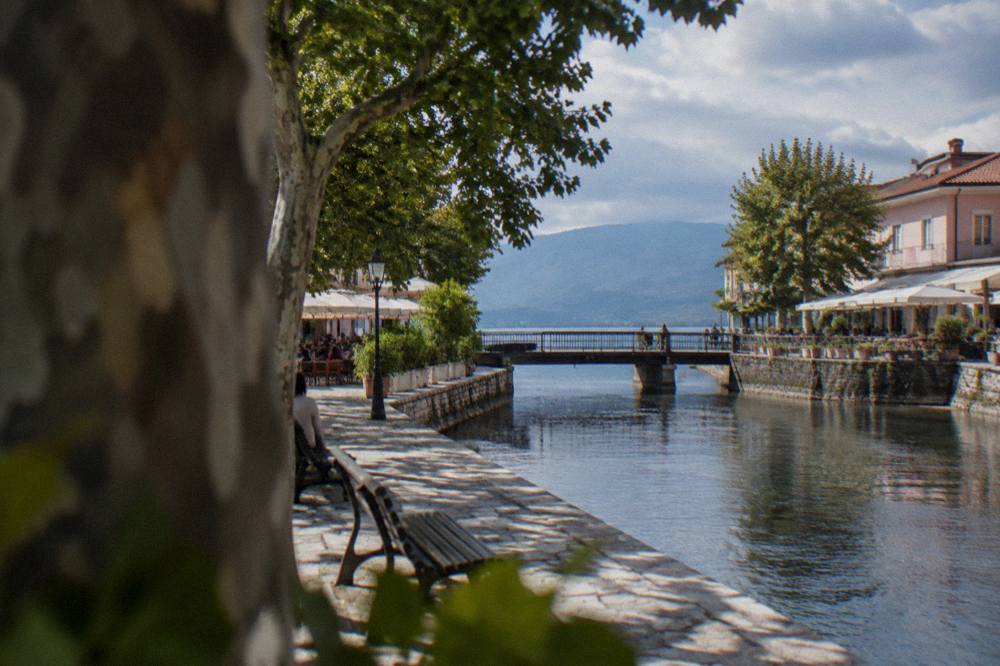
Ohrid fits the first-time visitor, the sight-driven trip and anyone traveling without a car, because the old town, the churches and the boat departures are all within walking distance of each other. Struga fits a quieter lakeside stay, a poetry-festival trip in late June, and a base closer to the lake's western shore. Neither town is a day trip from the other in any painful sense; the straight-line distance is about 12 km and local buses link them.
The decision usually comes down to what the trip is for. A visitor whose list is St John at Kaneo, the fortress hill, the Bay of Bones and a sunset on the water is describing Ohrid, and Ohrid's worth-visiting case rests on exactly that list. A visitor who wants a small town, the Drim riverfront and festival dates in June is describing Struga. Families and groups splitting a week sometimes take both, sleeping a few nights in each.
| Point of comparison | Ohrid | Struga |
|---|---|---|
| UNESCO listing | Core of the mixed World Heritage site (1979/1980) | Inside the wider Ohrid region, not the monument core |
| Headline sights | St John at Kaneo, St Sophia, Plaosnik, Ancient Theatre, Samuel's Fortress, Old Bazaar, Bay of Bones nearby | Lake outflow into the Black Drim; no equivalent monument set |
| Signature event | Ohrid Summer Festival, 66th edition opened 12 July 2026 | Struga Poetry Evenings, 65th edition 24 to 29 June 2026 |
| Museum tickets | Institute sites 120 den domestic, 150 den foreign | No published comparable figures |
| Setting | Old town climbing from the lake shore to the fortress | Small town at the lake's outflow end |
| Best for | First visit, sights, tours and activities without a car | Quieter stay, June festival, western shore |
One more practical asymmetry: transport into the region lands in Ohrid's favor for most travelers. Ohrid's St Paul the Apostle Airport sits about 10 km from the centre, and Skopje connections run to Ohrid's bus station rather than Struga's, with the Skopje to Ohrid bus taking about 3 hours at 850 to 950 den. Struga is then a short local hop. Details are in the Struga town area guide.
Timing matters as much as geography. The lake's peak season runs June to September, and boats from Ohrid port toward St Naum operate roughly May to October with a reduced winter schedule, which means the activity layer that separates Ohrid from Struga is thickest in those same months. In the off-season the gap narrows: museum sites drop to their winter hours on 1 October, closed Mondays, and both towns quiet down. November 2025 still brought Ohrid those 18,103 guests, so the town does not empty, but a winter visitor weighing the two bases is choosing between two small lakeside towns rather than between a monument city and its quiet neighbor.
Common Questions About Ohrid And Struga
Is Ohrid Better Than Struga?
For a first trip built around sights, yes: Ohrid holds the UNESCO-listed monuments, the museum sites and the tour departures. Struga is better for a quiet lakeside stay and for the Struga Poetry Evenings in late June. The two are about 12 km apart by straight line, so the choice is not exclusive.
How far apart are Ohrid and Struga?
About 12 km in a straight line, on the same lake shore, linked by local buses with fares reported at 100 to 150 den one way on older guides.
Can you visit Struga as a day trip from Ohrid?
Yes, it is one of the standard day trips from Ohrid, along with St Naum, Galicica, Lake Prespa and the Albanian side of the lake around Pogradec.
What is Struga famous for?
The Struga Poetry Evenings, whose 65th edition ran from 24 to 29 June 2026 with about 70 poets, and its position where the Black Drim flows out of Lake Ohrid.
Is Ohrid the one with the UNESCO listing?
Yes. The Natural and Cultural Heritage of the Ohrid Region was inscribed in 1979 and 1980 and extended to the Albanian part in 2019, and Ohrid's churches, fortress and old town are its core.
Which town is better without a car?
Ohrid. The old town sights, the port boat departures and the bus station are compact, and regional transport lands there; Struga is then an easy local-bus hop away.