Ohrid Summer Festival: Dates, Venues And Tickets
The Ohrid Summer Festival runs each summer in Ohrid, North Macedonia, with its opening gala at the Ancient Theatre each July and its close, by tradition, on 20 August. Here is what the 2026 edition looked like, how the venues work, and how to plan around a festival whose 2027 dates have not been announced.
Short answer
The 66th Ohrid Summer Festival opened on 12 July 2026 at the Ancient Theatre in Ohrid and closed, by tradition, on 20 August 2026. The Ancient Theatre and St Sophia are the traditional main venues. No 2027 dates or ticket prices have been announced, so plan around July and August and check the festival's own channels closer to the season.
The Ohrid Summer Festival is the flagship cultural event of Ohrid, the lake town in North Macedonia whose old town and lake shore sit inside the UNESCO mixed site "Natural and Cultural Heritage of the Ohrid Region". The 66th edition opened on 12 July 2026 with a gala at the Ancient Theatre, and the festival closes, by tradition, on 20 August. The Ohrid Travel Guide lays out what the sources say about the festival's shape, its venues and the practical business of seeing it, without promising anything the announcements do not.
What Is The Ohrid Summer Festival And When Does It Run?
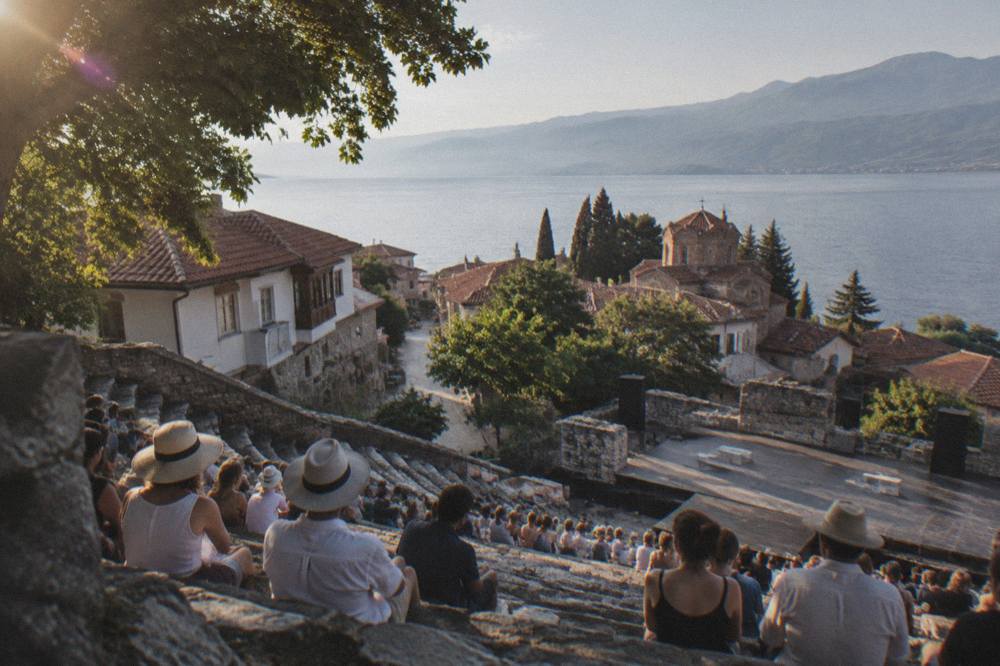
The Ohrid Summer Festival is a long-running summer arts festival in Ohrid, North Macedonia, whose 66th edition opened on 12 July 2026 at the Ancient Theatre and closed, by tradition, on 20 August 2026, a span of roughly forty days each summer. The opening gala in 2026 was titled "Love" and featured the singers Ermonela Jaho and Charles Castronovo.
The festival is a fixture of the town's cultural calendar rather than a single weekend of events. It spreads across July and August, which are also the months the modelled ERA5 climate normals, 1991-2020, give as the height of the Ohrid summer: July averages a mean daily high of about 27.1 C and August about 27.6 C, with the lowest monthly rainfall of the year at 34.7 mm in July and 32.9 mm in August. An open-air theatre season and the least rainy part of the year line up by design.
The opening night is the anchored date. The 12 July 2026 gala at the Ancient Theatre was reported by the national news agency MIA and by the Municipality of Ohrid, which published the 66th edition's programme announcement on its own site. The closing date of 20 August is described as a matter of tradition rather than a fixed legal deadline, and each edition's exact final performance is set in the published programme.
For anyone planning around the festival rather than inside it, the useful frame is this: Ohrid in July and August is high summer, lake swimming is in season on the modelled water temperatures (July about 22.9 C, August about 23.5 C at the surface), and the town's other summer events cluster in the same window. The general shape of a festival-season visit, including how the days fill up, is covered in the Ohrid in summer guide and the broader best time to visit Ohrid page.
Where Are The Festival Venues In Ohrid?
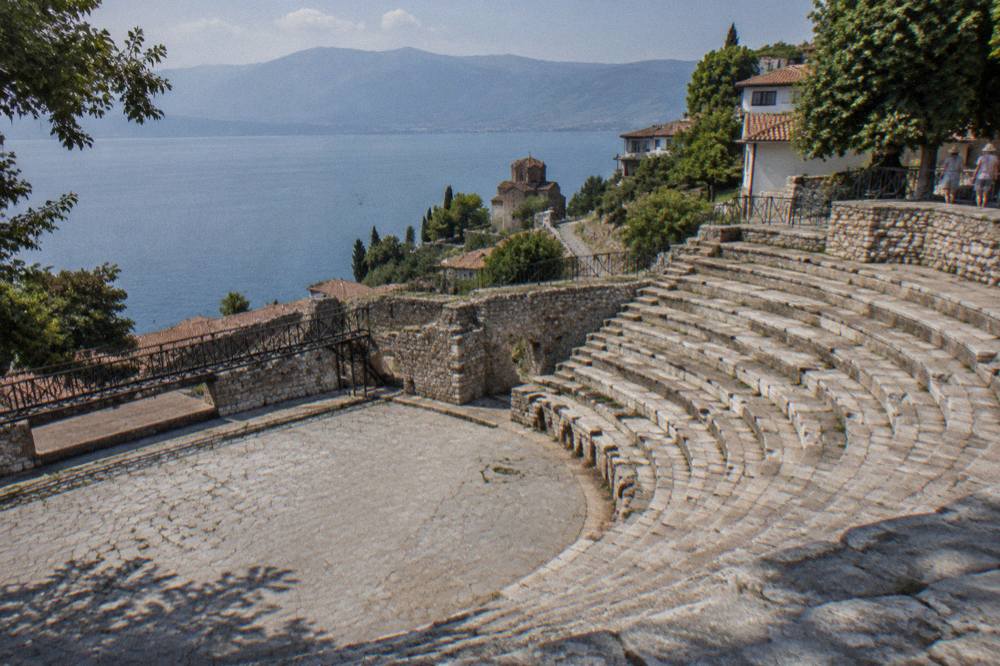
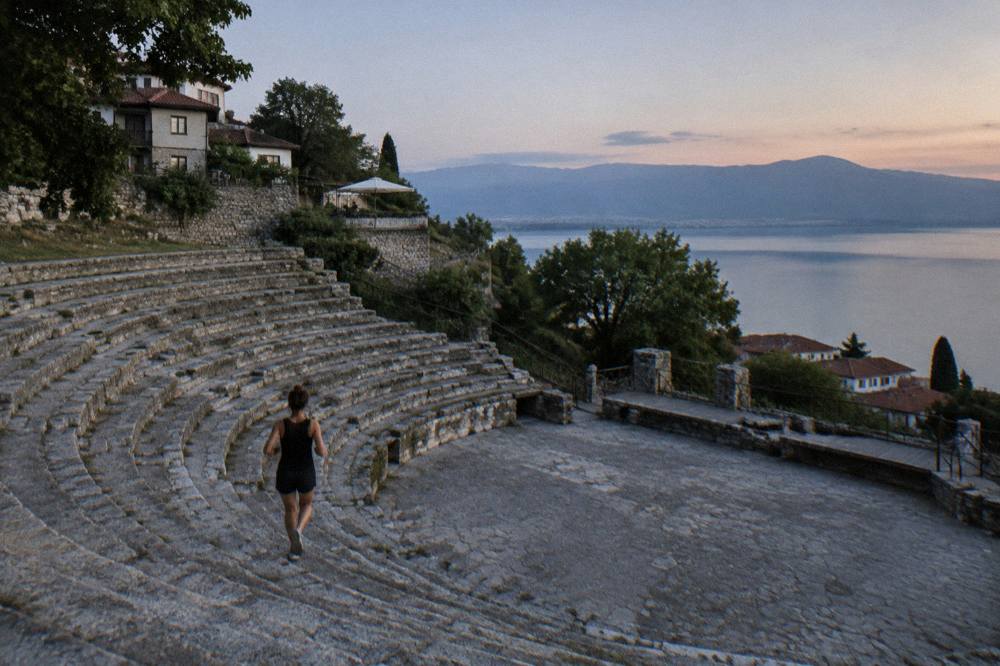
The festival's traditional main venues are the Ancient Theatre, an open-air late Hellenistic theatre in Ohrid's old town where the opening gala is held, and St Sophia, the large medieval church whose churchyard serves as a concert space; both are within walking distance of the old-town lanes and the lake shore.
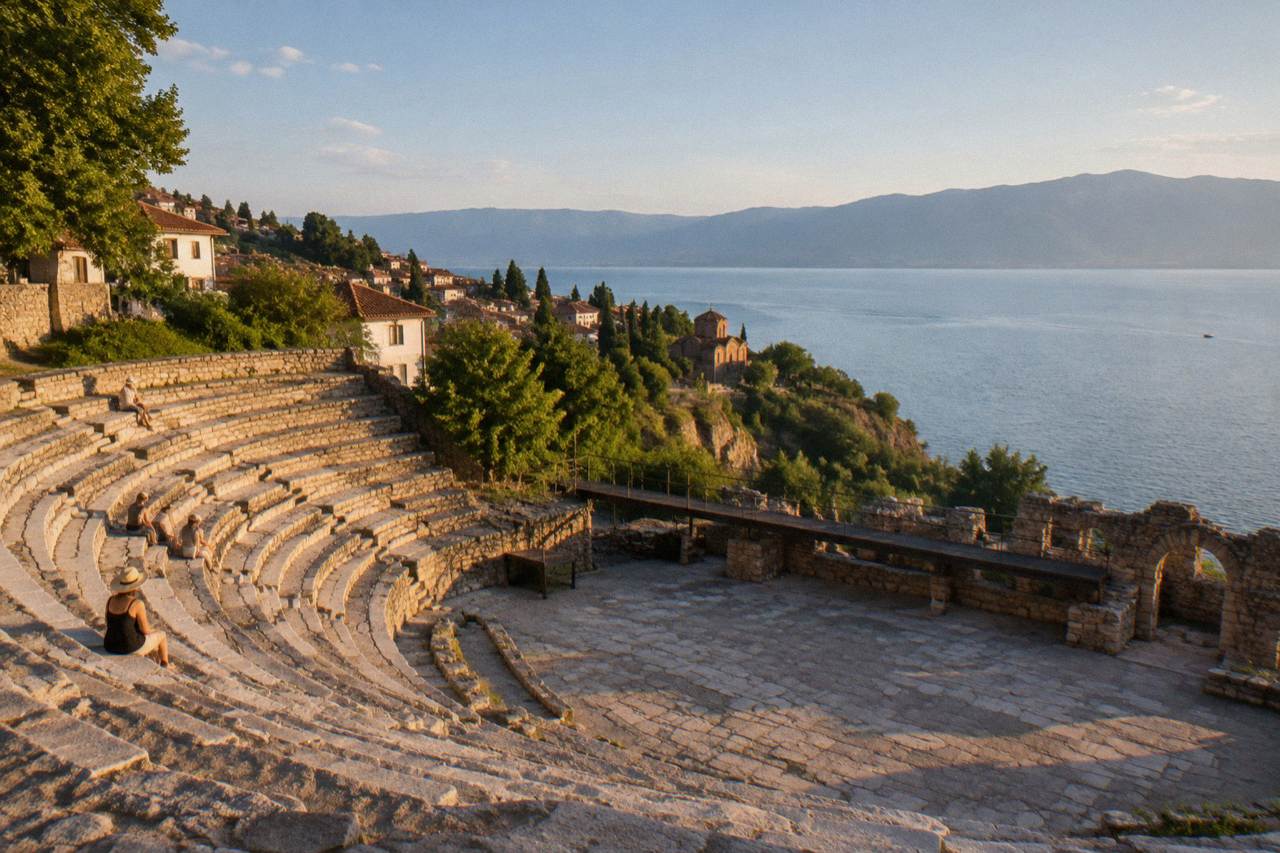
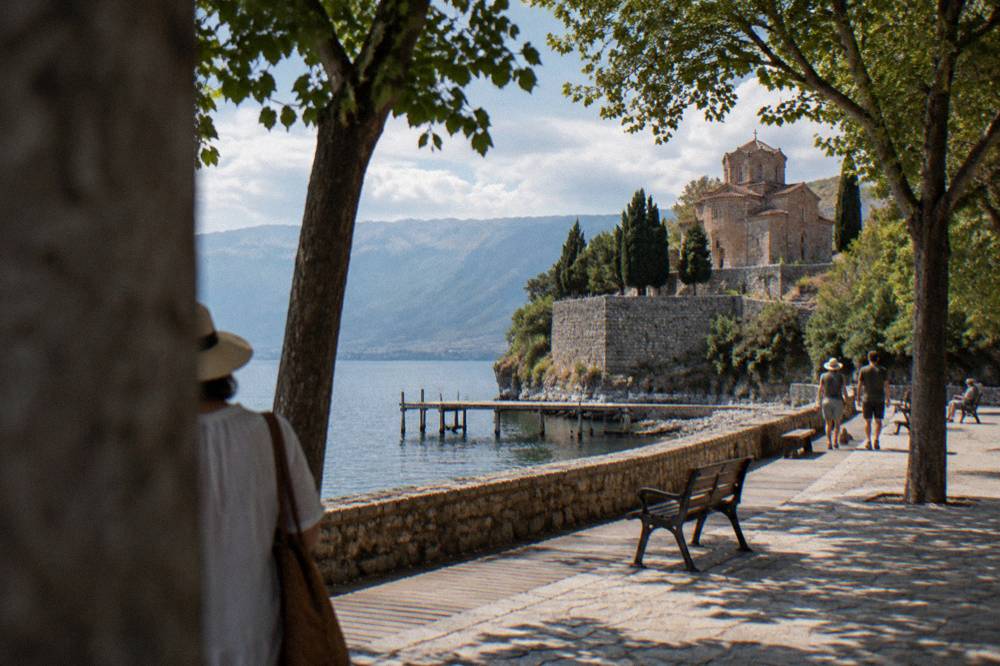
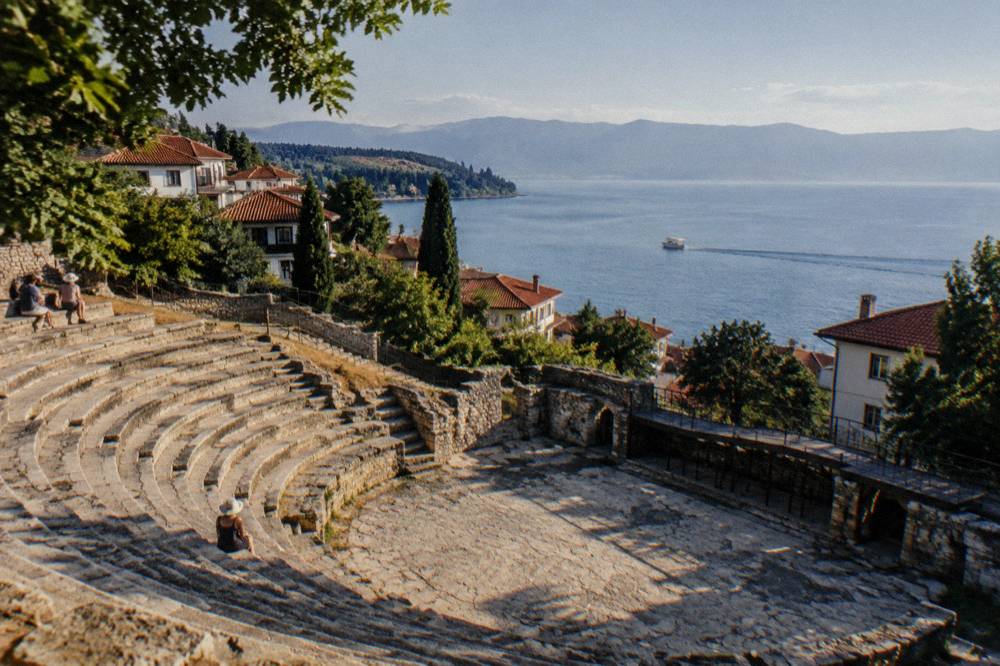
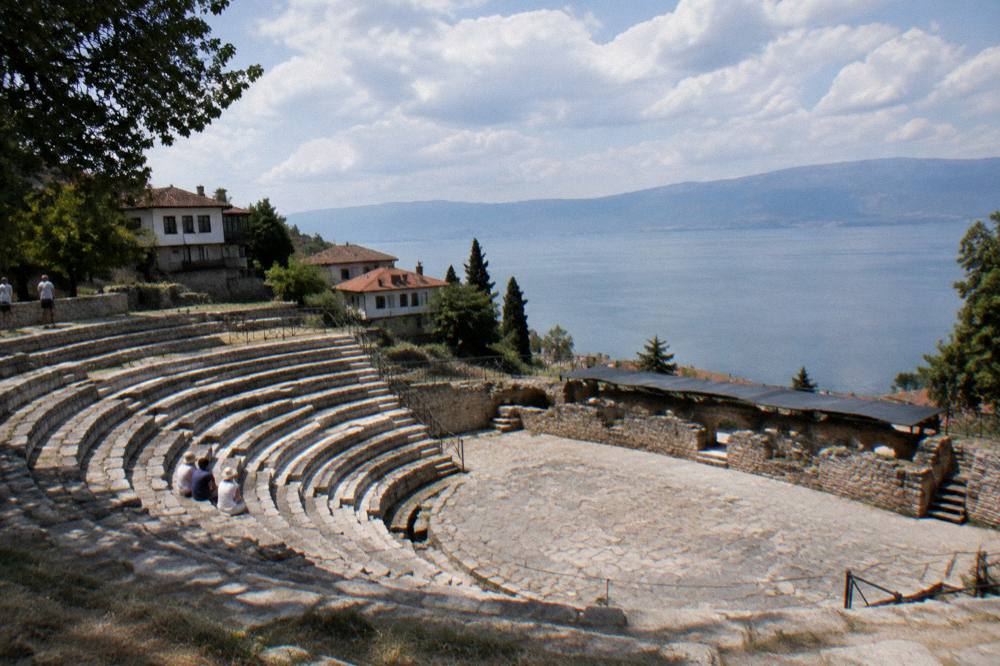
The Ancient Theatre is the festival's signature stage. The museum institute's own page for the theatre records that it was built at the end of the 3rd or start of the 2nd century BC, in the period of late Hellenism, that the first excavations took place in 1935, and that its capacity rose to about 5,000 after an upper tier, the epiteatron, was added. It sits inside the old-town fabric that climbs from the lake toward Samuel's Fortress, and festival nights put a performing-arts audience on stone seating that is more than two thousand years old.
St Sophia is the other traditional venue named in the festival reporting. Its churchyard hosts concerts during the festival season, a use that goes back through decades of the festival's history.
| Venue | Role in the festival | What the sourced record states |
|---|---|---|
| Ancient Theatre | Opening gala and main performances | Built end of 3rd or start of 2nd century BC, late Hellenism; first excavated 1935; capacity about 5,000 after the epiteatron was added |
| St Sophia | Traditional concert venue | Concerts held during the Ohrid Summer Festival season |
| Old-town streets and squares | Festival-season atmosphere and supporting events | The old town climbs from the lake to the fortress and is on foot |
Neither venue's entrance fee or opening hours for festival events are carried in the sourced record, and the festival's own ticketing arrangements are announced with each edition's programme. No 2027 programme exists yet. What is stable is the geography: both venues sit in the compact old town, the same lanes a visitor walks between the lake shore, the Old Bazaar and the churches, and the Ancient Theatre of Ohrid entry on the site's main directory covers the theatre as a sight in its own right.
A festival visit is also a walking visit.
What Happened At The 2026 Ohrid Summer Festival?
The 66th Ohrid Summer Festival opened on 12 July 2026 at the Ancient Theatre with a gala titled "Love", headlined by the soprano Ermonela Jaho and the tenor Charles Castronovo, and ran to its traditional close on 20 August 2026. The programme announcement came from the festival organisers and was carried by MIA and the Municipality of Ohrid.
The 2026 edition followed the festival's established pattern: a gala opening at the Ancient Theatre in the second week of July, then weeks of performances across the town's venues through to the traditional 20 August close. The opening gala's programme, "Love", and its two headline singers are the specific details carried in the reporting; the full performance list for the edition sits in the published programme rather than in the summary reporting.
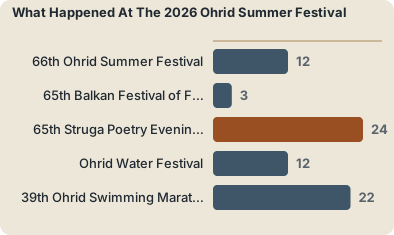
The 2026 festival summer in Ohrid was busier than the festival alone. The same August window carried the Ohrid Water Festival, which ran 12 to 30 August 2026 and included the Ohrid Swimming Marathon on 22 August, a 25 km swim from St Naum to Ohrid harbour on the "Klime Savin" route, with 16 swimmers in the 39th edition. The Water Festival also included a 33 km stand-up-paddle marathon around the lake on 26 August. Earlier in the summer, the 65th Balkan Festival of Folk Songs and Dances ran 3 to 6 July 2026 at the Grigor Prlichev cultural centre, opening with the Tanec ensemble and closing with Croatia's Lado.
| Event, 2026 edition | Dates | Detail carried in the sourced reporting |
|---|---|---|
| 66th Ohrid Summer Festival | Opened 12 Jul, closed by tradition 20 Aug 2026 | Opening gala "Love" at the Ancient Theatre, with Ermonela Jaho and Charles Castronovo |
| 65th Balkan Festival of Folk Songs and Dances | 3 to 6 Jul 2026 | At the Grigor Prlichev cultural centre; opened with Tanec, closed by Croatia's Lado |
| 65th Struga Poetry Evenings | 24 to 29 Jun 2026 | Theme "Where Poetry Lives", about 70 poets; held in Struga, not Ohrid |
| Ohrid Water Festival | 12 to 30 Aug 2026 | Included the 33 km SUP marathon around the lake (26 Aug) |
| 39th Ohrid Swimming Marathon | Sat 22 Aug 2026 | 25 km from St Naum to Ohrid harbour, "Klime Savin" route; 16 swimmers |
Two cautions travel with these dates. And the Struga Poetry Evenings, the June poetry festival in the neighbouring town of Struga, ran 24 to 29 June in 2026, in June rather than in the late-August slot it has used in other years, so no fixed month should be assumed for a future edition.
How Do You Get Tickets For Ohrid Summer Festival Events?
The festival does not run on a fixed year-round box office that a traveller can book against months ahead. Each summer's programme arrives with its own announcement, as the 66th edition's did in 2026, and the ticketing detail sits inside that announcement.
What the sourced record does give, in full, is the museum institute's ticket scale for its own listed sites, which is separate from the festival but useful to any festival-season visitor pairing performances with sightseeing:
| Museum institute site (not festival venues) | Winter hours, 1 Oct to 30 Apr | Summer hours, 1 May to 30 Sep | Closed |
|---|---|---|---|
| Robev Family House, Tsar Samoil St 62 | 09:00 to 15:30 | Two shifts, 09:00 to 15:30 and 13:30 to 20:00 | Monday |
| Bay of Bones / Museum on Water, Gradishte, Peshtani | 09:00 to 15:30 | 09:00 to 16:30 | Monday |
| Icon Gallery, Klimentov Univerzitet St bb | 09:00 to 14:00 | 09:00 to 17:00 | Monday |
Tickets for the museum institute's listed sites are 120 den for domestic visitors and 150 den for foreign visitors, with a children's and students' rate reported at 60 den, per the institute's own ticket pages. These are museum tickets, not festival tickets, and the fortress, the churches used by the festival and the theatre are not covered by them on this page's record.
The honest planning position for the festival itself is a summer-shaped one: book the travel and the bed for July or August on the strength of the tradition, and let the programme announcement, when it comes, fill in the performances. Free cancellation terms on bookable tours and activities in the town, shown on each operator's live listing, keep the flexible part of an itinerary refundable while the programme is still pending.
When Is The Best Time To Visit Ohrid For The Festival?
The festival window is July and August: the 2026 edition opened on 12 July and closed by tradition on 20 August, and the modelled ERA5 normals for 1991-2020 put July at a mean daily high of about 27.1 C and August at about 27.6 C, with July rainfall of about 34.7 mm and August about 32.9 mm, the lowest months of the year.
Those climate figures are modelled normals from the ERA5 reanalysis for the old-town grid point, not a weather-station record, so they are written as "about". They describe a stable pattern: a continental climate with a lake influence, warm dry mid-summers, and enough rain in the shoulder months (about 62.4 mm in September, about 76.0 mm in October) to change the feel of a visit outside the festival window. The month-by-month detail, including the modelled lake surface temperatures, is laid out in the Ohrid weather guide.
| Month | Mean daily high, modelled | Mean daily low, modelled | Rain, mm |
|---|---|---|---|
| June | 24.2 C | 15.2 C | 43.1 |
| July | 27.1 C | 18.3 C | 34.7 |
| August | 27.6 C | 19.0 C | 32.9 |
| September | 22.4 C | 14.9 C | 62.4 |
August is the busiest month of the Ohrid year, and the festival's close on 20 August sits inside it. The same weeks bring full beaches and full accommodation on the seasonal pattern the travel reporting describes, and the lake is at its most swimmable on the modelled surface figures, about 22.9 C in July and about 23.5 C in August. A festival-first visitor is choosing peak season deliberately, and the trade is straightforward: the fullest cultural calendar against the fullest town.
Visitors with flexibility can put a trip at the festival's edges instead: early July, after the opening gala and before the deepest August crowds, or the first three weeks of August, which still catch performances before the traditional close. The swimming and beach side of that choice is covered in swimming in Lake Ohrid, and the budget side, including what the denar prices of museum visits do to a daily spend, in Ohrid cost and budget.
How Many Days Should You Plan Around The Ohrid Summer Festival?
A festival visit works best as a three-to-five-day stay: one day for the old town and the Ancient Theatre, one for a lake excursion toward St Naum or the Bay of Bones, one for museums and churches, and the evenings for performances, with the site's itinerary guidance pointing to three days as a comfortable core for Ohrid itself.
The reasoning is geographic as much as cultural. The festival venues sit inside a walkable old town, so performances cost no travel time, but the excursions that fill festival-free days, the St Naum monastery at the lake's southern end, the Bay of Bones museum on water at Peshtani, the Galicica National Park ridge between Lake Ohrid and Lake Prespa, are half-day and full-day trips out of town. The site's how many days in Ohrid page breaks the trade down by trip length.
The lake excursions run on a seasonal pattern: boats to St Naum operate about May to October and are reduced in winter, and the full-day cruise from Ohrid port to St Naum run by Boat Armada is a seven-hour trip from 1,200 den for an adult and 600 den for a child, per the operator's own page, with the St Naum monastery entrance listed at 150 MKD per person and a rowboat through the Crn Drim springs at about 5 EUR on the same page's list. Those are operator figures, not festival figures, and they belong to the lake side of a festival trip.
Galicica, reached from Ohrid, charges 250 MKD per vehicle with no per-passenger fee, or 100 MKD for someone entering on foot from the Ohrid-side gate, and its main road can close under heavy snow, typically January to March, which is irrelevant in festival season but frames why summer is the park's open season. The Lake Ohrid guide covers the water itself, and the getting around and arrival pages cover the roads in.
Between performances, the town's food side rewards an evening of its own: a cooking class, a winery tasting in the hills above the lake, or a slow dinner in the Old Bazaar quarter after a gala night. The Ohrid food page covers what the regional table actually serves, from tavche gravche to the lake's own trout traditions.
What Does Getting To Ohrid For The Festival Involve?
Ohrid is reached by air through Ohrid St Paul the Apostle Airport, about 10 km from the centre, by bus from Skopje in about three hours over about 170 km for 850 to 950 den, or by minibus from Tirana in about three to three and a half hours including the border for about 15 to 20 EUR; there is no passenger train to Ohrid and no domestic flight.
The airport is summer-weighty: the 2026 season brought new Wizz Air routes including Milan Malpensa from 30 March, Wroclaw from 7 June and Katowice from 8 June, per the route reporting, and Wizz Air is expected to base an aircraft at Ohrid, a step reported in August 2026 from the Deputy Prime Minister's announcement. Airport-to-town transport is by taxi, with reported fares of about 600 to 800 MKD, or about 12 EUR, for the roughly ten-kilometre run. The Ohrid airport page carries the detail.
| Route | Distance or time | Fare in the sourced record |
|---|---|---|
| Skopje to Ohrid by bus | About 170 km, about 3 hours | 850 to 950 MKD one way |
| Skopje to Ohrid by car | About 172 km, about 2.5 hours | About 140 MKD in tolls |
| Tirana to Ohrid by minibus | About 3 to 3.5 hours including the border | About 15 to 20 EUR |
| Ohrid airport to centre | About 10 km | About 600 to 800 MKD reported taxi fare |
Overland arrivals in festival season should budget border time. The Tirana routes cross at Qafe Thane or Kjafasan; the St Naum to Tushemisht crossing near the Albanian border is about 4 km from the monastery, and travellers report allowing up to an hour at that border. North Macedonia is not in the EU or in Schengen, so passport checks apply on every crossing; visa-free nationals get up to 90 days in any 180-day period, and UK visitors up to three months, with the police registration done by the hotel within 48 hours of arrival. The North Macedonia visa and entry page carries the rules.
Until then the bus is the practical spine: multiple daily departures, more in summer, from Skopje's Transport Centre to Ohrid's bus station.
What Should You Know About Ohrid While The Festival Is On?
Ohrid in festival season is a town of about 51,428 people (2021 census figure for the municipality) on a lake at about 693 m above sea level, inside a UNESCO mixed heritage site that in July 2026 was formally kept off the List of World Heritage in Danger, with old-town streets that are resident-only for parking in summer and a lake subject to dated 2026 navigation rules.
The UNESCO decision matters to how the town is talked about. In 2025 the Committee had found the conditions for danger listing met. The region's heritage value is not in question; the site's inscription dates to 1979 and 1980, extended to the Albanian part in 2019, and UNESCO's own listing records the oldest Slav monastery at Plaosnik and more than 800 Byzantine-style icons from the 11th to the end of the 14th century.
Practical summer rules carry dates. A resident-only parking regime applies to old-town streets including Ilindenska, Kosta Abrash and Car Samoil from summer 2026, with clamping reported for non-residents, so a festival visitor driving in should plan to park outside the old-town core. On the water, a June 2026 government decision banned jet skis between 1 July and 31 August from 11:00 to 19:00 and restricted night boating through the summer and into October, measures dated 2026 rather than permanent law.
| Festival-season practical | What applies | Source |
|---|---|---|
| Old-town parking | Resident-only on Ilindenska, Kosta Abrash, Car Samoil; clamping for non-residents | Summer 2026 regime |
| Jet skis on the lake | Banned 1 Jul to 31 Aug, 11:00 to 19:00 | 2026 government decision |
| Night boating | Restricted 3 Jun to 31 Aug 21:00 to 05:00; 1 to 30 Sep 20:00 to 06:00 | 2026 government decision |
| Museum sites | Winter schedule 1 Oct to 30 Apr, summer 1 May to 30 Sep, closed Mondays | Institute's published schedule |
Safety and money round out the basics. The US State Department's advisory for North Macedonia stands at Level 1, Exercise Normal Precautions, and the is Ohrid safe page carries the detail. The currency is the Macedonian denar, pegged in practice to the euro, with euros not legal tender but sometimes accepted informally at poor rates, a reason to withdraw denars; the denar and money page explains the mechanics. Emergency numbers are ambulance 194, police 192, roadside assistance 196.
The 2026 bathing-water testing found Class I physico-chemical quality across the lake's monitored points except Grashnica beach, which was Class III, with most microbiological samples rated excellent by the Institute of Public Health, so the swimming that frames a festival summer is monitored and generally sound, with one named exception worth knowing.
Where Should You Stay During The Ohrid Summer Festival?
Festival-season accommodation in Ohrid clusters in and around the old town for walkability to the Ancient Theatre and St Sophia, along the eastern lakeshore at Lagadin and Peshtani for a quieter base with boat and road links, and near the city beach and port for the busiest all-round position; August books earliest because the festival close, the swimming marathon and peak holidays all land in the same month.
Planning where to stay for the festival weeks? Book a hotel in Ohrid here.
The choice is really a trade between being inside the festival's walking radius and being beside the water. The old town puts the venues, the Old Bazaar and the fortress lanes at the door, at the cost of the resident-parking regime and the summer crowds on the stone lanes. The eastern shore villages trade that for beaches and quieter nights, with the Bay of Bones at Peshtani and the boat routes toward St Naum on the doorstep; the lakeshore settlements are covered in the site's where to stay in Ohrid page.
No hotel rates are carried in this page's sourced record, so none are stated; the cost and budget page is the place for what a festival-season stay does to a daily spend, and the booking-side flexibility, free cancellation and pay-later terms, is shown on each listing rather than promised here.
For a visitor who wants both the festival and a quiet base, the workable pattern is a lakeshore stay with evenings in town: the old town is compact, taxis are inexpensive for short town runs at roughly 150 to 200 MKD from the bus station on the reported figures, and the boat and bus links along the shore make a car optional. The site's featured pick for this page, the shared small-group hidden-gems walk, is one way to anchor the old-town side of that split, and its live listing shows current availability: Check availability.
Common Questions About The Ohrid Summer Festival
When is the Ohrid Summer Festival held?
The 66th edition opened on 12 July 2026 at the Ancient Theatre and closed, by tradition, on 20 August 2026, a span of roughly forty days. Each edition's exact dates are set in the published programme, and 2027 dates have not been announced, so plan around July and August.
Where are the Ohrid Summer Festival venues?
The Ancient Theatre, the open-air theatre in Ohrid's old town built at the end of the 3rd or start of the 2nd century BC, hosts the opening gala, and St Sophia is the other traditional main venue. Both sit inside the walkable old town, close to the lake shore.
How much are Ohrid Summer Festival tickets?
No festival ticket prices are carried in the sourced record, and none are stated here. Ticketing for each edition is announced with that edition's programme, so check the festival's own channels once the programme is published.
Is the Ancient Theatre open to visit outside festival performances?
The theatre is a real sight in its own right, with a recorded capacity of about 5,000 after an upper tier was added and first excavations in 1935. No entrance fee or opening hours for the theatre are stated on this page's record, so check the venue's own page before a visit.
What else happens in Ohrid during the festival summer?
The same window carries the Ohrid Water Festival from 12 to 30 August 2026, including the 25 km Ohrid Swimming Marathon from St Naum to Ohrid harbour on 22 August, and the Balkan Festival of Folk Songs and Dances ran 3 to 6 July 2026 at the Grigor Prlichev cultural centre.
Is August a good month to visit Ohrid for the festival?
August is the festival's closing month and the town's busiest, with a modelled mean daily high of about 27.6 C and about 32.9 mm of rain (ERA5 normals, 1991-2020), and lake surface temperatures of about 23.5 C. It offers the fullest cultural calendar and the fullest town in the same package.