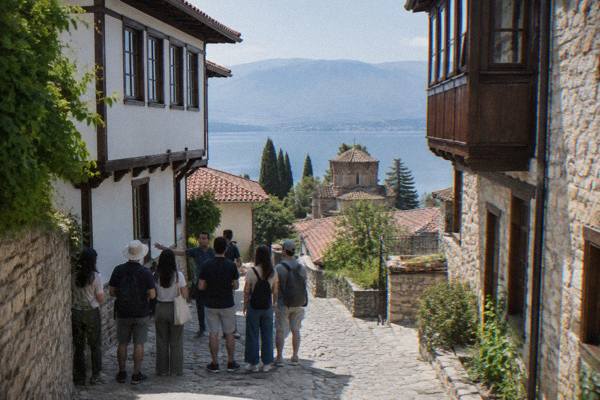
Is Ohrid In Albania Or North Macedonia?
Ohrid is a lakeside town in North Macedonia, on a freshwater mountain lake close to the Albanian border. Here is where exactly it sits, which country it belongs to and what that means for your trip.
Ohrid is a lakeside town in North Macedonia, and the confusion with Albania is understandable: the lake it sits on, Lake Ohrid, is shared between the two countries, the Albanian border lies only kilometres from the town's southern end, and a good share of travellers arrive from Tirana rather than from Skopje. The Ohrid Travel Guide exists to clear up exactly this kind of question, and this page answers it with the country's entry rules, the border geography and the practical differences between the two sides of the lake. North Macedonia is not a member of the European Union and not part of Schengen, the currency is the Macedonian denar, and the town itself sits inland at about 693 m above sea level on a freshwater mountain lake, not on the sea.
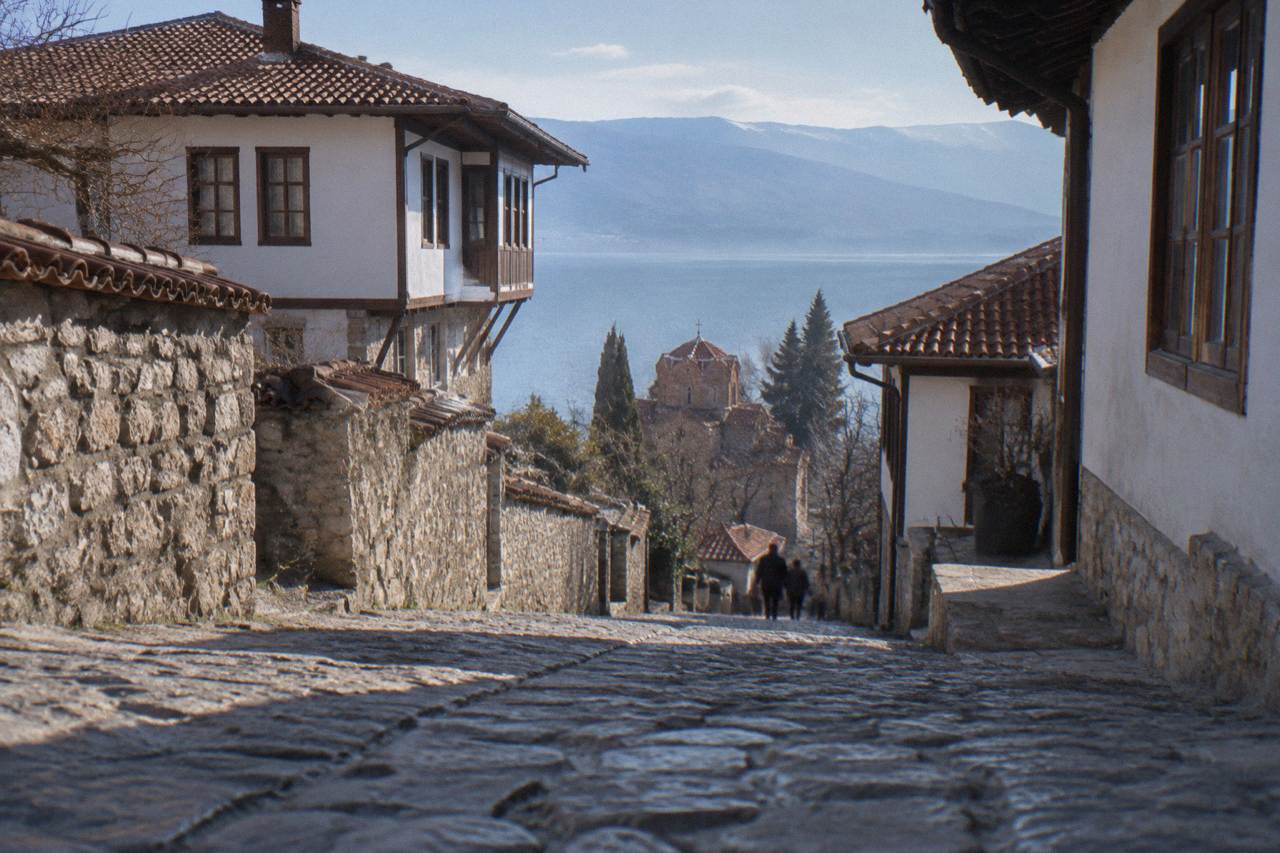
Ohrid is in North Macedonia, not Albania. The town is the seat of Ohrid Municipality in North Macedonia, a country that became independent from Yugoslavia in 1991, and it sits on the north-eastern shore of Lake Ohrid, a freshwater mountain lake at about 693 m above sea level. Albania shares the lake's south-western shore, and the border crossing near St Naum is only about 4 km from the monastery, but the town itself has never been on Albanian territory in the modern era.
The confusion usually has three roots. First, the name of the lake and the name of the town are the same, and the lake genuinely spans two countries, so a search for "Lake Ohrid" returns Albanian pages about Pogradec and Lin alongside Macedonian pages about the old town. Second, many visitors arrive from Albania: day tours run from Tirana and Durres across the border and back in a single day, so travel forums fill with posts written from the Albanian side. Third, the wider region carries overlapping names, Macedonia the historical region and North Macedonia the state, which leads readers to guess at the wrong neighbour.
The UNESCO listing adds another twist. The World Heritage property is called "Natural and Cultural Heritage of the Ohrid Region", inscribed in 1979 for its natural values and in 1980 for its cultural ones, and it was extended in 2019 to include the Albanian part of the lake. So the protected region covers territory in both countries, while the famous town, the one with Samuel's Fortress, St Sophia and the Church of St John at Kaneo, sits entirely inside North Macedonia.
For more on what the town itself offers, see what Ohrid is famous for and whether Ohrid is worth visiting.
Which Country Is Lake Ohrid In?
Lake Ohrid sits in both North Macedonia and Albania. The larger, north-eastern portion of the lake, including the town of Ohrid, Struga and the St Naum monastery, belongs to North Macedonia, while the south-western shore around Pogradec and Lin belongs to Albania. The two sides are joined by road border crossings, of which Sveti Naum and Tushemisht is the one closest to Ohrid, about 4 km from the monastery, reported to operate around the clock.
The lake is the border's defining feature rather than an obstacle to it. On the Macedonian side the shore runs from the town south past villages such as Trpejca and Ljubanista down to St Naum, where the Crn Drim springs feed the lake beside the monastery. From there the Tushemisht crossing puts you in Albania, with Pogradec, the main Albanian lakeside town, roughly 26 km straight-line from Ohrid on the other side of the water.
The practical point for travellers is that the two sides feel different even when the view is the same. Albania uses the euro and is a candidate for EU membership; North Macedonia uses the denar and is outside both the EU and Schengen. Crossings are land borders with passport checks, and the FCDO advises allowing time for them. The lake's protected status is shared, but the towns, currencies and entry rules are not, so knowing which shore you are standing on matters for money, phones and paperwork alike.
A day trip is the easiest way to see both sides, and tours make the border routine straightforward. One option that starts in Tirana and crosses into North Macedonia is the Private St Naum day trip: Check availability. The full range of multi-country options is covered in combining Ohrid and Albania on one trip.
How Close Is Ohrid To The Albanian Border?
Ohrid sits close to Albania on the southern shore of the lake, with Pogradec about 26 km straight-line away across the border and Tirana about 86 km straight-line away. Buses from Tirana cross at the Qafe Thane border, usually taking three to three and a half hours including the border check, while direct buses run multiple times daily. The St Naum crossing near the monastery is open around the clock.
Those straight-line distances help frame where the town actually sits. Ohrid is a North Macedonian town roughly equidistant in travel terms from two capitals, but only one of them, Skopje, is in the same country. Buses connect Skopje and Ohrid in about three hours over roughly 170 km of road, and similar services run from Tirana across the Qafe Thane border, usually taking three to three and a half hours including the border check.
| Place | Straight-line distance from Ohrid | Country |
|---|---|---|
| Struga | about 12 km | North Macedonia |
| Pogradec | about 26 km | Albania |
| Bitola | about 46 km | North Macedonia |
| Tirana | about 86 km | Albania |
| Skopje | about 111 km | North Macedonia |
Because the border is so near the southern shore, a single day can easily include both St Naum and a short hop into Albania. The crossing near St Naum is reported to be open around the clock for passenger vehicles and pedestrians, though waits vary, and a taxi between the monastery and the border has been quoted at around 400 denars. For planning a crossing in either direction, the guide to getting from Ohrid to Tirana covers the options, and the Pogradec day trip from Ohrid covers the Albanian lakeside.
Can You Visit Ohrid And Albania On One Trip?
Yes, and it is a common route. North Macedonia and Albania sit side by side with open land crossings, so a single trip can cover Ohrid, the Albanian shore of the lake and even Tirana, with passport checks at each crossing. Visa-free visitors may stay up to 90 days in any 180-day period in North Macedonia, and hotels register guests with the local police within 48 hours of arrival, so the paperwork on both sides is light for most European and North American passports.
The classic two-country route runs Skopje, Ohrid, St Naum, a crossing at Tushemisht, Pogradec and on to Tirana, or the reverse. Day tours from Tirana to Ohrid and St Naum make the crossing a routine part of the itinerary, and the distance is short enough that the drive, border included, fits comfortably into a day trip. Travellers with more time can overnight in Ohrid and use it as a base for the Albanian shore, since Pogradec is barely half an hour's drive away once the border is cleared.
Two practical notes keep the day smooth. Carry your passport, not just an ID card, for the border, and remember that the currency changes at the crossing: the denar on the Macedonian side, the euro in Albania. Euros are sometimes accepted informally in Ohrid's tourist areas, though at poor rates and with no legal standing, so withdrawing denars is the better plan for anything local.
If a private day trip from Tirana appeals, the St Naum day tour from Tirana covers Ohrid and the monastery in one crossing.
What Country Facts Change For Visitors To Ohrid?
Because Ohrid is in North Macedonia, not Albania and not the EU, several practical rules follow: the currency is the Macedonian denar (MKD), euros are not legal tender even though tour prices are often quoted in them, the country is outside Schengen so land borders carry passport controls, and visa-free nationals may stay up to 90 days in any 180-day period. Emergency numbers differ too: ambulance 194, police 192 and roadside assistance 196.
None of this is difficult, but each item catches somebody out. The denar is pegged in practice to the euro, which keeps money matters predictable, but paying in euros directly invites unfavourable informal rates. ATMs are widespread in the town, and exchange offices handle conversions. Cards are accepted in many places, though smaller kiosks, churches and boat operators may expect cash, so carrying some denars is sensible for tickets and small purchases.
Entry rules are gentler than the country's non-EU status suggests. Most foreign visitors enter visa-free for up to 90 days in any 180-day period; holders of a valid multiple-entry UK, US or Canadian visa or a Schengen residence permit may enter for up to 15 days. UK guidance adds that visitors should register with the local police within 48 hours of arrival, something hotels routinely do for their guests. The full detail is in the guide to North Macedonia visa and entry rules, and money questions are covered in what currency is used in Ohrid.
| Question | Answer for Ohrid |
|---|---|
| Country | North Macedonia |
| EU membership | Not a member |
| Schengen membership | Not a member; passport checks at borders |
| Currency | Macedonian denar (MKD) |
| Visa-free stay | Up to 90 days in any 180-day period for eligible nationals |
| Police registration | Within 48 hours of arrival; hotels do it for guests |
| Ambulance | 194 |
| Police | 192 |
One more country fact shapes the visit: the town is inland and mountainous. The lake sits at about 693 m above sea level, and the old town climbs from the shore toward Samuel's Fortress on foot lanes. Anyone picturing a Mediterranean seaside resort should recalibrate toward a freshwater lake ringed by mountains, with the August mean daily high around 27.6 C according to modelled ERA5 climate normals for 1991 to 2020.
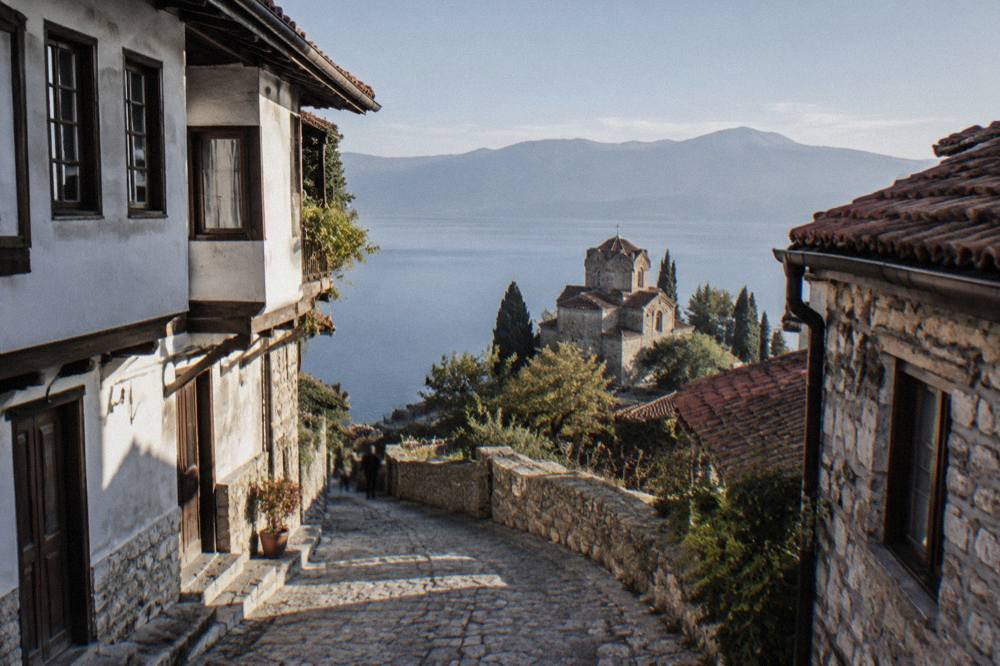
Where Does The Albania Confusion Come From?
The confusion comes from three things at once: the lake is genuinely split between North Macedonia and Albania, the town of Struga sits where the lake drains toward Albanian territory, and large numbers of visitors reach Ohrid on day tours from Tirana, so much of what is written about the town online is written from the Albanian side of the border. None of that moves the town: Ohrid is, and remains, in North Macedonia.
The shared UNESCO listing deepens the blur. When the World Heritage property was extended in 2019 to include the Albanian part of the region, both countries began promoting the same lake under one heritage name. Articles about "Lake Ohrid" now mix the Macedonian old town with Albanian villages like Lin, and map searches jump between the two shores. The reliable rule is simple: the town called Ohrid, with the fortress, the Ancient Theatre and the Old Bazaar, is North Macedonian; the Albanian side has Pogradec and Lin but no town named Ohrid.
Language adds a final layer of fog. Macedonian uses the Cyrillic alphabet, and the town's name renders the same in Latin script on both sides of the lake, so a booking confirmation or a bus ticket rarely announces which country it belongs to. Checking the country code on a phone connection, the currency on a receipt or the flag on a public building settles the question in seconds anywhere in town.
Common Questions About Ohrid And Its Country
Is Ohrid In Albania Or North Macedonia?
Ohrid is in North Macedonia. The town sits on the north-eastern shore of Lake Ohrid, a freshwater mountain lake at about 693 m above sea level. Albania shares the south-western shore of the same lake, and the border crossing near St Naum lies about 4 km from the monastery, but the town itself is North Macedonian.
Is Lake Ohrid split between two countries?
Yes. The lake is shared between North Macedonia, which holds the north-eastern shore including Ohrid, Struga and St Naum, and Albania, which holds the south-western shore around Pogradec and Lin. The UNESCO World Heritage property covering the region was extended in 2019 to include the Albanian part.
Can I cross from Ohrid into Albania for a day?
Yes. The Sveti Naum and Tushemisht crossing near the St Naum monastery is about 4 km from the monastery and is reported to operate around the clock for passenger vehicles and pedestrians. Pogradec, the main Albanian lakeside town, is about 26 km straight-line from Ohrid. Carry a passport.
Do I need a visa for North Macedonia?
Most visa-free nationals may stay up to 90 days in any 180-day period. Holders of a valid multiple-entry UK, US or Canadian visa or a Schengen residence permit may enter for up to 15 days. UK guidance also says visitors should register with the local police within 48 hours of arrival, which hotels normally handle for guests.
What currency does Ohrid use if it is not in the EU?
The Macedonian denar (MKD). North Macedonia is outside the EU and the euro is not legal tender, though euros are sometimes accepted informally at poor rates and tour prices are often quoted in them. ATMs and exchange offices in the town make getting denars straightforward.
Is Ohrid near the sea?
No. Ohrid is an inland lakeside town on a freshwater mountain lake at about 693 m above sea level. The nearest sea coast is in Albania or Greece, hours away by road; the town's swimming, boats and beaches are all on the lake.