Skopje, Ohrid And Tirana In A Week: The Overland Route
Skopje, Ohrid and Tirana sit on one practical overland line through the western Balkans, and a week is enough to cover all three by bus and minibus.
Short answer
Yes, one week covers Skopje, Ohrid and Tirana: two days in Skopje, three in Ohrid on Lake Ohrid in North Macedonia, and two in Tirana, linked by a roughly 3-hour bus from Skopje to Ohrid (850 to 950 MKD one way) and a 3 to 3.5-hour minibus from Ohrid to Tirana (about EUR 15 to 20), with no passenger train on either leg.
The overland line from Skopje to Ohrid to Tirana strings together the capital of North Macedonia, a UNESCO-listed lake town and the capital of Albania in one straight week of travel. Ohrid, the middle stop, sits on Lake Ohrid at about 693 m above sea level, a freshwater mountain lake and a mixed natural and cultural World Heritage site, not a seaside resort. The Ohrid Travel Guide covers that middle stop in depth, and this itinerary shows how the three cities connect by road, since there is no passenger train to Ohrid on any part of the route.
The distances are workable. Skopje lies about 170 km from Ohrid by road, about 111 km as a straight line, and Tirana about 86 km straight-line from Ohrid across the Albanian border. Both road legs run several times a day in each direction, which is what makes the triangle possible without a car.
Why Skopje, Ohrid And Tirana Work As One Overland Week
The three cities line up along a single westward corridor, each leg runs daily by scheduled road transport, and the middle stop, Ohrid, is the compact walkable heart of the route, so a seven-day week splits cleanly into two days in Skopje, three in Ohrid and two in Tirana. The leg from Skopje to Ohrid takes about 3 hours by bus, the leg from Ohrid to Tirana about 3 to 3.5 hours by minibus including the border. Nothing on the route needs a flight: there is no passenger train to Ohrid and no domestic flight between the cities, so road transport is the whole system.
Skopje earns its two days as the arrival hub. Most international travellers land there or pass through, and the city is the natural place to adjust before heading west. Ohrid then does the heavy lifting culturally: the UNESCO property "Natural and Cultural Heritage of the Ohrid Region", inscribed in 1979 and 1980 and extended to the Albanian side of the lake in 2019, covers the old town, its Byzantine churches and the lake itself. Tirana closes the route as the exit hub, with its own international airport for the flight home.
The direction can be reversed. Tirana works just as well as the entry point, with Ohrid in the middle either way, and the same two road legs run in both directions. What does not change is the middle: Ohrid is the smallest of the three cities and the one where the itinerary's time is best spent on foot.
A week is the honest minimum. Five days forces the route into a dash, and ten allows a slower pace with a day trip or two out of Ohrid, for example to Skopje as a day trip in the other direction, or to Struga about 12 km away.
How Many Days To Give Each City On The Route
A sensible seven-day split is two nights in Skopje, three in Ohrid and two in Tirana: Skopje needs a day and a spare morning, Ohrid rewards three full days because the old town, the lake shore and St Naum each take a half day or more, and Tirana fits two days with one full sightseeing day and a departure morning. Travellers with only five days should cut Skopje to one night and Tirana to one, keeping Ohrid at three, because Ohrid is the destination the route exists for and the other two cities absorb the compression more easily.
The split also follows the transport rhythm. Both long legs are morning-friendly: buses from Skopje leave across the day, and the Tirana minibuses run several daily departures, so a midday transfer after a morning of sightseeing is realistic on each changeover day. That means a "two nights" city still delivers most of a full day.
| Day | Base | Focus | Leg of the route |
|---|---|---|---|
| 1 | Skopje | Arrival, city centre | Arrival day |
| 2 | Skopje | Full day in the capital | None |
| 3 | Ohrid | Transfer west, old town first look | Skopje to Ohrid, about 3 h by bus |
| 4 | Ohrid | Churches, fortress hill, Old Bazaar | None |
| 5 | Ohrid | Lake day: boat or St Naum | None |
| 6 | Tirana | Transfer south, evening in the capital | Ohrid to Tirana, 3 to 3.5 h by minibus |
| 7 | Tirana | Full day, departure | Departure day |
For anyone building the Ohrid middle from scratch, the site's longer plans, such as three days in Ohrid, map the old town day by day.
How To Get From Skopje To Ohrid
The Skopje to Ohrid leg is about 170 km by road, covered by intercity bus in about 3 hours for a one-way fare of 850 to 950 MKD, with several departures a day from Skopje's bus station and no passenger train alternative, since no rail service reaches Ohrid. Operators named on the route include Galeb and Classic Company of Ohrid, among others, and departures run from morning into the evening, with more in summer. By car the drive is about 2.5 hours over 172 km, with about 140 MKD in motorway tolls paid at plazas along the A2 sections, and a private transfer starts from about EUR 130.
For that first leg west, book a bus ticket to Ohrid here.
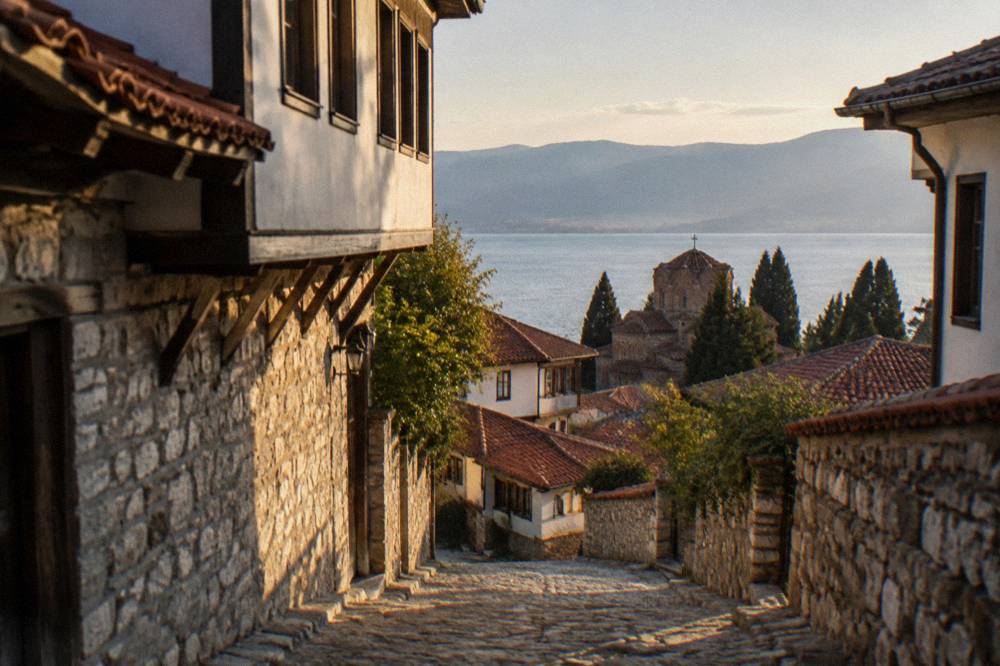
The bus is the default for this itinerary. The Skopje departure point is the Transport Centre, and the Ohrid bus station sits east of the centre, a short taxi ride or a walk of roughly twenty to thirty minutes from the old town. Fares and schedules are seasonal, so the current timetable is worth checking at the station or with the operator before travel day.
| Option | Time | Cost (one way) | Notes |
|---|---|---|---|
| Intercity bus | about 3 h | 850 to 950 MKD | Several daily, more in summer |
| Car | about 2.5 h | about 140 MKD tolls plus fuel | Headlights on day and night by law |
| Private transfer | about 2.5 h | from about EUR 130 | Door to door, book ahead |
| Train | none | none | No passenger rail to Ohrid |
The detailed comparison, including the taxi question, sits in the site's dedicated pages on Skopje to Ohrid and whether there is a train from Skopje to Ohrid, with fares broken out for the bus and the taxi separately.
One road-work note for drivers: the Kicevo to Ohrid motorway is still under construction, with the Izvor to Vrbjani section due in the coming months and full opening expected in the first half of 2027, so the last stretch into the lake basin remains ordinary road for now.
What To See In Ohrid On The Middle Three Days
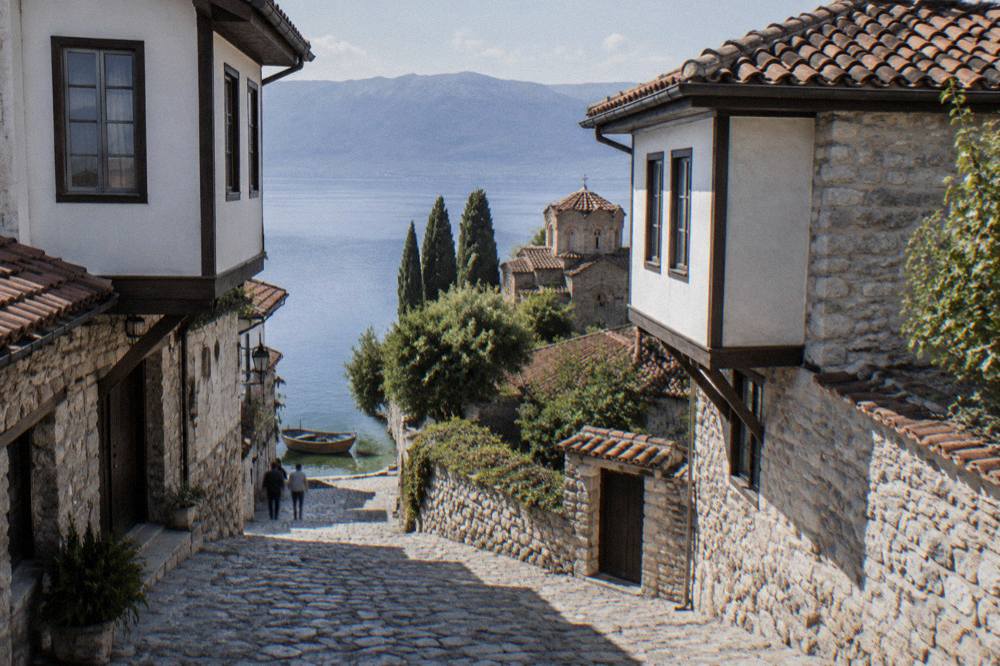
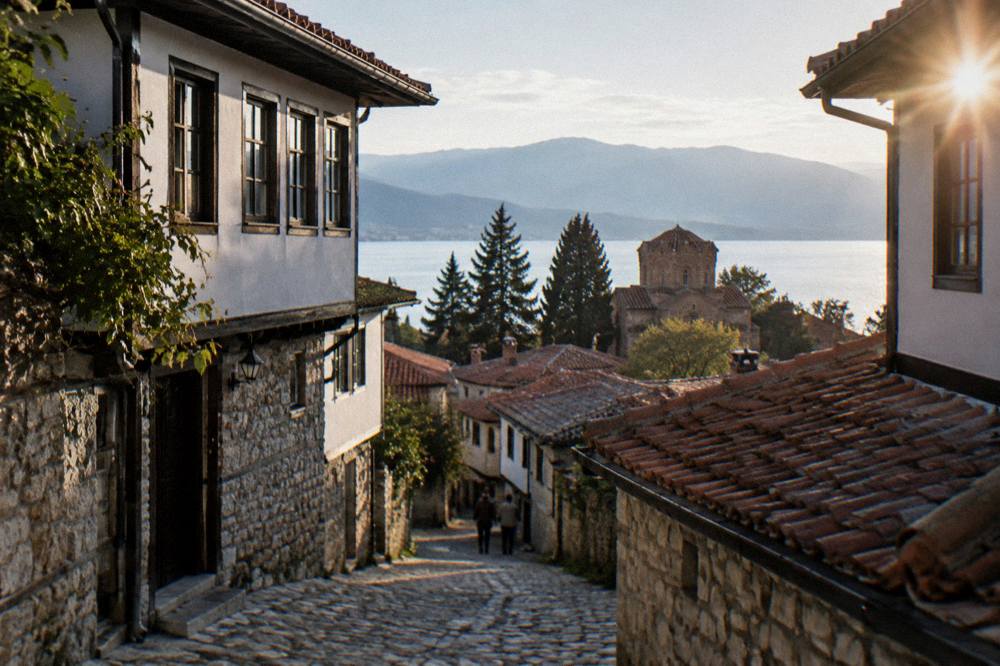
Ohrid's core sights are the Church of St John at Kaneo above the lake, St Sophia, Plaosnik, Samuel's Fortress, the Ancient Theatre and the Old Bazaar, all within walking distance in the old town, plus the Bay of Bones museum on the water near Peshtani and the St Naum monastery at the lake's south end, both reached as half-day trips out along the shore. The museum institute's ticketed sites, including the Robev Family House, the Museum on Water and the Icon Gallery, cost 120 den for domestic visitors and 150 den for foreign visitors, with a reported child and student rate of 60 den.
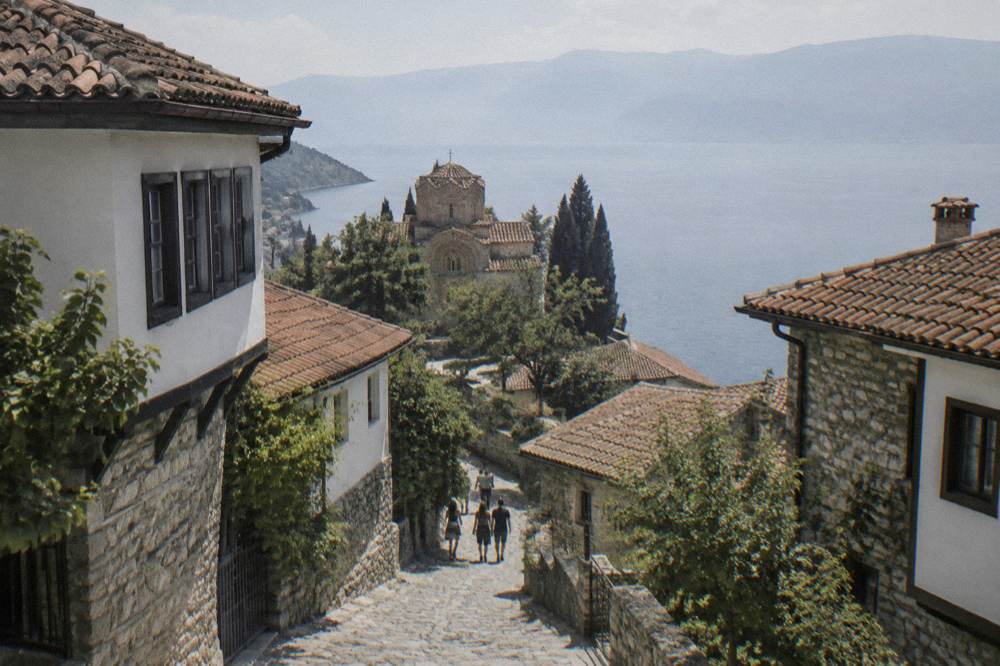
Day four of the itinerary belongs to the old town on foot. The lanes climb from the lake to the fortress, and the Ancient Theatre, built at the end of the 3rd or start of the 2nd century BC and first excavated in 1935, sits on the way up. The Old Bazaar and the Perivleptos complex with the Icon Gallery, whose collection includes more than 800 Byzantine-style icons from the 11th to the end of the 14th century, fill the rest of a slow loop.
| Museum site | Ticket (foreign / domestic) | Summer hours | Closed |
|---|---|---|---|
| Robev Family House | 150 / 120 MKD | two shifts, 09:00 to 15:30 and 13:30 to 20:00 | Monday |
| Museum on Water (Bay of Bones) | 150 / 120 MKD | 09:00 to 16:30 | Monday |
| Icon Gallery (Perivleptos) | 150 / 120 MKD | 09:00 to 17:00 | Monday |
Summer hours run from 1 May to 30 September; from 1 October to 30 April the winter schedule shortens the day, and the sites close on Mondays. Travellers arriving mid-week should plan the museum day accordingly.
Day five is the lake day. A full-day boat cruise from Ohrid port to St Naum, such as the Boat Armada departure, runs about 7 hours and costs from 1,200 den for an adult and 600 den for a child, with the St Naum monastery entrance at 150 MKD and a rowboat through the Crn Drim springs at about 5 EUR. The monastery sits about 4 km from the Albanian border crossing at Tushemisht, which matters for anyone tempted to peek into Albania a day early.
Independent walkers have alternatives: the site's overview of everything to do in Ohrid lists the full range, and a compact option is the one day in Ohrid plan. For travellers who would rather start the whole Ohrid segment guided from Skopje, the UNESCO day tour from Skopje covers the old town in a single move, with the option to Check availability before committing the day.
How To Get From Ohrid To Tirana
The Ohrid to Tirana leg runs by direct minibus, known locally as a furgon, with roughly five to seven departures a day, a journey of 3 to 3.5 hours including the border, and a fare of about EUR 15 to 20 one way, crossing at Qafe Thane and running mostly from Tirana's south and regional terminals. The straight-line distance is about 86 km, but the road hugs the lake's south shore and then crosses the border, so the driving time is longer than the distance suggests. There is no train on this leg either: no passenger rail connects the two cities.
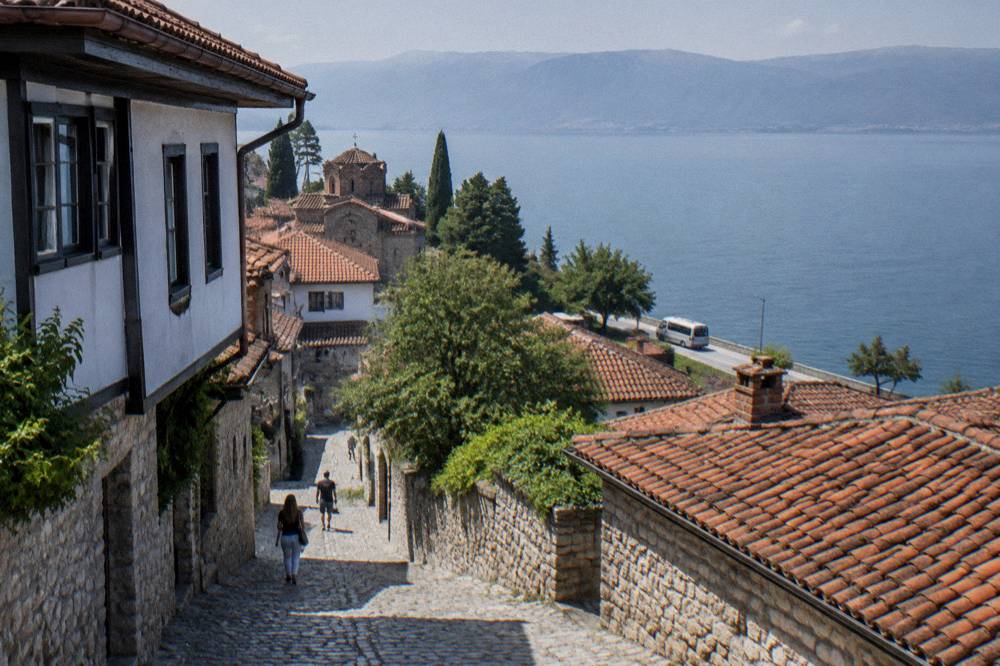
The practical details for this leg are laid out in the site's pages on getting from Ohrid to Tirana, the wider Tirana to Ohrid corridor in reverse, and the question of a train from Tirana to Ohrid.
Border paperwork is straightforward but worth knowing in advance. North Macedonia is not in the EU and not in Schengen, so this is a hard external border with passport control on both sides. Visa-free nationals may stay up to 90 days in any 180-day period in North Macedonia; UK visitors may stay up to 3 months without a visa, with a passport expiry date at least 90 days after the date of arrival, and registration with the local police within 48 hours is handled by hotels. Albania has its own entry rules, and neither country applies the EU's roam-like-at-home scheme.
What To Do In Tirana On The Final Two Days
Spend the final two days using Tirana as the exit: fly home from its airport and keep the last evening near the centre. Travellers still weighing the two capitals can consult the Ohrid versus Skopje comparison and the answer to whether Skopje is worth visiting, since both feed the two-versus-three-night decision.
The site's Tirana coverage focuses on Tirana in relation to Ohrid, and the Tirana from Ohrid page frames the capital as it looks from the lake. For the route as a whole, Tirana's role is the exit: its airport takes the flight home, and the last evening is best spent near the centre.
Travellers comparing the two capitals on this route can read the site's Ohrid versus Skopje comparison and the question of whether Skopje is worth visiting, both of which feed the two-versus-three-night decision.
What The Skopje Ohrid Tirana Route Costs In Fares And Tickets
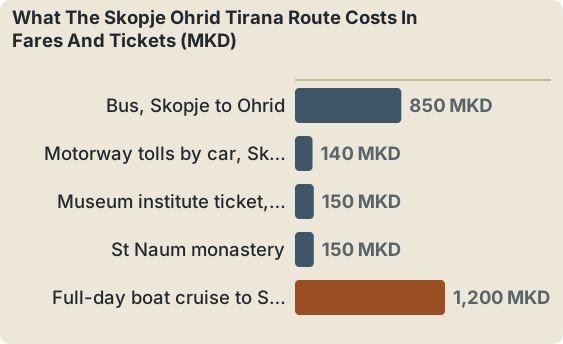
The route's fixed transport cost is roughly 850 to 950 MKD for the Skopje to Ohrid bus plus about EUR 15 to 20 for the Ohrid to Tirana minibus, and the main sightseeing cost in Ohrid is the museum institute's 150 den foreign ticket at each of its sites, so a week of moving and museum-going between the three cities is a modest budget by European standards. The denar, pegged de facto to the euro at about 61.5 to the euro, handles Ohrid's local costs, while Albania uses the euro-friendly lek economy; euros are commonly quoted for tours and transfers in Ohrid but are not legal tender in North Macedonia.
| Item | Cost | Currency context |
|---|---|---|
| Bus, Skopje to Ohrid | 850 to 950 MKD | One way, about 3 h |
| Minibus, Ohrid to Tirana | about EUR 15 to 20 | One way, 3 to 3.5 h |
| Motorway tolls by car, Skopje side | about 140 MKD | Paid per plaza, no vignette |
| Museum institute ticket, per site | 150 MKD foreign / 120 MKD domestic | Robev House, Museum on Water, Icon Gallery |
| St Naum monastery | 150 MKD | Reported per person |
| Rowboat, Crn Drim springs | about 5 EUR | Per boat at the springs |
| Full-day boat cruise to St Naum | from 1,200 den adult | About 7 hours, child 600 den |
Accommodation and restaurant prices are not part of this route's fixed costs and vary widely across the three cities, so they are budgeted separately. What the table shows is the skeleton: two road legs and a handful of tickets carry the whole week.
When To Travel The Skopje Ohrid Tirana Route
The route is at its best from late spring to early autumn, roughly May to September, when the Ohrid leg's lake activities run: the boats to St Naum operate about May to October, the modelled lake surface temperature reaches about 22.9 C in July and 23.5 C in August, and the Ohrid Summer Festival fills July and August, with its 66th edition running 12 July to 20 August 2026. The ERA5 reanalysis normals for Ohrid, 1991 to 2020, put the mean daily high at 24.2 C in June, 27.1 C in July and 27.6 C in August, against 5.0 C in January. Rain totals 816.6 mm across the year, with 92.6 mm in December and 32.9 mm in August.
The festival calendar gives the summer route extra weight. The 65th Balkan Festival of Folk Songs and Dances ran 3 to 6 July 2026 in Ohrid, the swimming marathon over its 25 km St Naum to Ohrid harbour course took place on 22 August 2026, and the Struga Poetry Evenings held their 65th edition from 24 to 29 June 2026 in nearby Struga. A June or July traveller catches at least one of them.
Spring and autumn trade the festivals for quiet and mild walking weather. The same normals show 80.5 mm of rain in March and 62.4 mm in September, with mean highs of 10.0 C and 22.4 C respectively. Winter shrinks the route's lake half: the boats reduce or stop, and the museum sites run their shorter 1 October to 30 April hours. The months table in the site's Ohrid weather coverage and the best time to visit guide carry the full breakdown.
Practical Rules That Shape The Route
Three rules frame the week: North Macedonia and Albania are outside the EU and Schengen, so passports are checked on each border and the 90-days-in-180 rule governs visa-free stays; the denar is the only legal tender in North Macedonia even though euros are quoted for tours; and Ohrid's old town is entirely pedestrian, with a resident-only parking regime on streets such as Ilindenska, Kosta Abrash and Car Samoil introduced in summer 2026. Emergency numbers differ from the EU default: ambulance 194, police 192, roadside assistance 196. Tap water in Ohrid is generally reported drinkable from the municipal supply.
The parking regime matters only for drivers. Anyone running the route by bus and minibus never touches it, which is one more argument for the car-free version of the week. For drivers, headlights must be on day and night, a green card is recommended, and tolls are paid per plaza in cash or by card.
Travellers who want a structured middle day in Ohrid rather than a self-guided one can also weigh the city tour covering the best of Ohrid, which the trio above compares against the lake and wine options.
A final word on pace: the route's two travel days are its only slow days, and both fit a morning departure with an afternoon of sightseeing on arrival. Everything else is walking, boats and lake air, which is exactly what a week across three countries should feel like.
Common Questions About The Skopje Ohrid Tirana Route
Can you do Skopje, Ohrid and Tirana in one week?
Yes. Two nights in Skopje, three in Ohrid and two in Tirana fit seven days, linked by a roughly 3-hour bus from Skopje to Ohrid and a 3 to 3.5-hour minibus from Ohrid to Tirana.
How far is Ohrid from Skopje?
About 170 km by road, roughly 111 km as a straight line. The bus takes about 3 hours; see the site's page on how far Ohrid is from Skopje for the full breakdown.
Is there a train between any of the three cities?
No. There is no passenger rail service to Ohrid at all, so both legs of the route, Skopje to Ohrid and Ohrid to Tirana, run by road only.
How do I get from Ohrid to Tirana?
By direct minibus, roughly five to seven departures a day, taking 3 to 3.5 hours including the border and costing about EUR 15 to 20 one way.
Do I need a visa for this route?
Visa-free nationals may stay up to 90 days in any 180-day period in North Macedonia; UK visitors may stay up to 3 months without a visa. Albania has its own entry rules, and passports are checked at the border because neither country is in the EU or Schengen.
Which month is best for the route?
July and August bring the warmest modelled lake water, about 22.9 C and 23.5 C respectively, and the Ohrid Summer Festival, which ran 12 July to 20 August in 2026. May, June and September are quieter with mild walking weather.