Ohrid Walking Tours: Which Old Town Walk To Book
Ohrid's old town is compact, steep and packed with Byzantine churches, so a walking tour covers more of it in a few hours than most visitors manage alone. This guide compares the bookable walks, what they include and what the sights along the way cost.
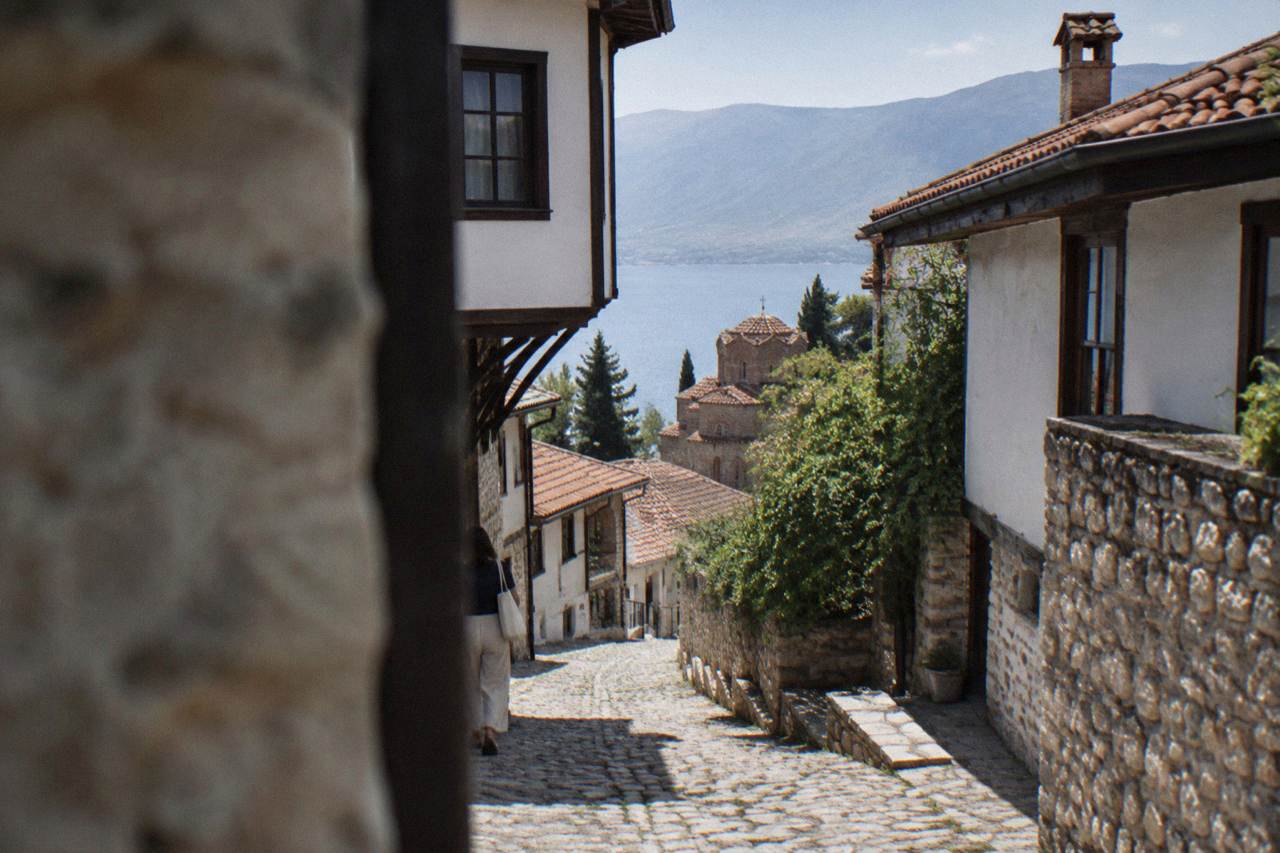
Short answer
For a first visit, a small-group old town walk is the strongest choice: the lanes between the Old Bazaar and the lake hold dozens of churches and museum sites, and a guided route strings them together. The museum institute sites charge 150 den for foreign visitors and 120 den for domestic visitors, and several close on Mondays.
Ohrid, in North Macedonia, is a town built for walking: the old town climbs from the shore of Lake Ohrid up to Samuel's Fortress, and every lane between the two holds a church, a museum courtyard or a viewpoint over the water. The Ohrid Travel Guide compares the bookable walks here, because the choice between them is less about quality and more about route, group size and how much of the hill you want to climb. A walking tour is also the cheapest structured sightseeing in town, with several options covered on the free walking tour page.
What Makes Ohrid Walking Tours Different From Other City Walks?
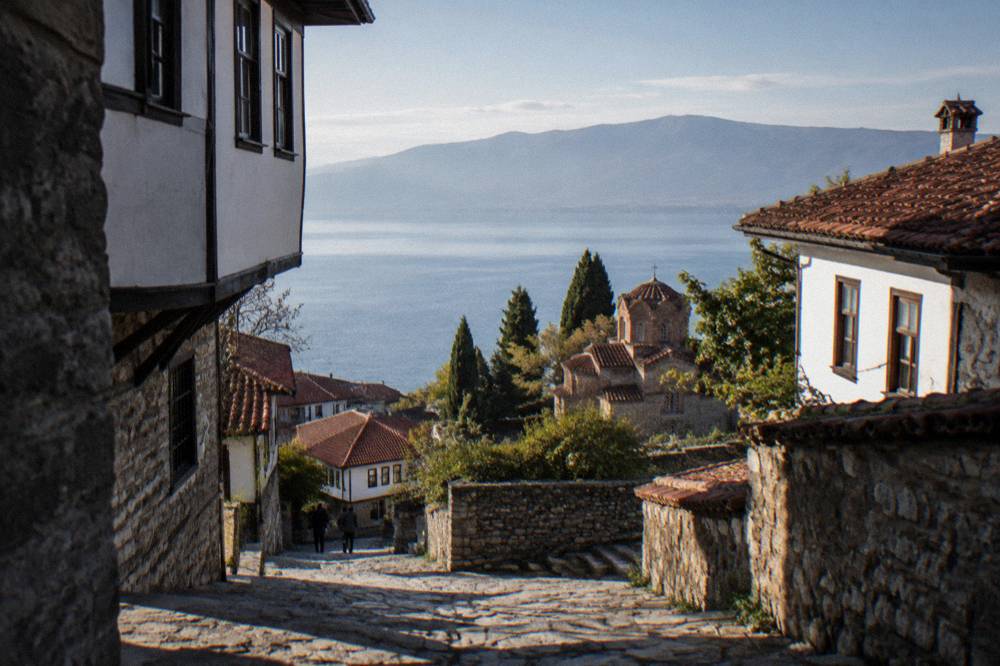
Ohrid walking tours work on a short, steep stage: the whole walkable core runs from the Old Bazaar and the lake front up to Samuel's Fortress on foot lanes, with the major churches and museum sites strung along that one climb, so a single guided walk can cover the Ancient Theatre, Plaosnik, St Sophia and the old town streets in one loop rather than across a spread-out city.
That geography shapes every product on the roster. There is no tram, no metro and no river crossing to plan around; the practical questions are how far up the hill a route goes, how long it stops at each church, and whether it ends near the lake where the boat trips leave. The Unesco listing behind the town, the Natural and Cultural Heritage of the Ohrid Region, inscribed in 1979 and 1980 and extended to the Albanian part of the lake in 2019, is the reason so much of that core is protected, and a guide who explains it earns their fee quickly.
The walks also differ by audience. Some are short small-group loops aimed at first-time visitors with a few hours. Others are half-day or full-day private tours that fold in viewpoints, monasteries outside the centre or a lake cruise. And a separate family of free, tip-based walks covers the same old town ground for those who prefer to pay what they want at the end; the site covers those separately on the free walking tour page.
Which Ohrid Old Town Walk Should You Book For A First Visit?
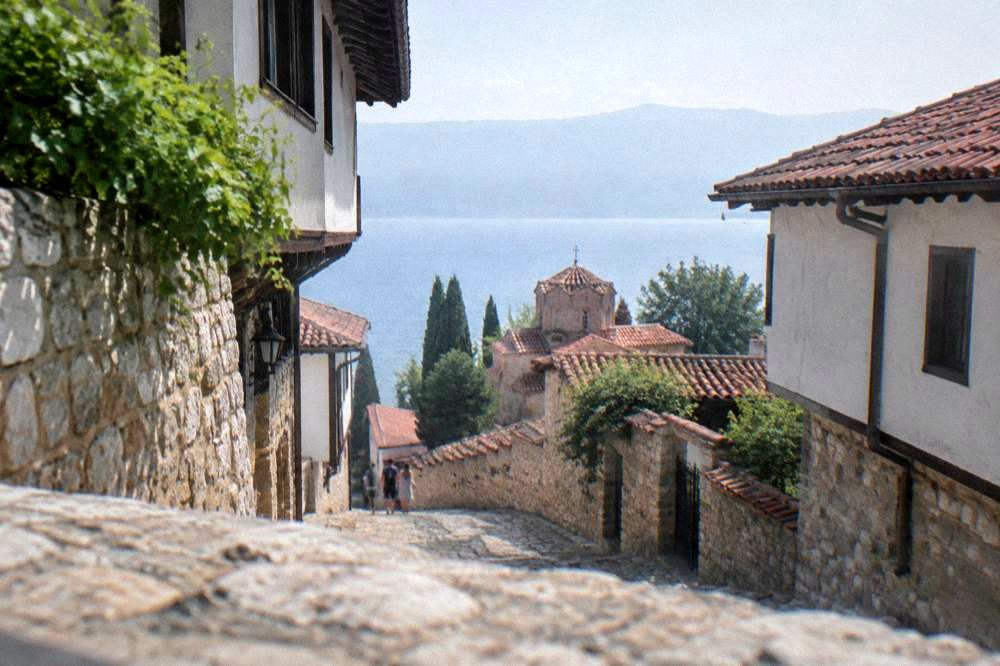
For a first visit, the small-group city tour of the old town is the pick that matches how Ohrid is actually seen: a guided loop through the lanes between the lake and the fortress with a licensed local guide, a small group size, and a start point in the centre, leaving the rest of the day free for a boat trip or the museums at your own pace, which is the structure that suits a town this compact.
That product is the site's featured walk for this article, and it sits alongside the full spread of options on the things to do in Ohrid overview. You can check dates on the operator's live listing at Check availability. The alternative structures are worth understanding before booking, because the roster splits cleanly by what the walker wants.
A visitor already staying in Ohrid has the widest choice: the small-group old town walk, a longer old town walking tour, a shared hidden-gems walk, or a private full-day best-of tour that pairs the town with the lake shore. A visitor based in Skopje books a different product entirely: full-day guided tours that depart from Skopje and bring the group to Ohrid by road, which the roster carries as day trips rather than city walks. And a visitor who wants the old town from the water pairs a walking tour with a panoramic boat cruise, which is why that cruise sits in the trio above.
The honest division of labour is this: walk the hill in the morning with a guide, then spend the afternoon on the water or in the museums. The one-day itinerary page shows how those pieces fit together hour by hour.
What Do The Guided Walking Tours Of Ohrid Cover Stop By Stop?
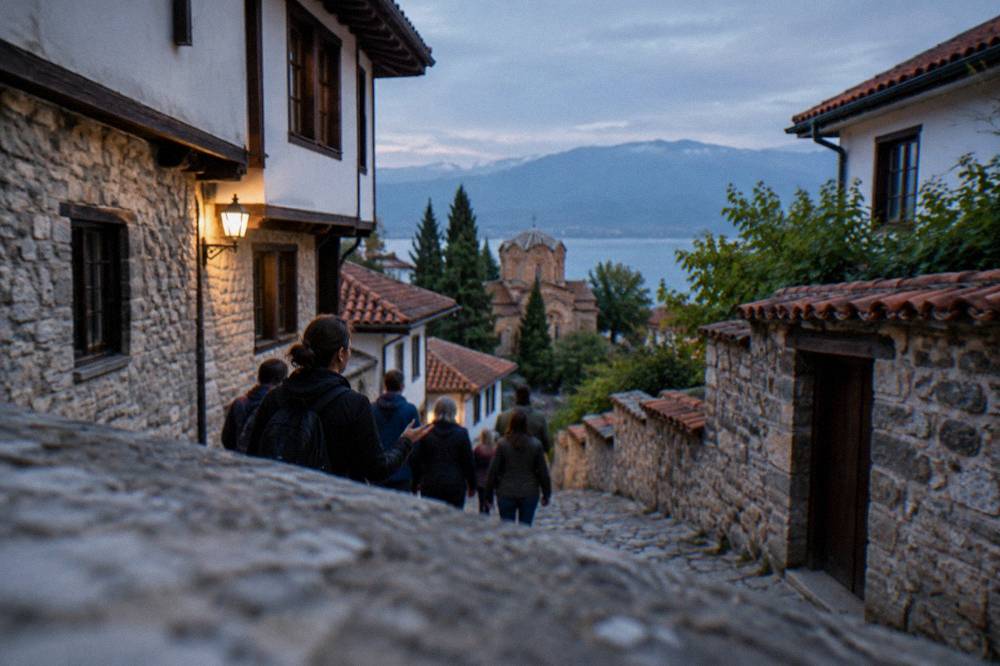
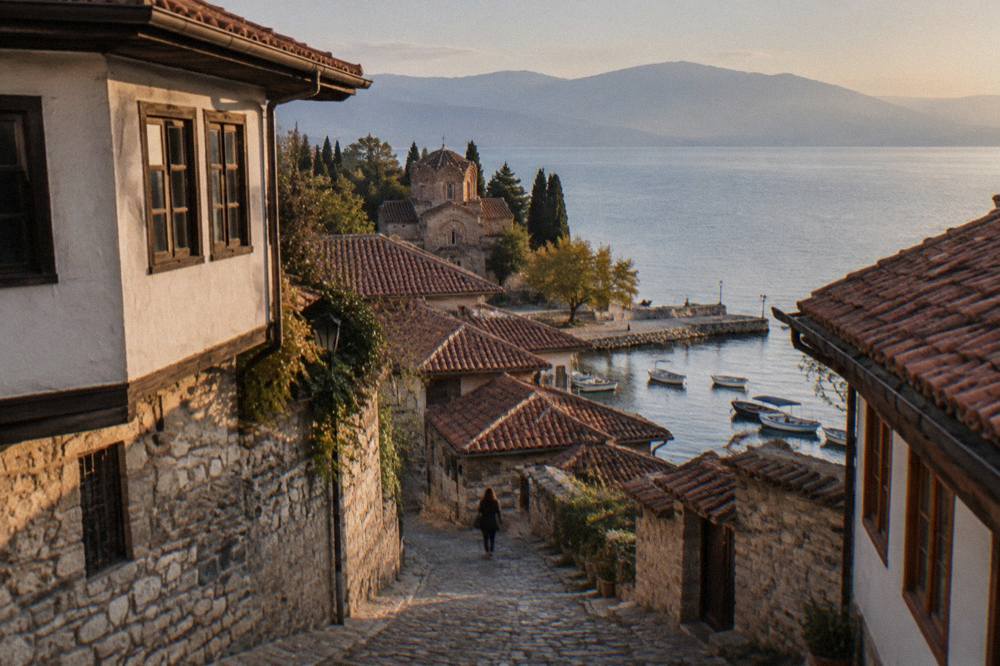
The standard guided route through Ohrid runs from the old town streets and the Old Bazaar up past St Sophia, Plaosnik and the Ancient Theatre to the fortress hill above the lake, then down to the Church of St John at Kaneo at the water's edge, with museum stops such as the Robev Family House and the Icon Gallery along the way; entry tickets to those museum sites are separate and cost 150 den for foreign visitors and 120 den for domestic visitors.
Those figures come from the NI Institute and Museum Ohrid, whose ticket system covers its listed sites, including the Robev Family House, the Museum on Water at the Bay of Bones and the Icon Gallery in the Perivleptos complex. The children's and student rate is reported at 60 den. The table below collects what the museum institute publishes for the sites a walking route passes.
| Museum site | Foreign ticket | Domestic ticket | Winter hours (1 Oct to 30 Apr) | Closed |
|---|---|---|---|---|
| Robev Family House | 150 den | 120 den | 09:00 to 15:30 | Monday |
| Icon Gallery (Perivleptos complex) | 150 den | 120 den | 09:00 to 14:00 | Monday |
| Bay of Bones / Museum on Water, Peshtani | 150 den | 120 den | 09:00 to 15:30 | Monday |
| Museum institute office, Boro Shain St 10 | office only | office only | Mon to Fri 07:30 to 15:30 | weekend |
Summer hours differ: from 1 May the Robev Family House runs two shifts, 09:00 to 15:30 and 13:30 to 20:00, and the Museum on Water runs 09:00 to 16:30. The Icon Gallery runs 09:00 to 17:00 in summer. All three close on Mondays, which matters more than any other planning detail: a walking tour on a Monday still shows you the churches and the streets, but the museum interiors stay shut. The Samuel's Fortress page and the Ancient Theatre page cover those two hilltop stops in detail.
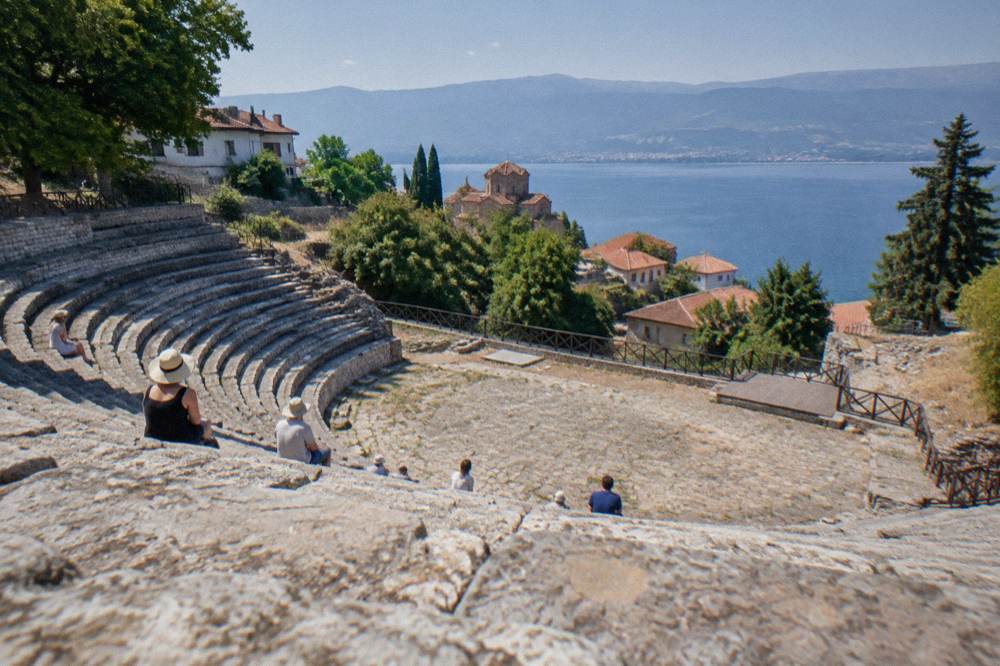
The churches themselves sit outside the museum institute's ticket system, and it is only reported, weakly, that St John at Kaneo, St Sophia and Plaosnik each charge about 150 den. Treat those as figures to confirm on the spot rather than settled prices. What a guide adds at each stop is context: the theatre's excavations began in 1935 and its capacity rose to about 5,000 after the epiteatron was added, and the UNESCO listing records the monastery at Plaosnik as the oldest Slav monastery, with more than 800 Byzantine-style icons from the 11th to the end of the 14th century held in Ohrid. Those are the details that turn a steep lane into a story, and they are why the old town area page is worth reading before you pick a route.
How Steep Is The Ohrid Old Town Walk, Really?
There is no lift, no funicular and no bus that shortcuts the climb; the old town is on foot by design. That suits a guided walk, because the pace is set by the group and the stops break up the slope. Visitors who want the views without the climb have two workarounds: start at the top near the fortress and walk down, which several routes do in summer, or take a panoramic boat cruise and see the old town and Kaneo from the water, which the boat tour page compares in full.
Accessibility is a real limit here. Stepped lanes exclude wheelchairs from the upper old town, and the site's accessibility guidance says as much in detail. For visitors with limited mobility, the lake-front stretch between the port and the beaches is flat, and a boat cruise recovers most of the views. Families with children manage the climb fine at child pace; the Ohrid with kids angle is covered on the itinerary pages.
When Is The Best Time Of Year For An Ohrid Walking Tour?
The most comfortable months for walking Ohrid's lanes are May, June, September and October, when the modelled ERA5 climate normals for 1991 to 2020 show mean daily highs between 17.4 and 24.2 degrees and monthly rain between 43 and 76 mm, while July and August are hotter at 27.1 and 27.6 degrees mean highs but drier at 34.7 and 32.9 mm of rain, so the trade-off is heat against the fullest programme of festivals and boat trips.
Those figures are modelled normals from ERA5 reanalysis for the grid cell over Ohrid, not a weather-station record, which is why summer walks start early here. Winter walking is a different product: January averages a mean high of 5.0 degrees and a mean low of -0.8, with 76.5 mm of rain across the month, and the museum sites run their shorter winter schedule. Snow does fall in Ohrid and lies longer on Galicica across the lake.
| Month | Mean high C | Mean low C | Rain mm |
|---|---|---|---|
| Jan | 5.0 | -0.8 | 76.5 |
| Feb | 6.3 | 0.0 | 74.3 |
| Mar | 10.0 | 2.5 | 80.5 |
| Apr | 14.6 | 6.3 | 82.4 |
| May | 19.5 | 10.8 | 70.8 |
| Jun | 24.2 | 15.2 | 43.1 |
| Jul | 27.1 | 18.3 | 34.7 |
| Aug | 27.6 | 19.0 | 32.9 |
| Sep | 22.4 | 14.9 | 62.4 |
| Oct | 17.4 | 10.3 | 76.0 |
| Nov | 11.5 | 5.3 | 90.4 |
| Dec | 6.2 | 0.9 | 92.6 |
The season also changes what a walk can include. The 66th Ohrid Summer Festival opened on 12 July 2026 at the Ancient Theatre and ran to 20 August by tradition, and the Balkan Festival of Folk Songs and Dances ran 3 to 6 July 2026, so a July or August walk may pass rehearsal stages and festival crowds. The lake adds a second clock: modelled surface water temperatures run about 22.9 degrees in July and 23.5 in August against 14.7 in October, so a summer walk pairs naturally with a swim, and the swimming and beaches pages cover where. The full monthly breakdown is on the best time to visit page set of season guides.
How Do Ohrid Walking Tours Pair With Boat Trips And Day Tours?
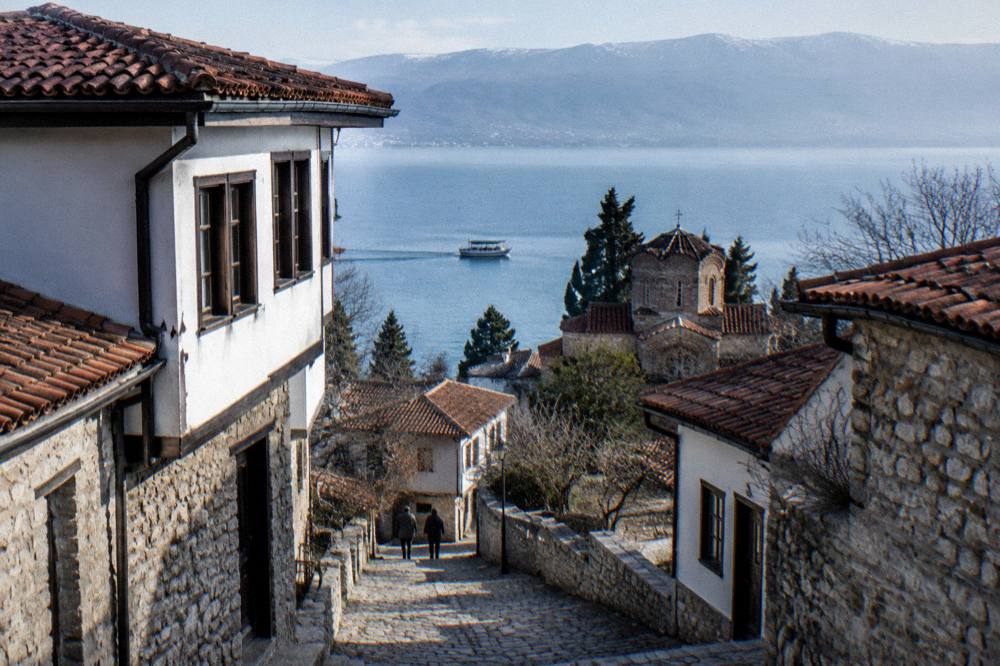
The strongest Ohrid plan pairs a walking tour with a boat cruise and, on a longer stay, one day trip: the walking tours cover the hill and the churches, the panoramic cruises cover the lake front and Tito's former residence from the water, and full-day boat trips reach the Bay of Bones and St Naum, while day tours from Skopje or Tirana bundle the whole old town into a single outing for visitors not staying in Ohrid.
The pairing logic is simple. A walking tour ends at the lake more often than not, and the cruise departure points sit right there, so the two products chain without transport. The roster's cruise options include a short panoramic old town cruise, a sunset cruise, and full-day lake trips that stop at the Bay of Bones and St Naum with a swim. A full-day boat cruise from Ohrid port with one operator runs 7 hours, from 1,200 den for an adult and 600 den for a child, and that operator's own listing states the 150 den Bay of Bones entrance is not included, which is exactly the kind of detail worth knowing before you board.
| Product type | What it covers | Where it starts |
|---|---|---|
| Small-group old town walk | Old town lanes, churches, fortress hill | Ohrid centre |
| Private full-day best-of tour | Old town plus lake shore, flexible | Ohrid centre |
| Skopje day tour to Ohrid | Road transfer plus guided Ohrid sightseeing | Skopje |
| Tirana day tour to Ohrid and St Naum | Road transfer, Ohrid and St Naum | Tirana |
| Panoramic boat cruise | Lake front, old town from the water | Ohrid port |
| Full-day lake boat trip | Bay of Bones, St Naum, swim stop | Ohrid port |
Day tours deserve one clear warning repeated from the site's day-trip pages: a product flagged as starting in Tirana or Skopje departs from there. It is not an Ohrid departure with a pickup extension. The St Naum tour page and the Struga day-trip page cover the excursions that do leave from Ohrid, and the food and wine page covers the tasting walks for visitors who want their route to end at a table.
What Should You Know Before Booking An Ohrid Walk?
Three practical rules cover most booking mistakes in Ohrid: avoid Mondays if you want the museum interiors, because the museum institute sites close then; carry denars in cash for church and museum entries, since the 150 den and 120 den tickets are local prices quoted in MKD, euros being commonly quoted for tours and transfers but not legal tender; and book the small-group walk with free cancellation so a rainy morning or a festival day can reshuffle your plan without cost.
The currency point matters more here than in eurozone destinations. The denar is pegged in practice to the euro through the National Bank's exchange-rate targeting, and ATMs are widespread, but a church doorway takes cash. The packing list is short: water in summer, because the climb is exposed stone, and layers in the shoulder months, because the modelled mean lows drop to 10.3 degrees even in October.
Two local rules from 2026 also touch walkers. The old-town streets Ilindenska, Kosta Abrash and Car Samoil run a resident-only parking regime from summer 2026, with clamping for non-residents, so anyone driving to a walk's start point should use a car park instead of a street; the parking guide lists the options. And the lake's 2026 navigation limits, set by government decision in June 2026, restrict jet skis by day in July and August and boats at night into September, which is context rather than constraint for a walker, but it explains why the evening cruises follow the rules they do.
Common Questions About Ohrid Walking Tours
How much do Ohrid walking tours cost?
Bookable walking tours in Ohrid start from prices printed on each operator's live listing, and this page deliberately does not type them, because they change with season and group size. Museum entries along the route are separate and are local prices: 150 den for foreign visitors and 120 den for domestic visitors at the museum institute sites.
Do I need to book an Ohrid walking tour in advance?
Small-group walks have fixed group sizes, so advance booking holds a place, and products with free cancellation let you rebook if the weather turns. Free, tip-based walks work on showing up, and the site covers those separately on the free walking tour page.
Are Ohrid walking tours suitable for children and older visitors?
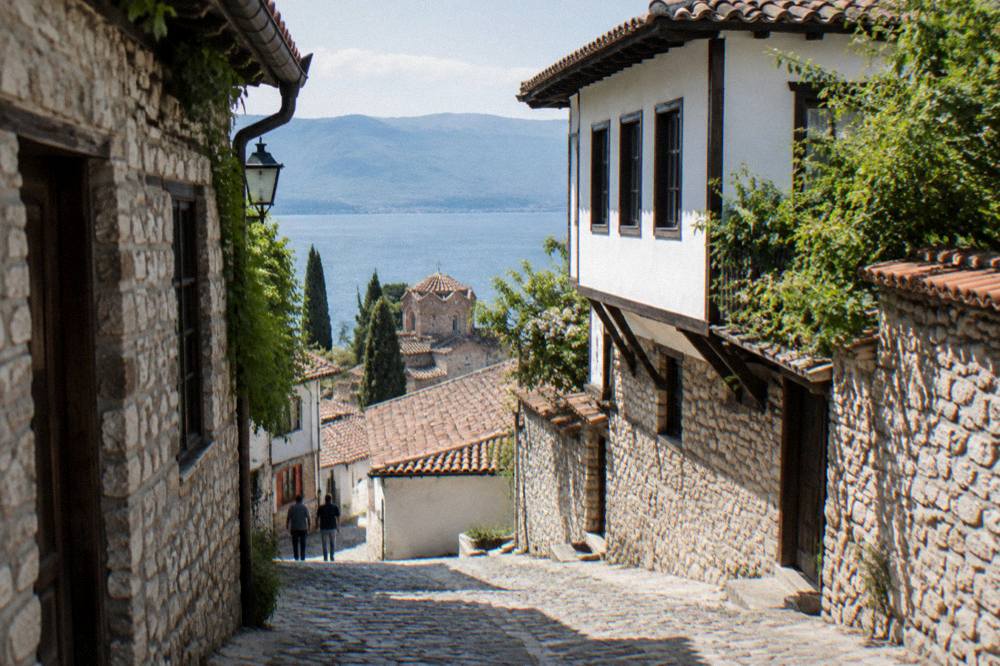
The old town is stepped, cobbled and closed to through traffic, so the walk is on foot throughout. Children manage the climb at their own pace, and older visitors can start routes at the fortress end and walk downhill, or take a panoramic boat cruise for the views without the ascent.
What is closed on Mondays in Ohrid?
The museum institute sites close on Mondays: the Robev Family House, the Icon Gallery and the Museum on Water at the Bay of Bones. The streets, churches and viewpoints of a walking route remain open, but book museum interiors for another day.
Can you combine an Ohrid walking tour with a boat cruise on the same day?
Yes, and it is the standard structure: a morning guided walk through the old town ends near the lake front where the cruise departures sit, so a short panoramic cruise or a sunset cruise chains onto the same day without any transport between them.
Which Ohrid walking tour is best if you are staying in Skopje?
A visitor based in Skopje books a full-day guided tour that departs from Skopje and brings the group to Ohrid by road, covering the old town's main sights in one outing. It is a day trip by design, not a city walk with an extension, and the departure point is Skopje.