Which Part Of Ohrid Is Best To Stay In?
Where to base yourself in Ohrid, North Macedonia: the old town, the Kaneo district, the lakeshore villages and Struga, with transport facts, seasonal notes and what to check before booking.
Ohrid sits on the shore of Lake Ohrid, a freshwater mountain lake at about 693 m above sea level, inside a UNESCO mixed World Heritage site shared with Albania. The town is compact and the choice of where to sleep comes down to a trade between being inside the old lanes, being on the water, and being close to the swimming beaches further along the shore. The Ohrid Travel Guide lays out that trade below, using only figures the sources actually publish, because the practical details, parking rules, buses, museum hours and boat seasons, matter more to a stay here than any view ever will.
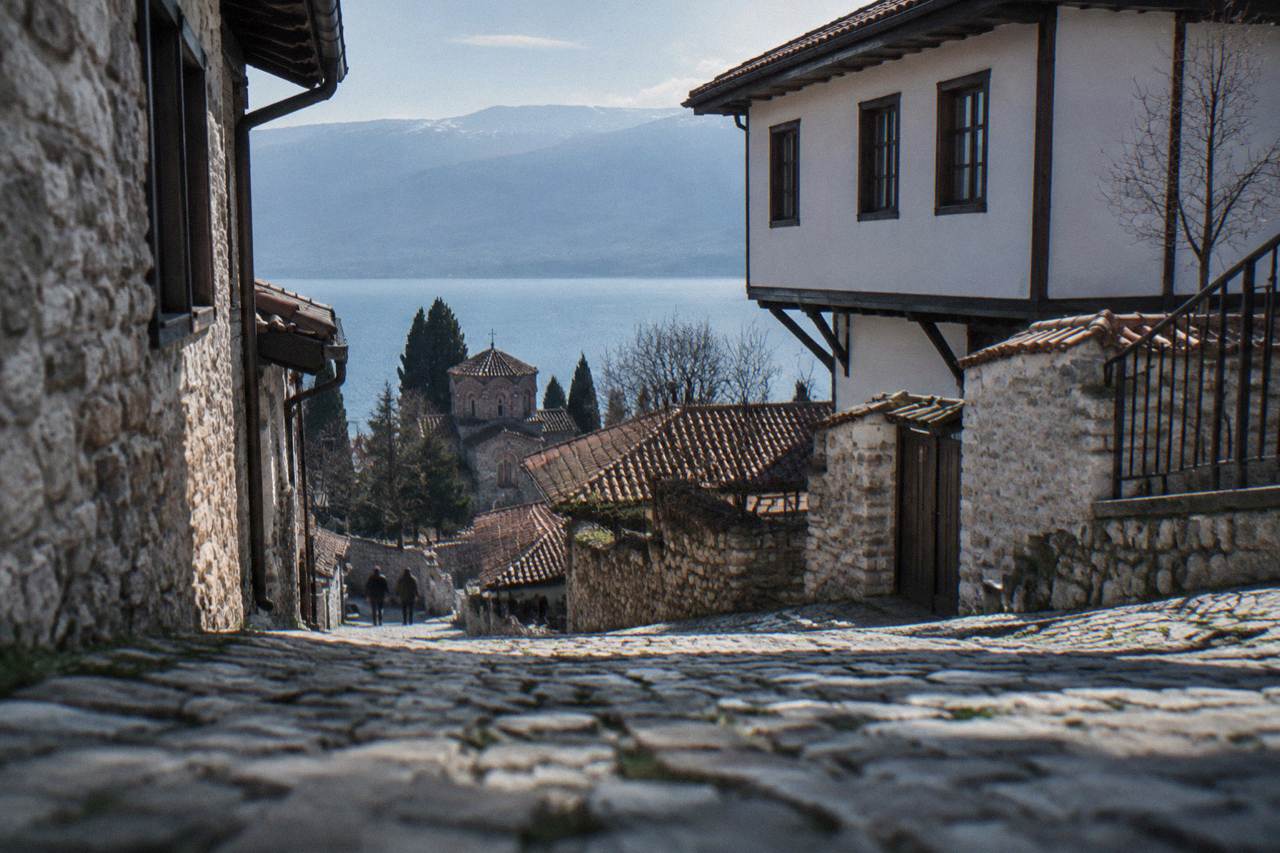
For a first visit the old town is the practical answer: it puts you on foot inside the lanes that climb from the lake to Samuel's Fortress, with the Old Bazaar, St Sophia, Plaosnik and the Ancient Theatre all walkable, and it removes the need for a car or a bus for everything in town. For a quieter, swim-first stay, the shore villages of Lagadin, Peshtani and Ljubanista sit by the beaches. Struga, at the north end of the lake, is a separate town reached by a short bus ride. Each choice changes what you need: a car, a bus timetable, or nothing but good shoes.
Ready to pick your base in the old town? Book an Ohrid hotel here.
The town's own geography forces the decision early. The old town climbs from the lake up to the fortress and the lanes are on foot, which is exactly why staying inside them is convenient and why parking inside them has become the hard part. A resident-only parking regime took effect on old-town streets such as Ilindenska, Kosta Abrash and Car Samoil in summer 2026, free for residents with a valid sticker, with non-resident vehicles subject to clamping. Anyone planning to arrive with a rental car and sleep in the old town should treat parking as a question to settle with the property before booking, not on arrival.
Depth of visit matters too. The question of how many days you need in Ohrid shapes the base: a short stay argues for the old town, where everything is on foot, while a week-long, swim-every-day stay tilts towards the shore. And if the trip doubles as a first look at the country, whether Ohrid is worth visiting is settled quickly, the UNESCO listing covers a natural and cultural heritage region of about 94,729 hectares, inscribed in 1979 and 1980 and extended to the Albanian part in 2019.
What Is Staying In Ohrid's Old Town Actually Like?
Staying in the old town means sleeping inside the UNESCO-listed core, where the lanes run on foot between the lakefront and Samuel's Fortress, and where the main sights, St Sophia, Plaosnik, the Ancient Theatre, the Old Bazaar and the Robev Family House, are all within walking distance of one another. The district's own scale is the argument for it: no trams, no local rail, and no need for either, because the town's sights sit on one climbable slope. The trade-offs are the parking regime and the cobbled lanes themselves, which reward light luggage.
The practical anchor points are all published. The museum institute's sites keep fixed schedules: the Robev Family House on Tsar Samoil Street runs a winter schedule from 1 October to 30 April, 09:00 to 15:30, and from 1 May two shifts, 09:00 to 15:30 and 13:30 to 20:00, closed Mondays. The Icon Gallery in the Perivleptos complex keeps winter hours of 09:00 to 14:00 and summer hours of 09:00 to 17:00, also closed Mondays. Institute tickets are 120 denars domestic and 150 denars foreign, with a children and student rate of 60 denars. Staying in the old town puts you within an easy walk of all of these, and the Monday closures are worth building a first-day plan around.
A short guided walk on the first evening is a reliable way to learn the lane layout between the lake and the fortress, and this small-group tour of the old town does exactly that, with Check availability on the operator's live listing.
Is The Kaneo District Or The Lakeshore Better For A Quieter Stay?
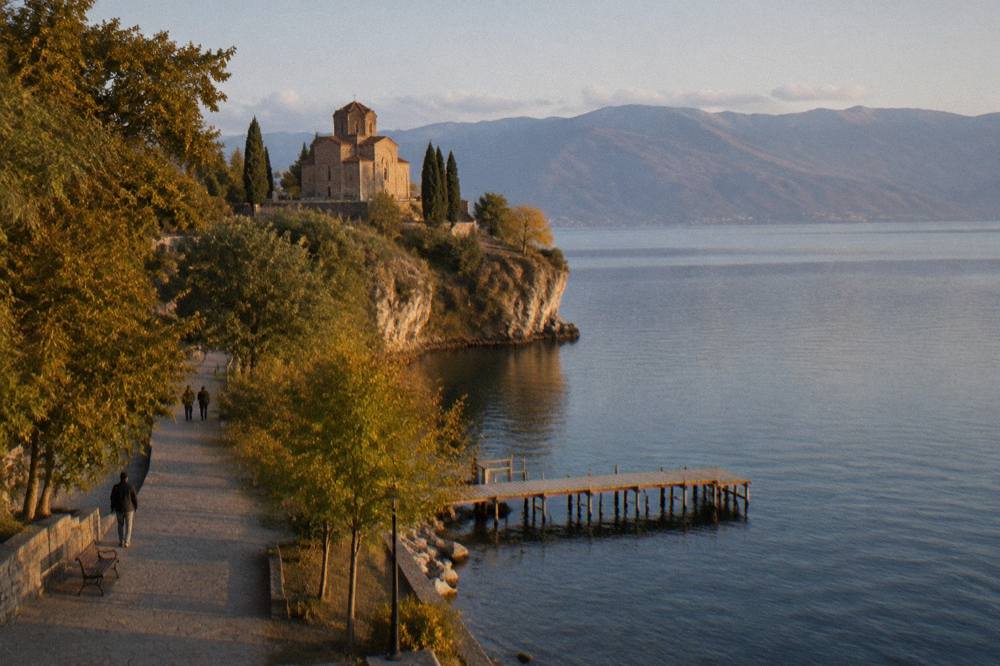
The Kaneo district sits on the headland below the old town around the Church of St John at Kaneo, close enough to walk up into the centre and low enough to be on the water, which makes it the classic middle choice: quieter than the bazaar end, still on foot from everything. Further along the shore, the beaches at Gradiste, Lagadin, Ljubanista, Potpesh and Labino are the swimming spots the guides name, and staying near them swaps walkable sightseeing for beach-first days.
What the sources do say about the water is reassuring on the whole. The 2026 bathing tests by the Institute of Public Health found the lake Class I physico-chemically at most sampled points, with most microbiological samples rated Excellent, the exception being Grashnica beach, which rated Class III. On the question whether you can swim in Lake Ohrid, the modelled surface temperatures give the season: about 22.9 C in July and 23.5 C in August, falling to about 14.7 C in October, with the swimming season generally running from July. Modelled values for winter sit near 4.6 C in January.
The practical split is simple and worth writing down before booking:
| Base in Ohrid | Best for | What it costs you |
|---|---|---|
| Old town lanes | Sights on foot, evening atmosphere, restaurants | Parking restrictions, uphill walking, luggage on cobbles |
| Kaneo district | Water access plus walkable centre | Fewer services than the bazaar end |
| Lagadin / Peshtani | Gradiste and Bay of Bones beaches, boat stops | A bus, car or taxi for town each time |
| Ljubanista / east shore | Swimming, quieter shore | Farthest from the old town |
| Struga | A separate lakeside town, the poetry-festival city | A bus ride to all Ohrid sights |
One more shoreline fact belongs in any stay decision: the lake's navigation rules changed for 2026. A government decision of 2 June 2026 banned jet skis on the lake between 1 July and 31 August from 11:00 to 19:00, and banned boats at night between 21:00 and 05:00 from 3 June to 31 August, with a further October limit. If a lakeside room is being sold on water sports or night boating, the 2026 rules are the thing to check against the calendar.
Should You Stay Outside Ohrid In Peshtani, Ljubanista Or Struga?
Staying outside the town works best for beach-based trips: Peshtani sits beside the Bay of Bones (the Museum on Water at Gradishte), Ljubanista is one of the named swimming beaches, and both sit on the road and boat route towards St Naum, while Struga is a separate town at the north end of the lake reached by local buses running several times a day. The Bay of Bones keeps the museum institute's schedule, winter 09:00 to 15:30, summer 09:00 to 16:30, closed Mondays, and charges the institute's 150 denar foreign ticket. Struga is home to the Struga Poetry Evenings, whose 65th edition ran 24 to 29 June 2026.
The Bay of Bones is also a stop on the lake's full-day boat runs. One operator, Boat Armada, runs a seven-hour cruise from Ohrid port to St Naum with stops, from 1,200 denars adult and 600 denars child, and its not-included list states the Bay of Bones entrance at 150 MKD and the St Naum monastery entrance at 150 MKD per person, with a rowboat through the Crn Drim springs at about 5 EUR. Boats to St Naum generally run about May to October with a reduced winter schedule, so a shore stay planned around them should sit inside that window.
Struga as a base has one clear rhythm advantage and one clear cost. The advantage: a separate town with its own festival calendar, on the lake, and connected to Ohrid by local buses at fares reported around 100 to 150 denars one way. The cost: every Ohrid sight becomes a bus ride or a drive, and the evening weight of the old town, its night-time character, stays a trip rather than a doorstep.
How Does The Season Change Where To Stay In Ohrid?
The season decides more than any preference does: July and August average highs of 27.1 C and 27.6 C, the modelled lake surface sits at about 23 to 24 C, the boats to St Naum run, and every shore base is in full operation, while from November to March the shoreline thins out, museum sites drop to their 09:00-to-15:30 winter hours, and the old town becomes the only base where everything still works on foot. Book the season first, then the street.
The modelled climate normals (ERA5 reanalysis, 1991-2020, for a grid cell over Ohrid, not a station record) give the year:
| Month | Mean high C | Mean low C | Rain mm | Modelled lake surface C |
|---|---|---|---|---|
| Jan | 5.0 | -0.8 | 76.5 | about 4.6 |
| Mar | 10.0 | 2.5 | 80.5 | about 7.2 |
| May | 19.5 | 10.8 | 70.8 | about 14.9 to 18.7 |
| Jul | 27.1 | 18.3 | 34.7 | about 22.9 |
| Aug | 27.6 | 19.0 | 32.9 | about 23.5 |
| Oct | 17.4 | 10.3 | 76.0 | about 14.7 |
| Nov | 11.5 | 5.3 | 90.4 | about 10.3 |
December carries 92.6 mm of rain and November 90.4 mm, against 32.9 mm in August. Peak season runs June to September with August the busiest month. The festival calendar also concentrates in summer: the 66th Ohrid Summer Festival opened on 12 July 2026 at the Ancient Theatre and ran towards its traditional 20 August close, the Balkan Festival of Folk Songs and Dances held its 65th edition from 3 to 6 July 2026, and the Ohrid Water Festival ran 12 to 30 August 2026, including the 25 km swimming marathon from St Naum to Ohrid harbour on 22 August. An old-town base puts the Ancient Theatre, one of the main festival venues, at the door.
Winter stays flip the logic. Snow falls in Ohrid in winter, and heavier snow sits on Galicica, the national park between Lake Ohrid and Lake Prespa, where the main road can close typically between January and March. The park, North Macedonia's second, established in 1958, covers 22,750 hectares with Magaro peak at 2,254 m, and charges 250 MKD per vehicle with no per-passenger fee, or 100 MKD only for someone entering on foot from the Ohrid-side gate. A winter base in the old town keeps the trip running regardless.
What Should You Check Before Booking Any Ohrid Stay?
Check four things before paying: parking, if a car is involved, because the old-town resident-only regime clamps non-resident vehicles; the Monday closures, because the museum institute's sites close Mondays year-round; the boat season, if a Peshtani or Ljubanista stay depends on reaching St Naum by water; and the walk itself, because the old town climbs from the lake to the fortress and the lanes are entirely on foot. None of these are hidden, and all of them are published, but each one silently breaks a trip type that looked fine on a map.
Money is the last practical layer. The currency is the Macedonian denar, and North Macedonia is not in the EU, so a stay involves some cash handling in MKD; the details are covered in what currency is used in Ohrid and the broader cost picture in is Ohrid cheap or expensive. Tap water in Ohrid is generally drinkable from the municipal supply. Registration with the local police within 48 hours of arrival is a legal requirement, and hotels do it for guests, which is one more reason a booked property beats an informal arrangement.
For travellers weighing the town against the region, where Ohrid sits on the map matters to the base choice too: Skopje is about 170 km away by road, the airport about 10 km from the centre, and day trips to Bitola, Tirana and Pogradec all start from wherever the bed is.
Common Questions About Where To Stay In Ohrid
Where To Stay In Ohrid?
Stay in the old town for a first visit, since the lanes put the main sights, the Old Bazaar and the lakefront on foot; choose Kaneo for water close to the centre; choose Lagadin, Peshtani or Ljubanista for beach-based summer stays; choose Struga for a separate lakeside town connected by local bus.
Is the old town of Ohrid walkable with luggage?
The old town climbs from the lake up to Samuel's Fortress and the lanes are on foot, so light luggage is the practical choice, and a property's exact position on that slope is worth checking before booking.
Can you park in Ohrid's old town?
A resident-only parking regime applied from summer 2026 on streets such as Ilindenska, Kosta Abrash and Car Samoil: free for residents with a valid sticker, with non-resident vehicles subject to clamping. Arrange parking with the property before arrival.
Is it better to stay in Ohrid or Struga?
Ohrid keeps the UNESCO core, the fortress and the main sights on foot. Struga is a separate town at the north end of the lake, reached by local buses, and hosts the Struga Poetry Evenings, whose 65th edition ran 24 to 29 June 2026.
When is the best season for a lakeshore stay near Ohrid?
Peak season runs June to September with August the busiest. Modelled lake surface temperatures reach about 22.9 C in July and 23.5 C in August, and the swimming season generally runs from July. Boats to St Naum run about May to October.
Are Ohrid's museum sites open every day?
No. The museum institute's sites, including the Robev Family House, the Bay of Bones and the Icon Gallery, are closed on Mondays, and they run a winter schedule from 1 October to 30 April with shorter hours.