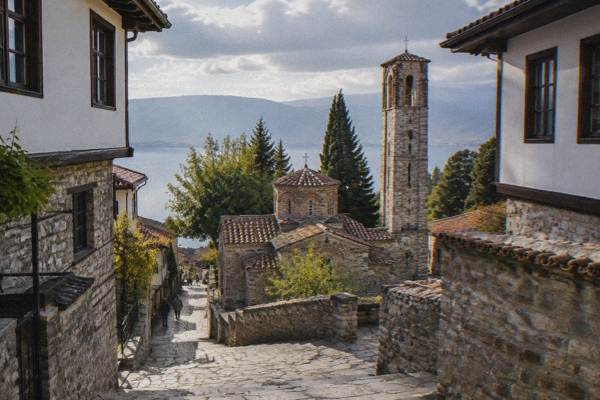
Ancient Theatre Of Ohrid: The Hellenistic Amphitheatre In The Old Town
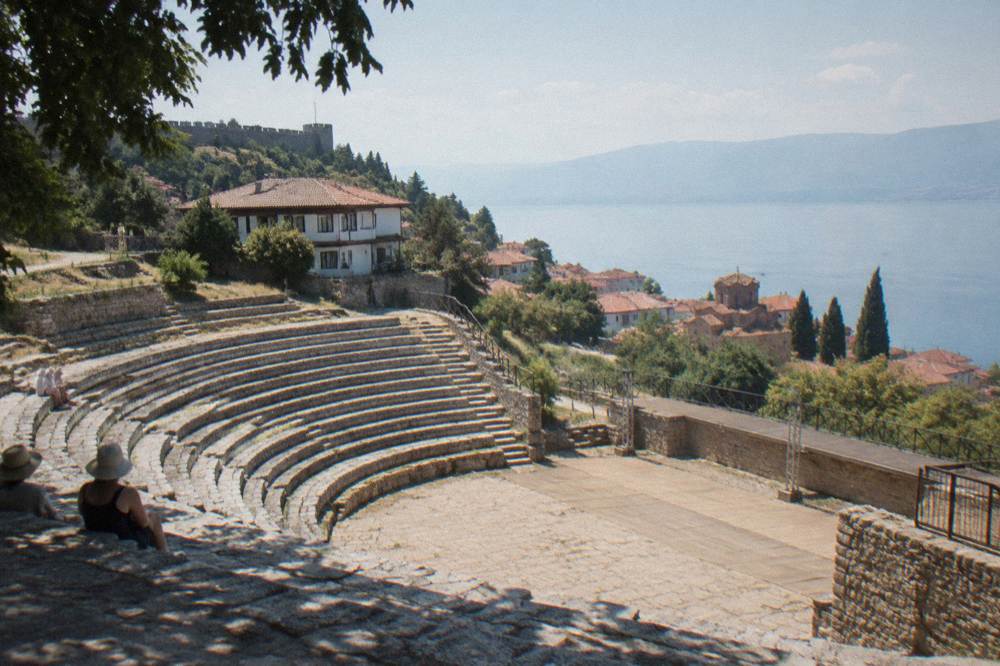
The Ancient Theatre of Ohrid is a late Hellenistic hillside theatre in the old town, built at the end of the third or the start of the second century BC, excavated from 1935, and now the opening stage of the Ohrid Summer Festival every July.
Short answer
The Ancient Theatre of Ohrid is a late Hellenistic stone theatre built at the end of the third or start of the second century BC, first excavated in 1935, with a capacity that rose to about 5,000 after an upper tier was added. It sits inside the old town of Ohrid, North Macedonia, and serves as an open-air stage for the Ohrid Summer Festival, which opened there on 12 July 2026.
The Ancient Theatre of Ohrid is a late Hellenistic stone theatre set into the hillside of the old town, first excavated in 1935. Its capacity later rose to about 5,000 after an upper tier, the epiteatron, was added, and today it works as an open-air stage whose calendar year is anchored by the Ohrid Summer Festival, which opened its 66th edition there on 12 July 2026. This page on the Ohrid Travel Guide sets out what the sources say about the theatre itself, how the festival uses it, and how to fold it into a wider walk through Ohrid, the lake town in North Macedonia on the shore of Lake Ohrid.
What Is The Ancient Theatre Of Ohrid?
The Ancient Theatre of Ohrid is a late Hellenistic theatre built into the old-town hillside and first excavated in 1935, with a capacity that grew to about 5,000 spectators once the epiteatron, an added upper tier, expanded the seating. It is managed today as one of the sites of the NI Institute and Museum of Ohrid, the same institute that runs the Robev Family House, the Icon Gallery and the Museum on Water at the Bay of Bones. Unlike those indoor sites, the theatre also lives a second life as a performance venue, and that double role shapes almost every practical question a visitor has about it.
The dating comes from the institute's own site page for the theatre, which places construction in late Hellenism and records the first excavations in 1935. The same page gives the capacity figure of about 5,000 and explains that the number rose after the epiteatron was added. Those three facts, the period, the excavation year and the capacity, are the backbone of everything published about the monument, and they are worth holding on to because a good deal of loose talk about the theatre online attaches numbers and dates to it that no primary source carries.
What the sources do not attach to it matters just as much for planning. No entrance fee is printed for the theatre on the institute's pages, and no opening hours are listed either. The museum-institute ticket rates of 120 denars for domestic visitors, 150 denars for foreign visitors and 60 denars for children and students apply to the institute's listed museum sites, such as the Robev Family House, the Icon Gallery and the Museum on Water, and cannot be assumed to cover the theatre, which functions as an open-air monument and performance space rather than a ticketed indoor collection.
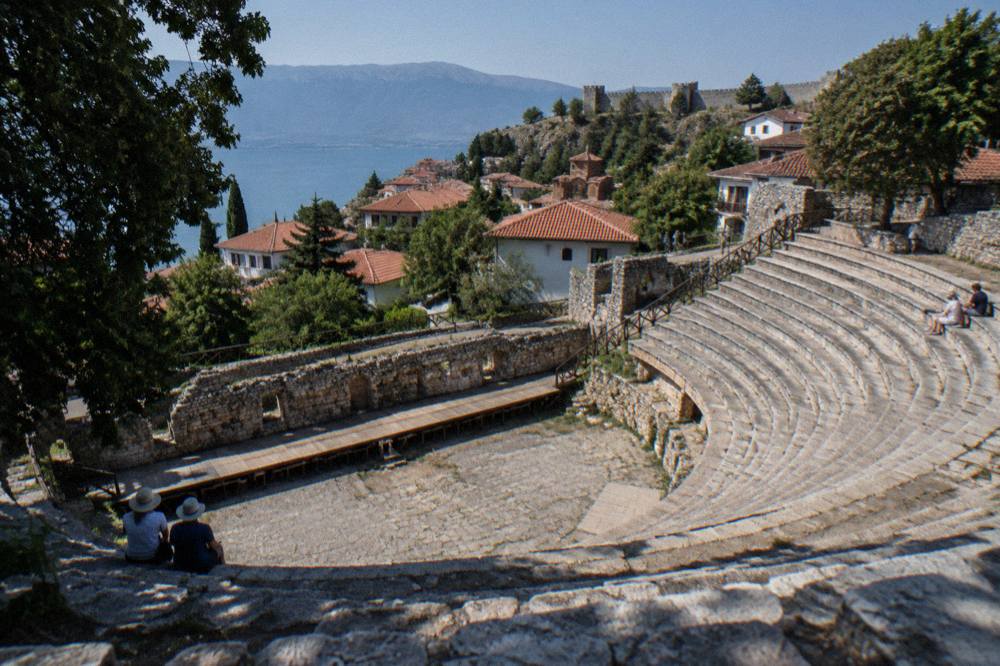
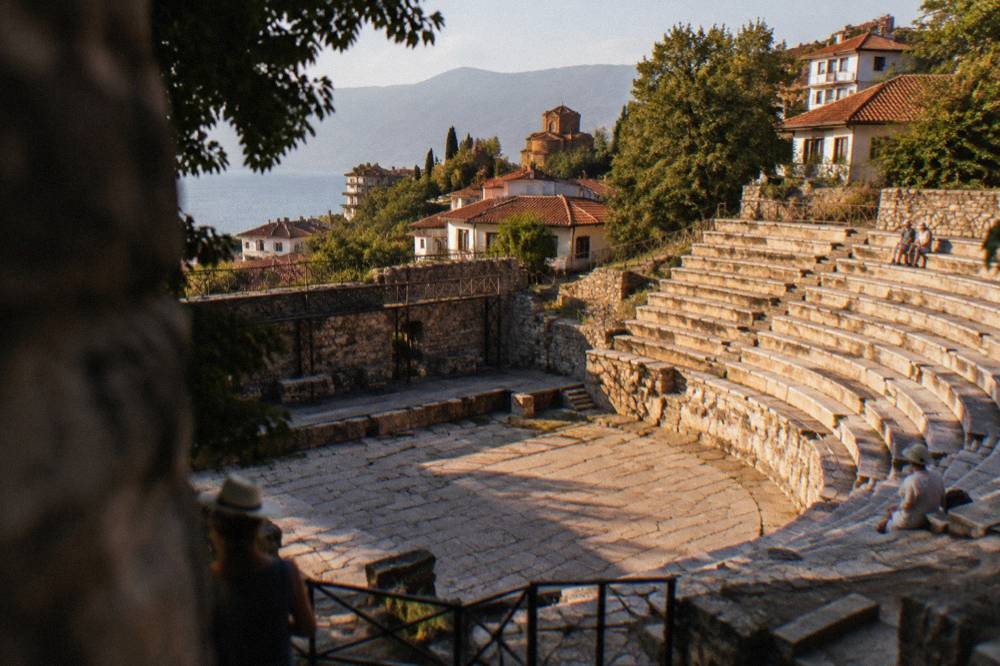
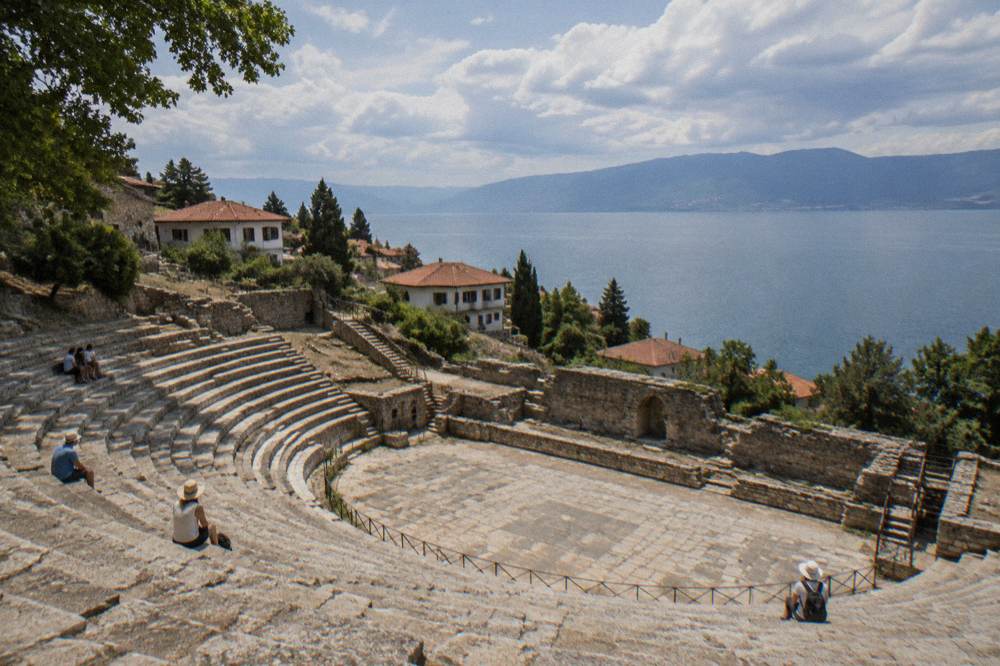
Its position inside the old town is part of its appeal. The theatre sits on the slope below Samuel's Fortress, so the climb through the old-town lanes toward the fortress walls passes the monument naturally. A visit is therefore rarely a standalone trip: it slots into a loop that can include the fortress hill above, the Old Bazaar below, and the lakeside lanes of the old town, which is exactly how the guided walks of the city treat it.
| Fact | Detail | Source basis |
|---|---|---|
| Built | Late Hellenistic period | Institute and Museum of Ohrid site page |
| First excavated | 1935 | Institute and Museum of Ohrid site page |
| Capacity | About 5,000 after the epiteatron upper tier was added | Institute and Museum of Ohrid site page |
| Managed by | NI Institute and Museum of Ohrid | Institute and Museum of Ohrid |
| Modern role | Open-air stage of the Ohrid Summer Festival | Festival programme, 2026 |
| Entrance fee | None stated on the official page | Institute and Museum of Ohrid |
Where Is The Ancient Theatre In Ohrid's Old Town?
The theatre stands on the old-town hillside in Ohrid, North Macedonia, on the slope between the lakeshore and Samuel's Fortress, so reaching it means walking uphill through the stone lanes that climb from the Old Bazaar and the lakefront toward the fortress walls. The old town itself is a pedestrian-scale district: the lanes run on foot, the terrain rises from the lake at about 693 metres above sea level up to the fortress, and there are no trams and no bike share to complicate the picture. Everything in this part of Ohrid is visited by walking.
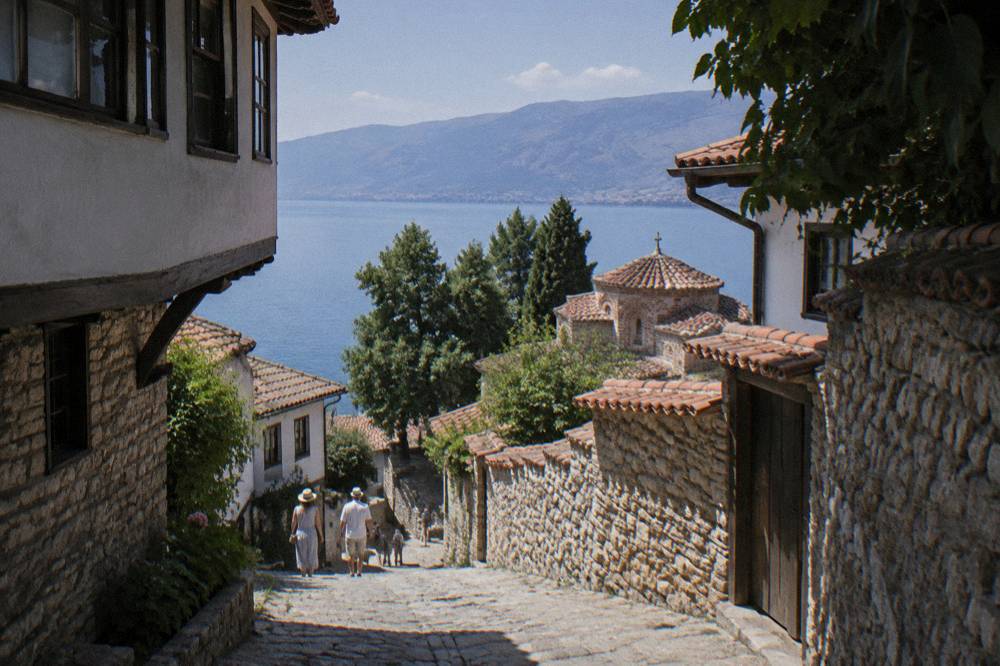
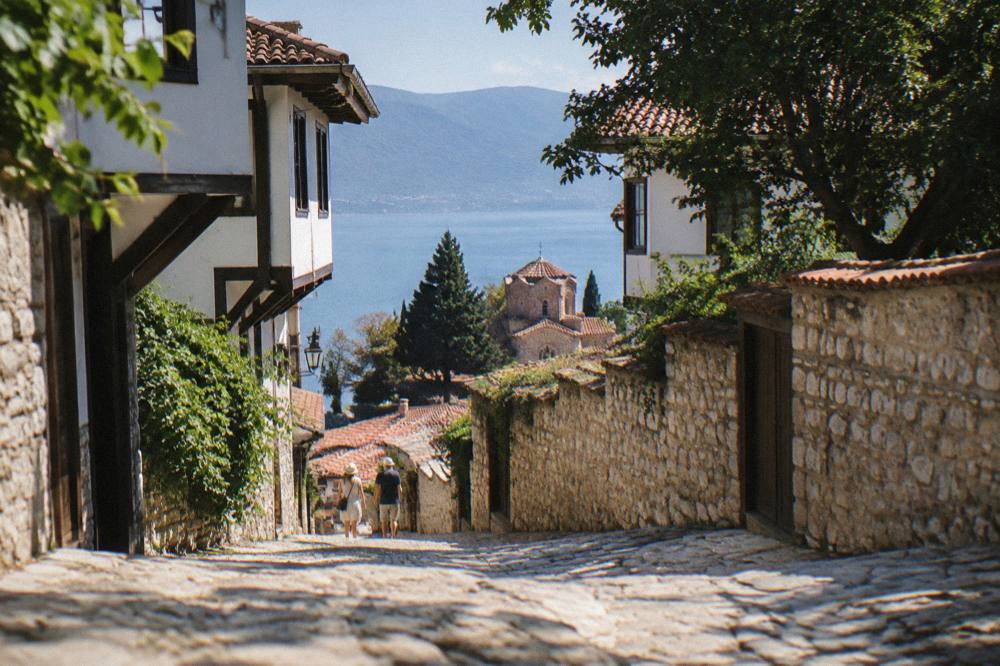
The practical geometry is simple. From the water's edge, the theatre lies partway up the hill, below the fortress. Walk up through the old-town lanes and the monument appears on the right-hand slope; continue and the ground keeps rising toward the fortress; turn back downhill and the lanes drop toward the Old Bazaar and the lakefront promenade. The old town area guide covers the district street by street, and the one-day itinerary places the theatre in the afternoon slot after the fortress, when the light comes across the lake.
Two 2026 changes affect arrival by car rather than on foot. From summer 2026, a resident-only parking regime applies to old-town streets including Ilindenska, Kosta Abrash and Car Samoil, with clamping reported for non-residents, so drivers should expect to leave the car outside the old core, a subject the parking guide treats in detail. The rest of the visit is a walk, and the walk itself is the reason the theatre pairs so naturally with a guided tour of the old town, whose operators thread the monument into a route that also takes in the churches and the fortress.
A guided walk saves the guesswork of finding the theatre's entrances and reading the site in context. The small-group old town walking tour covers the theatre along with the wider old town, and it can be booked online.
A guided walk saves the guesswork of finding the theatre's entrances. Book an old town walking tour here.
What Can You See At The Ancient Theatre Today?
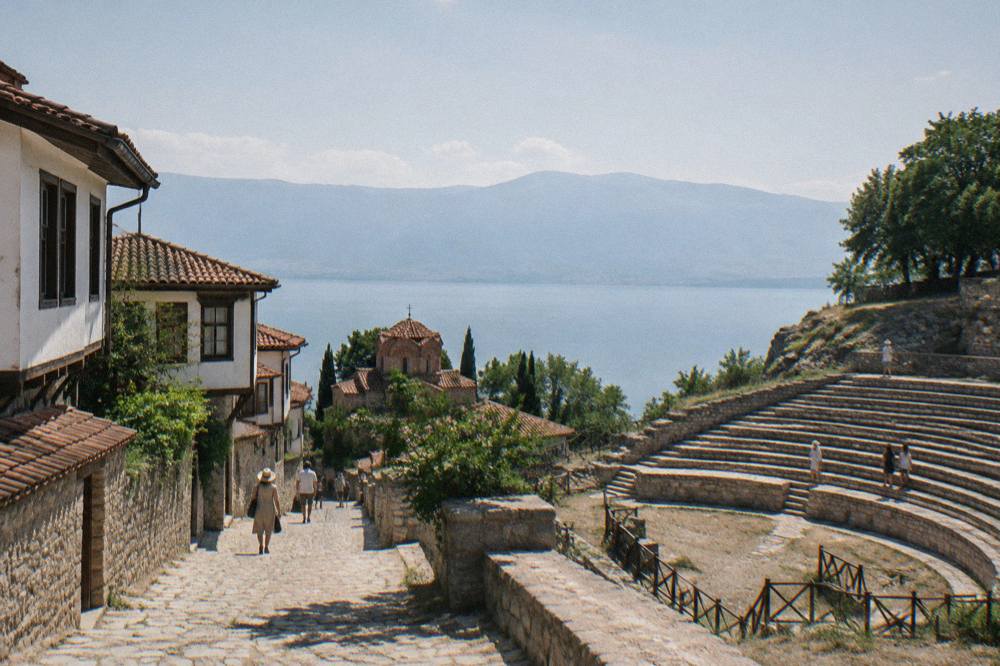
What stands today is the excavated seating and stage architecture of a late Hellenistic theatre, curved stone tiers set into the slope, with enough of the cavea preserved that the site served for decades as an open-air performance space and remains the ceremonial opening venue of the Ohrid Summer Festival, whose 2026 edition opened there on 12 July. The excavation that began in 1935 recovered the theatre from the accumulated building of the centuries above it, and the institute that manages it presents it as both monument and stage. No interior description beyond that is offered here, because the official pages describe the monument's history and capacity rather than its current layout.
The honest planning picture is that the theatre is a monument you walk around and, on performance days, sit in. The sources give no entrance fee and no hours for it. What can be stated plainly is its institutional context: the museum institute's office at Boro Shain St 10 keeps weekday office hours of 07:30 to 15:30, and its ticketed sites follow winter and summer schedules, with the winter schedule running from 1 October to 30 April and the summer schedule from 1 May to 30 September, closed on Mondays where each site's page says so. The theatre's own festival use is seasonal in a different way: it peaks in July and August with the festival programme.
Around the theatre, the rest of the old town supplies the fee-charging half of a sightseeing day. The institute's museum sites charge 120 denars for domestic visitors, 150 denars for foreign visitors, and 60 denars for children and students. Those rates apply to the Robev Family House, the Icon Gallery at the Perivleptos complex and the Museum on Water at the Bay of Bones near Peshtani, each with its own published hours, and the pairing table further down this page sets them out. The theatre, by contrast, carries no published fee, and the festival events staged inside it are ticketed through the festival rather than through the museum institute.
For visitors who want the theatre explained rather than simply found, a guided visit is the efficient route, and the choice below covers the old town as a whole rather than the theatre in isolation.
| Nearby sight | Distance context | Ticket (institute sites) | Hours basis |
|---|---|---|---|
| Ancient Theatre | On the old-town slope | None stated | Open-air monument |
| Robev Family House | Downhill in the old town | 120/150/60 MKD | Winter 09:00-15:30, summer two shifts, closed Monday |
| Icon Gallery, Perivleptos | In the old town | 120/150/60 MKD | Winter 09:00-14:00, summer 09:00-17:00, closed Monday |
| St Sophia | Lower old town | About 150 MKD, reported | Not stated |
| Bay of Bones, Peshtani | Lakeshore south of town | 150 MKD per person | Winter 09:00-15:30, summer 09:00-16:30, closed Monday |
How Does The Ohrid Summer Festival Use The Theatre?
The Ohrid Summer Festival holds its opening gala at the Ancient Theatre, and did so on 12 July 2026, when the 66th edition opened with a gala programme at the monument before running a 40-day season to 20 August, with the Ancient Theatre and St Sophia named as its traditional main venues. The theatre's role is ceremonial and musical at once: the opening night is its biggest single occasion of the year, and festival programming across the season returns to the stone tiers for performances that use the Hellenistic cavea as a auditorium of roughly the scale the ancient builders intended.
The 2026 opening is documented in detail. The 66th Ohrid Summer Festival opened on 12 July 2026 at the Ancient Theatre with a gala titled "Love", featuring the singers Ermonela Jaho and Charles Castronovo, and the festival ran 40 days, closing by tradition on 20 August. St Sophia, the great church lower in the old town, shares the festival load as the other traditional venue, its interior serving the concert programme while the theatre carries the open-air performances. Festival tickets are sold through the festival's own channels, not through the museum institute and not through any tour listing, and 2027 dates have not been announced.
The festival season slots into a broader summer calendar that gives the theatre and the old town their busiest weeks. The Balkan Festival of Folk Songs and Dances ran its 65th edition from 3 to 6 July 2026, opening with the Tanec ensemble at the Grigor Prlichev cultural centre, and the Ohrid Water Festival ran 12 to 30 August 2026, including the 25 km Ohrid Swimming Marathon from St Naum to Ohrid harbour on 22 August and a separate 33 km stand-up-paddle marathon around the lake on 26 August. Struga's Poetry Evenings, the 65th edition from 24 to 29 June 2026, sit just before the Ohrid season opens, so late June through August is one continuous cultural run across the lake towns.
| Event, 2026 | Dates | Venue detail |
|---|---|---|
| Struga Poetry Evenings, 65th edition | 24 to 29 June | Struga, theme "Where Poetry Lives", about 70 poets |
| Ohrid Summer Festival, 66th edition | 12 July to 20 August | Opening gala at the Ancient Theatre on 12 July |
| Balkan Festival of Folk Songs and Dances, 65th | 3 to 6 July | Grigor Prlichev cultural centre, opened by Tanec |
| Ohrid Water Festival | 12 to 30 August | Swimming marathon 22 Aug, 25 km; SUP marathon 26 Aug, 33 km |
A visitor whose trip is built around the theatre's biggest night should plan around the festival opening in July, keeping in mind that the whole lake season peaks from June to September with August the busiest month, and that modelled ERA5 climate normals for 1991 to 2020 put July at a mean daily high of 27.1 C and August at 27.6 C, with rain at 34.7 mm and 32.9 mm respectively, the two lowest monthly totals of the year.
How Do You Fit The Ancient Theatre Into A Day In Ohrid?
The theatre works best as the mid-point of an old-town loop: climb from the lakefront through the lanes to the theatre, continue up to Samuel's Fortress, then descend past Plaosnik and St Sophia toward the bazaar and the water, a sequence the one-day itinerary on this site follows and that guided old-town walks cover in a single morning or afternoon. The order matters less than the geography, since the theatre sits between the shore and the fortress, but the classic direction is upward first, while legs are fresh, and the lake views come as reward on the way down.
A full day gives the theatre a natural supporting cast. The morning can carry the fortress hill and the theatre; the middle of the day the Old Bazaar and lunch; the afternoon the church circuit of Plaosnik and St Sophia, with the late afternoon reserved for the water. The lakeshore is where Ohrid changes register entirely: a panoramic boat tour of the old town from the water puts the theatre's hillside in context from below, showing how the monument sits inside the amphitheatre of the town itself. For visitors basing themselves overnight, the where to stay guide maps the districts, and the restaurants guide covers the old-town tables within walking distance of the loop.
Two half-day rhythms suit the theatre equally. A morning walk catches the old town before the day heats up, with July and August modelled highs of 27.1 C and 27.6 C making the climb more comfortable before noon. An evening visit belongs to the festival calendar: on performance nights the theatre fills, and the surrounding lanes do the same, so dinner planning around an event should allow time for the uphill walk. Outside the festival weeks the theatre is simply a monument on the hillside, quiet at any hour, and the descent toward the water takes in the boardwalk and the city beach at the bottom.
| Time block | Old-town sequence | Notes |
|---|---|---|
| Morning | Lakefront, theatre, Samuel's Fortress | Climb before the midday heat in July and August |
| Midday | Descent past Plaosnik to the Old Bazaar | Lunch stops cluster around the bazaar lanes |
| Afternoon | St Sophia, Perivleptos and Icon Gallery | Institute sites closed Mondays |
| Evening | Boardwalk and lakefront, or a festival performance | Theatre fills on Ohrid Summer Festival nights |
Which Ohrid Sights Pair Best With The Ancient Theatre?
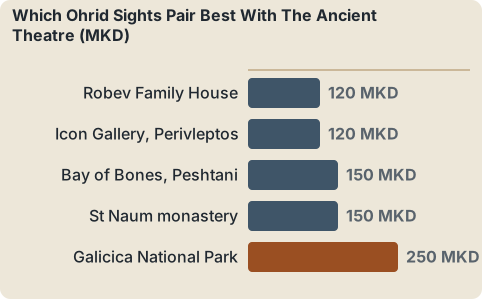
The closest pairings are Samuel's Fortress directly above the theatre and the museum-institute sites below it, chiefly the Robev Family House and the Icon Gallery at the Perivleptos complex, with St Sophia, Plaosnik and the Old Bazaar completing a circuit that can be walked in one day on the old-town hill. Each pairing has its own fee logic: the fortress posts no price or hours, the institute's museum sites charge 120 denars domestic and 150 denars foreign with a 60-denar rate for children and students, and the theatre itself carries no stated fee, so a full old-town day can be built around a single set of institute tickets plus the free-standing monuments.
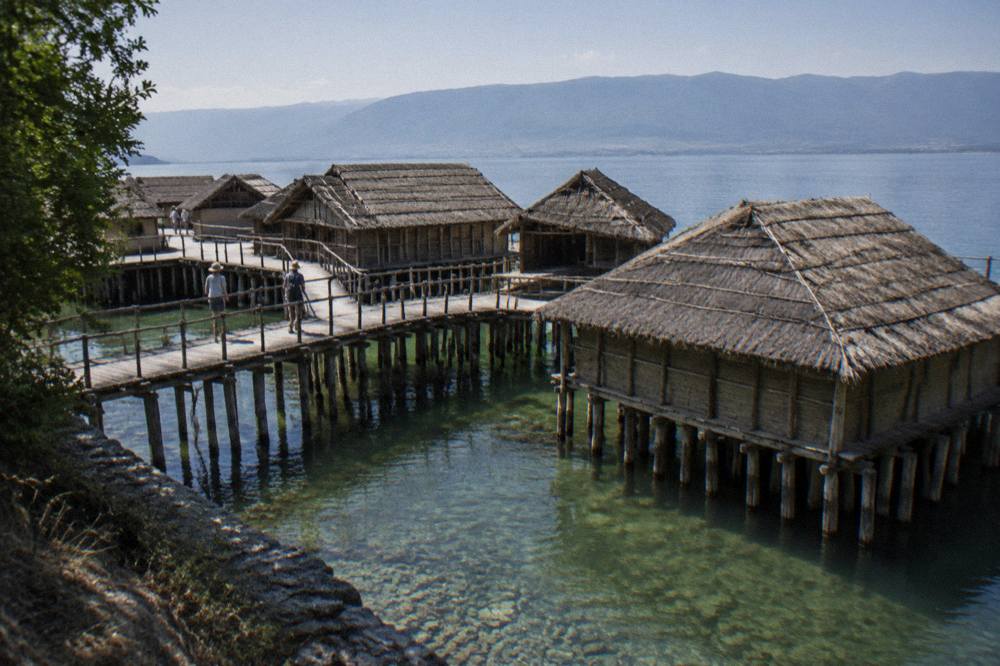
The pairings extend beyond the old town for visitors with more time. South along the shore, the Bay of Bones, the Museum on Water at Gradishte near Peshtani, reconstructs a prehistoric lake settlement on pilings and runs the same institute ticket system, with summer hours of 09:00 to 16:30 from 1 May to 30 September and winter hours of 09:00 to 15:30, closed Mondays in both seasons. Further still, the St Naum monastery sits at the lakeside springs of the Crn Drim near the Albanian border, about 4 km from the Tushemisht crossing, with an entrance of 150 MKD per person quoted by a cruise operator and rowboat rides through the springs at about 5 EUR. A full-day boat cruise from Ohrid port to St Naum with the operator Boat Armada runs 7 hours, from 1,200 denars per adult and 600 denars per child.
Inland, Galicica National Park rises between Lake Ohrid and Lake Prespa as North Macedonia's second national park, proclaimed in 1958, covering 22,750 hectares with Magaro peak at 2,254 m; the park charges 250 MKD per vehicle, with 100 MKD applying only to those entering on foot from the Ohrid-side gate. The park road is open year-round, though heavy snow can close it typically between January and March. These are day trips from Ohrid, not old-town stops, and they suit a second or third day rather than the theatre day itself. The hidden-gems itinerary gathers the less obvious stops closer to town for visitors who have already walked the main circuit.
| Pairing | Type | Fee basis | Best slot |
|---|---|---|---|
| Robev Family House | Institute museum | 120/150/60 MKD | Afternoon, closed Monday |
| Icon Gallery, Perivleptos | Institute museum | 120/150/60 MKD | Afternoon, closed Monday |
| Bay of Bones, Peshtani | Institute lakeside site | 150 MKD per person | Second day, by boat or road |
| St Naum monastery | Lakeside monastery | 150 MKD per person, operator-quoted | Full-day boat cruise |
| Galicica National Park | Mountain park | 250 MKD per vehicle | Clear day outside Jan-Mar snow |
When Is The Best Time Of Year To See The Ancient Theatre Of Ohrid?
July is the month that answers the question for the theatre specifically, because the Ohrid Summer Festival opens there in mid-July, but June through September all work for a visit, with modelled ERA5 climate normals for 1991 to 2020 showing June at a 24.2 C mean high, July at 27.1 C, August at 27.6 C and September at 22.4 C, and with rain at its two lowest monthly totals in July and August. The festival opening on 12 July 2026 is the single date that transforms the monument from a quiet hillside site into the town's principal stage.
The shoulder months trade the festival for space. May carries a modelled mean high of 19.5 C with 70.8 mm of rain, October 17.4 C with 76.0 mm, and the lake's modelled surface temperature cools from about 22.9 C in July to about 14.7 C in October, so swimming drops out of the day's plan by late autumn. Winter visits are possible and quiet: January's modelled mean high is 5.0 C with 76.5 mm of rain, snow reaches the Galicica heights above the town, and the theatre stands open on the hillside, though the lakeside boat season has ended and the museum sites have shifted to their winter schedules from 1 October to 30 April. The month-by-month climate guide on this site carries the full normals table.
| Month | Modelled mean high C | Modelled mean low C | Rain mm | Theatre-day character |
|---|---|---|---|---|
| May | 19.5 | 10.8 | 70.8 | Green hillside, thin crowds |
| June | 24.2 | 15.2 | 43.1 | Season builds, Struga poetry late June |
| July | 27.1 | 18.3 | 34.7 | Festival opens at the theatre |
| August | 27.6 | 19.0 | 32.9 | Festival closes on the 20th, water festival after |
| September | 22.4 | 14.9 | 62.4 | Warm lake, quieter lanes |
| October | 17.4 | 10.3 | 76.0 | Museum sites move to winter hours on the 1st |
ERA5 reanalysis values for the 1991 to 2020 period, modelled for a grid cell over Ohrid, are the basis of every figure in the table above. For visitors combining the theatre with the water, the modelled lake surface temperature reaches about 22.9 C in July and 23.5 C in August, with the UHMR multi-year October mean at 14.3 C, and the 2026 bathing-water testing found Class I physico-chemical quality at Ohrid's swimming points except Grashnica beach, which was rated Class III.
Common Questions About The Ancient Theatre Of Ohrid
How old is the Ancient Theatre of Ohrid?
It was built in the late Hellenistic period, according to the Institute and Museum of Ohrid's own page for the monument, and it was first excavated in 1935.
How many people does the Ancient Theatre of Ohrid seat?
About 5,000, a capacity reached after the epiteatron, an upper seating tier, was added, per the institute's page for the theatre.
Does the Ancient Theatre of Ohrid charge an entrance fee?
No fee is stated on the official page for the theatre. The institute's ticket rates of 120 denars domestic, 150 denars foreign and 60 denars for children and students apply to its listed museum sites, such as the Robev Family House, the Icon Gallery and the Museum on Water, not to the theatre.
Can you attend a performance at the Ancient Theatre of Ohrid?
Yes, during the Ohrid Summer Festival. The 66th edition opened at the theatre on 12 July 2026 with the gala "Love", featuring Ermonela Jaho and Charles Castronovo, and ran 40 days to 20 August, with the Ancient Theatre and St Sophia as its traditional main venues. Festival tickets are sold through the festival's own channels.
Where exactly is the theatre in Ohrid?
On the old-town hillside, on the slope between the lakeshore and Samuel's Fortress. Reaching it is a walk uphill through the old-town lanes from the Old Bazaar and lakefront; there is no tram or bike share in Ohrid.
What else should you see near the Ancient Theatre?
Samuel's Fortress above it, then Plaosnik, St Sophia, the Perivleptos complex with the Icon Gallery, and the Old Bazaar on the way down to the water, a circuit covered in the one-day Ohrid itinerary on this site.