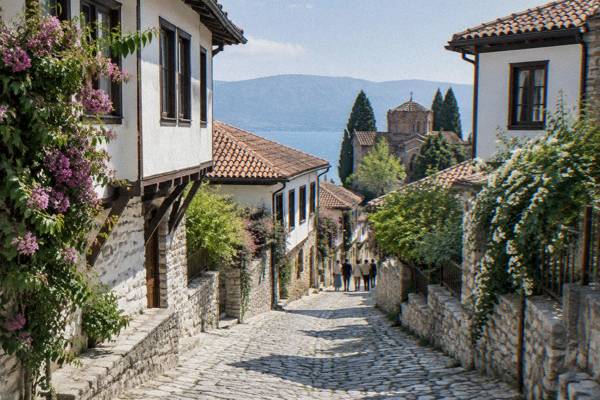
How Old Is Ohrid?
How old is Ohrid? A sourced timeline of the North Macedonian lake town, from the Ancient Theatre to the UNESCO listing, Samuel's Fortress, the churches and a lake measured in millions of years.
The Ancient Theatre above Ohrid's old town was built at the end of the third or start of the second century BC, which gives the town, in North Macedonia on the shore of Lake Ohrid, a documented age of well over two thousand years at that single site. Below the masonry, the water goes far deeper into time: UNESCO's citation puts the lake at about two to three million years old. This page on the Ohrid Travel Guide lays out each dated layer, from the theatre's first excavations in 1935 to the 2021 census count of the people living above it.
Ohrid is over two thousand years old at its dated ancient sites: the Ancient Theatre was built at the end of the third or start of the second century BC, its first excavations came in 1935, and its capacity rose to 5,000 after the epiteatron was added, all according to the museum institute's own page for the site. Older still is the lake it sits above, which UNESCO estimates at about two to three million years.
The town's age is really several ages stacked on one hillside. The theatre is the oldest dated structure with an official page behind it. Samuel's Fortress sits higher up the same slope, a medieval layer whose own timeline the fortress's official page does not fix with dates. Lower down, the church sites and the Old Bazaar carry the Byzantine and Ottoman-era story, and the museum institute's ticket system links several of them together.
The number that answers the question depends on what is being measured. Count from the theatre and the town is more than two millennia old at that spot. Count the lake and the figure jumps into the millions of years, with over 200 endemic species, including 17 endemic fish, cited in the UNESCO listing. The Ancient Theatre of Ohrid is the anchor for the man-made side of the timeline, and it still hosts the opening gala of the Ohrid Summer Festival, which opened its 66th edition there on 12 July 2026.
| Layer of Ohrid | What the source says | Figure |
|---|---|---|
| Lake Ohrid | UNESCO listing: lake has existed about two to three million years | about two to three million years |
| Ancient Theatre | Museum institute page: built end of 3rd or start of 2nd century BC | more than two thousand years |
| Ancient Theatre excavations | First excavations in 1935 | 1935 |
| Ancient Theatre capacity | Rose to 5,000 after the epiteatron was added | 5,000 |
| UNESCO inscription | Natural 1979, cultural 1980, extended to Albanian part 2019 | 1979 and 1980 |
| Living town | Municipality population, 2021 census, reported | 51,428 |
What Is The Oldest Dated Structure Standing In Ohrid?
The Ancient Theatre is the oldest structure in Ohrid with a dated official entry: the museum institute's page for the site places its construction at the end of the third or the start of the second century BC, notes the first excavations in 1935, and records that capacity rose to 5,000 once the epiteatron was added. It sits on the slope between the old town and the fortress.
Three figures from that one page do most of the work. The construction window puts the theatre in the late Hellenistic period, a label the institute's own text uses. The 1935 excavation date marks when the modern town began recovering the structure. The 5,000 capacity, reached after the epiteatron was added, tells you the scale the ancient city worked at when it filled the hillside.
The theatre is not a museum-glass relic. It serves as a performance venue, and the Ohrid Summer Festival used it for its opening gala on 12 July 2026, with the gala running there by tradition. A visit can be folded into a walk up through the old town toward the fortress walls, since the theatre sits on the line between the two.
Want to wander those layers of history at your own pace? Book a self-guided audio walk here.
Where Does Samuel's Fortress Sit In Ohrid's Timeline?
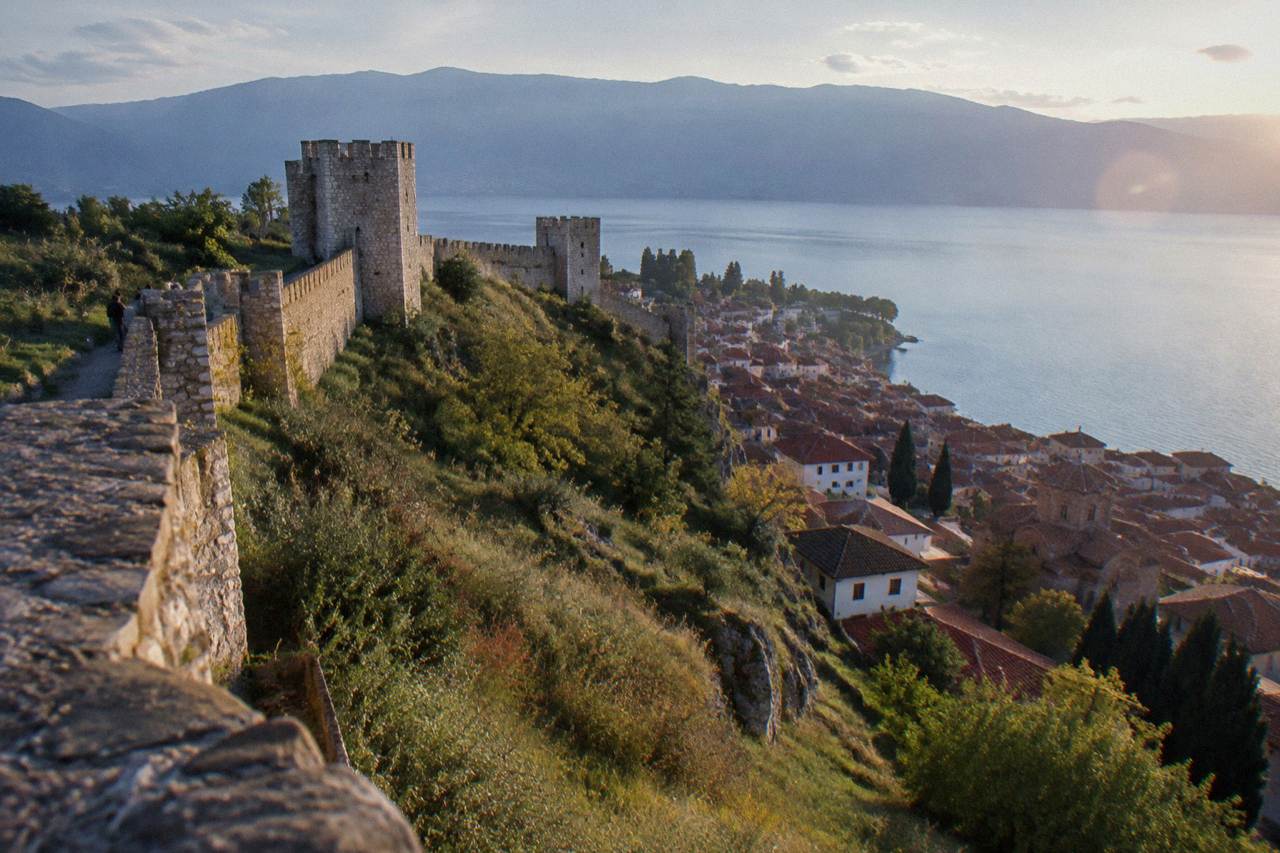
Samuel's Fortress stands above the old town as the medieval layer of Ohrid's history, and its own official page lists no construction date and no ticket price, so its age cannot be pinned down the way the theatre's can. What is documented is a municipal revitalisation plan, budgeted at over 11 million denars, that would add a summer stage and illumination to the site.
The fortress is where caution matters. Pages across the web attach dates, prices and hours to it freely, but the institute's own material states none for the fortress, and this site does not repeat figures the primary pages do not carry. What can be said is structural: the fortress walls sit at the top of the old-town slope, the lanes below them are entirely on foot, and the climb from the lake to the walls is the town's most direct walk through its layers.
The 11-million-denar revitalisation plan, reported by plusinfo.mk, signals that the fortress is treated as a working venue rather than a sealed monument, with a summer stage and illumination in the design. For planning a visit, the Samuel's Fortress guide on this site keeps to what the official pages state and flags what they do not.
What Do The Church Sites Add To Ohrid's Age?
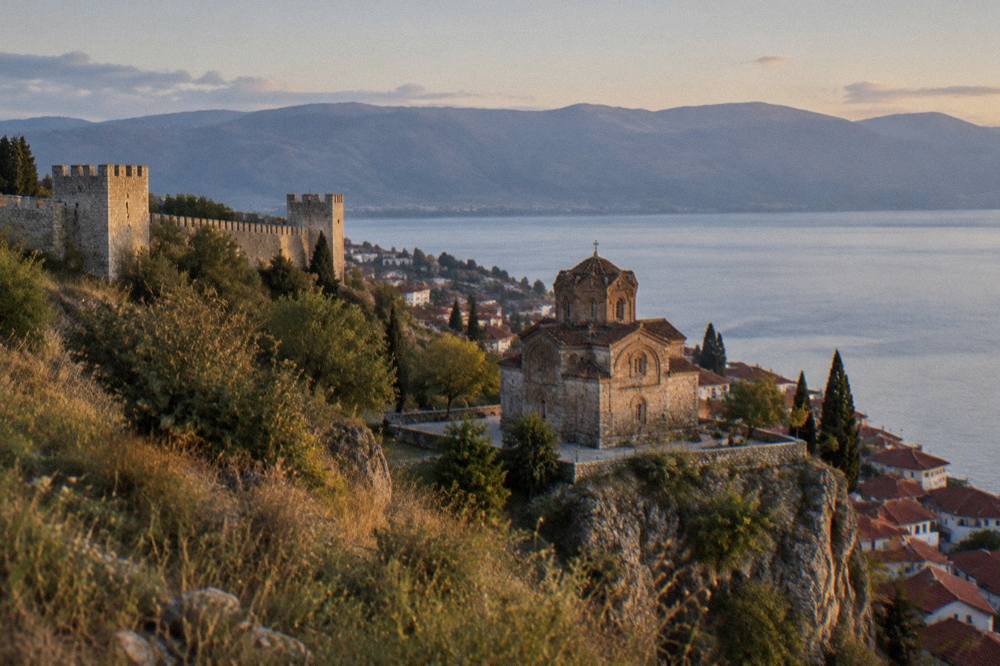
The church layer runs from the Byzantine era onward: UNESCO's citation recognises St Panteleimon at Plaosnik as the first Slav monastery, and credits Ohrid with more than 800 Byzantine-style icons from the eleventh to the end of the fourteenth century. The museum institute's ticket system prices its own sites at 150 den for foreign visitors, 120 den for domestic visitors, with a reported 60-den rate for children and students.
The icon collection is the strongest dated body of material: more than 800 Byzantine-style icons spanning the eleventh to the end of the fourteenth century, held across the town's galleries, with the Icon Gallery at the Perivleptos complex on the institute's combined ticket. Robev Family House, on Tsar Samoil Street, holds the same ticket and runs a winter schedule from 1 October to 30 April, 09:00 to 15:30, closed Monday, with a two-shift summer day from 1 May. The Bay of Bones, the museum on water near Peshtani, is also on the institute's ticket.
UNESCO's interest in Ohrid was formalised in two steps: the region was inscribed as natural heritage in 1979 and as cultural heritage in 1980, and the property was extended to include the Albanian part of the lake in 2019. The mixed property covers about 94,729 hectares. On 24 July 2026 the World Heritage Committee decided not to place the property on the List of World Heritage in Danger, instead asking for a joint report by 1 February 2029.
| Museum institute site | Winter hours (1 Oct to 30 Apr) | Summer schedule | Closing day |
|---|---|---|---|
| Robev Family House, Tsar Samoil St 62 | 09:00 to 15:30 | Two shifts from 1 May, 09:00 to 15:30 and 13:30 to 20:00 | Monday |
| Bay of Bones / Museum on Water, Peshtani | 09:00 to 15:30 | 09:00 to 16:30 (1 May to 30 Sep) | Monday |
| Icon Gallery, Perivleptos complex | 09:00 to 14:00 | 09:00 to 17:00 | Monday |
Tickets across those institute sites: 150 den foreign, 120 den domestic, with the child and student rate reported at 60 den. The rates belong to the institute's listed museum sites only, not to the fortress or the town's working churches, whose pages carry no institute prices.
How Old Is Lake Ohrid Beneath The Town?
Lake Ohrid has existed for about two to three million years, according to UNESCO's citation for the property, which also records over 200 endemic species including 17 endemic fish. The lake sits at about 693 m above sea level, and Galicica National Park, North Macedonia's second national park, founded in 1958, rises between it and Lake Prespa with Magaro peak at 2,254 m.
The lake's age is the figure that separates Ohrid from almost every other heritage town in Europe: the water under the town predates the theatre, the fortress and the churches by a margin measured in millions of years. UNESCO's basis for the figure is the listing text itself, which is the source this site treats as final on the question. The endemism count, over 200 species with 17 endemic fish, is part of the same citation.
The hydrology is monitored daily. The lake's water level stands at about 693 m above sea level, and the October mean water temperature is 14.3 C on the UHMR multi-year record with a 2001 to 2020 base. Modelled aggregator values put the July surface at about 22.9 C and August at about 23.5 C, with the swimming season running from July. Galicica, between the two lakes, covers 22,750 ha and is open year-round, though heavy snow can close its main road, typically from January to March.
| Lake and park figure | Value | Basis |
|---|---|---|
| Lake Ohrid age | approx. 2 to 3 million years | UNESCO listing |
| Endemic species | over 200, incl. 17 endemic fish | UNESCO listing |
| Lake level | about 693 m above sea level | UHMR gauge |
| October mean water temperature | 14.3 C | UHMR multi-year mean, 2001 to 2020 |
| Galicica National Park | founded 1958, 22,750 ha | Park guide |
| Magaro peak | 2,254 m | Park guide |
| Lake Prespa level | 841.36 m, about 148 m above Lake Ohrid | UHMR gauge, 19 Oct 2026 |
How Old Is Ohrid As A Living Town Today?
Ohrid today is a town of 51,428 people in its municipality, reported from the 2021 census, spread from the lakeshore up the lanes to the fortress, with an economy that leans on the summer season, the Ohrid Summer Festival and the lake itself. The same hillside that holds a second-century-BC theatre also holds a working Old Bazaar and a bus station serving Skopje about 170 km away.
The November 2025 count from the State Statistical Office, reported by Ohridnews, logged 18,103 guests in the municipality that month, 11,686 of them foreign, with Germany the largest foreign market at 3,537. That is a town carrying its layered past while running a modern tourist economy, with festival dates fixed on the calendar: the 66th Ohrid Summer Festival opened on 12 July 2026 and ran toward its traditional 20 August close, and the Balkan Festival of Folk Songs and Dances held its 65th edition from 3 to 6 July 2026.
For visitors turning the timeline into a day's walking, the private full-day option that strings the fortress, the theatre and the lake shore into one loop is worth a look alongside the trio below, and Check availability before locking a date. What Ohrid is famous for beyond its age, from the pearls to the trout, is covered in the companion what Ohrid is famous for answer on this site.
Common Questions About The Age Of Ohrid
How Old Is Ohrid?
Over two thousand years at its dated ancient sites: the Ancient Theatre was built at the end of the third or start of the second century BC, per the museum institute's page, and the lake beneath the town is about two to three million years old by UNESCO's estimate.
What is the oldest dated structure in Ohrid?
The Ancient Theatre, built at the end of the third or start of the second century BC, first excavated in 1935, with a capacity that rose to 5,000 after the epiteatron was added.
How old is Lake Ohrid?
UNESCO's listing states the lake has existed for about two to three million years and records over 200 endemic species, including 17 endemic fish.
How old is Samuel's Fortress?
The fortress's official pages list no construction date, so no age figure can be given. What is documented is a revitalisation plan, budgeted at over 11 million denars, for a summer stage and illumination at the site.
When did Ohrid become a UNESCO World Heritage site?
The Ohrid region was inscribed as natural heritage in 1979 and as cultural heritage in 1980, and the property was extended to include the Albanian part in 2019. On 24 July 2026 the Committee decided not to place it on the Danger List.
How many people live in Ohrid?
The municipality's population was 51,428 at the 2021 census, as reported from State Statistical Office data.