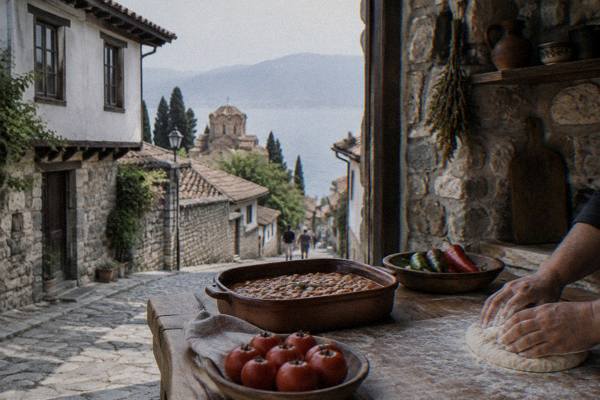
What Is The Best Food In North Macedonia?
What to eat in Ohrid and across North Macedonia: tavche gravche, lake trout, grilled meats, pastries and local wine, with how to plan a food-focused visit.
Ohrid, the old lake town in North Macedonia, is where most food-focused trips to the country end up, and for a plain reason: the UNESCO-listed old town, the lakeshore and the day-trip ring around it concentrate the whole national kitchen within a short ride. The Ohrid Travel Guide covers where each dish sits in town and beyond, and this page answers the question directly, starting with the dishes that define the table and ending with the tours and food days that shorten the learning curve. No prices for individual plates appear here, because plate prices move with the season and the street; what does not move is the shape of the menu. The country's cooking is a home kitchen first and a restaurant kitchen second, and that origin explains most of what arrives on the table: beans, peppers, cheese, pastry and charcoal, cooked slowly and served without ceremony.
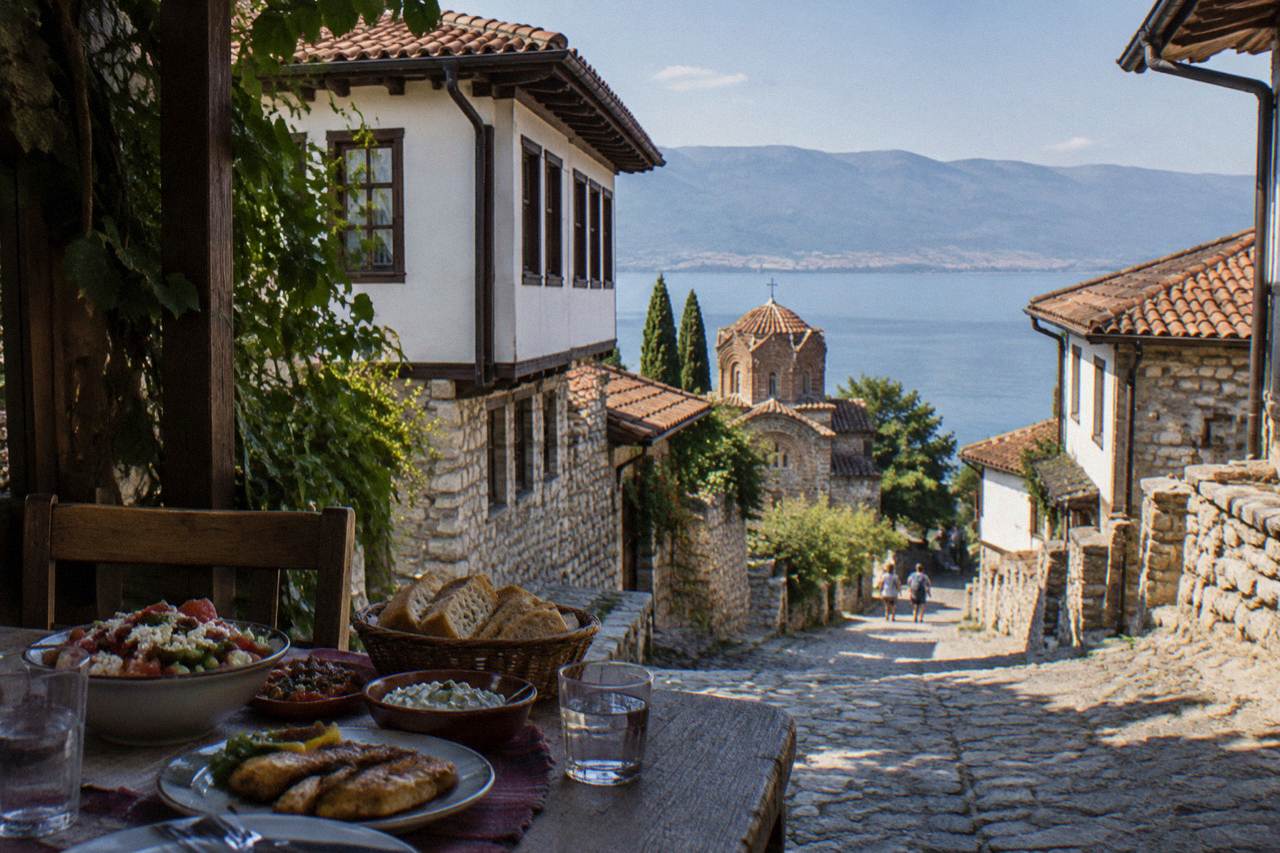
There is no single best dish, but the national table is anchored by tavche gravche, a slow-baked bean pot served in traditional restaurants across Ohrid and the rest of North Macedonia, alongside grilled meats, fresh lake fish, burek pastries, shopska salad and local red wine. A fair answer names tavche gravche as the national dish and builds the rest of the plate around it. That is the short version visitors arrive at within a meal or two of landing, and it holds whether the table is in the Old Bazaar or a village beyond the lake. The site's own food guide to Ohrid unpacks the same menu street by street, and the sections below take each part of it in turn.
Which Dishes Define Ohrid And Macedonian Cooking?
The core list is short and stable: tavche gravche as the national baked-bean pot, Ohrid trout as the lake's signature fish, kebapi and other charcoal-grilled meats, burek as the everyday pastry, shopska salad as the standard opener, and ajvar as the roasted-pepper relish that arrives with bread. Together these six cover the plate that an Ohrid table sets. None of them is a restaurant secret; each is an everyday food, and that everydayness is exactly why they define the kitchen. A first-day strategy is simply to order across that list rather than hunting one standout plate.
The bean pot deserves the first sentence because it carries the national label. It is baked, served hot, and treated as the dish to order when the question at the top of this page is asked out loud. The tavche gravche guide gives it a page of its own on this site, and the Ohrid trout guide does the same for the fish that belongs to this lake rather than to the country as a whole.
Trout needs a caveat worth stating plainly: Ohrid trout is a native fish of Lake Ohrid, and its fishing is regulated, so what a menu labels as Ohrid trout may be farmed or a related species. Asking is normal and expected. Grilled meats, by contrast, need no caveat: kebapi, grilled sausages and pljeskavica-style patties are everyday charcoal fare, and the pastry counter is where breakfast happens, with burek sold by weight and eaten standing as often as seated.
Around those anchors sits a supporting cast that turns up without being ordered. Bread arrives first, ajvar and other relishes come with it, and a seasonal vegetable dish or a grilled pepper plate fills the middle of the table. Cheese appears in three or four registers across a single menu: white cheese in the salad, a firmer grilled cheese as a starter, and melted cheese baked into smaller dishes. None of this needs translating into a strategy; ordering the anchors and letting the sides arrive is the local way of eating, and a table that tries to plan every dish usually ends up over-ordering, which, in this kitchen, is not a disaster so much as a logistics problem.
| Dish | What It Is | Where It Fits |
|---|---|---|
| Tavche gravche | Slow-baked bean pot, the national dish | Lunch or dinner in traditional restaurants |
| Ohrid trout | Native lake fish, grilled; fishing is regulated | Lakeshore tables in Ohrid |
| Kebapi | Charcoal-grilled minced meat, served in sets | Casual grill houses, Old Bazaar area |
| Burek | Filled pastry sold by weight | Breakfast, eaten any morning |
| Shopska salad | Tomato, cucumber and white cheese salad | Standard starter everywhere |
| Ajvar | Roasted-pepper relish | Arrives with bread, also bought to take home |
A food day does not have to be a restaurant-only day. The tours above mix the table with the countryside: a cave-churches-and-villages day that puts village cooking on the itinerary, a half-day city tour that walks the old town where the food streets sit, and a monastery winery tasting that covers the wine half of the question.
Fancy pairing the table with local bottles? Book a wine tasting here.
Where To Eat In Ohrid: From The Old Bazaar To The Shore?
Eat in two registers: the Old Bazaar and the lanes immediately around it for grill houses, bakeries and the fast, standing lunch, and the lakeshore from the port down to Kaneo for slower sit-down tables with fish on the menu. A stay of two or three days lets you work both, and the climb between them is short and on foot. That two-register split is the practical answer, and it needs no car: the old town climbs from the lake to the fortress, and the food sits along the whole line of it.
The pastry counter is the morning half of the equation. Burek and its sweet relatives come out through the day, and a bakery near the Old Bazaar is the standard first stop. At midday the grill houses take over, and in the evening the shore tables fill. Nobody planning this needs a named venue list to start; the pattern holds street by street, and the restaurants guide on this site carries the venue-level detail.
Two cautions keep expectations calibrated. First, this is an inland mountain lake at about 693 m above sea level, so "seafood" is not the frame: the fish story here is lake fish, and the trout is the headline. Second, the denar is the currency and card acceptance varies from counter to counter, so carrying cash in MKD for bakeries and small grill houses avoids the question entirely; the money and denar page covers the practical detail.
A useful habit for the evening tables: walk the shore lane once before choosing, because the menus along it cover the same core list with the lake in common, and the differences that matter are the terrace and the pace rather than the cuisine. The fish plates sit closest to the water, the grill houses sit a street or two up, and the pastry counters cluster near the bazaar end. That geography does the deciding for you once you have seen it laid out.
What About Wine, Rakija And Sweets?
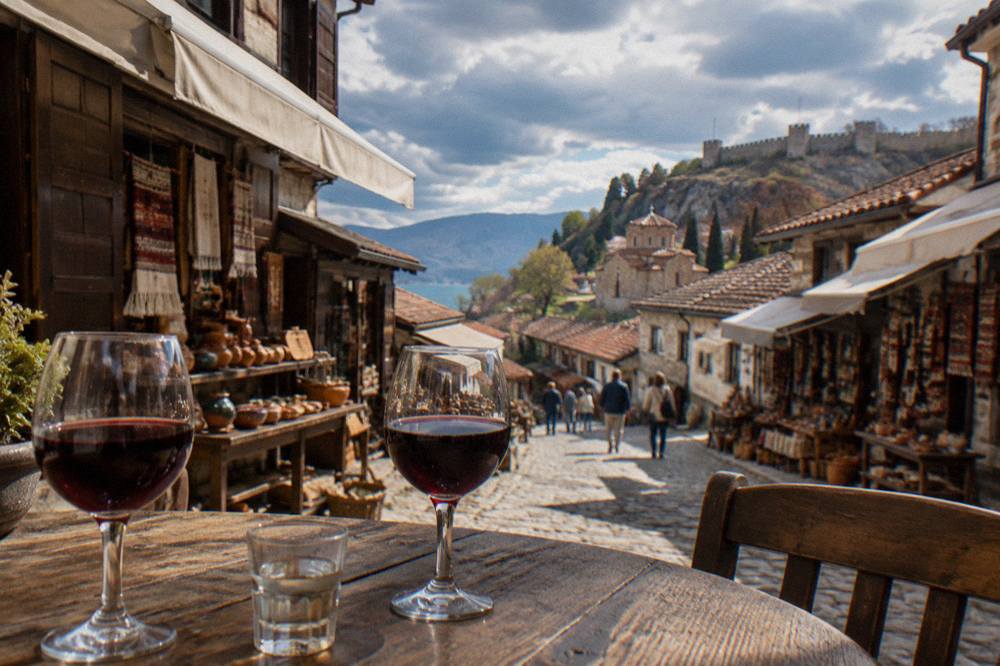
Wine and rakija are the drink answer: North Macedonia has a serious red-wine tradition served by the glass in Ohrid's traditional restaurants, rakija is the fruit brandy that opens or closes a meal, and the sweet course runs through baklava and syrup pastries rather than anything baked around chocolate. The monastery winery day in the picks above is the structured way to taste it, since the tasting comes to you rather than relying on restaurant luck.
The wine deserves more attention than the country's size suggests visitors give it. A tasting built around a monastery winery outside town is the easiest single booking that covers it, and the winery tour in the tour picks above is exactly that product; for direct booking, Check availability on the operator's live listing. The rakija and Macedonian wine guide gives the drinks their own page, including how rakija fits the meal.
| Drink Or Sweet | What It Is | When It Appears |
|---|---|---|
| Red wine by the glass | Local reds from Macedonia's wine regions | Dinner tables in Ohrid |
| Rakija | Fruit brandy | Before or after a meal |
| Turkish-style coffee | Small boiled coffee | After meals, all day in cafés |
| Baklava and syrup pastries | Sweet pastry desserts | Bakeries and restaurant dessert trays |
Coffee closes the loop, because the café is as much a food institution in Ohrid as the grill house. A slow coffee after lunch is the local rhythm, not a tourist performance, and it costs roughly nothing relative to the rest of the day. Rakija follows its own etiquette: it is offered rather than ordered in homes, it arrives in small glasses, and it is drunk in one motion with the table. Visitors who take to it can buy bottles of rakija and jars of ajvar to carry home, which is where the souvenirs and shopping guide on this site picks up the thread.
Can A Food Tour Replace Weeks Of Restaurant Research?
For a short trip, partly yes: a cooking class or a villages-and-cuisine day compresses several restaurant visits into one booked experience, puts the national dishes in front of you in a single sitting, and removes the language and cash questions that slow a solo food crawl. It does not replace the bakery counter or the evening shore table, so the strongest plan books one food day and leaves the rest to the streets. That is the honest split, and it is how the itineraries on this site treat food.
The cooking class product in the roster is the direct version of this: an Ohrid cooking class where the dishes on the list above are the lesson. The villages-and-cuisine day is the wider one, taking the kitchen out to cave churches and villages in a single loop from Ohrid, which suits a stay of three days or more. For a two-day visit the class alone is the better fit, with the Old Bazaar and the shore covering the rest.
Timing matters less for food than for swimming, but it still matters. The lake water warms enough for swimming from roughly July, and the summer tables run fullest then; spring and autumn keep the restaurants open with the same core menu, and the question of when to visit Lake Ohrid is really a question of crowds and warmth rather than of food. If the trip is built around eating rather than swimming, the shoulder months do the same job with more room at the tables.
Common Questions About Food In North Macedonia
What Is The Best Food In North Macedonia?
Tavche gravche, the baked bean pot, carries the national-dish label, with Ohrid trout, grilled meats, burek, shopska salad and ajvar completing the core plate. Ohrid is the natural base to eat through that list.
Can You Drink The Tap Water With A Meal In Ohrid?
Tap water in Ohrid is generally reported as drinkable from the municipal supply, though visitors who prefer bottled water will find it on every table. The site's water page covers the detail.
Is Food In Ohrid Expensive?
North Macedonia is outside the EU and uses the denar, and eating out is modest by wider European standards, though no specific plate price is quoted here. Budget detail sits on the cost page on this site.
What Is Ohrid Trout And Should You Order It?
Ohrid trout is a fish native to Lake Ohrid, and its fishing is regulated, so menu trout may be farmed or a related species. Asking the restaurant is the normal move, and the trout guide on this site explains the background.
Do Restaurants In Ohrid Take Cards?
Card acceptance varies from venue to venue, and bakery and grill counters are the least predictable. Carrying denars in cash covers the whole food day without planning around it.
The short answer to the whole question is a menu rather than a dish: the bean pot first, the lake fish with a question asked, the grill house for lunch, the pastry counter for breakfast, and a glass of local red at the shore table to finish.