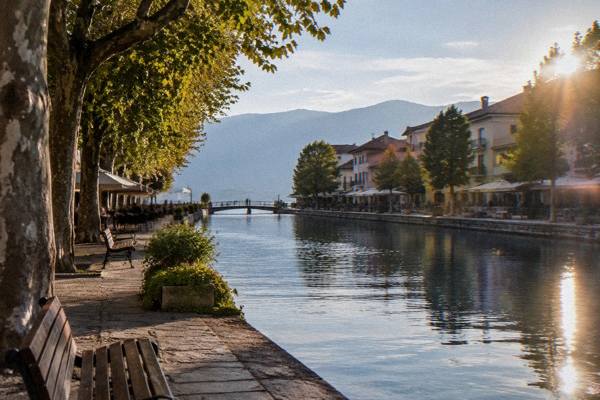
Vevčani: The Springs, The Carnival And The Mountain Village
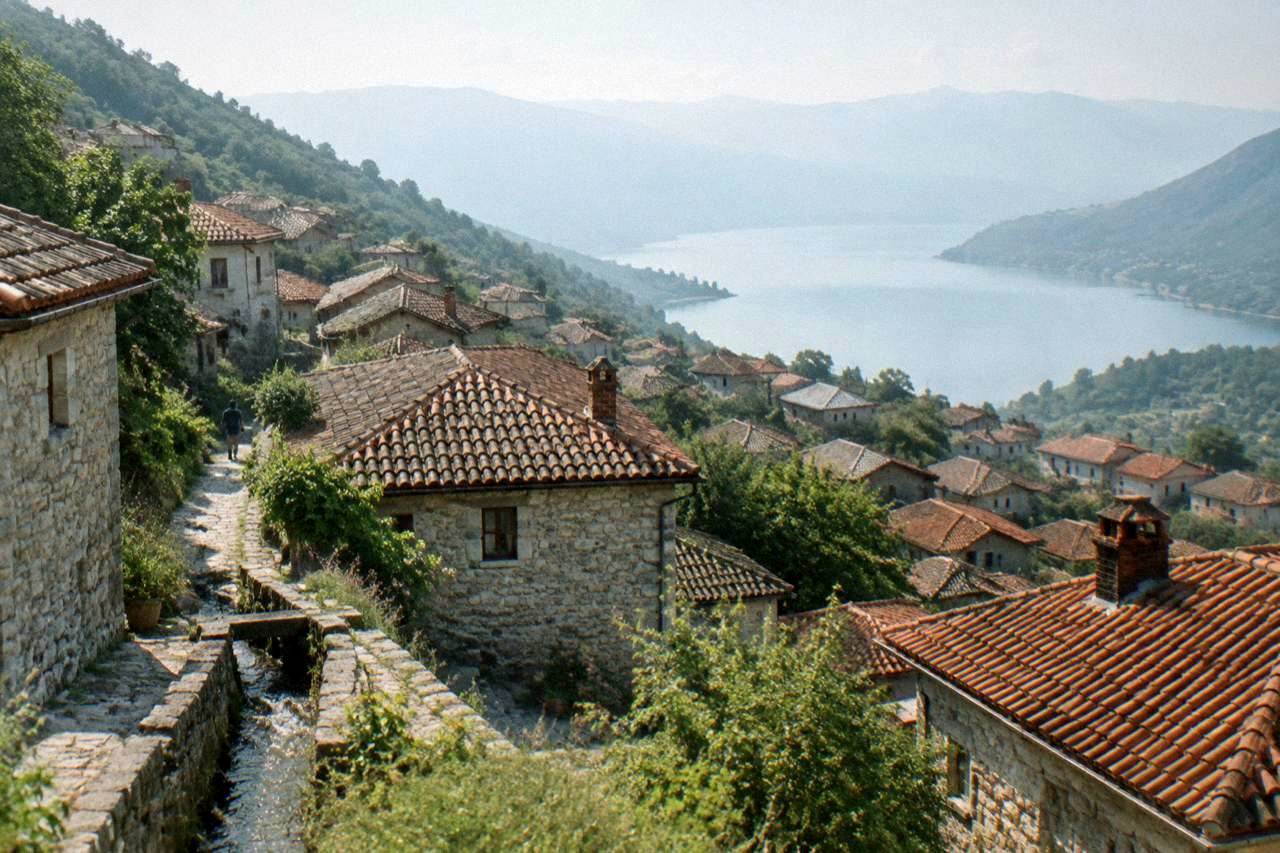
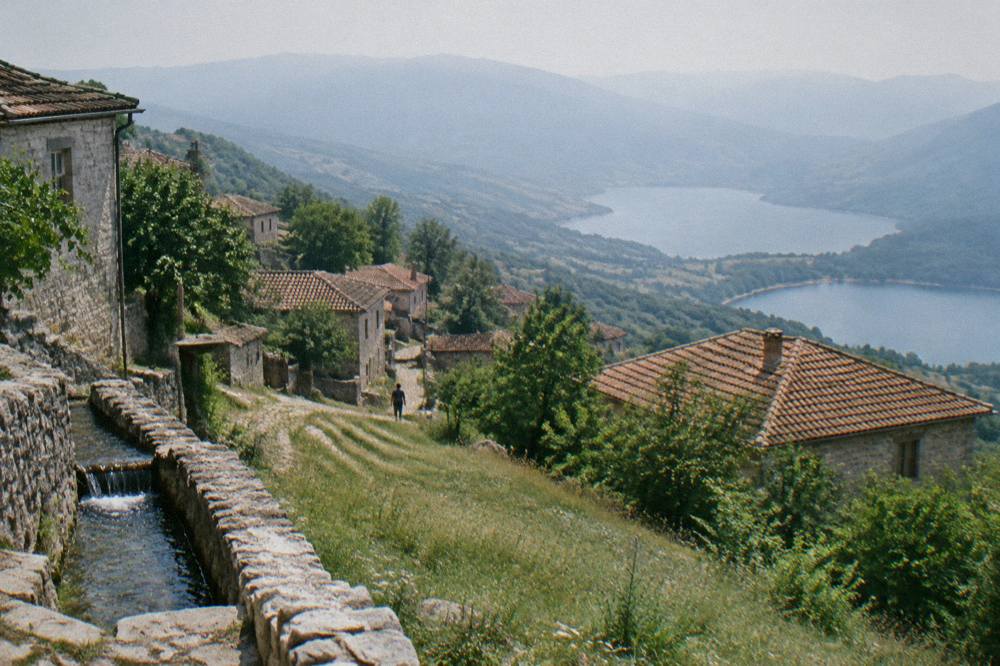
Vevčani is a mountain village in the hills above Struga, reached from Ohrid on a day trip, and it is known for two things above all: the springs that pour out of the hillside, and a January carnival that fills the lanes with masks.
Short answer
Vevčani is a village in the hills above Struga, about 12 km straight-line from Ohrid as Struga itself sits, reached by road via Struga. It is best known for the Vevčani springs and for a carnival traditionally held on 13 and 14 January. There is no printed entry fee or opening-hour schedule to plan around, so the trip works as a half-day excursion from Ohrid or as a stop paired with Struga.
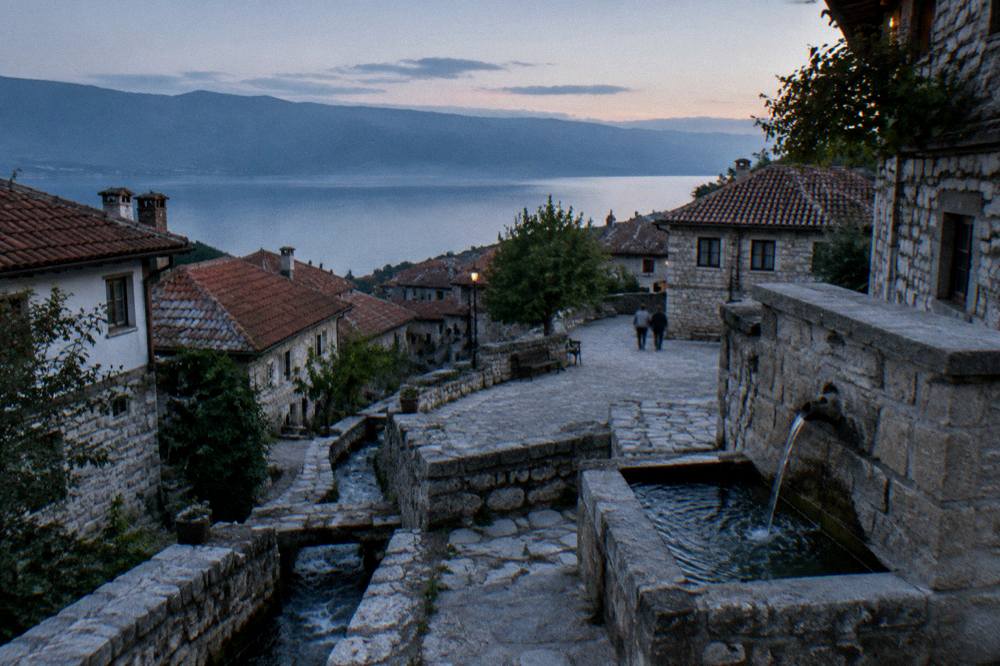
Vevčani is a mountain village above the town of Struga, on the western side of the Lake Ohrid basin in North Macedonia, and it is the day trip from Ohrid that trades the lake shore for hills, fast water and a carnival tradition. The village clusters on a slope with lanes built for feet rather than cars, and the stream that rises at the springs runs down through it toward the Struga plain and the Black Drim. Ohrid itself, the usual base, is a lakeside town on a freshwater mountain lake at about 693 m above sea level, and every destination on this page, Vevčani, Struga, Galicica and the rest, sits outside the town as a separate trip. This Ohrid Travel Guide page lays out what the springs are, how the carnival works, how to get there and what the day costs in denar terms that are actually printed somewhere.
Where Is Vevčani And How Far From Ohrid?
Vevčani is a village in the hills above Struga, on the western side of the Lake Ohrid basin in North Macedonia. Struga lies about 12 km straight-line from Ohrid, and Vevčani is a separate uphill climb beyond Struga on local roads. Most travelers reach it by bus or car to Struga, then continue up to the village. No door-to-door journey time for the full Ohrid to Vevčani leg is given, so treat Struga as the anchor.
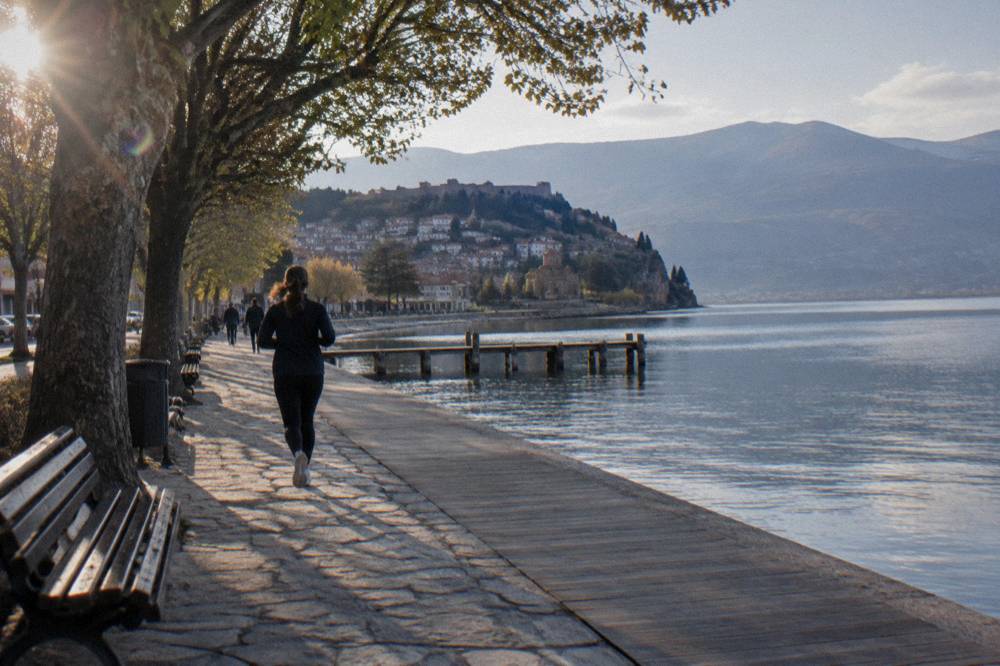
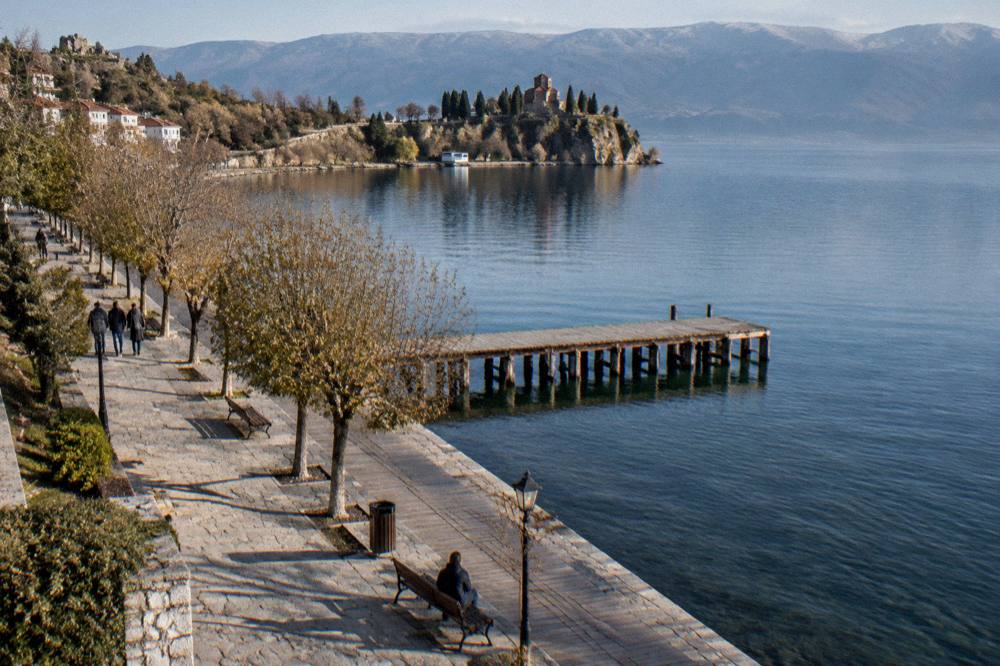
The geography is the reason this trip feels different from the lake shore. Ohrid's old town climbs from the water toward Samuel's Fortress, and the lake sits at about 693 m above sea level. Vevčani belongs to the mountain world behind the basin, the same world that produces Galicica National Park on the eastern side, and the spring water that surfaces there is part of the same karst plumbing that feeds the Crn Drim springs near St Naum at the lake's southern end. The lake's outflow, the Black Drim, runs through Struga, so the stream from Vevčani and the river in Struga belong to one watershed.
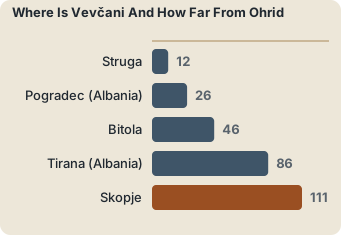
For orientation, the straight-line distances from Ohrid to the other day-trip anchors, computed from the coordinate set, are as follows. They are straight-line figures, not road kilometres, and road distances run longer everywhere in this region of mountains and lake.
| Day-trip destination from Ohrid | Straight-line distance |
|---|---|
| Struga | about 12 km |
| Pogradec (Albania) | about 26 km |
| Bitola | about 46 km |
| Tirana (Albania) | about 86 km |
| Skopje | about 111 km |
Struga pairs naturally with Vevčani, and the Struga day trip from Ohrid covers the town itself: the Black Drim, the lake shore and the poetry festival heritage. Vevčani is the hill chapter of that same outing.
What Are The Vevčani Springs?
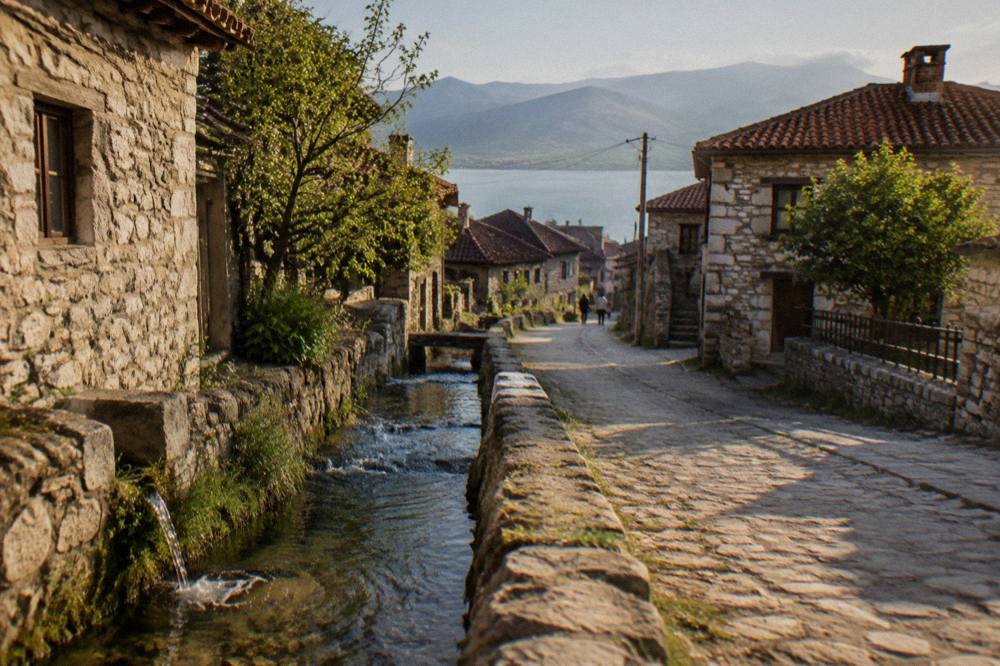
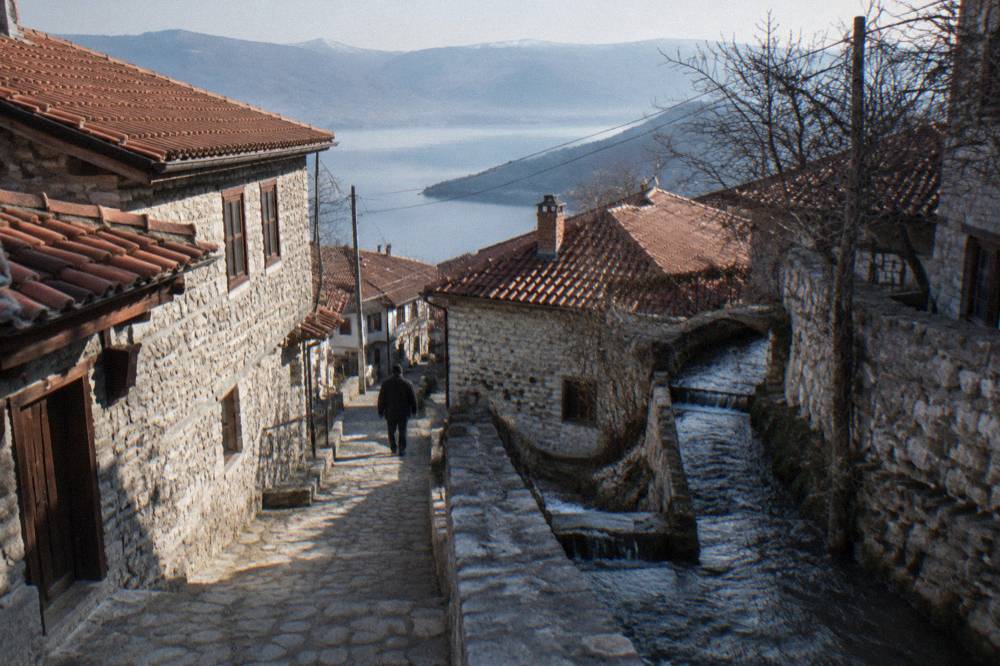
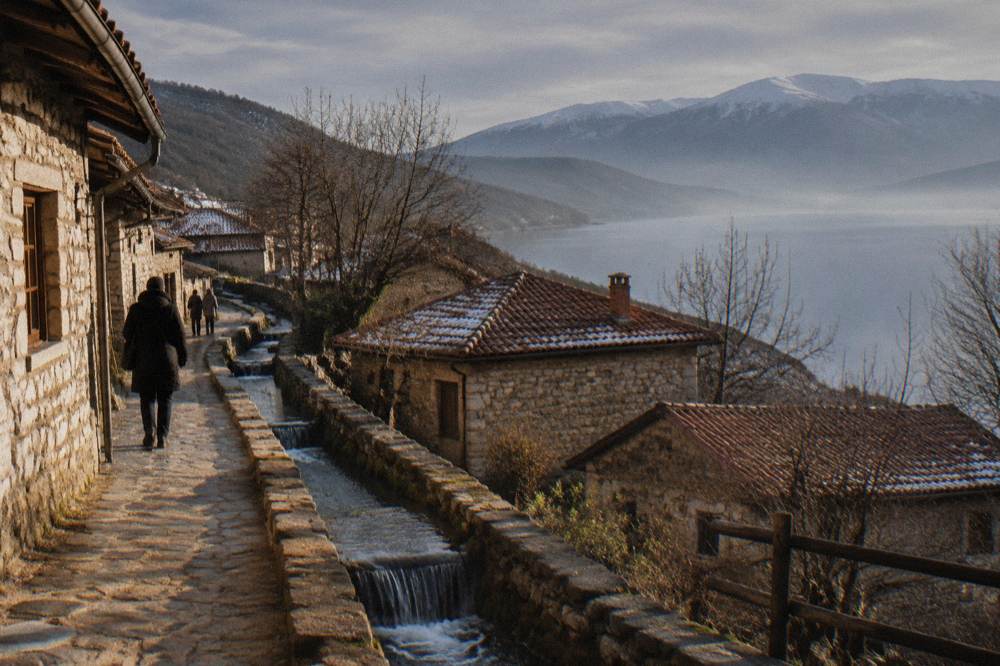
The Vevčani springs are a set of karst springs that rise on the hillside at the top end of the village, pouring out of the rock and gathering into a stream that runs down through Vevčani toward the Struga plain, and they are the village's main natural sight. The water belongs to the same hydrology that makes the whole Ohrid basin unusual: Lake Ohrid is a freshwater mountain lake shared with Albania, with the Crn Drim springs near St Naum at its southern end, and karst springs breaking out of the surrounding hills feed the system from several directions. The Vevčani output is one of the larger of those hillside breakouts on the western side.
No entry fee or opening-hour schedule for the springs could be confirmed for this guide. The practical reality is that the springs and the walk up the stream are the reason to go: the village lanes run alongside the water, and the walk is the activity, not a ticketed attraction with a gate and a queue. Anyone who wants a ticketed museum experience on the same day can find it back in Ohrid, where the museum institute's sites run on a printed schedule.
What the printed facts do support is the comparison with the better-known springs at St Naum. The Crn Drim springs at St Naum monastery sit about 4 km from the Albanian border crossing at Tushemisht, and the monastery entrance there is listed at 150 MKD per person, with a rowboat through the springs at about 5 EUR, both on a cruise operator's published list. The Vevčani springs have no comparable printed price, which shapes the budget: the Ohrid museum sites and St Naum cost denar at the gate, Vevčani costs fuel or a bus fare and nothing at the water.
The lake's own water level, for anyone tracking the basin's health, stands at about 693 m above sea level on the national hydrometrical bulletin, and the same bulletin puts Lake Prespa, over the Galicica ridge, at about 148 m higher than Lake Ohrid. The springs at Vevčani and St Naum are the visible taps of that system.
How Do You Get From Ohrid To Vevčani?
The route from Ohrid runs west along the lake's northern shore to Struga, about 12 km away by straight line, and then climbs from the Struga plain into the hills to Vevčani on local roads; buses and minibuses serve the Ohrid to Struga leg, and the final climb is the part that usually decides whether visitors drive, take a taxi or join an excursion. The Ohrid to Struga connection is the region's workhorse local route, with fares reported at 100 to 150 MKD one way on older guides, a figure to confirm on the day since it is not an official tariff. Beyond Struga, no printed schedule or fare for the Vevčani leg exists in the material this site uses.
Driving gives the most control. Anyone renting a car should know the national driving rules that are printed: headlights on day and night, a green card for insurance, and tolls paid per plaza on the motorway sections with no vignette system. In Ohrid itself, a resident-only parking regime applies on the old-town streets Ilindenska, Kosta Abrash and Car Samoil from summer 2026, with clamping reported for non-residents, so a day trip out of town is also a way to sidestep that regime entirely. The road toward Struga and the hills starts outside those restricted streets.
The guided option covers the whole loop. The Albanian side of the lake excursion is the site's featured tour for this route, an excursion out of Ohrid that covers driving and stops on a shared itinerary, and it can be checked live with Check availability. A product that starts in Skopje or Tirana starts there, not in Ohrid, so anyone booking an excursion for a Vevčani or lake day should read the departure point on the listing before assuming it fits an Ohrid base.
For anyone building the trip from Ohrid without a car, the practical shape is simple: Struga first, by bus or minibus from the Ohrid bus station, then the uphill leg arranged locally. The return works the same way in reverse, and the lake shore road between Ohrid and Struga is the same corridor that carries the buses toward Skopje and, with a border crossing, toward Tirana.
What Is The Vevčani Carnival And When Does It Happen?
The Vevčani Carnival is a masked carnival traditionally held on 13 and 14 January, the eve and first day of the old Julian New Year, and it fills the village with costumed groups in one of the liveliest single events in the Ohrid region's winter calendar. The January dates are reported by the carnival listing this site works from, and they recur each year on the same calendar principle, so a winter visitor can plan around them in a way that the summer festivals, whose dates shift, do not allow. The carnival is the village's second identity alongside the springs.
The masks and the satire are the tradition: carnival groups parade through the lanes with costumes that comment on the year's events, and the whole village becomes a stage for two days. Nothing in the printed material gives a ticket price for watching the carnival, and none is needed: it is a village event in the streets, not a gated festival. The practical challenge is January itself. The modelled ERA5 climate normals for the Ohrid grid point put January's mean daily high at 5.0 C and the mean daily low at -0.8 C, with 76.5 mm of precipitation across the month, and snow falls in the Ohrid basin in winter, with heavier snow on the higher ground such as Galicica. A carnival trip is a winter mountain trip and should be packed for one.
For visitors who cannot make January, the region's calendar has other anchors. The 66th Ohrid Summer Festival opened on 12 July 2026 at the Ancient Theatre in Ohrid and closes by tradition on 20 August. The Ohrid Water Festival ran 12 to 30 August 2026, including the 25 km swimming marathon from St Naum to Ohrid harbour on 22 August and a separate 33 km stand-up-paddle marathon around the lake on 26 August. The 65th Struga Poetry Evenings ran 24 to 29 June 2026 in Struga itself, about 70 poets taking part under the theme "Where Poetry Lives". None of the 2027 editions has announced dates.
| Event in the Ohrid region | 2026 dates | Usual home |
|---|---|---|
| Vevčani Carnival | 13 to 14 January, recurring tradition | Vevčani village |
| Struga Poetry Evenings (65th) | 24 to 29 June | Struga |
| Ohrid Summer Festival (66th) | opened 12 July, closes by tradition 20 August | Ohrid, Ancient Theatre |
| Ohrid Water Festival, 25 km swim | 12 to 30 August; swim 22 August | St Naum to Ohrid harbour |
| SUP marathon around the lake | 26 August | Lake Ohrid |
What Else To See Around Vevčani And Struga?
The productive pairing is Vevčani with Struga: the springs and lanes of the village above, and the river town below, where the Black Drim drains Lake Ohrid and where the Struga Poetry Evenings held their 65th edition from 24 to 29 June 2026. Struga sits on the lake's northern shore at the outflow, and the day trip to Struga from Ohrid covers the town's own sights; Vevčani adds the mountain half of the outing. Prices for Struga's house museums do not appear in the printed material this site uses, so the town is planned around its public riverfront and streets rather than a ticket list.
Back in Ohrid, the ticketed sights that do carry printed hours and prices all belong to the museum institute, and they make a clean contrast with the free-form hill day. The Robev Family House on Tsar Samoil Street runs a winter schedule from 1 October to 30 April, 09:00 to 15:30, and from 1 May two shifts, 09:00 to 15:30 and 13:30 to 20:00, closed Mondays. The Bay of Bones, the Museum on Water at Gradishte near Peshtani, runs winter 09:00 to 15:30 and summer 09:00 to 16:30, closed Mondays. The Icon Gallery at the Perivleptos complex runs winter 09:00 to 14:00 and summer 09:00 to 17:00, also closed Mondays. Institute tickets are 150 den for foreign visitors, 120 den domestic, with a children's and students' rate reported at 60 den.
| Museum institute site in Ohrid | Winter hours (1 Oct to 30 Apr) | Summer hours (from 1 May) | Closed |
|---|---|---|---|
| Robev Family House | 09:00 to 15:30 | 09:00 to 15:30 and 13:30 to 20:00 | Monday |
| Bay of Bones, Museum on Water | 09:00 to 15:30 | 09:00 to 16:30 | Monday |
| Icon Gallery, Perivleptos | 09:00 to 14:00 | 09:00 to 17:00 | Monday |
The wider day-trip belt around Ohrid rounds out the options. Galicica National Park, covered in its own guide, is North Macedonia's second national park, proclaimed in 1958, spanning 22,750 hectares between Lake Ohrid and Lake Prespa with Magaro peak at 2,254 m, and its road over the ridge gives views of both lakes, though snow can close the main road, typically between January and March. St Naum, reached by road or by boat from Ohrid port, is the southern anchor, and the guided St Naum tour from Ohrid covers the monastery and the springs on an organised outing, while one operator publishes a full-day boat cruise from Ohrid port of about 7 hours, from 1,200 den adult and 600 den child, seasonal through the warmer months.
When Is The Best Time Of Year To Visit Vevčani From Ohrid?
The choice splits into two distinct trips: January, cold and occasionally snowy, for the carnival on 13 and 14 January, or the May to October stretch for the springs, the walk up the stream and a combined Struga day in warm weather; the modelled ERA5 normals for the Ohrid grid point put July and August mean daily highs at 27.1 C and 27.6 C, and January's at 5.0 C. Neither month is wrong; they are simply different products. The springs run year-round, the carnival does not.
The modelled normals, computed for the 1991 to 2020 period for the old-town grid point rather than recorded at a station, give the full picture. December brings 92.6 mm of rain and November 90.4 mm, while August brings 32.9 mm and July 34.7 mm. Mean daily lows sit below freezing only in January, at -0.8 C. The lake's swimming season starts around July on the modelled water figures, which is a separate consideration from the village walk: a January carnival trip is not a swimming trip.
| Month | Mean daily high | Mean daily low | Rain |
|---|---|---|---|
| Jan | 5.0 C | -0.8 C | 76.5 mm |
| Feb | 6.3 C | 0.0 C | 74.3 mm |
| Mar | 10.0 C | 2.5 C | 80.5 mm |
| Apr | 14.6 C | 6.3 C | 82.4 mm |
| May | 19.5 C | 10.8 C | 70.8 mm |
| Jun | 24.2 C | 15.2 C | 43.1 mm |
| Jul | 27.1 C | 18.3 C | 34.7 mm |
| Aug | 27.6 C | 19.0 C | 32.9 mm |
| Sep | 22.4 C | 14.9 C | 62.4 mm |
| Oct | 17.4 C | 10.3 C | 76.0 mm |
| Nov | 11.5 C | 5.3 C | 90.4 mm |
| Dec | 6.2 C | 0.9 C | 92.6 mm |
How Does Vevčani Compare With Other Day Trips From Ohrid?
Vevčani is the region's mountain-village day trip, and it stands apart from the lake-and-monastery trips: St Naum is the southern lake anchor with a monastery and springs reached by road or boat, Struga is the river town at the outflow, Galicica is the high ridge between the two lakes, and Vevčani is the only one of the four built around a living village tradition rather than a monument or a viewpoint. That is the honest ranking-free comparison. Each trip sells a different thing, and the printed facts support the sorting.
Cost separates them too. St Naum's monastery entrance is listed at 150 MKD and the springs rowboat at about 5 EUR; Ohrid's museum institute sites run 150 den foreign and 120 den domestic on a printed schedule; the Bay of Bones boat-and-museum day runs from 1,200 den adult. Vevčani has no printed gate price at all, which makes it the cheapest sightseeing day on the list once transport is settled. Galicica's figures are a separate matter from anything on this page and belong to its own guide.
The regional extensions, for trip planners stringing days together, are all real options from Ohrid: Skopje at about 111 km straight-line, Tirana at about 86 km across the border, Bitola at about 46 km, and Pogradec in Albania at about 26 km. The wider list of things to do in Ohrid holds the in-town alternatives for days when the hills call less loudly.
Common Questions About A Vevčani Day Trip From Ohrid
How far is Vevčani from Ohrid?
Vevčani sits in the hills above Struga, and Struga lies about 12 km straight-line from Ohrid, with the village a further uphill climb beyond the town on local roads. Road distances run longer than straight-line figures throughout the region.
The springs and the walk up the stream are the reason to visit, and the trip is planned around transport rather than tickets.
When is the Vevčani Carnival?
The carnival is traditionally held on 13 and 14 January, the eve and first day of the old Julian New Year, a recurring pattern reported by the carnival listing this site uses. The 2027 edition follows the same January tradition.
Can you combine Vevčani and Struga in one day from Ohrid?
Yes, and that is the usual shape of the trip: Struga, at the Black Drim outflow from Lake Ohrid, sits on the route between Ohrid and the hills, so the town and the village pair naturally on a single outing.
Is Vevčani worth visiting outside the carnival?
The springs run year-round and the village lanes and stream walk carry the trip in any season. The modelled normals put January's mean daily high at 5.0 C, so a warm-month visit trades the masks for easier walking weather.
What currency do you need for a Vevčani day trip?
The currency is the Macedonian denar, with euros commonly quoted for tours but not legal tender. Institute museum tickets in Ohrid are printed in denar, and any local spending in the village should be planned in denar.