Bitola From Ohrid: Sirok Sokak And Heraclea Lyncestis
This guide sets out what the record gives for planning the route, which guided products cover the region, and how the two cities divide a week in the Ohrid region of North Macedonia.
Short answer
Bitola lies about 46 km from Ohrid in a straight line, reachable as a day trip by road. No journey time, entry fee or opening hours for Bitola's sights appear in the destination record, so the practical planning below leans on distances, the Ohrid end of the trip and the guided products that cover the region.
Ohrid, the lakeside town in North Macedonia on Lake Ohrid at about 693 m above sea level, works as a base for a string of inland day trips, and Bitola is one of them. The straight-line distance from Ohrid to Bitola is about 46 km, computed from map coordinates, and the route crosses the same mountain country that separates the lake from the Pelagonian plain. What follows is a planning guide built from what the destination record actually states: distances, the Ohrid end of any two-city trip, the region's guided products and the seasonal facts that shape when to go.
The Ohrid Travel Guide covers the whole destination rather than one operator's roster, and this page sits in its day-trip strand alongside St Naum from Ohrid and Skopje from Ohrid. The sections below spend the words where the facts are dense: distances, the Ohrid half of the trip, the tour products, and the calendar.
How Far Is Bitola From Ohrid And What Does The Route Involve?
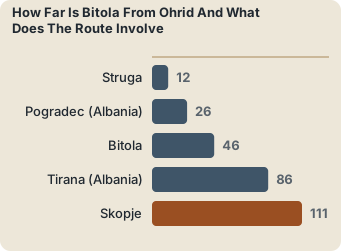
Bitola lies about 46 km from Ohrid as a straight-line distance, a figure computed from map coordinates for both cities, which makes it one of the nearer inland day trips on the Ohrid circuit alongside Struga at about 12 km and Pogradec at about 26 km. The road distance is longer than the straight line, as road distances always are, and the route leaves the Lake Ohrid basin and crosses the Galicica country toward the Pelagonian plain.
Galicica National Park, North Macedonia's second national park, established in 1958, spans 22,750 ha between Lake Ohrid and Lake Prespa, with Magaro peak at 2,254 m. A trip toward Bitola leaves the lake behind and drops into different terrain. The park charges 250 MKD per vehicle with no per-passenger fee, and 100 MKD applies only to someone entering on foot from the Ohrid-side gate. Heavy snow can close the park's main road, typically between January and March, which matters for winter planning on any route that touches the high country.
No journey time for the Ohrid to Bitola drive is given here. Anyone combining cities in one itinerary is effectively working with buses, a hired car or a guided product. The Galicica National Park day trip page carries the park detail, and the Lake Prespa day trip page covers the high ridge road between the two lakes.
For the freedom to set your own inland itinerary, book a rental car here.
| Day trip from Ohrid | Straight-line distance (km) | Source tier |
|---|---|---|
| Struga | about 12 | V, computed |
| Pogradec (Albania) | about 26 | V, computed |
| Bitola | about 46 | V, computed |
| Tirana (Albania) | about 86 | V, computed |
| Skopje | about 111 | V, computed |
Straight-line distances understate road travel, and the gap grows in mountains. Treat the table as a ranking of what is reachable, not a promise of driving time. Within that ranking Bitola sits comfortably in the middle band: farther than Struga, closer than the capital.
Why Does Bitola Pair So Well With An Ohrid Base?
Ohrid itself is a UNESCO mixed World Heritage site, inscribed in 1979 for its natural values and 1980 for its cultural ones and extended to the Albanian part of the lake in 2019, which means the lake town carries enough sights for several days on its own while Bitola adds a second city in a different landscape. The two places answer different moods: Ohrid is churches, fortress walls and a lake shore at about 693 m, while the Bitola trip crosses into the plain.
The UNESCO listing, "Natural and Cultural Heritage of the Ohrid Region", covers about 94,729 ha and recognises, in UNESCO's own description, the oldest Slav monastery at Plaosnik, more than 800 Byzantine-style icons from the 11th to the end of the 14th century, a lake that has existed about two to three million years, and over 200 endemic species including 17 endemic fish. Those are the headline reasons a trip anchored in Ohrid fills up quickly, and why Bitola works as a change of scene rather than a rival.
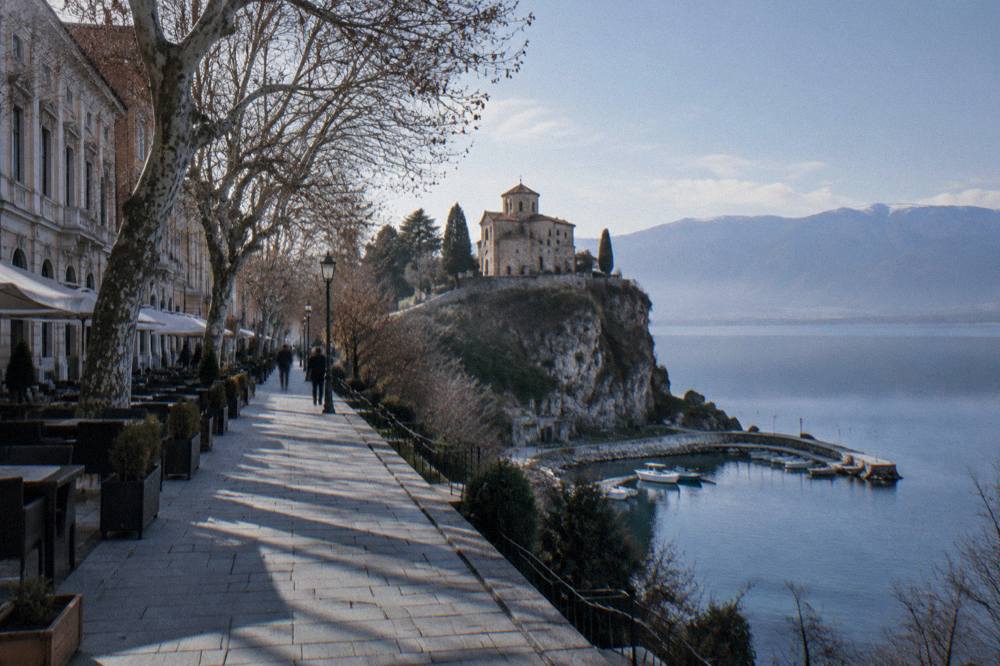
A sensible split puts the deeper time in Ohrid. The old town climbs from the lake to Samuel's Fortress on foot lanes, with the Ancient Theatre and the fortress along the same climb. The things to do in Ohrid page inventories the full set, from the Church of St John at Kaneo to the boat routes south. Bitola then fills one or two days when the lake itinerary needs variety.
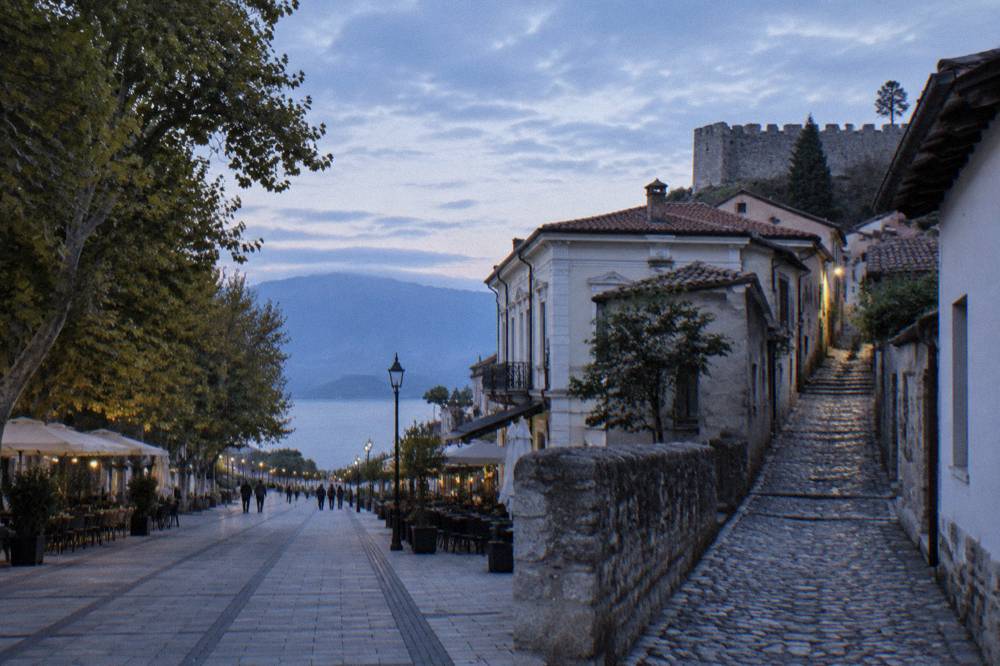
The pairing also suits the calendar. Ohrid's festival summer concentrates between late June and late August, and a second city gives an option when a festival week books up accommodation or when a rest day from the climb suits. The best time to visit breakdown carries the month-by-month detail.
What Does A Guided Tour Add To The Ohrid Region?
A guided product replaces the logistics question with a fixed itinerary, and the strongest fit for this region is a full-day guided tour of Ohrid's UNESCO heritage that starts in Skopje, covering the lake town's major sights with transport from the capital already arranged, which suits travellers pairing Bitola with Ohrid on a wider North Macedonia route rather than basing themselves solely by the lake. The operator's live listing carries the current price, rating and departure detail.
That Skopje-started tour matters here because of a simple rule: a product that starts in Skopje or Tirana starts there, and it is never an Ohrid departure. For a traveller flying into Skopje, doing the capital, then reaching Ohrid, a guided UNESCO day can slot into either end of the trip.
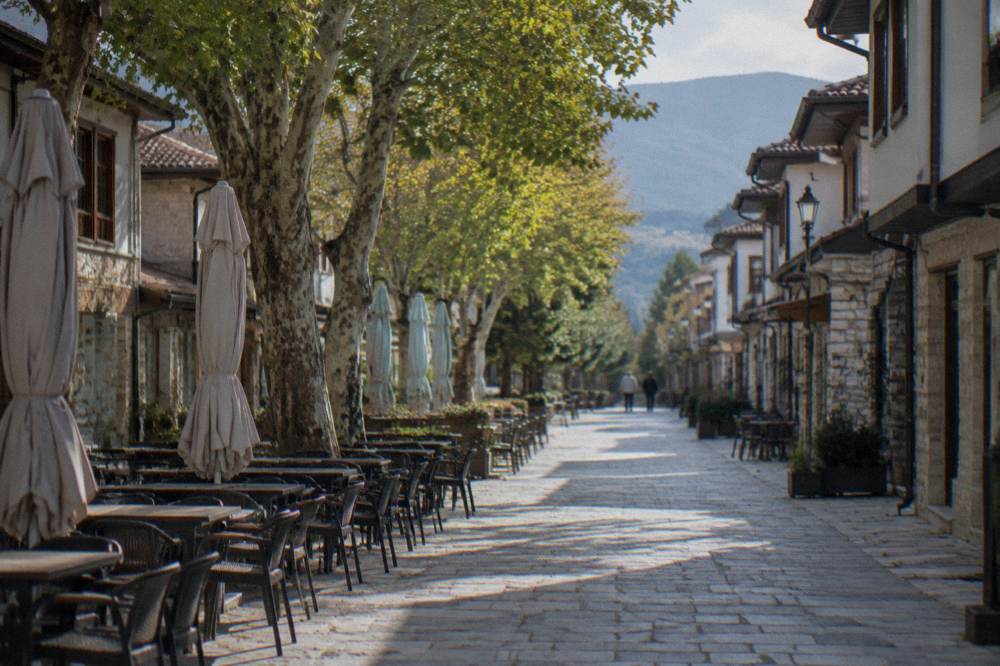
Guided products in the roster cover the lake from several angles: boat trips that run from Ohrid port toward the Bay of Bones and St Naum, walking tours of the old town, and food-and-wine experiences in and around the town. The Bay of Bones and St Naum boat trip and the small-group old town walk pages group those. Bitola itself has no product in this site's roster, so the guided route to a two-city trip runs through either a Skopje-started day or self-arranged travel.
If the Skopje-started UNESCO day fits your route, the operator's live listing shows what is included: Check availability.
What Do Ohrid's Own Museum Sites Cost And When Are They Open?
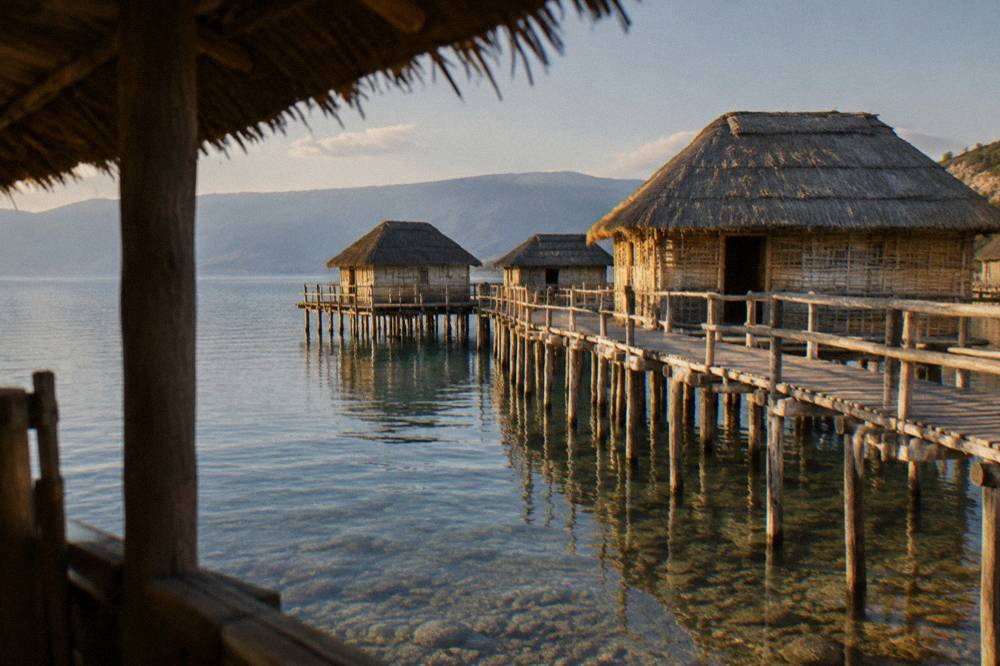
The Institute and Museum of Ohrid's listed sites, including the Robev Family House, the Museum on Water at the Bay of Bones and the Icon Gallery, charge 120 den for domestic visitors, 150 den for foreign visitors and a reported 60 den for children and students, per the institute's own website, with a winter schedule from 1 October to 30 April and a summer schedule from 1 May to 30 September, and the listed sites close on Mondays.
Those three rates come from the museum institute's own pages, and the child and student rate is reported rather than fetched, so confirm it at the desk. The schedule split matters for a Bitola day trip because a Monday in Ohrid empties the museum calendar, and that is exactly the day to give to Bitola or another inland destination instead. The Samuel's Fortress page carries the fortress detail separately.
| Museum institute site | Winter hours (1 Oct to 30 Apr) | Summer hours (from 1 May) | Closed |
|---|---|---|---|
| Robev Family House | 09:00 to 15:30 | 09:00 to 15:30 and 13:30 to 20:00 | Monday |
| Bay of Bones (Museum on Water) | 09:00 to 15:30 | 09:00 to 16:30 | Monday |
| Icon Gallery (Perivleptos) | 09:00 to 14:00 | 09:00 to 17:00 | Monday |
| Institute office | Mon to Fri 07:30 to 15:30 | Mon to Fri 07:30 to 15:30 | weekends |
The institute's address is Boro Shain St 10, Ohrid, with a listed phone of +389 46 262 498. St John at Kaneo, St Sophia and Plaosnik each carry a reported entry figure of about 150 MKD, attributed to a secondary source rather than an official page, so treat those as approximate and check on site. The Bay of Bones page covers the lake-side museum in detail, including the boat cruises that call there.
What Does The Weather Mean For Planning The Trip?
The ERA5 reanalysis climate normals for the Ohrid grid cell at 701 m, covering 1991 to 2020, give August the highest mean daily high at 27.6 C and January the lowest mean daily low at minus 0.8 C, with December carrying 92.6 mm of rain and August 32.9 mm, a modelled record rather than a weather-station one, and those figures shape both the lake season and the comfort of any inland drive toward Bitola.
Modelled normals are a planning tool, not a forecast. Summer in the lake basin runs warm with modest rain, and the July and August means of 27.1 C and 27.6 C sit alongside the year's lowest monthly rain totals, 34.7 mm and 32.9 mm. Winter flips the pattern: December, January and February average daily highs of 6.2 C, 5.0 C and 6.3 C, with overnight means below freezing in January. November carries 90.4 mm of rain. The Ohrid weather and weather by month pages carry the full breakdown.
| Month | Mean daily high (C) | Mean daily low (C) | Rain (mm) |
|---|---|---|---|
| Jan | 5.0 | -0.8 | 76.5 |
| Mar | 10.0 | 2.5 | 80.5 |
| May | 19.5 | 10.8 | 70.8 |
| Jul | 27.1 | 18.3 | 34.7 |
| Sep | 22.4 | 14.9 | 62.4 |
| Nov | 11.5 | 5.3 | 90.4 |
Lake temperatures follow the same arc. Modelled aggregator values put the lake surface at about 22.9 C in July and 23.5 C in August, falling to 4.6 C in January, with the UHMR multi-year October mean at 14.3 C. Snow in the Galicica country can close the park's main road between January and March, and that is the one seasonal fact that directly touches high-country routes out of the lake basin.
Which Day Trips From Ohrid Compare With Bitola?
Bitola at about 46 km straight-line from Ohrid sits in the middle of a day-trip ladder that runs from Struga at about 12 km, through Pogradec at about 26 km and Bitola, up to Tirana at about 86 km and Skopje at about 111 km, and each rung suits a different kind of day: lake shores to the near rungs, cities and borders to the far ones, with guided products covering some and self-arranged travel covering the rest.
Near rungs are half-days. Struga, where the Black Drim leaves the lake, is a short local bus or drive, and the Struga from Ohrid page details it. St Naum, the monastery by the Crn Drim springs about 4 km from the Albanian border crossing at Tushemisht, works by road or by seasonal boat from Ohrid port, with full-day cruises from 1,200 den for adults and 600 den for children on one operator's listing. The St Naum from Ohrid page carries that detail.
Far rungs are full days with border or motorway time. Tirana minibuses run roughly five to seven a day at 3 to 3.5 hours including the border, about EUR 15 to 20, mostly from Tirana's south or regional terminal and crossing at Qafe Thane or Kjafasan. Skopje buses run several times daily at about 3 hours. Pogradec in Albania sits about 26 km away, reached through the St Naum side, and the Pogradec page covers the crossing. The Vevcani and Mavrovo pages cover two more inland options.
Between the rungs, Bitola holds a specific niche: a city day, not a lake day and not a border day. For travellers who have done the lake from the water and the old town on foot, it is the natural next step inland. The is Bitola worth visiting page takes that question directly.
What Should A Two-City Itinerary Look Like?
A practical split gives Ohrid the larger share, three or four nights against one full Bitola day, because Ohrid carries the UNESCO listing, the lake activities and the museum institute's roster while Bitola adds a single day's change of scene, and the museum Monday closure in Ohrid makes that weekday the natural candidate for the Bitola leg.
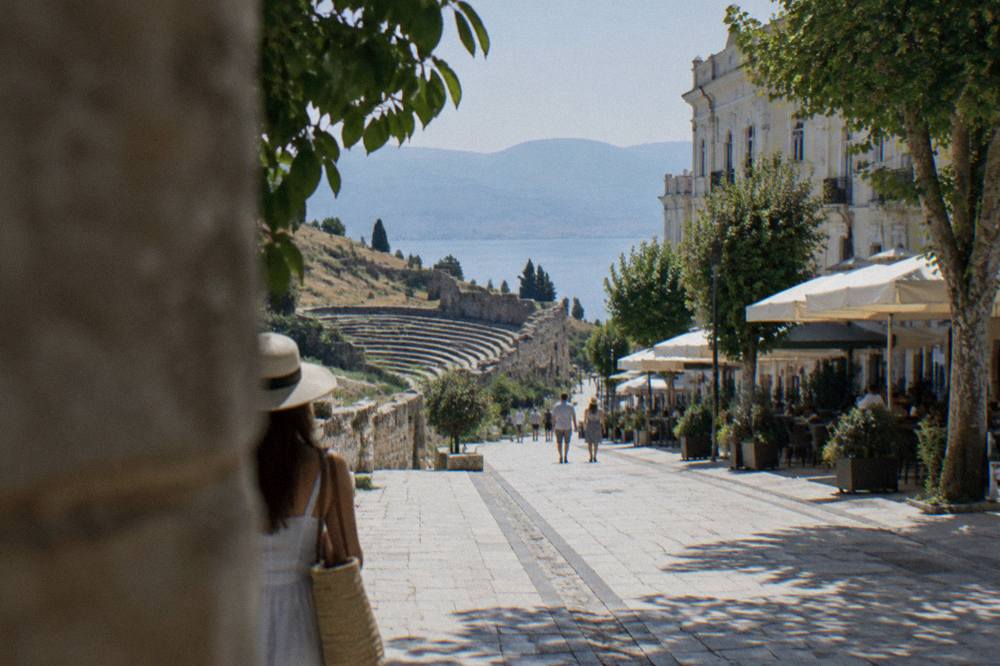
Day one belongs to the old town: the climb from the lake through the lanes, the fortress walls, the Ancient Theatre, built in the late Hellenism period with first excavations in 1935 and a capacity that rose to 5,000 after the epiteatron was added. Day two belongs to the water, whether a boat toward the Bay of Bones and St Naum or a paddle along the shore. Day three is the Bitola run, or a Galicica and Lake Prespa loop, which the distances table above ranks as close neighbours in effort. From day four, choose between the far rungs or a slower lake rhythm.
Festival weeks reorder any itinerary. The 66th Ohrid Summer Festival opened on 12 July 2026 at the Ancient Theatre and runs to 20 August by tradition; the 65th Balkan Festival of Folk Songs and Dances ran 3 to 6 July 2026; the 65th Struga Poetry Evenings ran 24 to 29 June 2026; and the Ohrid Water Festival ran 12 to 30 August 2026, including the 25 km swimming marathon from St Naum to Ohrid harbour on 22 August and the separate 33 km SUP marathon around the lake on 26 August. Dates for 2027 are not announced.
| 2026 event | Dates | Edition |
|---|---|---|
| Struga Poetry Evenings | 24 to 29 June | 65th |
| Balkan Festival of Folk Songs and Dances | 3 to 6 July | 65th |
| Ohrid Summer Festival | 12 July to 20 August | 66th |
| Ohrid Water Festival (incl. 25 km swim marathon 22 Aug) | 12 to 30 August | 2026 edition |
How Do You Plan The Bitola Day Practically?
Practical planning for the Bitola day rests on four anchors: the 46 km straight-line distance, the denar as local currency with euros commonly quoted but not legal tender, the Kicevo to Ohrid motorway remaining partly open with completion expected in the first half of 2027, and driving rules that require headlights day and night and a green card, with tolls paid per plaza rather than by vignette.
Money first. The National Bank's middle rate on 19 October 2026 was 1 EUR to 61.6633 MKD, and the denar is managed against the euro. ATMs are the routine way to get denars, and any quoted euro price for a tour or transfer is a quote, not legal tender. The Macedonian denar and money page carries the detail.
Then the road. For anyone driving the wider region, headlights stay on day and night, a green card belongs in the car, and motorway tolls are paid at each plaza, about 140 MKD in total for the Skopje to Ohrid sections. The Ohrid end of the trip now has the resident-only parking regime on the old-town streets, so a car is best parked outside that zone. Buses cover the Skopje corridor at 850 to 950 MKD one way, and there is no passenger train anywhere in this itinerary.
Entry rules frame the border rungs. North Macedonia is not in the EU or Schengen; visa-free nationals may stay up to 90 days in any 180-day period, and UK visitors may stay up to 3 months with a passport valid at least 90 days after arrival. Visitors register with the local police within 48 hours, which hotels handle. Emergency numbers are ambulance 194, police 192 and roadside assistance 196.
Common Questions About Bitola From Ohrid
How far is Bitola from Ohrid?
About 46 km in a straight line, a figure computed from map coordinates for both cities. The road distance is longer, and no journey time appears in the destination record, so allow a full day for the round trip and check current schedules before travelling.
Can you visit Bitola and Ohrid in one trip?
Yes, and that is the standard shape of the itinerary. Base yourself in Ohrid, where the UNESCO listing and the museum institute's sites fill several days, and give Bitola one day as an inland change of scene. The is Bitola worth visiting page takes the question in detail.
Is there a guided tour from Ohrid to Bitola?
This site's roster carries no Bitola product. The guided products covering the region include a full-day UNESCO heritage tour of Ohrid that starts in Skopje, boat trips from Ohrid port toward the Bay of Bones and St Naum, and old town walking tours. A Bitola day runs on self-arranged transport.
What currency do you need for a Bitola day trip?
The Macedonian denar (MKD). Euros are commonly quoted for tours and transfers but are not legal tender, and the National Bank's middle rate on 19 October 2026 was 1 EUR to 61.6633 MKD. ATMs dispense denars.
When is the best time of year for this trip?
The ERA5 modelled normals for Ohrid, 1991 to 2020, put July and August mean daily highs at 27.1 C and 27.6 C with the year's lowest rain totals, while January averages a low of minus 0.8 C and snow can close Galicica's main road between January and March. Late spring through early autumn suits both cities; festival weeks in July and August add events in Ohrid.
Do you need a visa for North Macedonia?
Visa-free nationals may stay up to 90 days in any 180-day period; UK visitors may stay up to 3 months with a passport valid at least 90 days after arrival. North Macedonia is not in the EU or Schengen, and visitors register with the local police within 48 hours, which hotels do for guests.