Ohrid Bus Station: Routes, Tickets And Departures
Everything a visitor needs to plan an arrival or departure through Ohrid's bus station in North Macedonia: location, connections to Skopje, Tirana and Struga, ticket practicalities, and the walk into the old town.
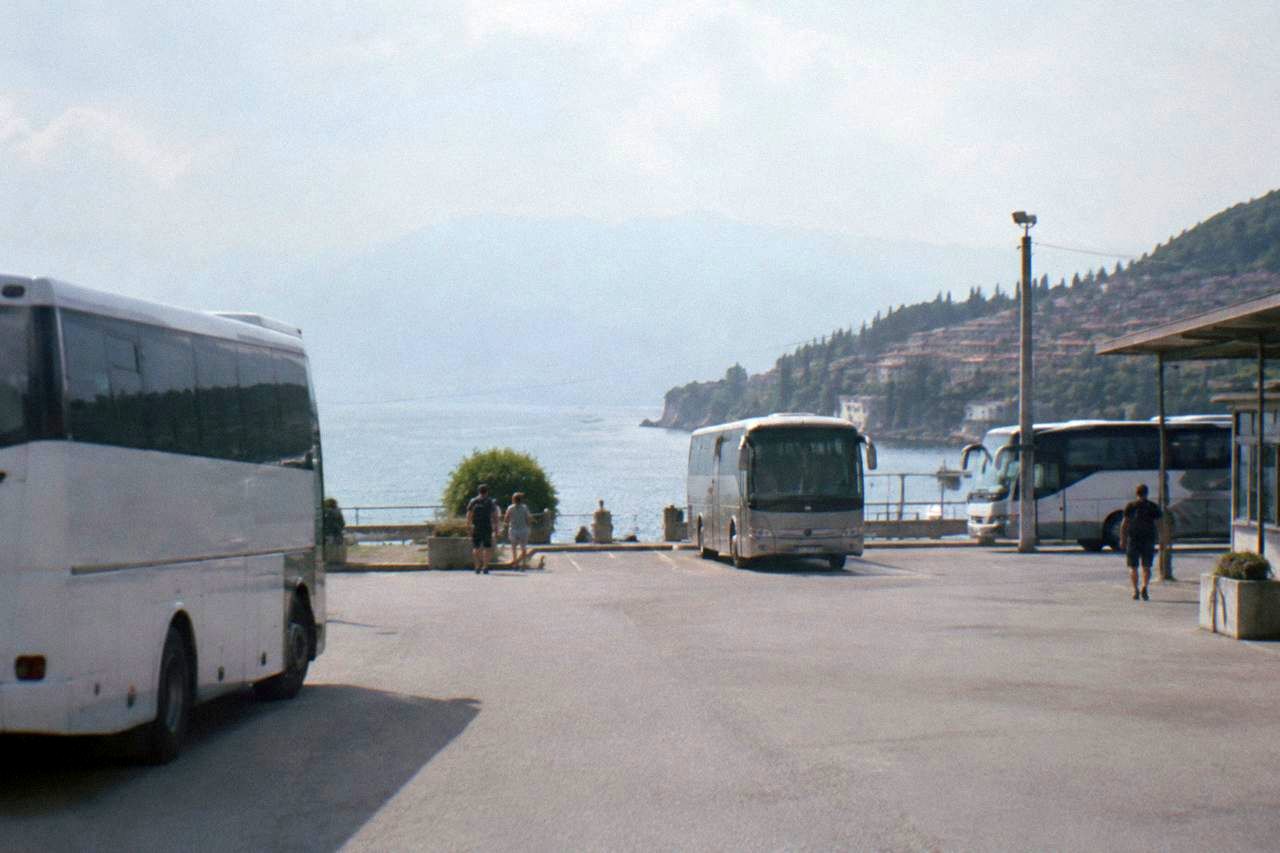
Short answer
No central timetable or fare is published, so travellers should check current schedules before travelling.
Ohrid, the lakeside town on Lake Ohrid in North Macedonia, is reached by road: no passenger train serves the town and there is no domestic flight, so the bus station and the airport ten kilometres away carry essentially all arriving visitors. This page on the Ohrid Travel Guide gathers what published sources say about the station itself, the routes that touch it, how tickets and departures work, and how to get from the forecourt to the old town lanes on the lake shore. One point shapes everything else: no central timetable or fare table for Ohrid buses exists in the available record, so every schedule detail below comes with the same advice, check current schedules with the operator before travelling.
Where Is The Ohrid Bus Station In Ohrid?
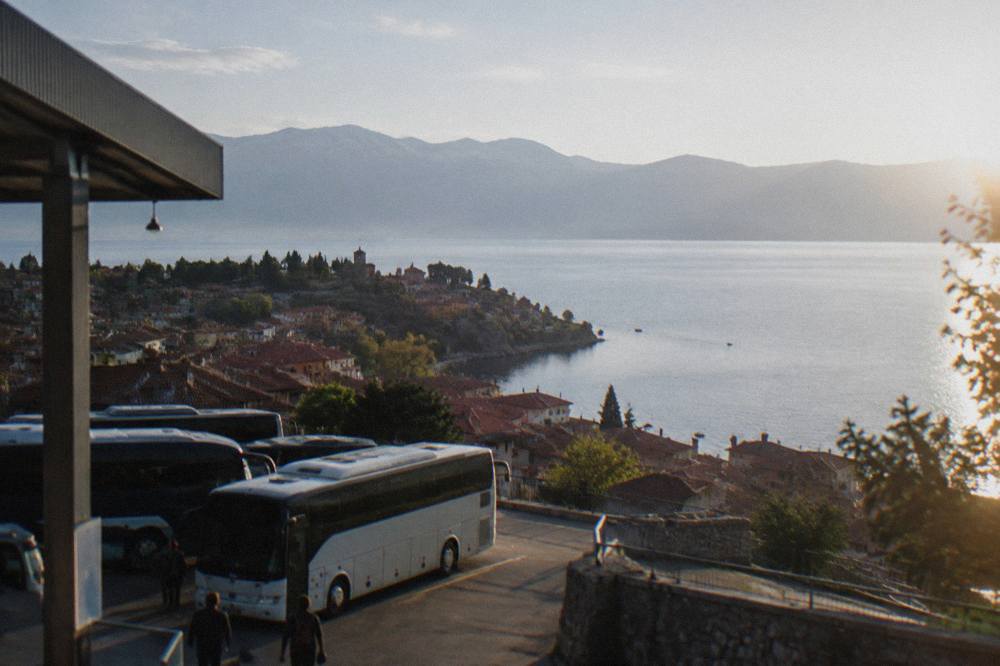
The Ohrid bus station sits east of the town centre, in the Vele Markov street area, roughly a 20 to 30 minute walk from the old town or a short taxi ride away, according to published station listings. The town itself is compact: the old lanes climb from the shore of Lake Ohrid, which sits at about 693 m above sea level, up to Samuel's Fortress, and everything a visitor arrives for lies within walking distance of the lake.
The station is not on the lakefront. It sits inland, which matters in July and August when the climb from the shore with luggage is best avoided: a taxi for a short town ride is the usual alternative, and short rides within town are inexpensive by general European standards. Agree the price before setting off, or ask the driver to use the meter where one is fitted.
For orientation, the station area is flat and the old town is not. The route in runs downhill toward the lake through newer streets before the cobbled lanes begin near the old town core. Anyone with mobility concerns should read the accessibility guide at Ohrid accessibility advice, which covers the terrain in detail, and consider a taxi for the final stretch rather than the walk.
Which Routes Run From The Ohrid Bus Station?
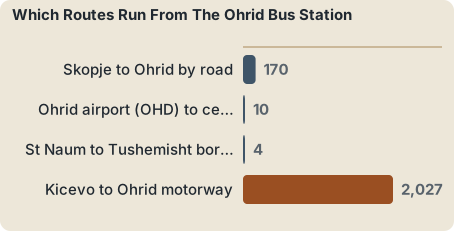
The routes that matter to visitors are domestic links to Skopje and Struga and cross-border services to Tirana in Albania, run by a changing roster of private operators including Galeb and Classic Company of Ohrid, per published operator listings. Skopje is about 170 km away by road. Struga is the nearest town on the same lake. No timetable, frequency or fare for any single route is published centrally, so schedules must be checked with operators or at the station before travelling.
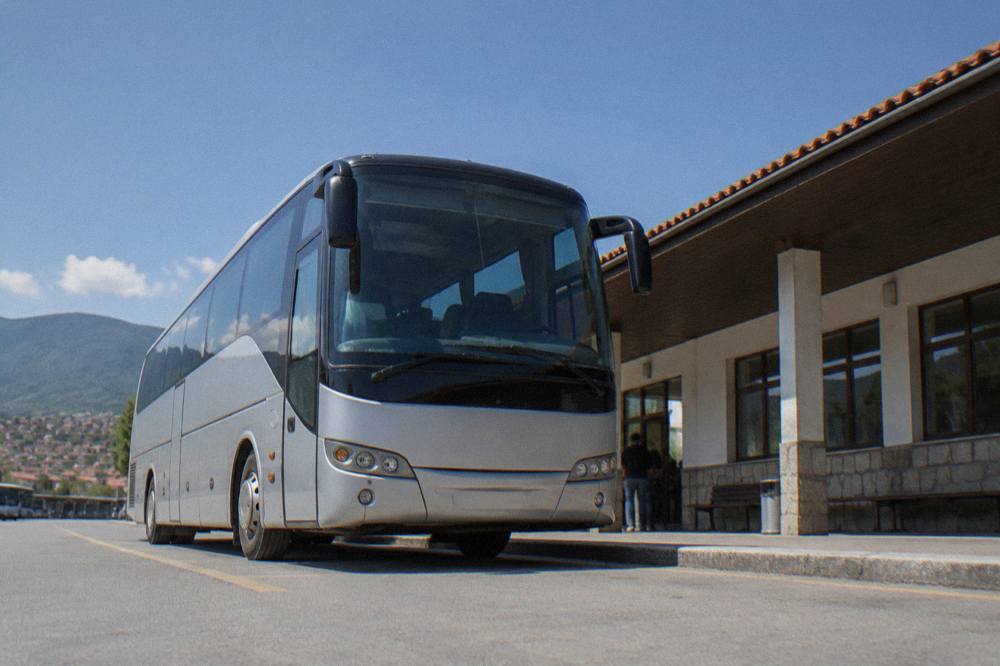
The Skopje connection is the backbone. Buses leave from Skopje's Transport Centre and arrive in Ohrid after a road journey of roughly three hours on the A2 route, which is still partly motorway: the Kicevo to Ohrid motorway section remains under construction, with full opening reported for the first half of 2027. Until then the last stretch is ordinary road. The full picture for that route, including the alternatives by car and private transfer, is in the dedicated guide to getting from Skopje to Ohrid, and the fare question is answered separately at how much is a bus from Skopje to Ohrid.
The Struga link is a local one, short and frequent in season per older guide listings, and it matters because Struga is a destination in its own right, the town where the Black Drim flows out of the lake and the home of the Struga Poetry Evenings, whose 65th edition ran 24 to 29 June 2026. The day-trip guide to Struga from Ohrid covers what to do there.
The Tirana connection is cross-border. Minibuses and shared transfers run from Tirana to Ohrid via the Qafe Thane border, a journey of roughly three to three and a half hours including border formalities per published transfer guides. The reverse guide, Tirana to Ohrid, covers the border detail. Travellers heading the other way will find the options at Tirana from Ohrid.
Distances a visitor will actually use:
| Journey | Distance or figure | Source |
|---|---|---|
| Skopje to Ohrid by road | about 170 km | published road guide |
| Ohrid airport (OHD) to centre | about 10 km | airport operator page |
| St Naum to Tushemisht border | about 4 km | border-crossing account |
| Kicevo to Ohrid motorway | full opening reported for first half of 2027 | news reports |
How Do Tickets And Departures Work At The Ohrid Bus Station?
Tickets are bought at the station or from the operator, in denar for domestic services and often quoted in euros for cross-border ones, and no central price list exists for any route, so the fare for a given departure is confirmed only at the point of sale. The denar (MKD) is the local currency; euros are not legal tender in North Macedonia and the country is neither in the EU nor in Schengen, so card and roaming habits from the EU do not carry over automatically.
The currency point is practical. The National Bank's middle rate on 19 October 2026 was 1 EUR = 61.6633 MKD, and the denar is managed against the euro, so the arithmetic is stable, but a traveller still needs denar for a domestic ticket, a station kiosk or a taxi. ATMs are widely available. The money guide at Macedonian denar and money covers exchange, cards and the euro question in full.
| Currency figure (19 Oct 2026, NBRM middle rate) | Value |
|---|---|
| 1 EUR | 61.6633 MKD |
| 1 USD | 54.7972 MKD |
| 1 GBP | 73.0738 MKD |
Departures are seasonal. Summer brings more frequent services on every route, and in winter the schedule thins, mirroring the town's tourism year, which runs from about May or June to September or October. Flights at Ohrid airport follow the same pattern, with Wizz Air's routes concentrated in summer; the airline was reported in August 2026 to be expected to base an aircraft at Ohrid, which would add early departures and new routes. Arriving by air is covered in the guides to Ohrid airport transfers and onward planning.
How Do You Get From The Ohrid Bus Station To The Old Town?
From the station forecourt the old town is a 20 to 30 minute walk east-to-west across the newer streets and down toward the lake, or a short taxi ride, and the walk is simple until the cobbled lanes begin near the old core, where the gradient and the stone make wheeled luggage hard work. The old town itself is entirely on foot: its lanes climb from the shore to Samuel's Fortress, and there are no trams, no bike share and no local rail, a point worth internalising before arrival.

The practical split is this. If the hotel or guesthouse is in the old town, take a taxi from the station rather than walking, because several old-town streets fall under a resident-only parking and access regime introduced in summer 2026 on streets including Ilindenska, Kosta Abrash and Car Samoil, which also affects where a taxi can set a passenger down. If the stay is in the newer town near the station, the walk is flat and short.
Once in the old town, everything is reachable on foot, and the getting around Ohrid guide covers the full picture: taxis, the local Struga buses, and the lake boats that act as a scenic alternative for coastal hops. For anyone with a spare hour on arrival day, a first walk through the old lanes is the standard introduction, and a guided version exists among the picks above.
What Should You Know About Arriving From Skopje?
Arriving from Skopje by bus means a road journey of about 170 km on a route that is part motorway, part ordinary road until the Kicevo to Ohrid motorway section opens, reported for the first half of 2027, and no fare or timetable for the route is published centrally, so both are confirmed at booking. Skopje's buses leave from the Transport Centre, and Ohrid's station is the terminus on this end.
Most international visitors reach Skopje first, either by air into Skopje International Airport or overland, and then come on to Ohrid by bus, car or private transfer. The transfer question from the airport specifically, including why there is no regular shuttle to Ohrid, is covered at Skopje airport to Ohrid. The road route matters for timing: the A2 tolls are paid per section at plazas for anyone driving, roughly 140 MKD in total for the Skopje to Ohrid sections per published road guides, with no vignette system.
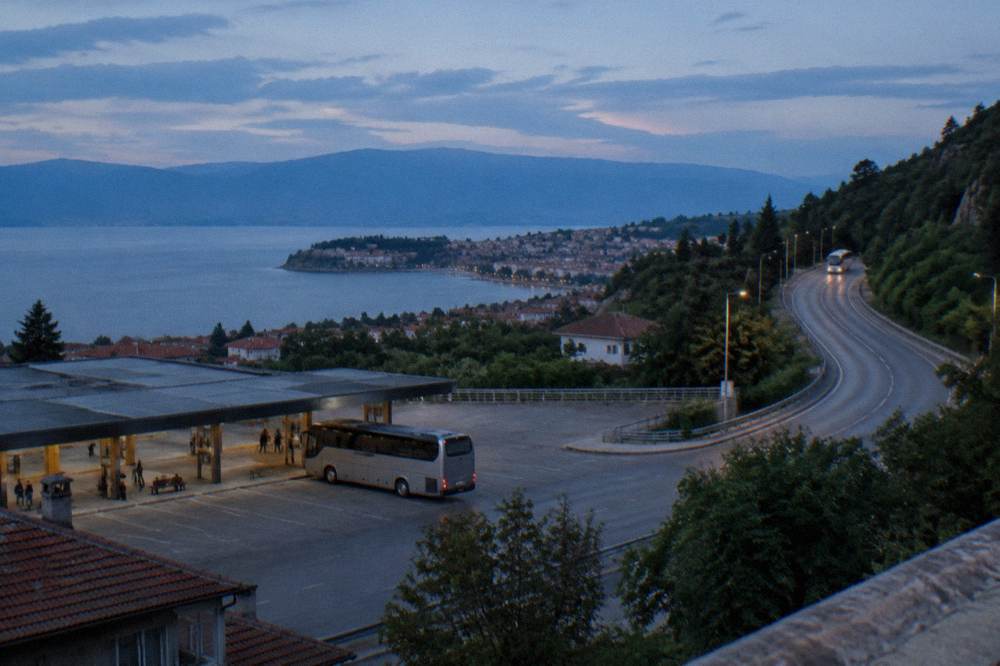
The bus is the default because there is no train. No passenger rail service reaches Ohrid, and no domestic flight links Skopje and Ohrid, so the road is the only line. In summer, services multiply and seats sell out around peak weekends, and the standard advice from every operator listing is the same: book ahead for July and August, and check the return leg when buying the outbound.
What Should You Know About Arriving From Tirana?
Arriving from Tirana means a cross-border minibus or shared transfer of roughly three to three and a half hours including the border at Qafe Thane, quoted in euros by the operators that run it, and departures run from Tirana's bus terminals several times a day in season, per published transfer guides. Albania is a separate country with its own entry rules, and the crossing adds time that no domestic Ohrid journey has.
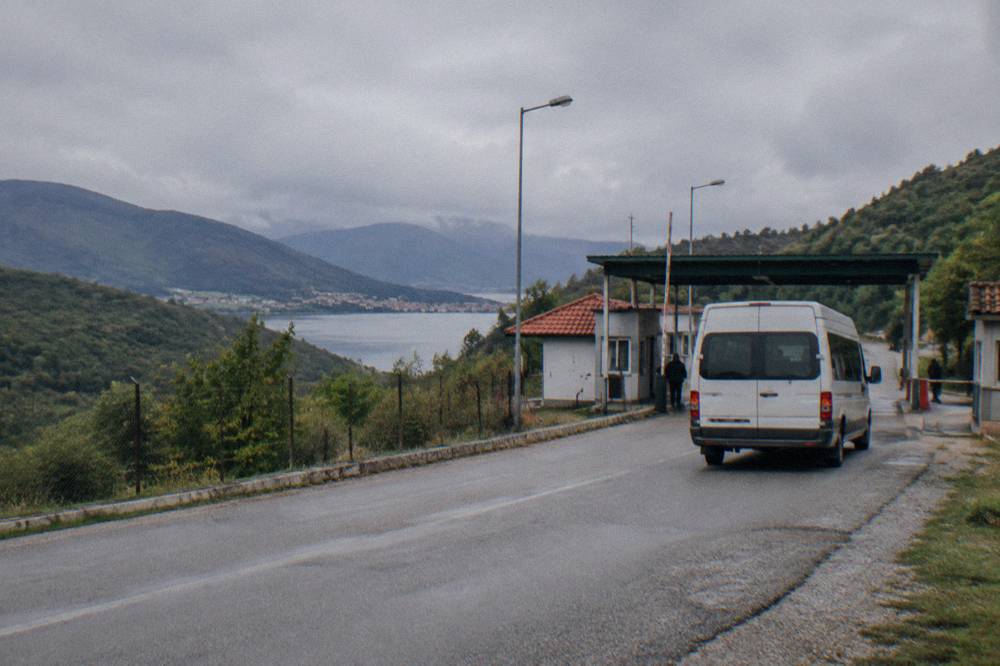
The border is the variable. Queues at Qafe Thane depend on the day and the season, and the scheduling advice is to build slack into any same-day connection. A different crossing exists at the southern end of the lake, Sveti Naum to Tushemisht, which is about 4 km from the St Naum monastery and is reported to be open around the clock for passengers and vehicles; that crossing suits travellers combining Ohrid with Pogradec rather than Tirana itself.
For visitors who prefer not to manage a border crossing on public transport, a guided option exists that starts in Tirana or Durres and covers Ohrid and the lake in one organised day, and it can be checked at Check availability. It is one of several Tirana-starting products in the site's day-trip roster, and like all of them it departs from Tirana, not from Ohrid.
What Day Trips Start From Ohrid Without A Bus?
The trips that leave from Ohrid itself, rather than starting in Skopje or Tirana, are the lake boats to St Naum and the Bay of Bones, the walks through the old town, and the food and wine experiences around the town, and all of them spare the traveller the station entirely: the boats leave from the Ohrid port on the lakefront, and the walking tours start in the old town. A full-day boat cruise from Ohrid port to St Naum with the operator Boat Armada runs 7 hours and is listed from 1,200 den for an adult and 600 den for a child, per the operator's own cruise page.
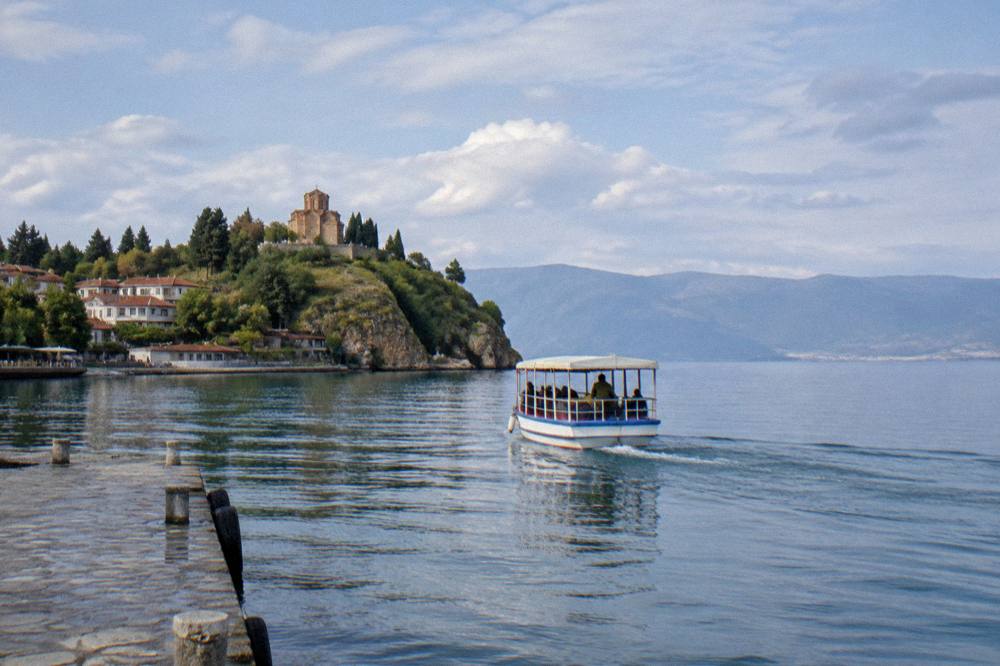
This is the real alternative to bus-station logistics. St Naum can be reached by boat rather than by road, and the boat calls at the Bay of Bones, the Museum on Water at Peshtani, whose ticket prices come from the museum institute's own list: 120 den domestic, 150 den foreign. The lake-based options are covered at Lake Ohrid boats and ferries and the road-and-boat comparison at St Naum from Ohrid.
| Day trip from Ohrid | How it starts | Notes |
|---|---|---|
| St Naum by boat | Ohrid port, lakefront | seasonal, roughly May to October |
| Bay of Bones / Museum on Water | by boat or road via Peshtani | museum institute ticket, closed Mondays in winter schedule |
| Struga | local bus or taxi | same lake, Black Drim outflow |
| Galicica National Park | road, own vehicle or tour | 250 MKD per vehicle, no per-passenger fee |
| Skopje or Bitola | intercity bus from the station | check schedules with the operator |
The museum-institute ticket table, for anyone planning the sightseeing around a bus arrival:
| Museum institute site | Ticket | Winter hours (1 Oct to 30 Apr) | Closed |
|---|---|---|---|
| Robev Family House | 150 MKD foreign / 120 MKD domestic | 09:00 to 15:30 | Monday |
| Bay of Bones (Museum on Water) | 150 MKD foreign / 120 MKD domestic | 09:00 to 15:30 | Monday |
| Icon Gallery (Perivleptos) | 150 MKD foreign / 120 MKD domestic | 09:00 to 14:00 | Monday |
When Is The Best Time To Arrive In Ohrid By Bus?
The season runs from about May or June to September or October, August is the reported high point for crowds and full accommodation, and July and August bring the warmest weather, with modelled ERA5 climate normals for 1991 to 2020 giving August a mean daily high of 27.6 C and December a mean daily high of 6.2 C, so the arrival experience at the station differs sharply by month: summer means more departures and more competition for seats, winter means a thin schedule and short days.
The weather table that matters for planning a bus journey, since the road from Skopje crosses high ground:
| Month | Mean daily high (C) | Mean daily low (C) | Rain (mm) |
|---|---|---|---|
| January | 5.0 | -0.8 | 76.5 |
| April | 14.6 | 6.3 | 82.4 |
| July | 27.1 | 18.3 | 34.7 |
| August | 27.6 | 19.0 | 32.9 |
| October | 17.4 | 10.3 | 76.0 |
| December | 6.2 | 0.9 | 92.6 |
These are modelled ERA5 reanalysis normals for a grid cell at the town, not a weather-station record, and the full month-by-month picture is at Ohrid weather and best time to visit Ohrid. Snow falls in the town in winter and heavier snow affects the Galicica park road, typically between January and March, which is one more reason winter bus schedules run thin.
How Many Days Should You Plan After Arriving?
Most itineraries in the site's planning guides settle on two to three days for Ohrid itself, with a fourth or fifth day for St Naum, Galicica or a cross-border trip, because the old town, the churches, the fortress and a lake cruise fit into two full days and the out-of-town sights each take half a day to a full day more; the dedicated planning guide works through the trade-offs day by day. A bus arrival uses up part of day one, which is worth remembering when reading any itinerary.
The itineraries that start from this assumption are collected at how many days in Ohrid and the master list of things to do in Ohrid. Budget planning, including what the museum tickets and the boat cruise cost against a daily total, sits at Ohrid cost and budget. Visitors combining the town with the festival calendar should check the 2026 dates: the 66th Ohrid Summer Festival opened on 12 July 2026 at the Ancient Theatre and closed by tradition on 20 August, and the Ohrid Water Festival ran 12 to 30 August 2026, including the 25 km swimming marathon from St Naum to Ohrid harbour on 22 August. The 2027 dates had not been announced in available sources.
Safety and entry questions are separate pages: is Ohrid safe and North Macedonia visa and entry, the latter covering the 90 days in any 180 rule for visa-free nationals and the UK's three-month rule. Emergency numbers for any arrival: ambulance 194, police 192, roadside assistance 196.
What Facilities And Practical Tips Matter At The Station?
The station is a small-town terminus, not a hub: published listings give an address in the Vele Markov street area east of the centre, taxi ranks at the forecourt, and kiosk-level facilities, with no left-luggage service, lounge or tourist desk among them, so travellers should plan around a brief, functional stop rather than an airport-style wait. The practical tips that follow from that are simple ones.

Carry denar. Domestic tickets, kiosks and taxis all run on the local currency, and while the denar's peg to the euro makes conversion predictable, the euro itself is not legal tender and informal acceptance, where it happens, is at poor rates. ATM withdrawals in town are the standard approach.
Check schedules twice. The absence of a central timetable is not a formality: operators change departures by season, the summer thickening and winter thinning of the schedule is real, and a route's existence in a guide listing is not a guarantee of a seat in August. Confirm with the operator or at the station the day before, both ways.
Arrive with the border in mind. For Tirana services, the Qafe Thane crossing adds variable time, and passports matter: North Macedonia is outside the EU and Schengen, so the crossing is a full international border. Registration with the local police within 48 hours of arrival is the rule for foreign visitors, and hotels handle it as a matter of course.
Do not plan around the last bus. Winter departures end early, and the walk-in-old-town alternative after dark is a taxi, not a night service. The station's own rhythm follows the town: busy at the shoulder hours of the tourist season, quiet outside it.
For the departure day itself, the same logic as arrival applies in reverse: a taxi from the old town to the station beats a dragged-suitcase walk uphill, and an hour of slack absorbs both the taxi and the ticket. Travellers heading onward to the coast can continue from Ohrid toward Kotor or Thessaloniki, both covered in the site's route guides at Ohrid to Kotor, and the lake crossing alternative remains the boats, which run roughly May to October and are the one departure from Ohrid that never touches the station at all.
Common Questions About The Ohrid Bus Station
Where is the Ohrid bus station?
East of the town centre, in the Vele Markov street area, roughly a 20 to 30 minute walk from the old town or a short taxi ride, per published station listings.
How much is a bus from Skopje to Ohrid?
No current fare is published centrally. Older guide listings quote a range of a few hundred denar each way, but the figure to rely on is the one quoted at the point of sale, so check with the operator or at the station before travelling.
Is there a train to Ohrid?
No passenger rail service reaches Ohrid. The town is reached by road, by bus, car or private transfer, or by air via Ohrid St Paul the Apostle Airport about 10 km from the centre.
Can you take a bus from Tirana to Ohrid?
Yes, cross-border minibuses and shared transfers run from Tirana via the Qafe Thane border, a journey of roughly three to three and a half hours including the border per published transfer guides, with departures concentrated in the tourist season.
How do I get from the bus station to the Ohrid old town?
Walk west toward the lake for 20 to 30 minutes, or take a taxi from the forecourt, which is the better choice with luggage because the old-town lanes are cobbled and climb from the shore to the fortress.
Do Ohrid buses run in winter?
Services thin outside the tourist season, which runs from about May or June to September or October, and the same applies to the lake boats and the airport's flight schedule, so winter travel should be confirmed with the operator in advance.