Macedonian Denar, Cards And Atms In Ohrid
The denar is the only legal tender in Ohrid, and a handful of numbers, from the National Bank's euro rate to the museum institute's 150 MKD ticket, decide how much cash you carry. This guide lays out what the sources actually say.
Short answer
Ohrid uses the Macedonian denar (MKD). Euros are not legal tender, though tour operators quote in them. Museum sites charge 150 MKD for foreign visitors, the lake boat cruise starts at 1,200 MKD, and the National Bank rate on 19 October 2026 was 61.6633 MKD to the euro. Carry cash for sights, boats and small purchases.
The currency question in Ohrid is simpler than it looks and stricter than many visitors expect: the Macedonian denar (MKD) is the only legal tender in North Macedonia, the country is not in the EU and not in the euro area, and every museum ticket, boat fare and park fee in town is priced in denars. The Ohrid Travel Guide keeps this page to what named sources state: the National Bank's own exchange-rate service for the value of your money, the museum institute's own pages for what the sights cost, and the operator listings for what tours include. Where a competing guide would guess at card acceptance or tip amounts, this page describes what a visitor actually does with cash and cards here instead.
What Currency Does Ohrid Use?
Ohrid, in North Macedonia, uses the Macedonian denar, abbreviated MKD, and no other currency is legal tender in the country, so the euro in your pocket cannot officially buy a museum ticket or a boat ride here. Tour operators and transfer firms commonly quote prices in euros, and some informal acceptance of euro cash is reported in tourist areas, but the denar is what every local price is written in.
The euro deserves a short explanation, because it creates most of the confusion. North Macedonia is not an EU member state, and the denar is managed by the National Bank of the Republic of North Macedonia (NBRM) under a strategy of targeting the nominal exchange rate of the denar against the euro, which keeps the two currencies in a stable relationship. That stability is why shopkeepers and operators can think in euros while charging in denars. It also means that when a listing quotes a tour in euros or US dollars, the price you see on that listing is the price you pay, and it is never converted by you at a shop counter.
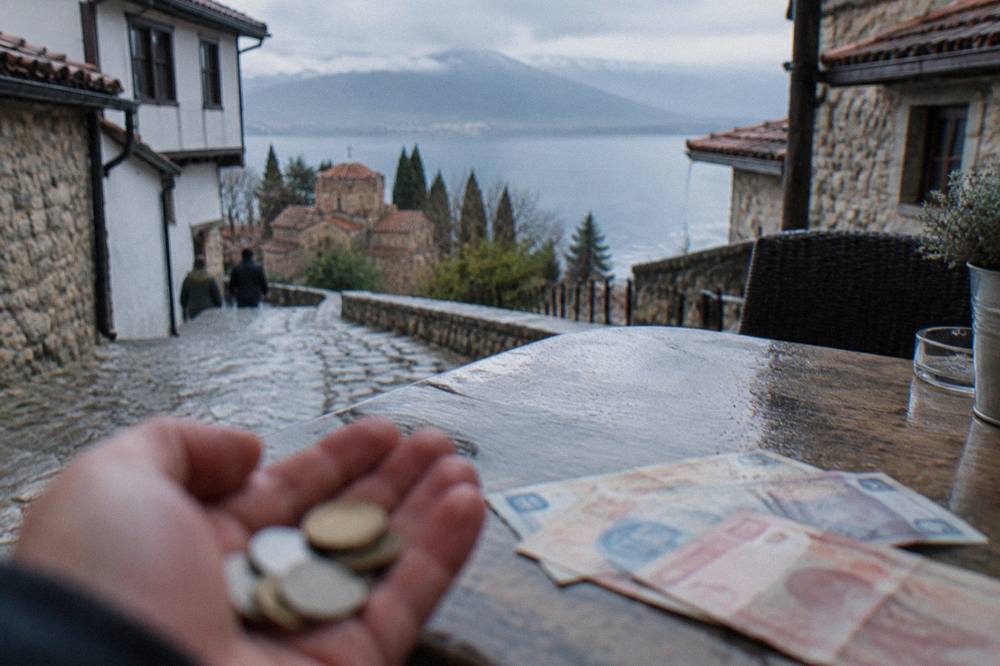
Reported practice in tourist areas, including Ohrid, is that euro cash is sometimes accepted informally, at exchange rates unfavourable to the visitor, and ATMs are widely available for withdrawing denars. Those two points come from guides to Macedonian currency rather than from a statute, so treat them as reported practice, not law. The safe habit follows from the official side of the ledger: pay in denars, keep euros only for comparison maths, and read the budget guide for Ohrid before you fix a daily figure.
What Is The Denar Worth Against The Euro And Other Currencies?
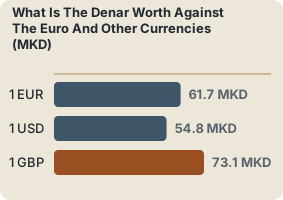
The National Bank's middle rate on 19 October 2026 was 61.6633 MKD to one euro, 54.7972 MKD to one US dollar and 73.0738 MKD to one pound, figures published by the NBRM's own exchange-rate service, and the denar is de facto pegged to the euro, so these numbers move very little from month to month.
The peg matters for planning more than the daily rate does. Because the NBRM targets the denar against the euro, a euro-based budget converted once stays roughly valid for the whole trip, and the same holds for any currency converted through the euro. The rate to one euro has sat in a narrow band for years, which is why menus, tickets and boat fares can be discussed in round denar numbers without anyone hedging.
| Currency | NBRM middle rate, 19 Oct 2026 | What it means in practice |
|---|---|---|
| 1 EUR | 61.6633 MKD | The reference rate; the denar is managed against the euro |
| 1 USD | 54.7972 MKD | Tour listings priced in USD render from the listing, not from this rate |
| 1 GBP | 73.0738 MKD | Useful for UK visitors doing quick mental maths |
Two rules keep this honest. First, never convert a local price yourself and print it as fact: the museum ticket is 150 MKD because the museum institute says so, and its value in your home currency depends on the day. Second, product prices on this site, including every tour mentioned below, are printed by the listing in its own currency and are never converted on this page. For a sense of how the bigger budget picture fits together, the guide to how many days you need in Ohrid shows where the money actually goes.
How Much Cash Do You Need For A Day In Ohrid?
A day built around the museum institute's sites costs 150 MKD per site for a foreign adult, the full-day boat cruise to St Naum starts at 1,200 MKD per adult, and Galicica National Park charges 250 MKD per vehicle, so the cash part of a full day is measured in a few thousand denars, roughly the equivalent of tens of euros at the National Bank rate.
The clean way to plan is to split the day into the parts that are paid in cash on the spot and the parts that are paid through a listing. The museum sites, boats, taxis and small food outlets belong to the first group. Tours, transfers and anything with a live listing belong to the second, where the price is fixed before you travel and the denar never enters the transaction.
| Sight or service | Local price (MKD) | Source level |
|---|---|---|
| Museum institute site, foreign adult | 150 | Museum institute's own ticket page |
| Museum institute site, domestic adult | 120 | Museum institute's own ticket page |
| Children and students | 60 | Reported on the museum institute's page |
| Bay of Bones entrance | 150 | Cruise operator's published list |
| St Naum monastery entrance | 150 | Cruise operator's published list |
| Rowboat at the Crn Drim springs | about 5 EUR | Cruise operator's published list |
| Full-day boat cruise, adult | from 1,200 | Boat Armada's own tour page |
| Full-day boat cruise, child | 600 | Boat Armada's own tour page |
| Galicica National Park, per vehicle | 250 | Park guide, Ohrid-Prespa |
| Galicica National Park, entering on foot | 100 | Park guide, Ohrid-Prespa |
Every row above is attached to the exact sight it belongs to, which is the discipline this site keeps throughout: the 150 MKD ticket covers the institute's listed museum sites, including Robev Family House, the Museum on Water at the Bay of Bones and the Icon Gallery, and it is never moved onto a church or a fortress. The Bay of Bones guide and the Galicica National Park guide carry the details for those two destinations, including their seasonal hours.
Where Can You Change Money And Withdraw Denars In Ohrid?
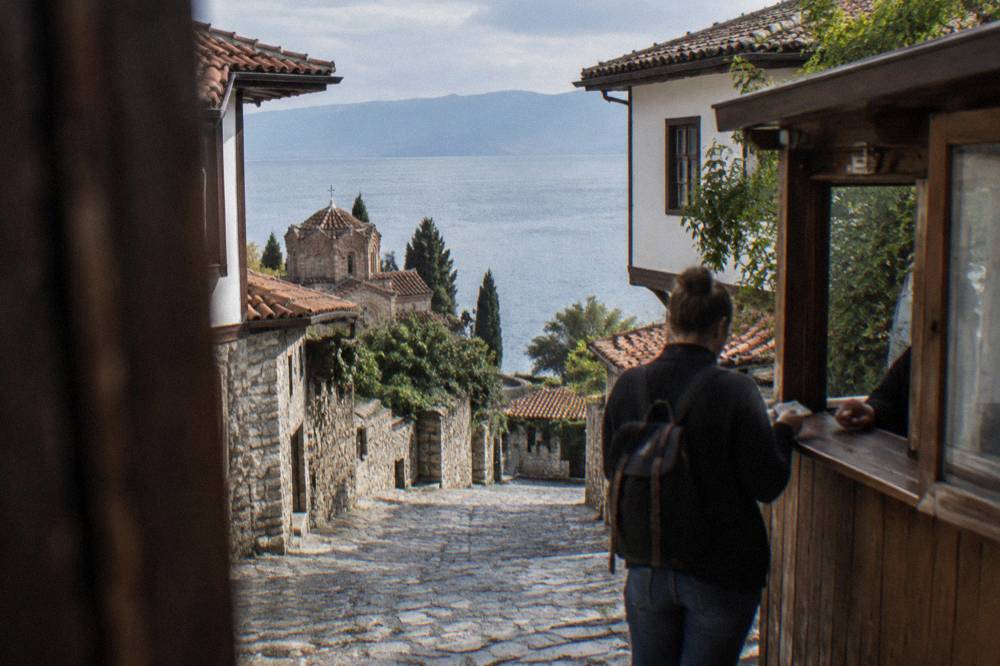
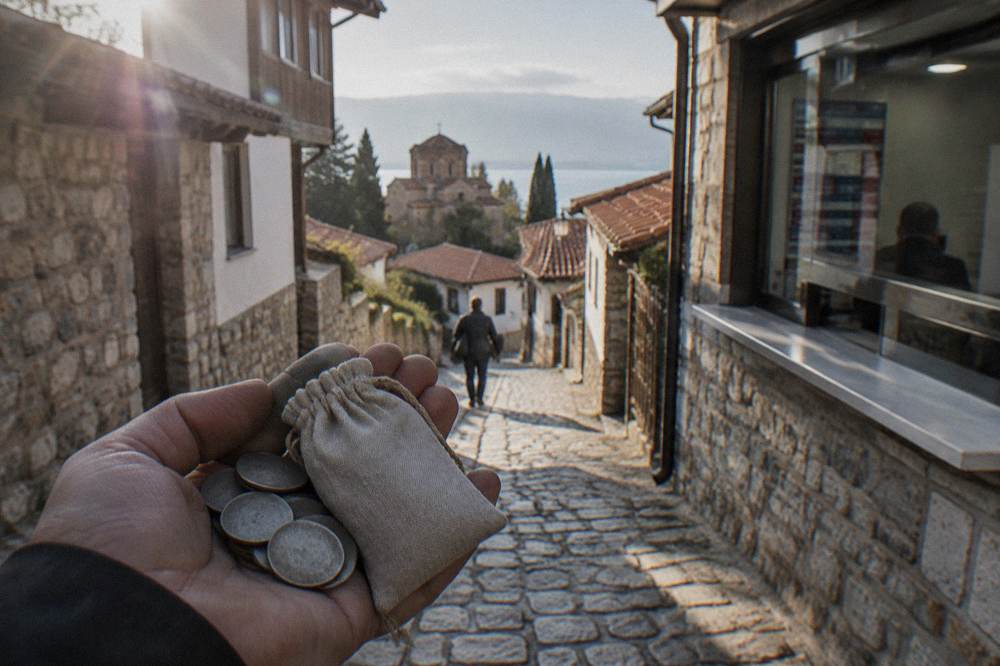
Withdraw denars from ATMs and change money at exchange offices and banks, which handle conversions and are reported to be widely available in Ohrid, and always agree any informal euro acceptance in advance because the rates offered in tourist areas are reported to be unfavourable compared with the National Bank's published middle rate.
The order of operations is the practical part. Arriving at Ohrid St Paul the Apostle Airport, about 10 km from the centre, you enter a cash-first environment for the taxi ride: reported airport taxi fares run 600 to 800 MKD, about EUR 12, to the centre. The airport's own passenger pages describe access by car and taxi rather than a regular public shuttle, so the first denars you hold are usually the ones you withdraw or change on arrival day. The Ohrid airport guide covers the arrival side in full.
In town, the reported picture is consistent: ATMs for denar withdrawals are widespread, and exchange offices and banks convert foreign cash. Two habits protect you. Count what a machine or counter offers against the NBRM middle rate, which the National Bank publishes daily, and keep the amounts moderate, changing what a day needs rather than a whole stay. The denar's stability against the euro means there is nothing to time: a rate that was fair on Monday is fair on Friday.
Do Shops And Restaurants In Ohrid Take Cards?
The honest answer is planning, not statistics: the denar is the only legal tender, small sights, boats and market stalls are paid in cash, and the prices that matter to a day in Ohrid, the 150 MKD museum ticket, the 1,200 MKD cruise, the 250 MKD park fee, are all denar prices, so a visitor who carries cash for those is never stranded regardless of what any individual shop accepts.
What the sources support is a two-layer strategy. The fixed, known costs are cash costs: the museum institute's sites at 150 MKD foreign adult rate, the boat cruise from 1,200 MKD, the park fee of 250 MKD per vehicle, the St Naum monastery entrance at 150 MKD and the springs rowboat at about 5 EUR. Anything booked through a listing, from a private full-day tour to a sunset cruise, is paid through that listing, in the currency it quotes, before you stand at a counter.
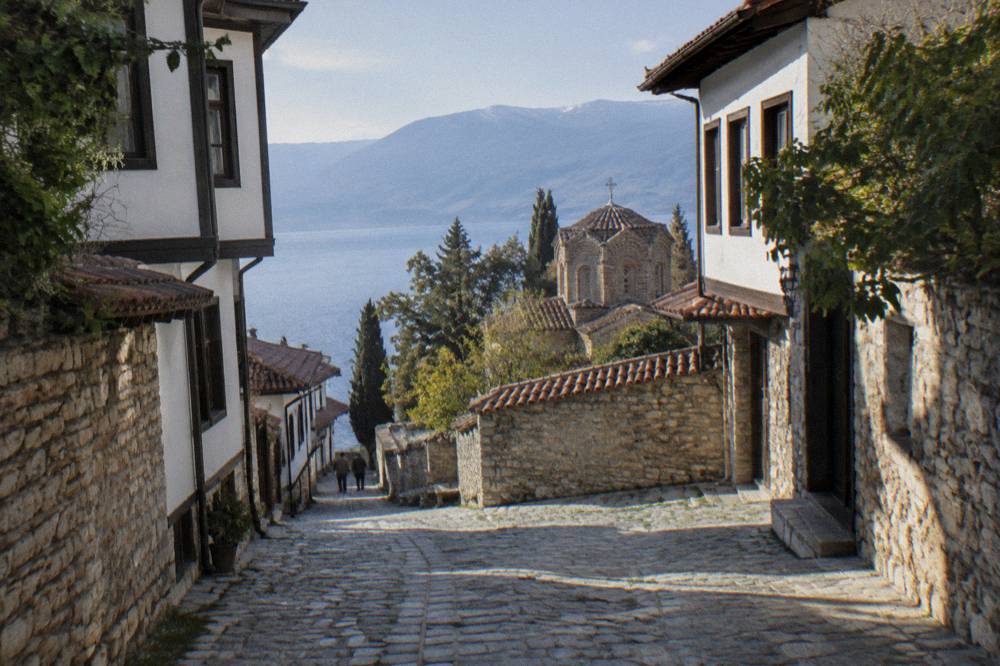
The private option is worth a sentence here, because it changes the cash arithmetic for a whole day. The Full-Day Private Best of Ohrid and Lake Ohrid tour fixes the day's guiding cost through its listing, leaving only entry tickets and food to be paid in denars on the spot: Check availability to see the operator's live listing. The same logic applies to transfers and day trips from further afield, covered in the Tirana to Ohrid guide and the Skopje to Ohrid guide, where the intercity bus fare of 850 to 950 MKD one way is the cash item and the rest can be arranged in advance.
What Do Ohrid's Sights And Transport Cost In Denars?
The museum institute's ticket system charges foreign adults 150 MKD and domestic adults 120 MKD at its listed sites, the intercity bus from Skopje costs 850 to 950 MKD one way, motorway tolls between Skopje and Ohrid total about 140 MKD by car, and the Ohrid to Struga local bus has been quoted at 100 to 150 MKD in older guides, all figures that belong to the exact route or site named.
The table below keeps each price with its owner. Prices move with seasons at the museum sites, but the ticket rates themselves are the institute's published rates, and the opening schedules below them are the ones the institute prints per site.
| Museum institute site | Winter hours (1 Oct to 30 Apr) | Summer hours (from 1 May) | Closed |
|---|---|---|---|
| Robev Family House, Tsar Samoil St 62 | 09:00 to 15:30 | Two shifts, 09:00 to 15:30 and 13:30 to 20:00 | Monday |
| Museum on Water (Bay of Bones), Peshtani | 09:00 to 15:30 | 09:00 to 16:30 (to 30 Sep) | Monday |
| Icon Gallery, Perivleptos complex | 09:00 to 14:00 | 09:00 to 17:00 | Monday |
Transport is the other cash line. The Skopje to Ohrid journey is about 170 km by road, roughly three hours by bus at 850 to 950 MKD one way, with several operators running daily departures from Skopje's Transport Centre to the Ohrid bus station; by car the drive is about 172 km plus about 140 MKD in tolls paid at each plaza, since North Macedonia has no vignette system. A private transfer from Skopje has been quoted from about EUR 130. The Ohrid bus station guide and the guide to getting to Ohrid hold the full route detail, and the Ohrid taxis and Uber guide covers the reported taxi picture in town, where short rides such as the bus station hop have been quoted around 150 to 200 MKD and the advice is consistent: agree the price in advance.
| Transport | Price or fare | Notes |
|---|---|---|
| Skopje to Ohrid bus, one way | 850 to 950 MKD | About 3 hours, several daily departures |
| Skopje to Ohrid by car | about 140 MKD tolls | Paid per plaza, no vignette, about 172 km |
| Private transfer Skopje to Ohrid | from about EUR 130 | Quoted by transfer guides |
| Airport taxi to Ohrid centre | 600 to 800 MKD (about EUR 12) | Reported fare, agree in advance |
| Ohrid to Struga local bus | 100 to 150 MKD | Older guide figures, confirm current fare |
| Full-day boat cruise to St Naum | from 1,200 MKD adult, 600 MKD child | Boat Armada, seasonal |
How Does Paying For Tours And Transfers Work In Ohrid?
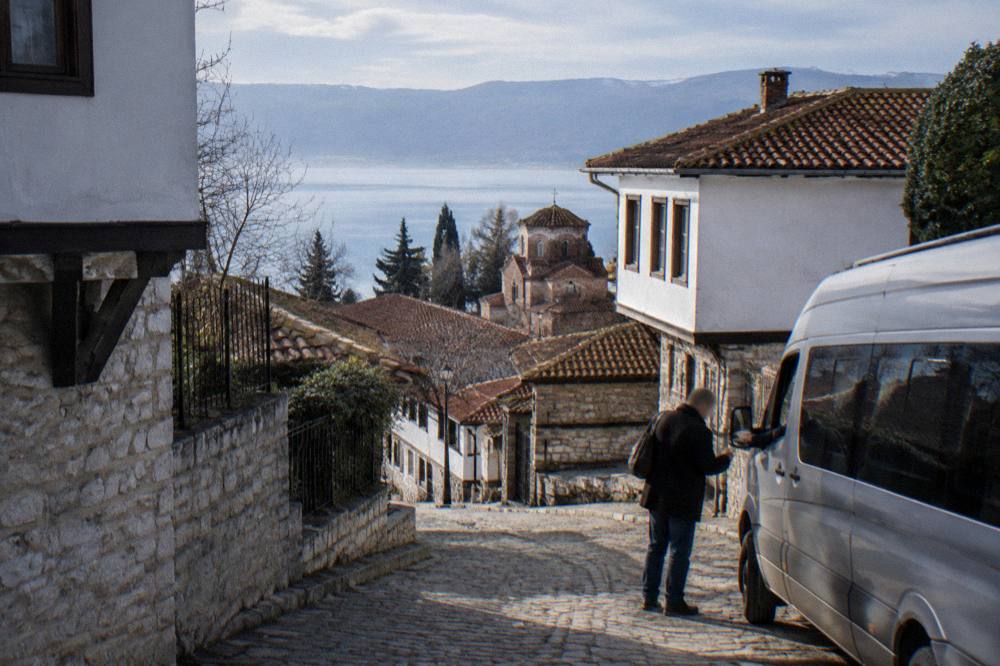
Bookable tours and transfers are paid through the operator's live listing in the currency that listing quotes, commonly euros or US dollars, and the price, rating and duration you see render from the listing itself, so no part of that transaction needs denars, while everything you buy on the spot in Ohrid, tickets, boats, taxis, food, is a denar transaction done in cash.
That split is the single most useful money decision on an Ohrid trip. The listings below this paragraph, for instance, print their own prices and durations, and this page never restates them in prose or converts them into denars. What you can plan is the cash remainder: a cruise to St Naum that includes transport still leaves the monastery entrance at 150 MKD and possibly the springs rowboat at about 5 EUR to be paid at the site, and the lake boats and ferries guide details what runs in which season.
Transfers follow the same pattern. A trip that starts in Tirana or Durres departs from there, is priced in its listing, and only the incidental costs along the way, coffee, a church candle, a lakeside snack, are denar items. Day-trip planning with the money question attached is covered in the best time to visit Ohrid guide wait, the correct link is the best time to visit Ohrid and in the safety guide, which together settle the seasonal and practical questions that decide how much cash a week here really needs.
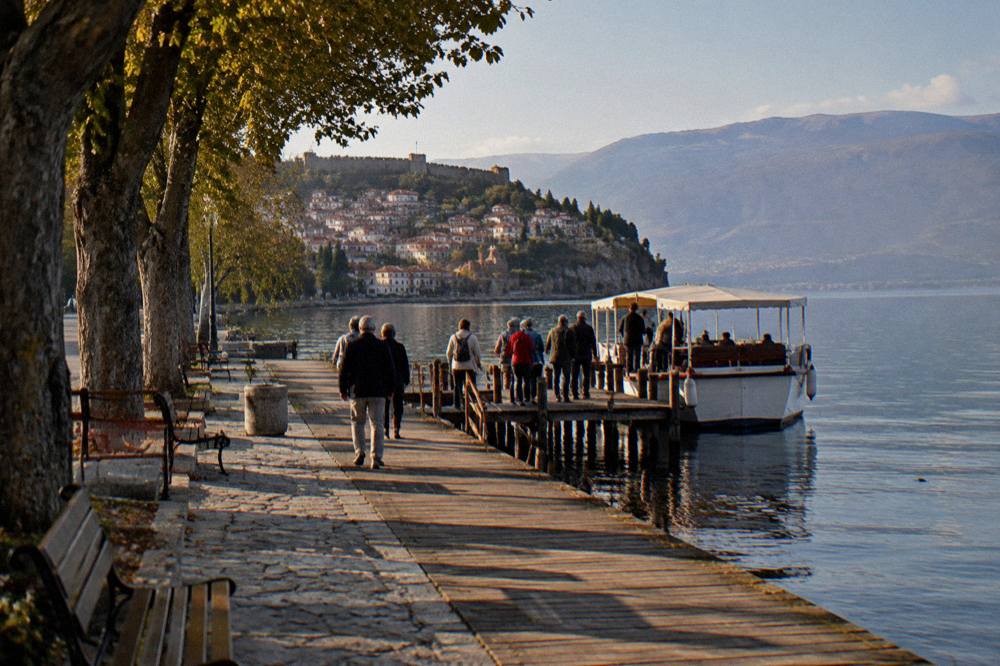
A note on where the denar is NOT the answer. North Macedonia is not in the EU, not in the euro area and not in Schengen, so EU roaming and euro rules do not apply as they do across the border in Greece or, since 1 January 2025, in Bulgaria and Romania as full Schengen members. The practical consequences for money are small but real: your home bank's eurozone fee regime may not apply the same way, and the SIM card and WiFi guide covers the connectivity side, while the visa and entry guide covers the 90 days in any 180-day period rule and the police registration your hotel handles within 48 hours of arrival.
What Should You Know About Emergency And Everyday Practicalities In Ohrid?
Keep three numbers in mind, ambulance 194, police 192 and roadside assistance 196, as listed in UK foreign travel advice for North Macedonia, keep your budget in denars for the day's fixed costs, and remember that tap water in Ohrid is reported to be generally drinkable, which removes bottled water from the daily cash line for most visitors.
The everyday arithmetic of a town like this is short. Fixed sights at 150 MKD each, a boat cruise from 1,200 MKD, a park fee at 250 MKD per vehicle if you drive up Galicica, and food bought as you go. Nothing in that list requires a card, and nothing in it benefits from euro cash carried in bulk. Emergency spending belongs on whatever card your bank issues, used where it is accepted, with cash as the fallback that always works at a ticket window.
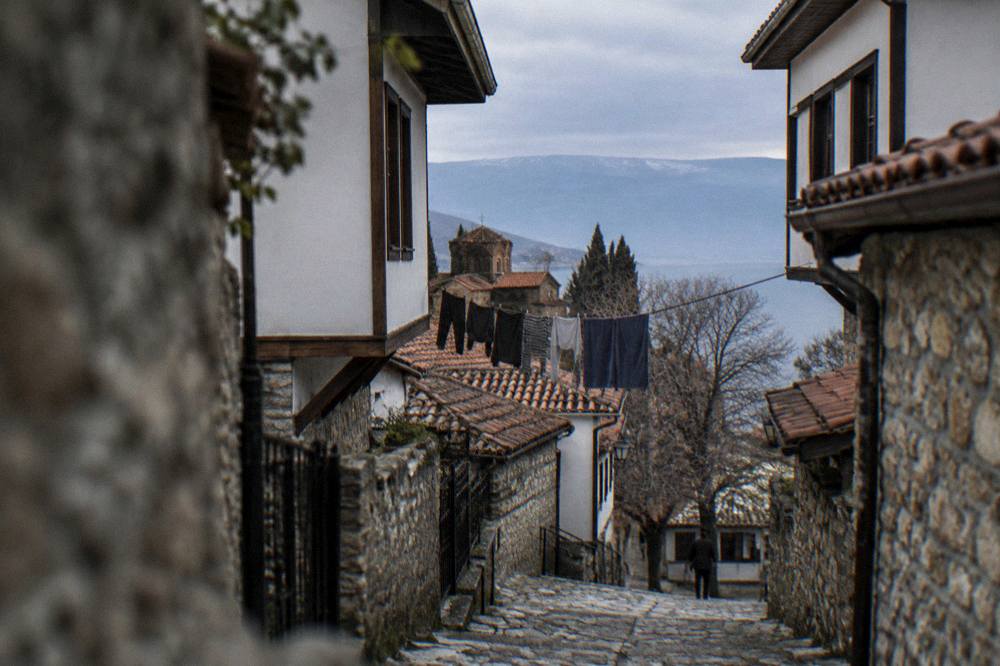
For the wider picture, the North Macedonia travel guide puts Ohrid's money habits in their national context, and the where to stay in Ohrid guide addresses the accommodation question, where rates render from booking listings and are never typed on this site. The language and phrases guide and the how to say hello in Macedonian page make the small interactions at counters smoother, and a greeting in Macedonian at a ticket window costs nothing at all.
Common Questions About Macedonian Denar And Money In Ohrid
What Currency Is Used In Ohrid?
The Macedonian denar (MKD) is the only legal tender in Ohrid and in North Macedonia. Euros are not legal tender, though tour operators commonly quote in them and informal euro acceptance is reported in tourist areas at unfavourable rates.
Can I Pay With Euros In Ohrid?
Not as legal tender. Local prices, from the 150 MKD museum ticket to the 1,200 MKD boat cruise, are in denars. Reported informal acceptance of euro cash exists in tourist areas, but the rates offered are reported to be unfavourable, so withdraw or change denars instead.
How Many Denars Is One Euro?
The National Bank's middle rate on 19 October 2026 was 61.6633 MKD to one euro. The denar is de facto pegged to the euro, so the rate moves very little.
How Much Cash Do I Need Per Day In Ohrid?
Count the fixed items: museum institute sites at 150 MKD each for foreign adults, the full-day St Naum boat cruise from 1,200 MKD, and Galicica at 250 MKD per vehicle. Food and taxis add the rest, and short town taxi rides have been quoted around 150 to 200 MKD.
Are There ATMs In Ohrid?
ATMs are reported to be widely available for denar withdrawals, and exchange offices and banks handle cash conversions. Compare the rate offered against the National Bank's published middle rate.
How Much Is A Bus From Skopje To Ohrid?
The intercity bus from Skopje to Ohrid costs 850 to 950 MKD one way for a journey of about three hours. By car, tolls between the two cities total about 140 MKD, paid at each plaza.