Ohrid City Beach And The Lido
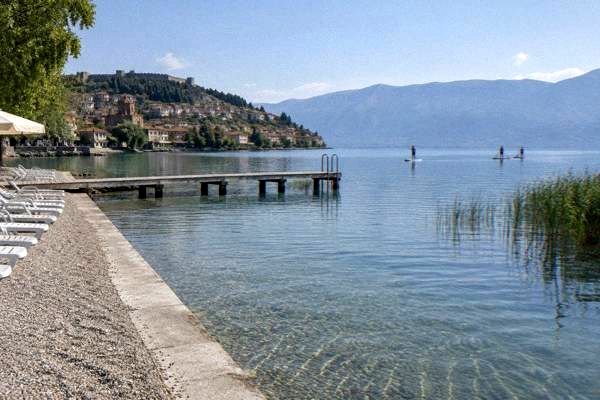
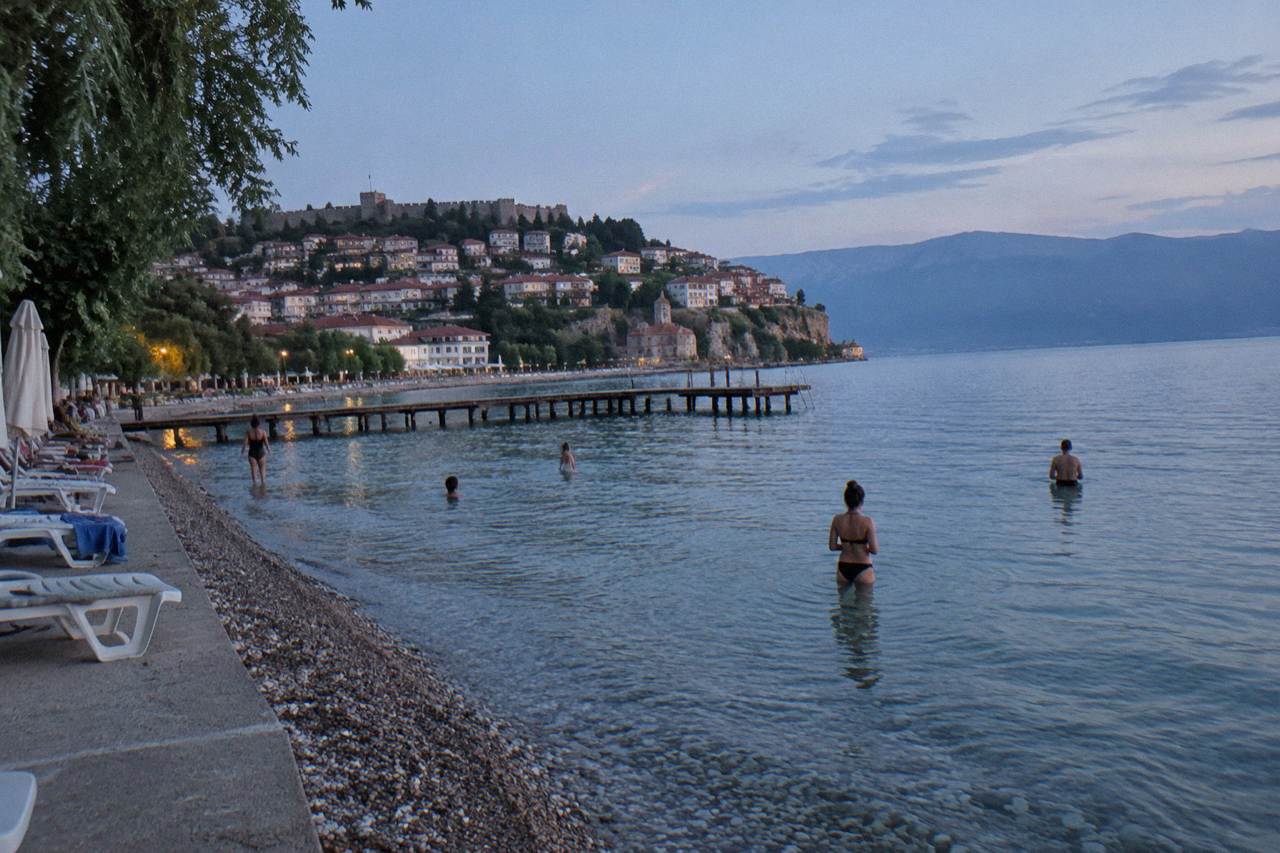
Ohrid, a lake town in North Macedonia, swims in fresh mountain water rather than the sea, and the city beach and the lido are where the town meets Lake Ohrid for a swim.
Short answer
Swimming at Ohrid's town shore runs mainly from July to September, when modelled lake surface temperatures sit above 20 C; 2026 testing rated the bathing water Class I physico-chemically apart from Grashnica beach, which rated Class III.
Ohrid, in North Macedonia, is a town built on the shore of a freshwater mountain lake that sits at about 693 m above sea level, and the Ohrid City Beach And The Lido is where that relationship becomes physical: a strip of lake shore inside the town where people swim in water that has existed, per the UNESCO listing for the region, for about two to three million years. The lake is not the sea. It has no tide, no salt and no waves worth naming, and the swimming season is shaped by altitude and mountain weather rather than by a Mediterranean calendar. This page, part of the Ohrid Travel Guide, sets out what is known about swimming at the town's shore: when the water is warm enough, what the 2026 water testing found, the rules the government introduced for boats and jet skis in 2026, and the water-based activities that use the same stretch of lake.
What Is The Ohrid City Beach And The Lido?
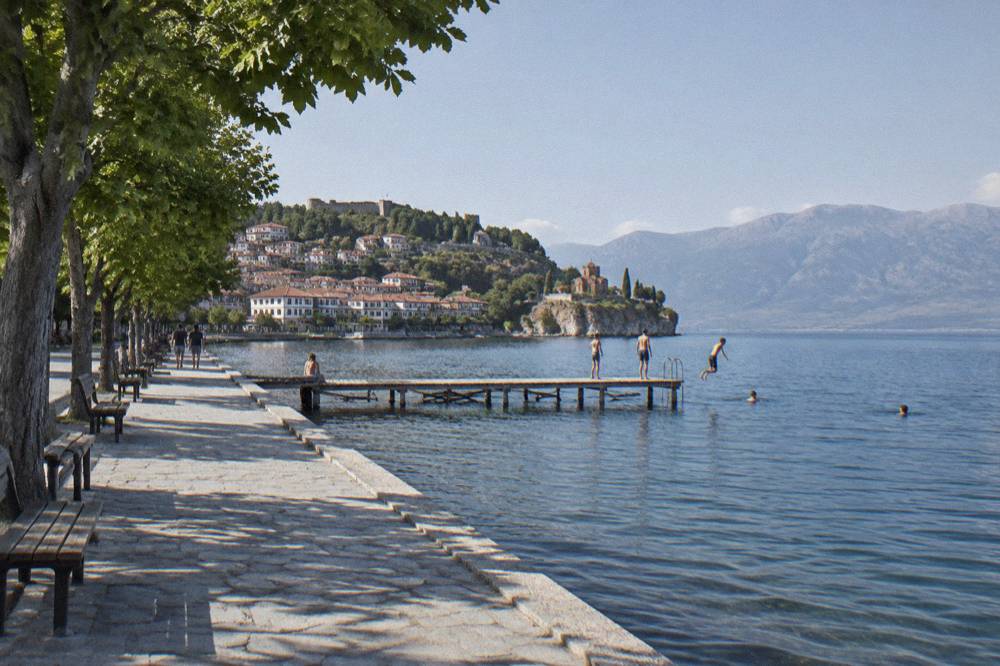
The Ohrid City Beach And The Lido is the town's swimming shore on Lake Ohrid, a freshwater lake at about 693 m above sea level in North Macedonia, rather than a coastal resort: the swimming spots around the town have pebble and mixed shores and clear water, and swimming is the point of them from July to September when the modelled surface temperature passes 20 C.
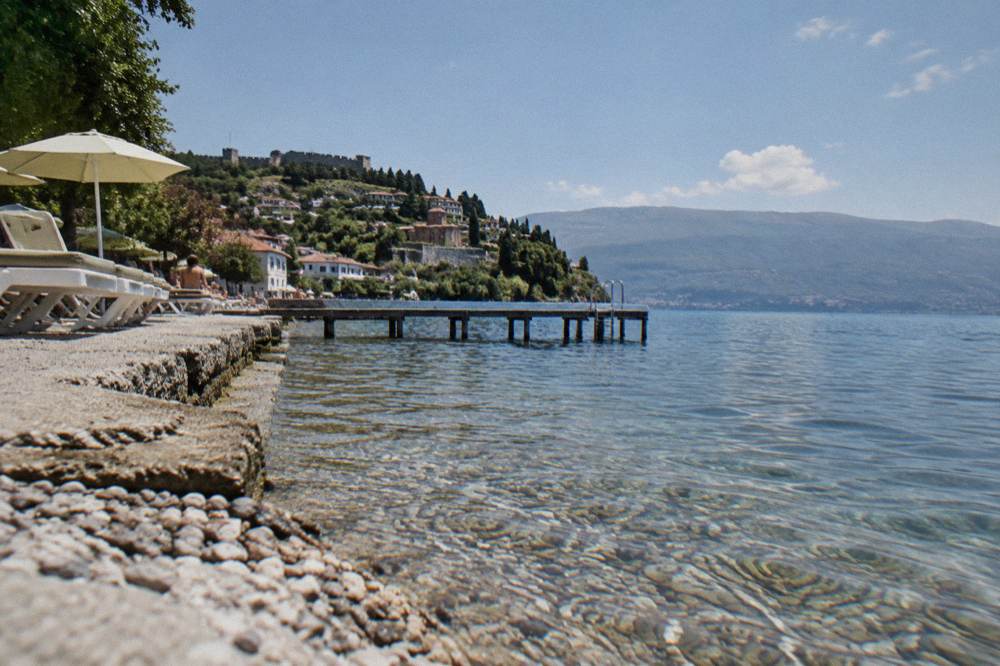
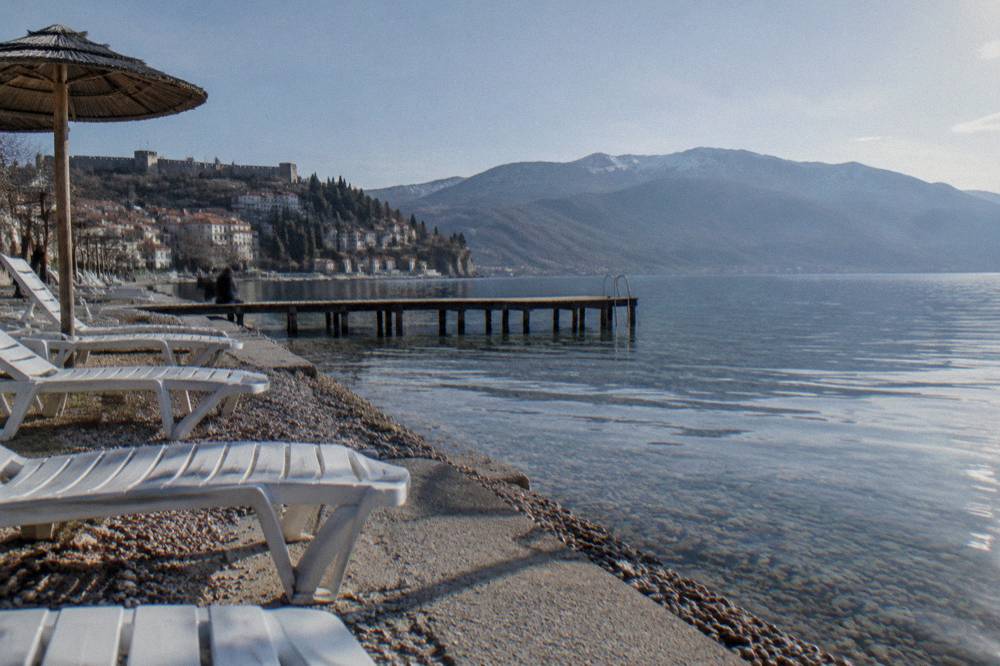
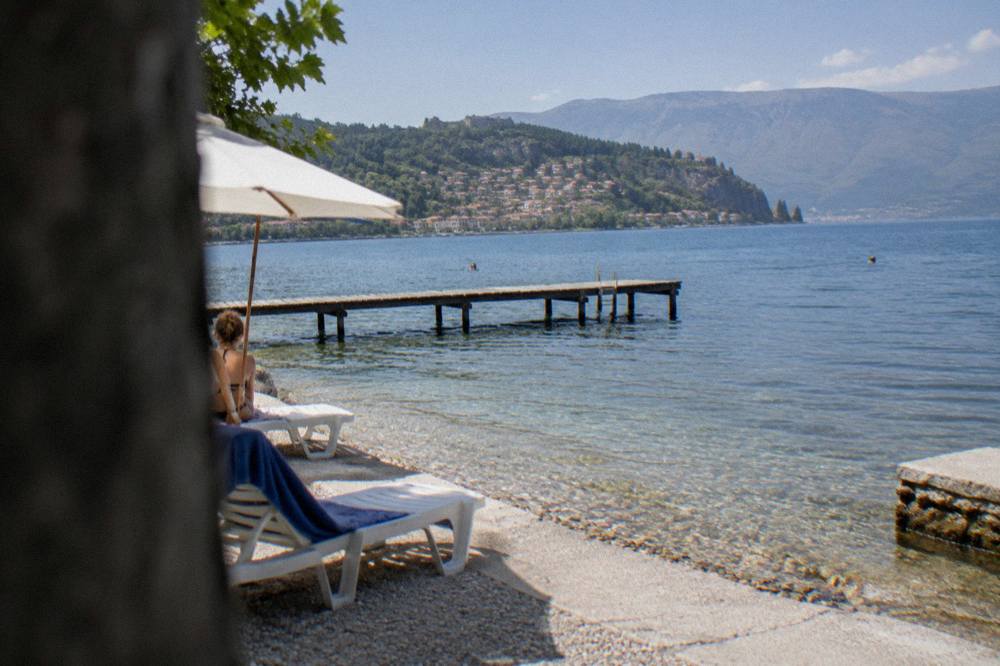
The shore around Ohrid is a working lakefront rather than a built resort strip. The guides that catalogue the lake's swimming spots list Gradiste, Lagadin, Ljubanista, Potpesh and Labino as the popular beaches of the Ohrid and Struga stretch, all pebble or mixed shores with clear water, and the town's own beach and lido sit inside that same landscape of quays, boat jetties and shallow entry. There is no sand to speak of. What the lake offers instead is clarity: the water is the reason the whole region holds UNESCO mixed heritage status, inscribed in 1979 and 1980 and extended to the Albanian side in 2019, with over 200 endemic species recorded including 17 endemic fish.
The character of a swim here follows from the altitude. Summer days can be warm on the shore while the water stays cool well into June. That combination, warm air over cool, deep water, is the defining fact of every beach day in Ohrid.
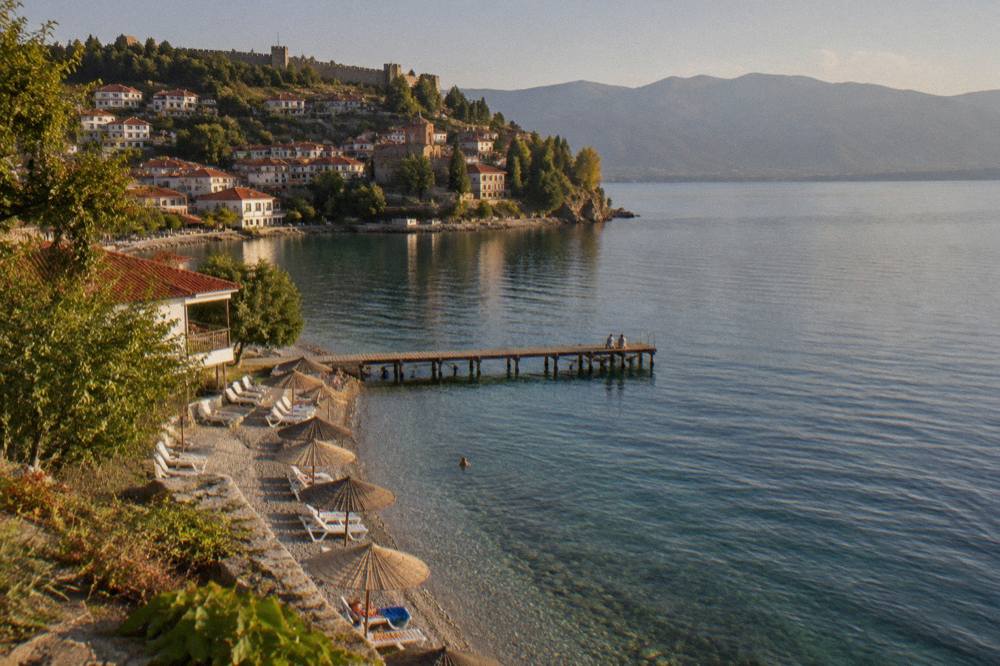
For planning a whole day around the water, the shoreline links naturally to the rest of the town. The Ohrid boardwalk runs along the lake edge, the old town climbs behind it, and a first visit can be sequenced with the one day in Ohrid itinerary.
When Can You Swim At Ohrid's City Beach And The Lido?
The swimming season on Lake Ohrid runs mainly from July to September, when the modelled surface temperature sits at or above about 20 C: July models at about 22.9 C, August at about 23.5 C and September in a reported range of roughly 20 to 25 C, while the October mean measured by the national service is 14.3 C, which most swimmers treat as cold.
The seasonal numbers come from two different kinds of source, and the distinction matters. Aggregator sites model lake surface temperatures month by month: January about 4.6 C, February about 5.4 C, March about 7.2 C, April about 10.5 C, July about 22.9 C, August about 23.5 C and October about 14.7 C, all modelled rather than measured at a station. By either figure, October water is brisk, and the swimming season the aggregators describe, July through September, matches what the lake actually does.
| Month | Modelled surface temperature | Swimmable? |
|---|---|---|
| Jan | about 4.6 C | No |
| Feb | about 5.4 C | No |
| Mar | about 7.2 C | No |
| Apr | about 10.5 C | No |
| May | reported about 15 to 19 C | Short dips |
| Jun | reported about 19 to 22 C | Marginal to yes |
| Jul | about 22.9 C | Yes |
| Aug | about 23.5 C | Yes |
| Sep | reported about 20 to 25 C | Yes |
| Oct | about 14.7 C modelled; 14.3 C multi-year mean | Cold |
| Nov | about 10.3 C | No |
| Dec | about 6.0 C | No |
Shoulder months are where expectations need calibrating. The ERA5 reanalysis for the Ohrid grid cell, modelled 1991 to 2020 normals, gives June a mean daily high of 24.2 C against a mean minimum of 15.2 C, and May a high of 19.5 C. The air can feel like summer in June while the water still holds the winter's cold, and the season on the lake shore lags the season on the terrace.
Is The Water Clean At The City Beach And The Lido?
Yes in 2026, with one exception away from the town beach: testing by the Institute of Public Health across the 2026 season rated Lake Ohrid bathing water Class I physico-chemically at every point except Grashnica beach, which rated Class III, and most microbiological samples came back Excellent, though the same reporting flagged persistent wastewater weaknesses from St Naum to Radozda.
The 2026 results, reported from May and June testing, are the most recent picture of what is actually in the water. The physico-chemical classification came back at Class I across the monitored points apart from Grashnica, and the microbiological picture was largely rated Excellent or Good for bathing. Points that drew poorer microbiological ratings in the reporting included Hotel Royal, Labino and the Studencishte canal. The same coverage was explicit that risks remain: properties and hotels not connected to the collector system, defects allowing leaks, and incomplete coverage on the stretch from St Naum to Radozda on the lake's south-western side.
| 2026 monitoring point | Result reported |
|---|---|
| Lake Ohrid bathing points (general) | Class I physico-chemical |
| Grashnica beach | Class III physico-chemical |
| Microbiological samples (most) | Excellent or Good for bathing |
| Labino, Hotel Royal, Studencishte canal | Poorer microbiological ratings flagged |
For a swimmer at the town shore, the practical reading is straightforward: the 2026 season's testing supported swimming at the monitored bathing points, Grashnica was the one physico-chemical failure, and untreated lake water is never a drinking source regardless of how clear it looks.
Swimming is only one way to use this water, and the town's operators run several. A guided kayaking trip with a beach stop and BBQ lunch works the same shoreline, and the wider roster of water products is worth a look before committing a beach day to the sand-free shore.
For anyone weighing a beach day against a boat day, the two are not mutually exclusive: several of the lake's full-day boat products include a swim stop of their own, and the shorter cruises return to the harbour in time for a late-afternoon swim off the town shore. That is the pattern the local operators have settled on, water first, sightseeing second, water again at dusk.
What Rules Apply On The Water At Ohrid In 2026?
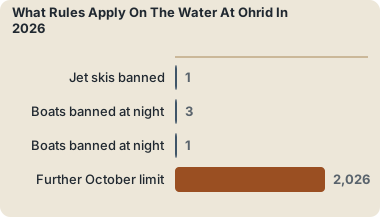
A government decision of 2 June 2026 restricts lake traffic for swimmer safety: jet skis are banned from 1 July to 31 August between 11:00 and 19:00, and boats are banned at night between 3 June and 31 August from 21:00 to 05:00, with a further restriction through September and October, so daytime swimming zones on the Ohrid shore sit inside an actively managed lake.
The measures came from the Ministry of Transport and Communications and are dated 2026 facts rather than permanent law: they apply to specific windows in the summer season and they were introduced explicitly for swimmer safety. The night limits for boats run 3 June to 31 August from 21:00 to 05:00, then 1 to 30 September from 20:00 to 06:00, with a further October restriction in the same decision. The jet ski ban covers the peak daytime hours of July and August. For anyone swimming off the town shore, the practical effect is a lake that is quieter at night and free of jet skis through the middle of high summer days.
| 2026 restriction | Dates | Hours |
|---|---|---|
| Jet skis banned | 1 Jul to 31 Aug 2026 | 11:00 to 19:00 |
| Boats banned at night | 3 Jun to 31 Aug 2026 | 21:00 to 05:00 |
| Boats banned at night | 1 to 30 Sep 2026 | 20:00 to 06:00 |
| Further October limit | Oct 2026 | per the June decision |
On land, the summer of 2026 also brought a resident-only parking regime to old-town streets including Ilindenska, Kosta Abrash and Car Samoil, free for residents with a valid sticker and enforced against non-residents, reported with wheel clamps. Anyone driving to a swim with a car should plan for that. The fuller picture of parking and getting about is on the site's practical pages.
How Does The Weather Shape A Beach Day In Ohrid?
The modelled ERA5 normals for 1991 to 2020 put August's mean daily high at 27.6 C and July's at 27.1 C with only about 33 mm of rain in August, while June still averages 43 mm and September 62 mm, so the classic Ohrid beach weather is July and August: warm days, cool nights and the lowest rainfall of the year on the same shore where January's mean daily low sits at -0.8 C.
The climate table for the Ohrid grid cell is modelled reanalysis, not a station record, and it describes a continental mountain pattern: warm summers, cold winters, and rain spread through the colder half of the year. For the swimmer, the months that matter are June through September.
| Month | Mean daily high | Mean daily low | Rain |
|---|---|---|---|
| Jun | 24.2 C | 15.2 C | 43 mm |
| Jul | 27.1 C | 18.3 C | 35 mm |
| Aug | 27.6 C | 19.0 C | 33 mm |
| Sep | 22.4 C | 14.9 C | 62 mm |
| Oct | 17.4 C | 10.3 C | 76 mm |
The summer rain figures are low but not zero, and September's 62 mm is a real step up from August's 33 mm. A September swim is a different proposition from an August one: the air highs are five degrees lower, the nights drop toward 15 C, and the water holds its summer warmth while the weather around it becomes less reliable. Spring is the mirror image, warm air over cold water, with May's 70.8 mm of rain falling on a lake still modelled at roughly 15 to 19 C at the surface.
What Can You Do At The City Beach And The Lido Besides Swim?
The town shore doubles as the base for Ohrid's water activities: guided kayaking with a beach stop and BBQ lunch, stand-up paddleboard tours and rentals, a sunset cruise on the lake, scuba and try-diving experiences, and boat trips toward the Bay of Bones and St Naum, all departing from or near the lakefront that the beach belongs to.
The product roster tells the story of this stretch of water better than any description could. Kayaking runs both as a guided trip with a beach stop and a BBQ lunch and as shorter paddles. Stand-up paddleboarding comes as a landmark tour with photos, a shorter paddle tour and plain rental with old-town views. Boat cruises range from an hour-long panoramic old-town loop to a sunset cruise, a wine-tasting cruise and full-day trips that combine the Bay of Bones, St Naum and a swim stop. Diving includes a try-dive at the Bay of Bones and a full scuba experience in the lake. Paragliding flights operate above the lake as well, for the view rather than the water.
A short paddle is a way to see the swimming shore from the outside. The SUP and kayak overview on this site collects the paddling options, and the boat tour guide covers the cruising side, including the run down the lake to St Naum.
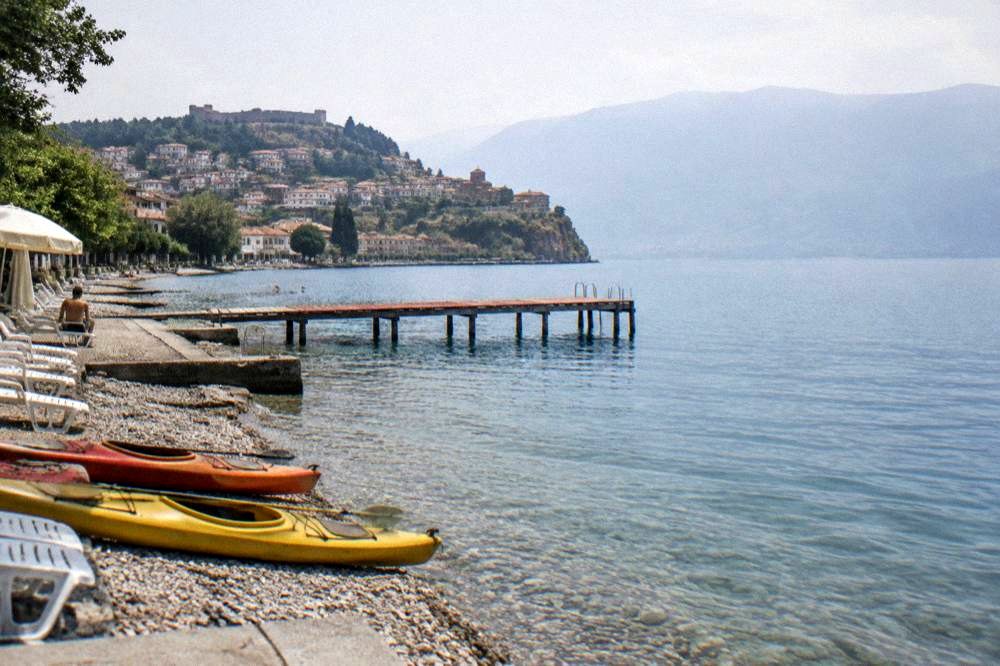
For a beach day with a meal built in, the kayaking trip with BBQ lunch is the one product that joins the two: paddle, beach stop, lunch. Check availability on the operator's live listing for dates and current terms.
Which Other Beaches Around Lake Ohrid Compare With The Town Shore?
The named swimming beaches of the Ohrid stretch are Gradiste, Lagadin, Ljubanista, Potpesh and Labino, all listed in guides as pebble or mixed shores with clear water, and the town beach sits at the convenient end of that set, while beaches further out such as Gradiste and Ljubanista trade a walk or a drive for more room.
The beach list is short because the lake's shore is short on flat land: the terrain rises quickly on both the Galicica side and the western side, and swimming spots cluster where the slope eases. The eastern-shore villages are covered in their own pages here: Trpejca and Ljubanista sit alongside the general neighborhood guide. On water quality, the 2026 exception to know about is Grashnica, the one Class III physico-chemical result in the season's testing, while the monitored bathing points generally came back at Class I.
| Beach | Character per guides |
|---|---|
| Gradiste | Popular swimming spot, pebble/mixed shore, clear water |
| Lagadin | Popular swimming spot, pebble/mixed shore |
| Ljubanista | Popular swimming spot, eastern shore |
| Potpesh | Popular swimming spot near the town |
| Labino | Popular swimming spot; one 2026 microbiological rating flagged |
Winter shrinks the beach map. Boat trips toward St Naum and the Bay of Bones reduce or stop outside the main season, reported as roughly May to October operation, and beach bars and facilities close or reduce for winter, while road access to St Naum remains possible year-round.
How Does A Beach Day Fit Into The Rest Of Ohrid?
A beach morning pairs naturally with an old-town afternoon: the shore sits below the lanes that climb to Samuel's Fortress, the Ancient Theatre and the church complex at Plaosnik, and the town's sights and its swimming water are close enough that a single day can hold both, which is why the town's itineraries treat the lake as a sight in its own right rather than a backdrop.
The layout of Ohrid puts the water and the heritage in one compact frame. The old town rises from the shore past the Church of St John at Kaneo, and the sight list above it includes Samuel's Fortress, Plaosnik, St Sophia and the Ancient Theatre. The museum sites run a winter schedule from 1 October to 30 April and a summer schedule from 1 May to 30 September, closed on Mondays where their pages state it, so a summer beach day loses nothing on the sight side except on Mondays. The itineraries on this site, from one day to two days, sequence the two halves of the town.
Timing matters more than distance here. The 2026 navigation rules quiet the lake at night, the water is at its modelled warmest in August, and the festival calendar fills the summer evenings: the 66th Ohrid Summer Festival opened on 12 July 2026 at the Ancient Theatre and ran to 20 August, and the Ohrid Water Festival ran 12 to 30 August 2026, including the 25 km swimming marathon from St Naum to Ohrid harbour on 22 August and a 33 km stand-up paddle marathon around the lake on 26 August. A swim in mid-August shares the water's calendar with the town's biggest fortnight.
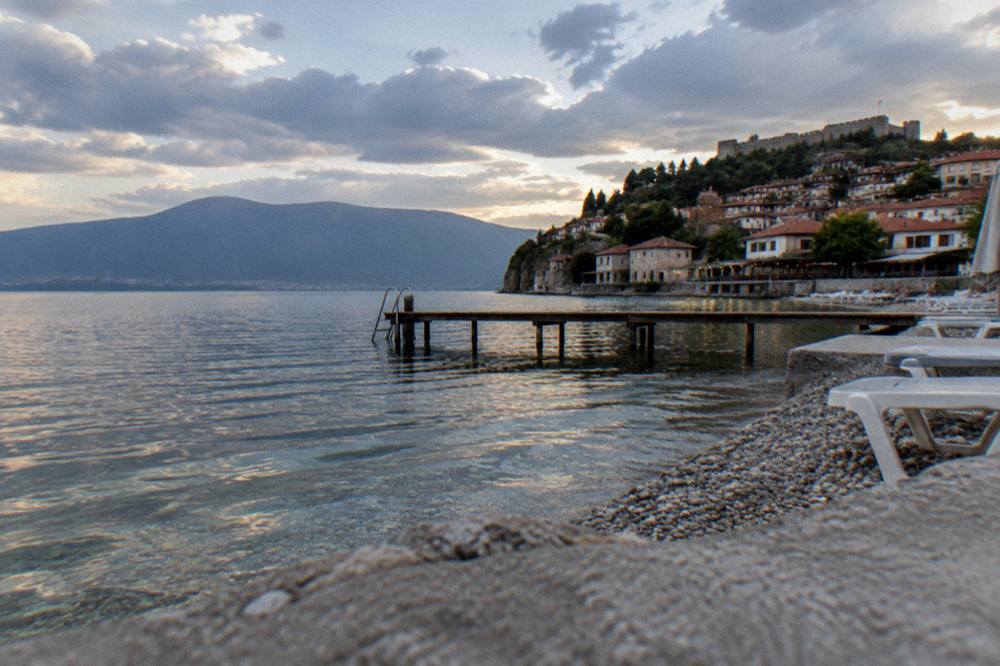
The sunset cruise is the product that closes a beach day most directly, leaving the shore as the light goes and returning after it. The evening is also when the town's restaurant side takes over, and the Ohrid food guide and the pages on Ohrid trout cover what the lake's own kitchen does with the same water.
To end a beach day on the water, book a sunset cruise ticket here.
Taken together, the beach, the water-quality results and the activity roster describe one place rather than three separate topics: a town whose swimming shore is also its harbour, its dive site and its sunset deck. That is the case for treating the city beach and the lido as a sight in their own right rather than a place to kill a hot afternoon.
Common Questions About The Ohrid City Beach And The Lido
Is the water at the Ohrid city beach clean?
2026 seasonal testing by the Institute of Public Health rated the lake's bathing water Class I physico-chemically at the monitored points except Grashnica beach, which rated Class III, and most microbiological samples were rated Excellent or Good for bathing.
When can you swim in Lake Ohrid at Ohrid?
Mainly July to September. The modelled surface temperature is about 22.9 C in July and 23.5 C in August, with September reported in a range of roughly 20 to 25 C; the October multi-year mean is 14.3 C.
Does the Ohrid city beach have sand?
No. The swimming spots around Ohrid are described in the beach guides as pebble and mixed shores with clear water, like the rest of the lake's listed beaches at Gradiste, Lagadin, Ljubanista, Potpesh and Labino.
Are jet skis allowed at the Ohrid beach in summer?
Not in the middle of the day in high summer. Under a government decision of 2 June 2026, jet skis are banned on the lake from 1 July to 31 August between 11:00 and 19:00, part of swimmer-safety measures that also restrict boats at night.
Is Lake Ohrid warm enough for children to swim?
From July the modelled surface temperature is above 20 C and August models at about 23.5 C, which is comfortable for most swimmers; June sits in a reported 19 to 22 C range and the water cools quickly from October.
Can you combine swimming with sightseeing in Ohrid?
Yes: the shore sits directly below the old town, whose sights include St John at Kaneo, Samuel's Fortress, Plaosnik, St Sophia and the Ancient Theatre, and the museum sites run a summer schedule from 1 May to 30 September, with Monday closures where stated.