Plaošnik: St Clement's Church And The Oldest University Site
Plaošnik, the site of the Church of St Clement and St Panteleimon in Ohrid, North Macedonia, sits inside the UNESCO-listed old town between the lake shore and Samuel's Fortress, and UNESCO describes it as the oldest Slav monastery site in the region. What follows covers what the published record states about the site, the museum tickets that apply to Ohrid's institute-run sites, and how to plan a visit.
Short answer
Plaošnik is the hillside site of the Church of St Clement and St Panteleimon in Ohrid's old town, part of the UNESCO Natural and Cultural Heritage of the Ohrid Region. UNESCO describes St Panteleimon at Plaošnik as the oldest Slav monastery, and a 2025 state of conservation report references roof remediation and fresco conservation work at the site. The three museum-institute sites in Ohrid charge 150 den for foreign visitors and 120 den for domestic visitors.
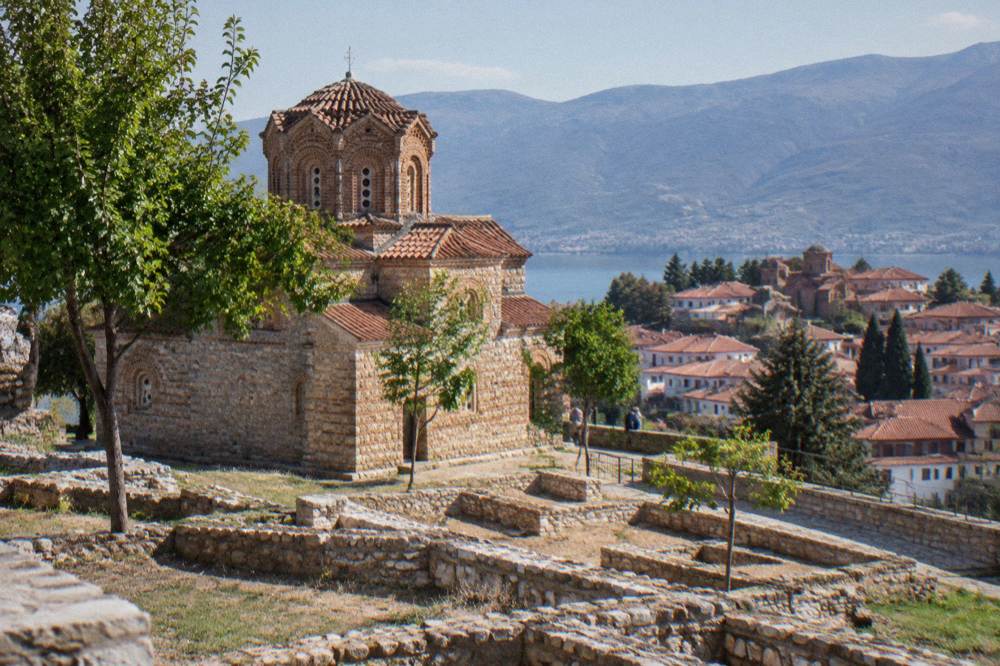
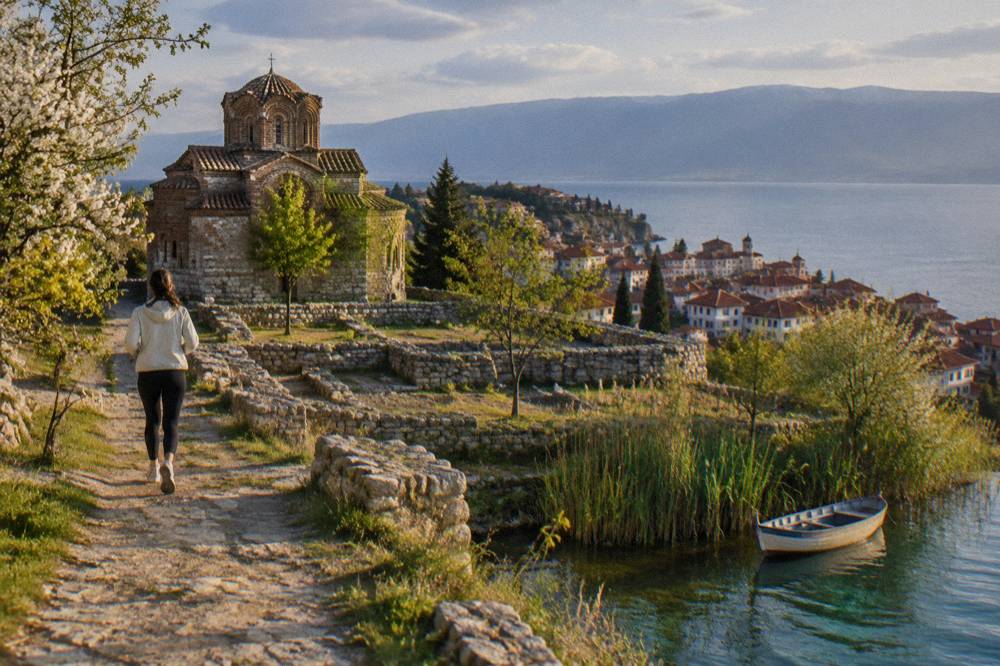
Plaošnik is the hillside site of the Church of St Clement and St Panteleimon in Ohrid, North Macedonia, a town on the shore of Lake Ohrid at about 693 m above sea level. The site sits inside the old town, which climbs from the lake up toward Samuel's Fortress, and it belongs to the UNESCO mixed property "Natural and Cultural Heritage of the Ohrid Region", inscribed in 1979 and 1980 and extended to the Albanian part of the lake in 2019. UNESCO's own listing for Ohrid describes St Panteleimon as the oldest Slav monastery, which is why the site is often described as the oldest university site in the Slav world. The Ohrid Travel Guide covers the whole destination, and this page stays on Plaošnik itself: the church, the archaeology, the museum tickets that apply to Ohrid's institute-run sites, and how the site fits into a day in the old town.
What Is Plaošnik In Ohrid?
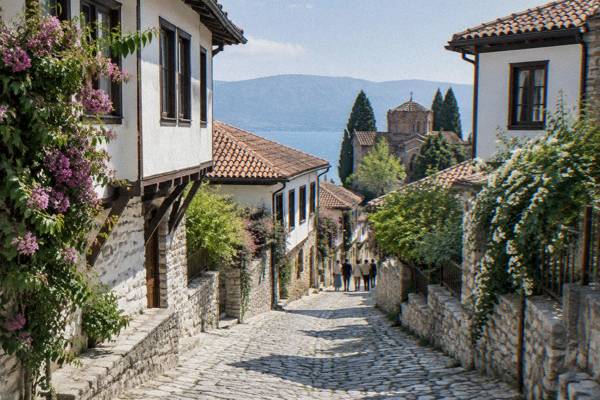
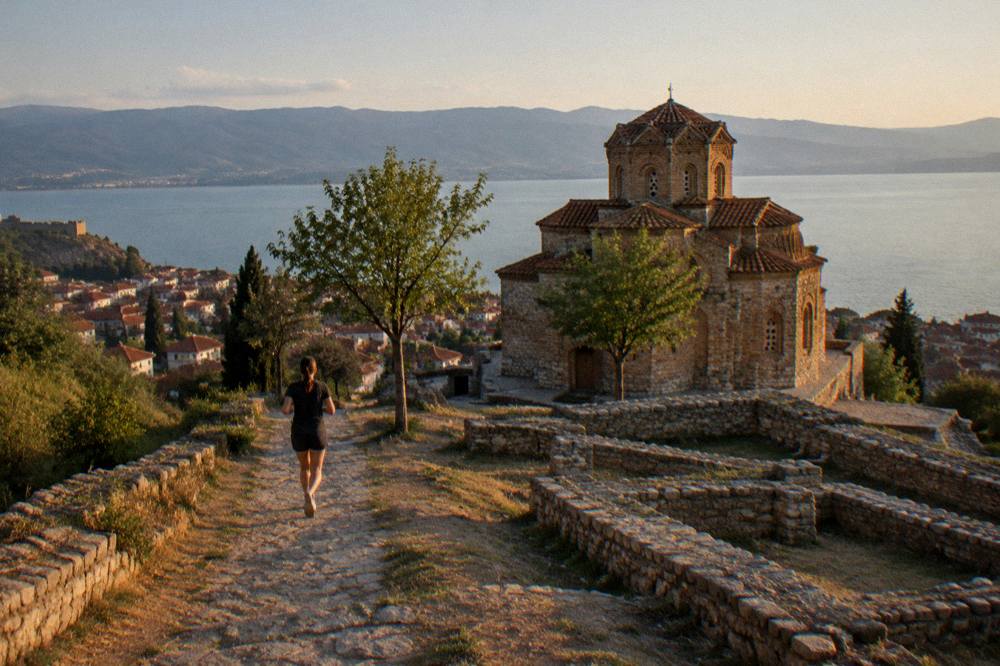
Plaošnik is the walled hillside site of the Church of St Clement and St Panteleimon in Ohrid's old town, on the slope between the lake shore and Samuel's Fortress, and it sits inside the UNESCO property Natural and Cultural Heritage of the Ohrid Region, a mixed cultural and natural site of about 94,729 hectares inscribed in 1979 and 1980 and extended to the Albanian side of the lake in 2019.
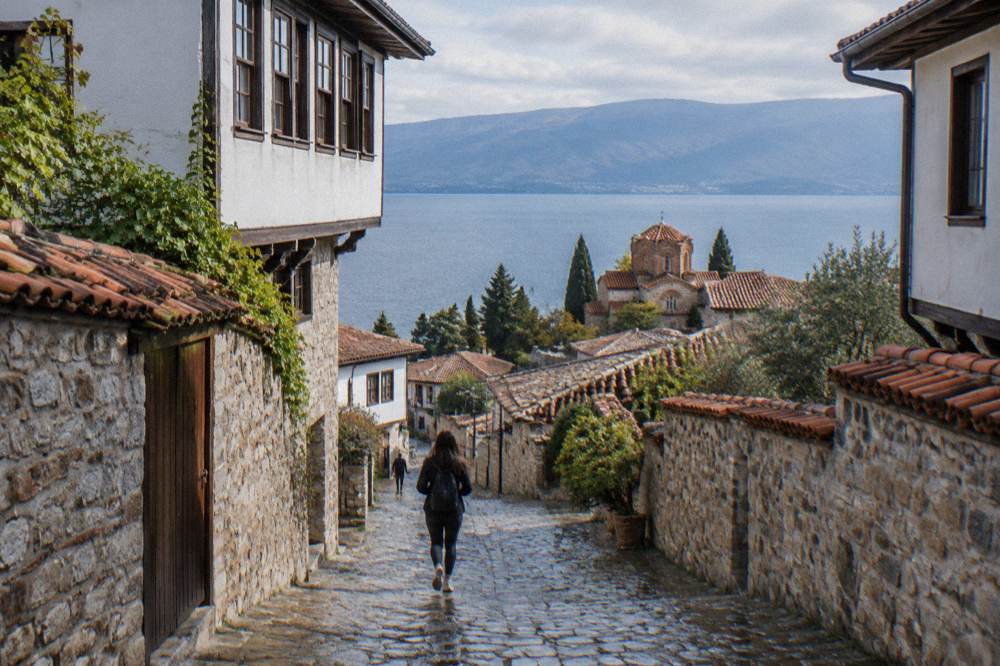
The site is one of the fixed points of any old-town walk in Ohrid. The lanes of the old town are on foot, climbing from the waterfront up to the fortress, and Plaošnik sits on that slope close to the Ancient Theatre of Ohrid, whose own museum-institute page dates it to the end of the third or start of the second century BC. UNESCO's listing credits Ohrid with the oldest Slav monastery at St Panteleimon and with more than 800 Byzantine-style icons from the eleventh to the end of the fourteenth century, a collection that the wider museum network of the town preserves and displays, with the Icon Gallery at the Perivleptos complex as its public home.
To walk those lanes and landmarks with a guide alongside, book an old town walking tour here.
The name covers both the church you see today and the archaeology around it. A 2025 state of conservation report for the UNESCO property, filed through the Macedonian ministry portal, references roof remediation at Plaošnik and ongoing fresco conservation, which is the most recent published indication of work at the site. The report gives no closure schedule, so anyone planning a visit around a specific week should check locally before travelling.
Why Is Plaošnik Described As The Oldest University Site?
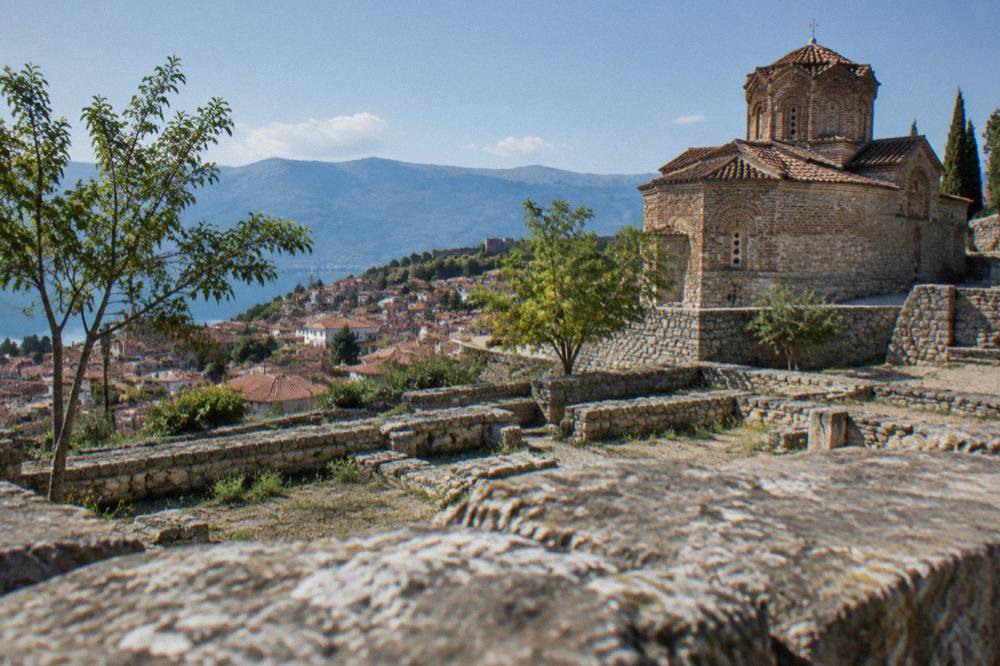
UNESCO's World Heritage listing for the Ohrid region describes St Panteleimon at Plaošnik as the oldest Slav monastery, and from that description the site is widely described as the oldest university site of the Slav world, because the monastery associated with St Clement functioned as a scriptorium and teaching centre that spread Slav literacy and the Cyrillic alphabet across the region; the description belongs to UNESCO's listing rather than to any single excavation report.
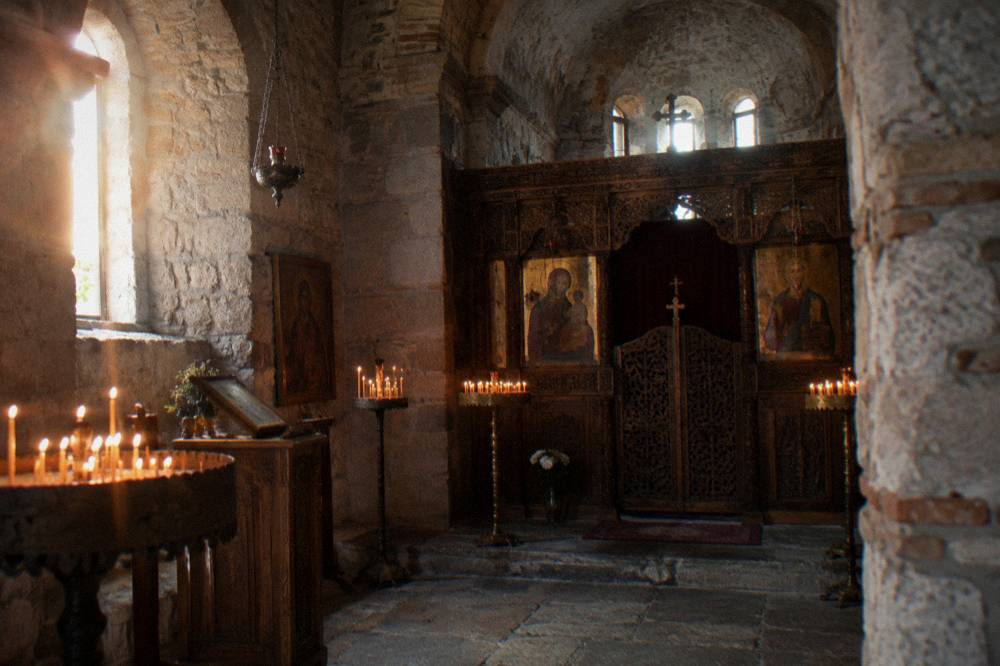
The claim rests on the figure of St Clement of Ohrid, whose name the church carries together with St Panteleimon. UNESCO's entry for property 99 on the World Heritage List ties Ohrid's significance to this monastic tradition and to the more than 800 Byzantine-style icons from the eleventh to the late fourteenth century held in the town. What that means in practice for a visitor is that Plaošnik is treated, in the official heritage framing, as the scholarly heart of medieval Ohrid rather than as a single isolated chapel.
The site's billing as the oldest university site should be read with that framing in mind: it is the standard description attached to the monastery tradition, not an archaeological date stamped on a wall. Readers who want the lake's own deep history, a separate question entirely, can follow the debate on the dedicated page is Lake Ohrid the oldest lake in Europe, where the UNESCO figure of about two to three million years is set out.
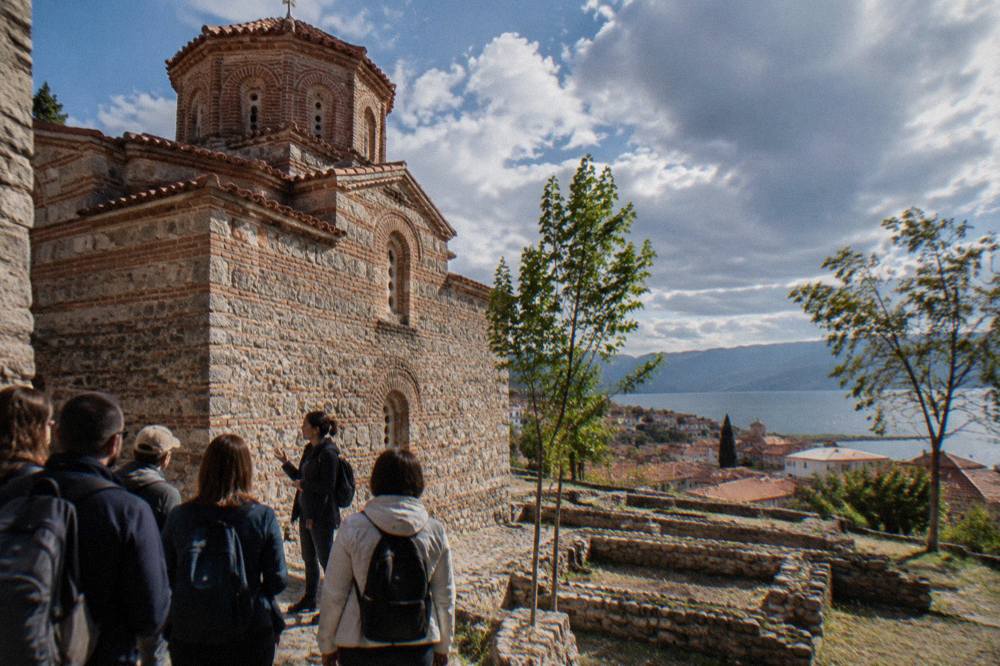
For travellers who want a guide rather than a solo wander, a shared small-group walk is the natural companion to this part of town. The Hidden Gems shared walk covers old-town lanes and landmark churches in a small group, and current price and availability sit on the operator's live listing: Check availability.
What Do Ohrid's Museum Institute Sites Cost To Enter?
The NI Institute and Museum Ohrid, which runs Robev Family House, the Museum on Water at the Bay of Bones and the Icon Gallery at the Perivleptos complex, charges 150 den for foreign visitors and 120 den for domestic visitors, with a reduced 60 den rate for children and students reported on the institute's own pages, and each of those three sites closes on Mondays under its published schedule.
Plaošnik itself is not one of the three ticketed institute sites listed with those rates, so the table below covers exactly the sites the institute publishes prices and hours for. The figures come from muzejohrid.mk, the institute's own website.
| Institute site | Foreign ticket | Domestic ticket | Winter hours (1 Oct to 30 Apr) | Summer hours (from 1 May) | Closed |
|---|---|---|---|---|---|
| Robev Family House, Tsar Samoil St 62 | 150 den | 120 den | 09:00 to 15:30 | Two shifts, 09:00 to 15:30 and 13:30 to 20:00 | Monday |
| Museum on Water, Bay of Bones, Gradishte, Peshtani | 150 den | 120 den | 09:00 to 15:30 | 09:00 to 16:30 (1 May to 30 Sep) | Monday |
| Icon Gallery, Klimentov Univerzitet St, Perivleptos complex | 150 den | 120 den | 09:00 to 14:00 | 09:00 to 17:00 | Monday |
The institute's office itself keeps weekday hours of 07:30 to 15:30, Monday to Friday, at Boro Shain St 10. Two details from the institute's English pages are worth repeating because they trip readers up: the summer schedule runs 1 May to 30 September and the winter schedule 1 October to 30 April, and the child and student rate is 60 den.
The wider sightseeing budget in Ohrid is small by regional standards. A full-day boat cruise from Ohrid port to St Naum with Boat Armada is listed from 1,200 den for an adult and 600 den for a child, and the St Naum monastery entrance is listed at 150 MKD per person on a cruise operator's own not-included list, with a rowboat through the Crn Drim springs at about 5 EUR. Galicica National Park charges 250 MKD per vehicle, with 100 MKD applying only to someone entering on foot from the Ohrid-side gate.
Where Is Plaošnik And How Do You Reach It?
Getting to Ohrid in the first place is a separate step, and the figures are straightforward. Skopje is about 170 km away by road, with intercity buses taking about 3 hours at 850 to 950 den one way, a car about 2.5 hours plus about 140 MKD in motorway tolls, private transfers from about EUR 130, and no passenger train and no domestic flight. From Tirana, minibuses run roughly five to seven a day, taking 3 to 3.5 hours including the border, at about EUR 15 to 20.
| Route to Ohrid | Distance or frequency | Time | Cost as published |
|---|---|---|---|
| Skopje to Ohrid by intercity bus | Multiple daily departures | About 3 hours | 850 to 950 den one way |
| Skopje to Ohrid by car | About 172 km | About 2.5 hours | About 140 MKD tolls |
| Skopje to Ohrid private transfer | On request | By arrangement | From about EUR 130 |
| Tirana to Ohrid by minibus | Roughly 5 to 7 per day | 3 to 3.5 hours with border | About EUR 15 to 20 |
| Ohrid airport to centre | About 10 km via the E65 | Short taxi ride | Reported about 600 to 800 MKD |
Inside the town, the practical detail that matters most in 2026 is parking. Since summer 2026, a resident-only parking regime has applied to old-town streets including Ilindenska, Kosta Abrash and Car Samoil, free for residents with a valid sticker, with clamping reported for non-residents. Anyone driving to the old town should plan to park outside those streets and walk up. The climb from the waterfront to the fortress area is the town's defining geography, and shoes for cobbled lanes matter more than any timetable.
What Can You See Around Plaošnik On The Same Old Town Walk?
The old town packs the Ancient Theatre, Samuel's Fortress, the Church of St Sophia, the Perivleptos complex with the Icon Gallery and the descent to St John at Kaneo into one walkable slope: the theatre dates to the end of the third or start of the second century BC and gained a capacity of 5,000 after the epiteatron was added, and the fortress has a revitalisation plan with a summer stage budgeted at 11 million denars.
Plaošnik works best as the middle chapter of that walk. Starting from the Ancient Theatre of Ohrid, whose first excavations date to 1935, the route continues through Plaošnik and up to Samuel's Fortress, then down toward the lake past St Sophia and the Perivleptos church and Icon Gallery, ending in the Kaneo district at St John at Kaneo. A fuller sequencing of the town sits in the two-day Ohrid itinerary.
| Sight near Plaošnik | What the published record states |
|---|---|
| Ancient Theatre of Ohrid | Built end of 3rd or start of 2nd century BC, late Hellenism; first excavated 1935; capacity rose to 5,000 after the epiteatron was added |
| Icon Gallery, Perivleptos complex | Institute site, 150 den foreign / 120 den domestic, 09:00 to 17:00 in summer, closed Monday |
| UNESCO Ohrid region property | About 94,729 ha, inscribed 1979 (natural) and 1980 (cultural), extended to the Albanian part in 2019 |
| Ohrid's icon collection | More than 800 Byzantine-style icons from the 11th to the end of the 14th century, per the UNESCO listing |
Two cautions keep this table honest. The fortress lists no ticket price or opening hours, so nothing should be assumed from the museum-institute rates, and the theatre's own official page lists no access fee or hours either. Both are worth the walk regardless, and the fortress viewpoint sits at the top of the same slope as Plaošnik.
How Does Plaošnik Fit Into The UNESCO Ohrid Region Story?
Plaošnik belongs to the UNESCO mixed property Natural and Cultural Heritage of the Ohrid Region, and on 24 July 2026 the World Heritage Committee at its 48th session in Busan decided by 16 votes of 21 not to inscribe the property on the List of World Heritage in Danger, adopting decision 48 COM 7B.62, which asks North Macedonia and Albania for a joint report by 1 February 2029 on urban development, wastewater management and transboundary governance.
That decision is the single most important piece of recent news for the whole destination. In 2025 the Committee had found that the conditions for danger listing were met, so the 2026 outcome reversed the direction of travel while keeping the pressure on: the decision text asks the two states to address illegal construction and urbanisation, complete strategic environmental assessments and suspend new developments pending those assessments.
For the lake itself, the same hydrological bulletin that tracks the level gives the context visitors rarely hear. Lake Ohrid's water level stands at about 693 m above sea level, five centimetres above the agreed minimum, while Lake Prespa, on the other side of the Galicica ridge, reads 841.36 m at the Nakolec gauge, about 148 m higher. The science behind Prespa's shrinking shoreline is covered separately in why is Lake Prespa shrinking's neighbour debate and in the Lake Ohrid guide.
When Is The Best Time Of Year To Visit Plaošnik And Ohrid?
July and August are the warmest months in Ohrid, with modelled ERA5 climate normals for 1991 to 2020 showing mean daily highs of 27.1 C in July and 27.6 C in August and the lowest monthly rainfall at 34.7 mm and 32.9 mm, while December brings 92.6 mm of rain and a mean daily low of 0.9 C, and the modelled lake surface temperature peaks in August at about 23.5 C with the swimming season running from July.
Those figures are modelled reanalysis values for a grid cell at 701 m, not a weather-station record, and they should be read as climate normals rather than a forecast. The table below gives the full monthly picture.
| Month | Mean daily high C | Mean daily low C | Rain mm |
|---|---|---|---|
| Jan | 5.0 | -0.8 | 76.5 |
| Feb | 6.3 | 0.0 | 74.3 |
| Mar | 10.0 | 2.5 | 80.5 |
| Apr | 14.6 | 6.3 | 82.4 |
| May | 19.5 | 10.8 | 70.8 |
| Jun | 24.2 | 15.2 | 43.1 |
| Jul | 27.1 | 18.3 | 34.7 |
| Aug | 27.6 | 19.0 | 32.9 |
| Sep | 22.4 | 14.9 | 62.4 |
| Oct | 17.4 | 10.3 | 76.0 |
| Nov | 11.5 | 5.3 | 90.4 |
| Dec | 6.2 | 0.9 | 92.6 |
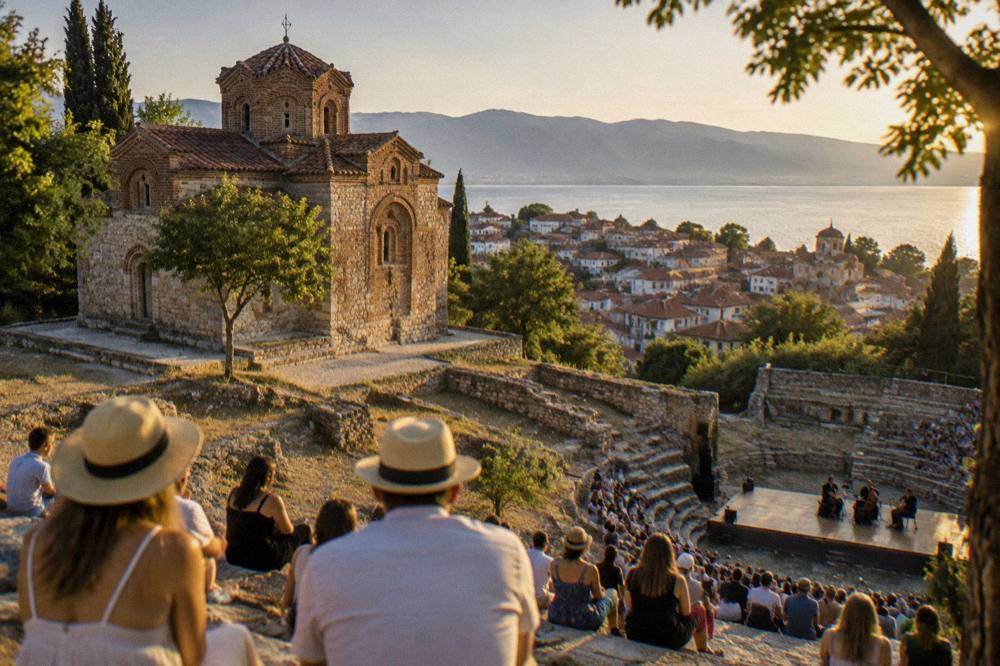
The events calendar gives the summer its rhythm. The 66th Ohrid Summer Festival opened on 12 July 2026 at the Ancient Theatre with a gala evening, and by tradition the festival closes on 20 August; the 65th Balkan Festival of Folk Songs and Dances ran 3 to 6 July 2026; and the Ohrid Water Festival ran 12 to 30 August 2026, including the 25 km swimming marathon from St Naum to Ohrid harbour on 22 August and the separate 33 km SUP marathon around the lake on 26 August. The Struga Poetry Evenings held their 65th edition from 24 to 29 June 2026, a month earlier than the festival's traditional late-August slot.
Beyond midsummer, boat services to St Naum are reported to run about May to October with a reduced winter schedule, and 2026 bathing-water testing found Class I physico-chemical quality across the lake's monitored points except Grashnica beach, with most microbiological samples rated excellent. The October mean lake temperature from the UHMR multi-year record is 14.3 C.
Which Tours And Walks Cover Plaošnik And Old Town Ohrid?
Plaošnik and the surrounding old-town sights are covered by Ohrid's walking tours, from a shared small-group Hidden Gems walk to a private full-day best-of tour, while the lake itself is served by panoramic old-town cruises and full-day boat trips to the Bay of Bones and St Naum, and travellers based in Tirana or Skopje reach the town on dedicated day trips that start in those cities and are priced per person on the operator's live listings.
The walking products are the closest match for this page. The Hidden Gems shared walk moves through the old town in a small group, the small-group city tour covers the old town's lanes and landmark churches, and private full-day tours take in the town and the lake shore together. Boat products split between the short panoramic cruise along the old-town waterfront, which calls at Tito's former residence, and the full-day lake trips that reach the Bay of Bones and St Naum with swimming stops.
| Product type | What it covers | Where it starts |
|---|---|---|
| Shared small-group walk | Old-town lanes and landmark churches including the Plaošnik slope | Ohrid |
| Small-group city tour | Old-town walking circuit of Ohrid's sights | Ohrid |
| Panoramic boat cruise | Old-town waterfront from the water, with Tito's residence | Ohrid |
| Full-day lake boat trip | Bay of Bones, St Naum and swimming stops | Ohrid |
| St Naum day tour | Ohrid and St Naum with border crossing | Tirana or Durres |
| UNESCO heritage day tour | Ohrid's World Heritage sights in one day | Skopje |
Day trips from Tirana and Skopje are a different animal from local tours, and the distinction matters: a product flagged as starting in Tirana departs from Tirana, not from Ohrid, so it suits travellers basing themselves in Albania or the capital rather than visitors already on the lake. How those transfers work in practice is covered in how to get from Ohrid to St Naum and in the wider things to do in Ohrid round-up.
What Should You Know Before Visiting Plaošnik And Ohrid?
Ohrid uses the Macedonian denar, with the National Bank's middle rate on 19 October 2026 at 1 EUR to 61.6633 MKD and the denar de facto pegged to the euro, euros are not legal tender even though tour prices are commonly quoted in them, and visa-free nationals may stay up to 90 days in any 180-day period, with UK visitors allowed up to 3 months and required to hold a passport valid at least 90 days beyond arrival.
North Macedonia is not in the EU and not in Schengen, which matters for border planning: Bulgaria and Romania became full Schengen members, land borders included, on 1 January 2025, but crossing into North Macedonia remains an external border check. Visitors must register with the local police within 48 hours of arrival, and hotels do this automatically for their guests. Emergency numbers are ambulance 194, police 192 and roadside assistance 196.
Practical details for the town itself are few and stable. Tap water in Ohrid is reported as generally drinkable from the municipal supply, though lake water itself should not be drunk untreated. The old town's streets are pedestrian lanes, and the 2026 resident-only parking regime closes several of them to visitor cars. The full practical picture, from denars to buses, is gathered in the Ohrid travel tips companion and the destination round-up.
Common Questions About Plaošnik
What is Plaošnik in Ohrid?
Plaošnik is the hillside site of the Church of St Clement and St Panteleimon in Ohrid's old town, between the lakefront and Samuel's Fortress, inside the UNESCO Natural and Cultural Heritage of the Ohrid Region. UNESCO's listing describes St Panteleimon at Plaošnik as the oldest Slav monastery.
Why is Plaošnik called the oldest university site?
The description follows from UNESCO's listing of St Panteleimon as the oldest Slav monastery, because the monastery associated with St Clement served as a scriptorium and teaching centre for Slav literacy. The billing belongs to the heritage framing rather than to an archaeological date.
How much does it cost to enter Plaošnik?
No entrance fee for Plaošnik is stated in the published record used here. The museum institute's 150 den foreign and 120 den domestic tickets apply to its listed sites: Robev Family House, the Museum on Water at the Bay of Bones, and the Icon Gallery at the Perivleptos complex.
What are Plaošnik's opening hours?
No opening hours for Plaošnik appear in the published record used here. The institute-run museum sites keep published schedules, with Monday closures, and a 2025 conservation report references roof remediation and fresco work at Plaošnik, so check locally before a visit planned around a specific day.
Is Plaošnik part of the UNESCO World Heritage site?
Yes. Plaošnik sits inside the Natural and Cultural Heritage of the Ohrid Region, a mixed UNESCO property of about 94,729 hectares inscribed in 1979 and 1980 and extended to the Albanian part of the lake in 2019. On 24 July 2026 the World Heritage Committee decided not to place the property on the List of World Heritage in Danger.
How do I get to Plaošnik?
Plaošnik is reached on foot from Ohrid's old town, on the slope below Samuel's Fortress near the Ancient Theatre. Ohrid itself is about 170 km from Skopje by road, with buses taking about 3 hours, and the airport is about 10 km from the centre.