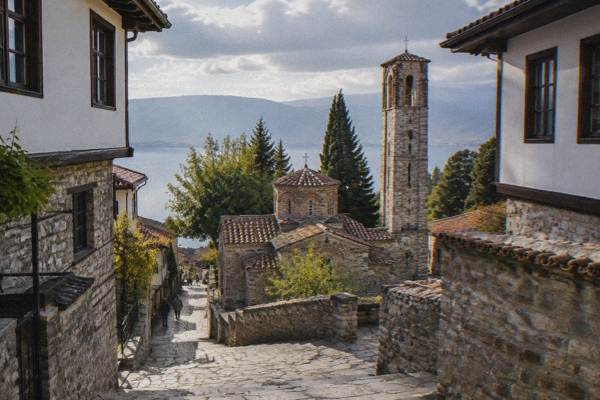
St Sophia Church: Byzantine Frescoes On The Lakeshore
St Sophia Church stands in the old town of Ohrid, on the shore of Lake Ohrid in North Macedonia, inside the UNESCO-listed Natural and Cultural Heritage of the Ohrid Region. This guide covers what the listing records, how the church fits into a day in Ohrid, the modelled climate by month, the 2026 festival calendar and how to get there.
Short answer
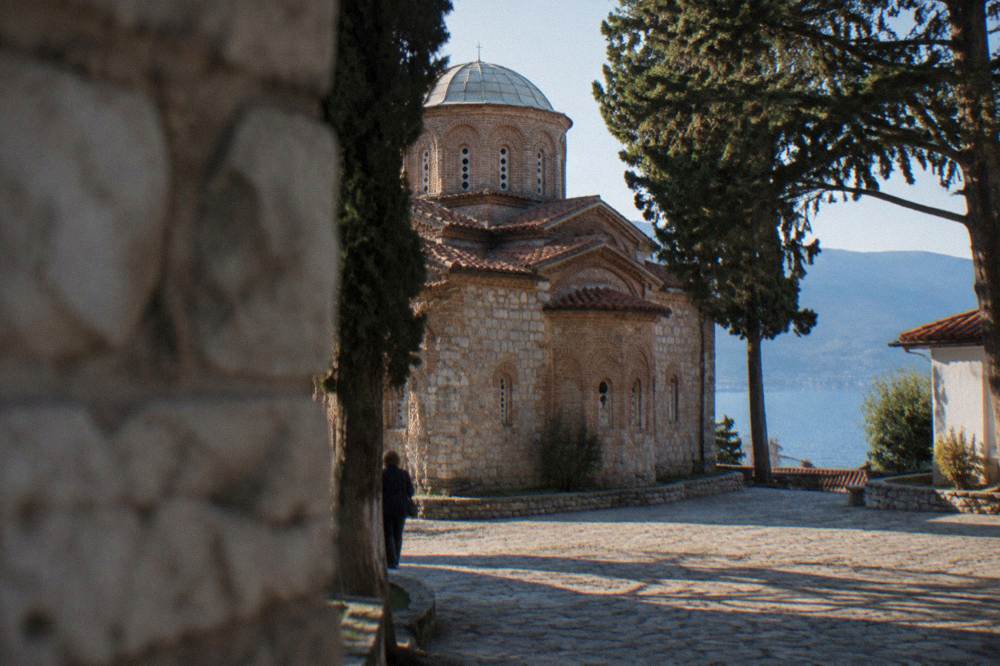
St Sophia Church is one of Ohrid's named Byzantine churches, set inside the UNESCO mixed World Heritage property inscribed in 1979 and 1980. It sits in the old town a short walk from the lake shore, and it appears among the venues of the Ohrid Summer Festival, whose 66th edition ran 12 July to 20 August 2026.
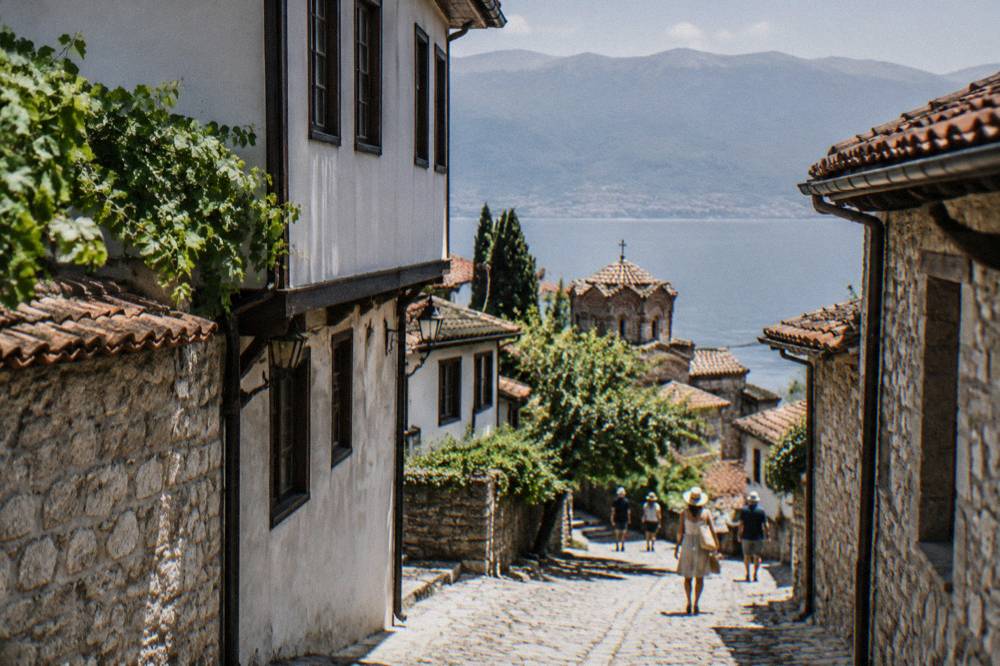
St Sophia Church is one of the named Byzantine churches of Ohrid, the lake town on the shore of Lake Ohrid in North Macedonia, and it sits inside the UNESCO mixed property known as the Natural and Cultural Heritage of the Ohrid Region. The Ohrid Travel Guide covers the church as part of the old-town core: the lake lies a few minutes' walk downhill, the old town climbs from the shore toward Samuel's Fortress, and the lanes between are on foot. The UNESCO listing, inscribed 1979 for its natural values and 1980 for its cultural ones and extended to the Albanian part of the lake in 2019, records for the Ohrid region the oldest Slav monastery, at Plaosnik, and a collection of more than 800 Byzantine-style icons from the 11th to the end of the 14th century held across the town's churches and galleries.
What Is The St Sophia Church In Ohrid?
St Sophia Church is a Byzantine church in the old town of Ohrid, North Macedonia, standing within the UNESCO Natural and Cultural Heritage of the Ohrid Region, a mixed property inscribed in 1979 and 1980 and extended to the Albanian part in 2019. The UNESCO listing names St Sophia among Ohrid's churches and records for the wider region more than 800 Byzantine-style icons from the 11th to the end of the 14th century.
The church belongs to the ensemble that makes Ohrid's old town a single heritage landscape rather than a collection of separate monuments. The town climbs from the shore of Lake Ohrid, which sits at about 693 m above sea level, up to Samuel's Fortress, with the lanes in between given over to pedestrians.
The lake itself is part of the same inscription. Lake Ohrid is a freshwater mountain lake shared with Albania, with the Crn Drim springs near St Naum at its southern end, and the UNESCO natural criteria were recognised first, in 1979, with the cultural values following in 1980. On 24 July 2026 the World Heritage Committee, at its 48th session in Busan, decided not to inscribe the property on the List of World Heritage in Danger, with 16 of 21 members in favour of that course, and asked for a joint report by 1 February 2029. That decision is the current state of the property's standing, and it replaced a 2025 finding that the conditions for danger listing had been met.
What Do The Frescoes And Icons Of Ohrid Include?
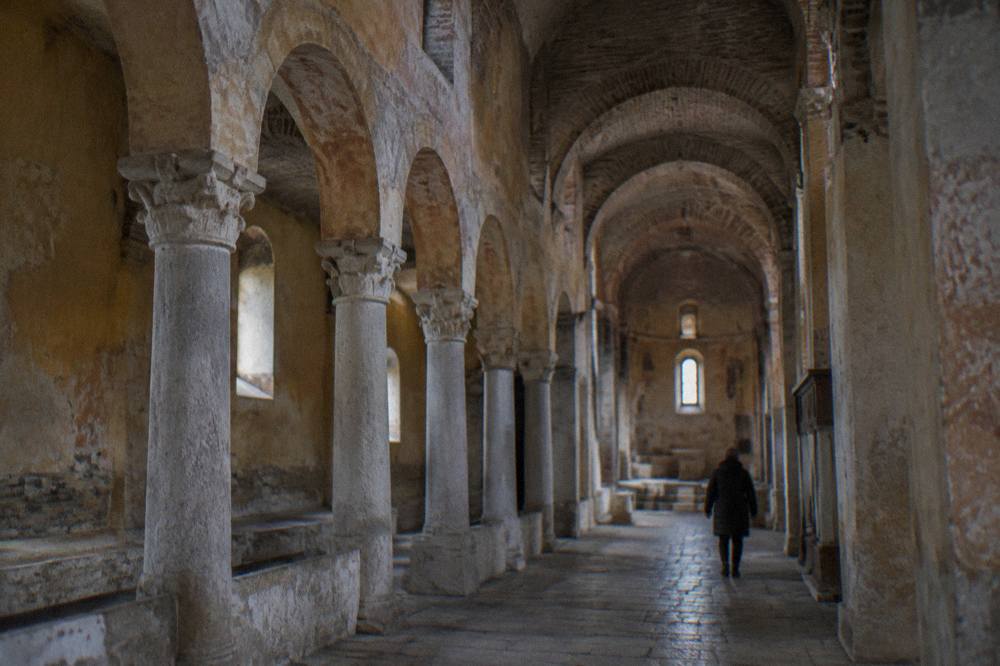
The UNESCO listing for the Ohrid region records a collection of more than 800 Byzantine-style icons from the 11th to the end of the 14th century, held across the town's churches and galleries, together with the oldest Slav monastery at Plaosnik. The listing treats Ohrid's painted heritage as a single body of work spanning three centuries rather than as isolated masterpieces.
For visitors, that painted heritage is displayed in more than one place. The Icon Gallery, at the Perivleptos complex on Klimentov Univerzitet Street, is the museum institute's dedicated home for icons, and the Perivleptos and Icon Gallery guide covers it in detail. The gallery's own page on the museum institute's site gives its hours as winter 09:00 to 14:00 and summer 09:00 to 17:00, closed Monday, with institute tickets at 150 den for foreign visitors, 120 den for domestic visitors and 60 den for children and students. The Icon Gallery attraction page carries the full ticket and schedule picture.
The museum institute runs the same ticket system across its listed sites, which makes a combined circuit of Ohrid's museum-managed heritage straightforward to plan. The table below gathers the institute's published figures for the sites it administers. Note that these figures belong to the institute's listed sites only; they do not transfer to any other church or monument in the town.
| Museum institute site | Winter hours (1 Oct to 30 Apr) | Summer hours | Closed | Ticket, foreign / domestic |
|---|---|---|---|---|
| Robev Family House, Tsar Samoil St 62 | 09:00 to 15:30 | Two shifts, 09:00 to 15:30 and 13:30 to 20:00 | Monday | 150 / 120 den |
| Bay of Bones (Museum on Water), Gradishte, Peshtani | 09:00 to 15:30 | 09:00 to 16:30 (1 May to 30 Sep) | Monday | 150 / 120 den |
| Icon Gallery, Klimentov Univerzitet St | 09:00 to 14:00 | 09:00 to 17:00 | Monday | 150 / 120 den |
Children and students pay 60 den at the institute's sites, a rate reported on the institute's own pages. The institute's office hours, distinct from the site hours, are Monday to Friday 07:30 to 15:30 at Boro Shain St 10. Planning the painted-heritage side of Ohrid around these three sites, plus the churches themselves, is the practical shape of a fresco-and-icon day, and the national museum guide adds the Robev House detail.
How Does St Sophia Church Fit Into A Day In Ohrid?
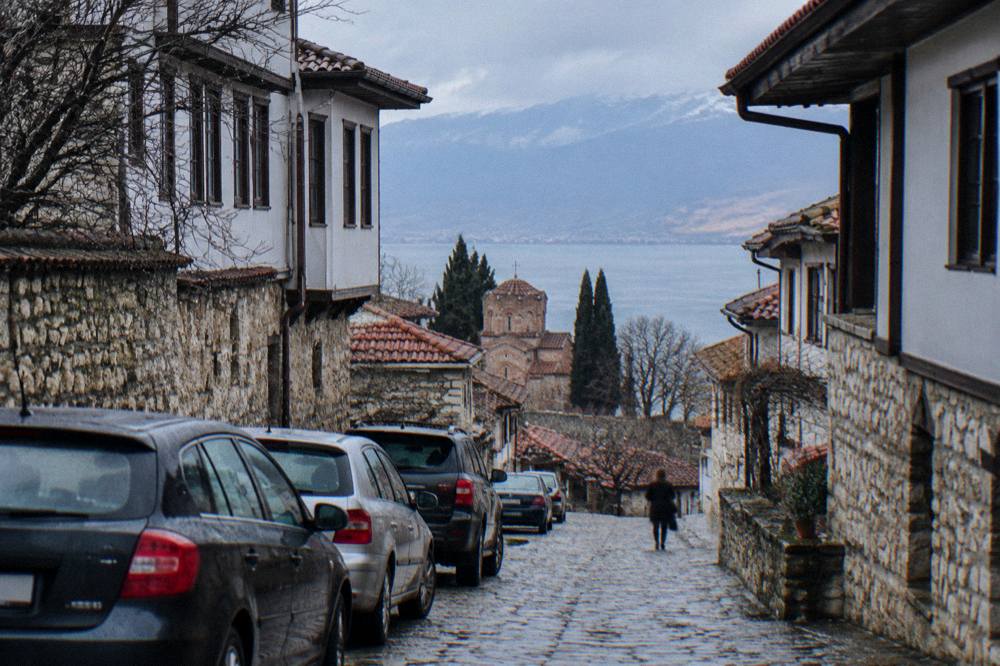
St Sophia Church sits inside the walkable core of Ohrid, between the lake shore and the fortress hill, so it fits naturally into a one-day circuit that also takes in the Ancient Theatre, Plaosnik and St John at Kaneo. The old-town lanes are pedestrian, the shore lies downhill from the church, and the main sights sit within a single continuous walk rather than separate trips.
Prefer to wander the old town with commentary in your ears? Book a self-guided audio tour here.
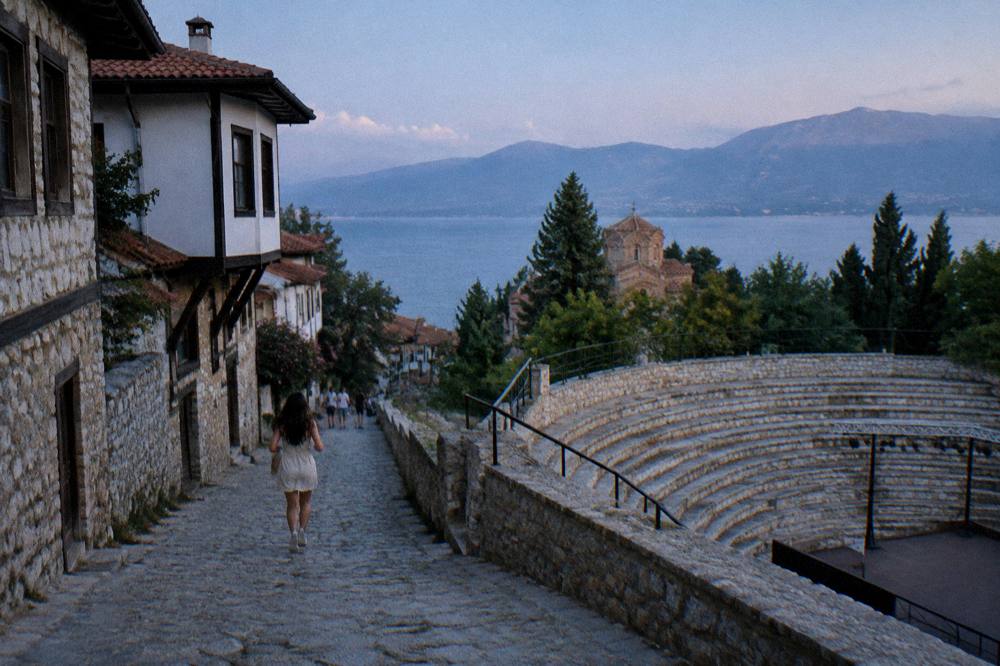
The Ancient Theatre, built at the end of the 3rd or the start of the 2nd century BC in the late Hellenistic period and first excavated in 1935, is the monument the climb delivers after the church; its capacity rose to 5,000 after the epiteatron was added, according to the museum institute's own page. The Ancient Theatre guide covers what the institute publishes about it. Above the theatre, Samuel's Fortress caps the hill, with a municipal revitalisation plan reported in 2026 that budgets over 11 million denars for a summer stage, illumination and archaeological work. Downhill again, the Old Bazaar and the lake boardwalk close the loop at the shore.
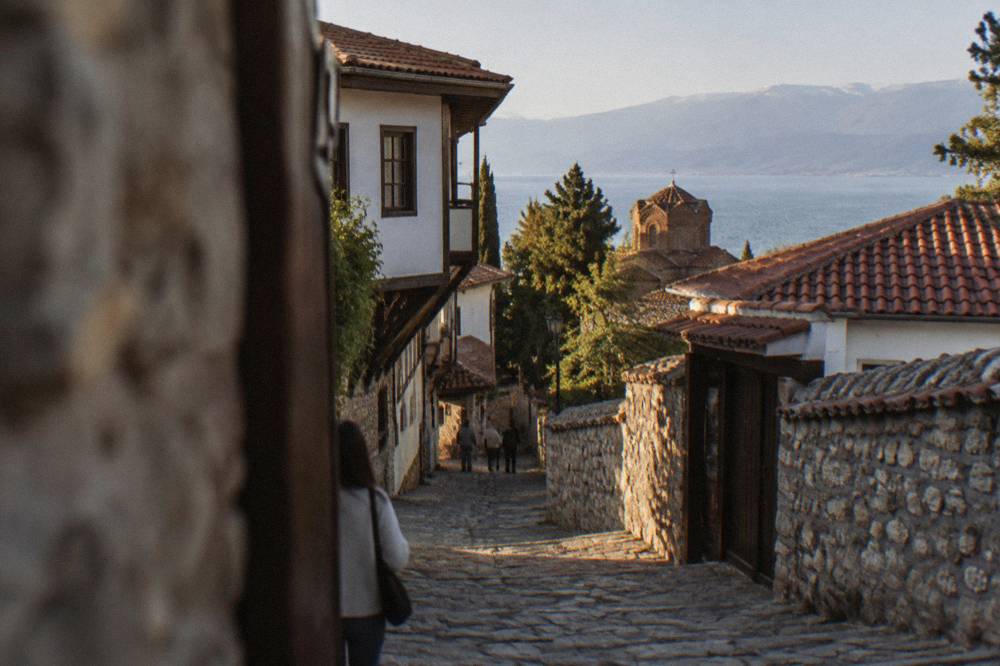
A guided walk is one way to hold this circuit together, and the related tour for this page is the Old Town Walking Tour, whose live listing carries its price, rating and duration. Check availability if a guided version of the route appeals. For a self-guided version, the two-day Ohrid itinerary sequences the same sights across a longer stay, and where to stay in Ohrid sorts the neighbourhoods by what sits within walking distance of them.
What Can You See Near St Sophia Church In Ohrid?
The immediate surroundings of St Sophia Church in Ohrid include the Ancient Theatre uphill, Samuel's Fortress at the top of the old town, Plaosnik and its archaeological site, and the lake shore with the boardwalk downhill. Within a short drive or boat ride, the Bay of Bones at Peshtani, Galicica National Park and the St Naum monastery extend the same heritage landscape along and beyond the lake.
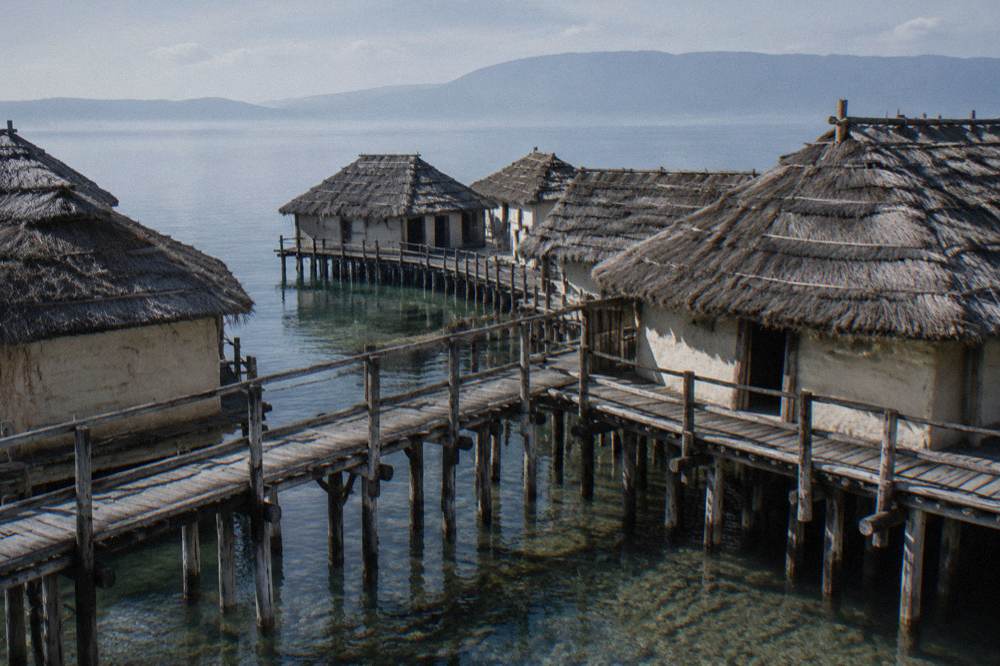
The Bay of Bones, the museum institute's Museum on Water at Gradishte near Peshtani, is the lake's most distinctive satellite site: a reconstructed pile-dwelling settlement reached along the eastern shore road, covered in the Bay of Bones guide. A full-day boat cruise from Ohrid port to St Naum with Boat Armada runs 7 hours, from 1,200 den for an adult and 600 den for a child, and the operator's listing states the Bay of Bones entrance of 150 den per person is not included. The St Naum monastery itself charges a reported entrance of 150 den, with a rowboat through the Crn Drim springs at about 5 EUR, both figures from a cruise operator's published list. The lake boats and routes are gathered in the Ohrid boat tour guide, and the overland option is covered in how to get from Ohrid to St Naum.
Galicica National Park lies between Lake Ohrid and Lake Prespa. It is North Macedonia's second national park, designated in 1958, covering 22,750 ha, with Magaro peak at 2,254 m, and it is open year-round, though heavy snow can close the main road, typically from January to March. Entry is 250 MKD per vehicle with no per-passenger fee, and 100 MKD only for someone entering on foot from the Ohrid-side gate. The park's official site runs a live camera page. Lake Prespa itself sits about 148 m higher than Lake Ohrid across the Galicica ridge, a contrast described in the Galicica and Prespa day-trip guides.
| Site near Ohrid | What the sources record | Distance or access |
|---|---|---|
| Bay of Bones, Gradishte, Peshtani | Museum on Water, winter 09:00 to 15:30, summer 09:00 to 16:30, closed Monday, 150 den foreign | Eastern shore road from Ohrid |
| St Naum monastery | Entrance reported at 150 den; Crn Drim springs rowboat about 5 EUR | Southern end of the lake |
| Galicica National Park | 22,750 ha, designated 1958, Magaro 2,254 m, 250 MKD per vehicle | Between the two lakes |
| Ancient Theatre, Ohrid | Built end of 3rd or start of 2nd century BC, capacity 5,000 with epiteatron | Uphill in the old town |
When Is The Best Time To Visit St Sophia Church In Ohrid?
Ohrid's modelled climate normals, ERA5 reanalysis for 1991 to 2020, show July and August with mean daily highs of 27.1 and 27.6 C and the lowest monthly rainfall of the year at 34.7 and 32.9 mm, while December and January average highs of 6.2 and 5.0 C with lows around freezing. The choice of month is a trade between lake-warm weather and the quieter shoulder seasons.
The full modelled monthly picture, which should be read as reanalysis values rather than a station record, looks like this:
| Month | Mean daily high C | Mean daily low C | Rain mm |
|---|---|---|---|
| Jan | 5.0 | -0.8 | 76.5 |
| Feb | 6.3 | 0.0 | 74.3 |
| Mar | 10.0 | 2.5 | 80.5 |
| Apr | 14.6 | 6.3 | 82.4 |
| May | 19.5 | 10.8 | 70.8 |
| Jun | 24.2 | 15.2 | 43.1 |
| Jul | 27.1 | 18.3 | 34.7 |
| Aug | 27.6 | 19.0 | 32.9 |
| Sep | 22.4 | 14.9 | 62.4 |
| Oct | 17.4 | 10.3 | 76.0 |
| Nov | 11.5 | 5.3 | 90.4 |
| Dec | 6.2 | 0.9 | 92.6 |
The year's precipitation total in the modelled normals comes to 816.6 mm, spread with 90.4 mm in November and 92.6 mm in December against 32.9 mm in August. Lake surface temperatures, modelled aggregator values, run from about 4.6 C in January to about 23.5 C in August, with the swimming season generally counted from July; the UHMR multi-year October mean, on a 2001 to 2020 base, is 14.3 C. Peak tourism runs June to September, with August the high point, and boats to St Naum run about May to October on a reduced winter schedule. The month-by-month detail, including what the modelled numbers do and do not support, is in the Ohrid weather by month and best time to visit guides.
What Events Are Held At St Sophia Church And In Ohrid?
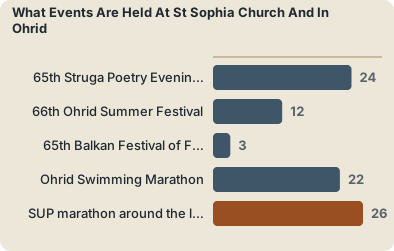
St Sophia appears among the venues of the Ohrid Summer Festival, whose 66th edition opened on 12 July 2026 at the Ancient Theatre with a gala and closed by tradition on 20 August, a 40-day run. Around it, the 2026 calendar brought the Balkan Festival in July, the Struga Poetry Evenings in June and the Ohrid Water Festival, with its 25 km swimming marathon, in August.
The 2026 festival season, as reported by the Macedonian Information Agency and the organisers, ran as follows. Each event has its own venue pattern, and the church's role is as one of the festival's traditional spaces, with the Ancient Theatre hosting the opening gala.
| Event, 2026 | Dates | Reported detail |
|---|---|---|
| 65th Struga Poetry Evenings | 24 to 29 June | Theme 'Where Poetry Lives', about 70 poets |
| 66th Ohrid Summer Festival | 12 July to 20 August | 40 days, opening gala at the Ancient Theatre |
| 65th Balkan Festival of Folk Songs and Dances | 3 to 6 July | Grigor Prlichev cultural centre, closed by Croatia's Lado |
| Ohrid Swimming Marathon | Saturday 22 August | 25 km 'Klime Savin' route, St Naum to Ohrid harbour, 16 swimmers |
| SUP marathon around the lake | 26 August | 33 km, part of the Ohrid Water Festival (12 to 30 August) |
The swimming marathon deserves its own note because the figure is misquoted often: the St Naum to Ohrid harbour swim is 25 km, not 30, and the 39th edition on 22 August 2026 drew 16 swimmers, 11 men and 5 women, with a prize fund of USD 15,000 organised by Ohrid Waves 2008. The 33 km SUP marathon around the lake on 26 August is a separate event. The 2027 dates of the major festivals had not been announced, so a visit planned around them needs a check closer to the time. The Ohrid Summer Festival guide holds the fuller calendar.
How Do You Get To St Sophia Church In Ohrid?
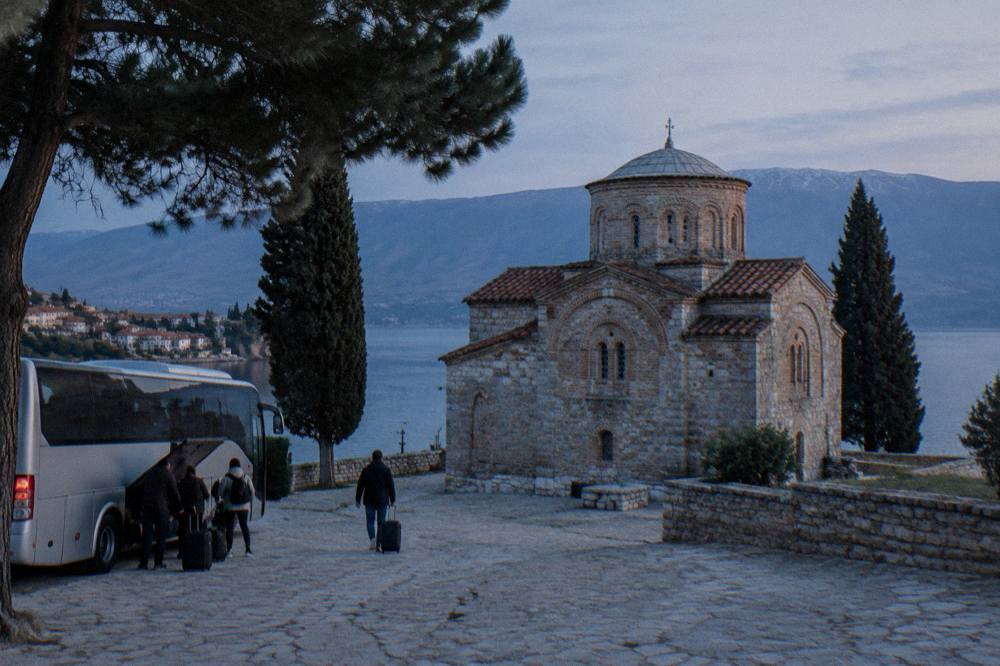
Ohrid is reached by air via St Paul the Apostle Airport, about 10 km from the centre on the E65, by bus from Skopje in about 3 hours over roughly 170 km for 850 to 950 den, or by minibus from Tirana in 3 to 3.5 hours including the border for about 15 to 20 EUR. There is no passenger train to Ohrid and no domestic flight from Skopje.
Within the region the connections are straightforward. From Skopje, operators including Galeb and Classic Company run multiple daily buses, with fares of 850 to 950 den one way; by car the route is about 172 km and 2.5 hours with about 140 MKD in motorway tolls, and a private transfer starts at about EUR 130. The Kicevo to Ohrid motorway's Izvor to Vrbjani section, about 10 km with the Preseka tunnel, was due to open in the coming months, with full opening expected in the first half of 2027. From Tirana, roughly 5 to 7 minibuses a day cross at Qafe Thane / Kjafasan. These routes and fares are set out in the Skopje to Ohrid and Tirana to Ohrid guides.
Practical entry facts matter here. North Macedonia is not in the EU and not in Schengen, and visa-free nationals may stay up to 90 days in any 180-day period; UK visitors may stay up to 3 months, with passport expiry at least 90 days after the date of arrival. Visitors register with the local police within 48 hours of arrival, which hotels normally handle. The denar is the currency, and while euros are commonly quoted, they are not legal tender. Emergency numbers are ambulance 194, police 192 and roadside assistance 196.
| Route to Ohrid | Time | Reported fare |
|---|---|---|
| Skopje to Ohrid by bus | About 3 hours | 850 to 950 den one way |
| Skopje to Ohrid by car | About 2.5 hours, 172 km | About 140 MKD in tolls |
| Tirana to Ohrid by minibus | 3 to 3.5 hours including the border | About EUR 15 to 20 |
| Airport to Ohrid centre | About 10 km on the E65 | About 600 to 800 MKD by taxi |
What Else Should You Know Before Visiting St Sophia Church In Ohrid?
Ohrid in 2026 introduced lake navigation limits and an old-town parking regime that shape a visit: jet skis were banned between 1 July and 31 August from 11:00 to 19:00, boats were restricted at night through summer and September, and streets including Ilindenska, Kosta Abrash and Car Samoil became resident-only parking with clamping for non-residents. Both are dated 2026 rules, not permanent ones.
The navigation limits came from a government decision announced by the Ministry of Transport on 2 June 2026: boats banned from 21:00 to 05:00 between 3 June and 31 August, from 20:00 to 06:00 from 1 to 30 September, with a further October limit, all for swimmer safety. The parking regime, reported from summer 2026, reserves named old-town streets for residents with a valid sticker. For anyone arriving by car and staying in the old town, these two facts argue for parking outside the restricted streets and walking in, which suits the town's pedestrian character in any case. The getting around Ohrid and Ohrid parking guides carry the detail.
Beyond the town, the same heritage landscape continues. The eastern-shore villages of Trpejca and Ljubanista sit between Ohrid and St Naum, and the question is St Naum monastery worth visiting is answered on its own page. For the wider canvas of the town, the root things to do in Ohrid page gathers every sight, walk and day trip, including the workshops where Ohrid's famous pearls are made, covered separately in the Ohrid pearl workshops guide, and the paper museum, which demonstrates the town's手工 traditions; the handmade-paper story there is part of the same crafts lineage. A day trip to St Naum from Ohrid completes the southern lake circuit.
Common Questions About St Sophia Church In Ohrid
Is St Sophia Church part of the UNESCO World Heritage site?
Yes. St Sophia Church stands inside the Natural and Cultural Heritage of the Ohrid Region, a UNESCO mixed property inscribed in 1979 for its natural values and 1980 for its cultural ones, and extended to include the Albanian part of the lake in 2019.
Does St Sophia Church charge an entrance fee?
No entrance fee for St Sophia Church itself appears in this guide's sources. The fees quoted in the tables above belong to the museum institute's listed sites: Robev Family House, the Bay of Bones and the Icon Gallery, at 150 den for foreign visitors and 120 den for domestic visitors.
Can you attend a concert at St Sophia Church?
St Sophia appears among the venues of the Ohrid Summer Festival. The 66th edition ran 12 July to 20 August 2026, opening with a gala at the Ancient Theatre.
How far is St Sophia Church from the lake shore?
The church sits in the old town, whose lanes run on foot from the shore of Lake Ohrid, at about 693 m above sea level, up to Samuel's Fortress. The shore, the Old Bazaar and the boardwalk all lie within the same walkable core.
What is the best month to visit Ohrid for the church and the lake together?
The modelled ERA5 normals for 1991 to 2020 put July and August highs at 27.1 and 27.6 C with the lowest monthly rain, 34.7 and 32.9 mm, and modelled lake surface temperatures around 23 C. The swimming season is generally counted from July, and peak tourism runs June to September with August the high point.
How do you get to Ohrid from Skopje or Tirana?
Buses from Skopje take about 3 hours over roughly 170 km and cost 850 to 950 den one way. Minibuses from Tirana take 3 to 3.5 hours including the border and cost about EUR 15 to 20. Ohrid's airport is about 10 km from the centre, and there is no passenger train service to the town.