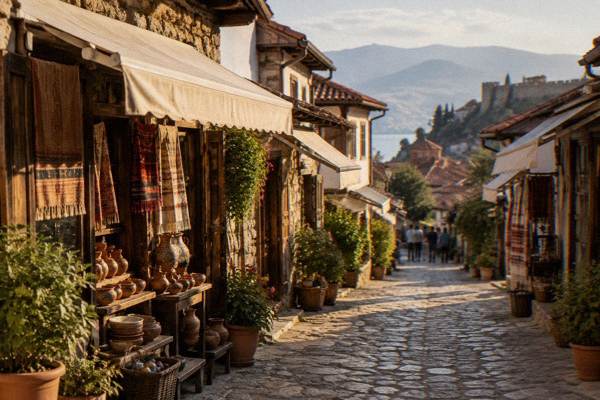
Hidden Gems In Ohrid: Beyond The Old Town
The Old Town lanes between Samuel's Fortress and the lake carry the crowds, but Ohrid keeps a second layer of small museums, shoreline coves and off-route churches that a one-day visit never reaches.
Short answer
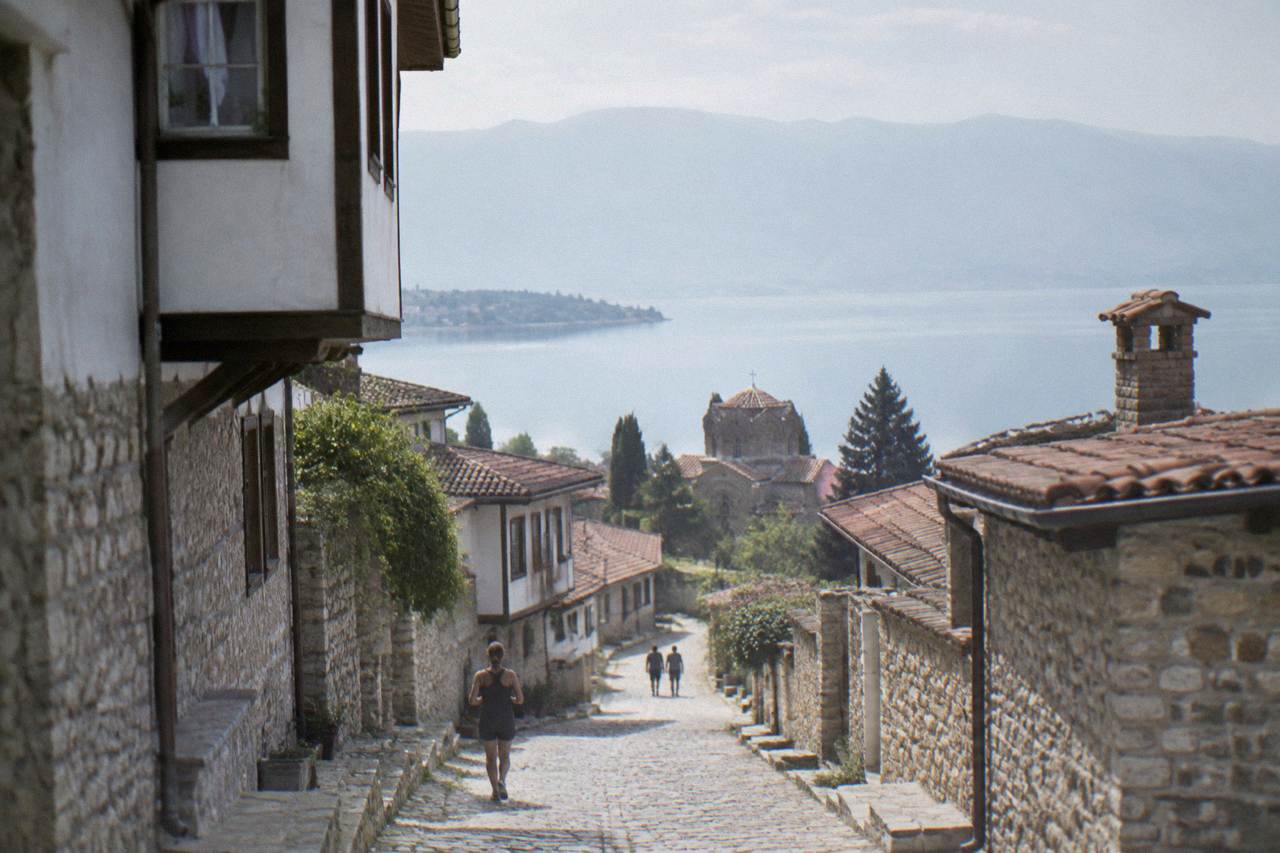
Ohrid's hidden gems sit in three rings: the museum institute's quieter sites such as the Icon Gallery at Perivleptos, the shoreline east of the centre towards the Bay of Bones, and the viewpoints and villages of Galicica National Park, most reachable on foot or by a short bus or boat ride.
Ohrid, in North Macedonia, wraps its best-known sights around one crowded axis: the lanes that run from Samuel's Fortress down through the Old Town to the lake and the Old Bazaar. That axis is the spine of every one-day itinerary, and it deserves the attention it gets. But the town holds a second, quieter layer that a short visit never touches, and this page from the Ohrid Travel Guide lays out exactly where that layer sits: the small museum sites, the off-route churches, the shoreline east of the centre, and the ridgelines of Galicica National Park that stand between Lake Ohrid and Lake Prespa.
What Are The Hidden Gems In Ohrid Beyond The Old Town?
The hidden side of Ohrid falls into three rings around the famous core: the museum institute's smaller sites such as the Icon Gallery inside the Perivleptos complex, the churches and coves along the shoreline east of the centre towards the Bay of Bones at Peshtani, and the high ground of Galicica National Park, whose 22,750 hectares separate Lake Ohrid from Lake Prespa. Each ring is reachable without a car if you plan around the summer boat season, and each rewards a slower pace than the fortress-to-lake dash that fills a single day.
The first ring needs no transport at all. The museum institute that runs Robev Family House also runs the Icon Gallery at the Perivleptos complex on Klimentov Univerzitet Street, a short climb off the main descent, and its collection belongs to the same ticket system. UNESCO's own listing for the Ohrid Region records that the town holds more than 800 Byzantine-style icons from the 11th to the end of the 14th century, and the gallery is where a large share of them live. Visitors who only walk the quay never see them.
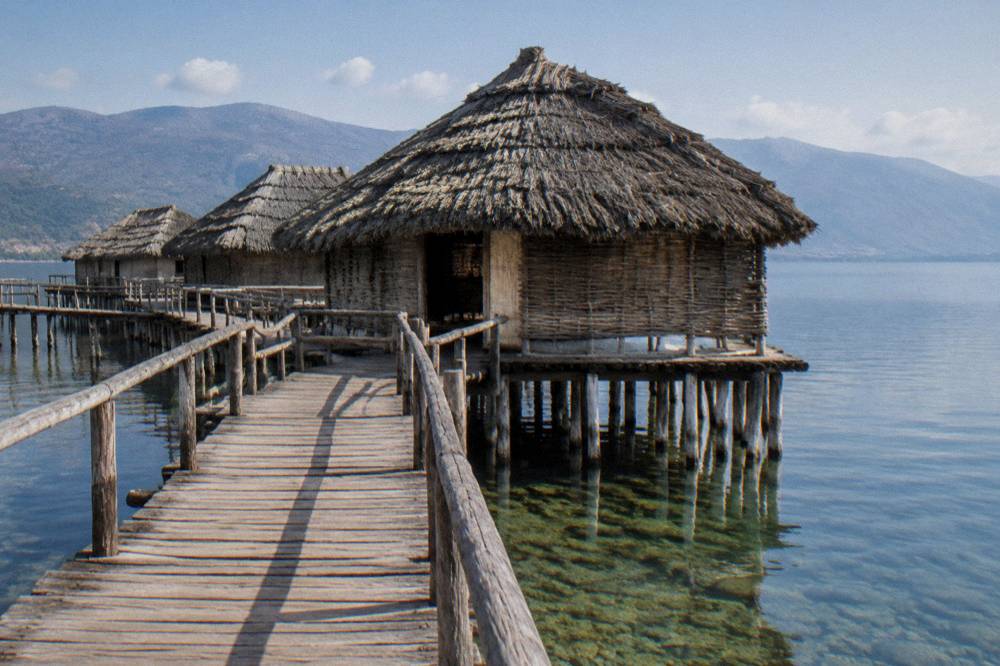
The second ring is the lake itself. The shoreline villages east of Ohrid, Peshtani among them, hold the Bay of Bones, a reconstructed prehistoric pile settlement known formally as the Museum on Water, and the village of Trpejca further along. The third ring is Galicica, designated a national park in 1958, with the Magaro peak at 2,254 m. The park is the piece of the destination that day visitors almost always skip, and it carries one of the smallest entry fees anywhere in the region.
Which Ohrid Sights Sit Off The Main Walking Route?
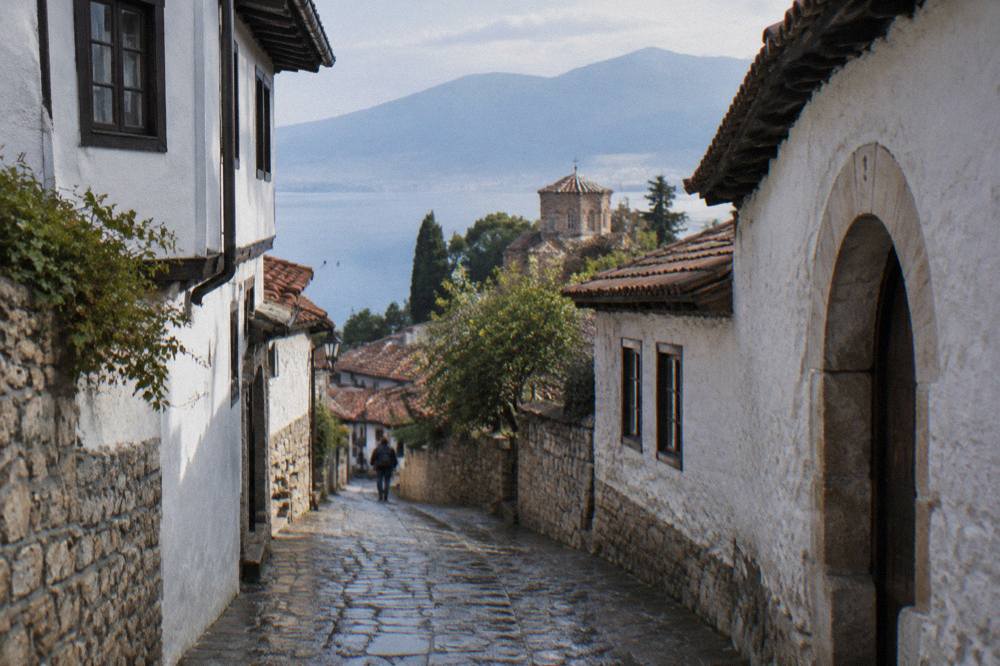
Four sites sit within walking distance of Ohrid's centre yet off the standard fortress-to-quay route: the Icon Gallery at the Perivleptos complex, the Ancient Theatre's upper approaches, the quieter lanes of the Kaneo district below the fortress, and the Robev Family House museum on Tsar Samoil Street, all managed or ticketed through the same institute system at 150 den for foreign visitors and 120 den for domestic visitors. The child and student rate of 60 den is reported on the institute's own pages, so confirm it at the desk when you buy.
The Icon Gallery is the clearest case of a hidden gem hiding in plain sight. Its winter hours run 09:00 to 14:00 (1 October to 30 April) and its summer hours 09:00 to 17:00, closed Monday, per the museum institute's own site page for the gallery. The Perivleptos church complex around it gives the gallery its setting, and the climb from the centre is short enough that the visit fits into any spare hour of an afternoon.
Robev Family House gets foot traffic from its position on the main street, but its hours reward attention: winter 09:00 to 15:30, and from 1 May two shifts, 09:00 to 15:30 and 13:30 to 20:00, closed Monday. That second summer shift means the museum is open into the evening, which suits the heat of July and August, when ERA5 modelled normals put the mean daily high at 27.6 C in August. The evening slot turns a museum visit into a genuine hidden-gem move.
| Museum institute site | Ticket (foreign / domestic) | Winter hours (1 Oct to 30 Apr) | Summer hours (from 1 May) | Closed |
|---|---|---|---|---|
| Robev Family House, Tsar Samoil 62 | 150 / 120 den | 09:00 to 15:30 | 09:00 to 15:30 and 13:30 to 20:00 | Monday |
| Museum on Water (Bay of Bones), Peshtani | 150 / 120 den | 09:00 to 15:30 | 09:00 to 16:30 | Monday |
| Icon Gallery, Perivleptos complex | 150 / 120 den | 09:00 to 14:00 | 09:00 to 17:00 | Monday |
The Ancient Theatre belongs on this list too, though differently. The institute's page for it records that it was built at the end of the 3rd or start of the 2nd century BC, in late Hellenism, first excavated in 1935, and that its capacity rose to 5,000 after the epiteatron was added. During the Ohrid Summer Festival it becomes a performance venue, and the 66th edition opened there on 12 July 2026 with a gala. Outside festival nights, the theatre sits on the hillside as an open stone bowl that the standard walking route passes at speed. Slow down and it earns its place among the quieter sights, as the Ancient Theatre guide explains in detail.
A shared small-group walk is one way to catch the corners the standard route skips. The hidden-gems walk covers exactly this territory with a local guide in a small group, and its full details, price and rating render in the block below.
What Can You See Around Kaneo And The Cliffs Below The Fortress?
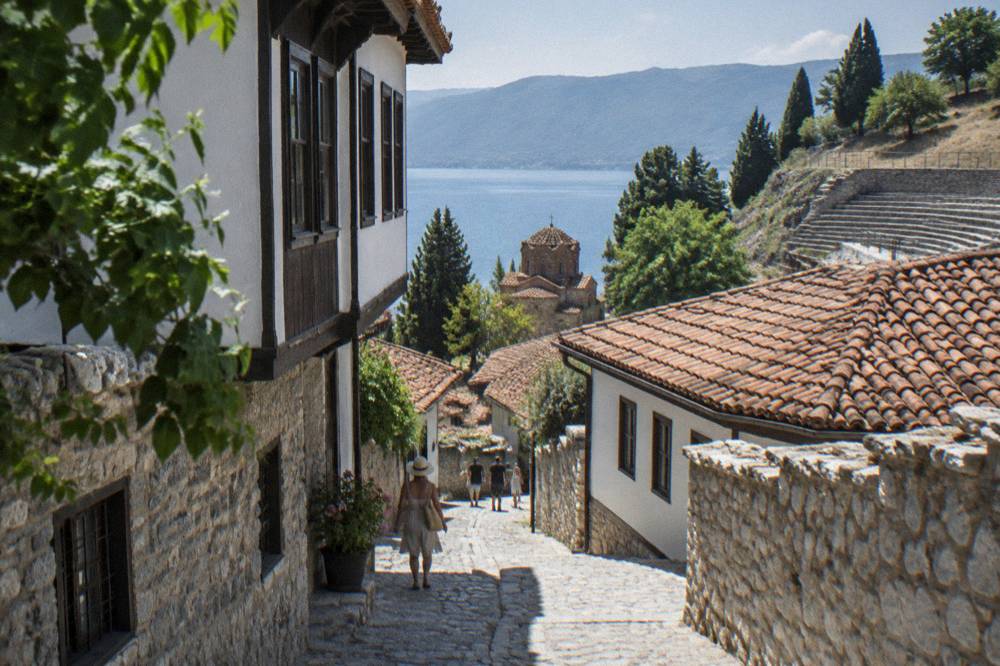
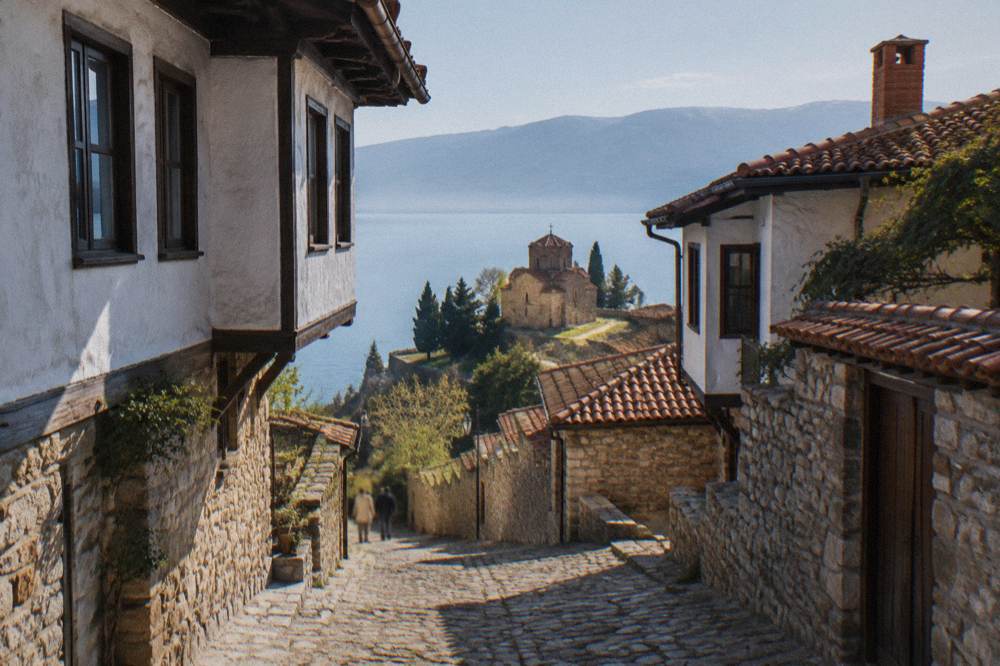
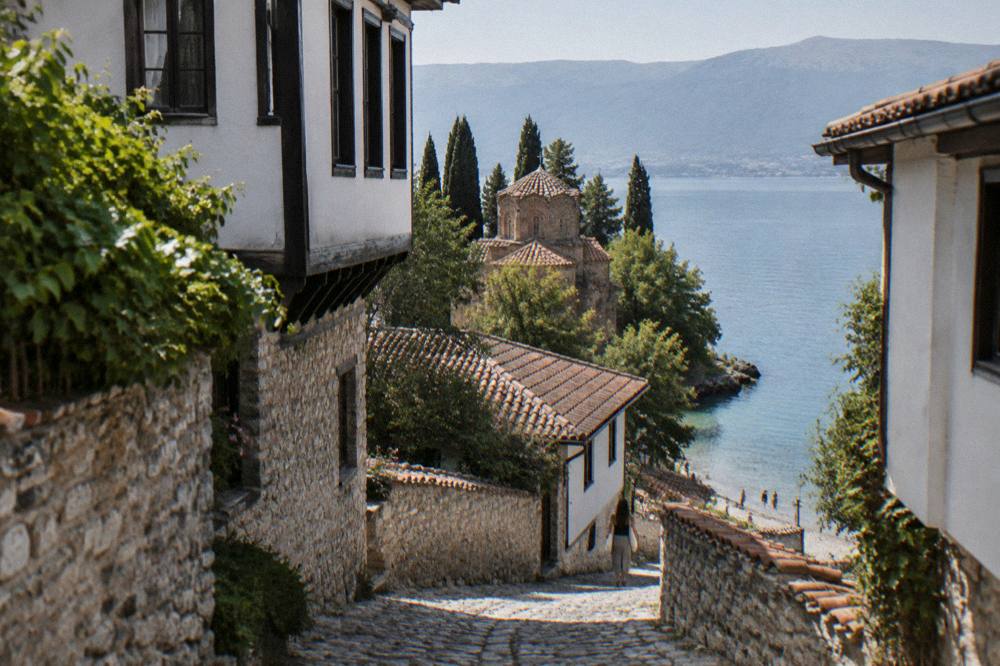
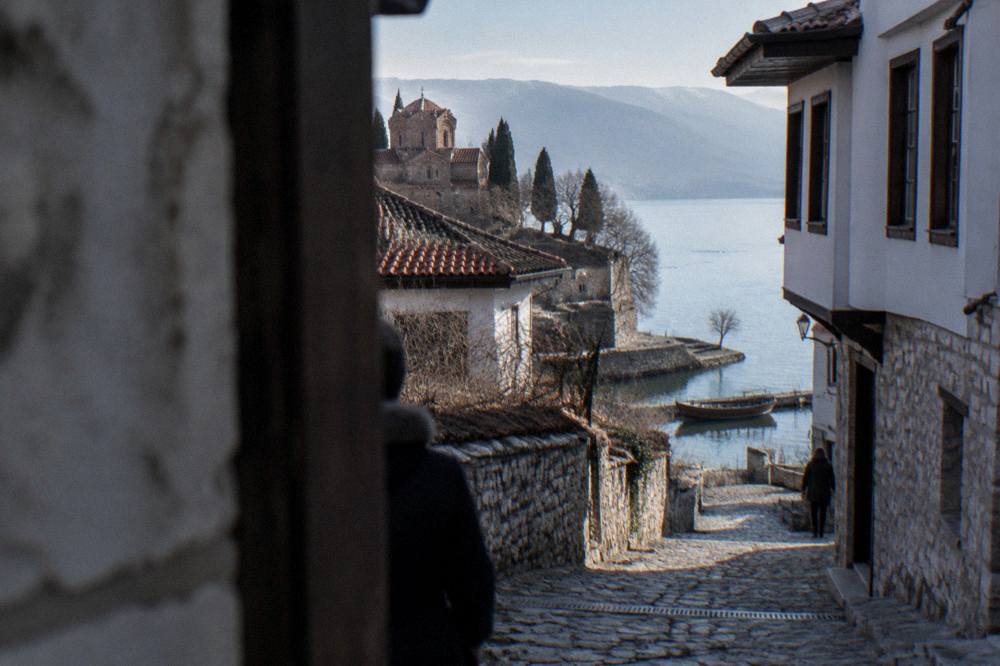
The Kaneo district below Samuel's Fortress holds the Church of St John at Kaneo on its own headland, plus a network of stone lanes and cliff-edge terraces that many people reach only as an out-and-back to the church itself, yet the district rewards looping down towards the water and back up through the lanes instead of retracing steps. The church sits above the lake at the end of the peninsula, and the ground between it and the fortress is the steepest, quietest part of the old town.
The Samuel's Fortress walls crown the hill, and the old town runs down from them to the water. What the standard route misses is the diagonal: the lanes that drop from the fortress side towards Kaneo rather than towards the port. This is terrain for steady shoes. The old town climbs from the lake to the fortress, and the lanes are on foot.
Kaneo's headland is also the town's clearest example of a sight with two halves: the exterior and the approach are free, and the lake below is the same body of water that the swimming marathon crosses each August. The 39th edition of the St Naum to Ohrid harbour swim, the 25 km Klime Savin route, finished at the town harbour on Saturday 22 August 2026 with 16 swimmers. Standing at the cliff edge below St John, the scale of that swim is easier to grasp: the water stretches south towards St Naum until the far shore flattens into haze.
For views that need no ticket and no climb at all, the quay east of the port curves along the water towards the beaches, and the whole Kaneo district walk takes an unhurried hour. Go early: ERA5 modelled normals put the July mean daily high at 27.1 C, and the cliffs have little shade by midday.
Should You Book A Guided Walk Or Boat To Reach Ohrid's Quieter Corners?
A guided walk suits the lanes and museum cluster inside the town, while a boat suits the eastern shoreline, because the shoreline gems, the Bay of Bones, Trpejca and St Naum, sit along water and road corridors where a boat tour bundles all three into one day and a walk covers none of them. The two formats solve different problems, and the choice comes down to which ring of hidden gems a visit has time for.
The walking option fits visitors with a half-day in town. The shared hidden-gems walk runs with a small group and a local guide, and it pairs naturally with a self-guided afternoon at the Icon Gallery and the theatre. Its live price, rating and review count print in the tour block, never in this prose, and availability can be checked on the operator's live listing: Check availability.
To see those quieter corners with a local guide, book a small-group city tour here.
The boat option covers the shoreline. A full-day cruise from Ohrid port to St Naum with Boat Armada runs 7 hours, from 1,200 den for an adult and 600 den for a child, per the operator's own listing, and the same listing notes that the Bay of Bones entrance of 150 MKD per person is not included in the fare. St Naum monastery's own entrance is listed at 150 MKD per person, and a rowboat through the Crn Drim springs runs about 5 EUR. Those are local costs printed in denar and euros exactly as the operators give them, never converted.
| Shoreline stop east of Ohrid | What it is | Entry cost | Included in a boat day? |
|---|---|---|---|
| Bay of Bones, Gradiste, Peshtani | Museum on Water, reconstructed pile dwelling | 150 MKD per person | Not included in the cruise fare |
| St Naum monastery | Monastery at the Crn Drim springs | 150 MKD per person, per the cruise operator's listing | Monastery stop included, entry paid separately |
| Crn Drim springs rowboat | Small boat through the spring channels | About 5 EUR | Paid on the spot |
Where Can You Swim In Lake Ohrid Away From The Centre?
The swimming beaches of Lake Ohrid spread east and south of the town centre, with Gradiste near Peshtani, Lagadin, Ljubanista, Potpesh and Labino all listed as swimming spots in guides to the lake, and the modelled surface water temperature reaching about 22.9 C in July and 23.5 C in August, which frames a swimming season that runs from July. The water is the draw: a freshwater mountain lake at about 693 m above sea level, not the sea.
The modelled monthly figures give the honest picture. Aggregator data puts the lake surface at about 14.9 C in May, 19.4 C in June and 22.9 C in July, while the UHMR multi-year October mean, from the official 2001 to 2020 base, is 14.3 C. Those are modelled and measured values respectively, and they say the same thing: May swimmers are hardy, July and August swimmers are comfortable, and by October the lake has cooled decisively.
Water quality in 2026 has a public record. Tests reported by the Institute of Public Health for May and June 2026 found Class I physico-chemical quality across the bathing sites except Grashnica beach, which rated Class III, and most microbiological samples returned excellent results, with poorer ratings at individual points including Labino. The same reporting flagged ongoing wastewater concerns from properties not yet connected to the collector system. The practical read: the lake is broadly clean, but check the current test results rather than assuming every cove is identical.
| Month | Modelled lake surface temperature | Rain, ERA5 modelled normal |
|---|---|---|
| May | About 14.9 C | 70.8 mm |
| June | About 19.4 C | 43.1 mm |
| July | About 22.9 C | 34.7 mm |
| August | About 23.5 C | 32.9 mm |
| September | About 19.7 C | 62.4 mm |
| October | 14.3 C (UHMR multi-year mean) | 76.0 mm |
Two 2026 rules change how the water feels in high summer. Under a government decision of 2 June 2026, jet skis are banned on the lake between 1 July and 31 August from 11:00 to 19:00, and boats are restricted at night between 3 June and 31 August from 21:00 to 05:00, with a further limit through 30 September. The upshot for swimmers at the eastern beaches is calmer daytime water in the peak weeks. The swimming and beaches coverage covers the shoreline in more depth.
How Does Galicica National Park Hide In Plain Sight Above Ohrid?
Galicica National Park, North Macedonia's second national park, designated in 1958, spans 22,750 hectares between Lake Ohrid and Lake Prespa with the Magaro peak at 2,254 m, and it charges 250 MKD per vehicle with no per-passenger fee, or 100 MKD only for someone entering on foot from the Ohrid-side gate, making it one of the least expensive park visits in the region. The park is open year-round, though heavy snow can close the main road, typically between January and March.
The hidden-gem angle is the geometry. Lake Prespa sits about 148 m higher than Lake Ohrid, measured at the Nakolec gauge at 841.36 m against the lake's about 693 m, across the Galicica ridge. A drive or hike over that ridge swaps one lake for another in under an hour, and the Lake Prespa day trip is the quietest big-landscape excursion available from Ohrid. The park's own site runs a live camera page, useful for checking conditions before setting out.
Inside the park, the Two Lakes hiking trail is the structured option, and a jeep safari covers the same terrain for visitors who would rather ride. The paragliding flights above Ohrid launch from the Galicica slopes, which puts the ridge, the lake and the old town into one frame from above. Product details for all three render from the tour blocks below, never typed into prose.
Winter needs honesty. The park road can close with snow, typically January to March, and the modelled ERA5 normals show why: January's mean daily low in Ohrid itself is -0.8 C, and the park sits well above the town. The Galicica guide carries the seasonal detail.
How Do You Build A Hidden-Gems Day In Ohrid Without Rushing?
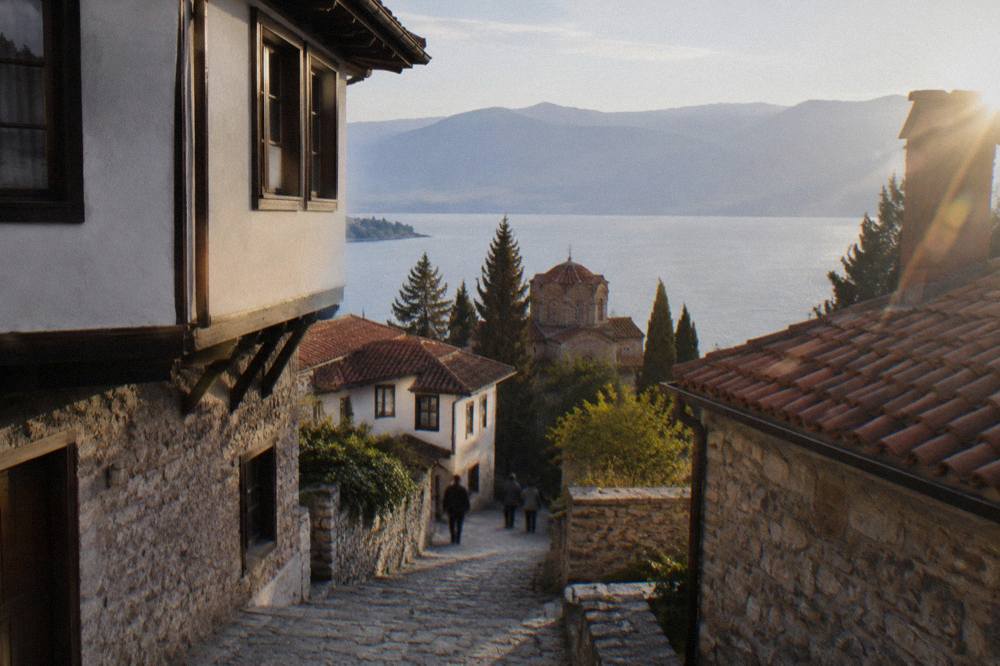
A workable hidden-gems day in Ohrid pairs one museum morning, the Icon Gallery or Robev House using the summer evening shift, one shoreline afternoon by boat or bus to the Bay of Bones, and one golden-hour return through the Kaneo lanes, ordered so the Monday closure of every museum institute site never lands on your museum slot. The Monday closure applies across the institute's sites, so anchor the plan to a Tuesday-to-Sunday visit.
The sequence matters because of the summer heat and the second museum shift. Start at the Icon Gallery when it opens at 09:00, walk the Perivleptos complex while the lanes are cool, then drop to the theatre and the fortress hill before the modelled afternoon peak. ERA5 normals put August's mean daily high at 27.6 C and the mean overnight low at 19.0 C, so midday belongs indoors, on the water, or in shade. A boat east after lunch covers the shoreline; a Robev House visit after 17:00, inside the summer evening shift that runs to 20:00, closes the culture ledger.
| Time of day | Hidden-gem slot | Why it works |
|---|---|---|
| 09:00 to 11:00 | Icon Gallery and Perivleptos complex | Gallery opens at 09:00, lanes still cool |
| 11:00 to 13:00 | Ancient Theatre and fortress hill | Stone sites before the afternoon peak |
| 13:00 to 17:00 | Boat or bus east: Bay of Bones, Peshtani | On the water during the day's heat |
| 17:00 to 20:00 | Robev Family House, summer shift | Museum open to 20:00 from 1 May, closed Monday |
| Evening | Kaneo lanes and quay | Cooler air, low light on the lake |
Visitors with more than a day can widen the ring. The two-day itinerary adds Struga, the three-day version adds St Naum properly, and the five-day plan brings in Galicica and Prespa at an unhurried pace. Families should read the Ohrid with kids page before committing to the boat day, and the rainy-day plan exists because November's modelled rainfall normal is 90.4 mm and December's is 92.6 mm.
What Hidden Day Trips And Experiences Start From Ohrid Itself?
The genuinely offbeat experiences that start in Ohrid cluster around the water and the ridge: the Bay of Bones boat tours with a barbecue lunch on board, scuba dive sessions in the lake, paddleboard tours past the old town cliffs, paragliding flights from the Galicica slopes, and wine tastings at the monastery winery outside town, all bookable with free-cancellation terms on the operator's live listing. Each one frames the town from a different angle, and none requires the fortress-to-quary walking route.
The boat-and-Bay-of-Bones product is the strongest fit for this page's theme, because it strings together the shoreline's quieter stops in a single day with food included. The paragliding flight is the other half of the pair: the same landscape read from above instead of from the water. Full details, prices and ratings for both print in the band below.
Practical notes finish the picture. The local currency is the Macedonian denar; euros are commonly quoted for tours but are not legal tender, and museum entries, park fees and boat fares are paid in denar as printed above. North Macedonia is not in the EU or Schengen, so visa-free nationals get up to 90 days in any 180-day period and UK visitors up to 3 months, with hotels handling the police registration within 48 hours of arrival. Emergency numbers are ambulance 194, police 192 and roadside assistance 196.
One 2026 change affects anyone driving into the old town: from summer 2026, streets including Ilindenska, Kosta Abrash and Car Samoil became resident-only parking, with clamping reported for non-residents, so a car belongs in a lot outside the old streets, as the parking guide details. Where to sleep, meanwhile, comes down to the quarters described in the where to stay in Ohrid guide, since the hidden-gem sights sit on both sides of the port.
Common Questions About Hidden Gems In Ohrid
What are the hidden gems in Ohrid beyond the Old Town?
The Icon Gallery at the Perivleptos complex, the Kaneo district lanes, the Bay of Bones at Peshtani, the shoreline swimming spots east of town, and the Galicica National Park ridge between Lake Ohrid and Lake Prespa together make up Ohrid's quieter layer beyond the fortress-to-quay route.
How much do Ohrid's small museums cost to enter?
The museum institute's sites, Robev Family House, the Museum on Water at the Bay of Bones and the Icon Gallery, charge 150 den for foreign visitors and 120 den for domestic visitors, with a reported 60 den rate for children and students; all are closed on Monday.
Can you reach the Bay of Bones from Ohrid without a car?
Yes. Full-day boat cruises from Ohrid port to St Naum stop at the Bay of Bones, with fares from 1,200 den for an adult and 600 den for a child on the Boat Armada listing, and local buses also run east along the shore towards Peshtani.
Is Galicica National Park worth visiting from Ohrid?
Yes. The park spans 22,750 hectares between Lake Ohrid and Lake Prespa, charges 250 MKD per vehicle or 100 MKD on foot from the Ohrid-side gate, and holds hiking trails, jeep safaris and paragliding launch sites, though snow can close the main road from January to March.
When is the best time of year to explore Ohrid's quieter corners?
July and August bring the modelled lake surface to about 22.9 and 23.5 C and the modelled mean daily high to 27.1 and 27.6 C, while May, June and September stay cooler with 70.8, 43.1 and 62.4 mm of modelled monthly rain; museum summer hours from 1 May add evening visiting hours that make the shoulder months comfortable.
Are Ohrid's hidden gems walkable from the centre?
The Icon Gallery, the Ancient Theatre, the fortress hill and the Kaneo lanes are all walkable from the centre on steep stone streets, while the Bay of Bones, St Naum and Galicica need a boat, bus or vehicle, as the getting around Ohrid guide explains.