Best Photo Spots In Ohrid: Kaneo, Fortress And Sunsets
Ohrid packs a fortress hill, Byzantine churches, a lakeside boardwalk and a UNESCO-listed old town into a walkable stretch of shoreline, and this guide sets out where to point a camera, what each site costs to enter and when the light works.
Short answer
The core photo spots in Ohrid are the Church of St John at Kaneo above the lake, the walls of Samuel's Fortress, the Ancient Theatre, the boardwalk along the shore and the Old Bazaar lanes, with boat cruises covering the shoreline from the water and St Naum, the Bay of Bones and Galicica National Park reachable as day trips.
Ohrid is a lake town in North Macedonia, built on a hillside that runs from the walls of Samuel's Fortress down to the shore of Lake Ohrid, a freshwater mountain lake sitting at about 693 m above sea level inside the UNESCO mixed property "Natural and Cultural Heritage of the Ohrid Region", inscribed in 1979 and 1980. For a photographer that geography is the whole brief: churches, fortress walls, a theatre cut into the hillside and a boardwalk along the water, all within walking distance of each other. This guide from the Ohrid Travel Guide lists the locations, the entry prices and hours where they exist, and the seasonal light, so a shot list can be planned before arrival. If you are building a first itinerary, the one day in Ohrid plan covers several of these locations in a single loop.
What Are The Best Photo Spots In Ohrid?
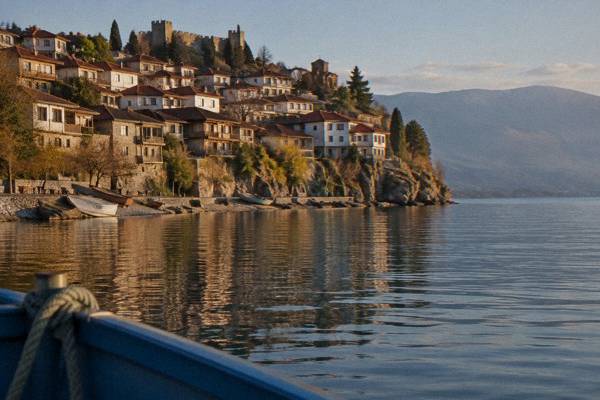
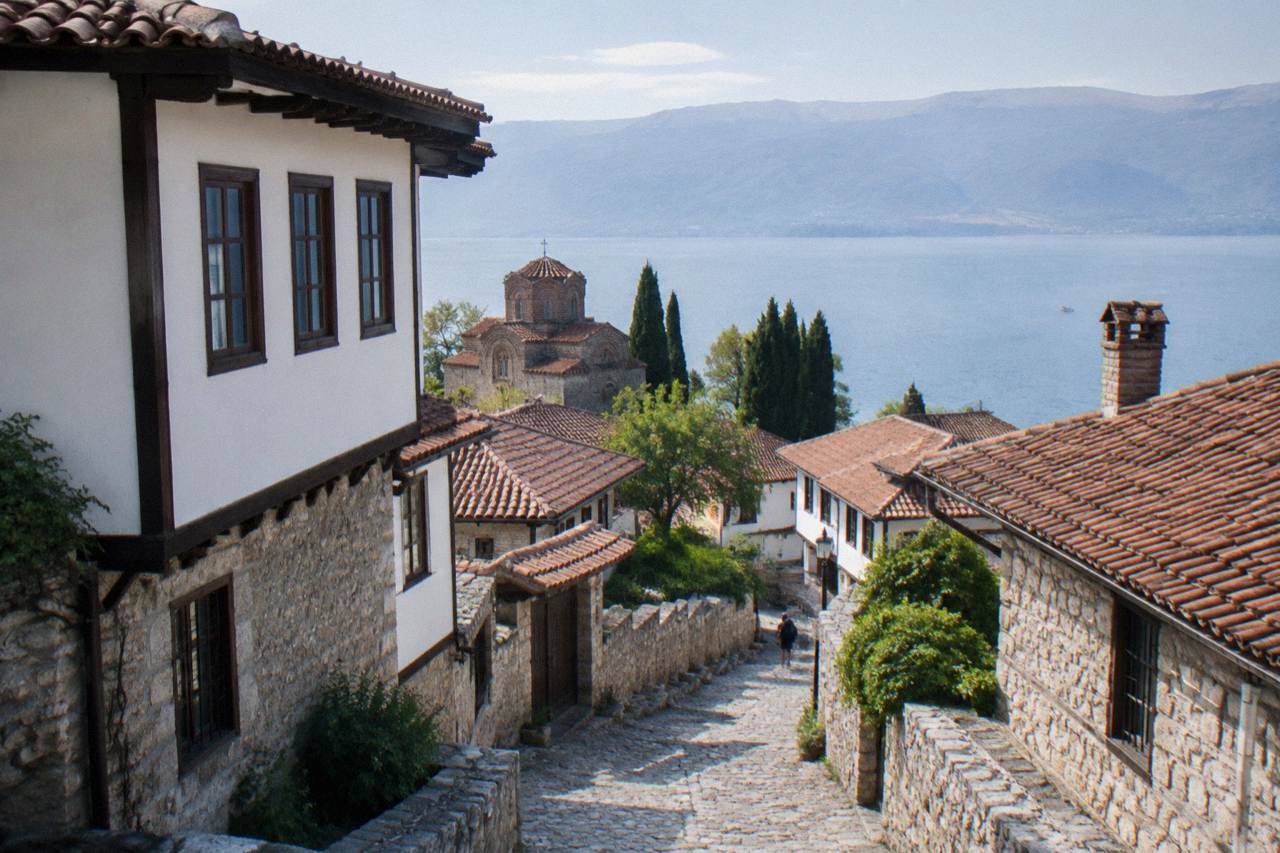
The locations that define a photo set of Ohrid are the Church of St John at Kaneo on its promontory above the lake, the walls of Samuel's Fortress on the hilltop, the Ancient Theatre cut into the slope below the fortress, the lanes of the Old Town running down to the Old Bazaar, and the boardwalk along the shoreline, with boat cruises adding the whole old town frontage seen from the water.
Each of these is a named, mapped sight rather than a hidden angle, and that is the point: Ohrid's photogenic core is compact and public. The old town climbs from the lake to the fortress and the lanes are on foot, so a single morning can cover the fortress hill, the theatre and the descent to the water. UNESCO's own listing for the region records more than 800 Byzantine-style icons from the 11th to the end of the 14th century held in Ohrid, which is why the church interiors and the Icon Gallery loom so large in any serious shot list. The lake itself sits at about 693 m above sea level, and it frames almost every exterior shot in town.
Practically, the walkable core means camera gear can stay light. The old town guide and the Kaneo district guide break the geography into walkable chunks, and the things to do in Ohrid page lists the full sight roster beyond the photographic ones.
Where Do You Photograph The Church Of St John At Kaneo?
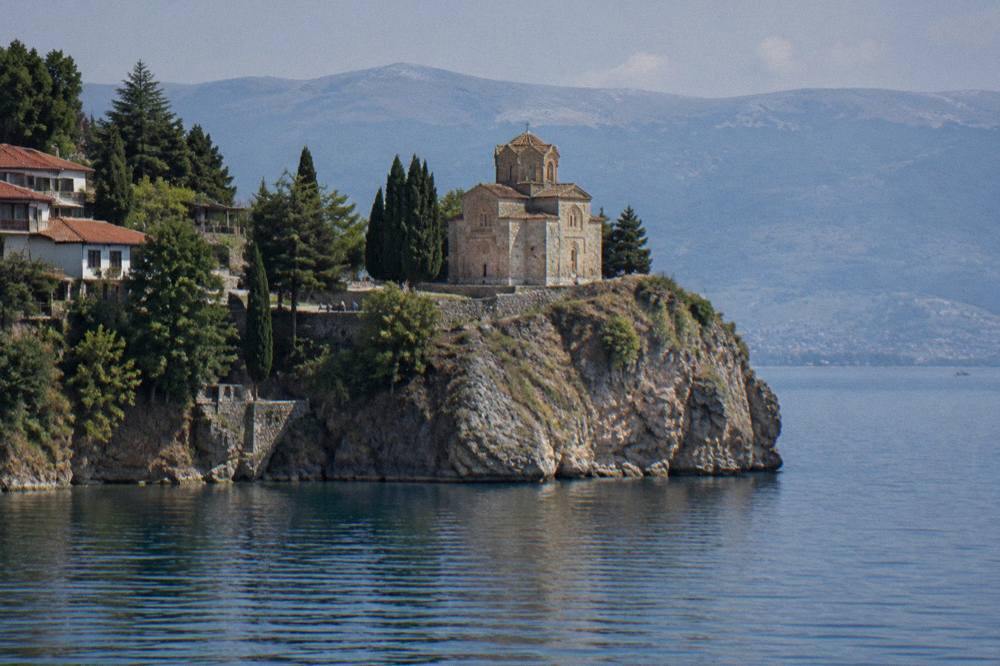
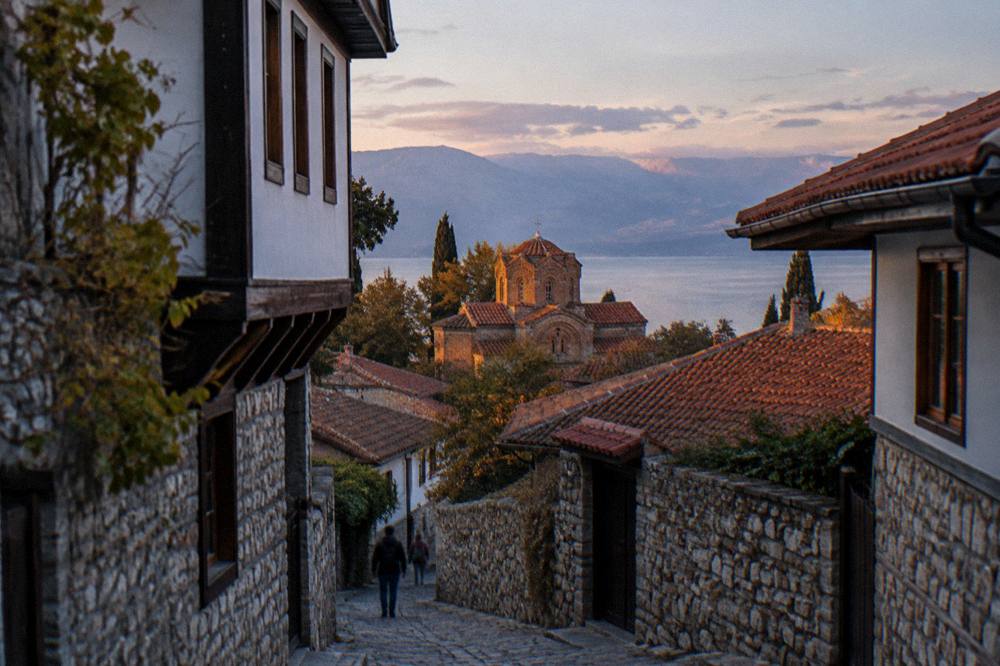
The Church of St John at Kaneo stands on a promontory above Lake Ohrid at the edge of the Kaneo district, and it is photographed from three directions: from the water on a boat cruise, from the rocky shoreline below the church, and from the lane approaches above the old town, with entry to the interior reported at about 150 MKD and the exterior views free.
The interior figure is reported by a secondary source rather than the museum institute, so treat it as a planning number and confirm at the gate. The exterior is the reliable subject: the church sits above the lake, and the water approach is why boat cruises sell so well with photographers, since the shoreline angle is the one no walk reaches. The St John at Kaneo guide covers the church in detail. For the shore angle, the boardwalk runs along the water and connects toward the Kaneo side.
Two practical notes shape a Kaneo shoot. First, the old-town streets nearest the shore now fall under a resident-only parking regime introduced in summer 2026 on streets including Ilindenska, Kosta Abrash and Car Samoil, so a hire car is a liability here and the lanes are the natural approach on foot. Second, the lake level as measured by the hydrological service sits around 693 m above sea level, close to its agreed minimum, which affects how much shoreline is exposed below the church.
What Can You Photograph From Samuel's Fortress Walls?
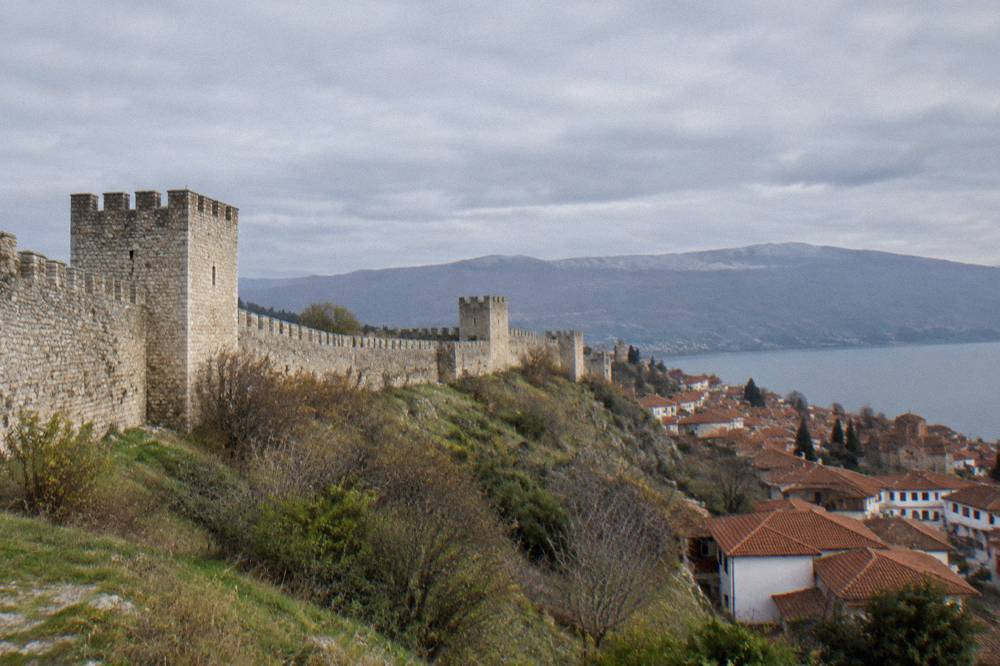
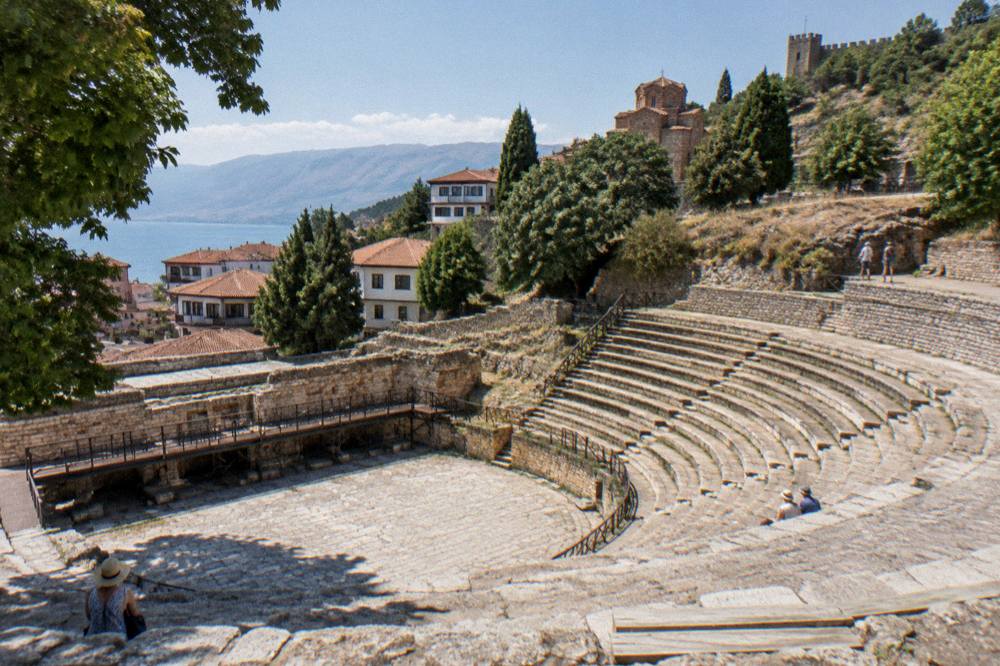
Samuel's Fortress crowns the hill above the lake with its walls, and from the wall walk the camera looks down over the tiled roofs of the Old Town, the bowl of the Ancient Theatre immediately below, and the full sweep of Lake Ohrid, making it the one location that puts the town and the water in a single frame.
The fortress is the anchor of the high shot list, and the Samuel's Fortress guide covers its history and access questions, including the common how much is entry to Samuel's Fortress question. A municipal revitalisation plan reported in 2026 budgets over 11 million denars for a summer stage, illumination and archaeological work at the fortress, so parts of the site may look different from one season to the next. The Ancient Theatre sits below the fortress on the same hillside: the museum institute dates it to the end of the 3rd or start of the 2nd century BC, with first excavations in 1935 and a capacity that rose to 5,000 after the epiteatron was added. It is a working festival venue too: the 66th Ohrid Summer Festival opened there on 12 July 2026 with a gala evening.
The fortress hill and the theatre pair naturally in one climb, and a guided loop that strings them together with the lakeside sights saves route-finding time on a short visit. Check availability for the city tour that covers the fortress, the old town and the shore in one guided circuit.
Where Are The Sunset Spots Over Lake Ohrid In Ohrid?
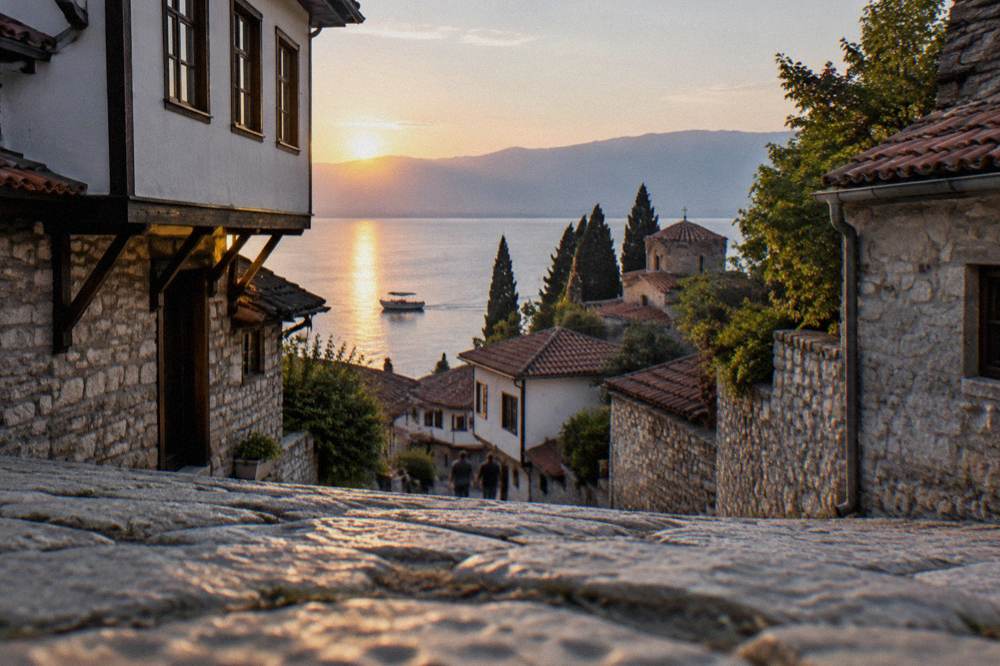
Sunset in Ohrid is a lake event, and the workable setups are the boardwalk and shoreline west of the old town, the rocks below St John at Kaneo looking along the water, and above all a boat on the lake itself, where a sunset cruise puts the sun's descent over the water and the old town frontage in the same frame.
The on-water option is the one Ohrid offers that a landlocked old town cannot: a dedicated sunset cruise runs on the lake, and panoramic old-town cruises run from the port along the shoreline. A reported full-day boat cruise from Ohrid port to St Naum with Boat Armada runs 7 hours from 1,200 den per adult and 600 den per child, with stops that include the Bay of Bones, which doubles as a location shoot in itself. Note one 2026 rule that affects evening work on the water: under a government decision of 2 June 2026, boats are banned on the lake at night from 3 June to 31 August between 21:00 and 05:00, and from 1 to 30 September between 20:00 and 06:00, so late-evening cruises end earlier than the calendar sunset might suggest.
For planning around light and weather, the Ohrid weather guide and the best time to visit Ohrid pages carry the monthly detail. One hard rule for this page: no sunrise or sunset timetable appears on it, because the only trustworthy figures come from live astronomical data, not from a static table.
What Do Boat Cruises Show You From The Water?
A boat cruise on Lake Ohrid shows the photographer the old town frontage from the port along the shoreline, St John at Kaneo from its signature water angle, and on the longer routes the Bay of Bones museum on stilts at Peshtani and the St Naum monastery at the far end of the lake, with the full-day cruise from Ohrid port running 7 hours from 1,200 den per adult.
The water angle is the one that separates an Ohrid set from every other Balkan old town album, and there are several ways to take it. A short panoramic cruise loops the old town from the port; a sunset cruise times the same water for the evening; the full-day Armada route runs down the lake to St Naum with the Bay of Bones on the itinerary. The rowboats at the Crn Drim springs below St Naum cost about 5 EUR per boat, and the monastery entrance is listed by the cruise operator at 150 MKD per person. Boats to St Naum run roughly May to October with a reduced winter schedule, so the water angles are a warm-season asset. The rest of the planning pages sit on Ohrid Travel Guide.
For a photo angle of the landmarks from the water, book a paddleboarding tour here.
| Boat option | Route | Duration | Price (as listed) |
|---|---|---|---|
| Full-day cruise to St Naum (Boat Armada) | Ohrid port, Bay of Bones, St Naum | 7 hours | from 1,200 den adult, 600 den child |
| Old town panoramic cruise | Ohrid port along the old town frontage | about 1 hour | on the operator's live listing |
| Sunset cruise | Lake Ohrid evening loop | on the operator's live listing | on the operator's live listing |
| Rowboat at the Crn Drim springs | St Naum springs channel | short loop | about 5 EUR per boat |
Which Museum Sites In Ohrid Can You Photograph Inside?
The museum institute sites in Ohrid that open to visitors are the Robev Family House on Tsar Samoil Street, the Icon Gallery at the Perivleptos complex, and the Bay of Bones Museum on Water at Peshtani, each charging 150 den for foreign visitors, 120 den for domestic visitors and 60 den for children and students, and each closed on Mondays.
The ticket structure comes from the institute's own pages, which list the foreign and domestic rates directly; the children and students rate appears on the English page with a known typo ("60 days", meaning 60 den), so treat it as 60 den and confirm at the desk. Hours differ by site and by season, and the table below carries them exactly as the institute publishes them. The Icon Gallery matters most to a photography plan on content: UNESCO's listing records more than 800 Byzantine-style icons from the 11th to the end of the 14th century in Ohrid, and the gallery is where a large share of them are held. Shooting rules inside museums vary and are set at the desk, so ask before setting up.
| Museum site | Winter hours (1 Oct to 30 Apr) | Summer hours (from 1 May) | Closed | Tickets |
|---|---|---|---|---|
| Robev Family House, Tsar Samoil St 62 | 09:00 to 15:30 | two shifts, 09:00 to 15:30 and 13:30 to 20:00 | Monday | 150 / 120 / 60 den |
| Icon Gallery, Perivleptos complex | 09:00 to 14:00 | 09:00 to 17:00 | Monday | 150 / 120 / 60 den |
| Bay of Bones, Gradishte, Peshtani | 09:00 to 15:30 | 09:00 to 16:30 (to 30 Sep) | Monday | 150 / 120 / 60 den |
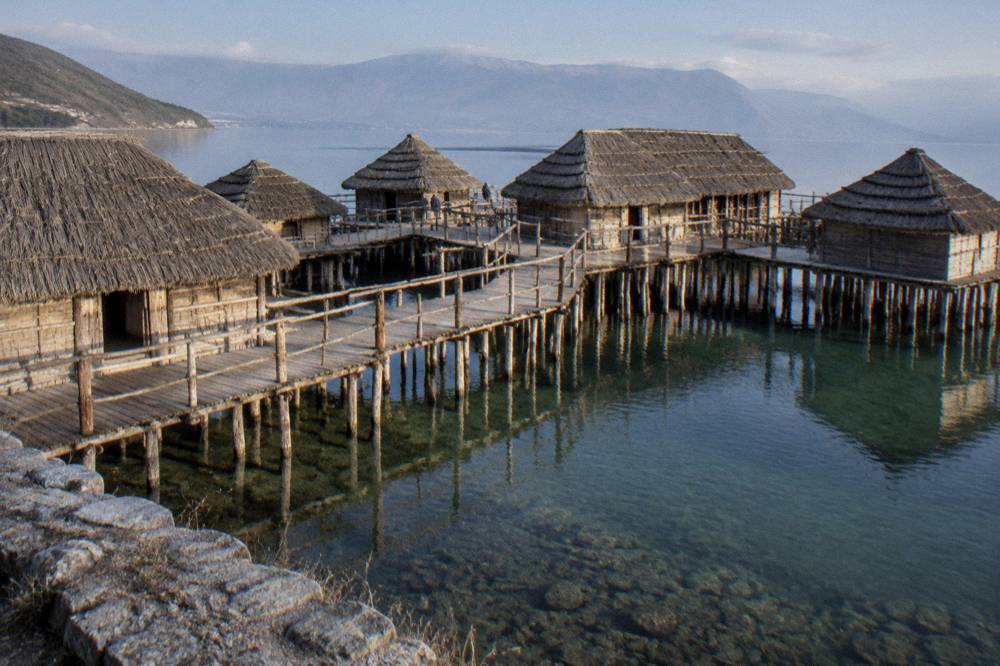
The Bay of Bones deserves its slot on any list: it is a reconstructed prehistoric pile dwelling standing over the water at Gradishte near Peshtani, reachable by boat on the St Naum route or by road, and it photographs from the shore, from the water and from its own walkways. The Perivleptos church and Icon Gallery complex sits in the old town within walking distance of the fortress hill, so it slots into the same climb as the theatre and the walls.
When Is The Light Best In Ohrid, Month By Month?
Ohrid's light is a mountain-lake pattern, and the modelled ERA5 climate normals for 1991 to 2020 show the warm bright months concentrated from June to August, when mean daily highs run 24.2 C in June, 27.1 C in July and 27.6 C in August and rain falls on roughly a third of the volume of the winter months, with 43.1 mm in June, 34.7 mm in July and 32.9 mm in August.
Those figures are modelled reanalysis values for a grid cell over Ohrid, not a station record, and they carry no sunshine-hour claims here. For a photographer the practical reading is seasonal: summer gives the reliable evening light for lake sunsets but also the peak crowds, with August the busiest month of the June-to-September season. Spring and autumn trade some light for thinner crowds, and November 2025 alone recorded 18,103 guests in Ohrid with 33,149 overnight stays, of which 11,686 were foreign visitors, so the town is far from empty outside summer. Winter brings snow to Ohrid and heavier snow to the Galicica heights, and December carries 92.6 mm of precipitation in the modelled normals.
| Month | Mean daily high | Mean daily low | Rain |
|---|---|---|---|
| Jan | 5.0 C | -0.8 C | 76.5 mm |
| Feb | 6.3 C | 0.0 C | 74.3 mm |
| Mar | 10.0 C | 2.5 C | 80.5 mm |
| Apr | 14.6 C | 6.3 C | 82.4 mm |
| May | 19.5 C | 10.8 C | 70.8 mm |
| Jun | 24.2 C | 15.2 C | 43.1 mm |
| Jul | 27.1 C | 18.3 C | 34.7 mm |
| Aug | 27.6 C | 19.0 C | 32.9 mm |
| Sep | 22.4 C | 14.9 C | 62.4 mm |
| Oct | 17.4 C | 10.3 C | 76.0 mm |
| Nov | 11.5 C | 5.3 C | 90.4 mm |
| Dec | 6.2 C | 0.9 C | 92.6 mm |
The lake's own temperature matters if the shoot includes water work. Modelled aggregator values put the surface at about 4.6 C in January, 22.9 C in July, 23.5 C in August and 14.7 C in October, and the hydrological service's multi-year October mean is 14.3 C, so stand-up-paddle and swim-angle shoots are a July-to-September proposition.
What Photography Day Trips Start From Ohrid?
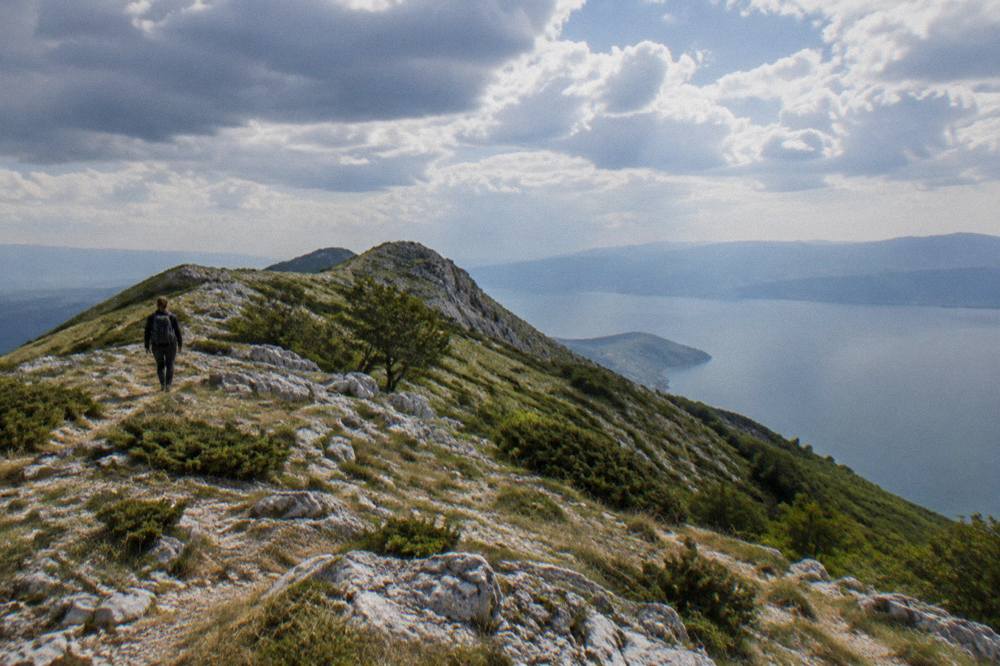
The photographic day trips from Ohrid are St Naum monastery at the Crn Drim springs, about 4 km from the Tushemisht border crossing with Albania, the Bay of Bones at Peshtani on the same shore road, the Galicica National Park ridge between Lake Ohrid and Lake Prespa with its 2,254 m Magaro peak, and the Albanian lakeside around Pogradec across the border.
Galicica is North Macedonia's second national park, designated in 1958, covering 22,750 ha between the two lakes, and it charges 250 MKD per vehicle with no per-passenger fee, or 100 MKD for someone entering on foot from the Ohrid-side gate. The road over the ridge is open year-round but heavy snow can close the main road, typically January to March, and the park's own site runs a live camera page for a check before driving up. From the ridge, Lake Prespa sits about 148 m above Lake Ohrid across the Galicica ridge, a figure the hydrological service measures at both gauges. St Naum photographs around its monastery and the springs, where the rowboats run at about 5 EUR per boat and monastery entry is listed at 150 MKD; the border crossing to Tushemisht is about 4 km away, roughly a 10-minute drive, with up to an hour to allow at the border on busy days.
| Day-trip location | Photographic subject | Entry / cost as listed | Getting there |
|---|---|---|---|
| St Naum monastery | Monastery and Crn Drim springs | 150 MKD entry, about 5 EUR per rowboat | Boat cruise, road; border 4 km away |
| Bay of Bones, Peshtani | Pile-dwelling museum over the water | 150 MKD foreign, 120 MKD domestic | On the St Naum boat route or by road |
| Galicica National Park | Ridge between the two lakes, Magaro 2,254 m | 250 MKD per vehicle, 100 MKD on foot | Road from Ohrid; snow can close it Jan to Mar |
| Pogradec, Albania | Albanian lakeside town | none listed | Cross at Sveti Naum / Tushemisht, about 4 km |
Trips that start elsewhere are worth knowing about here because they photograph the same lake from the far end: several day tours run from Tirana and Durres through Ohrid and St Naum, and they suit photographers based in Albania rather than in Ohrid itself.
What Practical Rules Affect Photographers In Ohrid?
The rules that matter for an Ohrid shoot are the 2026 lake navigation limits, under which jet skis are banned from 1 July to 31 August between 11:00 and 19:00 and boats are banned at night from 3 June to 31 August between 21:00 and 05:00, plus the resident-only parking regime on old-town streets from summer 2026, the Monday closures at every museum institute site, and the denar-only pricing at gates that quote 150, 120 and 60 den tickets.
The navigation limits come from a government decision of 2 June 2026 aimed at swimmer safety, and they shape water-based shooting in high summer: no jet ski wake in the frame at midday, and no boat at all after 21:00 in July and August, which pulls the evening cruise window earlier. The parking regime restricts streets including Ilindenska, Kosta Abrash and Car Samoil to residents with a valid sticker, with clamping reported for non-residents, so the old town is a walking shoot. North Macedonia is not in the EU or Schengen, the denar is the currency with euros informally accepted at poor rates, and the money guide covers the practicalities. For anything beyond the day-to-day, the Is Ohrid safe and visa and entry pages carry the detail.
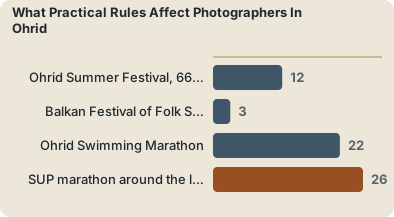
Festival dates can also drive a shooting calendar. The 66th Ohrid Summer Festival ran 12 July to 20 August 2026 with its opening gala at the Ancient Theatre, the Balkan Festival of Folk Songs and Dances held its 65th edition from 3 to 6 July 2026, and the Ohrid Swimming Marathon, a 25 km race from St Naum to Ohrid harbour, was swum on 22 August 2026 as part of a water festival that included a separate 33 km stand-up-paddle marathon around the lake on 26 August.
| 2026 event | Dates | Photographic angle |
|---|---|---|
| Ohrid Summer Festival, 66th edition | 12 July to 20 August 2026 | Opening gala at the Ancient Theatre, St Sophia as a concert venue |
| Balkan Festival of Folk Songs and Dances | 3 to 6 July 2026 | Folk ensembles at the Grigor Prlichev cultural centre |
| Ohrid Swimming Marathon | 22 August 2026 | 25 km finish at Ohrid harbour |
| SUP marathon around the lake | 26 August 2026 | Paddlers on the open lake |
How Many Days Do You Need To Photograph Ohrid?
Photographically, Ohrid needs at least two full days: one for the fortress hill, the Ancient Theatre, the Old Town lanes and the Old Bazaar in daylight, and one for the water, whether a panoramic or sunset cruise from the port or the full-day run down the lake to the Bay of Bones and St Naum, with a third day adding the Galicica ridge or the Albanian shore.
That pacing matches the general advice on how many days in Ohrid, and the Lake Ohrid guide covers the water side in depth. A single-day visit can still deliver the core set, fortress, theatre, Kaneo and the boardwalk, but it compresses the light windows and leaves nothing for the southern lake, which is where the Bay of Bones and St Naum shots live. Couples planning a slower photographic trip will find the pacing suggestions in the Ohrid for couples itinerary useful, since the shot list and the sightseeing list overlap almost completely.
For the restaurant side of a long shooting day, the Ohrid restaurants guide covers where to eat between locations.
Common Questions About Photography In Ohrid
Where is the best photo spot in Ohrid?
The Church of St John at Kaneo above the lake is Ohrid's defining photograph, shot from the water on a cruise, from the shoreline rocks below the church, or from the lanes above; the fortress walls add the high town-and-lake frame, and the boardwalk carries the shoreline set.
Can you photograph inside Ohrid's museums?
The Robev Family House, the Icon Gallery and the Bay of Bones are all open to visitors on the museum institute's 150 den foreign, 120 den domestic and 60 den child and student tickets, but interior photography rules are set at each desk, so ask before setting up a camera.
Are Ohrid's museums open on Mondays?
No. The museum institute's sites, including the Robev Family House, the Icon Gallery and the Bay of Bones Museum on Water, are closed on Mondays, with summer schedules starting 1 May and winter schedules running 1 October to 30 April.
Can you take sunset photos from a boat on Lake Ohrid?
Yes, a sunset cruise runs on the lake, but under the 2026 navigation rules boats are banned at night from 3 June to 31 August between 21:00 and 05:00 and in September from 20:00, so evening cruises finish before the latest light.
Is a drone or tripod allowed in Ohrid?
No published rule on drones or tripods in Ohrid's streets or churches is available here, so check locally; inside the museum institute sites, photography conditions are set at the ticket desk.
What is the best month for photography in Ohrid?
July and August give the modelled warmest weather, 27.1 C and 27.6 C mean daily highs, and the full festival and boat season, but they are also the busiest months; June and September carry mean highs of 24.2 C and 22.4 C with thinner crowds, and the boats to St Naum run roughly May to October.