Ohrid Vs Kotor: Lake Or Bay
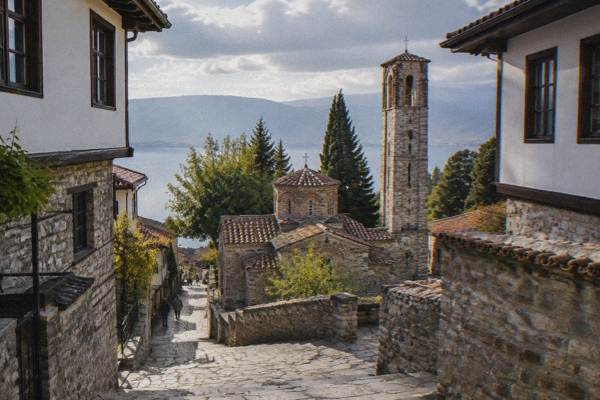
Ohrid sits on a freshwater mountain lake at about 693 m above sea level in North Macedonia; Kotor sits on a sea inlet on the Montenegrin coast. The choice between them is a choice between lake and bay.
Short answer
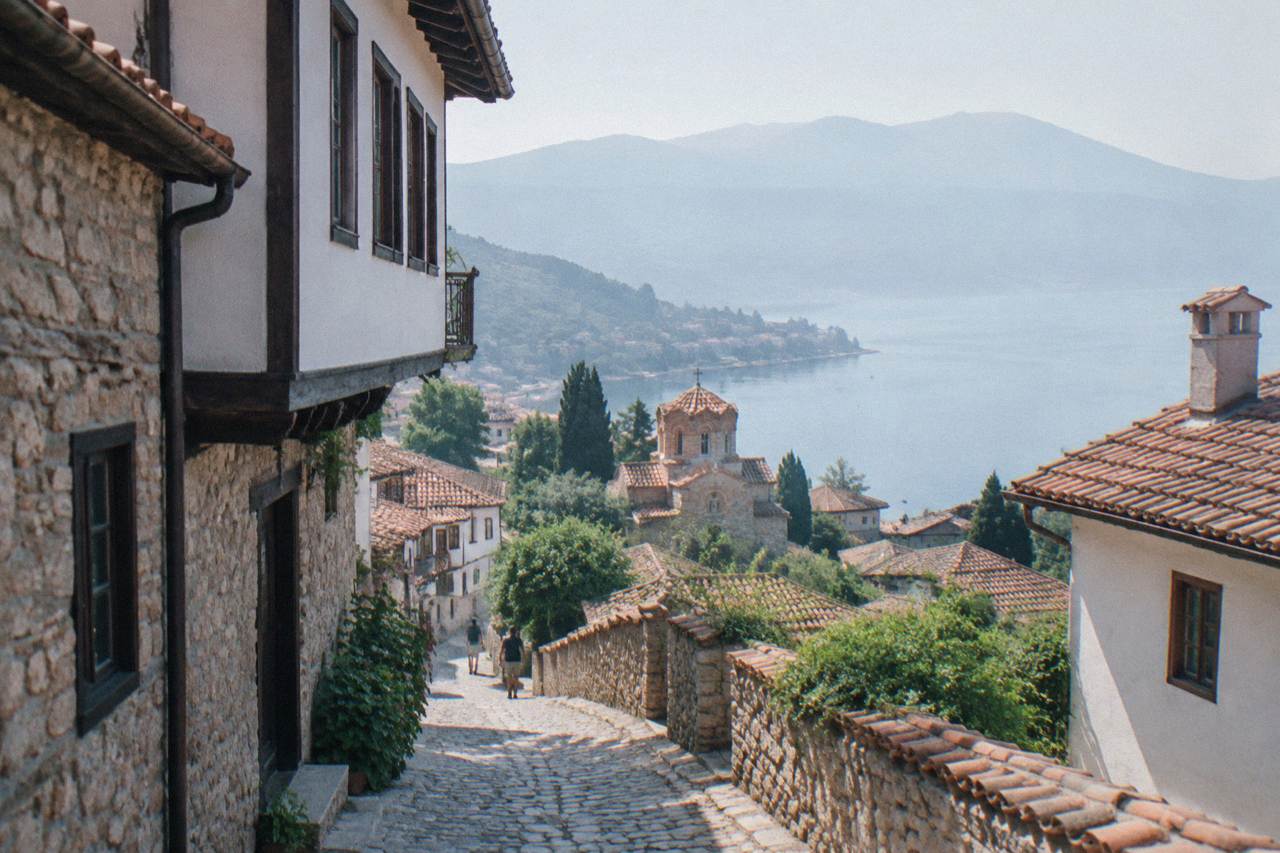
Ohrid is an inland lake town in North Macedonia at about 693 m elevation, with Byzantine churches, Samuel's Fortress and swimming in fresh water; Kotor is a walled coastal town on the Adriatic. Pick Ohrid for the lake, the churches and the cooler mountain air, Kotor for the sea.
Ohrid is a lakeside town in North Macedonia, on the shore of Lake Ohrid, a freshwater mountain lake whose surface sits at about 693 m above sea level. Kotor is a coastal town in Montenegro, at the head of a steep bay that opens to the Adriatic Sea. That single contrast, lake against bay, inland mountain air against salt water, drives almost every practical difference between the two, from swimming and weather to how you arrive and what money you carry. This comparison on the Ohrid Travel Guide sets the two towns side by side using the destination facts available for Ohrid, and frames the Kotor side as geography rather than a ranking.
Is Ohrid Or Kotor Better For A First Visit?
Ohrid suits a first visit built around a lake, Byzantine churches and a walkable old town that climbs from the shore to Samuel's Fortress, while Kotor suits a first visit built around the sea, a walled town on the water and coastal driving. Ohrid's setting is a freshwater lake shared with Albania inside a UNESCO mixed heritage site, so nature and heritage sit in one inscription. The honest answer is what you want from water: still fresh water at altitude, or a tidal bay on the coast.
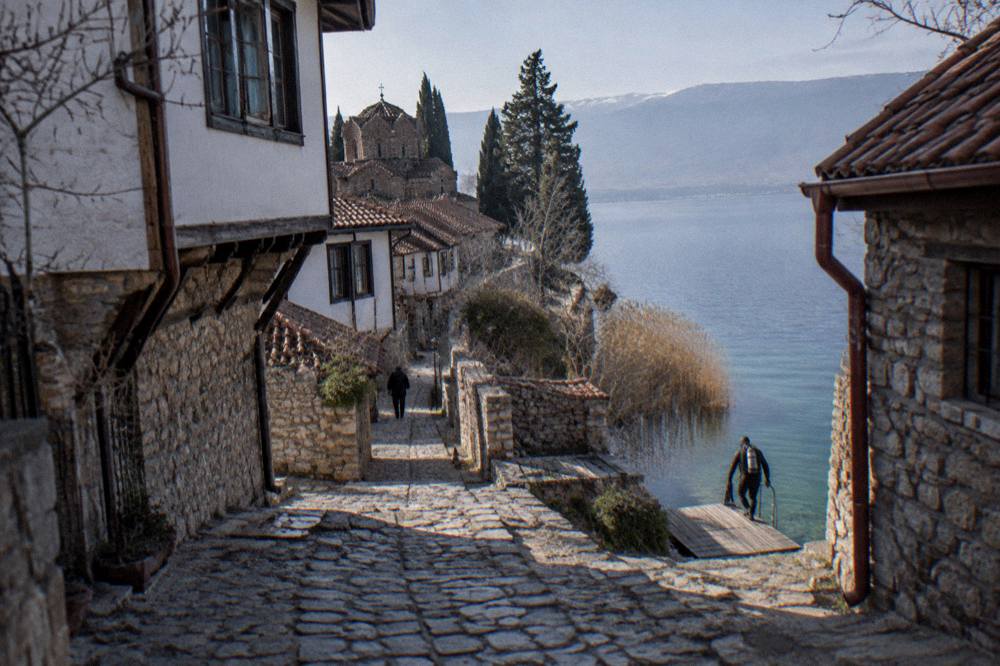
Neither town is a substitute for the other, and the comparison is not a beauty contest. Ohrid's old town is a network of lanes on foot between churches, the Ancient Theatre, the Old Bazaar and the fortress above, with the lake below. The town's heavyweight sights, the Church of St John at Kaneo, St Sophia, Plaosnik and the Perivleptos and Icon Gallery complex, belong to a Byzantine tradition that UNESCO recognised when it inscribed the Natural and Cultural Heritage of the Ohrid Region in 1979 and 1980, extending it to the Albanian part of the lake in 2019.
Kotor's identity is its bay and its walls. The town lies at sea level on an inlet ringed by mountains, and the old town is a fortified grid at the water's edge. Where Ohrid's town climbs, Kotor's town encloses, and where Ohrid looks out over a flat lake horizon to the Galicica ridge, Kotor looks out over water that moves with the tide and opens eventually to the open sea.
For a traveller deciding between the two on a first trip to the western Balkans, the practical questions come down to swimming, transport, season and money. The rest of this page works through each one. A good starting point for the Ohrid side is the site's overview of things to do, and for the water itself, what Lake Ohrid is and why it matters.
Is Lake Swimming In Ohrid Different From The Sea In Kotor?
Swimming in Ohrid means fresh water in a mountain lake whose surface sits at about 693 m above sea level, with modelled summer surface temperatures around 22.9 C in July and 23.5 C in August, while swimming in Kotor means salt water in a sheltered sea bay. The lake warms slowly and peaks in late summer, the bay is tidal and saline. Neither is better; the experience is simply a different kind of water at a different altitude.
The lake's swimming season runs from roughly July into September, according to the modelled aggregator figures for Lake Ohrid's surface temperature. The same modelled series puts January at about 4.6 C and October at about 14.7 C, with the UHMR multi-year October mean for the lake at 14.3 C. Fresh water at this altitude behaves differently from a sheltered Adriatic bay: it takes longer to warm in spring and holds its warmth into early autumn, which is why late summer is when lake swimming is at its most comfortable.
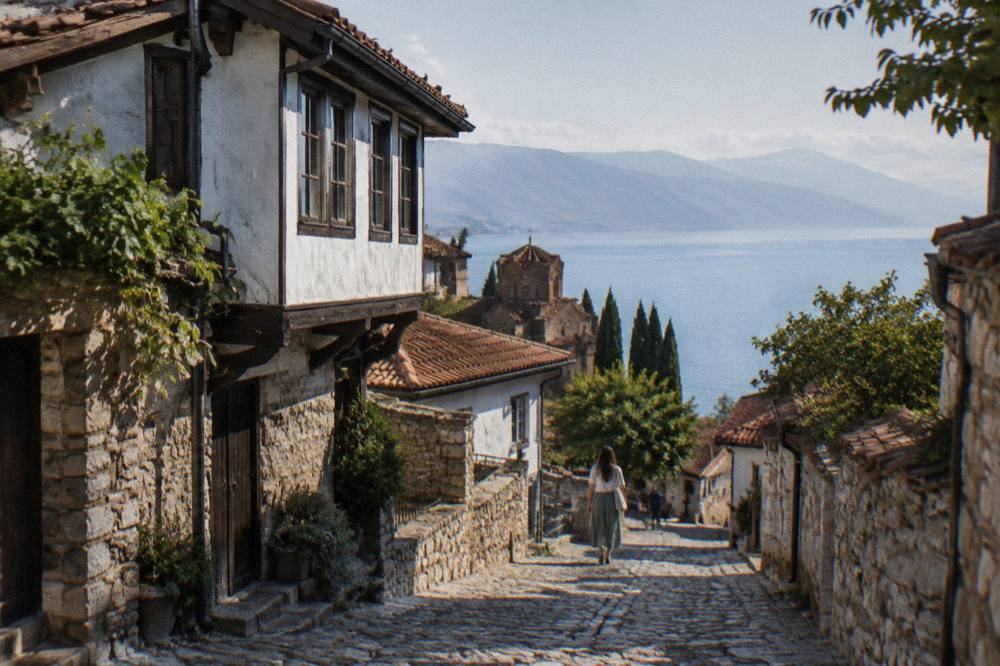
The swimming culture is different too. In Ohrid, swimming is a lake activity tied to beaches and jetties along the shore, and it pairs naturally with boats: the lake is the town's main open space. The site's guide to swimming in Lake Ohrid covers where that happens and what the water is like month by month, and the question is it possible to swim in Lake Ohrid answers the basics directly. On the Kotor side, swimming is sea swimming, with the salinity, tides and boat traffic that come with a bay that connects to open water.
| Month | Modelled Lake Ohrid Surface Temp (C) |
|---|---|
| January | 4.6 |
| February | 5.4 |
| March | 7.2 |
| April | 10.5 |
| July | 22.9 |
| August | 23.5 |
| October | 14.7 |
| November | 10.3 |
| December | 6.0 |
These lake figures are modelled aggregator values, not station readings, and May, June and September fall between the April and October marks on the same curve. The pattern matters more than any single digit: a lake that reads about 10.5 C in April does not become a swimming lake until early summer, while a sea bay in the same latitude band is already attracting swimmers by late spring.
Boats are the other half of Ohrid's water story. The classic day on the lake is a full-day cruise from Ohrid port towards St Naum with a stop at the Bay of Bones, the museum on water near Peshtani, and the Bay of Bones is one of the lake's signature sights precisely because it stands on piles above the water. You can Check availability for that trip, or read the wider guide to Lake Ohrid boats and ferries for the scheduled and seasonal options.
How Hard Is It To Reach Ohrid Compared With Kotor?
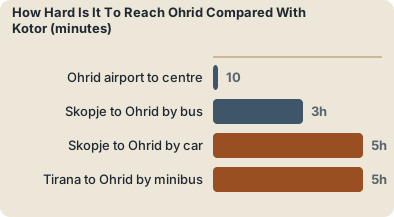
Ohrid is reached by air through Ohrid St Paul the Apostle Airport about 10 km from the centre, by bus in about 3 hours from Skopje about 170 km away, or by minibus from Tirana in roughly 3 to 3.5 hours including the border, while Kotor is reached by coastal road, most commonly through Podgorica or Dubrovnik airports and a drive along the bay. Ohrid is an inland hub with one seasonal airport; Kotor sits on a coastal corridor.
The Ohrid side is well documented. Ohrid St Paul the Apostle Airport, operated by TAV Macedonia, lies about 10 km from the town centre off the E65, and its flight schedule is strongly seasonal. From 2026, Wizz Air opened new routes including Milan Malpensa, Wroclaw and Katowice, and the airline has been reported as expected to base an aircraft at Ohrid. In 2025 the airport handled 263,869 passengers, 20.0 percent more than 2024 but still below 2023 and 2019. There is no regular public shuttle between the airport and the town.
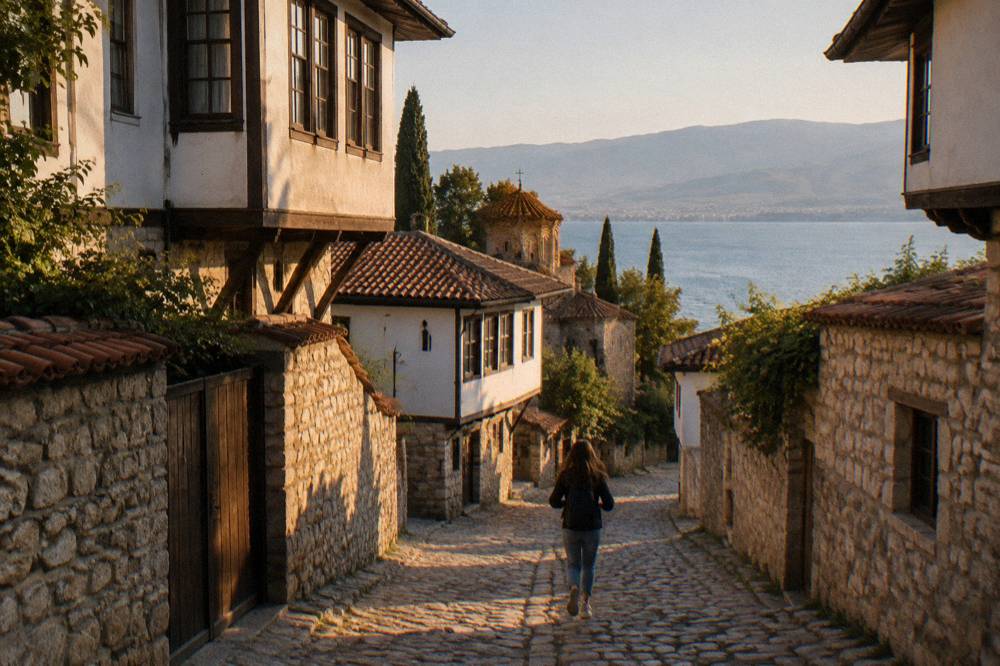
Overland, the main approaches are Skopje and Tirana. Buses from Skopje cover about 170 km in around 3 hours, with fares of roughly 850 to 950 MKD one way; driving takes about 2.5 hours over about 172 km with about 140 MKD in motorway tolls, and there is no passenger train to Ohrid and no domestic flight. From Tirana, minibuses run several times a day, taking roughly 3 to 3.5 hours including the border crossing at Qafe Thane / Kjafasan, at about 15 to 20 EUR one way. The site's guide to getting to Ohrid has the full breakdown.
| Route To Ohrid | Distance | Time | Typical Cost |
|---|---|---|---|
| Ohrid airport to centre | about 10 km | about 10 to 15 min | taxi about 600 to 800 MKD |
| Skopje to Ohrid by bus | about 170 km | about 3 h | 850 to 950 MKD |
| Skopje to Ohrid by car | about 172 km | about 2.5 h | about 140 MKD tolls |
| Tirana to Ohrid by minibus | via Qafe Thane border | 3 to 3.5 h | about 15 to 20 EUR |
Kotor's access pattern is the mirror image. The town has no airport of its own; arrivals flow in through Podgorica or Tivat by air or Dubrovnik from the north, and then by road along the shoreline of the bay. That makes Kotor part of a coastal chain, easy to combine with other seaside stops, while Ohrid is a destination you aim at, usually over a mountain road or through a seasonal airport.
The Kicevo to Ohrid motorway is worth knowing about if you drive: the Izvor to Vrbjani section of about 10 km was due to open in the coming months, with the full opening of the A2 expected in the first half of 2027. Until then, the last stretch into Ohrid remains ordinary road. None of this makes either town hard to reach; it just makes them different kinds of trip, an inland lake destination against a coastal one on a well-worn Adriatic route.
How Do The Old Towns Of Ohrid And Kotor Compare?
Ohrid's old town is a sprawling hillside of lanes climbing from the lake to Samuel's Fortress, dotted with churches, the Ancient Theatre and the Old Bazaar, while Kotor's old town is a compact walled grid at sea level with its fortifications climbing the slope behind. Ohrid's heritage is UNESCO-listed as a mixed natural and cultural property inscribed in 1979 and 1980; Kotor's old town is part of a UNESCO cultural listing of its own.
The two towns reward walking in different ways. In Ohrid, the walk is vertical: from the shore at the church of St John at Kaneo up through the lanes to the fortress walls, past Plaosnik and the Ancient Theatre, a structure dated to the late Hellenistic period whose first excavations began in 1935 and whose capacity reached about 5,000 after the epiteatron was added. The town's church density is its signature; UNESCO's listing notes the oldest Slav monastery at Plaosnik and a collection of more than 800 Byzantine-style icons from the 11th to the 14th century.
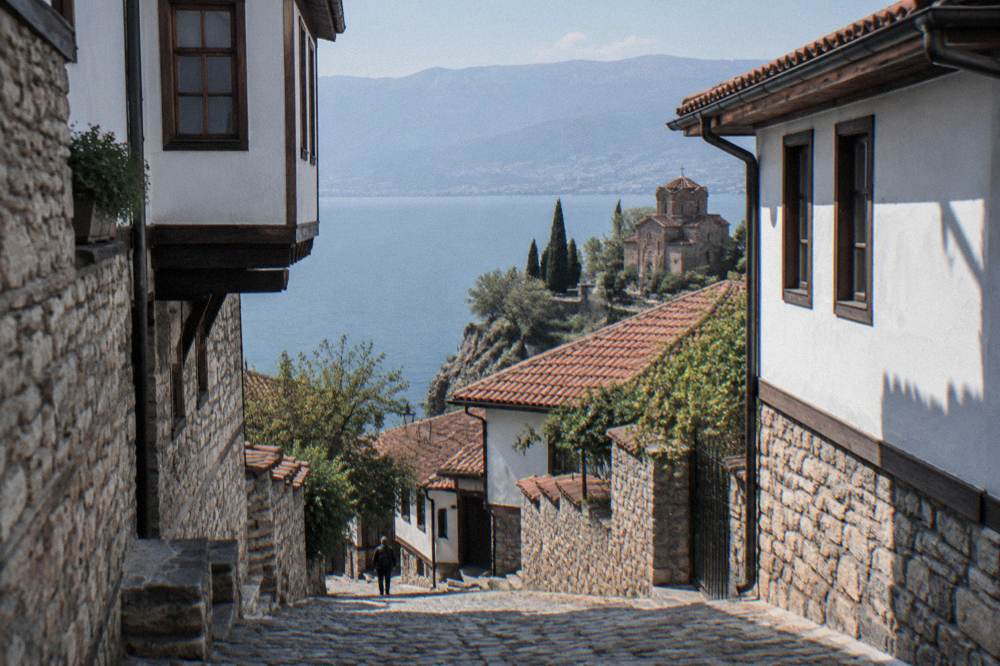
In Kotor, the walk is first enclosed and then vertical: the old town is a walled rectangle of squares and lanes at the water, and the famous climb is the fortress path above the walls. Ohrid spreads; Kotor contains. That difference shapes a day. Ohrid's old town asks for a full day of up-and-down between dispersed sights, which is exactly what the one day in Ohrid itinerary is built around, while a walled coastal town concentrates its sights inside a circuit you can cross in minutes.
Two practical notes for Ohrid worth planning around. Since summer 2026, streets in the old core such as Ilindenska, Kosta Abrash and Car Samoil have been restricted to residents under a new parking regime, with clamping reported for non-residents, so a car is a liability in the old town and the lanes are best treated as pedestrian. And the 2026 lake navigation rules introduced seasonal limits for swimmer safety: jet skis are banned between 1 July and 31 August from 11:00 to 19:00, and boats face night limits from early June through September and into October. Both rules are dated 2026 measures, not permanent law.
The museums tell a similar story of depth. The Institute and Museum Ohrid runs Robev Family House in the old town, the Icon Gallery at the Perivleptos complex and the Museum on Water at the Bay of Bones, all closed on Mondays, with winter schedules from 1 October to 30 April and summer schedules from 1 May. A walled coastal town leans on its fortifications and squares; Ohrid leans on a museum and church network spread across the hillside and the lake shore.
What About Money, Denars And Euros In Ohrid?
Ohrid uses the Macedonian denar (MKD), a currency the National Bank manages against the euro, with euros not legal tender in North Macedonia, while Kotor uses the euro as Montenegro's currency. The practical difference for a visitor is that Kotor involves no currency step at all and Ohrid does, with ATMs and exchange offices handling the conversion at rates tied to the National Bank's published middle rate.
The numbers around the denar are stable rather than dramatic. The National Bank's middle rate on 19 October 2026 was 1 EUR = 61.6633 MKD, and the bank's strategy of targeting the denar against the euro keeps that relationship tight, so a visitor is not exposed to wild swings between booking a trip and arriving. What catches people out is different: assuming the euro works everywhere. Euros are sometimes accepted informally in tourist areas, at poor rates, but the denar is the currency, and local costs such as museum tickets are quoted in it.
| Money Question | Ohrid | Kotor |
|---|---|---|
| Local currency | Macedonian denar (MKD) | euro |
| Euro legal tender | No, informally accepted at poor rates | Yes |
| Rate anchor | NBRM middle rate, 1 EUR = 61.6633 MKD on 19 Oct 2026 | none needed |
| Card and tipping norms | varies by business, agree taxi fares in advance | varies by business |
North Macedonia is not in the EU and not in Schengen, which matters for border formalities on the way in. Visa-free nationals can stay up to 90 days in any 180-day period; UK visitors can stay up to 3 months, need a passport valid at least 90 days after arrival, and registration with the local police within 48 hours is handled by hotels. Bulgaria and Romania became full Schengen members, land borders included, on 1 January 2025, but North Macedonia remains outside, so crossing into it is a real border crossing with passport checks.
For budgeting, the honest framing is descriptive. Ohrid is a non-euro destination where local costs, buses, museum tickets, market food, are denominated in denars, and bookable tours and transfers are commonly quoted in euros or dollars on the operators' listings. Kotor is a euro destination inside the euro payment system. Whether one works out cheaper for a given traveller depends on the trip, and no cross-town price comparison is stated here as fact.
Which Has The Weather You Want, Ohrid Or Kotor?
Ohrid's modelled climate normals, ERA5 reanalysis for 1991 to 2020, show mean daily highs of 27.1 C in July and 27.6 C in August with cool nights around 18 to 19 C at about 693 m elevation, while a coastal bay town runs on a maritime pattern moderated by the sea. Ohrid's weather is mountain-lake weather: warm days, cool nights, and a summer rainfall minimum in July and August of 34.7 and 32.9 mm.
The altitude is the whole story on the Ohrid side. The old town sits hundreds of metres above sea level, and the modelled normals reflect it: January averages a high of 5.0 C and a low of -0.8 C, April 14.6 C and 6.3 C, and December 6.2 C and 0.9 C. Summer nights that drop to 18.3 C in July are a mountain signature, and they are why lake evenings in Ohrid feel different from bay evenings at sea level. These are modelled ERA5 reanalysis values for a grid cell near the town, not a station record.
| Month | Mean High (C) | Mean Low (C) | Rain (mm) |
|---|---|---|---|
| Jan | 5.0 | -0.8 | 76.5 |
| Feb | 6.3 | 0.0 | 74.3 |
| Mar | 10.0 | 2.5 | 80.5 |
| Apr | 14.6 | 6.3 | 82.4 |
| May | 19.5 | 10.8 | 70.8 |
| Jun | 24.2 | 15.2 | 43.1 |
| Jul | 27.1 | 18.3 | 34.7 |
| Aug | 27.6 | 19.0 | 32.9 |
| Sep | 22.4 | 14.9 | 62.4 |
| Oct | 17.4 | 10.3 | 76.0 |
| Nov | 11.5 | 5.3 | 90.4 |
| Dec | 6.2 | 0.9 | 92.6 |
Read the table rather than the folklore. November carries 90.4 mm of rain and December 92.6 mm; July carries 34.7 mm and August 32.9 mm. Snow reaches the Galicica ridge above town and can close the park's main road in a typical January to March window, while the town itself sits low enough that winter is cold rather than alpine. The full month-by-month picture is in the site's Ohrid weather guide, and the seasonal strategy question is covered in when is the best time to visit Lake Ohrid.
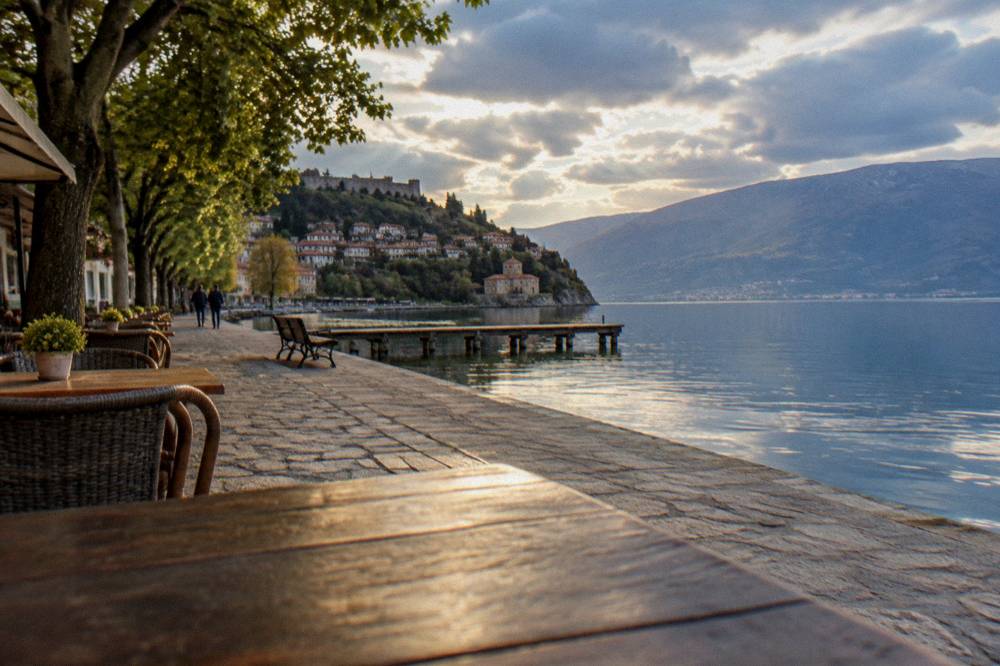
Kotor's pattern, in plain terms, is coastal Adriatic: the sea buffers both extremes, and the summer peak arrives with the yachts and the cruise calls. Ohrid's summer, by contrast, belongs to the lake season, June to September with August the high point, boats running to St Naum roughly May to October and a reduced schedule outside that. Whichever you choose, the season question is answered in the site's Ohrid in summer guide.
Can You Visit Ohrid And Kotor On The Same Trip?
Yes, Ohrid and Kotor can be combined on one trip, and the practical route runs between them overland with a border crossing, since Ohrid lies inland in North Macedonia and Kotor lies on the Montenegrin coast. The pairing works well as a lake-then-coast or coast-then-lake itinerary, but it is a real drive across mountainous terrain with at least one international border, so it deserves its own day rather than a hop.
The site's own guide to the Ohrid to Kotor route covers the corridor in detail. The logic of the pairing is simple: the two towns answer different questions, and a traveller with a week or more can take the lake first, swim in fresh water, walk the church lanes, then continue west to the bay for the sea leg. In the other direction, the coast comes first and the lake becomes the cool, high finish.
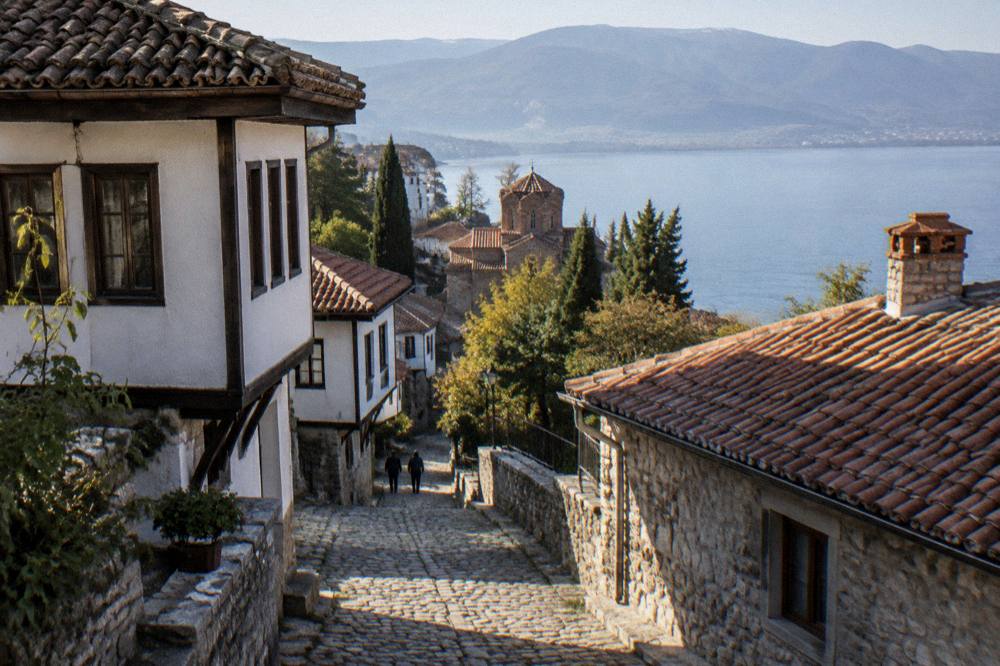
Planning the Ohrid half well is where most of the value sits. Five days is a comfortable frame for the town plus its day trips, and the five days in Ohrid itinerary shows how the pieces fit: the old town, the lake boats, and excursions such as Lake Prespa, Pogradec over the Albanian border or Mavrovo National Park. Ohrid also pairs naturally with Struga on the lake's outflow, a comparison drawn out in Ohrid vs Struga, and with the hiking above both lakes in Galicica National Park, which lies between Lake Ohrid and Lake Prespa as North Macedonia's second national park, proclaimed in 1958, with the Magaro peak at 2,254 m.
Safety and practicality hold up on both legs. The US State Department's advisory level for North Macedonia stands at Level 1, Exercise Normal Precautions, and emergency numbers in the country are ambulance 194, police 192 and roadside assistance 196. The site's is Ohrid safe guide deals with the question in full for the lake half of the trip.
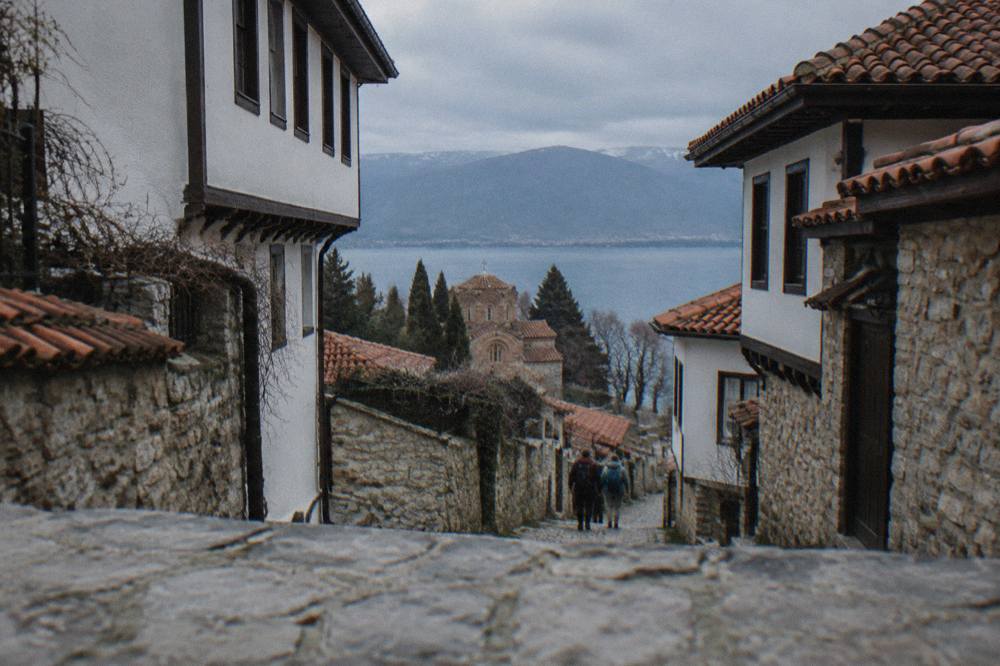
The choice between lake and bay, in the end, is a choice about what water means on your trip. Ohrid delivers a high mountain lake with a mixed UNESCO inscription, church lanes that climb, fresh-water swimming that peaks in August, and a denar economy on the edge of the EU. Kotor delivers sea, walls and a bay that opens to the Adriatic. Many travellers stop choosing and do both.
Common Questions About Ohrid Vs Kotor
Is Ohrid cheaper than Kotor?
No cross-town price comparison is stated as fact here. Structurally, Ohrid uses the Macedonian denar with local costs denominated in MKD and tours quoted in euros or dollars on operators' listings, while Kotor uses the euro. What a trip costs depends on the season and the choices made in each place.
Is Ohrid on the sea like Kotor?
No. Ohrid is an inland town in North Macedonia on Lake Ohrid, a freshwater mountain lake whose surface sits at about 693 m above sea level. Kotor is on the Adriatic coast of Montenegro at the head of a bay. The two settings are lake and sea respectively.
Which is better for swimming, Ohrid or Kotor?
Ohrid offers fresh-water swimming in a lake whose modelled surface temperature reaches about 22.9 C in July and 23.5 C in August, with the comfortable season from roughly July into September. Kotor offers salt-water swimming in a sheltered bay. It is a preference between lake water and sea water, not a ranking.
Can you get from Ohrid to Kotor by public transport?
The route between Ohrid and Kotor runs overland across at least one international border, since North Macedonia is outside the EU and Schengen and Montenegro is a separate country. The site's guide to the Ohrid to Kotor route covers the practical options for the corridor.
Is Ohrid or Kotor better in summer?
Ohrid's modelled summer normals show highs of 27.1 C in July and 27.6 C in August with nights around 18 to 19 C, plus the lake swimming season and boats to St Naum running roughly May to October. Kotor runs on a coastal summer pattern. Ohrid suits a mountain-lake summer; Kotor a coastal one.
Do both towns have UNESCO status?
Yes, in different categories. The Natural and Cultural Heritage of the Ohrid Region is a mixed property inscribed in 1979 and 1980 and extended to the Albanian part in 2019. On 24 July 2026 the World Heritage Committee decided not to place it on the List of World Heritage in Danger, asking instead for a joint report by 1 February 2029. Kotor's old town belongs to its own UNESCO cultural listing.