Ohrid To Kotor: Routes, Border And Journey Time
There is no single ticket from Ohrid to Kotor: the journey is built from stages, and the details for the Ohrid end of it are set out here stage by stage.
Short answer
The practical route runs Ohrid to Tirana by minibus (about 3 to 3.5 hours including the border, roughly EUR 15 to 20), then Tirana to Kotor with an Albanian operator; alternatively Ohrid to Skopje by bus or car, then onwards. North Macedonia is outside the EU and Schengen, so two hard borders sit on any route.
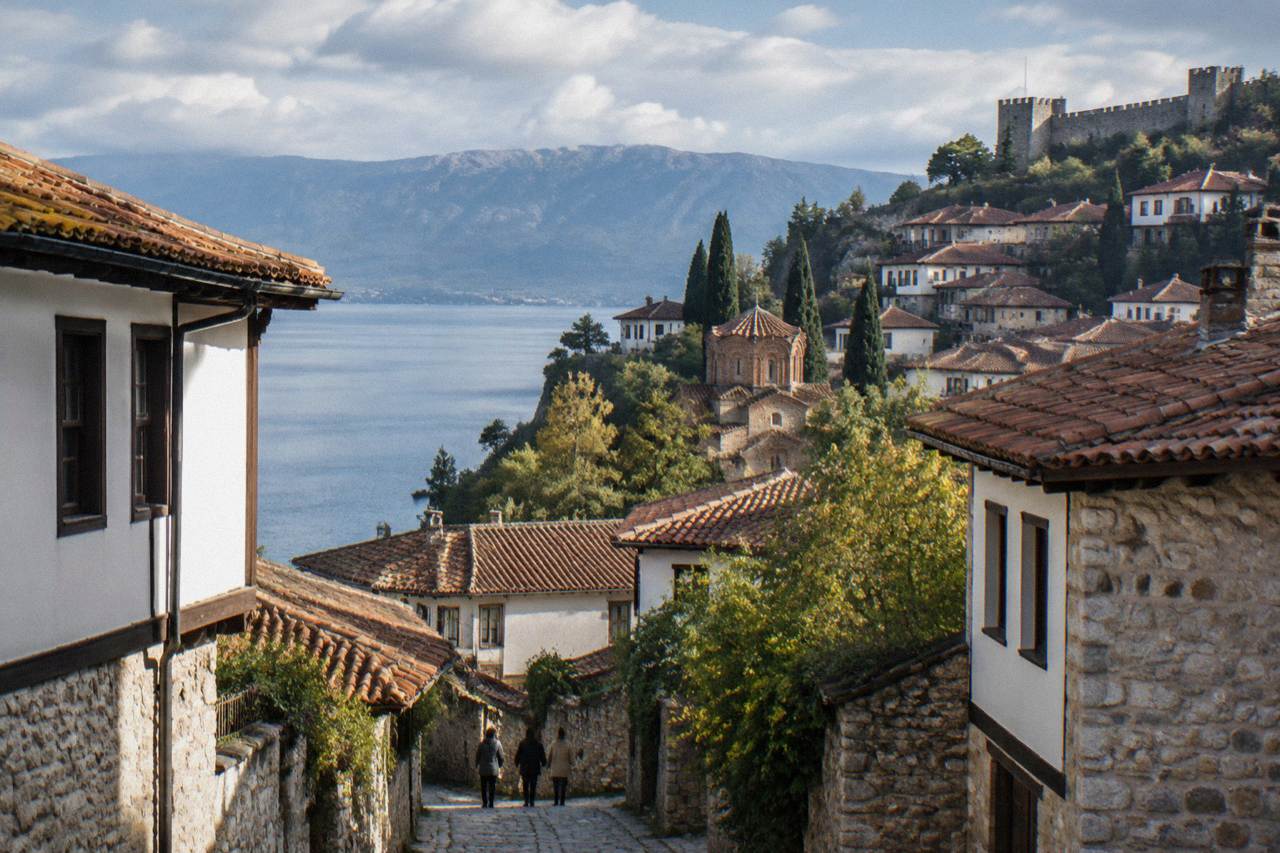
Ohrid sits on Lake Ohrid in North Macedonia at about 693 m above sea level, and Kotor sits on the Adriatic coast of Montenegro: two UNESCO-listed towns joined by a journey that crosses at least two international borders. The Ohrid Travel Guide sets out the stages of the journey, the border rules that shape the timing, and the Ohrid-side sights worth seeing before a departure south. The honest headline is simple: no single bus, train or flight links the two towns directly, and the trip is assembled from shorter legs, each with its own operators, currency and border post.
What Does The Ohrid To Kotor Journey Actually Involve?
The Ohrid to Kotor journey is a three-stage trip: an outbound leg from Ohrid to a hub city with scheduled international services, a hub-city connection, and an arrival leg into Kotor, crossing the North Macedonia border and then the Albania to Montenegro border, with North Macedonia outside both the EU and Schengen, so each crossing is a full passport check.
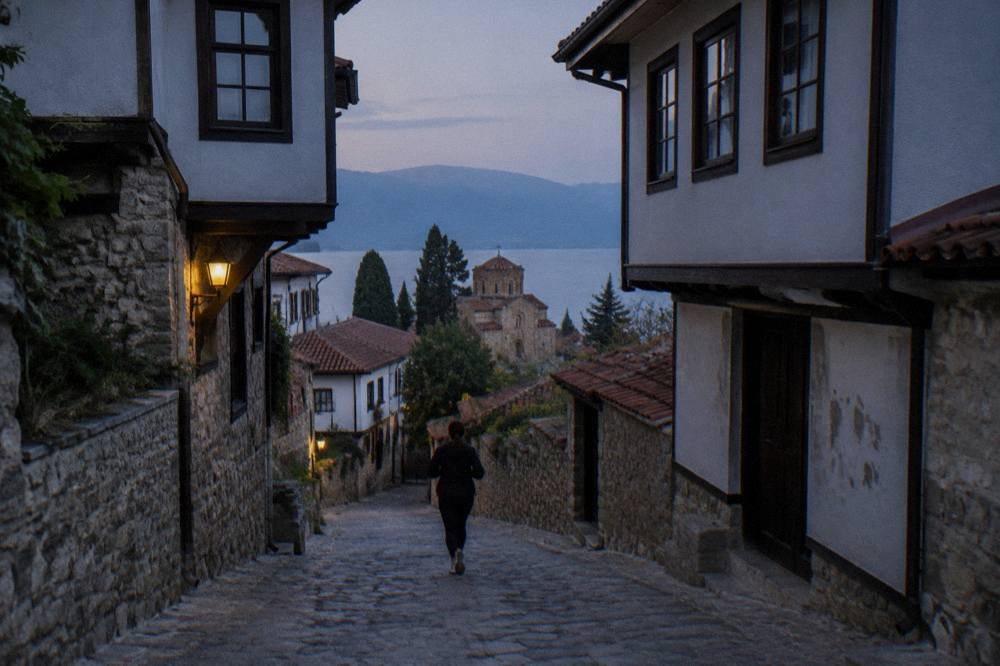
The building blocks sit on the Ohrid end. Ohrid connects by road to two hubs that matter for Montenegro: Tirana in Albania and Skopje in North Macedonia. From Tirana, Albanian and Montenegrin operators run services toward the coast, and the same city anchors the semi-private and private Ohrid day-trip products in this site's roster. From Skopje, connections run north and west through North Macedonia's motorway network. There is no passenger train to Ohrid at all, and no domestic flight between Ohrid and Skopje, so every option starts on a road.
Want the freedom to drive the corridor yourself? Book a rental car here.
Two facts frame the planning. First, Ohrid's own airport, St Paul the Apostle, is about 10 km from the centre and its route map is heavily seasonal, so flying out toward Montenegro via a hub is rarely the natural path. Second, the Kicevo to Ohrid motorway section remains under construction, with the full opening reported for the first half of 2027, which affects drive times on the Skopje corridor more than the Albanian one.
The stage figures that are documented, with their sources, are these:
| Stage | Mode | Journey Time | Fare | Notes |
|---|---|---|---|---|
| Ohrid to Tirana | Minibus (furgon), about 5 to 7 per day | About 3 to 3.5 hours including the border | About EUR 15 to 20 one way | Crosses at Qafe Thane / Kjafasan; departs mostly from Tirana South/Regional terminal on the return |
| Ohrid to Skopje | Intercity bus, several daily | About 3 hours | 850 to 950 MKD one way | About 170 km |
| Ohrid to Skopje | Car | About 2.5 hours | About 140 MKD in tolls | About 172 km; tolls paid at each plaza, no vignette |
| Ohrid town to Ohrid Airport | Taxi | Short transfer | About 600 to 800 MKD (reported) | Airport is about 10 km from the centre |
How Do You Get From Ohrid To Tirana, The Main Gateway?
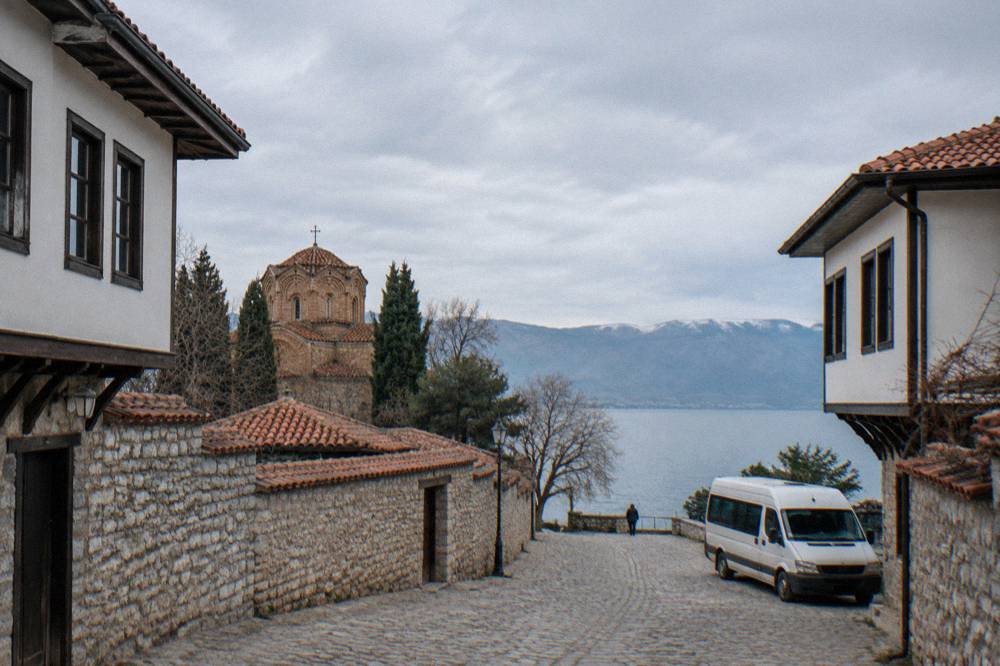
The standard gateway leg is the Tirana to Ohrid minibus: roughly 5 to 7 departures a day, about 3 to 3.5 hours including the border, about EUR 15 to 20 one way, crossing at Qafe Thane or Kjafasan, with departures concentrated at Tirana's South and Regional terminal, and the same services run the reverse direction from Ohrid.
These are the figures a published guide for the region reports, and they line up with the day-trip economics visible in the tour roster: several of the highest-volume Ohrid products on this site start in Tirana or Durres, which only makes sense if the corridor carries steady traffic. That is worth internalising, because a traveller in Ohrid planning Kotor can borrow the corridor in reverse. Book a seat to Tirana, overnight there if the onward coast service leaves early, and complete the trip the next day.
For a full account of the corridor in the other direction, read the Tirana to Ohrid transport guide, and for the return day trip as a product, see the Tirana day trip page. If the hub plan is Skopje instead, the Ohrid bus station guide and the Ohrid car rental guide cover the practicalities of the northern corridor, and how to get around the wider region sets out how the pieces connect.
One Ohrid-based product belongs in this conversation precisely because it is not one: a private Tirana departure tour covers Ohrid and the lake as a destination, which underlines that the Tirana corridor is the busiest international link the town has. The trio below shows how the corridor, the old town and the lake combine.
Before leaving Ohrid on any long road day, a short orientation walk pays for itself in saved wandering, and the half-day city tour is the roster's dedicated option for exactly that.
What Do The Borders And Entry Rules Mean For Timing?
Every Ohrid to Kotor route crosses two external borders, because North Macedonia is outside the EU and Schengen and so are Albania and Montenegro's arrangements in practice for land crossings: visa-free nationals get up to 90 days in any 180-day period in North Macedonia, UK visitors get up to 3 months with a passport valid at least 90 days after arrival, and hotels handle the police registration required within 48 hours.
Those entry rules come from the North Macedonian foreign ministry and UK travel advice, and they matter for timing because land borders on this corridor work on passport stamps and checks, not frictionless Schengen movement. A useful comparison point: Bulgaria and Romania joined Schengen fully, land borders included, on 1 January 2025, which changed crossings on their frontiers but nothing on the Ohrid to Tirana road. On the St Naum to Albania crossing at Tushemisht, the gap between posts is walked by pedestrians and the monastery sits about 4 km from the border, a detail that matters only for lakeside detours, not for the Kotor run.
Three practical rules complete the picture:
- The currency changes twice on any route: denar in North Macedonia, lek in Albania, euro in Montenegro, so change or withdraw at each stage rather than carrying one currency through.
- Emergency numbers in North Macedonia are ambulance 194, police 192 and roadside assistance 196.
- Driving rules in North Macedonia include headlights on day and night and a green card for the vehicle, and motorway tolls are paid per plaza in cash or card, with no vignette.
For the full entry picture, including the 15-day rule for holders of certain valid multiple-entry visas, see the North Macedonia visa and entry guide, and for money handling across the border chain, the denar and money guide. The exchange-rate anchor is the National Bank's middle rate, which on 19 October 2026 stood at 1 EUR = 61.6633 MKD, 1 USD = 54.7972 MKD and 1 GBP = 73.0738 MKD, with the denar de facto pegged to the euro, so the Ohrid leg's costs are stable in euro terms.
The mid-journey decision point, where a traveller weighs a guided Ohrid experience against pressing on south, is where a booking with free cancellation earns its keep.
When Is The Best Time Of Year To Make The Ohrid To Kotor Trip?
The climate data points to late June through early July or September as the comfortable window: ERA5 reanalysis normals for Ohrid, 1991 to 2020, put July and August mean daily highs at 27.1 C and 27.6 C with the lowest monthly rainfall of the year, 34.7 mm and 32.9 mm, while May and September sit at 19.5 C and 22.4 C with 70.8 mm and 62.4 mm of rain.
Those figures are modelled reanalysis values for the grid cell over Ohrid at about 701 m, not a weather-station record, and they describe only the Ohrid end of the route; the Montenegrin coast runs on its own, milder maritime regime.
| Month | Mean Daily High (C) | Mean Daily Low (C) | Rain (mm) |
|---|---|---|---|
| Jan | 5.0 | -0.8 | 76.5 |
| Feb | 6.3 | 0.0 | 74.3 |
| Mar | 10.0 | 2.5 | 80.5 |
| Apr | 14.6 | 6.3 | 82.4 |
| May | 19.5 | 10.8 | 70.8 |
| Jun | 24.2 | 15.2 | 43.1 |
| Jul | 27.1 | 18.3 | 34.7 |
| Aug | 27.6 | 19.0 | 32.9 |
| Sep | 22.4 | 14.9 | 62.4 |
| Oct | 17.4 | 10.3 | 76.0 |
| Nov | 11.5 | 5.3 | 90.4 |
| Dec | 6.2 | 0.9 | 92.6 |
Season also cuts the other way: the modelled lake surface temperature peaks in August at about 23.5 C, and the bathing-water testing that runs through the summer, with most samples rated Excellent in the 2026 results from the Institute of Public Health, belongs to the warm half of the year. If the trip is really a two-base holiday, the best time to visit Ohrid guide and the lake swimming season answer work through the trade-offs month by month, and the Ohrid weather guide carries the full normals.
Festival dates can anchor the Ohrid end of the trip. The 66th Ohrid Summer Festival opened on 12 July 2026 at the Ancient Theatre and closes by tradition on 20 August; the 65th Balkan Festival of Folk Songs and Dances ran 3 to 6 July 2026; and the Ohrid Water Festival ran 12 to 30 August 2026, including the 25 km St Naum to Ohrid harbour swimming marathon on 22 August. The 2027 dates have not been announced.
| Event | 2026 Dates | Detail |
|---|---|---|
| Struga Poetry Evenings, 65th edition | 24 to 29 June | About 70 poets; Struga, at the lake's outflow |
| Balkan Festival of Folk Songs and Dances, 65th edition | 3 to 6 July | Opened 3 July with the Tanec ensemble |
| Ohrid Summer Festival, 66th edition | 12 July to 20 August | Opening gala at the Ancient Theatre |
| Ohrid Water Festival | 12 to 30 August | Includes the 33 km SUP marathon (26 Aug) |
| Ohrid Swimming Marathon, 39th edition | 22 August | 25 km from St Naum to Ohrid harbour |
What Should You See In Ohrid Before Heading South?
The sights to settle before departure are the ones the museum institute runs: Robev Family House on Tsar Samoil Street, the Bay of Bones museum on water at Peshtani, and the Icon Gallery at the Perivleptos complex, all on the same ticket structure of 150 MKD for foreign visitors, 120 MKD for domestic and a reported 60 MKD child and student rate, with each site closed on Mondays and running winter hours from 1 October to 30 April.
That schedule structure is the single most useful planning fact in the old town, because the three sites share a rhythm: shorter winter hours, longer summer hours from 1 May, and a Monday closure. The differences are in the shift patterns, set out below from the museum institute's own pages. The full index of guides sits on Ohrid Travel Guide.
| Site | Winter Hours (1 Oct to 30 Apr) | Summer Hours (from 1 May) | Closed |
|---|---|---|---|
| Robev Family House, Tsar Samoil St 62 | 09:00 to 15:30 | Two shifts, 09:00 to 15:30 and 13:30 to 20:00 | Monday |
| Bay of Bones / Museum on Water, Gradishte, Peshtani | 09:00 to 15:30 | 09:00 to 16:30 (to 30 Sep) | Monday |
| Icon Gallery, Perivleptos complex | 09:00 to 14:00 | 09:00 to 17:00 | Monday |
Beyond the institute's sites, the roster of Ohrid experiences divides neatly into what fits before a morning departure and what needs a full day. A short old town walk fits any itinerary; a lake boat trip to the Bay of Bones and St Naum needs the better part of a day; and the St Naum monastery itself, with the rowboat ride through the Crn Drim springs at about 5 EUR and entrance at 150 MKD per person as a cruise operator's listing states, is the classic full-day send-off. For the deeper planning, how many days you need in Ohrid and the things to do overview lay out the sequencing, and the lake itself explains what the water holds, including the endemic species UNESCO counts at more than 200, seventeen of them fish.
Two day-long products from the site's roster fit the "last full day in Ohrid" slot particularly well, one private and covering the town, one on the water covering the southern lake and monastery shore.
For independent travellers, the lake's scheduled cruising is documented separately in the Lake Ohrid boats and ferries guide, including the Boat Armada full-day cruise from Ohrid port to St Naum, seven hours, from 1,200 den for an adult and 600 den for a child.
How Much Should The Ohrid End Of The Trip Cost?
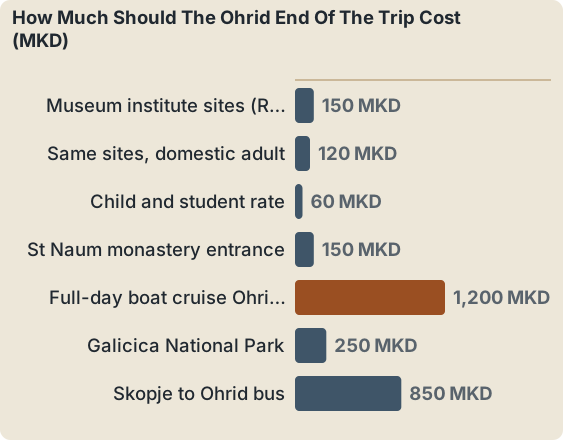
Budget the Ohrid end in denar: museum sites at 150 MKD each for foreign visitors, a St Naum monastery entrance of 150 MKD per person and a springs rowboat at about 5 EUR per a cruise operator's listing, a full-day port-to-St Naum cruise from 1,200 den adult, Galicica National Park at 250 MKD per vehicle or 100 MKD on foot, and Skopje buses at 850 to 950 MKD, with the denar pegged to the euro around 61.5 MKD.
The park fee carries one trap the sources correct directly: 250 MKD is charged per vehicle with no per-passenger fee, and the 100 MKD rate applies only to someone entering on foot from the Ohrid-side gate. Galicica, North Macedonia's second national park, founded in 1958, spans 22,750 ha between Lake Ohrid and Lake Prespa with Magaro peak at 2,254 m, and heavy snow can close the main road, typically January to March, which matters for anyone routing the trip through the mountains in winter. The cost and budget guide builds the full daily picture.
| Item | Figure | Source Basis |
|---|---|---|
| Museum institute sites (Robev House, Bay of Bones, Icon Gallery), foreign adult | 150 MKD | Institute ticket page |
| Same sites, domestic adult | 120 MKD | Institute ticket page |
| Child and student rate | 60 MKD | Reported on the institute's page |
| St Naum monastery entrance | 150 MKD per person | Cruise operator's listing |
| Rowboat through the Crn Drim springs | About 5 EUR | Cruise operator's listing |
| Full-day boat cruise Ohrid port to St Naum | From 1,200 den adult, 600 den child | Boat Armada listing |
| Galicica National Park | 250 MKD per vehicle; 100 MKD on foot | Park guide |
| Skopje to Ohrid bus | 850 to 950 MKD | Regional transport guide |
Ohrid Or Kotor: Which Town Deserves The Longer Stay?
Ohrid rewards the longer stay on the strength of depth rather than spectacle-by-the-hour: the UNESCO property here is mixed, inscribed 1979 for nature and 1980 for culture and extended to the Albanian part in 2019, covering about 94,729 ha, with a lake that has existed about two to three million years, over 200 endemic species, and a built heritage that UNESCO describes through the oldest Slav monastery and more than 800 Byzantine-style icons from the 11th to the 14th century.
That is the measured case, and it is a different kind of claim than Kotor's, which rests on a fjord-like bay and a walled Venetian old town. The comparison deserves its own page: Ohrid versus Kotor runs the two towns head to head, and Ohrid versus Skopje does the same for the capital. The practical answer for a two-town itinerary is usually days here, a day there, and the corridor between them is short enough that the order can follow the flight schedules: Ohrid's airport carries seasonal Wizz Air routes including Milan Malpensa from 30 March 2026, Wroclaw and Katowice from June 2026, with a based aircraft expected, while the region's rail map offers nothing on this corridor at all.
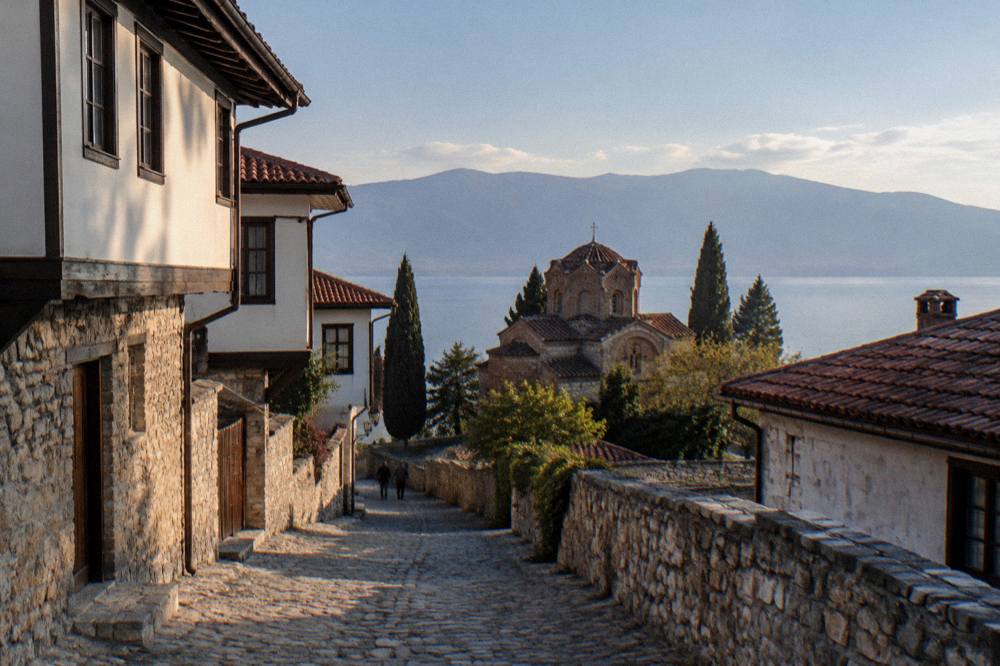
For staying put rather than passing through, where to stay in Ohrid maps the neighbourhoods, and the neighbourhoods overview explains how the old town climbs from the lake toward the fortress. If the trip is part of a longer Balkan loop, the Thessaloniki route guide covers the southern Greek corridor from the same starting point, and for mobility limits on these steep lanes, the Ohrid accessibility guide is honest about the terrain.
Before the second set of picks, the standing warning about safety on this corridor is a short one: the US State Department advisory for North Macedonia stands at Level 1, Exercise Normal Precautions, and the is Ohrid safe guide works through the local detail.
What Can Complicate The Road Between Ohrid And Kotor?
Three documented complications shape the drive: the Kicevo to Ohrid motorway remains under construction with full opening reported for the first half of 2027, a resident-only parking regime took force on old-town streets including Ilindenska, Kosta Abrash and Car Samoil from summer 2026 with clamping for non-residents, and 2026 lake navigation limits ban jet skis from 1 July to 31 August between 11:00 and 19:00 and restrict boats at night from early June through September under a government decision dated 2 June 2026.
Each of those is a dated 2026 fact rather than a permanent rule, and each touches a different stage. The motorway affects the Skopje corridor, where about 10 km of new road on the Izvor to Vrbjani section was reported as due in the coming months. The parking regime affects anyone driving into the old town to load or unload before departure. The navigation limits affect anyone booking an evening boat experience as a farewell, since night boating is restricted from 3 June to 31 August between 21:00 and 05:00, and from 1 to 30 September between 20:00 and 06:00, with a further October limit. On the water itself, the 2026 bathing tests rated nearly every sampled point Excellent or Good, with Grashnica beach the physico-chemical exception at Class III, and the lake boats and ferries guide tracks what that means for schedules. Cycling the corridor is its own project, covered in the Lake Ohrid by bike day trip.
A final reassurance for the booking stage: the products named here carry free cancellation and, where offered, pay-later options on the operator's live listing, so the road plan can be secured before every border detail is settled, and the classic pre-departure walk can be held with Check availability open in another tab.
Common Questions About Travelling From Ohrid To Kotor
Is there a direct bus from Ohrid to Kotor?
No direct service links the two towns: the journey runs through a hub, most practically Tirana, using the Ohrid to Tirana minibus corridor of roughly 5 to 7 departures a day, about 3 to 3.5 hours and about EUR 15 to 20 one way, then an onward Albanian or Montenegrin service to Kotor.
How long does the Ohrid to Kotor journey take?
Count it in stages: about 3 to 3.5 hours Ohrid to Tirana including the border, then the Tirana to Kotor leg on an operator whose schedule this site has not confirmed, plus border time at Albania's crossing with Montenegro; as a rule plan an overnight in Tirana rather than a same-day guarantee.
Do I cross the Schengen border between Ohrid and Kotor?
No. North Macedonia, Albania and Montenegro are all outside Schengen on this corridor, so every crossing is a full passport check; Bulgaria and Romania became full Schengen members, land borders included, on 1 January 2025, but that changes nothing on the Ohrid to Kotor road.
What currency do I need on the route?
Three: Macedonian denar in Ohrid, where the National Bank's middle rate on 19 October 2026 was 1 EUR = 61.6633 MKD with the denar de facto pegged to the euro; Albanian lek in Tirana; and euro in Montenegro, where Kotor prices are quoted directly in euro.
Can I drive from Ohrid to Kotor with a rental car?
Driving is documented on the Ohrid side: headlights on day and night, a green card for the vehicle, and tolls paid at each plaza with no vignette, about 140 MKD on the Skopje corridor; confirm cross-border permission with the rental company before committing, since Ohrid rental desks' cross-border policies remain unclear.
Is Kotor worth adding to an Ohrid trip?
Both towns sit on UNESCO lists, Ohrid as part of a mixed property of about 94,729 ha inscribed 1979 and 1980 and extended in 2019, and the two reward comparison rather than substitution; the head-to-head case is set out in the Ohrid versus Kotor guide.