Ohrid Old Bazaar: Shops, Cafes And Craft Streets
The Old Bazaar sits in the old town of Ohrid, North Macedonia, between the lanes that climb toward Samuel's Fortress and the shore of Lake Ohrid, a freshwater mountain lake at about 693 m above sea level inside a UNESCO mixed heritage site.
Short answer
The Old Bazaar is the historic market street of Ohrid's old town, a short walk from the lake shore, the Ancient Theatre and Samuel's Fortress, with craft shops, pearl workshops and cafes along stone lanes. Museum sites around it charge 120 den domestic and 150 den foreign tickets, and the whole area is covered on foot.
The Old Bazaar is the market quarter of Ohrid, a lakeside town in North Macedonia on the shore of Lake Ohrid, a freshwater mountain lake that sits at about 693 m above sea level. The whole region, town and lake together, is inscribed as the UNESCO mixed site "Natural and Cultural Heritage of the Ohrid Region", added in 1979 and 1980 and extended to the Albanian side in 2019. This page on Ohrid Travel Guide covers the bazaar streets themselves, the museum sites that surround them, what entry costs in denar, and how the quarter fits into a walk through the old town.
What Is The Old Bazaar In Ohrid?
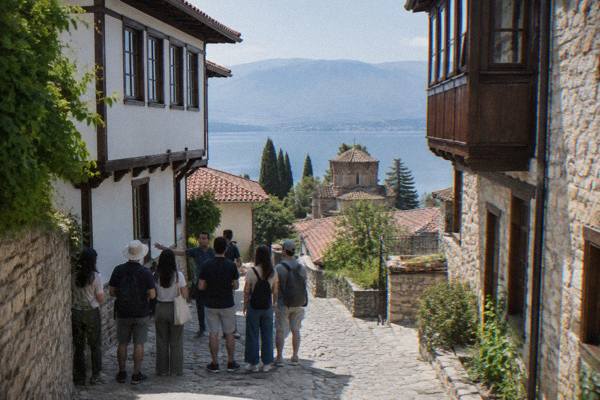
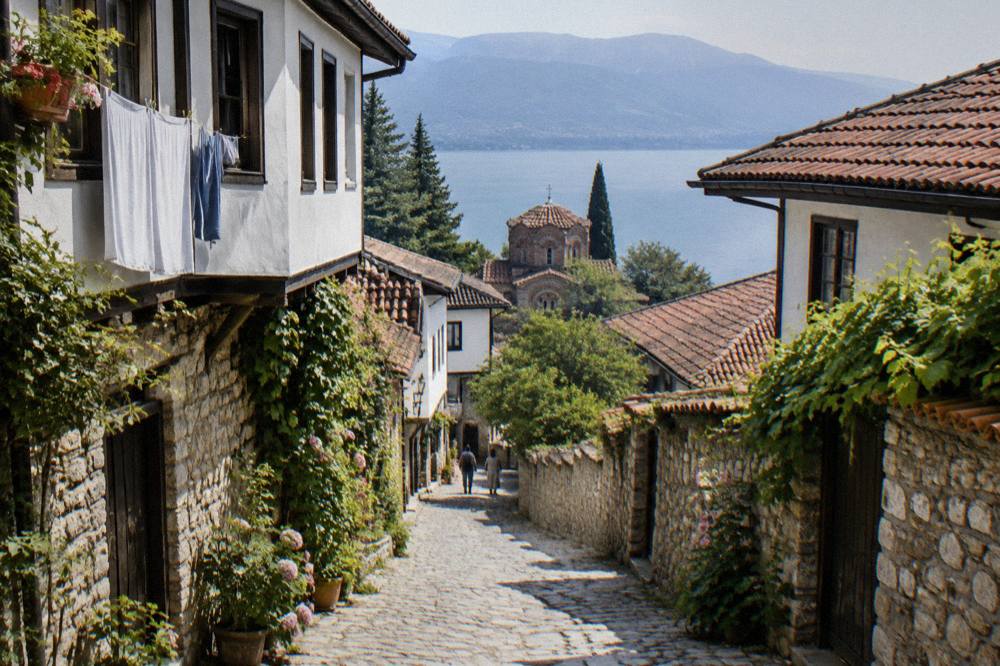
The Old Bazaar is the historic market quarter at the heart of Ohrid's old town in North Macedonia, a lane of small shops and workshops sitting below Samuel's Fortress and a short walk from the shore of Lake Ohrid, the freshwater mountain lake that gives the town its setting. The bazaar belongs to the UNESCO inscribed Ohrid region, and everything in and around it is reached on foot, since the old town climbs from the water up toward the fortress.
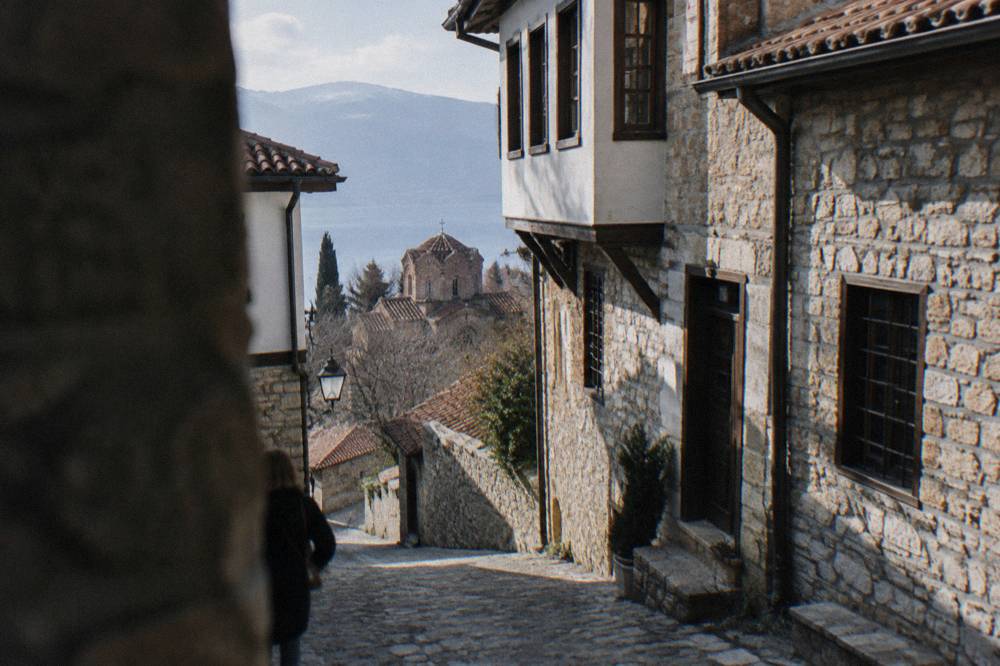
Ohrid's old town is compact and built for walking. The lanes rise from the lake shore to the fortress walls above, and the Old Bazaar sits within that slope, surrounded by the churches, museums and gates that make the town a single continuous sightseeing circuit. The Ancient Theatre, a late Hellenistic structure first excavated in 1935 whose capacity rose to about 5,000 after the epiteatron was added, lies within the same upper old-town area, and the fortress walls crown the hill above it all.
The bazaar's role in that circuit is practical. It is the quarter where the sightseeing day meets food, crafts and shopping, and where the steep lanes level out between the lake and the upper monuments. Visitors planning the wider town should start with the things to do in Ohrid overview, then use this page for the market quarter specifically.
Where Does The Old Bazaar Sit Within The Old Town?
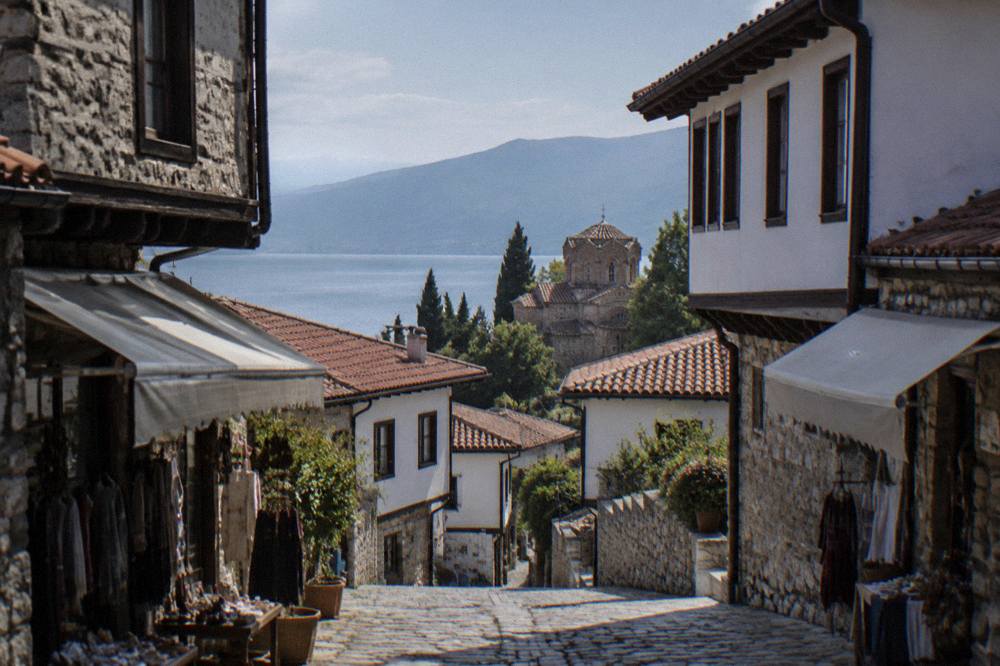
The Old Bazaar sits inside Ohrid's old town, between the lake shore below and Samuel's Fortress above, with the Upper Gate area connected to the fortress zone and the whole descent to the water managed on foot along stone lanes. Nothing in this quarter needs transport: the old town is a pedestrian landscape that runs from the water's edge at about 693 m above sea level up to the fortress walls on the hill.
The geography matters for planning. Ohrid's old town is a single hillside, and the bazaar sits mid-slope, which makes it the natural hinge of any walking day. A route can start at the shore, climb through the bazaar lanes, reach the fortress and the theatre at the top, and come back down past the churches toward the water. The boardwalk along the shore marks the bottom of that loop.
Two practical notes from 2026 shape a visit. A resident-only parking regime applies to old-town streets including Ilindenska, Kosta Abrash and Car Samoil from summer 2026, with clamping reported for non-residents, so a car is a liability in these lanes; the parking guide covers where to leave one.
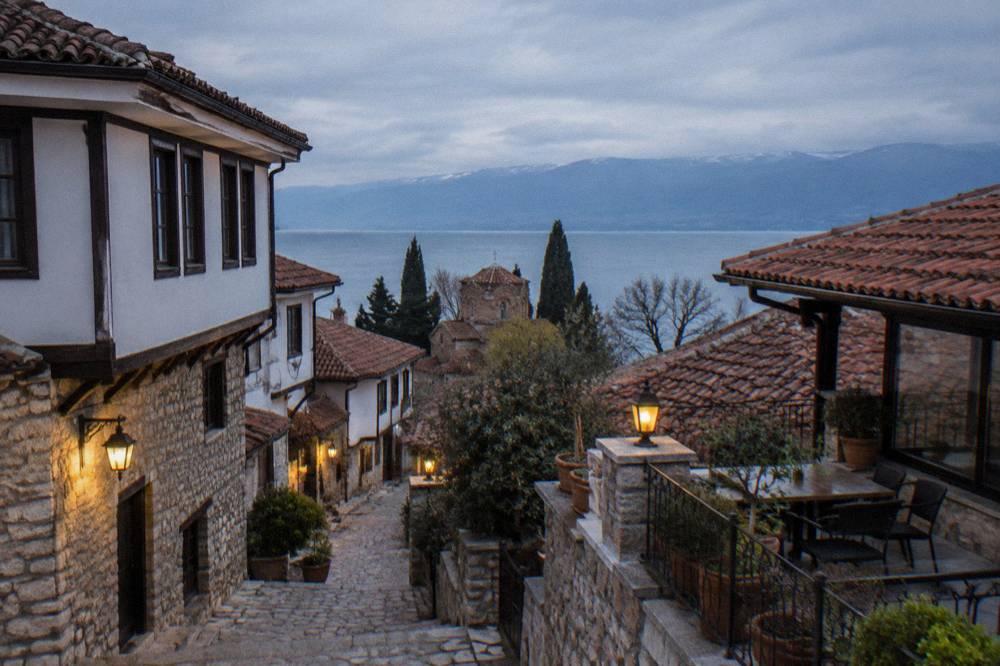
For travellers who want the lay of the land explained while walking it, the old town circuit is the classic choice.
Prefer to explore the quarter at your own pace with commentary? Book a self-guided audio tour here.
What Shops And Crafts Fill The Old Bazaar Streets?
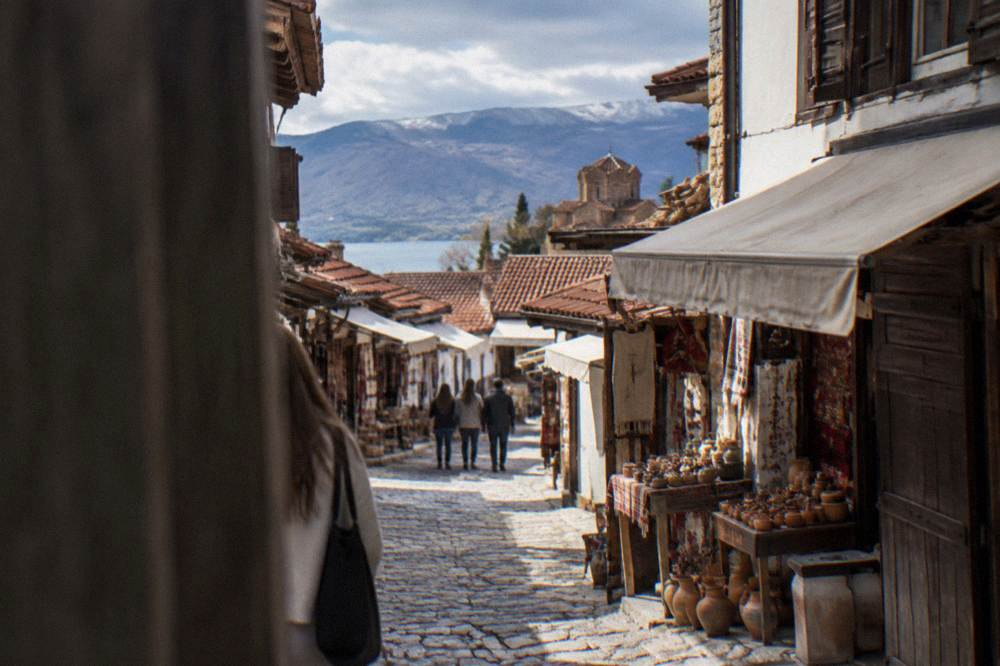
The Old Bazaar in Ohrid is the town's craft and shopping quarter, known in the destination context for the Ohrid pearl, the hand-made jewellery and souvenir craft tradecraft the town is associated with, and small shops and cafes along the stone lanes. Ohrid pearl workshops exist as a named, established attraction in the town, and a dedicated paper museum also sits among the old-town sights.
Two craft attractions give the bazaar quarter its specific character. The Ohrid pearl workshops are the town's signature craft story, and the Ohrid paper museum preserves the old paper-making tradition inside the old town. Both sit within easy walking distance of the bazaar lanes, and both are covered by their own pages on this site with their own details.
Around them, the shopping day in the bazaar is unpriced general fare: crafts, souvenirs, and small shops, plus the cafes that line the lanes. The facts available for this destination carry no individual shop names, prices or opening hours for bazaar businesses, so the honest planning advice is structural rather than transactional: budget time rather than a fixed list, and treat the pearl workshops and paper museum as the two anchor visits inside the quarter. The souvenirs and shopping guide on the wider site extends the food side of the same streets.
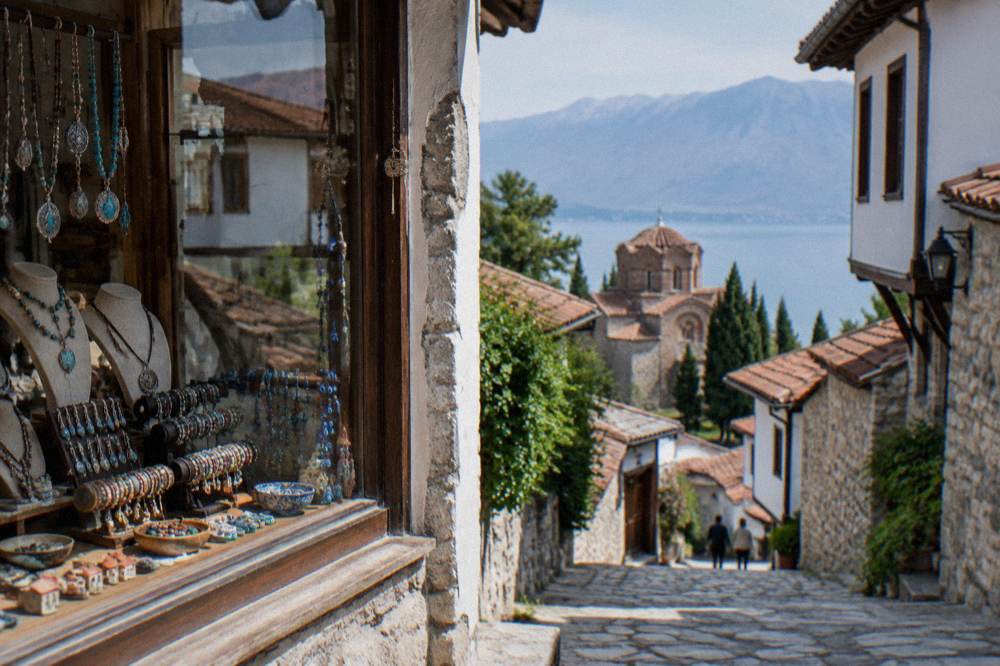
The bazaar also works as the launch point for tours that reach beyond the town, and one of them belongs to this page directly: a food-and-villages tour that covers cave churches, villages and cuisine in the Macedonian interior, built around exactly the crafts-and-food interest that brings people to the bazaar in the first place. You can read about it on its cave churches and villages tour page, or check dates on the operator's live listing via Check availability.
What Do The Museum Sites Around The Bazaar Cost?
The museum institute sites around Ohrid's old town, including the Robev Family House, the Museum on Water at the Bay of Bones and the Icon Gallery, charge 150 den for foreign visitors, 120 den for domestic visitors and a reported 60 den for children and students, per the institute's own website. Those three sites run a winter schedule from 1 October to 30 April and a summer schedule from 1 May to 30 September, and each closes on Monday.
These are the priced, scheduled sights that anchor a bazaar-area day, and their hours differ from each other in the details, so the per-site table below is the one to save. The institute's office hours are Monday to Friday 07:30 to 15:30 at Boro Shain St 10.
| Museum site | Winter hours (1 Oct to 30 Apr) | Summer hours (1 May to 30 Sep) | Closed |
|---|---|---|---|
| Robev Family House | 09:00 to 15:30 | Two shifts: 09:00 to 15:30 and 13:30 to 20:00 | Monday |
| Museum on Water (Bay of Bones, Peshtani) | 09:00 to 15:30 | 09:00 to 16:30 | Monday |
| Icon Gallery (Perivleptos complex) | 09:00 to 14:00 | 09:00 to 17:00 | Monday |
Ticket prices apply across the institute's listed sites: 120 den domestic, 150 den foreign, with the children and students rate reported at 60 den. The Icon Gallery sits in the Perivleptos complex in the old town itself, the Robev Family House museum stands on Tsar Samoil street, and the Bay of Bones is the lakeshore branch at Gradishte near Peshtani.
Churches around the bazaar carry their own situation. St John at Kaneo, St Sophia and Plaosnik are each reported at about 150 MKD for entry, a reported figure from a secondary source rather than an official listing, so confirm at the door. The Perivleptos church and the Icon Gallery share their complex.
Where Do You Eat And Drink Around The Old Bazaar?
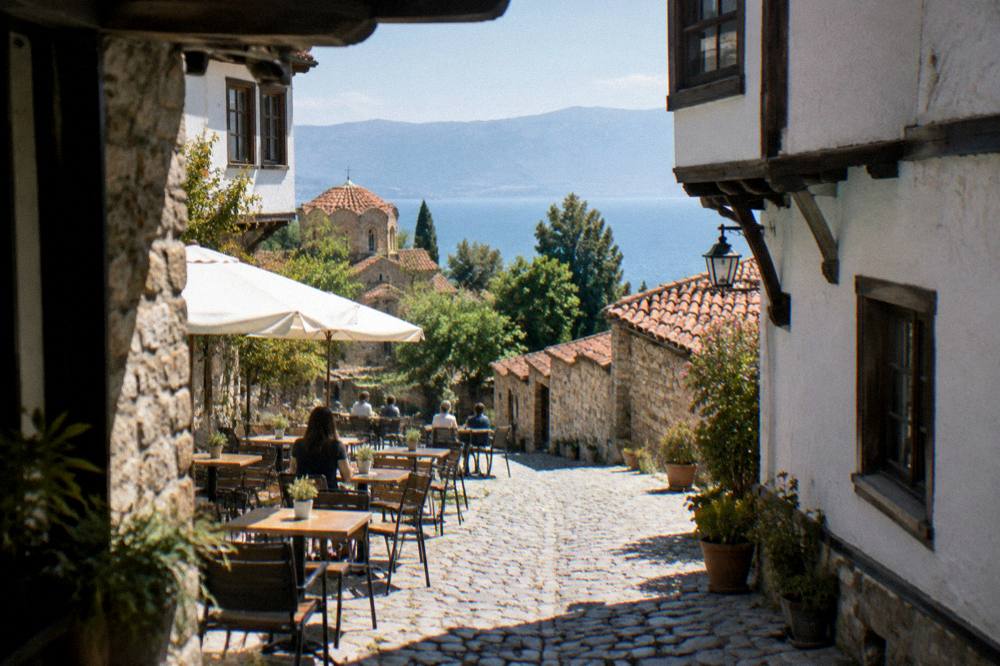
Eating and drinking around the Old Bazaar in Ohrid means the cafes and small kitchens of the old-town lanes and the restaurants of the lakeshore below, within a town whose food culture centres on lake fish, grilled meat, tavche gravche and Macedonian wine and rakija. No individual restaurant prices or opening hours are on record for this quarter, so this page names no venue and prints no price: the practical guide is the site's dedicated food pages.
The honest way to plan food here is by dish and by district rather than by named venue. Ohrid trout is the town's famous lake fish, tavche gravche is the national baked-bean dish, and rakija and Macedonian wine frame the drink side of the culture; each has its own page on this site. The bazaar lanes carry the casual end of that, coffee and small plates, while the shore a few minutes' walk below carries the fuller restaurant scene described in the where to stay and eat guide.
Two deeper food experiences extend the bazaar's craft-and-cuisine theme beyond the town. A monastery winery tour with tasting is the classic Ohrid pairing of landscape and glass, and a cooking class covers the home side of the same cuisine. The wine route in particular is the one travellers add to a bazaar afternoon most often.
How Do You Fit The Old Bazaar Into One Day In Ohrid?
A single day in Ohrid pairs the Old Bazaar with the fortress above and the lake shore below, all on foot: the bazaar works best as the middle of a loop that starts at the water, climbs past the Ancient Theatre and the fortress walls, descends through the bazaar and pearl workshops, and ends on the boardwalk. Two to three days is the site's recommended span for Ohrid overall, but the old-town core, bazaar included, is a one-day circuit.
The one day in Ohrid itinerary carries the full hour-by-hour version. The shape of it, in blocks:
| Part of day | Area | What it covers |
|---|---|---|
| Morning | Upper old town | Samuel's Fortress walls, the Ancient Theatre, the views over the lake |
| Midday | Bazaar quarter | Craft lanes, Ohrid pearl workshops, the paper museum, lunch |
| Afternoon | Lower old town | St Sophia, Plaosnik, the descent to the shore |
| Evening | Lake shore | The boardwalk, dinner, a sunset over the water |
Wet weather reshapes rather than cancels this loop: the museum sites keep their schedules, and the rainy day itinerary moves the weight indoors. Families get their own angle in the wider Ohrid with kids coverage of quieter corners, and the hidden gems itinerary reaches the lanes most day-trippers skip.
When Is The Best Time Of Year For The Bazaar Streets?
The bazaar streets themselves are part of the old town and stand there year-round, while the lake season around them runs from about May or June to September or October, with July and August the busiest months and boats to St Naum operating roughly May to October.
Climate normals for Ohrid, modelled ERA5 reanalysis for 1991 to 2020 at a 701 m grid cell, show July and August with mean daily highs of 27.1 C and 27.6 C and the lowest monthly rain totals, 34.7 mm and 32.9 mm.
Those modelled normals are the only climate numbers this site prints for Ohrid, and they carry no ranking claims: the table gives each month's figure and stops. December shows 92.6 mm of rain and January a mean daily low of -0.8 C, which frames the winter side of a bazaar visit.
| Month | Mean daily high C | Mean daily low C | Rain mm |
|---|---|---|---|
| Jan | 5.0 | -0.8 | 76.5 |
| Feb | 6.3 | 0.0 | 74.3 |
| Mar | 10.0 | 2.5 | 80.5 |
| Apr | 14.6 | 6.3 | 82.4 |
| May | 19.5 | 10.8 | 70.8 |
| Jun | 24.2 | 15.2 | 43.1 |
| Jul | 27.1 | 18.3 | 34.7 |
| Aug | 27.6 | 19.0 | 32.9 |
| Sep | 22.4 | 14.9 | 62.4 |
| Oct | 17.4 | 10.3 | 76.0 |
| Nov | 11.5 | 5.3 | 90.4 |
| Dec | 6.2 | 0.9 | 92.6 |
Modelled lake surface temperatures from an aggregator put July at about 22.9 C and August at about 23.5 C, with the UHMR multi-year October mean at 14.3 C, so the swimming side of a summer bazaar trip is real but separate from the market lanes themselves. The season pages, including spring in Ohrid, break the year down month by month for anyone weighting the trip toward weather.
What Events Fill Ohrid Around The Bazaar?
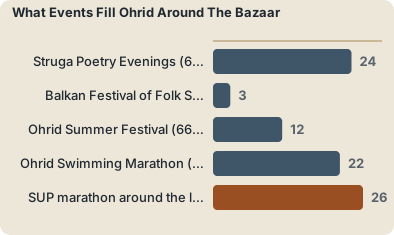
Ohrid's 2026 festival calendar ran the 66th Ohrid Summer Festival from 12 July to 20 August 2026 with the opening gala at the Ancient Theatre in the old town, the 65th Balkan Festival of Folk Songs and Dances from 3 to 6 July, and the Ohrid Water Festival from 12 to 30 August including the 25 km swimming marathon from St Naum to Ohrid harbour on 22 August.
The summer festival matters for a bazaar visit because its venues sit in the same old-town landscape: the Ancient Theatre hosted the 2026 opening gala, and St Sophia is a traditional venue.
| Event (2026 edition) | Dates | Note |
|---|---|---|
| Struga Poetry Evenings (65th) | 24 to 29 June 2026 | Struga, not Ohrid; theme "Where Poetry Lives", about 70 poets |
| Balkan Festival of Folk Songs and Dances (65th) | 3 to 6 July 2026 | Grigor Prlichev cultural centre |
| Ohrid Summer Festival (66th) | 12 July to 20 August 2026 | Opening gala at the Ancient Theatre |
| Ohrid Swimming Marathon (39th) | 22 August 2026 | 25 km, St Naum to Ohrid harbour |
| SUP marathon around the lake | 26 August 2026 | 33 km, a separate event from the swim |
Vevcani Carnival traditionally falls on 13 to 14 January at the Julian New Year in the village of Vevcani, reached as a day trip. Orthodox Christmas is 7 January, Epiphany with the cross-throwing into the lake is 19 January, and St Clement of Ohrid Day on 8 December is a public holiday.
How Do You Get To The Old Bazaar And Around It?
The Old Bazaar is reached on foot from anywhere in Ohrid's old town, and Ohrid itself is reached by bus, plane or car: Skopje is about 170 km away by road with buses taking about 3 hours at 850 to 950 den one way, Ohrid's St Paul the Apostle Airport is about 10 km from the centre, and minibuses from Tirana take 3 to 3.5 hours including the border at about EUR 15 to 20. There is no passenger train service to Ohrid.
Those are the transport numbers the destination record actually carries. Within the town, taxis quote roughly 150 to 200 den for a short ride from the bus station, and the resident-only parking regime on old-town streets from summer 2026 makes driving into the bazaar lanes unwise. The table below consolidates the figures.
| Route | Mode | Time | Cost |
|---|---|---|---|
| Skopje to Ohrid | Intercity bus | About 3 h | 850 to 950 MKD one way |
| Skopje to Ohrid | Car | About 2.5 h, 172 km | About 140 MKD in tolls |
| Tirana to Ohrid | Minibus | 3 to 3.5 h with border | About EUR 15 to 20 |
| OHD airport to centre | Taxi | 10 to 15 min, 10 km | About 600 to 800 MKD (reported) |
| Ohrid to Struga | Local bus | Multiple daily | 100 to 150 MKD (older guides) |
Money basics complete the practical picture. The currency is the Macedonian denar; the National Bank middle rate on 19 October 2026 was 1 EUR = 61.6633 MKD, the denar is de facto pegged to the euro, and euros are not legal tender though sometimes accepted informally at poor rates, with ATMs widespread for denar withdrawals. Emergency numbers are ambulance 194, police 192 and roadside assistance 196. Entry rules for visa-free nationals allow up to 90 days in any 180-day period, UK visitors up to 3 months with passport expiry at least 90 days after arrival, and registration with local police within 48 hours, which hotels handle.
What Else Sits Near The Old Bazaar In Ohrid?
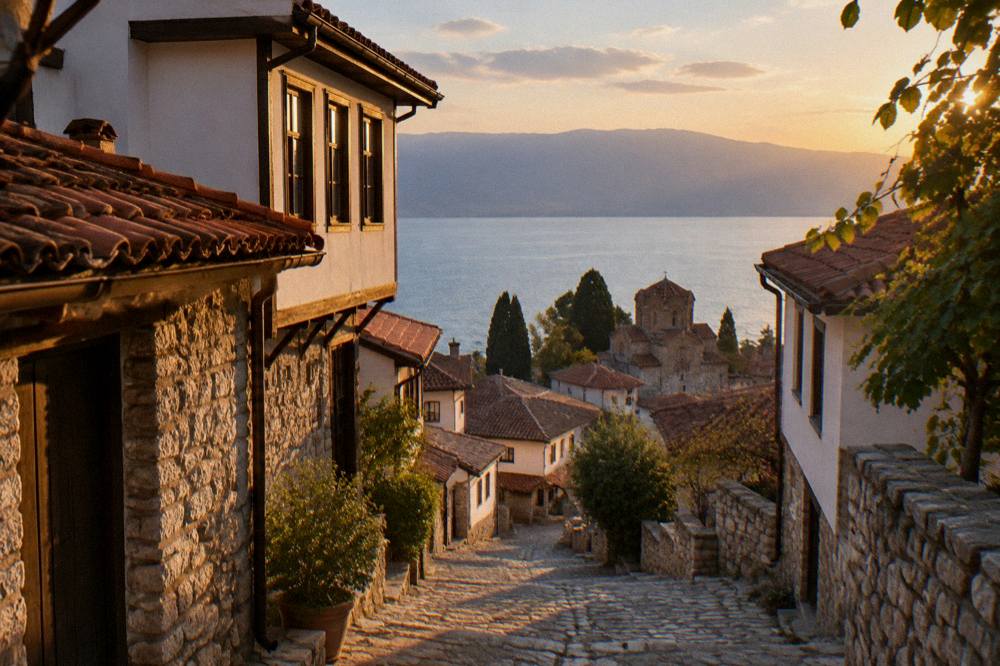
The sights within walking range of the Old Bazaar include Samuel's Fortress above it, the Ancient Theatre in the same upper old-town zone, St Sophia, Plaosnik, St John at Kaneo on the bluff above the lake, the Perivleptos church and Icon Gallery, and the boardwalk at the shore, with the Bay of Bones museum at Peshtani and St Naum monastery reached as short trips along or across the lake. The bazaar is the hinge of all of it.
Each of those has a full page on this site: St John at Kaneo, Plaosnik, St Sophia, St Naum monastery and the Bay of Bones. St Naum monastery charges a reported 150 MKD entry with rowboats through the Crn Drim springs at about 5 EUR, and the monastery sits about 4 km from the Tushemisht border crossing with Albania, a crossing reported open 24/7.
For anyone weighing the bazaar quarter against a longer stay, the site's span guides cover two, three and five days in town, and the town's deep history, including how old Ohrid is, runs on the history page.
For the food-and-crafts theme that the bazaar represents, the signature pick below is the tour built around it.
Common Questions About The Ohrid Old Bazaar
What is the Old Bazaar in Ohrid?
The Old Bazaar is the historic market quarter of Ohrid's old town in North Macedonia, a lane of craft shops, pearl workshops and cafes on the hillside between the lake shore and Samuel's Fortress, inside the UNESCO inscribed Ohrid region.
How much does it cost to visit the sights around the Old Bazaar?
The museum institute sites, including the Robev Family House, the Icon Gallery and the Museum on Water at the Bay of Bones, charge 150 den for foreign visitors and 120 den for domestic visitors, with a reported 60 den rate for children and students. Churches around the old town are reported at about 150 MKD each; confirm at the door.
When are the Ohrid museum sites around the bazaar closed?
The museum institute sites close on Mondays. They run a winter schedule from 1 October to 30 April and a summer schedule from 1 May to 30 September, with per-site hours differing, so check each site's own page before a Monday-adjacent visit.
Is the Old Bazaar walkable from the lake shore?
Yes. Ohrid's old town is entirely pedestrian, climbing from the lake at about 693 m above sea level to the fortress walls, and the bazaar sits mid-slope on that walk. The resident-only parking regime on old-town streets from summer 2026 makes arriving on foot or by taxi the practical choice.
What crafts is the Ohrid bazaar known for?
Ohrid pearl workshops are the town's signature craft attraction, and a dedicated paper museum preserves traditional paper making inside the old town; both sit within walking distance of the bazaar lanes and have their own pages on this site.
What money do I need in the Old Bazaar?
The Macedonian denar. Euros are not legal tender and are sometimes accepted informally at poor rates; ATMs are widespread for denar withdrawals, and the National Bank middle rate on 19 October 2026 was 1 EUR = 61.6633 MKD.