Antique Handmade Paper Mill: Gutenberg-Era Paper In Ohrid
Ohrid, a lake town in North Macedonia, keeps a small workshop where paper is still made sheet by sheet, the way it was made in Europe before machine production. This guide sets out what it is, where it sits in the Old Town, and how to fold it into a day.
Short answer
The Antique Handmade Paper Mill is a workshop attraction in Ohrid's Old Town where paper is made by hand using traditional mould-and-press methods; it sits in a town whose museum sites charge 150 den for foreign visitors and 120 den for domestic visitors, and it pairs naturally with an Old Town walking tour.
Ohrid, in North Macedonia, is a town whose old lanes climb from the shore of Lake Ohrid toward Samuel's Fortress, and among its workshops and small museums sits the Antique Handmade Paper Mill, a place where paper is made sheet by sheet with the hand methods that preceded machine production. This Ohrid Travel Guide page explains what the workshop is, how a visit fits into the Old Town, what the surrounding museum sites cost, and how to build a full day around it. The lake itself sits at about 693 m above sea level, the whole region is a UNESCO mixed heritage site inscribed in 1979 and 1980, and the town's attractions sit close enough together that paper, churches and fortress walls can share a single afternoon.
What Is The Antique Handmade Paper Mill In Ohrid?
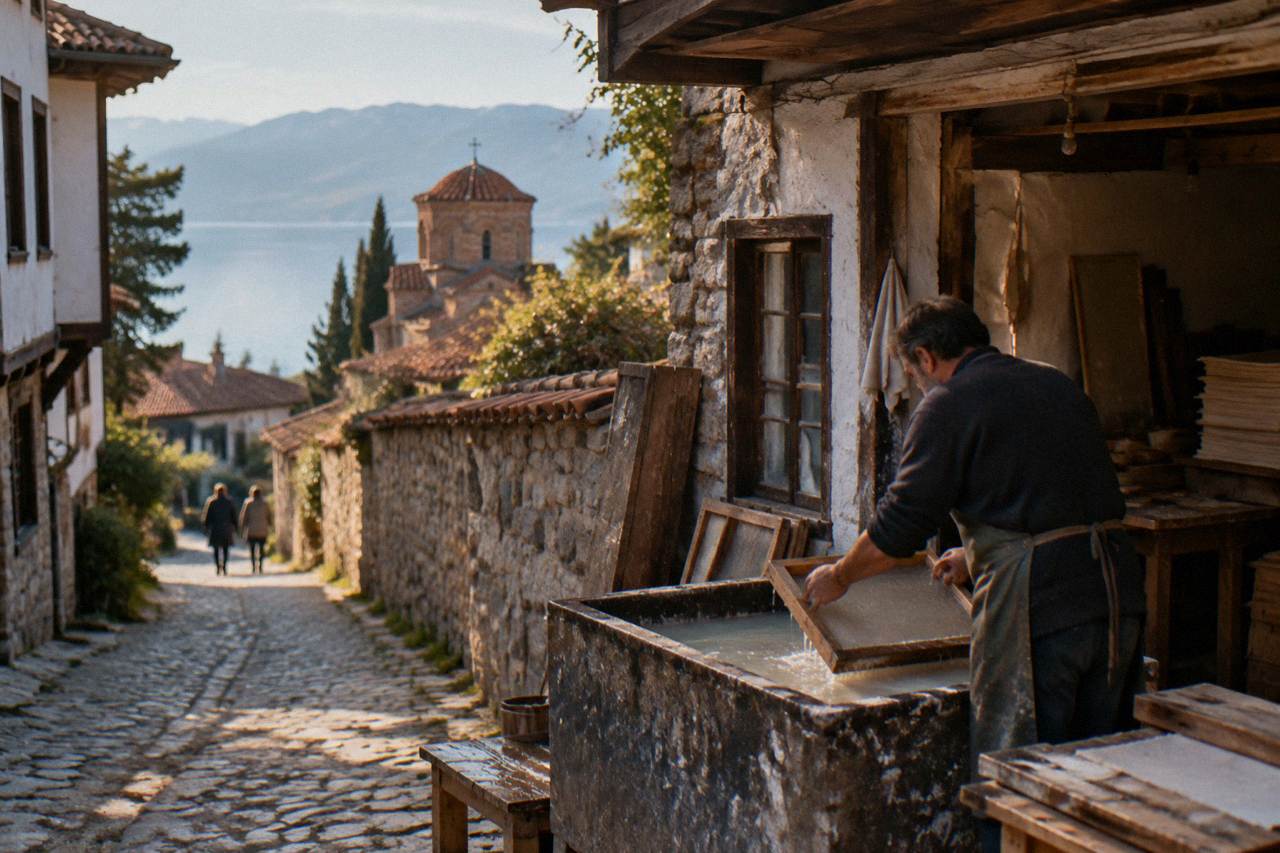
The Antique Handmade Paper Mill is a small workshop attraction in Ohrid's Old Town where paper is produced by hand, sheet by sheet, using the mould, vat and press methods of the pre-industrial era that Gutenberg-era printing depended on, rather than by machine. It presents itself as a working demonstration rather than a conventional gallery, so the visit is built around watching the process.
The workshop belongs to a family of small craft attractions in Ohrid that also includes the town's Ohrid pearl workshops, where another traditional craft is practised and sold. Paper made this way starts as a pulp suspension in water. A wooden frame with a fine mesh screen, the mould, is dipped into the vat, lifted with a thin layer of fibre resting on the screen, drained, and then couched, meaning the wet sheet is transferred onto a felt. Stacks of damp sheets and felts are pressed to squeeze out water, and the sheets are then dried flat. That is the sequence any Gutenberg-era workshop would recognise, and it is the sequence the Ohrid workshop demonstrates.
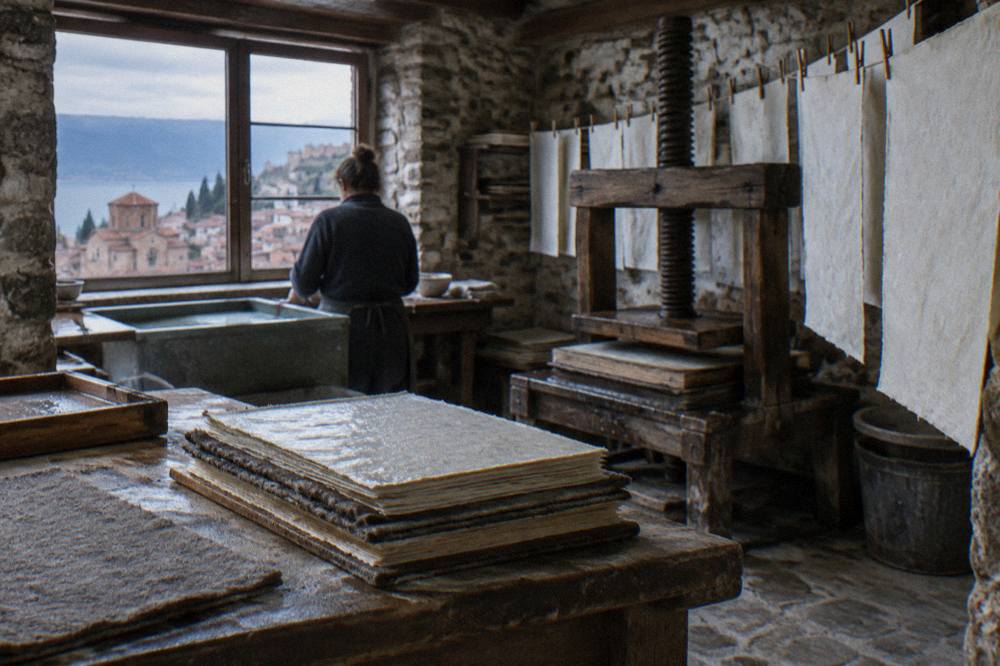
The practical appeal for a visitor is that the process is visible and unhurried. A demonstration shows a single sheet forming in front of you, and finished sheets, cards and bound items made from the same paper are typically what the workshop offers to take away. Because the workshop trades on a craft rather than a collection, it sits comfortably in an Old Town itinerary beside the grander sights, filling the gap between, say, the Old Bazaar and the churches above it. Nothing about the visit demands planning in the way a timed monument does: it is a stop on a walk, and the walk is the point.
Where Does The Paper Mill Sit In Ohrid's Old Town?
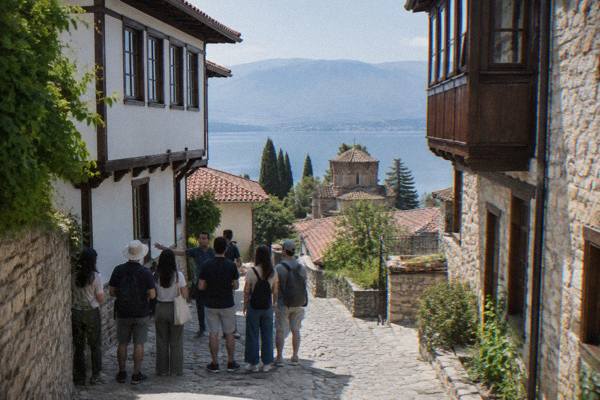
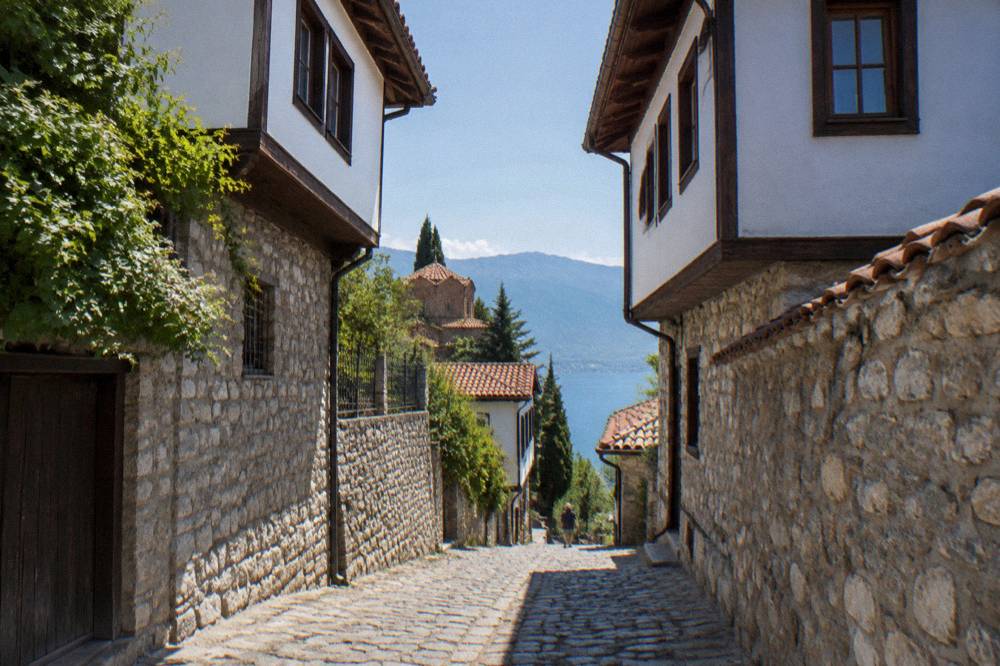
The Antique Handmade Paper Mill sits inside Ohrid's Old Town, the historic core that climbs from the lakeshore up toward Samuel's Fortress, which means it is reached entirely on foot along lanes where cars are largely absent and where the main sights of the old town area string together in a natural line from the port to the fortress walls.
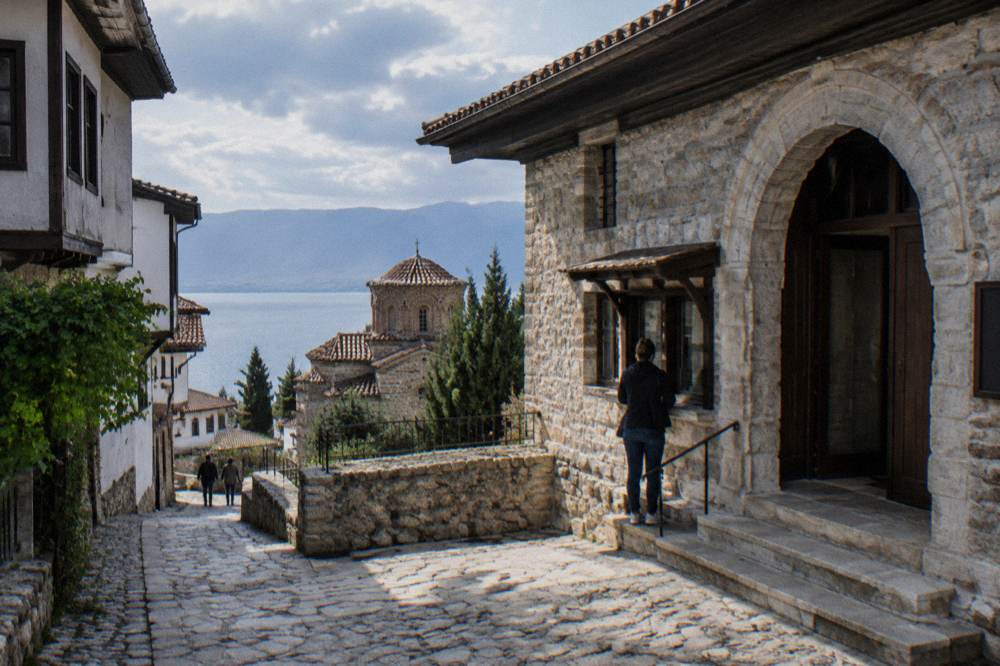
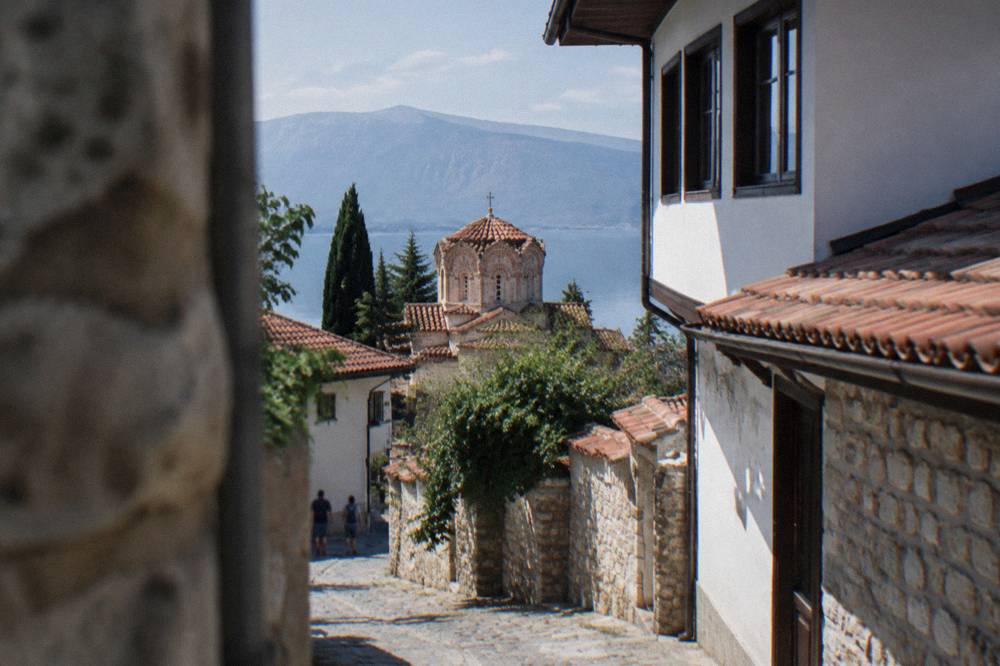
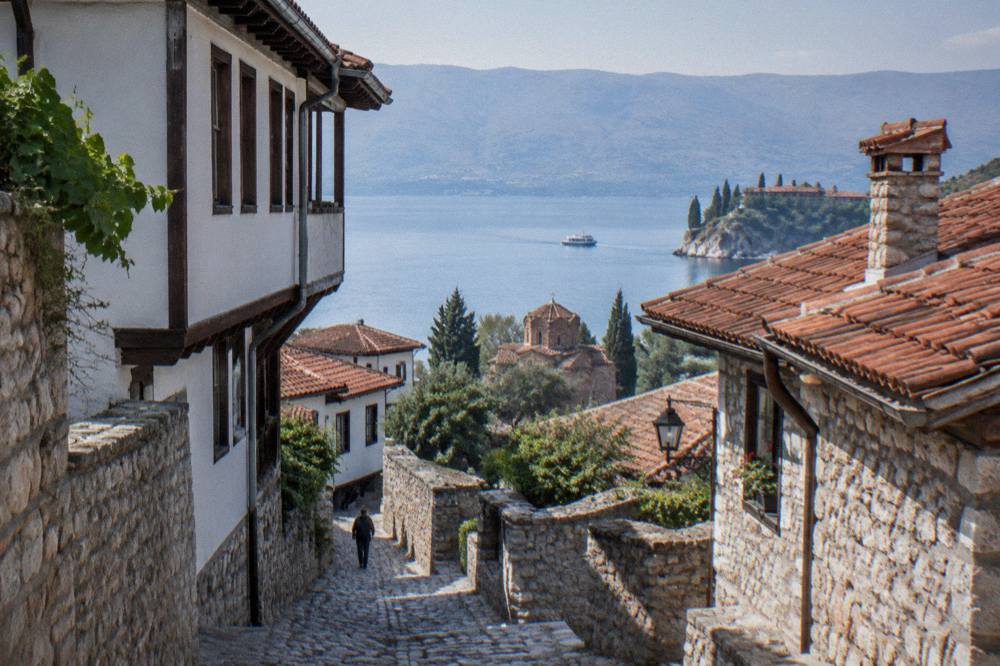
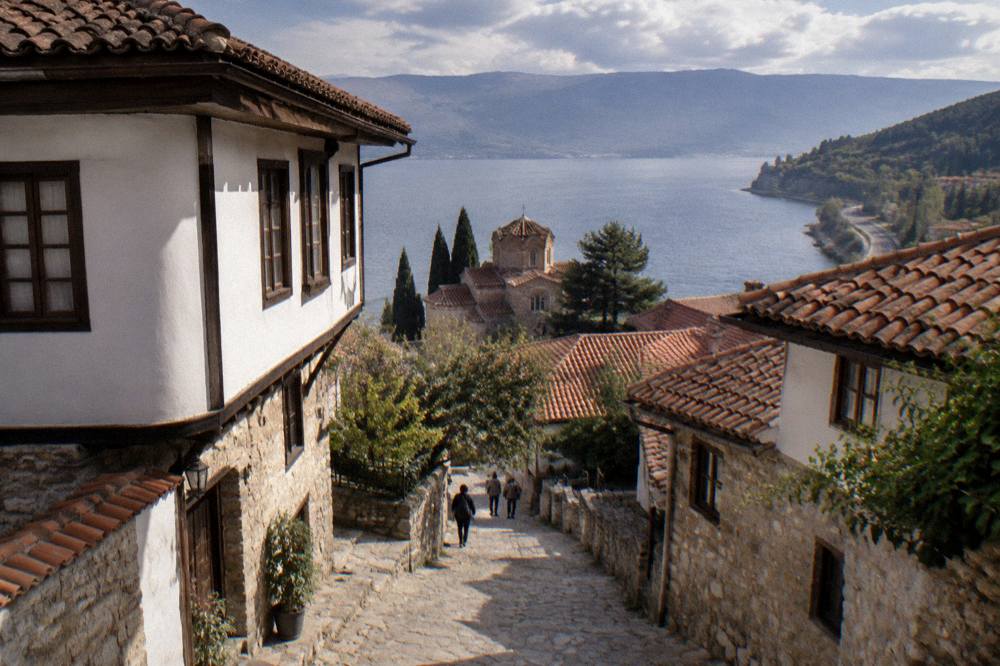
The Old Town's geography shapes every visit. The lanes rise steeply from the lake, the boardwalk runs along the water at the bottom, and the fortress sits at the top with the Ancient Theatre below it. A paper workshop fits into that vertical walk because the craft quarter, including the bazaar streets, sits partway up the slope. Walking it downhill from the fortress toward the lake, or uphill in reverse, passes the Church of St John at Kaneo detour, St Sophia, and Plaosnik in a couple of hours of unhurried movement. The old town page maps that line in detail.
Two half-day shapes work well. One starts at the fortress in the morning while the light is still low over the lake, descends through the theatre and Plaosnik, reaches the craft streets and the paper workshop, and finishes at the lake with a swim or a boat. The other reverses it and saves the fortress for the view at the end of the day. The Ohrid in one day itinerary on this site follows exactly that spine, and Ohrid in two days splits it so the second day can go out to St Naum or the Bay of Bones.
For anyone who would rather have the route narrated, guided options cover the same core, and the half-day city tour is the one that pairs a guided walk with enough time to browse. It can be checked without commitment: Check availability. A guided morning plus a free afternoon of craft stops and the lake is a comfortable split for a first visit.
Prefer to explore the lanes at your own pace with commentary? Book an audio tour here.
What Do Ohrid's Museums And Sights Cost?
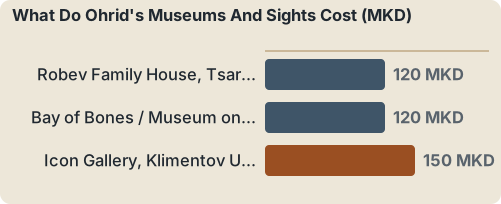
Ohrid's museum-institute sites, meaning the Robev Family House, the Bay of Bones Museum on Water and the Icon Gallery, charge 150 den for foreign visitors, 120 den for domestic visitors and a reported 60 den for children and students, per the institute's own website, while the paper workshop and the churches of the Old Town network are separate stops with their own arrangements.
The museum institute, NU Zavod i Muzej Ohrid, is the body behind the ticketed heritage sites, and its prices apply across its listed sites. The table below holds the rates and the seasonal hours the institute publishes for its own museums, which run a winter schedule from 1 October to 30 April and a summer schedule from 1 May to 30 September, with Mondays closed at the sites where the institute says so.
| Institute site | Foreign visitor | Domestic visitor | Winter hours (1 Oct to 30 Apr) | Summer hours (from 1 May) |
|---|---|---|---|---|
| Robev Family House, Tsar Samoil St 62 | 150 MKD | 120 MKD | 09:00 to 15:30, closed Monday | Two shifts, 09:00 to 15:30 and 13:30 to 20:00, closed Monday |
| Bay of Bones / Museum on Water, Gradishte, Peshtani | 150 MKD | 120 MKD | 09:00 to 15:30, closed Monday | 09:00 to 16:30, closed Monday |
| Icon Gallery, Klimentov Univerzitet St bb | 150 MKD | 150 MKD tier applies | 09:00 to 14:00, closed Monday | 09:00 to 17:00, closed Monday |
The children and student rate of 60 den is reported only, so confirm it at the desk. Samuel's Fortress is a separate subject: the fortress has a municipal revitalisation plan with a summer stage and illumination budgeted at 11 million denars, but no ticket price or opening hours are published for it, so this guide states none. The national museum page covers the Robev Family House in depth.
For the paper workshop itself, the model is a craft stop rather than an institute ticket desk: workshops of this kind in Ohrid show the process and sell the product, and the Icon Gallery and Perivleptos complex nearby is where the institute's ticket applies. A sensible budget for a day in the Old Town is one institute ticket, a modest amount for craft purchases such as paper sheets or pearl pieces, and food. The Ohrid cost and budget guide breaks the wider numbers down.
Which Sights Pair Best With The Paper Workshop?
The closest natural pairings are the Old Bazaar streets immediately around the craft quarter, the Icon Gallery and Perivleptos church complex on the same slope, and the sequence of St Sophia, Plaosnik and the Church of St John at Kaneo, all of which sit within the same walking line from the lakeshore to the fortress, so the paper stop costs minutes rather than a detour.
The logic of pairing is altitude. The Old Bazaar sits low and central, the paper workshop sits in the same craft band, and above it the climb passes Perivleptos and the Icon Gallery, then Plaosnik, then the fortress. Below, the descent to the lake reaches St John at Kaneo and the boardwalk. Doing the craft stops and the churches in one movement is what makes an Ohrid day feel larger than the town's size suggests. The Samuel's Fortress page and the Plaosnik and St Sophia church pages cover each of those in detail.
For travellers with more than a day, the things to do in Ohrid overview ranks the full set of stops, and the Ohrid neighborhoods page explains how the districts connect. The craft angle also extends across town to the pearl workshops, where another handmade Ohrid product is produced, and the two together give a picture of what the town's artisans actually make: paper by hand, and a simulated pearl worked from fish scale essence, both crafts with dedicated pages on this site.
When Is The Best Time To Visit Ohrid For A Craft And Walking Trip?
July and August bring Ohrid's highest modelled temperatures, with ERA5 reanalysis 1991-2020 normals of 27.1 and 27.6 C mean daily highs and the year's lowest rainfall at 34.7 and 32.9 mm, while May, June and September sit between 19.5 and 24.2 C highs with moderate rain, making the shoulder months the modelled-numbers choice for long walking days.
These figures are modelled ERA5 reanalysis climate normals for a grid cell over Ohrid, not a weather station record, and they describe averages rather than any single year. The full monthly picture:
| Month | Mean daily high C | Mean daily low C | Rain mm |
|---|---|---|---|
| Jan | 5.0 | -0.8 | 76.5 |
| Feb | 6.3 | 0.0 | 74.3 |
| Mar | 10.0 | 2.5 | 80.5 |
| Apr | 14.6 | 6.3 | 82.4 |
| May | 19.5 | 10.8 | 70.8 |
| Jun | 24.2 | 15.2 | 43.1 |
| Jul | 27.1 | 18.3 | 34.7 |
| Aug | 27.6 | 19.0 | 32.9 |
| Sep | 22.4 | 14.9 | 62.4 |
| Oct | 17.4 | 10.3 | 76.0 |
| Nov | 11.5 | 5.3 | 90.4 |
| Dec | 6.2 | 0.9 | 92.6 |
A craft-focused trip is less weather-dependent than a beach trip, because a paper demonstration, a museum interior and the bazaar lanes are all sheltered, but the Old Town walk between them is steep and fully outdoors. Summer also carries the season's calendar: the 66th Ohrid Summer Festival opened on 12 July 2026 at the Ancient Theatre and ran toward its traditional close on 20 August, and the Water Festival in August included the 25 km swimming marathon from St Naum to Ohrid harbour on 22 August. The best time to visit Ohrid guide treats the trade-offs month by month.
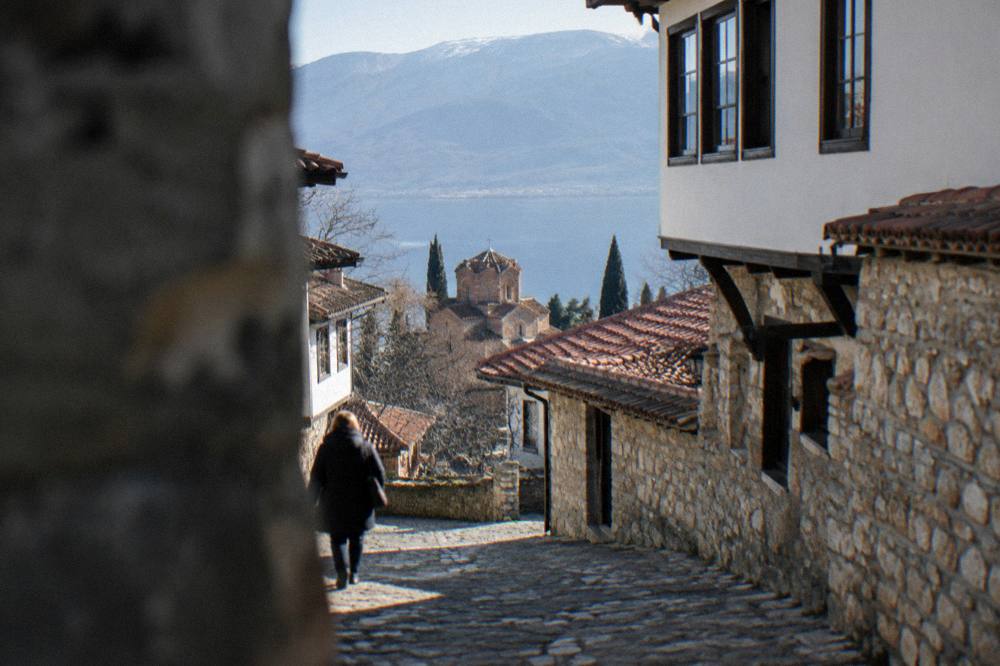
Winter visits trade warmth for quiet and museum winter hours: institute sites run 1 October to 30 April schedules and close Mondays, and boats to St Naum reduce or pause outside roughly May to October. The Ohrid in winter guide covers that season honestly.
How Does The Lake Fit Around A Paper And Old Town Morning?
Lake Ohrid is the second half of almost any Ohrid day: modelled lake surface temperatures reach about 22.9 C in July and 23.5 C in August with a swimming season from July onward, boat cruises to St Naum and the Bay of Bones run roughly May to October, and the city beach and lido sit within walking distance of the Old Town lanes that hold the paper workshop.
The lake's drawn water temperatures below are modelled aggregator values except the October mean of 14.3 C, which is a UHMR multi-year mean on a 2001 to 2020 base, so treat them as planning guides rather than measurements of any given day.
| Month | Modelled lake surface C | Swimming note |
|---|---|---|
| Jan | 4.6 | No |
| Feb | 5.4 | No |
| Mar | 7.2 | No |
| Apr | 10.5 | No |
| May | 14.9 to 18.7 | Marginal |
| Jun | 19.4 to 22.5 | Starting |
| Jul | 22.9 to 24.4 | Yes |
| Aug | 23.5 to 25.8 | Yes |
| Sep | 19.7 to 25.0 | Yes, cooling |
| Oct | 14.7 (UHMR mean 14.3) | No |
The pairing is straightforward: a morning of paper, bazaar and churches uphill, an afternoon on or in the water. The city beach and lido page covers swimming from town, swimming in Lake Ohrid covers the water itself, and the boat tour options cover the lake's sightseeing arm, with the full-day cruise from Ohrid port to St Naum operated by Boat Armada running 7 hours from 1,200 den per adult and 600 den per child. 2026 bathing tests rated the water Class I physico-chemically except Grashnica beach at Class III, with most microbiological samples rated Excellent.
Can You Combine The Paper Mill With A Day Trip From Ohrid?
Yes: the paper workshop needs only a stop on an Old Town walk, which leaves the rest of a multi-day visit free for St Naum monastery, the Bay of Bones at Peshtani, Struga, Galicica National Park and Lake Prespa, and for travellers based in Tirana or Skopje, full-day Ohrid tours arrive from those cities and cover the Old Town core that the workshop sits in.
The classic day trip from Ohrid is south along the lake to St Naum via the Bay of Bones, and the St Naum tour from Ohrid and St Naum from Ohrid pages cover it. St Naum monastery entrance is listed by the cruise operator at 150 MKD per person, with a rowboat through the Crn Drim springs at about 5 EUR, and the monastery sits about 4 km from the Tushemisht border crossing into Albania, which is reported open around the clock. Galicica National Park, North Macedonia's second national park from 1958 with 22,750 ha between Lake Ohrid and Lake Prespa and Magaro peak at 2,254 m, charges 250 MKD per vehicle with 100 MKD only for those entering on foot at the Ohrid-side gate.
For visitors based in Albania, day tours from Tirana and Durres reach Ohrid's Old Town in a single day and include the sightseeing core; a product of this kind starts in Tirana and is an Albania departure, not an Ohrid one. For those planning the wider route, Struga from Ohrid and Galicica National Park break down the nearer options, and the Skopje Ohrid Tirana route covers the three-city line. Getting to Ohrid itself is documented on how to get to Ohrid: Skopje is about 170 km away by road with buses taking about 3 hours at 850 to 950 MKD, and Ohrid's St Paul the Apostle Airport sits about 10 km from the centre.
| Route | Figure | Tier note |
|---|---|---|
| Skopje to Ohrid road | About 170 km, about 3 h by bus, 850 to 950 MKD fare | Confirmed on a fetched page |
| Skopje to Ohrid by car | About 172 km, about 2.5 h, about 140 MKD in tolls | Confirmed, secondary |
| Tirana to Ohrid minibus | Roughly 5 to 7 a day, 3 to 3.5 h with border, EUR 15 to 20 | Confirmed, secondary |
| Ohrid airport to centre | About 10 km via the E65 | Official airport page |
| Passenger train to Ohrid | None | Confirmed |
What Should You Know About Money, Entry And Practicalities In Ohrid?
North Macedonia uses the Macedonian denar, with the National Bank's middle rate on 19 October 2026 at 1 EUR equals 61.6633 MKD, euros are not legal tender though tours and transfers are commonly quoted in them, and visa-free nationals may stay up to 90 days in any 180-day period, with UK visitors allowed up to 3 months and required to register with the local police within 48 hours, a task hotels handle.
The denar is what museum desks, workshops and buses transact in, so the 150 MKD institute ticket and the 1,200 den boat cruise are paid in local currency, while bookable tours priced from operators are quoted in the currency their listing states. ATMs are reported widespread. North Macedonia is not in the EU or Schengen, and Bulgaria and Romania became full Schengen members, land borders included, on 1 January 2025. Emergency numbers are ambulance 194, police 192 and roadside assistance 196. Tap water in Ohrid is generally drinkable per available reporting. The Macedonian denar and money and North Macedonia visa and entry guides carry the full detail.
Two 2026-specific rules matter to anyone driving or boating. A government decision of 2 June 2026 banned jet skis on the lake from 1 July to 31 August between 11:00 and 19:00 and restricted boats at night through the summer and into October, and from summer 2026 old-town streets including Ilindenska, Kosta Abrash and Car Samoil became resident-only parking, with clamping reported for non-residents. The Ohrid parking page treats the practical side.
Common Questions About The Antique Handmade Paper Mill In Ohrid
What is the Antique Handmade Paper Mill in Ohrid?
It is a workshop attraction in Ohrid's Old Town where paper is made by hand using the mould, vat and press methods of the pre-industrial, Gutenberg-era tradition, with the process shown as a working demonstration and finished paper items offered for sale.
How long does a visit to the paper workshop take?
It is a stop on a walk rather than a half-day destination: the Old Town line that includes the workshop, the Old Bazaar, the Icon Gallery, Plaosnik and the fortress is comfortably covered in a morning or an afternoon on foot.
Does the museum-institute ticket cover the paper workshop?
No. The 150 MKD foreign and 120 MKD domestic rates apply to the institute's listed sites, the Robev Family House, the Bay of Bones Museum on Water and the Icon Gallery. The paper workshop is a separate craft stop.
Is the paper workshop close to the Old Bazaar?
Yes, it sits in the craft band of the Old Town between the lakeshore and the fortress, on the same walking line as the Old Bazaar streets, Perivleptos and the Icon Gallery, and the Church of St John at Kaneo detour below.
What else pairs well with the paper workshop in Ohrid?
The Ohrid pearl workshops, which practise the town's other handmade craft, the churches of the Old Town, a boat cruise on Lake Ohrid, and a day trip to St Naum monastery and the Bay of Bones, which can be reached by tours that run roughly May to October.
Can you buy handmade paper at the workshop?
Craft workshops of this type sell the paper they produce, in sheets, cards and bound items, so a purchase can be planned for; this guide states no prices for the workshop's goods, and the selection is best seen on site.