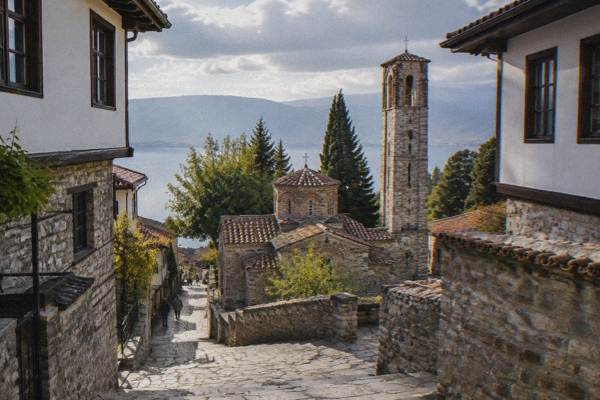
Ohrid Museums: Robev House, Icon Gallery And The Museum On Water
Ohrid in North Macedonia holds its museum collection across three sites: the Robev Family House in the old town, the Icon Gallery at the Perivleptos complex, and the Bay of Bones, a museum on water near Peshtani.
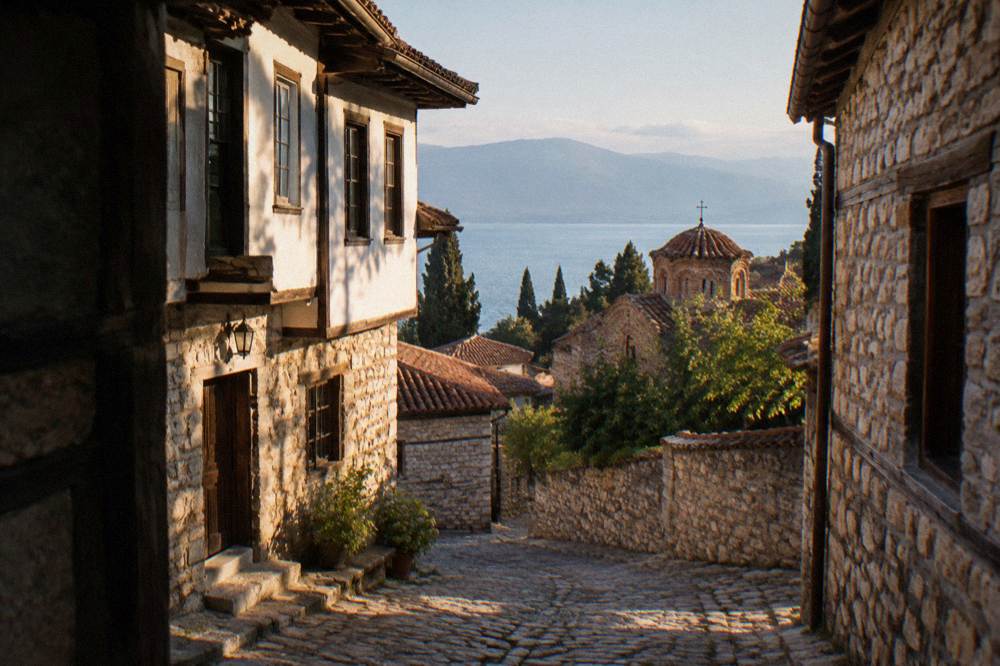
Short answer
Ohrid's main museums sit under one institute with three sites: the Robev Family House on Tsar Samoil Street, the Icon Gallery at the Perivleptos complex, and the Museum on Water at Gradishte near Peshtani, all inside the UNESCO-listed Ohrid region.
Ohrid, a lakeside town in North Macedonia on Lake Ohrid, keeps its museum heritage in three places run by the same institute: the Robev Family House on Tsar Samoil Street in the old town, the Icon Gallery at the Perivleptos complex, and the Bay of Bones, a museum built over the water at Gradishte near the village of Peshtani. All three sit inside the UNESCO property "Natural and Cultural Heritage of the Ohrid Region", inscribed in 1979 for its natural values and in 1980 for its cultural ones and extended to the Albanian side of the lake in 2019. This Ohrid Travel Guide page lays out what each site is, where each one sits, and how to plan a visit that strings them together.
The three sites could not be more different in setting. One occupies a townhouse on the old town's main street. One shares a complex with a church known for its icons. The third stands on a reconstructed pile dwelling out in the lake near Peshtani, reached along the shore road. Together they cover the town's archaeological, ethnographic and religious collections, and each one belongs to a different neighbourhood or stretch of coast, which is exactly what makes planning them worth a little thought.
What Is The National Museum Of Ohrid?
The National Museum of Ohrid is the institute, known as NU Zavod i Muzej Ohrid, that runs the town's main museum sites, including the Robev Family House, the Icon Gallery at the Perivleptos complex and the Bay of Bones Museum on Water at Peshtani, with its office at Boro Shain Street 10 in Ohrid. The institute is the body behind the ticketing and the site network, and its address and telephone contact are published on its own website. For a visitor, the practical point is simple: the museums you walk through in Ohrid are not a single building but a set of sites spread between the old town and the lake shore, all managed by this one institution inside the UNESCO-listed region.
The institute's scope goes beyond display rooms. Its own pages describe the sites it administers, from the Robev Family House to the Antique Theatre, the hillside ruin where the Ohrid Summer Festival opens its season each July. That theatre, built at the end of the third or start of the second century BC and first excavated in 1935, grew to a capacity of 5,000 after the epiteatron was added, and its festival use continues today: the 66th Ohrid Summer Festival opened there on 12 July 2026.
For trip planning, the museum network is a useful spine. A day built around the Robev Family House in the morning, the Icon Gallery a short climb away, and the Bay of Bones on a boat or shore-road trip in the afternoon covers the town's core collections and two very different pieces of lakeside scenery. The pages on Samuel's Fortress, the Ancient Theatre of Ohrid and the Old Bazaar cover the other sights that sit along the same walking lines.
Where Are Ohrid's Three Main Museums Located?
The Robev Family House stands at Tsar Samoil Street 62 in Ohrid's old town, the Icon Gallery sits at Klimentov Univerzitet Street bb inside the Perivleptos complex above the old town, and the Bay of Bones, the Museum on Water, stands at Gradishte near Peshtani on the lake shore, all three addresses published by the museum institute itself. The two town sites sit within walking distance of each other on the hillside lanes that climb from the lake. The third is a drive or a boat ride away along the southern shore, past the swimming spots covered in the guide to swimming in Lake Ohrid.
The split matters for how you build a day. The Robev Family House sits on the old town's main street, between the lake front and the fortress hill. The Icon Gallery belongs to the Perivleptos complex, the church site described on the page for the Church of the Holy Mother of God Perivleptos, which stands in the upper part of town. Walking between them means the old town's stepped lanes, which is the normal way to move around this part of Ohrid: the town has no trams and the lanes are on foot.
The Bay of Bones is the outlier. It sits at Gradishte, near Peshtani on the eastern shore, one of the settlements covered in the guide to Lagadin and Peshtani. Boat cruises from Ohrid port call there, and the page on Lake Ohrid boats and ferries covers how that side of the lake is reached by water. Whether you go by road or by boat changes the shape of the day considerably, since a boat trip turns the museum into part of a longer lake outing.
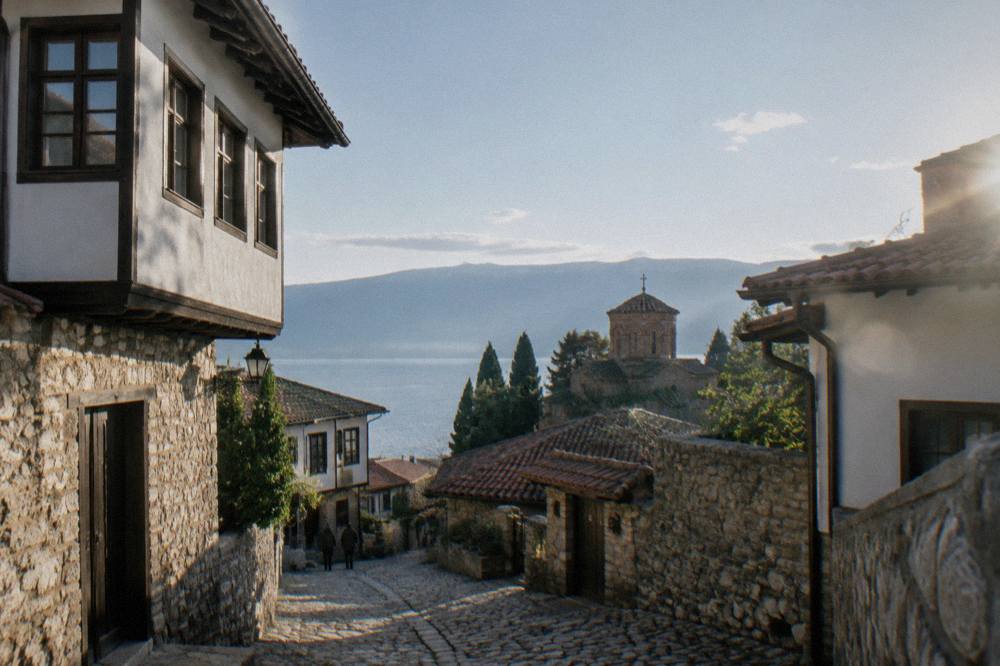
A useful way to picture the geography is as three rings: the old-town ring on foot, the hill ring above it, and the shore ring reached by road or water. The museums give you a reason to visit all three, and the town's other headline sights slot into the same rings, from St John at Kaneo down by the water to St Sophia Church in the lower town.
| Museum site | Address | Setting | Part of the lake region |
|---|---|---|---|
| Robev Family House | Tsar Samoil St 62 | Old town main street | Yes, inside the UNESCO property |
| Icon Gallery | Klimentov Univerzitet St bb | Perivleptos complex, upper old town | Yes, inside the UNESCO property |
| Bay of Bones, Museum on Water | Gradishte, near Peshtani | Reconstructed pile dwellings over the lake | Yes, inside the UNESCO property |
How Do The Three Ohrid Museum Sites Fit Together?
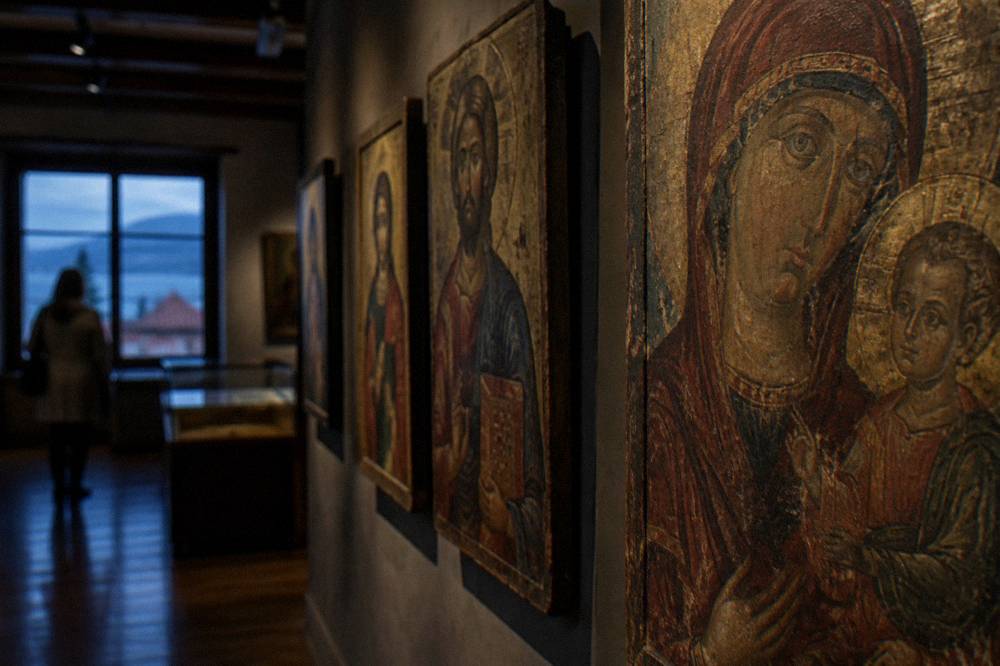
The three sites share one institute, one UNESCO-listed setting and one broad story, but they answer different questions: the Robev Family House carries the town house and its collections, the Icon Gallery at Perivleptos holds the region's famous Byzantine-style icons, and the Bay of Bones reconstructs prehistoric lake dwelling out on the water at Gradishte. UNESCO's own listing for the Ohrid region records more than 800 Byzantine-style icons from the eleventh to the end of the fourteenth century in Ohrid, and the Icon Gallery is where that heritage is concentrated. The Bay of Bones, meanwhile, is the site that explains the lake itself as a place people have lived on and around for a very long time.
That lake is remarkable in its own right. UNESCO's description gives the lake an age of about two to three million years and records over 200 endemic species, including 17 endemic fish. The Bay of Bones is the museum that faces that story most directly, standing on pilings above the water as a reconstruction of a pile-dwelling settlement. The distinction between the three sites is therefore not just geographic but thematic: town life, religious art, and lake archaeology.
For visitors who want the museums explained rather than simply walked through, a guided option exists. The city tour described as "Ohrid city tour, the best of Ohrid" is a walking-tour product that covers the town's principal sights with a guide, and it can anchor a day that ends with the museums explored independently. The dedicated page for the Icon Gallery goes deeper on that one collection, and the guide to Ohrid churches sets the icon tradition in its wider context.
What Can You See At The Robev Family House?
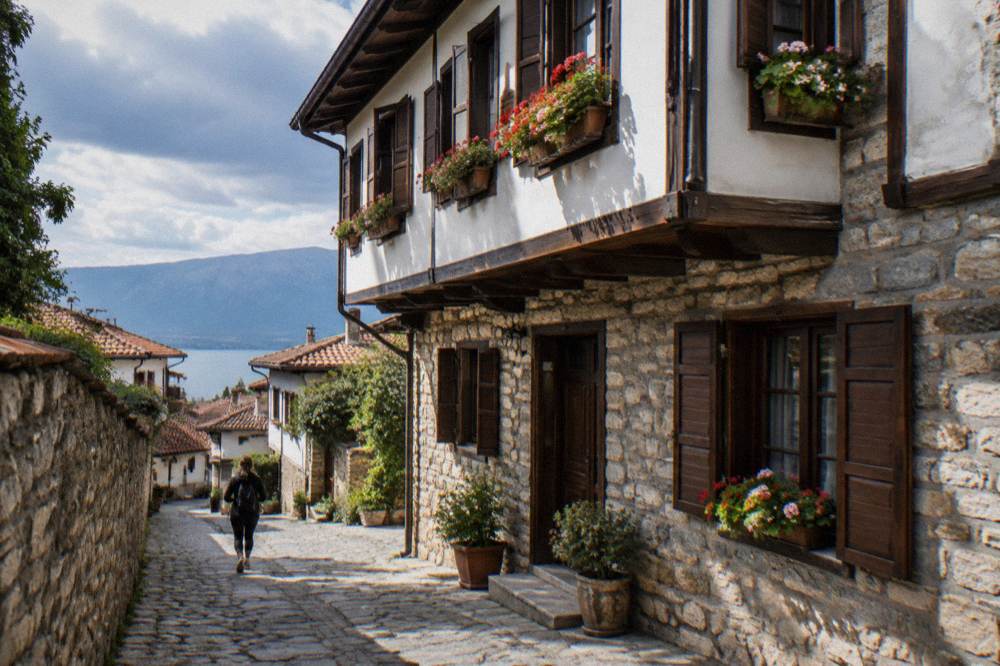
The Robev Family House is the National Museum's townhouse site at Tsar Samoil Street 62, a restored old-town house holding the institute's collections in the heart of Ohrid, its address and site details published on the museum institute's own website. It is the most central of the three sites: you reach it on foot from anywhere in the old town, and it sits on the same street as the town's main walking line between the lake front and the fortress. The house gives the museum a domestic setting rather than a purpose-built gallery, which is the point of interest for anyone interested in how Ohrid's old-town architecture has been put to use.
What the site offers is a walk through a grand old-town residence that now serves as the National Museum's principal building. The institute's pages present it among its administered sites alongside the Antique Theatre and the Bay of Bones, and its location on Tsar Samoil Street places it steps from the Old Bazaar and the lanes that climb toward Plaosnik and Samuel's Fortress. For itinerary purposes it works as the anchor of an old-town morning: the house, the bazaar, the fortress hill and the theatre can be combined in one loop, the shape described in the guide to Ohrid in one day.
The house is also the site most affected by weather simply because the walk to it runs through the open lanes of the old town. Ohrid's modelled climate normals, ERA5 reanalysis for 1991-2020, show July and August with mean daily highs of 27.1 and 27.6 degrees and mean lows of 18.3 and 19.0, while January averages a high of 5.0 and a low of minus 0.8. Rainfall runs 32.9 mm in August against 92.6 mm in December, so an old-town walking day is a different proposition in midwinter than in high summer, a comparison expanded in the guide to Ohrid weather by month.
| Month | Mean daily high C | Mean daily low C | Rain mm |
|---|---|---|---|
| Jan | 5.0 | -0.8 | 76.5 |
| Feb | 6.3 | 0.0 | 74.3 |
| Mar | 10.0 | 2.5 | 80.5 |
| Apr | 14.6 | 6.3 | 82.4 |
| May | 19.5 | 10.8 | 70.8 |
| Jun | 24.2 | 15.2 | 43.1 |
| Jul | 27.1 | 18.3 | 34.7 |
| Aug | 27.6 | 19.0 | 32.9 |
| Sep | 22.4 | 14.9 | 62.4 |
| Oct | 17.4 | 10.3 | 76.0 |
| Nov | 11.5 | 5.3 | 90.4 |
| Dec | 6.2 | 0.9 | 92.6 |
The figures are modelled ERA5 reanalysis normals for a grid cell covering Ohrid, not a weather-station record, and they are the basis for the seasonal advice on the best time to visit Ohrid.
What Can You See At The Icon Gallery At Perivleptos?
The Icon Gallery stands inside the Perivleptos complex at Klimentov Univerzitet Street bb in Ohrid's upper old town, and it holds the icon collection of a region that UNESCO's listing records as having more than 800 Byzantine-style icons from the eleventh to the end of the fourteenth century. The gallery is the institute's site for religious art, and its setting ties it directly to one of the town's churches: the Perivleptos complex is described in full on its own page, and the gallery shares the address and the complex. For visitors tracking Ohrid's painted heritage, this is the indoor half of a story whose outdoor half is the churches themselves.
The numbers attached to the region's icon heritage are UNESCO's own. The listing for the Ohrid region states that Ohrid holds more than 800 Byzantine-style icons dating from the eleventh to the end of the fourteenth century, alongside its monastery tradition. The gallery is where a concentrated selection of that heritage can be viewed under one roof, in contrast to the churches where individual works remain in situ. The distinction matters for how you plan: a church-hopping route covers St John at Kaneo, St Sophia and Plaosnik in their settings, while the gallery concentrates the portable works.
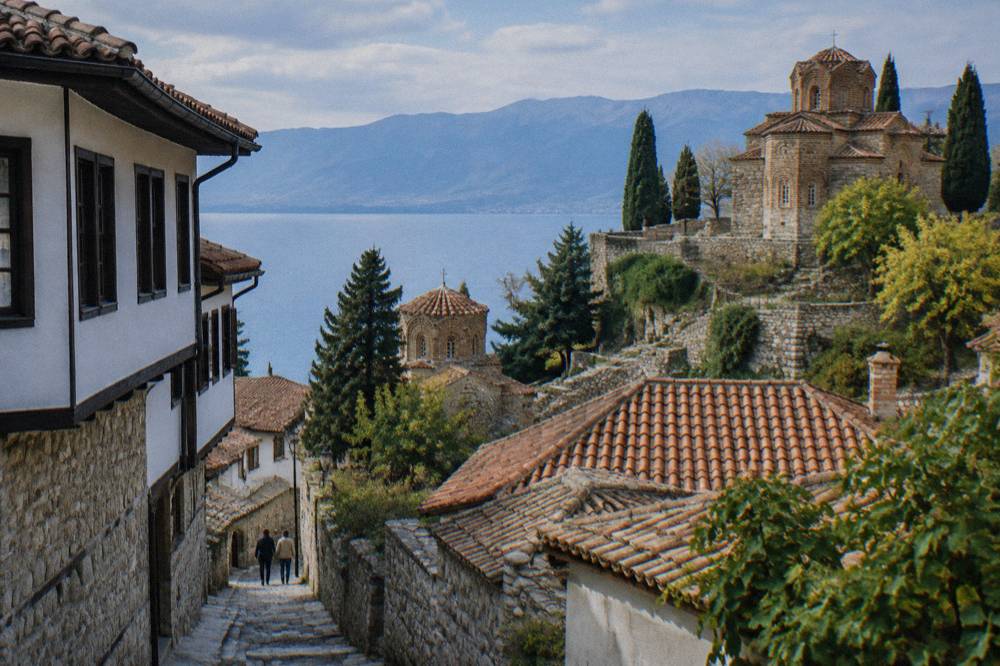
Walking to the gallery places you in the upper old town, close to the fortress and the theatre. A reasonable line runs from the Robev Family House up through the lanes to the Perivleptos complex, then on to the fortress viewpoint and the theatre, a route shaped in more detail in the old town guide. The climb is part of the experience: Ohrid's old town rises from the lake at about 693 m above sea level, and its sights stack up the hillside rather than spreading on the flat.
What Is The Bay Of Bones Museum On Water?
The Bay of Bones, known in Macedonian as Zaliv na Koskite, is the Museum on Water at Gradishte near Peshtani, a reconstruction of a prehistoric pile-dwelling settlement built over the lake itself, administered by the same museum institute as the Robev Family House and the Icon Gallery and described on the institute's own site pages. It is the only one of the three museum sites that stands in the lake rather than in the town, and it turns the region's deep human history on the water into something you walk through on wooden walkways. Its setting at Gradishte, on the shore near Peshtani, puts it beside one of the lake's popular swimming and beach areas.
The museum answers the question of how people lived on Lake Ohrid long before the churches and the town houses existed. The lake it stands in is ancient: UNESCO's description gives it an age of about two to three million years and records over 200 endemic species including 17 endemic fish. The Bay of Bones is the site that faces that timescale directly, in contrast to the Robev Family House's town history and the gallery's medieval and later religious art. The three sites together span from lake prehistory to the modern town.
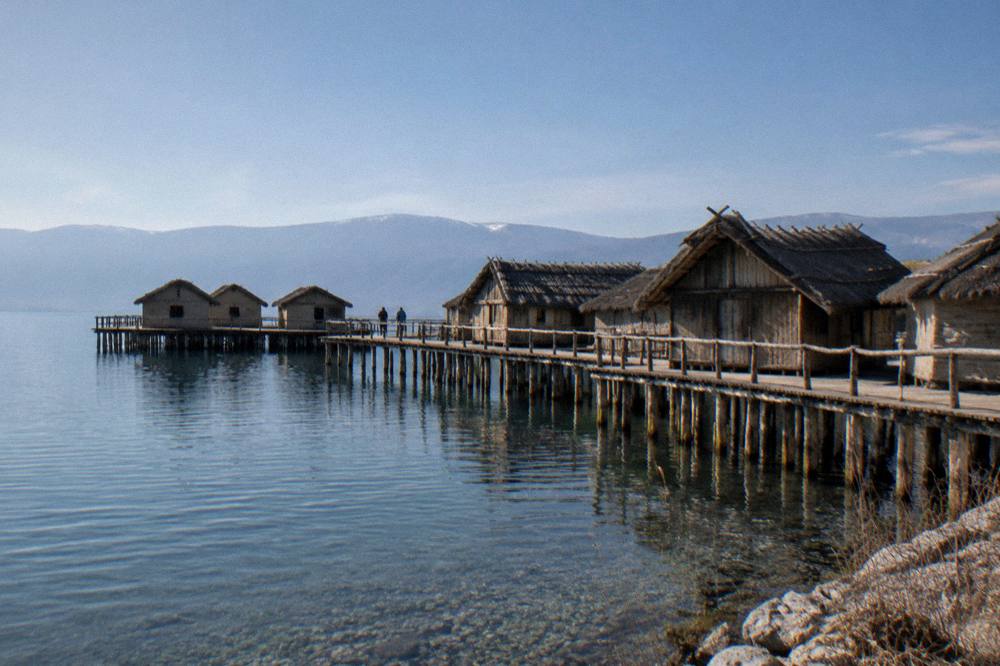
Getting there is half the decision. The shore road south from Ohrid passes the beaches and villages of the eastern shore, covered in the guide to Trpejca and Ljubanista, and continues toward St Naum at the southern end of the lake. Boat cruises from Ohrid port also run the southern shore, and the page on the Bay of Bones covers the site in detail. Either way, the trip combines a museum visit with the lake scenery that is the reason many people come to Ohrid in the first place.
A water-based day pairs naturally with the museums. A panoramic cruise of the old town from the water gives a different view of the town's amphitheatre-like setting, and combining a short cruise with the Bay of Bones by road or water is a common shape for a second day in town, the pattern described in Ohrid in two days.
To see the lake and its museum from the water, book a Bay of Bones boat trip here.
Can You Visit All Three Ohrid Museums In One Day?
Yes, all three sites can be combined in a single day: the Robev Family House and the Icon Gallery are an easy walk apart in the old town, and the Bay of Bones at Gradishte near Peshtani is the only leg that needs transport, either by road along the eastern shore or by boat from Ohrid port, so one well-sequenced day covers the whole institute network. The order that works is town first, shore second: the two town sites in the morning while the lanes are cool, then the lake leg in the afternoon when being on or beside the water is the more comfortable place to be.
The limiting factor is the shore leg. The two town sites sit within the same hillside, but the Bay of Bones is a separate journey, and the boat season shapes that journey: boat trips on the lake run roughly May to October with reduced winter schedules, so in the colder months the shore road is the dependable option. The ERA5 normals put January's mean daily high at 5.0 degrees and July's at 27.1, and rain runs from 32.9 mm in August to 92.6 mm in December, so the season in which you travel changes both the museum day and the lake leg around it. The Ohrid in spring and Ohrid in autumn guides cover those shoulder-season trade-offs.
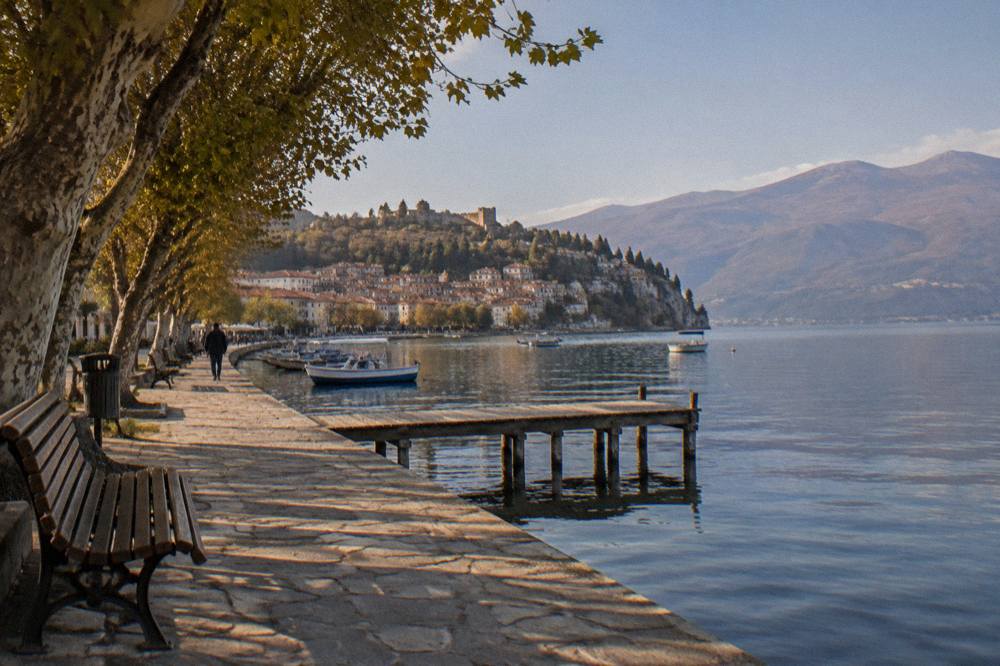
For travellers who prefer a guide over self-direction, the walking-tour product marketed as "Ohrid city tour, the best of Ohrid" covers the town's principal sights with a local guide, and it can be checked for your dates via Check availability. A guided morning through the old town followed by an independent afternoon at the Bay of Bones is one of the cleanest ways to split the day, since the guide covers the town's dense cluster of sights while the lake leg rewards going at your own pace.
| Museum day building block | Where it sits | How it is reached | Pairs naturally with |
|---|---|---|---|
| Robev Family House | Tsar Samoil St 62, old town | On foot | Old Bazaar, boardwalk |
| Icon Gallery | Perivleptos complex, upper town | On foot, stepped lanes | Plaosnik, Samuel's Fortress |
| Bay of Bones, Museum on Water | Gradishte, near Peshtani | Shore road or boat cruise | Eastern-shore beaches, St Naum |
A rainy-day version of the same day leans on the indoor sites, and the guide to Ohrid in the rain covers what remains rewarding when the ERA5 normals' wetter months deliver on their averages. The museums, a church visit or two, and the town's workshops, such as the Ohrid pearl workshops and the paper museum, are the anchors of that plan.
How Does A Museum Visit Fit A Longer Ohrid Itinerary?
In a two- or three-day Ohrid itinerary the museums slot in as one morning or afternoon block rather than a whole day: day one carries the old town including the Robev Family House and the Icon Gallery, day two carries the southern shore with the Bay of Bones and St Naum, and day three opens up Galicica National Park or a day trip to Struga, Bitola or across the border. That is the shape used across this site's itinerary guides, from Ohrid in three days to Ohrid in five days, and it keeps each day's geography coherent instead of doubling back across the lake.
The day-trip layer is where Ohrid's position pays off. Skopje is about 170 km away by road with buses taking around three hours, Tirana is reachable by minibus in roughly three to three and a half hours including the border, and the St Naum monastery area sits only about 4 km from the Tushemisht border crossing with Albania. Travellers based in Tirana can even reach Ohrid's museum town as a day trip, and the day-trip products listed lower on this page include departures from Tirana, Durres and Golem that combine Ohrid with St Naum. A trip that starts in Tirana starts in Tirana: it is a different product from an Ohrid-departure tour.
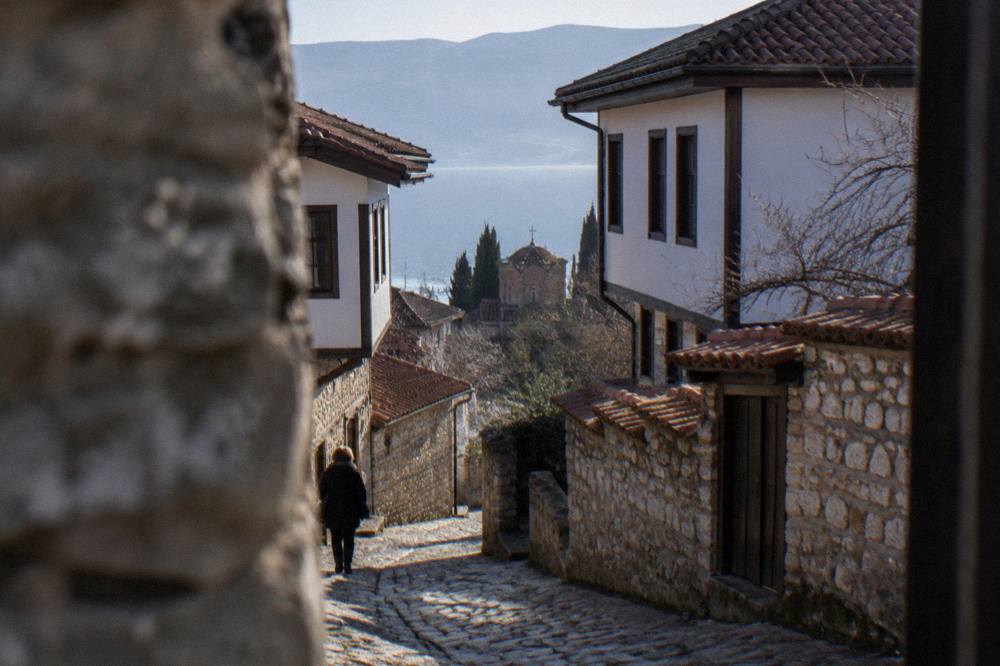
Families and mixed groups can use the museums as the reliable core of a day. The Bay of Bones in particular pairs a walk-through site with a beach setting at Gradishte, which suits the patterns described in Ohrid with kids. And for the practical questions that surround any museum day, from water safety to lake cleanliness, the answers on drinking the water in Ohrid and whether the lake water is clean cover the essentials, with the lake's 2026 bathing tests showing Class I physico-chemical quality at most measured points.
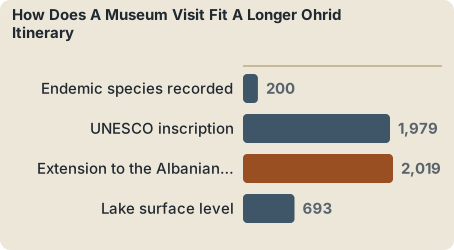
| Ohrid lake facts | Figure | Source basis |
|---|---|---|
| Age of the lake | About two to three million years | UNESCO listing |
| Endemic species recorded | Over 200, including 17 endemic fish | UNESCO listing |
| UNESCO inscription | 1979 (natural) and 1980 (cultural) | UNESCO listing |
| Extension to the Albanian part | 2019 | UNESCO listing |
| Lake surface level | About 693 m above sea level | Hydrological service gauge |
The wider UNESCO property covers roughly 94,729 hectares across both countries, which is the formal boundary inside which all three museum sites sit. That framing is worth knowing because it explains why a town this size carries a museum network of this spread: the collection is the region's, not just the town's.
When Is The Best Time To Visit The Ohrid Museums?
The museum sites themselves are year-round anchors, but the best combined museum-plus-lake visit runs from late spring to early autumn, when modelled ERA5 normals for Ohrid show mean daily highs rising from 19.5 degrees in May to 27.6 in August and the boat services that reach the Bay of Bones are running, roughly May through October on the lake's seasonal schedules. In those months a museum morning flows into an afternoon on the water or at the Gradishte beach beside the Museum on Water, and the whole three-site network works as planned.
Outside that window the plan changes shape rather than collapsing. The town sites stay reachable on foot in any weather, and the colder months suit the indoor collections and the town's workshop scene. The modelled lake surface temperatures tell the swimming side of the story: aggregator data puts January around 4.6 degrees, July around 22.9 and August around 23.5, with the UHMR multi-year October mean at 14.3 degrees. Swimming season on the lake generally runs from July, so a museum-heavy spring or autumn trip trades the beach for thinner crowds and the shoulder-season feel described in the seasonal guides.
| Season | Modelled normals, ERA5 1991-2020 | Museum day shape |
|---|---|---|
| Spring, March to May | Highs 10.0 to 19.5 C, rain 70.8 to 82.4 mm | Town sites plus shore road to the Bay of Bones |
| Summer, June to August | Highs 24.2 to 27.6 C, rain 32.9 to 43.1 mm | Full network incl. boat cruises and swimming |
| Autumn, September to November | Highs 11.5 to 22.4 C, rain 62.4 to 90.4 mm | Town sites plus a boat leg while boats still run |
| Winter, December to February | Highs 5.0 to 6.3 C, rain 74.3 to 92.6 mm | Town sites, workshops, indoor-focused days |
Common Questions About Ohrid Museums
What museums are there in Ohrid?
The main museum network runs under one institute with three sites: the Robev Family House at Tsar Samoil Street 62 in the old town, the Icon Gallery at the Perivleptos complex, and the Bay of Bones, the Museum on Water, at Gradishte near Peshtani on the lake shore.
Is the Bay of Bones the same as the Museum on Water?
Yes. Zaliv na Koskite, the Bay of Bones, is the Museum on Water, a reconstructed pile-dwelling site built over Lake Ohrid at Gradishte near Peshtani, administered by the same museum institute as the Robev Family House and the Icon Gallery.
Where is the Icon Gallery in Ohrid?
The Icon Gallery is at Klimentov Univerzitet Street bb, inside the Perivleptos complex in the upper part of the old town. It holds the region's icon collection; UNESCO's listing records more than 800 Byzantine-style icons in Ohrid from the eleventh to the end of the fourteenth century.
Can you walk between Ohrid's museums?
Two of the three, yes: the Robev Family House and the Icon Gallery are linked by the old town's stepped lanes on foot. The Bay of Bones at Gradishte near Peshtani is not walkable from the centre; it is reached by the shore road or by a boat cruise from Ohrid port.
Are Ohrid's museums inside the UNESCO site?
Yes. All three museum sites sit inside the UNESCO property "Natural and Cultural Heritage of the Ohrid Region", inscribed in 1979 and 1980 and extended to the Albanian part of the lake in 2019.
How many days do you need for Ohrid's museums?
One well-planned day covers all three sites: the two town museums in the morning and the Bay of Bones by road or boat in the afternoon. In a longer stay, the museums spread naturally across the day-by-day plans in the guides to Ohrid in two days and Ohrid in three days.