Ohrid Churches: The Ones Worth Entering
Ohrid, a lake town in North Macedonia, holds one of the densest concentrations of historic churches anywhere in the Balkans, and a UNESCO mixed World Heritage property has protected the region since 1979 and 1980. This guide sets out which churches you can enter, what tickets cost where a figure exists, and how to order the walk.
Short answer
The church sights worth entering in Ohrid are St John at Kaneo, St Sophia, Plaosnik, and the Perivleptos complex with the Icon Gallery, which charges 150 den for foreign visitors and 120 den for domestic visitors, closed Mondays, with winter hours 09:00 to 14:00 and summer hours 09:00 to 17:00.
Ohrid sits on Lake Ohrid, a freshwater mountain lake at about 693 m above sea level in North Macedonia, and its old town carries a concentration of churches that earned the whole region a place on the UNESCO World Heritage List, inscribed as the Natural and Cultural Heritage of the Ohrid Region in 1979 for its natural values and 1980 for its cultural ones, and extended to the Albanian side of the lake in 2019. UNESCO's own listing describes Ohrid as home to the oldest Slav monastery, St Panteleimon at Plaosnik, and to more than 800 Byzantine-style icons dating from the 11th to the end of the 14th century. The Ohrid Travel Guide lays out below which of these churches you can actually enter, what the tickets cost where a published figure exists, and how to order a day around them. The four names that matter most are St John at Kaneo, St Sophia, Plaosnik, and the Perivleptos complex with the Icon Gallery, and each rewards a different kind of visitor.
Which Ohrid Churches Can You Actually Enter, And What Does Each One Offer?
Four church sights anchor a visit to Ohrid: St John at Kaneo on its cliff above the lake, St Sophia in the centre of the old town, Plaosnik with the reconstructed St Clement and Panteleimon church on the plateau below the fortress, and the Perivleptos complex whose Icon Gallery is run by the national museum institute and charges 150 den for foreign visitors and 120 den for domestic visitors.
Want someone to walk you through all four churches? Book an audio walking tour here.
Each of the four plays a different role. Kaneo is the one people climb to for the setting above the water. St Sophia is the one whose interior the Ohrid Summer Festival uses, with its 66th edition opening on 12 July 2026 at the Ancient Theatre nearby. Plaosnik is the archaeological and religious heart, the site UNESCO itself describes as the oldest Slav monastery. Perivleptos is where the painted heritage lives, in a gallery the museum institute stocks with icons across a span UNESCO dates from the 11th to the end of the 14th century.
What follows is the access picture as the published sources give it. The museum institute that runs the Icon Gallery publishes its prices and seasonal hours on its own site, and those figures are firm. For the standalone churches, the planning position is simpler: go in daylight, in the main season, and check any fee at the door. The table below gathers what can be said with a source behind it.
| Sight | What it is | Entry figure with a published source |
|---|---|---|
| Icon Gallery, Perivleptos complex | Museum institute gallery of icons | 150 den foreign, 120 den domestic, 60 den children and students (institute site) |
| St John at Kaneo | Cliffside church above the lake | Check at the door; no published institute figure |
| St Sophia | Central old town church, festival venue | Check at the door; no published institute figure |
| Plaosnik, St Clement and Panteleimon | Reconstructed monastery church on the archaeological plateau | Check at the door; no published institute figure |
| St Naum monastery, south of Ohrid | Monastery at the Crn Drim springs, a day trip | 150 den per person (cruise operator's listing) |
A shared small-group walk is a practical way to cover the church lanes when the climbs and the geography feel unclear, and Discover Ohrid's Hidden Gems, a shared-group walk is this site's featured pick for the old town; Check availability if the date matters to your plans. For the wider picture of the town's sights, the things to do in Ohrid overview lists the non-church highlights too, from the fortress to the Old Bazaar.
How Much Do Church And Museum Tickets In Ohrid Cost?
Tickets to the museum institute's sites in Ohrid cost 150 den for foreign visitors, 120 den for domestic visitors and 60 den for children and students, per the institute's own website, and the Icon Gallery, the museum's church-related site, uses exactly that scale, so budget for each adult in your party at the published foreign rate and expect to pay any separate church door fees in cash on top.
The denar, abbreviated MKD, is the currency of North Macedonia, and euros are commonly quoted for tours and transfers but are not legal tender, so church door fees are paid in denar. The institute's published rates cover its own properties: the Icon Gallery in the Perivleptos complex, Robev Family House, and the Museum on Water at the Bay of Bones. The standalone churches sit outside that ticket system, and their door fees, where a fee applies, are collected on the spot.
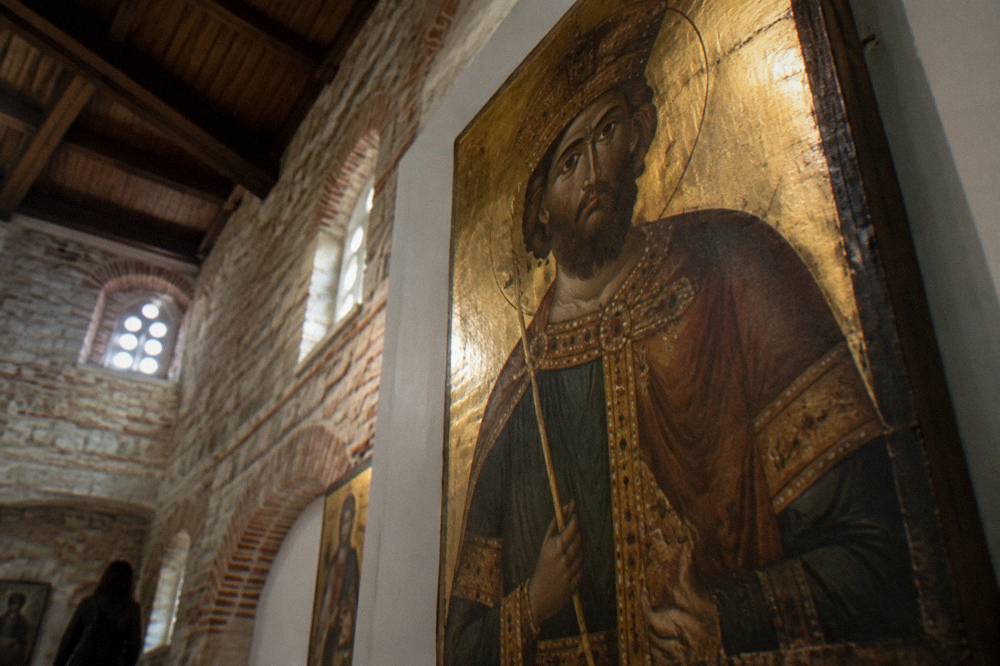
The institute also publishes its seasonal schedule, and the Icon Gallery's hours differ by season: winter hours of 09:00 to 14:00 run from 1 October to 30 April, and summer hours of 09:00 to 17:00 run from 1 May to 30 September, with the gallery closed on Mondays year-round. That Monday closure is the single most useful planning fact on this page, because a Monday arrival in the off-season means the gallery door stays shut.
| Museum institute site | Foreign adult | Domestic adult | Children and students | Closed |
|---|---|---|---|---|
| Icon Gallery (Perivleptos complex) | 150 den | 120 den | 60 den | Monday |
| Robev Family House | 150 den | 120 den | 60 den | Monday |
| Museum on Water, Bay of Bones | 150 den | 120 den | 60 den | Monday |
| Season | Dates | Icon Gallery hours |
|---|---|---|
| Winter | 1 October to 30 April | 09:00 to 14:00 |
| Summer | 1 May to 30 September | 09:00 to 17:00 |
Budget context for the rest of the town, including food and accommodation trade-offs, sits in the Ohrid cost and budget guide, and the denar and money guide explains exchange offices, ATMs and the euro peg in detail. For how the church stops fit a fuller itinerary, how many days in Ohrid breaks down one-day, two-day and three-day plans.
Is St John At Kaneo Worth The Walk Down From The Old Town?
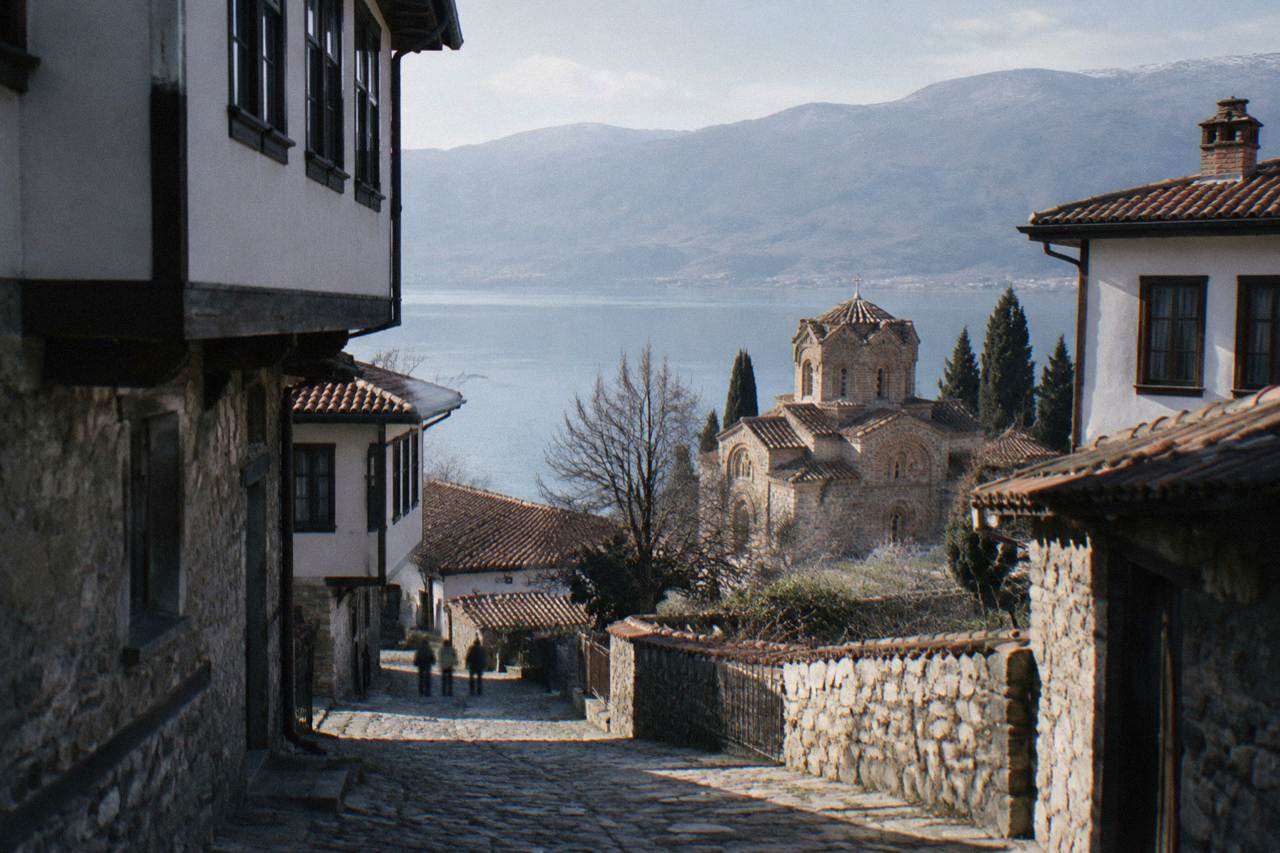
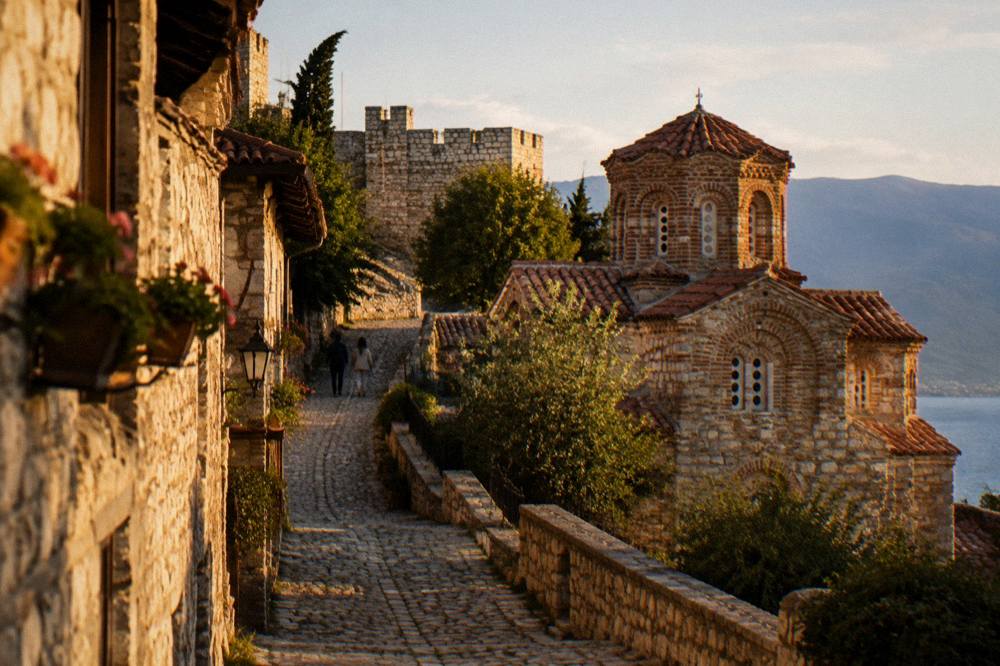
St John at Kaneo is Ohrid's most photographed church, standing above the lake on the Kaneo promontory below the old town, and the walk down to it from the centre is short, on foot, through lanes that climb from the shore toward the fortress, so the question is less whether it is worth it and more when to go, given no published institute hours and a door fee collected on the spot.
The church's position is the whole argument. The old town of Ohrid climbs from the lakeshore to Samuel's Fortress, and Kaneo sits on the water side of that slope, reachable only on foot through the lanes of the Kaneo district. The Kaneo district guide context aside, the practical reading is this: the exterior and the setting above the water cost nothing and can be seen at any hour, while the interior opens in daylight hours in the main season and charges its fee at the door.
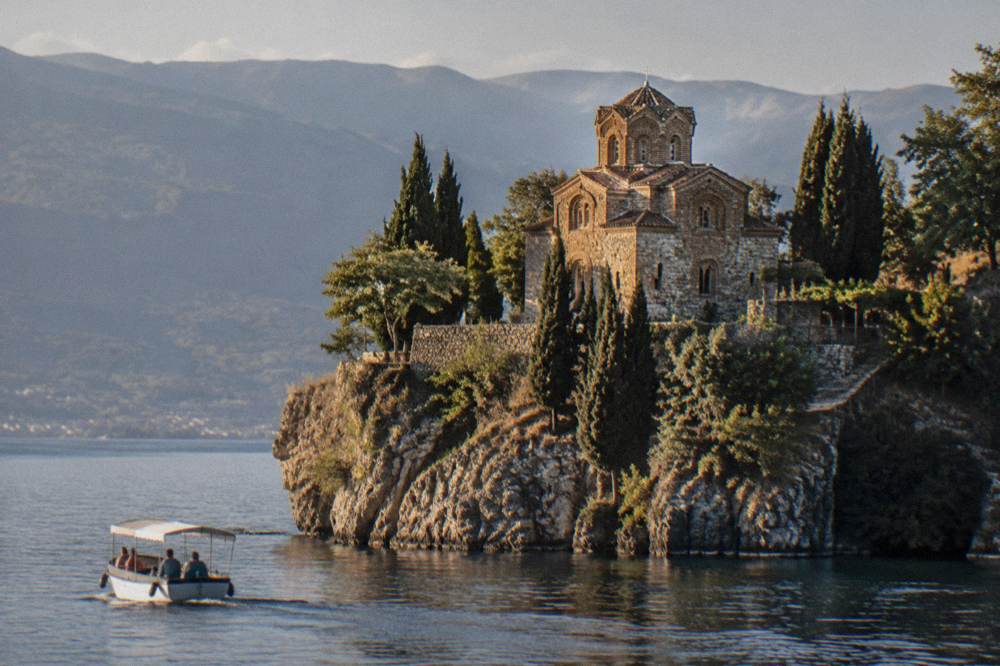
Two practical notes shape the visit. First, the lanes are stepped and on foot, so shoes matter more than timing. Second, the 2026 resident-only parking regime on old-town streets such as Ilindenska, Kosta Abrash and Car Samoil, introduced in summer 2026, means a car is a liability in this part of town; the Ohrid parking guide carries the detail. The church also reads differently from the water, and the panoramic boat cruises that leave the old town harbour pass directly beneath it; the Lake Ohrid boats and ferries guide covers those departures.
For visitors pairing the church walk with the rest of the evening, the Ohrid at night itinerary adds the fortress walls after dark and the lakeside quay, both of which sit within the same walking circuit as Kaneo.
What Do You See At Plaosnik, The Site UNESCO Calls The Oldest Slav Monastery?
Plaosnik is the archaeological and religious plateau between the fortress and the lake where the church of St Clement and Panteleimon now stands, on a site UNESCO's World Heritage listing describes as the oldest Slav monastery, and the wider complex, reached on foot from the fortress or down from the old town, layers a reconstructed church over excavated foundations in an open, walkable precinct.
The UNESCO claim is the headline, and it is worth quoting precisely: the listing for the Natural and Cultural Heritage of the Ohrid Region names St Panteleimon at Plaosnik as the oldest Slav monastery, and the same listing credits Ohrid with more than 800 Byzantine-style icons from the 11th to the end of the 14th century, the collection from which the Icon Gallery across town draws. The current church is a reconstruction on early foundations, and the precinct around it is excavated and open.
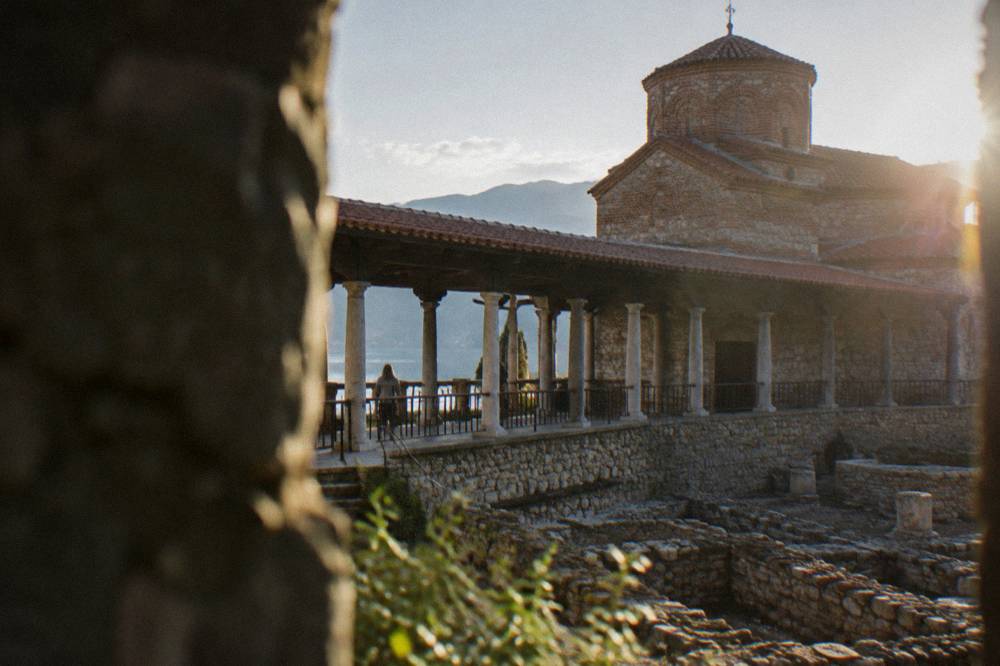
Plaosnik pairs naturally with the fortress above it, and the Samuel's Fortress guide covers that climb. A note of caution for planning: the fortress itself has no published ticket price or hours in the sources this site uses, so treat any figure quoted at the gate as the gate's own answer rather than a published fact. The Plaosnik guide on this site goes deeper on the site's layers, and the question how many churches are in Ohrid addresses the famous count directly.
The practical sequence that works: fortress first for the overview, then down through Plaosnik, then on through the old town lanes toward St Sophia and eventually Kaneo, a descent rather than a climb, all of it on foot.
What Role Does St Sophia Play In Ohrid Today?
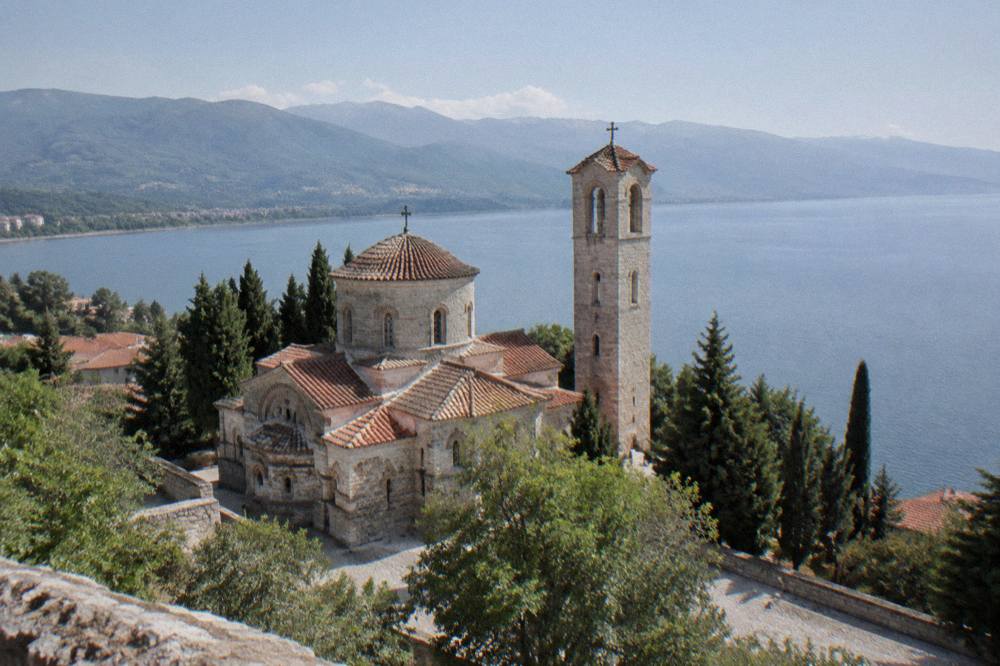
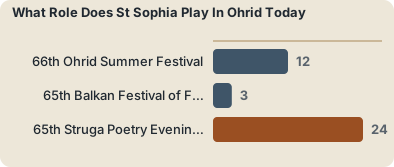
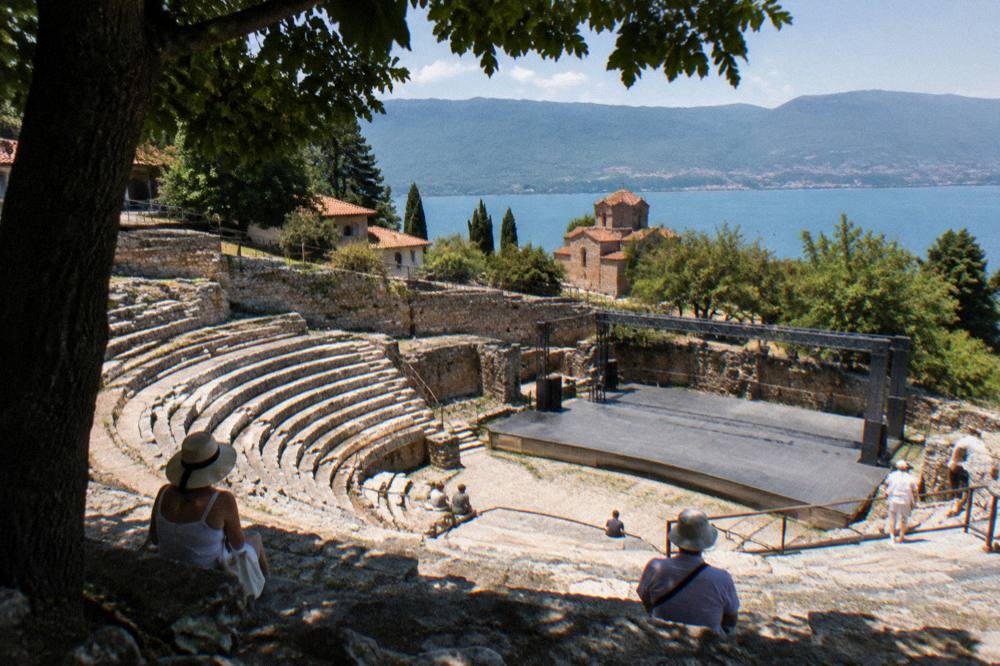
St Sophia is the large central church of the old town and, beyond its standing as a monument, it functions as a working festival venue, with the Ohrid Summer Festival using it among its traditional spaces while the 66th edition of that festival opened on 12 July 2026 with a gala at the Ancient Theatre, Ohrid's Roman-stage site first excavated in 1935, whose capacity rose to about 5,000 after a later upper tier was added.
The festival connection is the modern reason St Sophia matters to a visitor's calendar. The 66th Ohrid Summer Festival ran from its 12 July 2026 opening to its traditional 20 August close, a forty-day programme across the town's historic venues. The Ancient Theatre, where the opening gala took place, is itself a church-adjacent stop on any old town circuit, built at the end of the 3rd or the start of the 2nd century BC in the late Hellenistic period, per the museum institute's own page on the site.
| Ohrid event, 2026 edition | Dates | Opening or key venue |
|---|---|---|
| 66th Ohrid Summer Festival | 12 July to 20 August 2026 | Ancient Theatre (opening gala, 12 July) |
| 65th Balkan Festival of Folk Songs and Dances | 3 to 6 July 2026 | Grigor Prlichev cultural centre |
| 65th Struga Poetry Evenings, in nearby Struga | 24 to 29 June 2026 | Struga venues |
A visit planned around the festival window turns the churches from static monuments into performance spaces, and July's modelled climate, an ERA5 reanalysis average daily high of 27.1 C for Ohrid across 1991 to 2020 with 34.7 mm of rain for the month, makes evening attendance the comfortable option. The best time to visit Ohrid guide and the Ohrid weather guide carry the full month-by-month picture.
What Is In The Perivleptos Complex And The Icon Gallery?
The Perivleptos complex, in the old town on Klimentov Univerzitet street, pairs the Church of the Holy Mother of God Perivleptos with the museum institute's Icon Gallery, which displays icons from the collection UNESCO credits to Ohrid, more than 800 Byzantine-style works spanning the 11th to the end of the 14th century, and charges 150 den for foreign adults, 120 den for domestic adults and 60 den for children and students.
This is the one church sight in Ohrid where every planning number is published and firm. The gallery's winter hours, 09:00 to 14:00 from 1 October to 30 April, and summer hours, 09:00 to 17:00 from 1 May to 30 September, come from the museum institute's own site, as does the Monday closure. The icons inside are the reason to go: the collection UNESCO documents for Ohrid is one of the largest bodies of Byzantine-style icon painting anywhere, and the gallery is where a planned portion of it hangs.
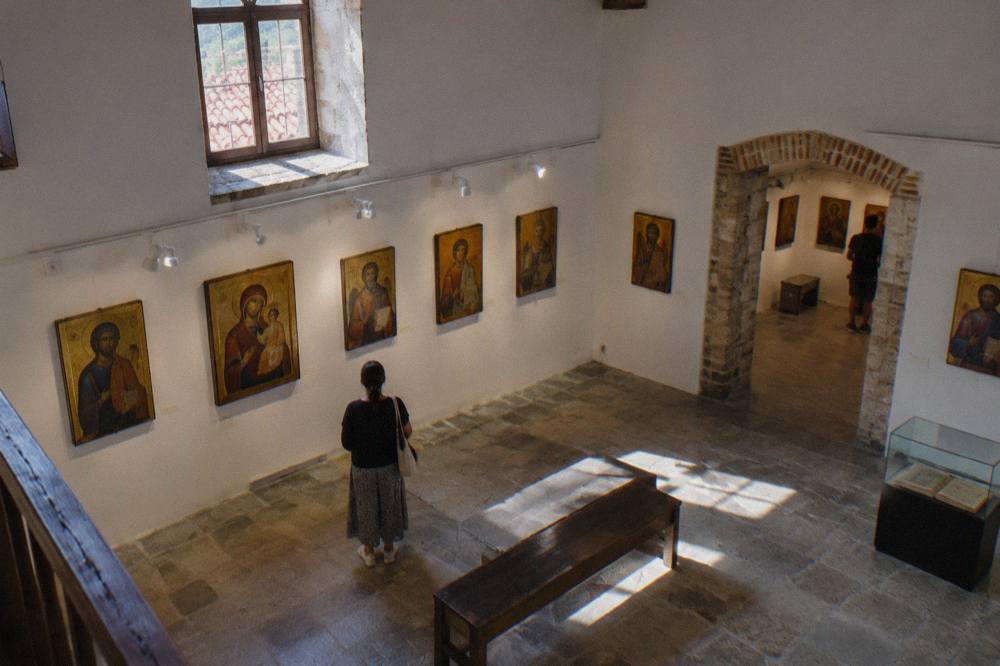
Perivleptos sits on the walking line between St Sophia and Plaosnik, which makes it an easy insertion rather than a detour. Visitors tight on time should rank it above the church interiors whose contents no published source describes, because the gallery's holdings are documented and its access is predictable. The wider painted and carved heritage of the town, including the museum's other sites, is covered in the site's dedicated pages on the Icon Gallery and the national museum.
How Do You Fit Ohrid's Churches Into One Walking Day?
A single walking day covers all four anchor churches in a downhill sequence: start at Samuel's Fortress and Plaosnik on the heights in the morning, drop through the old town to St Sophia and the Perivleptos Icon Gallery around midday when the gallery is open, continue down to St John at Kaneo in the afternoon, and finish on the lakeshore quay, a route of connected pedestrian lanes with no transport needed and every stop within the old town.
The order matters because of the terrain. The old town climbs from the lake to the fortress, and the lanes between are stepped and on foot, so a top-down plan saves the climbs for the cool hours. The gallery's opening hours shape the middle of the day: in winter it closes at 14:00 and on Mondays it does not open at all, so a Monday arrival should reverse the plan and lead with the outdoor stops.
| Time of day | Stop | Why then |
|---|---|---|
| Morning | Samuel's Fortress heights and Plaosnik | Cooler hours for the upper town; precinct open air |
| Afternoon | St John at Kaneo | Daylight interior hours; descent to the shore |
| Evening | Lakeshore quay and dinner | End at the water without another climb |
For a second day, the church story continues outside the town. The St Naum monastery at the south end of the lake, at the springs of the Crn Drim, charges 150 den per person per a cruise operator's listing, and a full-day boat cruise from Ohrid port to St Naum with a stop at the Bay of Bones runs 7 hours at from 1,200 den for adults and 600 den for children, per the operator's own tariff. The St Naum monastery guide and the Lake Ohrid guide cover that extension, and the rowboats through the springs run at about 5 EUR per boat, per the same listing.
Visitors arriving from the capital can also buy the whole church town as a single day trip, and the trio below reflects the strongest reviewed options for exactly that, alongside the small-group walk this site features.
A final planning layer is seasonal. Modelled lake surface temperatures put the water at about 14.7 C in October against 23.5 C in August, per aggregator data, and the boats to St Naum run about May to October with a reduced winter schedule, so an off-season visit trades the lake extension for quieter church lanes. The how to get to Ohrid guide and the where to stay in Ohrid guide close out the logistics.
Common Questions About Ohrid Churches
How many churches are in Ohrid?
Ohrid is famous for a very large count of churches, historically quoted in the dozens across the old town and the surrounding shore. The dedicated answer on this site, how many churches are in Ohrid, unpacks the figure and where it comes from. The four that anchor a first visit are St John at Kaneo, St Sophia, Plaosnik and the Perivleptos complex.
Which Ohrid churches charge entry?
The Icon Gallery in the Perivleptos complex charges 150 den for foreign visitors, 120 den for domestic visitors and 60 den for children and students, per the museum institute's own website. St Naum monastery charges 150 den per person per a cruise operator's listing. The door fees at St John at Kaneo, St Sophia and Plaosnik, where a fee applies, are collected on the spot.
When is the Icon Gallery in Ohrid open?
The Icon Gallery is open 09:00 to 14:00 in winter, from 1 October to 30 April, and 09:00 to 17:00 in summer, from 1 May to 30 September, and it is closed on Mondays in both seasons, per the museum institute's published schedule.
Is there a dress code for Ohrid churches?
These are working Orthodox churches and monastery sites, and modest clothing that covers shoulders and knees is the standard expectation at Orthodox places of worship. No official Ohrid dress-code regulation is published in the sources this site uses, so plan for the standard and follow any instruction given at the door.
Can you see Ohrid's churches in one day?
Yes. A downhill walking day covers Samuel's Fortress and Plaosnik, then St Sophia and the Perivleptos Icon Gallery, then St John at Kaneo, all connected by pedestrian lanes. The only scheduling constraint is the gallery's Monday closure and its 14:00 winter close.
Are Ohrid's churches part of the UNESCO World Heritage site?
Yes. The Natural and Cultural Heritage of the Ohrid Region was inscribed in 1979 for its natural values and 1980 for its cultural ones, and extended to the Albanian part of the lake in 2019. UNESCO's listing specifically names the oldest Slav monastery at Plaosnik and Ohrid's more than 800 Byzantine-style icons from the 11th to the end of the 14th century.