Ohrid Travel Tips: The Practical Basics Before You Go
Ohrid sits on Lake Ohrid in North Macedonia, a lake at about 693 m above sea level inside a UNESCO mixed heritage site, and a handful of practical details make the difference between a smooth visit and a confused one.
Short answer
Bring denars or a card to withdraw them, carry a passport valid well beyond your stay, remember North Macedonia is outside the EU and Schengen, and plan around Monday closures at the museum sites and a summer-peaked season.
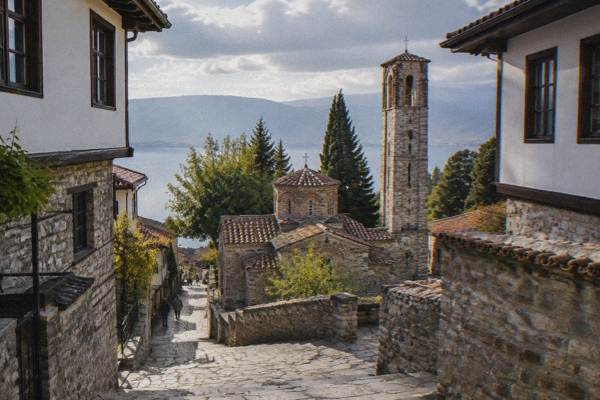
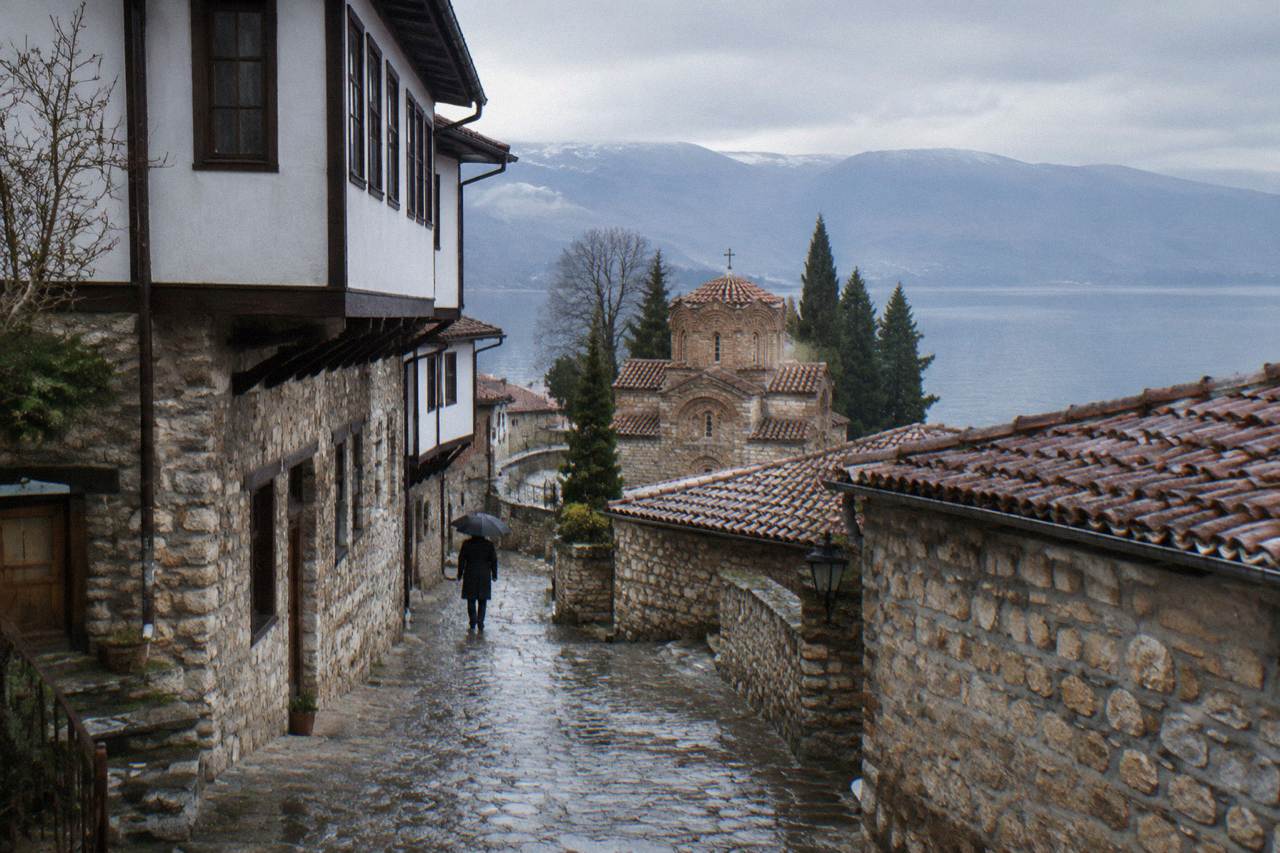
Ohrid is a lakeside town in North Macedonia, on the shore of Lake Ohrid, a freshwater mountain lake whose surface sits at about 693 m above sea level. The town and the lake together form the UNESCO mixed heritage site "Natural and Cultural Heritage of the Ohrid Region", inscribed in 1979 and 1980 and extended to the Albanian part of the lake in 2019. This page from the Ohrid Travel Guide collects the practical basics, money, entry rules, transport, sight hours and lake rules, so the planning side of the trip takes an afternoon rather than a week. For the sight list itself, start with things to do in Ohrid and come back here for the small print.
What Money Do You Need In Ohrid?
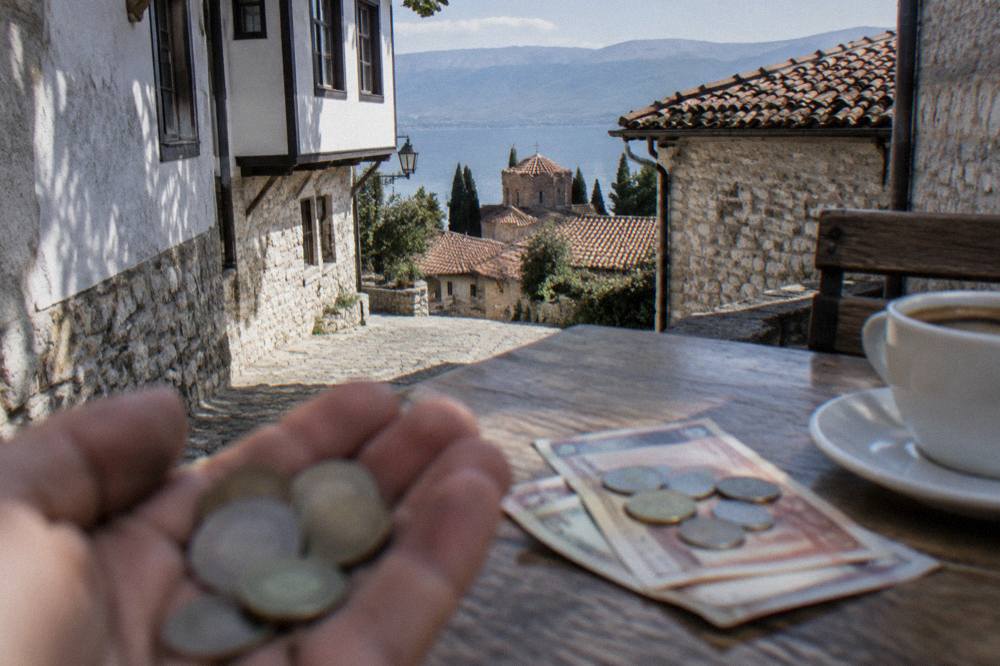
The local currency is the Macedonian denar (MKD), euros are not legal tender in North Macedonia, and the National Bank's middle rate on 19 October 2026 was 1 EUR = 61.6633 MKD, with the denar de facto pegged to the euro through the central bank's exchange-rate targeting. That peg means the euro rate moves very little, but a price quoted in a shop, a museum or a taxi is a denar price, and paying in cash euros informally tends to happen at poor rates.
ATMs are widely available for denar withdrawals, and exchange offices and banks handle conversions. Tours and transfers aimed at visitors are commonly quoted in euros, but on the ground the denar is what counts. The museum institute's ticket prices, the Galicica park fee and the boat fares are all denar figures, and there is no reason to convert them mentally into anything else. The money page, Macedonian denar and money in Ohrid, goes deeper on exchange and withdrawals.
| Item | Figure | Note |
|---|---|---|
| Local currency | Macedonian denar (MKD) | Sole legal tender |
| NBRM middle rate, 19 Oct 2026 | 1 EUR = 61.6633 MKD | 1 USD = 54.7972 MKD |
| Euro status | Not legal tender | Informally accepted at poor rates |
| Denar and euro | De facto peg | NBRM targets the denar/euro rate |
Accommodation and restaurant prices are covered on the Ohrid cost and budget page. What matters here is simpler: arrive with a card that works in foreign ATMs, withdraw denars, and keep small notes for museum tickets, buses and market stalls.
Do You Need A Visa For Ohrid?
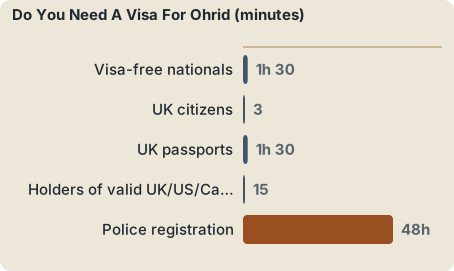
Visa-free nationals may stay in North Macedonia up to 90 days in any 180-day period, UK visitors may stay up to 3 months without a visa, and every foreign visitor must be registered with the local police within 48 hours of arrival, which hotels do automatically, according to the Foreign, Commonwealth and Development Office. Holders of a valid multiple-entry UK, US or Canadian visa, or a Schengen residence permit, may enter for up to 15 days under the foreign ministry's rules.
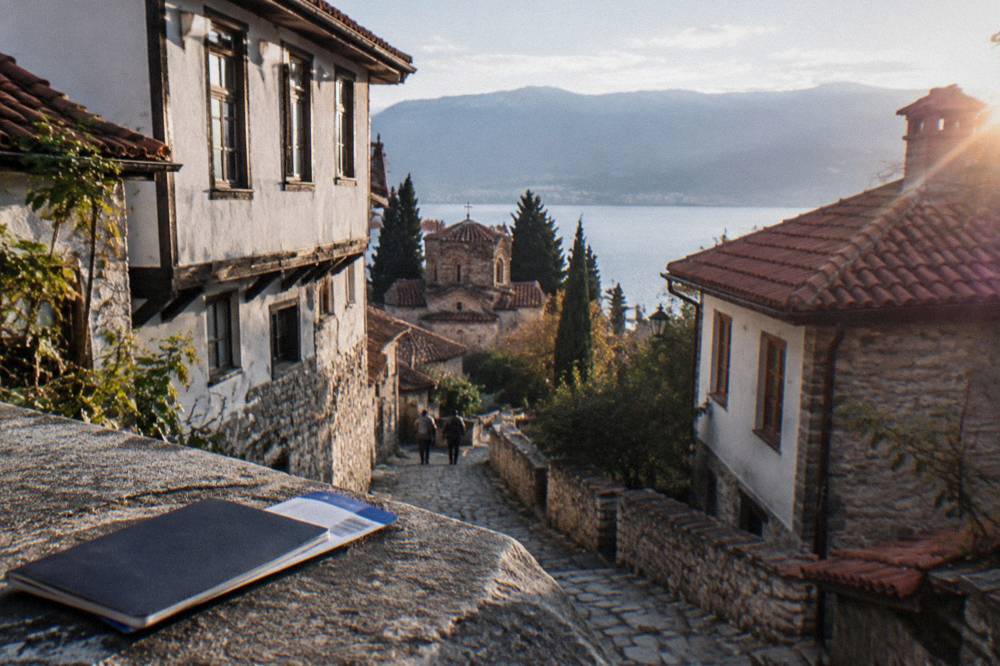
North Macedonia is not in the European Union and not in Schengen, so EU rules on roaming, duty free and border checks do not apply the way they do across the border in Greece or, since 1 January 2025, Bulgaria. The UK passport rule is specific: the expiry date must be at least 90 days after the date you arrive. Anyone staying in private accommodation rather than a hotel should ask the host about the police registration, because the 48-hour obligation sits with the visitor, not the hotel. The full detail is on North Macedonia visa and entry.
EU roaming rules do not apply, so sorted data matters. Book a travel eSIM here.
| Traveller | Rule | Source basis |
|---|---|---|
| Visa-free nationals | Up to 90 days in any 180-day period | Foreign ministry, mfa.gov.mk |
| UK citizens | Up to 3 months, no visa | FCDO |
| UK passports | Expiry at least 90 days after arrival | FCDO |
| Holders of valid UK/US/Canada visa or Schengen residence | Up to 15 days | Foreign ministry |
| Police registration | Within 48 hours; hotels do it | FCDO |
How Do You Get To Ohrid?
Ohrid's own airport, St Paul the Apostle (OHD), lies about 10 km from the centre and is served mainly by Wizz Air, while the standard overland route is the roughly 170 km bus journey from Skopje, about 3 hours and 850 to 950 MKD one way, and from Tirana a shared minibus takes 3 to 3.5 hours across the border for roughly EUR 15 to 20. There is no passenger train to Ohrid and no domestic flight from Skopje.
The airport is reached via the E65, and a taxi from it to the centre is reported at about 600 to 800 MKD, roughly EUR 12, a reported figure worth agreeing before the ride. From Skopje, several bus operators run daily departures and the tolls for a driver add about 140 MKD across the A2 plazas. From Tirana, roughly five to seven minibuses a day leave mostly from the south and regional terminal, crossing at Qafe Thane or Kjafasan. Route by route, the detail lives on how to get to Ohrid, with dedicated pages for Skopje to Ohrid, Tirana to Ohrid and Ohrid airport.
| Route | Distance or time | Fare | Tier |
|---|---|---|---|
| OHD airport to centre | About 10 km | Taxi reported 600 to 800 MKD | R |
| Skopje to Ohrid bus | About 170 km, about 3 h | 850 to 950 MKD | V (secondary) |
| Skopje to Ohrid car | About 172 km, about 2.5 h | Tolls about 140 MKD | V (secondary) |
| Tirana to Ohrid minibus | 3 to 3.5 h with border | About EUR 15 to 20 | V (secondary) |
| Train to Ohrid | None | None | V |
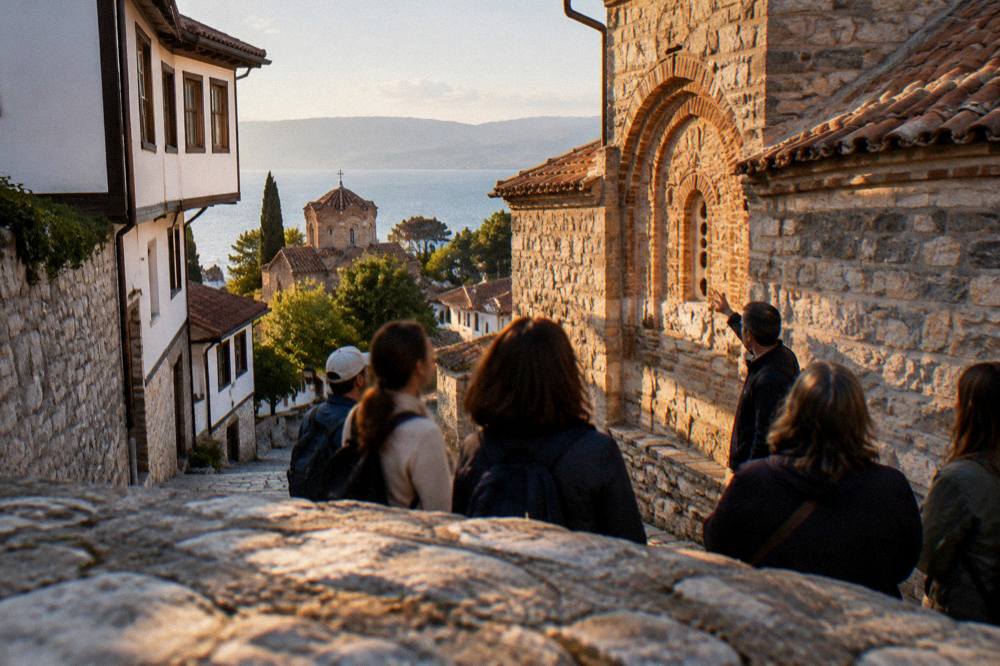
Arriving visitors who want the town explained on day one can join a guided walk. The full-day city tour of Ohrid pairs the old town with the lakeshore, and Check availability covers the operator's live listing. It suits a first day particularly well, because the guides place each church and gate in context before you wander the lanes alone.
What Is The Weather Like In Ohrid?
Ohrid's climate normals, modelled from ERA5 reanalysis for 1991 to 2020 at a grid cell near the town, give a July mean daily high of 27.1 C and an August high of 27.6 C, a January mean daily low of minus 0.8 C, and yearly precipitation of 816.6 mm, with December the month of highest rainfall at 92.6 mm and August the lowest at 32.9 mm. These are modelled reanalysis values, not a weather-station record, and no sunshine-hour figures belong alongside them.
Summer days are warm and settled; winter brings snow to the town and heavier snow to Galicica National Park above it, where the main road can close typically between January and March. Autumn and spring sit between the two, with rainfall spread fairly evenly through the cooler months. Month-by-month figures, including the swimming angle, are on Ohrid weather and the best time to visit Ohrid.
| Month | Mean daily high C | Mean daily low C | Rain mm |
|---|---|---|---|
| Jan | 5.0 | -0.8 | 76.5 |
| Feb | 6.3 | 0.0 | 74.3 |
| Mar | 10.0 | 2.5 | 80.5 |
| Apr | 14.6 | 6.3 | 82.4 |
| May | 19.5 | 10.8 | 70.8 |
| Jun | 24.2 | 15.2 | 43.1 |
| Month | Mean daily high C | Mean daily low C | Rain mm |
|---|---|---|---|
| Jul | 27.1 | 18.3 | 34.7 |
| Aug | 27.6 | 19.0 | 32.9 |
| Sep | 22.4 | 14.9 | 62.4 |
| Oct | 17.4 | 10.3 | 76.0 |
| Nov | 11.5 | 5.3 | 90.4 |
| Dec | 6.2 | 0.9 | 92.6 |
The lake moderates the shoulder seasons, and the modelled lake surface temperatures tell the swimming story: about 4.6 C in January, 22.9 C in July and 23.5 C in August, with the comfortable swimming season running from July, while the UHMR multi-year October mean is 14.3 C. Lake Ohrid covers the water itself in depth.
What Are The Opening Hours And Ticket Prices At Ohrid's Sights?
The NI Institute and Museum Ohrid sells tickets to its sites at 120 MKD for domestic visitors and 150 MKD for foreign visitors, with a children's and students' rate reported at 60 MKD, per the institute's own website. Its sites run a winter schedule from 1 October to 30 April and a summer schedule from 1 May to 30 September, and the museum sites close on Mondays.
Robev Family House, the Museum on Water at the Bay of Bones and the Icon Gallery each publish their own hours on the institute's pages.
The single most useful planning fact is the Monday closure: it applies to the institute's listed museum sites, so a Monday is the day for the Old Bazaar, the lanes and the lakeshore rather than the museum interiors. The three great churches, St John at Kaneo, St Sophia and Plaosnik, are each reported at about 150 MKD entry, a reported figure to confirm on the spot.
| Site | Ticket | Hours | Closed |
|---|---|---|---|
| Robev Family House | 120/150 MKD domestic/foreign | Winter 09:00-15:30; summer two shifts 09:00-15:30 and 13:30-20:00 | Monday |
| Museum on Water, Bay of Bones | 120/150 MKD | Winter 09:00-15:30; summer 09:00-16:30 | Monday |
| Icon Gallery, Perivleptos | 120/150 MKD | Winter 09:00-14:00; summer 09:00-17:00 | Monday |
| St Naum monastery | 150 MKD (cruise operator's list) | Published hours absent | Not stated |
| Galicica National Park | 250 MKD per vehicle; 100 MKD on foot from the Ohrid-side gate | Open year-round | Snow can close the road Jan-Mar |
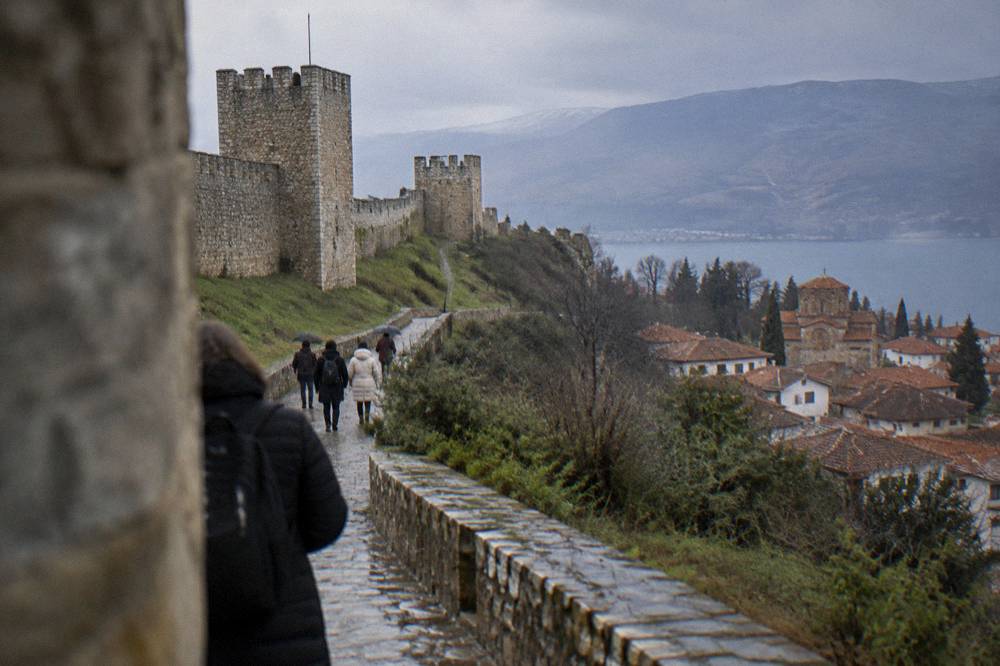
Beyond the town, the full-day boat cruise from Ohrid port to St Naum with the Boat Armada operator runs 7 hours at from 1,200 den for an adult and 600 den for a child, and a rowboat through the Crn Drim springs at St Naum costs about 5 EUR. Individual sights have their own pages, including Samuel's Fortress, St John at Kaneo and the Bay of Bones.
Is Ohrid Safe?
Ohrid is considered safe by the standard reference points: the US State Department advisory for North Macedonia stands at Level 1, Exercise Normal Precautions, and the emergency numbers to save are ambulance 194, police 192 and roadside assistance 196, per the FCDO's help page. Tap water in Ohrid is generally drinkable from the municipal supply, a weakly sourced but consistent finding, and the town's 2026 bathing water tests came back Class I physico-chemically at every point except Grashnica beach.
The usual lake-country cautions apply rather than any specific threat. Swimmers should respect the 2026 navigation limits described below, drivers should note that headlights must be on day and night in North Macedonia and a green card should be carried. The 2026 water quality testing, published by the Institute of Public Health, rated most microbiological samples Excellent, with poorer ratings at individual points including Grashnica beach and the Studencishte canal. More detail sits on is Ohrid safe and is it safe to travel to North Macedonia right now.
| Service | Number |
|---|---|
| Ambulance | 194 |
| Police | 192 |
| Roadside assistance | 196 |
How Do You Get Around Ohrid And Where Can You Park?
Ohrid's old town is walked rather than driven: the lanes climb from the lake to the fortress on foot, there are no trams and no bike share, and from summer 2026 a resident-only parking regime applies to old-town streets including Ilindenska, Kosta Abrash and Car Samoil, with non-resident cars liable to clamping, per the municipal decision as reported. Local buses to Struga run for roughly 100 to 150 MKD, a figure from older guides worth confirming on board.
A car is useful for the wider lake, Galicica and Lake Prespa, less useful inside the old town itself. Anyone driving should expect tolls paid per plaza with no vignette, headlights always on, and the parking regime to push visitor cars into lots outside the resident streets. The practical detail is spread across getting around Ohrid, Ohrid parking, Ohrid car rental and taxis in Ohrid.
What Lake Rules Apply In Ohrid In 2026?
A Government decision of 2 June 2026, announced by the Ministry of Transport, bans jet skis on Lake Ohrid from 1 July to 31 August between 11:00 and 19:00, bans boats at night from 3 June to 31 August between 21:00 and 05:00, and extends the night limit into September and October with shifted hours, all for swimmer safety. These are dated 2026 rules, not permanent law, and they shape how the lake feels through the peak season.
The same summer brought a drop in the lake level through mid-August, with the UHMR gauge reading 693.15 m in late October against an October multi-year mean of 693.31 m, still above the agreed minimum of 693.10 m. The lake sits at about 693 m above sea level, and Lake Prespa, across the Galicica ridge, sits about 148 m higher at 841.36 m on the same gauge day. None of this closes beaches; it is context for why swimming zones and boat corridors are marked the way they are. Boat transport detail, including the seasonal St Naum services, is on Lake Ohrid boats and ferries.
How Many Days Do You Need In Ohrid?
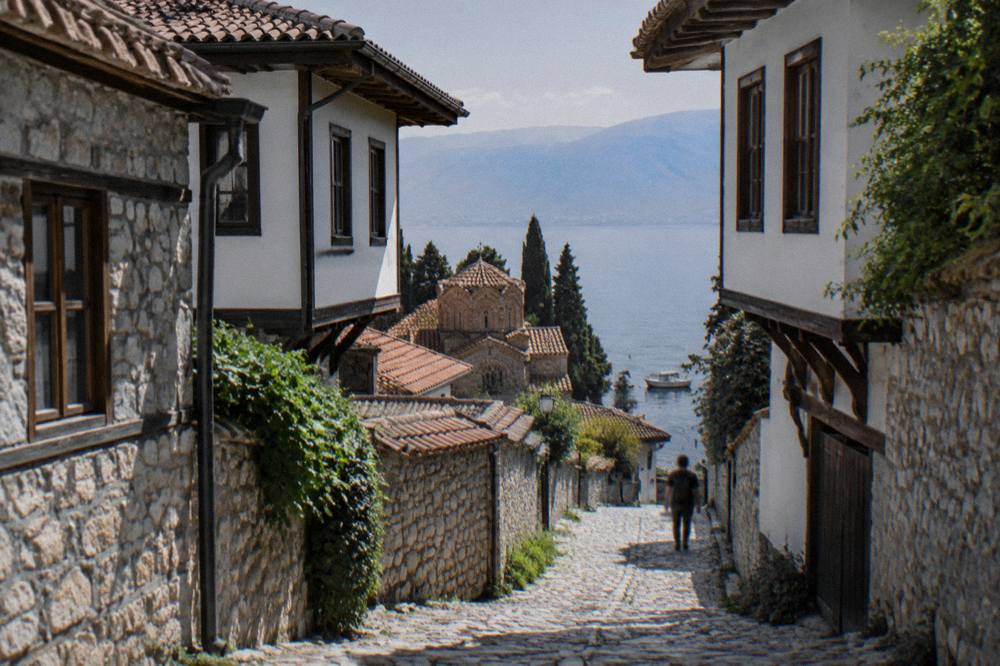
Two days cover the old town's core sights, the fortress ground, Kaneo and a boat hour on the water, while three to four days add St Naum, the Bay of Bones, a Galicica viewpoint and a Struga afternoon, which is why the standard advice lands on three days for a first visit with one lakeshore excursion. The museum sites' Monday closure means the order of days matters more than their number.
Pairing a walking day with a water day is the shape that works. A morning walk through the old town, an afternoon cruise, a full day for St Naum by boat or road, and a spare day for Galicica or Struga from Ohrid fills itself without rushing. The itinerary pages, Ohrid in one day, Ohrid in two days and how many days in Ohrid, sequence it sight by sight, and where to stay in Ohrid settles the neighbourhood question.
What Should You Book Ahead In Ohrid?
The experiences worth booking ahead are a guided old-town walk, a boat trip on the lake and a wine tasting, because all three are fixed-session products with limited seats, while the museum sites, the churches and the fortress ground are pay-on-arrival and need nothing more than a day without a Monday closure. Booking a session product for day one also front-loads the orientation.
The trio below spans the three shapes: a full guided day around the town, a semi-private day trip that adds Struga to Ohrid for visitors starting from Tirana, and a panoramic boat hour along the old-town shore. Each listing carries its own price, rating and duration, rendered live from the operator's listing.
Worth adding beyond those: the sunset cruise on Lake Ohrid fits the last evening of a stay, and the food angle, trout, tavche gravche and the local wine list, is mapped on Ohrid food and Ohrid restaurants. A first visit that books one guided walk, one boat and one tasting, and leaves the rest to the lanes, has the balance about right.
Common Questions About Ohrid Travel Tips
Can I use euros in Ohrid?
No. The Macedonian denar (MKD) is the only legal tender, and while euros are informally accepted in some tourist settings, the rates are poor. Withdraw denars from an ATM; the denar is de facto pegged to the euro, at 61.6633 MKD per euro on the National Bank's 19 October 2026 middle rate.
Is Ohrid on the sea?
No. Ohrid is a lakeside town in North Macedonia on Lake Ohrid, a freshwater mountain lake at about 693 m above sea level, inside a UNESCO mixed heritage site. There is no sea coast, no river and no tram network.
Are the Ohrid museums open on Mondays?
No. The NI Institute and Museum Ohrid's sites, including Robev Family House, the Museum on Water at the Bay of Bones and the Icon Gallery, are closed on Mondays and run a winter schedule from 1 October to 30 April.
Do I need to register with the police in Ohrid?
Foreign visitors must be registered with the local police within 48 hours of arrival. Hotels handle this automatically; anyone in private accommodation should arrange it with their host, per the FCDO.
Is North Macedonia in the EU or Schengen?
No to both. North Macedonia is outside the European Union and the Schengen area, so Schengen rules on borders and roaming do not apply. Bulgaria and Romania, by contrast, have been full Schengen members since 1 January 2025.
When can you swim in Lake Ohrid?
From July. Modelled lake surface temperatures average about 22.9 C in July and 23.5 C in August, dropping to about 14.7 C in October against a UHMR multi-year October mean of 14.3 C, so the comfortable swimming season is July to September.
One last orientation point: the whole country context, borders, holidays and the wider route between Skopje, Ohrid and Tirana, sits on the North Macedonia travel guide, and solo travellers will find the specifics on Ohrid solo and LGBT travel. Plan the days, book the two or three fixed sessions, and let the lake set the pace.